Custom Walk in Madrid, Spain by wendyryan_3d8fd created on 2025-09-25
Guide Location: Spain » Madrid
Guide Type: Custom Walk
# of Sights: 6
Tour Duration: 2 Hour(s)
Travel Distance: 3.6 Km or 2.2 Miles
Share Key: XDNV5
Guide Type: Custom Walk
# of Sights: 6
Tour Duration: 2 Hour(s)
Travel Distance: 3.6 Km or 2.2 Miles
Share Key: XDNV5
How It Works
Please retrieve this walk in the GPSmyCity app. Once done, the app will guide you from one tour stop to the next as if you had a personal tour guide. If you created the walk on this website or come to the page via a link, please follow the instructions below to retrieve the walk in the app.
Retrieve This Walk in App
Step 1. Download the app "GPSmyCity: Walks in 1K+ Cities" on Apple App Store or Google Play Store.



Step 2. In the GPSmyCity app, download(or launch) the guide "Madrid Map and Walking Tours".
Step 3. Tap the menu button located at upper right corner of the "Walks" screen and select "Retrieve custom walk". Enter the share key: XDNV5

1) C.de las Maldanadas
This custom location is created on gpsmycity.com website.
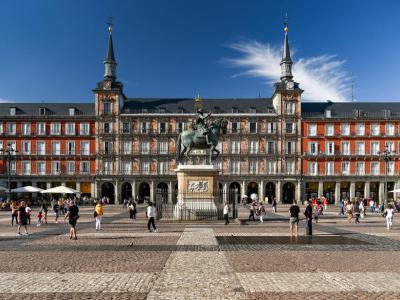
2) Plaza Mayor (Town Square) (must see)
Madrid’s grand and dramatic Town Square was initially dreamed up by King Felipe II, who, in the late 16th century, envisioned a more prestigious focal point for his new capital. The oldest building here, known as the Bakery House, dates back to 1590, though extensive rebuilding occurred after devastating fires in the 17th and 18th centuries. Interestingly, its eye-catching frescoes are relatively new, added as recently as 1992. Today, this building hosts the city’s tourist information center, welcoming visitors from morning until late into the evening. At the square’s center, you’ll spot a bronze equestrian statue of Felipe III, which has stood there since 1616.
Historically, this vast plaza-with a capacity of 50,000 people-hosted a wide range of events: royal coronations, religious ceremonies, theatrical productions, bullfights, and even public trials of heretics that ended dramatically with executions. Nowadays, the square remains a lively social hub, bustling with outdoor cafés, upscale restaurants, and plenty of tourists. Still, it hasn’t lost its old-world grandeur, continuing to host seasonal events like outdoor concerts, theatrical performances, festive Christmas markets, and a popular Sunday stamp and coin fair.
While many restaurants lining the plaza can be somewhat pricey and tourist-oriented, the square’s delightful atmosphere makes it an ideal setting for relaxing with a glass of Spanish wine and a delicious tapa. One culinary treat you shouldn’t miss here is Madrid’s signature calamari sandwich-crispy battered squid served fresh in a bun-best enjoyed with a refreshing cold beer.
Among the square’s standout eateries, Los Galayos is especially noteworthy. Established back in 1894, this historic restaurant is open every day until late, featuring multiple dining rooms and two inviting outdoor terraces. For a more casual experience, tucked in a charming alley just south of the square, you'll discover Casa Revuelta, an authentic local bar renowned for its “bacalao frito”-crispy, golden fried cod, simply irresistible.
Finally, just steps away on nearby Calle de Cuchilleros, sits Sobrino de Botín. Established in 1725, it proudly holds the Guinness World Record as the oldest continuously operating restaurant in the world.
Historically, this vast plaza-with a capacity of 50,000 people-hosted a wide range of events: royal coronations, religious ceremonies, theatrical productions, bullfights, and even public trials of heretics that ended dramatically with executions. Nowadays, the square remains a lively social hub, bustling with outdoor cafés, upscale restaurants, and plenty of tourists. Still, it hasn’t lost its old-world grandeur, continuing to host seasonal events like outdoor concerts, theatrical performances, festive Christmas markets, and a popular Sunday stamp and coin fair.
While many restaurants lining the plaza can be somewhat pricey and tourist-oriented, the square’s delightful atmosphere makes it an ideal setting for relaxing with a glass of Spanish wine and a delicious tapa. One culinary treat you shouldn’t miss here is Madrid’s signature calamari sandwich-crispy battered squid served fresh in a bun-best enjoyed with a refreshing cold beer.
Among the square’s standout eateries, Los Galayos is especially noteworthy. Established back in 1894, this historic restaurant is open every day until late, featuring multiple dining rooms and two inviting outdoor terraces. For a more casual experience, tucked in a charming alley just south of the square, you'll discover Casa Revuelta, an authentic local bar renowned for its “bacalao frito”-crispy, golden fried cod, simply irresistible.
Finally, just steps away on nearby Calle de Cuchilleros, sits Sobrino de Botín. Established in 1725, it proudly holds the Guinness World Record as the oldest continuously operating restaurant in the world.
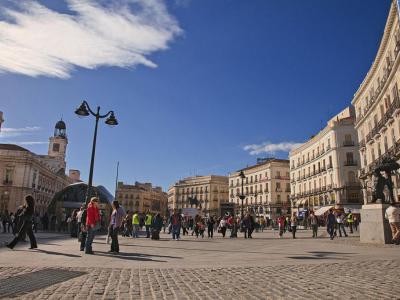
3) Puerta del Sol (Gate of the Sun) (must see)
One of Madrid’s most popular gathering places, the Gate of the Sun is always buzzing with life. Historically, it marked the city’s original eastern entrance, where a gatehouse and castle once stood. Over the centuries, these structures gave way to churches, and in the late 19th century, the area transformed into the square we know today, becoming a hub of café culture and social activity.
Shaped like a half-moon, the area features a modern glass train station facing the statue of Carlos III on horseback at its center. Opposite, a red-brick government building, originally a post office from the reign of Carlos III, now houses the regional government. Later repurposed as the Ministry of the Interior, it gained its distinctive clocktower in 1866. This building, however, has a darker past-during the Franco regime, its basement cells were notorious for human rights abuses.
The Gate of the Sun itself has witnessed significant historical drama. On May 2, 1808, the Spanish uprising against French occupation began here, though the rebellion was ultimately quashed. In 1912, Prime Minister José Canalejas was assassinated in the square, and in 1931, the proclamation of the Second Republic was made from the Ministry’s balcony.
Today, it remains a focal point for festive events, bringing together locals and visitors alike. Nearby side streets offer a treasure trove of nightlife, with bars and clubs opening their doors late, creating a vibrant after-hours scene.
While here, you can also have a chance to eat like a local in a number of family-run restaurants, authentic taverns and tapas bars tucked away from the usual tourist paths. One such hidden gem is La Mallorquina, famed for its “napolitanas” and ring-shaped pastries, which can be enjoyed in an upstairs salon overlooking the square.
Shaped like a half-moon, the area features a modern glass train station facing the statue of Carlos III on horseback at its center. Opposite, a red-brick government building, originally a post office from the reign of Carlos III, now houses the regional government. Later repurposed as the Ministry of the Interior, it gained its distinctive clocktower in 1866. This building, however, has a darker past-during the Franco regime, its basement cells were notorious for human rights abuses.
The Gate of the Sun itself has witnessed significant historical drama. On May 2, 1808, the Spanish uprising against French occupation began here, though the rebellion was ultimately quashed. In 1912, Prime Minister José Canalejas was assassinated in the square, and in 1931, the proclamation of the Second Republic was made from the Ministry’s balcony.
Today, it remains a focal point for festive events, bringing together locals and visitors alike. Nearby side streets offer a treasure trove of nightlife, with bars and clubs opening their doors late, creating a vibrant after-hours scene.
While here, you can also have a chance to eat like a local in a number of family-run restaurants, authentic taverns and tapas bars tucked away from the usual tourist paths. One such hidden gem is La Mallorquina, famed for its “napolitanas” and ring-shaped pastries, which can be enjoyed in an upstairs salon overlooking the square.
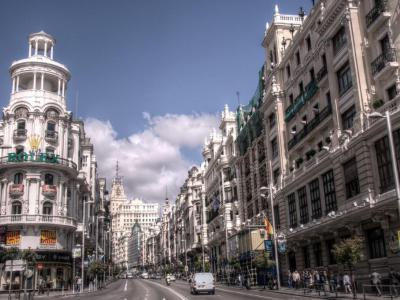
4) Gran Via (Great Way) (must see)
The Gran Vía, or “Great Way,” represents Madrid’s leap into modernity at the turn of the 20th century. Built in stages during an era of economic prosperity, thanks in part to Spain’s neutrality in World War I, it became the city’s commercial lifeline, separating the historic southern neighborhoods from the newer districts to the north. Today, this boulevard is alive with traffic, shopping, and a dazzling mix of architectural styles-from sleek Modernist designs to ornate Neo-Rococo facades. Along the way, you’ll encounter grand banks, imposing office buildings, and even a handful of museums and churches to enrich the experience.
The most eye-catching section is the earliest, completed between 1910 and 1924. Stretching from Calle Alcalá to the Telefónica skyscraper, this segment is home to landmarks like the Metrópolis Building, renowned for its cylindrical design, intricate white stone sculptures, and dazzling golden garlands. The Telefónica skyscraper, reaching 81 meters, was Spain’s first true high-rise. During the Civil War, it served as a reference point for Franco's forces to carry out bombings in the area.
As you venture down toward Callao Square, the street buzzes with energy, lined with shops, cafes, and cinemas. The square itself leads into Calle Preciados, a shopper’s paradise. Positioned on the corner is the iconic Art Deco Capitol Building, adorned with eye-catching neon signs. Further along, as you head towards Spain Square (“Plaza de España”), the view expands upward to reveal statues and ornate details crowning the rooftops, giving Gran Vía an unmistakable and picturesque skyline.
Tip:
If you’re visiting in the summer, an early evening stroll is ideal. The heat fades, and the street lights begin to glow, creating a magical setting for your walk.
The most eye-catching section is the earliest, completed between 1910 and 1924. Stretching from Calle Alcalá to the Telefónica skyscraper, this segment is home to landmarks like the Metrópolis Building, renowned for its cylindrical design, intricate white stone sculptures, and dazzling golden garlands. The Telefónica skyscraper, reaching 81 meters, was Spain’s first true high-rise. During the Civil War, it served as a reference point for Franco's forces to carry out bombings in the area.
As you venture down toward Callao Square, the street buzzes with energy, lined with shops, cafes, and cinemas. The square itself leads into Calle Preciados, a shopper’s paradise. Positioned on the corner is the iconic Art Deco Capitol Building, adorned with eye-catching neon signs. Further along, as you head towards Spain Square (“Plaza de España”), the view expands upward to reveal statues and ornate details crowning the rooftops, giving Gran Vía an unmistakable and picturesque skyline.
Tip:
If you’re visiting in the summer, an early evening stroll is ideal. The heat fades, and the street lights begin to glow, creating a magical setting for your walk.
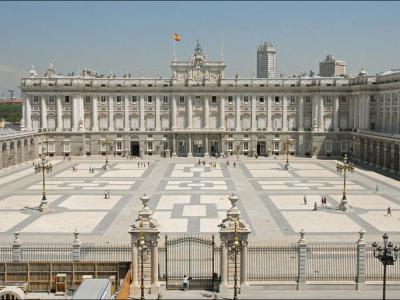
5) Palacio Real (Royal Palace of Madrid) (must see)
Touring this palace feels like wandering through one of the world’s most exquisite art galleries. You’ll discover a stunning array of masterpieces, from paintings and frescoes to porcelain, ornate furniture, silverware, and other historically significant treasures. Among the standout features is the only complete set of Stradivarius string quintet instruments-a true musical marvel.
The palace we see today was commissioned by Felipe V after the 9th-century wooden Moorish Alcázar fortress was lost to a devastating fire in 1734. Drawing inspiration from the lavish splendor of Versailles, where Felipe had been raised, the Bourbon king envisioned a magnificent French-Italian-style structure built from stone and granite. Although Felipe didn’t live to see its completion, the palace was finally ready for use during the reign of Carlos III in 1764. What the exterior lacks in flamboyance, the interior more than makes up for: lavish marble floors, celestial frescoes, and golden furnishings tell a story of wealth and power, standing in stark contrast to Spain’s declining status at the time.
Don’t miss the awe-inspiring Throne Room, with its ceiling by Tiepolo illustrating the Majesty of Spain, or the Gasparini Room, whose silver silk-embroidered walls and intricate marble mosaic floor offer a mesmerizing display. The Porcelain Room, with its dazzling gold, green, and white porcelain decor, is another showstopper.
Beyond the main palace, you can explore the renowned Royal Armory, home to one of the world’s finest collections of historic weapons and armor. There is also an 18th-century pharmacy resembling a laboratory and the Painting Gallery, with works by Caravaggio, Velázquez, and Goya.
Tips:
If you’re planning a visit, set aside a few hours to take it all in. To beat the crowds and save time, consider booking your tickets online in advance.
The palace we see today was commissioned by Felipe V after the 9th-century wooden Moorish Alcázar fortress was lost to a devastating fire in 1734. Drawing inspiration from the lavish splendor of Versailles, where Felipe had been raised, the Bourbon king envisioned a magnificent French-Italian-style structure built from stone and granite. Although Felipe didn’t live to see its completion, the palace was finally ready for use during the reign of Carlos III in 1764. What the exterior lacks in flamboyance, the interior more than makes up for: lavish marble floors, celestial frescoes, and golden furnishings tell a story of wealth and power, standing in stark contrast to Spain’s declining status at the time.
Don’t miss the awe-inspiring Throne Room, with its ceiling by Tiepolo illustrating the Majesty of Spain, or the Gasparini Room, whose silver silk-embroidered walls and intricate marble mosaic floor offer a mesmerizing display. The Porcelain Room, with its dazzling gold, green, and white porcelain decor, is another showstopper.
Beyond the main palace, you can explore the renowned Royal Armory, home to one of the world’s finest collections of historic weapons and armor. There is also an 18th-century pharmacy resembling a laboratory and the Painting Gallery, with works by Caravaggio, Velázquez, and Goya.
Tips:
If you’re planning a visit, set aside a few hours to take it all in. To beat the crowds and save time, consider booking your tickets online in advance.
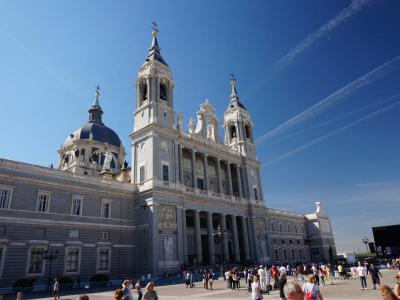
6) Catedral de la Almudena (Almudena Cathedral)
Almudena Cathedral, a project centuries in the making, finally opened in 1993 after a history marked by financial difficulties and Civil War bombing. Its neoclassical exterior, planned in the 1940s, contrasts beautifully with the neo-Gothic interior. Inside, sunlight streams through rose windows, casting a soft glow over the Latin-cross layout. A majestic dome crowns the transept, while vibrant ceiling designs and a 16th-century altarpiece in the Almudena chapel are particularly awe-inspiring.
Near the main entrance, a small museum showcases some of the cathedral’s treasures, but the true highlight is climbing to the dome. From this vantage point, you’ll enjoy sweeping views of Madrid and a close-up look at the towering statues of saints that stand watch over the city. The immense crypt, accessible from Calle Mayor, is another must-see. Its neo-Romanesque capitals, colorful stained-glass windows, and the figure of the Virgin of the Almudena create a tranquil, reverent atmosphere.
Tip: After exploring the crypt, cross the street to find remnants of ancient walls-built by the Moors in the 9th century and the Christians in the 12th-now part of Emir Mohammed I park, which occasionally hosts concerts.
Near the main entrance, a small museum showcases some of the cathedral’s treasures, but the true highlight is climbing to the dome. From this vantage point, you’ll enjoy sweeping views of Madrid and a close-up look at the towering statues of saints that stand watch over the city. The immense crypt, accessible from Calle Mayor, is another must-see. Its neo-Romanesque capitals, colorful stained-glass windows, and the figure of the Virgin of the Almudena create a tranquil, reverent atmosphere.
Tip: After exploring the crypt, cross the street to find remnants of ancient walls-built by the Moors in the 9th century and the Christians in the 12th-now part of Emir Mohammed I park, which occasionally hosts concerts.
