Custom Walk in Cologne, Germany by sjlr_harris_c766f created on 2025-08-07
Guide Location: Germany » Cologne
Guide Type: Custom Walk
# of Sights: 8
Tour Duration: 3 Hour(s)
Travel Distance: 5.8 Km or 3.6 Miles
Share Key: F3W3E
Guide Type: Custom Walk
# of Sights: 8
Tour Duration: 3 Hour(s)
Travel Distance: 5.8 Km or 3.6 Miles
Share Key: F3W3E
How It Works
Please retrieve this walk in the GPSmyCity app. Once done, the app will guide you from one tour stop to the next as if you had a personal tour guide. If you created the walk on this website or come to the page via a link, please follow the instructions below to retrieve the walk in the app.
Retrieve This Walk in App
Step 1. Download the app "GPSmyCity: Walks in 1K+ Cities" on Apple App Store or Google Play Store.



Step 2. In the GPSmyCity app, download(or launch) the guide "Cologne Map and Walking Tours".
Step 3. Tap the menu button located at upper right corner of the "Walks" screen and select "Retrieve custom walk". Enter the share key: F3W3E
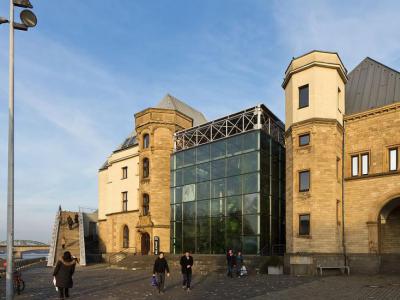
1) Chocolate Museum (must see)
The Imhoff-Schokoladenmuseum was opened by Hans Imhoff on 31 October 1993. It is situated in the Cologne quarter Altstadt-Süd on the Rheinauhafen-peninsula. The exhibition shows the whole history of chocolate, from the beginning at the Olmecs, Maya and Aztecs until the contemporary products and their production methods. The museum belongs to the Top Ten of German museums with 5,000 guidances and 600,000 visitors a year.
A special attraction is the three-meter-high chocolate fountain, at which a woman dips wafers in the liquid chocolate and distributes them to visitors. Another interesting thing for visitors is the small tropiarium consisting of a glass cube with 10-meter edge length showing cacao trees of the species Theobroma cacao and Theobroma grandiflorum. Several production machineries were built as miniatures so that you can have a look at the production process of the small chocolate bars, which are given to the visitors at the entrance of the museum.
Why You Should Visit:
Gives a brief history of chocolate as well as more esoteric things like the religion & culture related to it. Great spot to view the Rhine river, too.
Tip:
Lots of free samples during visits and you can have your own personalized chocolate made.
A special attraction is the three-meter-high chocolate fountain, at which a woman dips wafers in the liquid chocolate and distributes them to visitors. Another interesting thing for visitors is the small tropiarium consisting of a glass cube with 10-meter edge length showing cacao trees of the species Theobroma cacao and Theobroma grandiflorum. Several production machineries were built as miniatures so that you can have a look at the production process of the small chocolate bars, which are given to the visitors at the entrance of the museum.
Why You Should Visit:
Gives a brief history of chocolate as well as more esoteric things like the religion & culture related to it. Great spot to view the Rhine river, too.
Tip:
Lots of free samples during visits and you can have your own personalized chocolate made.
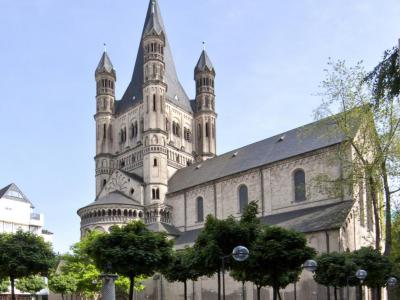
2) Groß St. Martin (Great St. Martin Church) (must see)
Ah, the Great Saint Martin Church-this seriously good-looking temple with a riverside address and medieval drama to spare is proof that if a building can survive fire, war, and questionable Baroque interior design choices, it deserves your full attention.
This Romanesque heavyweight was built between 1150 and 1250, and its iconic tower has been photobombing Old Town’s skyline ever since. But the site’s résumé goes way back. In Roman times, this spot was actually an island in the Rhine, where they built a humble chapel-probably to appease both the gods and the weather.
In the 10th century, a new church was built. In 1150: Boom. Fire. Ashes. Time to build again! By 1172, they’d got a fancy tri-apsidal structure. It survived another fire in 1185. But in 1378, the towers' roofs caught fire again, and by 1434, a storm decided to finish the job and blew them clean off. Truly, the medieval weather had no chill...
In the 1700s, someone got ambitious with the interior, adding Baroque decorations. Not everyone was thrilled. Some clergy officials thought it looked more Versailles than virtue, and out came the paintbrushes.
Then came the French in 1794. They stuck around for 20 years, turned the abbey into barracks, and eventually pulled the plug on the monastery altogether. Monks out, soldiers in. Not exactly a spiritual upgrade...
By 1847, restoration kicked off, and not a moment too soon. Because in World War II, the church took a beating-fires again, naturally-but was lovingly rebuilt between 1948 and 1985. Now, that’s what we call long-term commitment...
Pro tip:
The entrance plays hard to get-it’s tucked away at the back. And if you fancy ancient basements, head downstairs to see the Roman foundations. Because nothing says timeless like a church that’s literally built on history.
This Romanesque heavyweight was built between 1150 and 1250, and its iconic tower has been photobombing Old Town’s skyline ever since. But the site’s résumé goes way back. In Roman times, this spot was actually an island in the Rhine, where they built a humble chapel-probably to appease both the gods and the weather.
In the 10th century, a new church was built. In 1150: Boom. Fire. Ashes. Time to build again! By 1172, they’d got a fancy tri-apsidal structure. It survived another fire in 1185. But in 1378, the towers' roofs caught fire again, and by 1434, a storm decided to finish the job and blew them clean off. Truly, the medieval weather had no chill...
In the 1700s, someone got ambitious with the interior, adding Baroque decorations. Not everyone was thrilled. Some clergy officials thought it looked more Versailles than virtue, and out came the paintbrushes.
Then came the French in 1794. They stuck around for 20 years, turned the abbey into barracks, and eventually pulled the plug on the monastery altogether. Monks out, soldiers in. Not exactly a spiritual upgrade...
By 1847, restoration kicked off, and not a moment too soon. Because in World War II, the church took a beating-fires again, naturally-but was lovingly rebuilt between 1948 and 1985. Now, that’s what we call long-term commitment...
Pro tip:
The entrance plays hard to get-it’s tucked away at the back. And if you fancy ancient basements, head downstairs to see the Roman foundations. Because nothing says timeless like a church that’s literally built on history.
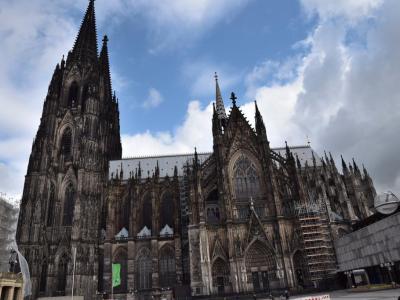
3) Kölner Dom (Cologne Cathedral) (must see)
The Cologne Cathedral - a place where Gothic ambition met a 600-year-long construction delay and still came out looking fabulous... Indeed, the magnitude of this building dwarfs your expectations and your camera’s field of view.
This towering masterpiece is Germany’s most visited landmark, with 20,000 people dropping by daily - not bad for a church that took over six centuries to finish. At 157 meters (that’s 515 feet for those who still think in feet), it’s the tallest twin-spired church on Earth, the second-tallest church in Europe, and the third tallest in the world. Clearly, Cologne doesn’t do things halfway...
Construction began in 1248, then took a casual break around 1560. The west tower wasn't completed until 1880, when 19th-century officials unearthed the original blueprints and reasoned, “Why not finish it?”
But the site’s sacred history runs much deeper than that. Since the 4th century, Christians have been building here. The "Old Cathedral" stood from 818 to 1248, and even earlier, a baptistery once graced the eastern end.
So, what kicked off this giant Gothic project? A golden box. Specifically, the Shrine of the Three Kings, believed to hold relics of the Three Wise Men (also known as the Magi - the ones who visited baby Jesus and offered him gifts). Its construction started at the eastern arm to house the shrine, then the west front followed - until everything just kind of stopped in 1473. The work-in-progress look lasted for centuries, complete with a giant crane stuck on top for 400 years. Talk about an eternal fixer-upper...
The cathedral's highlights include the 1322 black marble High Altar and that aforementioned blingy shrine, which began in 1190 and shines brighter than a royal wedding. There's also the 10th-century Gero Crucifix, the 1290 Milan Madonna, and a legal twist - a 13th-century stone tablet that once granted rights to Cologne’s Jewish residents.
And, of course, there are bells - eleven in total. The Saint Peter Bell, cast in 1922, was once the biggest free-swinging bell in the world. You’ll feel it before you hear it...
Insider Tip:
Don’t skip the rear mosaics - they're stunning. Brave the climb for sky-high views, or sneak into the underground parking to see the cathedral’s ancient roots... literally.
This towering masterpiece is Germany’s most visited landmark, with 20,000 people dropping by daily - not bad for a church that took over six centuries to finish. At 157 meters (that’s 515 feet for those who still think in feet), it’s the tallest twin-spired church on Earth, the second-tallest church in Europe, and the third tallest in the world. Clearly, Cologne doesn’t do things halfway...
Construction began in 1248, then took a casual break around 1560. The west tower wasn't completed until 1880, when 19th-century officials unearthed the original blueprints and reasoned, “Why not finish it?”
But the site’s sacred history runs much deeper than that. Since the 4th century, Christians have been building here. The "Old Cathedral" stood from 818 to 1248, and even earlier, a baptistery once graced the eastern end.
So, what kicked off this giant Gothic project? A golden box. Specifically, the Shrine of the Three Kings, believed to hold relics of the Three Wise Men (also known as the Magi - the ones who visited baby Jesus and offered him gifts). Its construction started at the eastern arm to house the shrine, then the west front followed - until everything just kind of stopped in 1473. The work-in-progress look lasted for centuries, complete with a giant crane stuck on top for 400 years. Talk about an eternal fixer-upper...
The cathedral's highlights include the 1322 black marble High Altar and that aforementioned blingy shrine, which began in 1190 and shines brighter than a royal wedding. There's also the 10th-century Gero Crucifix, the 1290 Milan Madonna, and a legal twist - a 13th-century stone tablet that once granted rights to Cologne’s Jewish residents.
And, of course, there are bells - eleven in total. The Saint Peter Bell, cast in 1922, was once the biggest free-swinging bell in the world. You’ll feel it before you hear it...
Insider Tip:
Don’t skip the rear mosaics - they're stunning. Brave the climb for sky-high views, or sneak into the underground parking to see the cathedral’s ancient roots... literally.
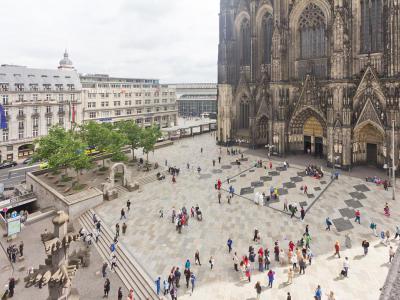
4) Cathedral Square Floor Paintings
The Cathedral [Dom] Square attracts professional artists who come here to draw pictures on the pavement. Among the floor paintings the most noticeable are the portrait of German composer Ludwig van Beethoven and a replica of the world famous Mona Lisa.
5) NS Documentation Center (must see)
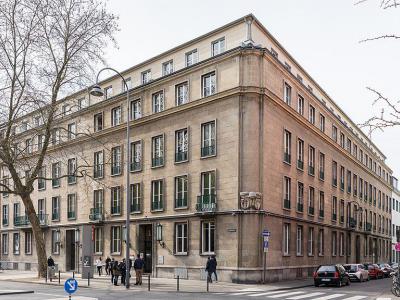
In the heart of Cologne stands a building once marked by silence, now filled with testimony-the NS Documentation Center, housed in the former headquarters of the Cologne Gestapo. From 1935 to 1945, this unassuming structure served as a key site of Nazi terror. Known as the EL-DE Haus-a name derived from the initials of businessman Leopold Dahmen, who leased the still-unfinished building to the Nazis-it became a dark chapter in the city’s history.
Beneath its ground floor, ten prison cells were constructed in the basement. Today, that space endures as one of the most chilling and best-preserved Nazi detention sites in Germany. The Gestapo Prison memorial is now the country’s largest memorial dedicated to victims of Nazi persecution. More than 1,800 inscriptions-carved or written on the cell walls by prisoners-remain, bearing raw witness to suffering, hope, despair, and resistance.
The permanent exhibition above examines the rise and machinery of National Socialism, with a particular focus on Cologne’s experience under the regime. Visitors will encounter detailed accounts of Nazi propaganda, administrative structures, systemic racism, and the deportation and murder of the city’s Jewish population. Stories of local resistance movements also find their place here-quiet acts of defiance that stood against overwhelming force.
The Center functions not only as a museum but as a research institution. Its library and archives continue to support scholarship on the Nazi era, ensuring that this part of history remains rigorously studied and publicly accessible.
A word to visitors:
Take the audio guide-it’s essential for grasping the deeper context behind what you’ll see. Start your journey in the basement, among the cells, and work your way upward. Lockers are available free of charge to store bags, leaving you free to absorb the weight of this place with undivided attention.
Beneath its ground floor, ten prison cells were constructed in the basement. Today, that space endures as one of the most chilling and best-preserved Nazi detention sites in Germany. The Gestapo Prison memorial is now the country’s largest memorial dedicated to victims of Nazi persecution. More than 1,800 inscriptions-carved or written on the cell walls by prisoners-remain, bearing raw witness to suffering, hope, despair, and resistance.
The permanent exhibition above examines the rise and machinery of National Socialism, with a particular focus on Cologne’s experience under the regime. Visitors will encounter detailed accounts of Nazi propaganda, administrative structures, systemic racism, and the deportation and murder of the city’s Jewish population. Stories of local resistance movements also find their place here-quiet acts of defiance that stood against overwhelming force.
The Center functions not only as a museum but as a research institution. Its library and archives continue to support scholarship on the Nazi era, ensuring that this part of history remains rigorously studied and publicly accessible.
A word to visitors:
Take the audio guide-it’s essential for grasping the deeper context behind what you’ll see. Start your journey in the basement, among the cells, and work your way upward. Lockers are available free of charge to store bags, leaving you free to absorb the weight of this place with undivided attention.
6) Hahnentorburg (Hahnen Gate)
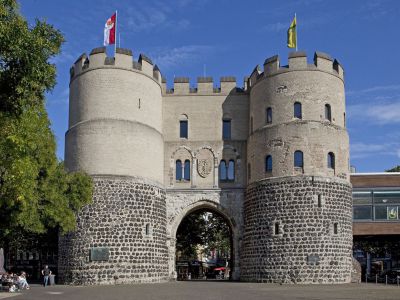
You can enter the city of Cologne through 12 gates and the Hahnen Gate, or 'Hahnentorburg' is the most popular among them. It was through this gate that the German Kings arrived in this city after their coronation in Aachen. They paid a visit to the Cologne Cathedral and prayed at the Three Magi shrine. Construction of this gate spanned five years between 1235 and 1240. The land surrounding the gate was owned by a citizen Hageno and the gate was probably named after him. Over a period of time, people started referring to the gate as Hahnentorburg.
This gate features two towers that are crenelated and semi-circular in shape. Before you enter, look up above the entrance where you will find a beautiful depiction of Cologne’s coat of arms. It was in 1890 that the tower was first renovated. Renovation work was carried out by Josef Stubben, one of the city's famous architects. You can find a memorial plaque here that commemorates his construction outside the city walls. During World War II, the tower was again damaged and reconstructed later.
Hahnentorburg has performed many functions through ages. It has been used as an exposition hall, museum and a prison. Today, this popular tourist spot is home to the carnival society, Ehrengarde der Stadt Köln 1902 e.V.
Why You Should Visit:
Massive gateway from medieval times and probably the best in Cologne.
Tip:
Some great pubs, bars, and restaurants close-by, and worth the walk along parts of the old wall or to the Rhein...
This gate features two towers that are crenelated and semi-circular in shape. Before you enter, look up above the entrance where you will find a beautiful depiction of Cologne’s coat of arms. It was in 1890 that the tower was first renovated. Renovation work was carried out by Josef Stubben, one of the city's famous architects. You can find a memorial plaque here that commemorates his construction outside the city walls. During World War II, the tower was again damaged and reconstructed later.
Hahnentorburg has performed many functions through ages. It has been used as an exposition hall, museum and a prison. Today, this popular tourist spot is home to the carnival society, Ehrengarde der Stadt Köln 1902 e.V.
Why You Should Visit:
Massive gateway from medieval times and probably the best in Cologne.
Tip:
Some great pubs, bars, and restaurants close-by, and worth the walk along parts of the old wall or to the Rhein...
7) 4711 House of Fragrances
If you’ve ever wondered where the phrase “Eau de Cologne” got its start, follow your nose to the 4711 House of Fragrances-part museum, part perfume playground, and all-around aromatic adventure.
Back in the early 1700s, an Italian-born perfumer named Johann Maria Farina set up a shop in the city. He created a light, citrusy fragrance that reminded him of “an Italian spring morning”-a stark contrast to the heavy, musky scents popular at the time. This he poetically dubbed “Eau de Cologne” (or “Water from Cologne”) in honor of his new hometown.
Farina’s creation became wildly popular across European courts as the must-have splash for royals and nobles who probably appreciated smelling like lemon zest instead of battlefield sweat. The fragrance was so successful that “Eau de Cologne” became a generic term for light, fresh scents.
But the story didn't stop there. Later in the century, another Cologne-based entrepreneurial wild card, Wilhelm Mülhens, brewed up his own “miracle water,” marketing it as medicine. During the French occupation, a soldier doing a building census randomly numbered Mülhens’ workshop as “4711.” And voilà-the most famous house number in fragrance history was born.
In 1810, Napoleon demanded that all medicinal products reveal their ingredients. Rather than spill the secret sauce, Mülhens pivoted. Forget medicine-this was now officially a perfume. Smart move. He even tried to borrow prestige by buying the rights to the Farina name... except the Farina family wasn’t selling it and took him to court. So in 1881, Mülhens finally embraced the 4711 name for good. Drama? Oh yes. But it smelled great.
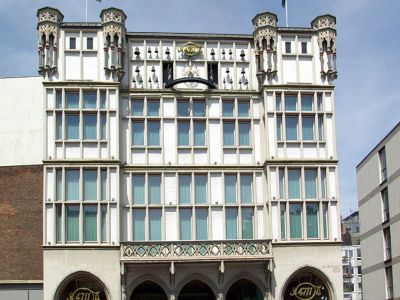
Though the original building didn’t survive, the modern 4711 flagship store still draws scent lovers from around the world. Inside, you’ll find a museum, antique Rosoli bottles, old-school perfume flasks, and the legendary Fragrance Fountain, which continuously flows with the iconic 4711 Eau de Cologne. And just to keep things classy, the building even serenades the street with 20 bells chiming out three melodies every hour.
Hot tip:
You can blend your own personal fragrance or simply stock up on gift-worthy scents and quirky souvenirs. Just don’t blame us if you leave smelling like royalty...
Back in the early 1700s, an Italian-born perfumer named Johann Maria Farina set up a shop in the city. He created a light, citrusy fragrance that reminded him of “an Italian spring morning”-a stark contrast to the heavy, musky scents popular at the time. This he poetically dubbed “Eau de Cologne” (or “Water from Cologne”) in honor of his new hometown.
Farina’s creation became wildly popular across European courts as the must-have splash for royals and nobles who probably appreciated smelling like lemon zest instead of battlefield sweat. The fragrance was so successful that “Eau de Cologne” became a generic term for light, fresh scents.
But the story didn't stop there. Later in the century, another Cologne-based entrepreneurial wild card, Wilhelm Mülhens, brewed up his own “miracle water,” marketing it as medicine. During the French occupation, a soldier doing a building census randomly numbered Mülhens’ workshop as “4711.” And voilà-the most famous house number in fragrance history was born.
In 1810, Napoleon demanded that all medicinal products reveal their ingredients. Rather than spill the secret sauce, Mülhens pivoted. Forget medicine-this was now officially a perfume. Smart move. He even tried to borrow prestige by buying the rights to the Farina name... except the Farina family wasn’t selling it and took him to court. So in 1881, Mülhens finally embraced the 4711 name for good. Drama? Oh yes. But it smelled great.
Though the original building didn’t survive, the modern 4711 flagship store still draws scent lovers from around the world. Inside, you’ll find a museum, antique Rosoli bottles, old-school perfume flasks, and the legendary Fragrance Fountain, which continuously flows with the iconic 4711 Eau de Cologne. And just to keep things classy, the building even serenades the street with 20 bells chiming out three melodies every hour.
Hot tip:
You can blend your own personal fragrance or simply stock up on gift-worthy scents and quirky souvenirs. Just don’t blame us if you leave smelling like royalty...
8) Farina Fragrance Museum
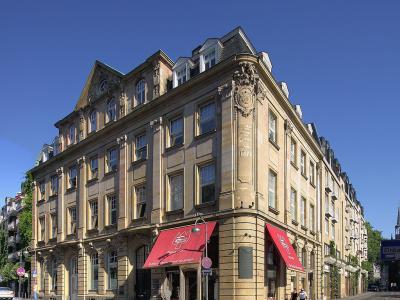
One of the popular tourist attractions in Cologne is the Fragrance Museum and Shop. This shop is across the City Hall and close to the Wallraf-Richartz Museum. Founded in 1709 by John Maria Farina to provide visitors with an insight into the art of producing perfumes, the museum is the eldest fragrance factory still standing and houses the registered office since 1723. Here you will see how perfume is produced using different methods. Over several floors, the museum provides a very detailed insight into the production methods of perfume throughout the various stages. The focus is primarily laid on Eau de Cologne, and you will, therefore, discover some particular technical devices such as distillation apparatus which were once used. In addition to the equipment, you will also be able to witness the evolution thanks to various pictures and documents which help trace back history. Moreover, as copyright didn’t exist in those days, many imitations and forgeries of Eau de Cologne rapidly appeared on the market and a certain number of them are also presented in the museum. Further details as to the changes in the manufacturing of Farina Eau de Cologne are also on display.
A staircase will lead you to the original cellar vaults, right back to those ancient days. This is where scents were produced three hundred years ago. On 25 November 2006, in commemoration of John Maria Farina’s 240th death anniversary, the Farina House was elected “place to be” within the context of the project “Germany Land to be”. On your trip to Cologne, visit the perfume museum and learn all about what this city is popularly known for. Go through an interesting 300-year-old journey unfolding the essence, culture and fragrance of the perfume industry here.
Why You Should Visit:
Super-educational on the history and realities of fragrances.
Takes 1 hour and is very central near the Dom.
You will also receive a small free sample of l'eau de Cologne at the end.
Tip:
Visit early or a day in advance to book a tour, as they do it in small groups and on a language-by-language basis.
A staircase will lead you to the original cellar vaults, right back to those ancient days. This is where scents were produced three hundred years ago. On 25 November 2006, in commemoration of John Maria Farina’s 240th death anniversary, the Farina House was elected “place to be” within the context of the project “Germany Land to be”. On your trip to Cologne, visit the perfume museum and learn all about what this city is popularly known for. Go through an interesting 300-year-old journey unfolding the essence, culture and fragrance of the perfume industry here.
Why You Should Visit:
Super-educational on the history and realities of fragrances.
Takes 1 hour and is very central near the Dom.
You will also receive a small free sample of l'eau de Cologne at the end.
Tip:
Visit early or a day in advance to book a tour, as they do it in small groups and on a language-by-language basis.
