Custom Walk in Key West, Florida by joyce_riley2573 created on 2025-08-12
Guide Location: USA » Key West
Guide Type: Custom Walk
# of Sights: 6
Tour Duration: 2 Hour(s)
Travel Distance: 4.1 Km or 2.5 Miles
Share Key: EH2GY
Guide Type: Custom Walk
# of Sights: 6
Tour Duration: 2 Hour(s)
Travel Distance: 4.1 Km or 2.5 Miles
Share Key: EH2GY
How It Works
Please retrieve this walk in the GPSmyCity app. Once done, the app will guide you from one tour stop to the next as if you had a personal tour guide. If you created the walk on this website or come to the page via a link, please follow the instructions below to retrieve the walk in the app.
Retrieve This Walk in App
Step 1. Download the app "GPSmyCity: Walks in 1K+ Cities" on Apple App Store or Google Play Store.



Step 2. In the GPSmyCity app, download(or launch) the guide "Key West Map and Walking Tours".
Step 3. Tap the menu button located at upper right corner of the "Walks" screen and select "Retrieve custom walk". Enter the share key: EH2GY
1) Mallory Square (must see)
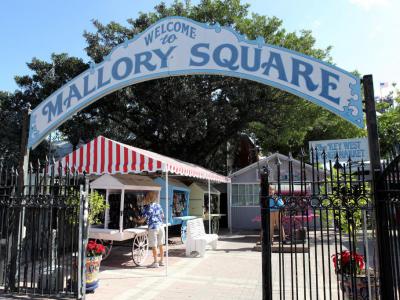
Fronting on the world-famous Sunset Pier in the heart of Old Town Key West, Mallory Square is known for its stunning sunsets, street shows, and lively atmosphere.
The square is named after Stephen Russell Mallory, a U.S. Senator and Secretary of the Navy for the Confederacy during the American Civil War. In the early 1800s, it was used as a naval base for the U.S. Navy and, later, as a commercial port, with ships bringing goods from the Caribbean and other parts of the world. During much of the 19th century, Key West was a hub for the salvaging of shipwrecks; many of the recovered items were sold in Mallory Square.
The tradition of celebrating the sunset began here in the 1960s. Local artists and performers would gather in the evening to marvel at the sun going down over the water, and eventually, crowds began to form and join in on the festivities.
Street performers – such as fire eaters, jugglers, musicians, and other wacky tricksters – are a standalone attraction at Mallory. To perform in the square they must audition and be licensed by the city. The performers range from a one-man band and fire jugglers to world-famous Kwinci, who swallows a 40-inch balloon and walks barefoot on broken glass (you have to see this to believe it).
Then there's Warren Lee, the Sophisticated Swindler. No trip to Key West is complete without seeing Dominique and his Flying House Cats. Somehow, he has trained his cats to jump through hoops of fire and other, very un-cat-like tricks.
In 2017, Mallory Square was severely damaged by Hurricane Irma. However, it was quickly rebuilt and today remains as vibrant and popular a destination as ever.
Why You Should Visit:
People-watching at this popular location is quite fun, as you have all kinds of walks of life here. The breeze is usually pretty refreshing even on hotter and humid days due to the oceanfront location.
Tip:
Bring cash and if you stop to watch, tip the performers – they deserve it. Surrounding are many delightful shops and craftsmen selling their wares, and you can get some nice food and drinks, all coupled with the spectacular view of the sun sinking into the Gulf of Mexico – a photographer's delight.
The square is named after Stephen Russell Mallory, a U.S. Senator and Secretary of the Navy for the Confederacy during the American Civil War. In the early 1800s, it was used as a naval base for the U.S. Navy and, later, as a commercial port, with ships bringing goods from the Caribbean and other parts of the world. During much of the 19th century, Key West was a hub for the salvaging of shipwrecks; many of the recovered items were sold in Mallory Square.
The tradition of celebrating the sunset began here in the 1960s. Local artists and performers would gather in the evening to marvel at the sun going down over the water, and eventually, crowds began to form and join in on the festivities.
Street performers – such as fire eaters, jugglers, musicians, and other wacky tricksters – are a standalone attraction at Mallory. To perform in the square they must audition and be licensed by the city. The performers range from a one-man band and fire jugglers to world-famous Kwinci, who swallows a 40-inch balloon and walks barefoot on broken glass (you have to see this to believe it).
Then there's Warren Lee, the Sophisticated Swindler. No trip to Key West is complete without seeing Dominique and his Flying House Cats. Somehow, he has trained his cats to jump through hoops of fire and other, very un-cat-like tricks.
In 2017, Mallory Square was severely damaged by Hurricane Irma. However, it was quickly rebuilt and today remains as vibrant and popular a destination as ever.
Why You Should Visit:
People-watching at this popular location is quite fun, as you have all kinds of walks of life here. The breeze is usually pretty refreshing even on hotter and humid days due to the oceanfront location.
Tip:
Bring cash and if you stop to watch, tip the performers – they deserve it. Surrounding are many delightful shops and craftsmen selling their wares, and you can get some nice food and drinks, all coupled with the spectacular view of the sun sinking into the Gulf of Mexico – a photographer's delight.
2) Kermit's Key West Key Lime Shoppe
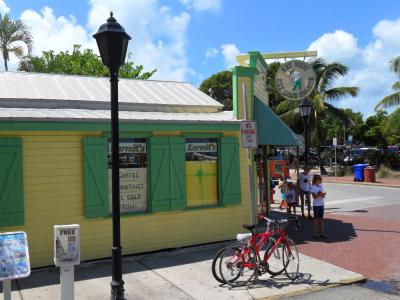
Kermit's Key West Key Lime Shoppe is a well-known culinary destination in Key West. It is famous for its exclusive focus on Key Limes, a unique fruit that only grows in a specific region on Earth, with Key West being its primary location. This particular variety of lime is renowned for its distinct flavor and is the key ingredient in Florida's official state dessert, Key Lime Pie.
Established more than thirty years ago, Kermit’s Key West Key Lime Shoppe has established itself as a distinctive player in the culinary world. Its reputation has been further enhanced by recognition from prominent entities like the Food Network, National Geographic, and celebrity chef Paula Deen, all of whom acknowledge Kermit’s as the top source for the finest Key Lime Pie.
Nonetheless, Kermit's appeal goes beyond its famous pie. The shop offers a wide range of Key Lime-infused products, including cookies, salsa, taffy, jellybeans, tea, olive oil, and chutney. This diverse selection of products demonstrates the versatility of Key Lime, showcasing how it can turn everyday items into exceptional culinary delights.
Kermit's in Key West offers two iconic locations where you can fully experience the world of Key Lime. You can buy various Key Lime products and enjoy the laid-back Key West vibe. Don't miss the Key Lime Pie Bar – a delightful twist on the classic pie, dipped in dark chocolate, perfect for savoring on the shop's front porch.
Established more than thirty years ago, Kermit’s Key West Key Lime Shoppe has established itself as a distinctive player in the culinary world. Its reputation has been further enhanced by recognition from prominent entities like the Food Network, National Geographic, and celebrity chef Paula Deen, all of whom acknowledge Kermit’s as the top source for the finest Key Lime Pie.
Nonetheless, Kermit's appeal goes beyond its famous pie. The shop offers a wide range of Key Lime-infused products, including cookies, salsa, taffy, jellybeans, tea, olive oil, and chutney. This diverse selection of products demonstrates the versatility of Key Lime, showcasing how it can turn everyday items into exceptional culinary delights.
Kermit's in Key West offers two iconic locations where you can fully experience the world of Key Lime. You can buy various Key Lime products and enjoy the laid-back Key West vibe. Don't miss the Key Lime Pie Bar – a delightful twist on the classic pie, dipped in dark chocolate, perfect for savoring on the shop's front porch.
3) Duval Street (must see)
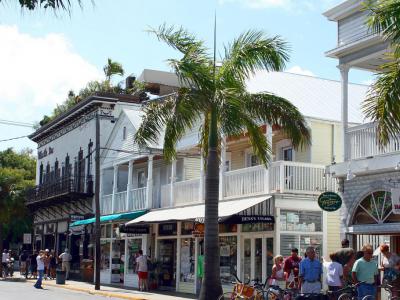
Duval Street is the most famous and most traveled street in all of Key West. Designated a "Great Street" in 2012 by the American Planning Association, it runs north-south through the entire length of the island, from the Gulf of Mexico to the Atlantic Ocean, and is the main thoroughfare of the city, renowned for its vibrant nightlife, historic buildings, and an array of unique shops and restaurants.
The street is named after William Pope Duval, the first territorial governor of Florida. It was originally a sandy path that linked Fort Zachary Taylor (in the south) to Mallory Square (in the north). As the city grew, more businesses were established on the street, and thus it became a bustling commercial hub.
In the 1800s, Duval Street was home to many of Key West's wealthiest residents. The street was lined with elegant mansions, many of which have been preserved and turned into museums or bed-and-breakfasts. During the early 20th century, it grew popular with sailors and fishermen, who frequented the numerous local eateries and watering holes.
The north (lower) end of Duval (or “wild” side) accommodates the majority of bars and tourist attractions and is where most of the carousing takes place until all hours of the night (and early morning!). The south (upper) end of Duval (the "quiet" side) houses the Southernmost Point, with a mix of early Key West Victorian mansions and bungalows dotting the neighborhood. Although it is more residential and less filled with tourists, the sidewalks still bustle with activity due to the art galleries, boutiques, inns, and bodegas lining them.
On Duval Street, you will find the famous Sloppy Joe's Bar, which used to be a favorite haunt of writer Ernest Hemingway. The street is also known for its colorful characters and street performers, such as the "Cat Man" (performing with his trained cats), and the annual Fantasy Fest celebration, a 10-day event featuring costume contests, street parties, and other festivities.
Overall, Duval Street offers a unique blend of history, culture, and entertainment, and is a must-see destination for anyone visiting Key West.
The street is named after William Pope Duval, the first territorial governor of Florida. It was originally a sandy path that linked Fort Zachary Taylor (in the south) to Mallory Square (in the north). As the city grew, more businesses were established on the street, and thus it became a bustling commercial hub.
In the 1800s, Duval Street was home to many of Key West's wealthiest residents. The street was lined with elegant mansions, many of which have been preserved and turned into museums or bed-and-breakfasts. During the early 20th century, it grew popular with sailors and fishermen, who frequented the numerous local eateries and watering holes.
The north (lower) end of Duval (or “wild” side) accommodates the majority of bars and tourist attractions and is where most of the carousing takes place until all hours of the night (and early morning!). The south (upper) end of Duval (the "quiet" side) houses the Southernmost Point, with a mix of early Key West Victorian mansions and bungalows dotting the neighborhood. Although it is more residential and less filled with tourists, the sidewalks still bustle with activity due to the art galleries, boutiques, inns, and bodegas lining them.
On Duval Street, you will find the famous Sloppy Joe's Bar, which used to be a favorite haunt of writer Ernest Hemingway. The street is also known for its colorful characters and street performers, such as the "Cat Man" (performing with his trained cats), and the annual Fantasy Fest celebration, a 10-day event featuring costume contests, street parties, and other festivities.
Overall, Duval Street offers a unique blend of history, culture, and entertainment, and is a must-see destination for anyone visiting Key West.
4) Key West Lighthouse & Museum (must see)
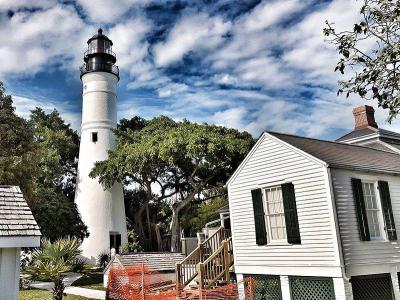
The Key West Lighthouse Museum occupies the first lighthouse built in the Florida Keys. Historically, a lighthouse on this site has been since 1825. The current Key West Light tower was constructed in 1848 after its predecessor was destroyed by a hurricane. Following several modifications, it stands 73 feet tall.
During the mid-1800s, Key West was the busiest port in Florida and one of the busiest in the entire United States. The lighthouse played an important role in the history of the city, as it helped guide ships through the treacherous waters surrounding the island.
After the Coast Guard decommissioned the Key West Light in 1969, it was handed over to Monroe County, which in turn leased it to the Key West Arts and Historical Society. The latter operates the lighthouse and its associated buildings as the Key West Light House and Keeper's Quarters Museum.
If you can fend off the claustrophobia and don't mind heights, you can climb 88 tiny and constricting steps to the top of this historic building to see the old lantern and enjoy panoramic views of the entire island/key and the surrounding ocean. Along the way up, there are three small landings you can stop on and rest if you need to.
The museum features exhibits that showcase the history of the structure, the people who operated it, and the maritime history of Key West. Visitors can explore the collection of navigational tools, historical photographs, and displays about the area's shipwrecks and salvaging industry.
Also, near the tower, you can see an interesting banyan tree that seems to have been planted when the lighthouse was built.
Tip:
Climbing the stairs up might get a bit challenging if you're not in sneakers, so it might be a good idea to swap the flip-flops if you do the climb.
During the mid-1800s, Key West was the busiest port in Florida and one of the busiest in the entire United States. The lighthouse played an important role in the history of the city, as it helped guide ships through the treacherous waters surrounding the island.
After the Coast Guard decommissioned the Key West Light in 1969, it was handed over to Monroe County, which in turn leased it to the Key West Arts and Historical Society. The latter operates the lighthouse and its associated buildings as the Key West Light House and Keeper's Quarters Museum.
If you can fend off the claustrophobia and don't mind heights, you can climb 88 tiny and constricting steps to the top of this historic building to see the old lantern and enjoy panoramic views of the entire island/key and the surrounding ocean. Along the way up, there are three small landings you can stop on and rest if you need to.
The museum features exhibits that showcase the history of the structure, the people who operated it, and the maritime history of Key West. Visitors can explore the collection of navigational tools, historical photographs, and displays about the area's shipwrecks and salvaging industry.
Also, near the tower, you can see an interesting banyan tree that seems to have been planted when the lighthouse was built.
Tip:
Climbing the stairs up might get a bit challenging if you're not in sneakers, so it might be a good idea to swap the flip-flops if you do the climb.
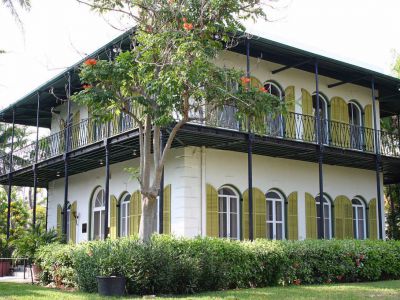
5) Ernest Hemingway Home & Museum (must see)
The Ernest Hemingway Home & Museum in Key West is the former residence of Ernest Hemingway, in which he lived from 1931 to 1939.
Presently a National Historic Landmark, this property was built in 1851 by a marine architect and salvage wrecker, Asa Tift. The beautiful French Colonial-style building features 18-inch-thick limestone walls, a metal roof, and large wrap-around verandas. The house was originally used as a family residence and later as a boarding house, a saloon, and a storage facility before it was purchased by Ernest Hemingway and his second wife, Pauline, in 1931.
The Hemingways lived here with their two sons. After their divorce in 1940, the writer moved to Cuba and later to Idaho, while Pauline continued living in the house until her death in 1951. Following that, the property remained vacant, although its ownership, in Hemingway's name, went on until the author's suicide in July 1961. Today, it represents an important part of his legacy.
During his time in this house, Hemingway wrote some of his best-received works, such as "The Green Hills of Africa," "To Have and Have Not," "The Snows of Kilimanjaro," and "For Whom the Bell Tolls."
Visitors to the museum can take a guided tour of the grounds, which include a lush garden and a swimming pool. The house is furnished with many of Hemingway's personal belongings, including his writing desk, typewriter, and hunting trophies.
One of the most famous features of the museum is its population of some 50 six-toed cats, which are believed to be the descendants of a cat named Snowball that was given to Hemingway by a ship's captain in the 1930s. Snowball was a polydactyl cat, meaning he had six toes on each paw instead of the usual five. Hemingway was so fascinated by the cat that he soon began acquiring more polydactyl cats. He believed they brought good luck and kept them as pets.
Today, the cats are considered an important part of the venue and a popular attraction – many a visitor come here specifically to see them. The cats are well-cared for by the museum staff and have their own veterinarian come twice a week to check on them.
Why You Should Visit:
The house is terrific, the Hemingway memorabilia is great, and the guided tour comes at no extra cost; you can afford yourself the time to explore the grounds (with a small pond) on your own, too.
Tip:
They only take cash at the door, so make sure you have some.
Don't miss the sad but adorable six-toed kitty graveyard in the back.
Presently a National Historic Landmark, this property was built in 1851 by a marine architect and salvage wrecker, Asa Tift. The beautiful French Colonial-style building features 18-inch-thick limestone walls, a metal roof, and large wrap-around verandas. The house was originally used as a family residence and later as a boarding house, a saloon, and a storage facility before it was purchased by Ernest Hemingway and his second wife, Pauline, in 1931.
The Hemingways lived here with their two sons. After their divorce in 1940, the writer moved to Cuba and later to Idaho, while Pauline continued living in the house until her death in 1951. Following that, the property remained vacant, although its ownership, in Hemingway's name, went on until the author's suicide in July 1961. Today, it represents an important part of his legacy.
During his time in this house, Hemingway wrote some of his best-received works, such as "The Green Hills of Africa," "To Have and Have Not," "The Snows of Kilimanjaro," and "For Whom the Bell Tolls."
Visitors to the museum can take a guided tour of the grounds, which include a lush garden and a swimming pool. The house is furnished with many of Hemingway's personal belongings, including his writing desk, typewriter, and hunting trophies.
One of the most famous features of the museum is its population of some 50 six-toed cats, which are believed to be the descendants of a cat named Snowball that was given to Hemingway by a ship's captain in the 1930s. Snowball was a polydactyl cat, meaning he had six toes on each paw instead of the usual five. Hemingway was so fascinated by the cat that he soon began acquiring more polydactyl cats. He believed they brought good luck and kept them as pets.
Today, the cats are considered an important part of the venue and a popular attraction – many a visitor come here specifically to see them. The cats are well-cared for by the museum staff and have their own veterinarian come twice a week to check on them.
Why You Should Visit:
The house is terrific, the Hemingway memorabilia is great, and the guided tour comes at no extra cost; you can afford yourself the time to explore the grounds (with a small pond) on your own, too.
Tip:
They only take cash at the door, so make sure you have some.
Don't miss the sad but adorable six-toed kitty graveyard in the back.
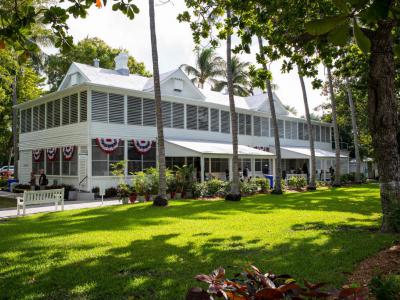
6) Harry S. Truman Little White House (must see)
Built in 1890 and originally waterfront, this used to be the First Officer's quarters on the submarine base naval station before turning into President Harry S. Truman's winter White House for 175 days during 11 visits. During such visits, Cabinet members and foreign officials were regular guests for fishing trips and poker games. More notably, Truman came here shortly after his 1948 re-election, on which occasion Division Street was renamed Truman Avenue in his honor.
In 1991, the house opened as a state historic site and museum. Today regular guided tours take visitors through the site, and one can enter the rooms where the Trumans lived, worked and relaxed. Items such as President's briefcase, books, telephone, and famous "The Buck Stops Here" sign are still at his desk. (The reverse of the sign says, "I'm From Missouri.")
Why You Should Visit:
Docents here are friendly and knowledgeable while the facility has all of the original furnishings for enhanced authenticity. It is also worthwhile exploring the Truman Annex area which is a beautifully landscaped part of Key West that many miss.
Tip:
Although the entry fee is rather steep, you have the option to purchase the tickets at the front and bundle them with one of the other attractions in Key West to save a few dollars (they take credit cards, too).
In 1991, the house opened as a state historic site and museum. Today regular guided tours take visitors through the site, and one can enter the rooms where the Trumans lived, worked and relaxed. Items such as President's briefcase, books, telephone, and famous "The Buck Stops Here" sign are still at his desk. (The reverse of the sign says, "I'm From Missouri.")
Why You Should Visit:
Docents here are friendly and knowledgeable while the facility has all of the original furnishings for enhanced authenticity. It is also worthwhile exploring the Truman Annex area which is a beautifully landscaped part of Key West that many miss.
Tip:
Although the entry fee is rather steep, you have the option to purchase the tickets at the front and bundle them with one of the other attractions in Key West to save a few dollars (they take credit cards, too).
