Custom Walk in Muscat, Oman by lfdaduran2273 created on 2025-09-04
Guide Location: Oman » Muscat
Guide Type: Custom Walk
# of Sights: 11
Tour Duration: 5 Hour(s)
Travel Distance: 11.2 Km or 7 Miles
Share Key: J5VMA
Guide Type: Custom Walk
# of Sights: 11
Tour Duration: 5 Hour(s)
Travel Distance: 11.2 Km or 7 Miles
Share Key: J5VMA
How It Works
Please retrieve this walk in the GPSmyCity app. Once done, the app will guide you from one tour stop to the next as if you had a personal tour guide. If you created the walk on this website or come to the page via a link, please follow the instructions below to retrieve the walk in the app.
Retrieve This Walk in App
Step 1. Download the app "GPSmyCity: Walks in 1K+ Cities" on Apple App Store or Google Play Store.



Step 2. In the GPSmyCity app, download(or launch) the guide "Muscat Map and Walking Tours".
Step 3. Tap the menu button located at upper right corner of the "Walks" screen and select "Retrieve custom walk". Enter the share key: J5VMA
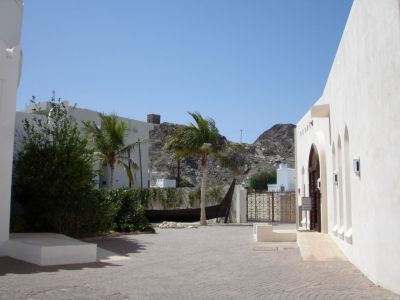
1) Bait Al-Zubair Museum (must see)
Bait Al Zubair Museum, established in 1998, is a cultural and heritage center that showcases the finest privately owned collection of Omani artifacts belonging to the Zubair family. The center has grown significantly since its inception, and it now boasts one of the most extensive heritage and permanent art collections in Oman. Bait Al Zubair offers an authentic insight into Oman's rich cultural heritage and is recognized by international museums and art galleries as a valuable learning and research resource on Omani heritage.
The complex, which includes six separate buildings and a garden with a miniature Omani village, an aflaj system, and a variety of indigenous plants and trees, is a serene and beautiful place to visit. The buildings themselves are as much a part of the collection as the thousands of artifacts on display.
Bait Al Zubair Museum houses a carefully curated, ever-evolving private collection that reflects Oman's cultural heritage and unique identity. The collection features traditional Omani weaponry, jewelry, costume, household utensils, and furniture, as well as early European maps and prints of the Arabian Peninsula and East Africa, early photographs, satellite images, coins, stamps, musical instruments, documents, manuscripts, and books.
The complex, which includes six separate buildings and a garden with a miniature Omani village, an aflaj system, and a variety of indigenous plants and trees, is a serene and beautiful place to visit. The buildings themselves are as much a part of the collection as the thousands of artifacts on display.
Bait Al Zubair Museum houses a carefully curated, ever-evolving private collection that reflects Oman's cultural heritage and unique identity. The collection features traditional Omani weaponry, jewelry, costume, household utensils, and furniture, as well as early European maps and prints of the Arabian Peninsula and East Africa, early photographs, satellite images, coins, stamps, musical instruments, documents, manuscripts, and books.
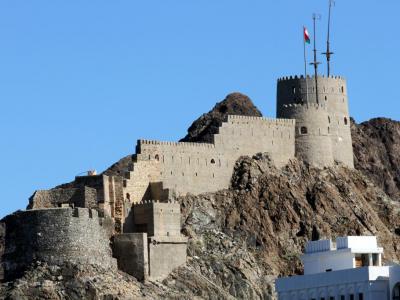
2) Muttrah Fort
Situated on the hills overlooking the natural harbor of Muttrah, Muttrah Fort is a historic fort in Muscat that served as a strategic defense point against attacks and a vantage point to monitor the surrounding area from its watchtowers. Its construction dates back to 1507 AD, but it was later reinforced with stronger walls and towers by the Portuguese during their occupation of Oman in the 1500s. Muttrah Fort remained a vital defensive location for centuries, including modern times.
Despite its relatively small size, Muttrah Fort offers multiple vantage points over the Muttrah corniche, harbor, and rocky ophiolite outcrops, making it a popular destination among tourists and locals alike. Visitors can admire the old cannons scattered on the ramparts and the slightly more modern WWII-era artillery guns. However, the fort lacks any rooms or seating areas and is simply stretched along the hill, which means a visit won't take much time. Nonetheless, the panoramic view of Muttrah Corniche is a sight not to be missed.
Despite its relatively small size, Muttrah Fort offers multiple vantage points over the Muttrah corniche, harbor, and rocky ophiolite outcrops, making it a popular destination among tourists and locals alike. Visitors can admire the old cannons scattered on the ramparts and the slightly more modern WWII-era artillery guns. However, the fort lacks any rooms or seating areas and is simply stretched along the hill, which means a visit won't take much time. Nonetheless, the panoramic view of Muttrah Corniche is a sight not to be missed.
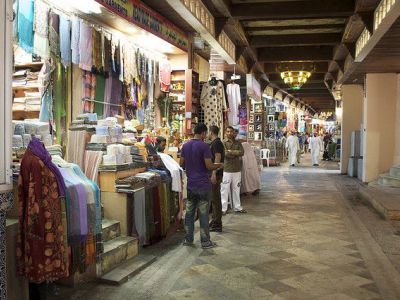
3) Old Muttrah Souk (Al Dhalam Souq) (must see)
The local name for the Muttrah Souq is Al Dhalam, which means darkness in Arabic. This historic marketplace, located in Muscat, is one of the oldest in the Arab world. It earned its name because the crowded stalls and narrow lanes are shielded from the sun, requiring lamps for shoppers to find their way around. Back in the 1960s, when life was simpler, the souq was the main source of supplies for Omanis. Local produce such as textiles, fruits, vegetables, and dates were sold alongside imported goods.
Originally constructed from mud and palm leaves, the market was designed to withstand the region's harsh climate and high temperatures. However, in recent years, the Muscat Municipality has renovated and embellished the souq to maintain its traditional charm while adding modern conveniences. The upgrades were aimed at attracting tourists and enhancing the shopping experience for locals.
During Eid, the souq bustles with activity as people from all over the country come to buy garments and jewelry. The main thoroughfare is filled with household goods, shoes, and ready-made garments. Further inside, the air is infused with the mixed fragrances of frankincense, perfume oils, fresh jasmine, and spices.
Originally constructed from mud and palm leaves, the market was designed to withstand the region's harsh climate and high temperatures. However, in recent years, the Muscat Municipality has renovated and embellished the souq to maintain its traditional charm while adding modern conveniences. The upgrades were aimed at attracting tourists and enhancing the shopping experience for locals.
During Eid, the souq bustles with activity as people from all over the country come to buy garments and jewelry. The main thoroughfare is filled with household goods, shoes, and ready-made garments. Further inside, the air is infused with the mixed fragrances of frankincense, perfume oils, fresh jasmine, and spices.

4) Fish Market
Located on the Mutrah waterfront in Muscat, the Mutrah Fish Market is a bustling working market where Omani fishermen arrive early in the morning to unload, prepare and sell their daily catch. Originally established as a small collection of stalls in 1960, the market has evolved over the years and now features a modern, wave-like building unveiled in September 2017.
For an awe-inspiring experience, visit the market in the early morning hours and observe the vendors meticulously washing and displaying a wide range of fresh fish for sale. Here, everyone from restaurant owners to individual shoppers engages in friendly bargaining battles. The market boasts an impressive array of marine creatures, including crabs, dorados, lobsters, prawns, tuna, and swordfish, among others.
If you prefer to cook your own seafood, purchase your desired fish and watch as the vendor quickly guts and scales it for you. Alternatively, enjoy a delicious seafood meal at the market's small restaurant that serves an assortment of local dishes. Additionally, the market offers a selection of fruit and vegetable stands, as well as a coffee shop where you can enjoy a cup of coffee seasoned with cloves or cardamom while observing the lively buying and selling.
For an awe-inspiring experience, visit the market in the early morning hours and observe the vendors meticulously washing and displaying a wide range of fresh fish for sale. Here, everyone from restaurant owners to individual shoppers engages in friendly bargaining battles. The market boasts an impressive array of marine creatures, including crabs, dorados, lobsters, prawns, tuna, and swordfish, among others.
If you prefer to cook your own seafood, purchase your desired fish and watch as the vendor quickly guts and scales it for you. Alternatively, enjoy a delicious seafood meal at the market's small restaurant that serves an assortment of local dishes. Additionally, the market offers a selection of fruit and vegetable stands, as well as a coffee shop where you can enjoy a cup of coffee seasoned with cloves or cardamom while observing the lively buying and selling.
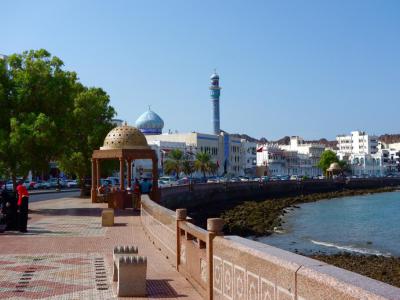
5) Muttrah Corniche
Muttrah Corniche is a must-see attraction for anyone visiting Muscat. This promenade stretches for three kilometers along the waterfront and is lined with restaurants, cafes, and markets. The views are breathtaking, with the Oman Port and harbor on one side and the stunning rock formations of the Hajar Mountains and Portuguese watchtowers on the other.
The northern end of the corniche features a fish market and a dhow harbor, where visitors can admire traditional Omani boats. Meanwhile, the eastern end of the harbor is dominated by Mutrah Fort, an impressive structure that unfortunately is closed to visitors. However, the flank of the fort can be climbed for more fantastic views of the harbor.
Muttrah Corniche's history is fascinating, as it was once Oman's principal port in the country's medieval maritime spice trade. Nowadays, the area has transformed into a bustling tourist destination with souks, shops, and restaurants where visitors and locals alike can soak in the old-time Arabian atmosphere.
The initiative to relocate the industrial elements of the port and redevelop the dockside for tourism is well underway, and the refurbishment of the fish market is complete. Additionally, the harbor is home to His Majesty's dhow, visiting cruise ships, and assorted naval vessels, making it an exciting place to visit.
Finally, sunset dhow cruises are a popular activity that allows visitors to see Muttrah Corniche at sundown when the setting sun bathes the corniche in gold. Whether strolling along the promenade, shopping at the markets, or admiring the views, Muttrah Corniche is a memorable destination that should not be missed.
The northern end of the corniche features a fish market and a dhow harbor, where visitors can admire traditional Omani boats. Meanwhile, the eastern end of the harbor is dominated by Mutrah Fort, an impressive structure that unfortunately is closed to visitors. However, the flank of the fort can be climbed for more fantastic views of the harbor.
Muttrah Corniche's history is fascinating, as it was once Oman's principal port in the country's medieval maritime spice trade. Nowadays, the area has transformed into a bustling tourist destination with souks, shops, and restaurants where visitors and locals alike can soak in the old-time Arabian atmosphere.
The initiative to relocate the industrial elements of the port and redevelop the dockside for tourism is well underway, and the refurbishment of the fish market is complete. Additionally, the harbor is home to His Majesty's dhow, visiting cruise ships, and assorted naval vessels, making it an exciting place to visit.
Finally, sunset dhow cruises are a popular activity that allows visitors to see Muttrah Corniche at sundown when the setting sun bathes the corniche in gold. Whether strolling along the promenade, shopping at the markets, or admiring the views, Muttrah Corniche is a memorable destination that should not be missed.
6) Watchtower
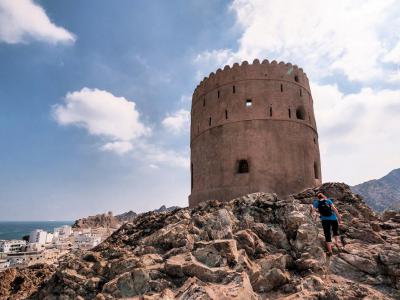
The Watchtower in Muscat is a captivating blend of modern architecture and historical importance, situated within the picturesque surroundings of Riyam Park. This contemporary white structure is designed to resemble an incense burner, honoring Oman's cultural heritage associated with incense trade and usage. Positioned strategically atop a hill along Bahri Road, the Watchtower provides visitors panoramic views of Matrah to Old Muscat, including the lively cityscape, the tranquil Arabian Sea, and the local architectural marvels.
Adding to its allure is the Watchtower's historical background as a renovated Portuguese watchtower, situated on a prominent promontory along Mutrah Corniche. This unique location offers clear views of the ocean and the scenic beauty of Mutrah's waterfront. The area between the Watchtower and the souq, especially along the Corniche, is a popular spot for locals and tourists to relish the evening breeze, surrounded by well-maintained flowerbeds and illuminated fountains at night.
Despite Muscat's impressive forts and palaces, the clifftop tower in Mutrah holds undeniable charm. A short climb up approximately 100 steps reveals the restored Portuguese lookout post, offering splendid views of Mutrah and the Riyam Monument. The historical significance of this site is palpable, with its strategic importance evident through the remaining cannons. The Watchtower in Muscat stands as a testament to the city's rich history, blending cultural richness with natural beauty.
Adding to its allure is the Watchtower's historical background as a renovated Portuguese watchtower, situated on a prominent promontory along Mutrah Corniche. This unique location offers clear views of the ocean and the scenic beauty of Mutrah's waterfront. The area between the Watchtower and the souq, especially along the Corniche, is a popular spot for locals and tourists to relish the evening breeze, surrounded by well-maintained flowerbeds and illuminated fountains at night.
Despite Muscat's impressive forts and palaces, the clifftop tower in Mutrah holds undeniable charm. A short climb up approximately 100 steps reveals the restored Portuguese lookout post, offering splendid views of Mutrah and the Riyam Monument. The historical significance of this site is palpable, with its strategic importance evident through the remaining cannons. The Watchtower in Muscat stands as a testament to the city's rich history, blending cultural richness with natural beauty.
7) Muscat Gate Museum
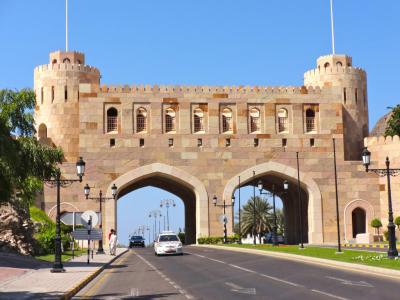
Situated in the heart of Old Muscat, the Muscat Gate Museum first opened its doors in January 2001. The museum showcases Oman's rich history from the Neolithic era to the present day and features numerous special exhibits on Muscat's water sources, including ancient wells, underground channels, souqs, houses, mosques, harbors, and forts.
Nestled above the Muscat Modern Gate, the museum offers a breathtaking view, accessible via a grand staircase leading up to its entrance. It provides visitors with an immersive experience of Oman's extensive history, with a particular focus on the capital city of Muscat. Guests can learn about the renowned Falaj irrigation system and the unique architecture of Oman, including the intricate niches found in mosques, halls, doors, and wooden arches.
The Muscat Gate Museum takes visitors on a captivating journey through the city's growth and development, from its origins as a bustling port to its status as a thriving capital. As a witness to Muscat's relics and history, the museum offers a comprehensive exploration of the city's fascinating past.
Nestled above the Muscat Modern Gate, the museum offers a breathtaking view, accessible via a grand staircase leading up to its entrance. It provides visitors with an immersive experience of Oman's extensive history, with a particular focus on the capital city of Muscat. Guests can learn about the renowned Falaj irrigation system and the unique architecture of Oman, including the intricate niches found in mosques, halls, doors, and wooden arches.
The Muscat Gate Museum takes visitors on a captivating journey through the city's growth and development, from its origins as a bustling port to its status as a thriving capital. As a witness to Muscat's relics and history, the museum offers a comprehensive exploration of the city's fascinating past.
8) Al Mirani Fort
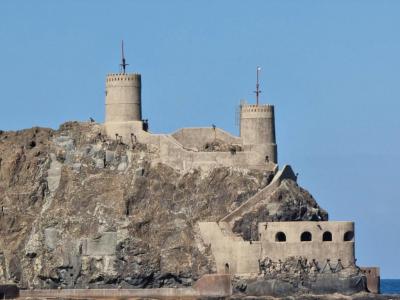
The fortification known as Al-Mirani Fort can be found in the harbor of Old Muscat. Originally constructed before the Portuguese invasion, it was later reconstructed by the Portuguese in 1587. Notably, Al-Mirani Fort was the first to utilize cannons in Oman.
Al-Mirani Fort holds an important place in history due to its involvement in the downfall of the Portuguese. According to legend, the Portuguese commander had fallen in love with the daughter of a Hindu supplier. However, the supplier refused the match due to religious reasons. When threatened with ruin, the supplier spent a year preparing for the wedding and convinced the commander that the fort's supplies needed to be replenished. He gradually removed all of the fort's gunpowder and grain until it was defenseless. The Omani imam, Sultan Bin Saif, then retook the fort in 1649, ousting the Portuguese from Muscat soon after. Although the wedding never took place, the fort played a crucial role in the Portuguese defeat.
Al-Mirani Fort is a significant tourist attraction in Oman due to its historical importance and stunning architecture. Despite being closed to the public, its imposing presence in the harbor contributes to the iconic view of Muscat that has been captured in 19th-century lithographs.
Al-Mirani Fort holds an important place in history due to its involvement in the downfall of the Portuguese. According to legend, the Portuguese commander had fallen in love with the daughter of a Hindu supplier. However, the supplier refused the match due to religious reasons. When threatened with ruin, the supplier spent a year preparing for the wedding and convinced the commander that the fort's supplies needed to be replenished. He gradually removed all of the fort's gunpowder and grain until it was defenseless. The Omani imam, Sultan Bin Saif, then retook the fort in 1649, ousting the Portuguese from Muscat soon after. Although the wedding never took place, the fort played a crucial role in the Portuguese defeat.
Al-Mirani Fort is a significant tourist attraction in Oman due to its historical importance and stunning architecture. Despite being closed to the public, its imposing presence in the harbor contributes to the iconic view of Muscat that has been captured in 19th-century lithographs.
9) Al-Alam Royal Palace (Sultan's Palace)
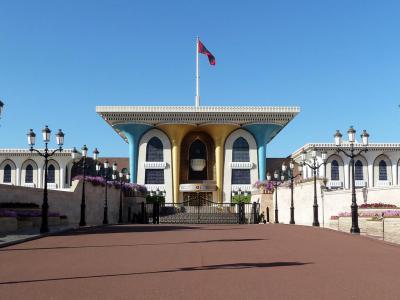
Situated in Old Muscat, the Al Alam Palace served as a ceremonial palace for Sultan Qaboos bin Said Al Said. The palace, which has a facade adorned with gold and blue, has a rich history of over two centuries, having been built under the supervision of Imam Sultan bin Ahmed, the 7th direct great-grandfather of Sultan Haitham.
In 1972, the palace was reconstructed to serve as a royal residence. While the palace's inner grounds remain off-limits to the public, visitors are permitted to take photographs near the gates. The Mirani and Jalali Forts, constructed by the Portuguese in the 16th century, surround the Al Alam Palace.
The palace is used for official events and plays host to notable guests. During her state visit to Oman in January 2012, Queen Beatrix of the Netherlands was received by the sultan at the Al Alam Palace.
Renowned author Peter J. Ochs described the palace as "elegant but humble in design, unlike the grandiose structures of other capitals," when visitors approach the palace gates. The palace's highly polished marble surfaces add to its elegance. Government buildings nearby follow the traditional Omani style with white exteriors, crenelated rooftops, and wooden balconies. Although primarily a ceremonial palace, a guest villa within the palace's grounds features its own pool, spa, and walled gardens.
In 1972, the palace was reconstructed to serve as a royal residence. While the palace's inner grounds remain off-limits to the public, visitors are permitted to take photographs near the gates. The Mirani and Jalali Forts, constructed by the Portuguese in the 16th century, surround the Al Alam Palace.
The palace is used for official events and plays host to notable guests. During her state visit to Oman in January 2012, Queen Beatrix of the Netherlands was received by the sultan at the Al Alam Palace.
Renowned author Peter J. Ochs described the palace as "elegant but humble in design, unlike the grandiose structures of other capitals," when visitors approach the palace gates. The palace's highly polished marble surfaces add to its elegance. Government buildings nearby follow the traditional Omani style with white exteriors, crenelated rooftops, and wooden balconies. Although primarily a ceremonial palace, a guest villa within the palace's grounds features its own pool, spa, and walled gardens.
10) Al Jalali Fort
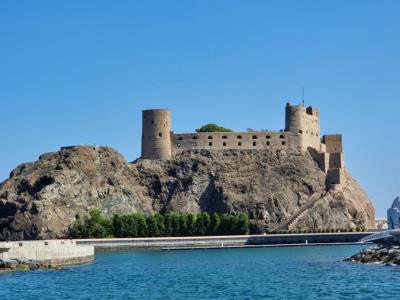
Al Jalali Fort is a historic castle located in the city of Muscat. The fort was built during the 16th century by the Portuguese and served as a military stronghold to protect the city from invaders. Today, it is one of the most popular tourist destinations in Oman and offers visitors a glimpse into the country's rich history.
The fort is situated on a rocky outcrop overlooking the Gulf of Oman and is accessible only by a steep staircase that leads up to its entrance. Despite its small size, the fort is well-fortified and boasts thick walls, towers, and cannons. The fort has been well-maintained over the centuries, and its current state is a testament to the craftsmanship of the Portuguese builders.
Al Jalali Fort has served many purposes over the centuries. It was used as a military base by the Portuguese, and later by the Omanis. In the 20th century, the fort was converted into a prison and remained so until 1970. Today, the fort is open to the public and is home to a museum that showcases Omani culture and history. The museum exhibits a range of artifacts, including traditional clothing, jewelry, and weapons, and provides visitors with an opportunity to learn about the rich cultural heritage of Oman.
Visitors to Al Jalali Fort can enjoy stunning views of the Gulf of Oman and the surrounding landscape. The fort is also a popular spot for photography, with many visitors capturing memorable photos of the fort and its surroundings. The fort is a must-visit destination for anyone interested in history and architecture, and it provides a unique glimpse into Oman's past.
The fort is situated on a rocky outcrop overlooking the Gulf of Oman and is accessible only by a steep staircase that leads up to its entrance. Despite its small size, the fort is well-fortified and boasts thick walls, towers, and cannons. The fort has been well-maintained over the centuries, and its current state is a testament to the craftsmanship of the Portuguese builders.
Al Jalali Fort has served many purposes over the centuries. It was used as a military base by the Portuguese, and later by the Omanis. In the 20th century, the fort was converted into a prison and remained so until 1970. Today, the fort is open to the public and is home to a museum that showcases Omani culture and history. The museum exhibits a range of artifacts, including traditional clothing, jewelry, and weapons, and provides visitors with an opportunity to learn about the rich cultural heritage of Oman.
Visitors to Al Jalali Fort can enjoy stunning views of the Gulf of Oman and the surrounding landscape. The fort is also a popular spot for photography, with many visitors capturing memorable photos of the fort and its surroundings. The fort is a must-visit destination for anyone interested in history and architecture, and it provides a unique glimpse into Oman's past.

11) National Museum
Situated in the heart of Muscat, the National Museum of the Sultanate of Oman is a flagship cultural institution that showcases the nation’s heritage from the earliest human settlement in the Oman Peninsula to the present day. Established by a royal decree in 2013, the museum was developed over ten years of collaboration between the Ministry of Heritage and Culture, the Royal Estate Affairs of Oman, Jasper Jacob Associates, and Arts Architecture International Ltd. It opened its doors to the public on July 30, 2016.
The museum boasts an impressive collection of 5,466 objects, including a significant collection of prehistoric metallic artifacts. Its curator, Mouza Sulaiman Mohamed Al-Wardi, is part of an international team exploring the legacy of Oman's silver working tradition, which historically included women as silversmiths.
Designed with state-of-the-art infrastructure, the museum offers 43 digital immersive experiences, a learning center, conservation facilities, an ultra-high definition cinema, and discovery areas for children. One of its unique features is an open-plan museum storage concept, where visitors can learn about the various processes that artifacts go through before they are put on display. The museum is also the first in the Middle East to adopt Arabic Braille script for the visually impaired, and it provides integrated infrastructure for special needs.
The purpose-built museum building spans 13,700 square meters (147,000 square feet), including 4,000 square meters (43,000 square feet) dedicated to 14 permanent galleries, and an additional 400 square meters (4,300 square feet) for temporary exhibitions. With its impressive collection, modern facilities, and commitment to accessibility, the National Museum of the Sultanate of Oman is a must-visit destination for anyone interested in Oman's rich cultural heritage.
The museum boasts an impressive collection of 5,466 objects, including a significant collection of prehistoric metallic artifacts. Its curator, Mouza Sulaiman Mohamed Al-Wardi, is part of an international team exploring the legacy of Oman's silver working tradition, which historically included women as silversmiths.
Designed with state-of-the-art infrastructure, the museum offers 43 digital immersive experiences, a learning center, conservation facilities, an ultra-high definition cinema, and discovery areas for children. One of its unique features is an open-plan museum storage concept, where visitors can learn about the various processes that artifacts go through before they are put on display. The museum is also the first in the Middle East to adopt Arabic Braille script for the visually impaired, and it provides integrated infrastructure for special needs.
The purpose-built museum building spans 13,700 square meters (147,000 square feet), including 4,000 square meters (43,000 square feet) dedicated to 14 permanent galleries, and an additional 400 square meters (4,300 square feet) for temporary exhibitions. With its impressive collection, modern facilities, and commitment to accessibility, the National Museum of the Sultanate of Oman is a must-visit destination for anyone interested in Oman's rich cultural heritage.
