Custom Walk in Aix-en-Provence, France by chrisortego_ceb69 created on 2025-09-30
Guide Location: France » Aix-en-Provence
Guide Type: Custom Walk
# of Sights: 6
Tour Duration: 1 Hour(s)
Travel Distance: 2.1 Km or 1.3 Miles
Share Key: S9QGV
Guide Type: Custom Walk
# of Sights: 6
Tour Duration: 1 Hour(s)
Travel Distance: 2.1 Km or 1.3 Miles
Share Key: S9QGV
How It Works
Please retrieve this walk in the GPSmyCity app. Once done, the app will guide you from one tour stop to the next as if you had a personal tour guide. If you created the walk on this website or come to the page via a link, please follow the instructions below to retrieve the walk in the app.
Retrieve This Walk in App
Step 1. Download the app "GPSmyCity: Walks in 1K+ Cities" on Apple App Store or Google Play Store.



Step 2. In the GPSmyCity app, download(or launch) the guide "Aix-en-Provence Map and Walking Tours".
Step 3. Tap the menu button located at upper right corner of the "Walks" screen and select "Retrieve custom walk". Enter the share key: S9QGV
1) Atelier de Cezanne (Cezanne's Studio) (must see)
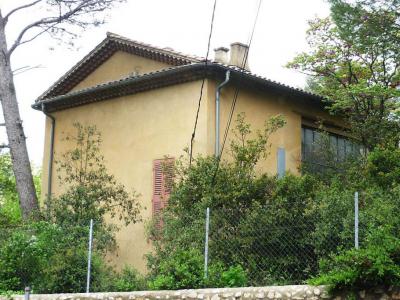
Head uphill from the city, and you'll find what might be the quietest place in Aix with the loudest artistic legacy-Cézanne’s Studio. Perched on Lauves Hill, this was Paul Cézanne’s creative headquarters from 1902 until his death in 1906. No gallery glitz here-just the real deal, exactly where he stood, mixed his paints, and glared at fruit until it revealed its geometric truth.
After his mother passed away and the family estate was sold, Cézanne bought an old farmhouse with a generous patch of land and a postcard view of his muse-Mountain Saint-Victoire. He added a studio upstairs with big south-facing windows and a glass roof to let in that famously moody Provence light. Downstairs was for living, upstairs was for working. The layout proved worthwhile as the result was paintings like The Bathers, still studied and swooned over.
When Cézanne died, the studio passed to his son, who eventually sold it to writer Marcel Provence. Luckily, Provence was the sentimental type-he left the studio just as Cézanne had, and artists and historians made quiet pilgrimages to soak in the genius vibes. After Provence’s death, art historian John Rewald and writer James Lord rallied to buy and preserve the site. By 1952, the Cézanne Memorial Committee had turned the place into a museum.
Today, it’s owned by the Aix-en-Provence Tourist Office and recognized as a House of the Illustrious-which is France’s fancy way of saying “Yes, this place really matters.” Inside, you’ll find Cézanne’s brushes, easel, still-life props, and a sense of paused time. Temporary exhibits rotate through, but the real magic is standing in the room where modern art found its backbone.
After his mother passed away and the family estate was sold, Cézanne bought an old farmhouse with a generous patch of land and a postcard view of his muse-Mountain Saint-Victoire. He added a studio upstairs with big south-facing windows and a glass roof to let in that famously moody Provence light. Downstairs was for living, upstairs was for working. The layout proved worthwhile as the result was paintings like The Bathers, still studied and swooned over.
When Cézanne died, the studio passed to his son, who eventually sold it to writer Marcel Provence. Luckily, Provence was the sentimental type-he left the studio just as Cézanne had, and artists and historians made quiet pilgrimages to soak in the genius vibes. After Provence’s death, art historian John Rewald and writer James Lord rallied to buy and preserve the site. By 1952, the Cézanne Memorial Committee had turned the place into a museum.
Today, it’s owned by the Aix-en-Provence Tourist Office and recognized as a House of the Illustrious-which is France’s fancy way of saying “Yes, this place really matters.” Inside, you’ll find Cézanne’s brushes, easel, still-life props, and a sense of paused time. Temporary exhibits rotate through, but the real magic is standing in the room where modern art found its backbone.
2) Cathedrale Saint-Sauveur d'Aix-en-Provence (Aix Cathedral) (must see)
Seventeenth-century writer Jean Pitton claimed that Aix Cathedral rose where a Roman temple to Apollo once stood-proof that even the gods can’t hold onto prime real estate forever. The site’s first church was reportedly founded around 500 AD by Saint Maximinus, who, according to tradition, arrived from Jerusalem with Mary Magdalene in a boat generously lent by Saint Lazarus. Apparently divine Uber was a thing back then.
The cathedral we see today took root in the 12th century with a solid Romanesque nave. Then came a second one in 1171, dedicated to Saint Maximinus himself, squeezing in between the original nave and baptistry like a holy architectural remix. The 14th century brought more flair, with a Gothic-style transept added in 1318-clearly, Aix was keeping up with cathedral trends.
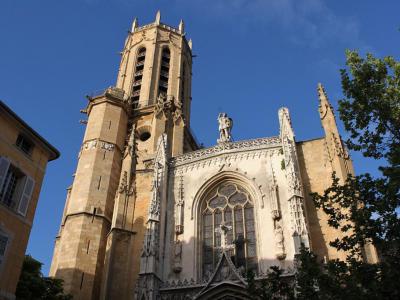
Outside, the façade is a theatrical display of late Gothic drama: pointed arches, slim yellowish buttresses, and twelve Apostles playing hide-and-seek in the niches-three upfront, the rest loitering in the wings. Above it all, Archangel Michael takes center stage, dramatically skewering a dragon atop the balustrade. The walnut portal doors, carved in 1505, add a final flourish of detail, leading into a space that juggles three styles-Romanesque on one side, Gothic down the middle, and Baroque along the north.
Inside, it’s not just architecture on show. You’ll find the 5th-century baptistry with Roman columns still holding their ground, plus a high altar supported by bronze figures of the Holy Trinity. The walls display works by Nicolas Froment, Jean Daret, and Louis Finson-a follower of Caravaggio known for his dramatic flair. One standout treasure is a set of 16th-century tapestries, originally woven for Canterbury Cathedral and brought to Aix long before international art loans became the norm.
And then there’s Cézanne. The hometown icon, who once called Aix the best place to live, painted the cathedral repeatedly from a spot just a short walk from his studio.When he died in 1906, it was here-under the watch of archangels, apostles, and centuries of layered stone-that he took his final bow.
The cathedral we see today took root in the 12th century with a solid Romanesque nave. Then came a second one in 1171, dedicated to Saint Maximinus himself, squeezing in between the original nave and baptistry like a holy architectural remix. The 14th century brought more flair, with a Gothic-style transept added in 1318-clearly, Aix was keeping up with cathedral trends.
Outside, the façade is a theatrical display of late Gothic drama: pointed arches, slim yellowish buttresses, and twelve Apostles playing hide-and-seek in the niches-three upfront, the rest loitering in the wings. Above it all, Archangel Michael takes center stage, dramatically skewering a dragon atop the balustrade. The walnut portal doors, carved in 1505, add a final flourish of detail, leading into a space that juggles three styles-Romanesque on one side, Gothic down the middle, and Baroque along the north.
Inside, it’s not just architecture on show. You’ll find the 5th-century baptistry with Roman columns still holding their ground, plus a high altar supported by bronze figures of the Holy Trinity. The walls display works by Nicolas Froment, Jean Daret, and Louis Finson-a follower of Caravaggio known for his dramatic flair. One standout treasure is a set of 16th-century tapestries, originally woven for Canterbury Cathedral and brought to Aix long before international art loans became the norm.
And then there’s Cézanne. The hometown icon, who once called Aix the best place to live, painted the cathedral repeatedly from a spot just a short walk from his studio.When he died in 1906, it was here-under the watch of archangels, apostles, and centuries of layered stone-that he took his final bow.
3) Place de l'Hôtel de Ville (Town Hall Square) (must see)
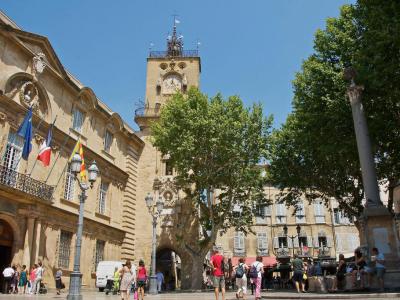
Town Hall Square may sound like bureaucracy central, but in Aix-en-Provence, it’s where history and art come together in a picturesque standoff. This central square has been keeping civic life scenic since the 14th century-though the current Town Hall, finished in 1678, is the spruced-up version by architect Pierre Pavillon. Bonus trivia: Paul Cézanne, tied the knot here in 1886. Romance and paperwork-two Provence traditions.
Towering above the square is the Clock Tower, built in 1510 from white limestone and accessorized with an astronomical clock from 1661. It also sports a medieval bell once used to enforce feudal dues-a cheerful reminder that history is full of taxes in disguise. Think of it as a giant stone calendar that occasionally scolds peasants.
Right beside the Town Hall sits the former Corn Exchange Hall, an 18th-century building that clearly believed grain deserved glamour. Now repurposed as a library and post office, it continues to deliver-just with books and stamps. Sorry, no more corn. Anchoring the square is a glorious fountain by Jean Chastel, topped with a Roman column from 1755, adding a touch of imperial flair to your afternoon amble.
Today, the square balances old-world elegance with everyday charm. You’ll find café tables spilling into the cobbles, a flower market in full bloom on Tuesdays, Thursdays, and Saturdays, and a book fair on the first Sunday of every month. Bureaucracy has never looked this lovely.
Towering above the square is the Clock Tower, built in 1510 from white limestone and accessorized with an astronomical clock from 1661. It also sports a medieval bell once used to enforce feudal dues-a cheerful reminder that history is full of taxes in disguise. Think of it as a giant stone calendar that occasionally scolds peasants.
Right beside the Town Hall sits the former Corn Exchange Hall, an 18th-century building that clearly believed grain deserved glamour. Now repurposed as a library and post office, it continues to deliver-just with books and stamps. Sorry, no more corn. Anchoring the square is a glorious fountain by Jean Chastel, topped with a Roman column from 1755, adding a touch of imperial flair to your afternoon amble.
Today, the square balances old-world elegance with everyday charm. You’ll find café tables spilling into the cobbles, a flower market in full bloom on Tuesdays, Thursdays, and Saturdays, and a book fair on the first Sunday of every month. Bureaucracy has never looked this lovely.
4) Cours Mirabeau (Mirabeau Boulevard) (must see)
Gabriel Riqueti, Count of Mirabeau, was a man of big gestures and even bigger contradictions. He spoke for liberty, flirted with monarchy, and somehow managed to represent Aix at the General Assembly in 1789 without burning any bridges-at least not immediately. When he died in 1791, France collectively put down its quills and mourned.
A few decades and revolutions later, Aix named its most iconic street after him: Mirabeau Boulevard. Back in 1649, however, this grand promenade was just a gleam in Archbishop Michel Mazarin’s eye. With the city bursting at the seams, Mazarin tore down the southern ramparts to build a tree-lined thoroughfare fit for gilded carriages, powdered wigs, and Sunday strolls. Architect Jean Lombard helped draft the blueprint for this upscale expansion, turning what was once a defense wall into something much more stylish.
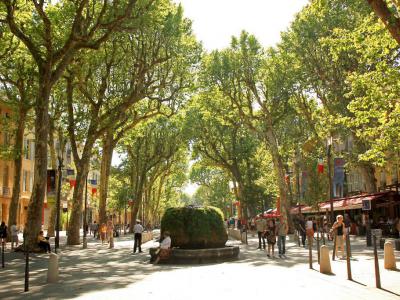
It took fifteen years of rubble removal to make way for the noble set, but the result still impresses: a leafy tunnel of plane trees lined with elegant mansions, wrought-iron balconies, and enough cafés to caffeinate all of Provence. The name “Mirabeau” wasn’t slapped on until 1876, but the spirit of grandeur had been there from the beginning.
Fountains punctuate the boulevard like commas in a particularly well-watered sentence. There’s the showy Fountain of the Rotunda at one end, the Fountain of the Nine Canons mid-way, and the Mossy Fountain, which looks exactly like it sounds. As for the Fountain of the Seahorses, it vanished in 1777; today, only a stony lump remains to tell the tale.
A statue of King René marks the east end of the boulevard, looking pleased with the view-shopfronts now outnumber mansions, but the Boulevard still holds its swagger. Like its namesake, it doesn’t quite pick a side-bourgeois polish, revolutionary echoes, and a strong preference for table service.
A few decades and revolutions later, Aix named its most iconic street after him: Mirabeau Boulevard. Back in 1649, however, this grand promenade was just a gleam in Archbishop Michel Mazarin’s eye. With the city bursting at the seams, Mazarin tore down the southern ramparts to build a tree-lined thoroughfare fit for gilded carriages, powdered wigs, and Sunday strolls. Architect Jean Lombard helped draft the blueprint for this upscale expansion, turning what was once a defense wall into something much more stylish.
It took fifteen years of rubble removal to make way for the noble set, but the result still impresses: a leafy tunnel of plane trees lined with elegant mansions, wrought-iron balconies, and enough cafés to caffeinate all of Provence. The name “Mirabeau” wasn’t slapped on until 1876, but the spirit of grandeur had been there from the beginning.
Fountains punctuate the boulevard like commas in a particularly well-watered sentence. There’s the showy Fountain of the Rotunda at one end, the Fountain of the Nine Canons mid-way, and the Mossy Fountain, which looks exactly like it sounds. As for the Fountain of the Seahorses, it vanished in 1777; today, only a stony lump remains to tell the tale.
A statue of King René marks the east end of the boulevard, looking pleased with the view-shopfronts now outnumber mansions, but the Boulevard still holds its swagger. Like its namesake, it doesn’t quite pick a side-bourgeois polish, revolutionary echoes, and a strong preference for table service.
5) Hotel de Caumont (Caumont Hotel) (must see)
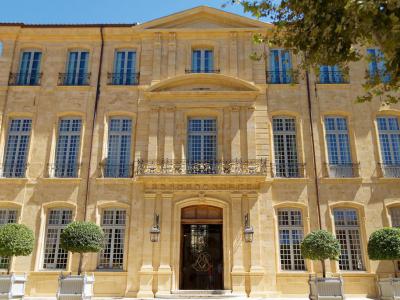
The Caumont Hotel may sound like a boutique stay with extra fluff pillows, but it's actually one of Aix’s finest 18th-century mansions-now operating as an art centre. Designed in 1715 by Robert de Cotte and Georges Vallon for the Marquess of Cabannes, the residence comes complete with an imposing entrance flanked by an Atlas sculpture courtesy of Rambot and Toro-yes, real sculptors, not a circus duo.
Over the centuries, the place rotated through various hands, eventually landing with the city of Aix in 1964. It moonlighted as a post office until 1970, and then hosted the Darius Milhaud Conservatory-proof that this house has always had good acoustics and a social calendar. The original owners of this Mazarin Quarter gem weren’t shy about entertaining either; they even had rooms dedicated just to music and mingling.
Inside, it’s all aristocratic finesse -curvy decorations, playful ceiling angels, and the frame of a harpsichord by Jean-Henri Naderman, because no proper 18th-century evening skipped the string section. The bedrooms feature cozy nooks, private corners, and wall monkeys that look like they wandered in from someone’s exotic daydream.
Outside, there’s an impressive courtyard, over 1,000 square meters of sculpted gardens, and an indoor fountain doing its best impression of refined understatement. Temporary exhibitions fill the elegant halls, along with a gift shop and a pocket-sized theatre-because this mansion really does have it all.
Over the centuries, the place rotated through various hands, eventually landing with the city of Aix in 1964. It moonlighted as a post office until 1970, and then hosted the Darius Milhaud Conservatory-proof that this house has always had good acoustics and a social calendar. The original owners of this Mazarin Quarter gem weren’t shy about entertaining either; they even had rooms dedicated just to music and mingling.
Inside, it’s all aristocratic finesse -curvy decorations, playful ceiling angels, and the frame of a harpsichord by Jean-Henri Naderman, because no proper 18th-century evening skipped the string section. The bedrooms feature cozy nooks, private corners, and wall monkeys that look like they wandered in from someone’s exotic daydream.
Outside, there’s an impressive courtyard, over 1,000 square meters of sculpted gardens, and an indoor fountain doing its best impression of refined understatement. Temporary exhibitions fill the elegant halls, along with a gift shop and a pocket-sized theatre-because this mansion really does have it all.
6) Musee Granet (Granet Museum) (must see)
Henri Pointier, curator of the Aix museum from 1892 to 1925, was no fan of Cézanne. In fact, he reportedly swore the painter’s work would only hang there “over my dead body.” Wish granted: Pointier died in 1949, and within months, the museum started collecting Cézannes like overdue apologies. That same year, it also rebranded as Granet Museum, in honor of local artist and major benefactor François-Marius Granet.
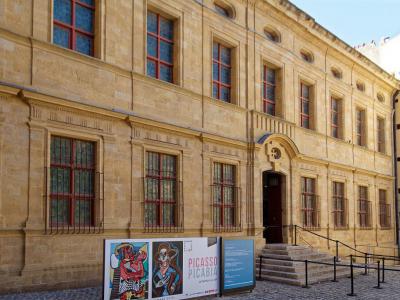
The museum itself occupies the former priory of Saint John's Church and still shares a peaceful garden with the neighboring church-a rare case of art and religion staying civil. In 2009, it mounted a centenary exhibition of Cézanne’s death, turning the whole affair into poetic payback.
Among the collection: works by Ingres (his thunderous Jupiter and Thetis included), a self-portrait by Rembrandt, pieces by Van Dyck, Giacometti, and yes, Cézanne-front and center at last.
In 2011, the Jean and Suzanne Planque Foundation kicked off a long-term show at the museum with over 180 works from the late Swiss collector’s archive. Eventually topping 300 pieces, the collection includes heavy-hitters like Degas, Renoir, Monet, Van Gogh, Picasso and Dubuffet. The ensemble now lives in a dedicated annex: the beautifully repurposed Chapel of the White Penitents-where penance meets prestige.
The museum itself occupies the former priory of Saint John's Church and still shares a peaceful garden with the neighboring church-a rare case of art and religion staying civil. In 2009, it mounted a centenary exhibition of Cézanne’s death, turning the whole affair into poetic payback.
Among the collection: works by Ingres (his thunderous Jupiter and Thetis included), a self-portrait by Rembrandt, pieces by Van Dyck, Giacometti, and yes, Cézanne-front and center at last.
In 2011, the Jean and Suzanne Planque Foundation kicked off a long-term show at the museum with over 180 works from the late Swiss collector’s archive. Eventually topping 300 pieces, the collection includes heavy-hitters like Degas, Renoir, Monet, Van Gogh, Picasso and Dubuffet. The ensemble now lives in a dedicated annex: the beautifully repurposed Chapel of the White Penitents-where penance meets prestige.
