Custom Walk in Atlanta, Georgia by ppollock2_3dba3 created on 2025-10-13
Guide Location: USA » Atlanta
Guide Type: Custom Walk
# of Sights: 6
Tour Duration: 8 Hour(s)
Travel Distance: 23 Km or 14.3 Miles
Share Key: PEJ9F
Guide Type: Custom Walk
# of Sights: 6
Tour Duration: 8 Hour(s)
Travel Distance: 23 Km or 14.3 Miles
Share Key: PEJ9F
How It Works
Please retrieve this walk in the GPSmyCity app. Once done, the app will guide you from one tour stop to the next as if you had a personal tour guide. If you created the walk on this website or come to the page via a link, please follow the instructions below to retrieve the walk in the app.
Retrieve This Walk in App
Step 1. Download the app "GPSmyCity: Walks in 1K+ Cities" on Apple App Store or Google Play Store.



Step 2. In the GPSmyCity app, download(or launch) the guide "Atlanta Map and Walking Tours".
Step 3. Tap the menu button located at upper right corner of the "Walks" screen and select "Retrieve custom walk". Enter the share key: PEJ9F

1) The Center (must see)
The building now known simply as The Center remains a prominent part of Atlanta’s skyline, though its long-standing association with CNN reached its final chapter in early 2024. After nearly four decades as the global headquarters for the 24-hour news network, CNN completed its relocation, marking the end of an era that closely tied the site to broadcast journalism and international media. Today, the building is no longer a functioning news hub but is undergoing a major transformation into a premier mixed-use destination under the ownership of CP Group.
Originally developed in the early 1970s as the Omni Complex, the structure was conceived as a large-scale urban centerpiece combining hotel, arena, and public gathering space. Its vast enclosed atrium-once among the largest in the world-set the tone for the building’s identity as a place designed to impress, circulate crowds, and host large public events. That spatial ambition carried through its CNN years, when live broadcasts, studio windows, and constant foot traffic turned the interior into a rare blend of newsroom and tourist attraction.
Today, the downtown site is being reimagined as a hub for world-class dining, retail, and entertainment, positioned as a gateway between Centennial Olympic Park and State Farm Arena. The redevelopment focuses on activating the ground level and opening the building more directly to the surrounding streetscape, with the goal of reconnecting it to Atlanta’s pedestrian flow and major event venues.
While the building’s purpose has shifted, its most famous architectural feature remains a point of distinction. The 196-foot freestanding escalator-once the starting point of the CNN Studio Tour-is officially recognized by Guinness World Records as the longest of its kind in the world. Although the guided tours that made it famous were permanently discontinued, both the escalator and the soaring atrium remain central to the renovation plans, now envisioned as part of a more open and welcoming public zone known as Hawks Plaza.
New dining concepts, event-ready gathering spaces, and interactive digital art installations-developed in collaboration with the Savannah College of Art and Design-are being introduced to give the interior a contemporary cultural edge. Even without its namesake news organization, The Center continues to function as a visual anchor for downtown Atlanta, bridging its media legacy with a new role in the city’s entertainment and urban life.
Originally developed in the early 1970s as the Omni Complex, the structure was conceived as a large-scale urban centerpiece combining hotel, arena, and public gathering space. Its vast enclosed atrium-once among the largest in the world-set the tone for the building’s identity as a place designed to impress, circulate crowds, and host large public events. That spatial ambition carried through its CNN years, when live broadcasts, studio windows, and constant foot traffic turned the interior into a rare blend of newsroom and tourist attraction.
Today, the downtown site is being reimagined as a hub for world-class dining, retail, and entertainment, positioned as a gateway between Centennial Olympic Park and State Farm Arena. The redevelopment focuses on activating the ground level and opening the building more directly to the surrounding streetscape, with the goal of reconnecting it to Atlanta’s pedestrian flow and major event venues.
While the building’s purpose has shifted, its most famous architectural feature remains a point of distinction. The 196-foot freestanding escalator-once the starting point of the CNN Studio Tour-is officially recognized by Guinness World Records as the longest of its kind in the world. Although the guided tours that made it famous were permanently discontinued, both the escalator and the soaring atrium remain central to the renovation plans, now envisioned as part of a more open and welcoming public zone known as Hawks Plaza.
New dining concepts, event-ready gathering spaces, and interactive digital art installations-developed in collaboration with the Savannah College of Art and Design-are being introduced to give the interior a contemporary cultural edge. Even without its namesake news organization, The Center continues to function as a visual anchor for downtown Atlanta, bridging its media legacy with a new role in the city’s entertainment and urban life.
2) Piedmont Park (must see)
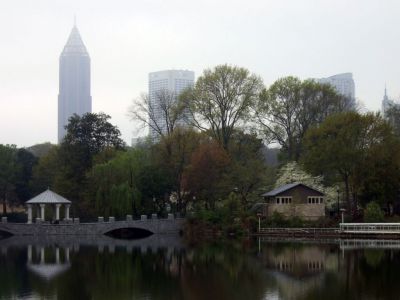
Nestled in the heart of Atlanta, Piedmont Park stands as a treasured green oasis that beckons visitors from near and far. This urban retreat has a rich history that dates back to its days as a Civil War encampment and a farm. The park's transformation began in 1895 when the elite Gentlemen's Driving Club purchased the property as a venue for horseback riding and racing, as well as a site for the Cotton States and International Exposition. Over the years, Piedmont Park has evolved into a beloved 189-acre city park that features rolling hillsides, lush forests, and a serene lake.
Nowadays, Piedmont Park attracts visitors with its endless array of recreational activities, including jogging, skating, cycling, swimming, softball, and soccer. Visitors can also catch one of the many popular events held at the park, from concerts to music festivals. The park's PlayScape, a climbable sculpture created by famous sculptor Isamu Noguchi, is a must-visit for families with children.
A visit here wouldn't be complete without admiring the magnificent skyline of Midtown Atlanta beyond. The park's close proximity to the Atlanta Botanical Garden makes it easy to combine these two attractions into one fun-filled day.
Why You Should Visit:
Large open space, many weekend activities (concerts, art fairs, farmers market), public pool and lots of paths alongside acres of well-kept grass.
Home of the Atlanta Jazz Festival and many other events that come into the city.
The city skyline backdrop makes for an outstanding sunset.
Tip:
Small restaurant at one end of the park has good food and a good beer selection.
Nowadays, Piedmont Park attracts visitors with its endless array of recreational activities, including jogging, skating, cycling, swimming, softball, and soccer. Visitors can also catch one of the many popular events held at the park, from concerts to music festivals. The park's PlayScape, a climbable sculpture created by famous sculptor Isamu Noguchi, is a must-visit for families with children.
A visit here wouldn't be complete without admiring the magnificent skyline of Midtown Atlanta beyond. The park's close proximity to the Atlanta Botanical Garden makes it easy to combine these two attractions into one fun-filled day.
Why You Should Visit:
Large open space, many weekend activities (concerts, art fairs, farmers market), public pool and lots of paths alongside acres of well-kept grass.
Home of the Atlanta Jazz Festival and many other events that come into the city.
The city skyline backdrop makes for an outstanding sunset.
Tip:
Small restaurant at one end of the park has good food and a good beer selection.

3) Atlanta Botanical Garden (must see)
Nestled in the heart of Atlanta, Georgia, this Botanical Garden is a verdant paradise that spans over 30 acres. Since its inception in 1976, it has flourished into a cherished destination for visitors from near and far, drawing over 400,000 nature enthusiasts each year. With a wide range of plant species and flower varieties from around the globe, the garden is a sensory delight for all who stroll its paths. Its rotating art installations, seasonal displays, and special events ensure there's always something new to discover.
The Atlanta Botanical Garden features a diverse array of themed gardens, each with its own unique character and atmosphere. Of these, one of the most popular is the Japanese Garden, which offers visitors a tranquil retreat complete with waterfalls, a koi pond, and an authentic Japanese tea house. The Edible Garden showcases a variety of herbs, fruits, and vegetables and provides visitors with inspiration for sustainable and organic gardening. The Children's Garden is a whimsical space designed for young visitors, with interactive exhibits, a splash pad, and a canopy walk. The Conservation Garden highlights the importance of biodiversity and sustainability and features rare and endangered plants. The Storza Woods, a woodland garden, showcases native plants and provides a glimpse into the diverse flora and fauna of Georgia. Finally, the Orchid Display House offers visitors a breathtaking collection of orchids from around the world, showcasing the beauty and diversity of these exquisite flowers.
Whether you're interested in nature, history, or simply exploring new environments, the themed gardens at the Atlanta Botanical Garden provide an immersive experience that delights and inspires visitors of all ages.
Why You Should Visit:
Very large garden with some beautiful places to stop. The indoor gardens (Orchid Display House, Conservation Garden, ...) behind the Great Lawn are all must-sees.
The Fuqua Conservatory is one of the 5 best in the U.S., and the Cascades Garden with the Earth Goddess living plant sculpture is beautiful as well!
Tips:
Thursday night (during the summer until end of October) is a great time to visit as the Garden is open late and you can see the skyline lit up from the Skyline Garden.
Have a small flashlight at hand as some of the areas are dark at night, and make sure you pick up a map at the entrance.
The Atlanta Botanical Garden features a diverse array of themed gardens, each with its own unique character and atmosphere. Of these, one of the most popular is the Japanese Garden, which offers visitors a tranquil retreat complete with waterfalls, a koi pond, and an authentic Japanese tea house. The Edible Garden showcases a variety of herbs, fruits, and vegetables and provides visitors with inspiration for sustainable and organic gardening. The Children's Garden is a whimsical space designed for young visitors, with interactive exhibits, a splash pad, and a canopy walk. The Conservation Garden highlights the importance of biodiversity and sustainability and features rare and endangered plants. The Storza Woods, a woodland garden, showcases native plants and provides a glimpse into the diverse flora and fauna of Georgia. Finally, the Orchid Display House offers visitors a breathtaking collection of orchids from around the world, showcasing the beauty and diversity of these exquisite flowers.
Whether you're interested in nature, history, or simply exploring new environments, the themed gardens at the Atlanta Botanical Garden provide an immersive experience that delights and inspires visitors of all ages.
Why You Should Visit:
Very large garden with some beautiful places to stop. The indoor gardens (Orchid Display House, Conservation Garden, ...) behind the Great Lawn are all must-sees.
The Fuqua Conservatory is one of the 5 best in the U.S., and the Cascades Garden with the Earth Goddess living plant sculpture is beautiful as well!
Tips:
Thursday night (during the summer until end of October) is a great time to visit as the Garden is open late and you can see the skyline lit up from the Skyline Garden.
Have a small flashlight at hand as some of the areas are dark at night, and make sure you pick up a map at the entrance.
4) High Museum of Art (must see)
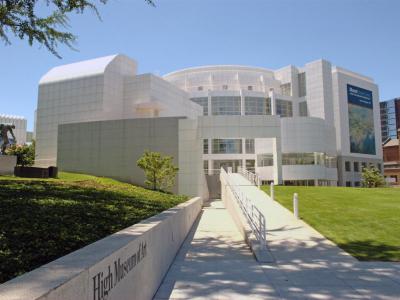
Widely regarded as the leading art museum in the Southeastern United States, the High Museum of Art-often simply called “the High”-is larger and more varied than many visitors expect. Its modern, sculptural, enamel-clad buildings house a diverse range of collections, making it easy to spend half a day exploring. Founded in 1905 as the Atlanta Art Association, the museum has grown into one of the region’s most carefully curated cultural institutions.
The High’s permanent collection includes more than 14,000 works of art, with a significant portion acquired around the turn of the 21st century. Its strengths include 19th- and 20th-century American art; European works by artists such as Tiepolo, Monet, Matisse, Renoir, Degas, Pissarro, and Rodin; decorative arts, particularly from the late 19th and early 20th centuries; as well as modern and contemporary art and photography. Notable highlights include the museum’s design objects and seating displays found throughout the galleries, Deborah Butterfield’s Horse sculpture, and the depth of the contemporary collection overall.
The museum places particular emphasis on Southern self-taught artists, including Howard Finster, whose work is presented through a contextual installation featuring paintings and sculptures connected to his Paradise Garden environment. The High is unusual among major North American museums in maintaining a dedicated curatorial focus on self-taught art, recognizing creativity that developed outside formal academic traditions. The result is a collection that feels inventive, expressive, and often unexpectedly playful.
Tip:
The museum offers a daily docent-led Highlights Tour, typically held in the early afternoon and not requiring advance reservations.
The High’s permanent collection includes more than 14,000 works of art, with a significant portion acquired around the turn of the 21st century. Its strengths include 19th- and 20th-century American art; European works by artists such as Tiepolo, Monet, Matisse, Renoir, Degas, Pissarro, and Rodin; decorative arts, particularly from the late 19th and early 20th centuries; as well as modern and contemporary art and photography. Notable highlights include the museum’s design objects and seating displays found throughout the galleries, Deborah Butterfield’s Horse sculpture, and the depth of the contemporary collection overall.
The museum places particular emphasis on Southern self-taught artists, including Howard Finster, whose work is presented through a contextual installation featuring paintings and sculptures connected to his Paradise Garden environment. The High is unusual among major North American museums in maintaining a dedicated curatorial focus on self-taught art, recognizing creativity that developed outside formal academic traditions. The result is a collection that feels inventive, expressive, and often unexpectedly playful.
Tip:
The museum offers a daily docent-led Highlights Tour, typically held in the early afternoon and not requiring advance reservations.
5) Atlanta History Center (must see)
More than just a collection of local artifacts, the Atlanta History Center is a sprawling 33-acre campus featuring a research library, an antebellum farmhouse, and a Jazz Age mansion. The Atlanta History Museum, a key attraction, underwent a significant expansion and renovation, including a face-lift of the front entrance and a new café and gift shop. Its remarkable permanent exhibition showcases 1,400 Civil War artifacts, a deep dive into the city's hosting of the 1996 Olympic Games, and a fun collection of memorabilia.
For a taste of Georgia's political history, visitors can take a free, guided tour of the Governor's Mansion, which has been the official residence of Georgia's first family since 1968. The Greek Revival-style mansion, designed by noted Georgia architect Thomas Bradbury, features 30 luxurious rooms spread over three floors and has housed occupants such as Jimmy Carter, Zell Miller, and Nathan Deal. The mansion's museum-quality furnishings and antiques are on display, including a signed first edition of Margaret Mitchell's 'Gone with the Wind' in the library.
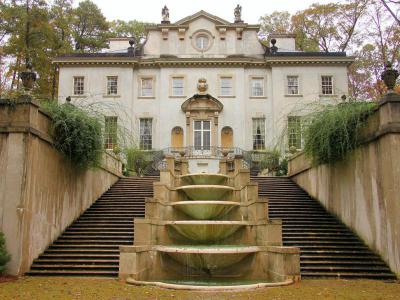
Visitors should also save time to explore the impressive Swan House, once the residence of the Inman family and a filming location for 'The Hunger Games: Catching Fire'. The Tullie Smith Farm provides a glimpse into 19th-century rural Georgia, complete with costumed interpreters leading tours and demonstrations of blacksmithing, candle-making, quilting, and weaving. Because both the Swan House and Tullie Smith Farm are open only during certain times, a visit to the Atlanta History Center may take up to three or four hours.
Why You Should Visit:
Great place to visit for Civil War history. Up close and personal with interactive audio and movies, plus the addition of Atlanta Cyclorama.
The Swan House and the Tullie Smith Farm are both highly educational and kids friendly.
Unlike other museums around Atlanta, parking is free and plentiful.
Tip:
Make sure you have 4-5 hours and decent weather to see everything, including the outdoor houses, gardens, and exhibits.
Be aware that outdoor attractions open later and close earlier than the History Museum.
Make sure to have lunch at the beautifully decorated Swan Coach House, a real southern treat.
For a taste of Georgia's political history, visitors can take a free, guided tour of the Governor's Mansion, which has been the official residence of Georgia's first family since 1968. The Greek Revival-style mansion, designed by noted Georgia architect Thomas Bradbury, features 30 luxurious rooms spread over three floors and has housed occupants such as Jimmy Carter, Zell Miller, and Nathan Deal. The mansion's museum-quality furnishings and antiques are on display, including a signed first edition of Margaret Mitchell's 'Gone with the Wind' in the library.
Visitors should also save time to explore the impressive Swan House, once the residence of the Inman family and a filming location for 'The Hunger Games: Catching Fire'. The Tullie Smith Farm provides a glimpse into 19th-century rural Georgia, complete with costumed interpreters leading tours and demonstrations of blacksmithing, candle-making, quilting, and weaving. Because both the Swan House and Tullie Smith Farm are open only during certain times, a visit to the Atlanta History Center may take up to three or four hours.
Why You Should Visit:
Great place to visit for Civil War history. Up close and personal with interactive audio and movies, plus the addition of Atlanta Cyclorama.
The Swan House and the Tullie Smith Farm are both highly educational and kids friendly.
Unlike other museums around Atlanta, parking is free and plentiful.
Tip:
Make sure you have 4-5 hours and decent weather to see everything, including the outdoor houses, gardens, and exhibits.
Be aware that outdoor attractions open later and close earlier than the History Museum.
Make sure to have lunch at the beautifully decorated Swan Coach House, a real southern treat.
6) Centennial Olympic Park (must see)
Built by the Atlanta Committee for the Olympic Games as part of the infrastructure for the 1996 Summer Olympics, Centennial Olympic Park welcomes millions of visitors each year and regularly hosts large events, including a popular summer concert series and an annual Independence Day concert and fireworks display. The park is organized into several distinct areas, including The Great Lawn, Centennial Plaza, and the Visitor Information Center.
As you enter through the northwestern entrance, begin walking eastward to reach the Centennial Plaza. Keep the broad lawn on your right side and follow the paved path, guiding you diagonally across the park. As you continue, look ahead and slightly to the east. From far away, you can observe the tall structure of SkyView Atlanta, serving as an orientation point.
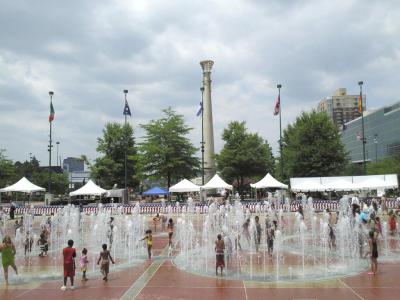
There, you'll find the Fountain of Rings, the park’s most recognizable feature. Set flush into the ground, the fountain is easy to walk around and through. Its 251 computer-controlled water jets, arranged in the shape of the Olympic rings, rise and fall in choreographed patterns synchronized with music and lighting. Pause here for a few minutes-this is where scheduled shows take place several times a day, and on warm days visitors are welcome to wade through the jets.
Standing near the fountain, look up and around the plaza to notice the tall light towers, inspired by classical Greek marker columns, which reinforce the Olympic theme. As you slowly circle the fountain clockwise, you’ll see flags lining the plaza, representing the host nations of every Summer Olympic Games prior to 1996. Nearby, set slightly off the main walking paths, are several sculptures, including a statue of Pierre de Coubertin, the founder of the modern Olympic movement.
From the fountain, continue westward across the open lawn toward The Great Lawn, a broad green space often used for concerts and large public events, including summer music programs and Independence Day celebrations. This area offers a quieter contrast to the activity of the plaza and is a good place to pause, sit, or take in wider views of the park.
Tip:
On hot days, plan your route so you pass the Fountain of Rings twice-once to watch a show, and again to cool off in the water. For orientation and event updates, starting and ending your visit at the Visitor Information Center makes navigating the park much easier.
As you enter through the northwestern entrance, begin walking eastward to reach the Centennial Plaza. Keep the broad lawn on your right side and follow the paved path, guiding you diagonally across the park. As you continue, look ahead and slightly to the east. From far away, you can observe the tall structure of SkyView Atlanta, serving as an orientation point.
There, you'll find the Fountain of Rings, the park’s most recognizable feature. Set flush into the ground, the fountain is easy to walk around and through. Its 251 computer-controlled water jets, arranged in the shape of the Olympic rings, rise and fall in choreographed patterns synchronized with music and lighting. Pause here for a few minutes-this is where scheduled shows take place several times a day, and on warm days visitors are welcome to wade through the jets.
Standing near the fountain, look up and around the plaza to notice the tall light towers, inspired by classical Greek marker columns, which reinforce the Olympic theme. As you slowly circle the fountain clockwise, you’ll see flags lining the plaza, representing the host nations of every Summer Olympic Games prior to 1996. Nearby, set slightly off the main walking paths, are several sculptures, including a statue of Pierre de Coubertin, the founder of the modern Olympic movement.
From the fountain, continue westward across the open lawn toward The Great Lawn, a broad green space often used for concerts and large public events, including summer music programs and Independence Day celebrations. This area offers a quieter contrast to the activity of the plaza and is a good place to pause, sit, or take in wider views of the park.
Tip:
On hot days, plan your route so you pass the Fountain of Rings twice-once to watch a show, and again to cool off in the water. For orientation and event updates, starting and ending your visit at the Visitor Information Center makes navigating the park much easier.
