Custom Walk in Turin, Italy by nagy_ramona_a4e5e created on 2025-11-12
Guide Location: Italy » Turin
Guide Type: Custom Walk
# of Sights: 9
Tour Duration: 1 Hour(s)
Travel Distance: 2 Km or 1.2 Miles
Share Key: XRLJG
Guide Type: Custom Walk
# of Sights: 9
Tour Duration: 1 Hour(s)
Travel Distance: 2 Km or 1.2 Miles
Share Key: XRLJG
How It Works
Please retrieve this walk in the GPSmyCity app. Once done, the app will guide you from one tour stop to the next as if you had a personal tour guide. If you created the walk on this website or come to the page via a link, please follow the instructions below to retrieve the walk in the app.
Retrieve This Walk in App
Step 1. Download the app "GPSmyCity: Walks in 1K+ Cities" on Apple App Store or Google Play Store.



Step 2. In the GPSmyCity app, download(or launch) the guide "Turin Map and Walking Tours".
Step 3. Tap the menu button located at upper right corner of the "Walks" screen and select "Retrieve custom walk". Enter the share key: XRLJG
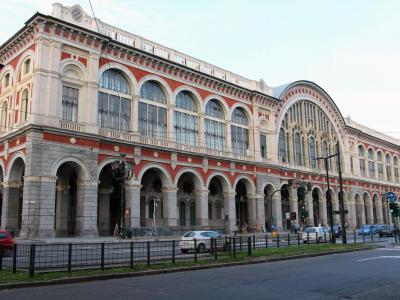
1) Stazione di Torino Porta Nuova (Torino Porta Nuova Railway Station)
Torino Porta Nuova Railway Station is the main gateway to Turin, welcoming millions of travelers each year with its blend of history and modernity. Opened in 1864, it was designed by architect Alessandro Mazzucchetti, who gave the building a grand Neo-Classical façade inspired by the Renaissance style. Its name, “Porta Nuova,” recalls the city gate that once stood nearby, symbolizing Turin’s role as both a defensive stronghold and an open passage to the wider world. Today, it stands as Italy’s third busiest station, connecting Turin with Milan, Rome, Paris, and beyond through high-speed rail and international services.
The station’s architecture makes it a landmark in its own right. The exterior colonnades and arched windows set a stately tone, while the vast central hall creates a sense of openness and grandeur. Inside, the blend of historic charm and contemporary upgrades reflects Turin’s balance between tradition and innovation. Over the years, the station has undergone major restorations, particularly for the 2006 Winter Olympics, ensuring it could serve as both a functional transport hub and a welcoming space for visitors.
For tourists, Porta Nuova is not only a starting point but also an experience. The station is surrounded by some of Turin’s most vibrant streets, including Via Roma, lined with shops, cafés, and elegant arcades leading directly to Piazza San Carlo and Piazza Castello. Within the station itself, travelers will find modern amenities, shopping areas, and dining options, making it a convenient stop to relax before setting out to explore the city.
More than just a railway terminal, Torino Porta Nuova embodies the city’s spirit: a place where history meets progress, and where journeys begin into the cultural, architectural, and culinary riches of Turin and the Piedmont region. Its role as both a transport hub and an urban landmark makes it an essential part of any visit to the city.
The station’s architecture makes it a landmark in its own right. The exterior colonnades and arched windows set a stately tone, while the vast central hall creates a sense of openness and grandeur. Inside, the blend of historic charm and contemporary upgrades reflects Turin’s balance between tradition and innovation. Over the years, the station has undergone major restorations, particularly for the 2006 Winter Olympics, ensuring it could serve as both a functional transport hub and a welcoming space for visitors.
For tourists, Porta Nuova is not only a starting point but also an experience. The station is surrounded by some of Turin’s most vibrant streets, including Via Roma, lined with shops, cafés, and elegant arcades leading directly to Piazza San Carlo and Piazza Castello. Within the station itself, travelers will find modern amenities, shopping areas, and dining options, making it a convenient stop to relax before setting out to explore the city.
More than just a railway terminal, Torino Porta Nuova embodies the city’s spirit: a place where history meets progress, and where journeys begin into the cultural, architectural, and culinary riches of Turin and the Piedmont region. Its role as both a transport hub and an urban landmark makes it an essential part of any visit to the city.
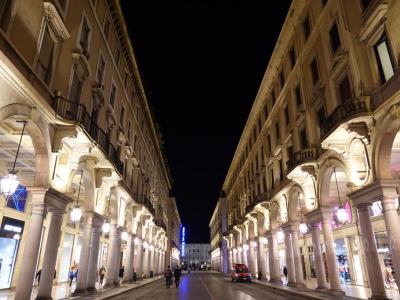
2) Via Roma (Rome Street)
Rome Street is one of Turin’s grand thoroughfares, a place where the city’s changing rulers left their mark block by block. Its course still follows the cardo maximus, the north–south backbone of the Roman colony Julia Augusta Taurinorum, and while centuries have reshaped the façades, the axis has never lost its prominence.
In the 1600s the Savoy dynasty decided Turin needed the look of a capital, and Rome Street became their canvas. Baroque arcades lined the way, their arches offering rhythm as well as shelter, and soon the porticos filled with cafés, patisseries, and shops. The street’s geometry tied together Castle Square, Saint Charles Square, and Vittorio Veneto Square, giving the city an ordered stage for everyday life and royal ceremony alike.
Skipping forward to the 1930s and another wave of transformation arrived, this time under the Fascist regime. Between 1931 and 1937, architect Marcello Piacentini was tasked with remaking much of the street in Italian Rationalist style. The result was a blend of Novecento Italiano formality, neoclassical restraint, and modernist severity. The stretch between Charles Felix Square and Saint Charles Square gained monumental blocks, among them the Prince of Piedmont Hotel and the former National Hotel. Yet the first section nearer Castle Square was spared and retained its baroque façades, keeping a visual dialogue between past and present.
Today, Rome Street is as much about fashion as it is about history. Luxury boutiques, international brands, and historic cafés share the arcades, making the walk a lesson in architecture that doubles as an invitation to linger.
In the 1600s the Savoy dynasty decided Turin needed the look of a capital, and Rome Street became their canvas. Baroque arcades lined the way, their arches offering rhythm as well as shelter, and soon the porticos filled with cafés, patisseries, and shops. The street’s geometry tied together Castle Square, Saint Charles Square, and Vittorio Veneto Square, giving the city an ordered stage for everyday life and royal ceremony alike.
Skipping forward to the 1930s and another wave of transformation arrived, this time under the Fascist regime. Between 1931 and 1937, architect Marcello Piacentini was tasked with remaking much of the street in Italian Rationalist style. The result was a blend of Novecento Italiano formality, neoclassical restraint, and modernist severity. The stretch between Charles Felix Square and Saint Charles Square gained monumental blocks, among them the Prince of Piedmont Hotel and the former National Hotel. Yet the first section nearer Castle Square was spared and retained its baroque façades, keeping a visual dialogue between past and present.
Today, Rome Street is as much about fashion as it is about history. Luxury boutiques, international brands, and historic cafés share the arcades, making the walk a lesson in architecture that doubles as an invitation to linger.

3) Chiesa di Santa Cristina (Saint Christine Church)
Saint Christine Church is a beautiful church located in the city of Turin, in the Piedmont region of northern Italy. The church, dedicated to Saint Christine, was originally built in the 17th century, and has since undergone significant renovations and additions over the years.
The stunning baroque architecture of the Saint Christine Church is a testament to the skilled craftsmanship of the era, with ornate details and intricate designs adorning both the interior and exterior of the church. The interior of the church is particularly noteworthy, with a series of stunning frescoes depicting scenes from the life of Saint Christine, as well as intricate sculptures and beautiful stained glass windows.
Saint Christine Church is not only a beautiful example of Italian baroque architecture, but it is also a significant part of the history and culture of Turin. The church has played an important role in the religious and social life of the community for centuries, and continues to be a beloved landmark and popular tourist attraction in the city today.
The stunning baroque architecture of the Saint Christine Church is a testament to the skilled craftsmanship of the era, with ornate details and intricate designs adorning both the interior and exterior of the church. The interior of the church is particularly noteworthy, with a series of stunning frescoes depicting scenes from the life of Saint Christine, as well as intricate sculptures and beautiful stained glass windows.
Saint Christine Church is not only a beautiful example of Italian baroque architecture, but it is also a significant part of the history and culture of Turin. The church has played an important role in the religious and social life of the community for centuries, and continues to be a beloved landmark and popular tourist attraction in the city today.
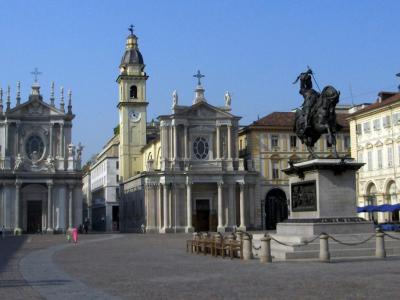
4) Piazza San Carlo (San Carlo Square) (must see)
Saint Charles’ Square might look like an elegant stage set, but every detail has centuries of politics, culture, and coffee drinking written into it. First drawn out in the 17th century under the Savoy dynasty’s grand makeover of Turin, the square-once called Royal, later Napoleon-was given its symmetry and order by architect Carlo di Castellamonte. The dimensions, 168 by 76 meters, were calculated to impress without overwhelming, and the long arcades still stretch around it like carefully pressed cuffs on a baroque jacket.
The southern end offers drama in stereo: two churches, Santa Cristina and San Carlo Borromeo, facing the square with almost identical façades. Around them stand noble palaces such as the Solaro dei Borgo, home to the Philharmonic Academy since 1839, and the Whist Society, where 19th-century Turin’s elite debated politics as seriously as they did card games. The arcades flow into Via Roma, sheltering shops, cafés, and patisseries where modern chatter continues the square’s long tradition as a meeting ground.
In the center, the equestrian statue of Emanuele Filiberto, Duke of Savoy, strikes a curious pose: sword sliding back into its sheath, a rare image of a general after the battle rather than during it. Sculptor Carlo Marochetti unveiled it in 1838, ensuring that even the square’s focal point mixes power with a hint of theatrical timing.
For nearly two centuries, San Carlo Square has also been Turin’s unofficial salon. At Caffè San Carlo, Caffè Torino, or the Stratta patisserie-famous for chocolates since 1836-politicians, artists, and writers sipped inspiration along with espresso. Since its 2004 redevelopment, the square belongs fully to pedestrians, making it an open-air living room where baroque elegance still frames Turin’s everyday life.
The southern end offers drama in stereo: two churches, Santa Cristina and San Carlo Borromeo, facing the square with almost identical façades. Around them stand noble palaces such as the Solaro dei Borgo, home to the Philharmonic Academy since 1839, and the Whist Society, where 19th-century Turin’s elite debated politics as seriously as they did card games. The arcades flow into Via Roma, sheltering shops, cafés, and patisseries where modern chatter continues the square’s long tradition as a meeting ground.
In the center, the equestrian statue of Emanuele Filiberto, Duke of Savoy, strikes a curious pose: sword sliding back into its sheath, a rare image of a general after the battle rather than during it. Sculptor Carlo Marochetti unveiled it in 1838, ensuring that even the square’s focal point mixes power with a hint of theatrical timing.
For nearly two centuries, San Carlo Square has also been Turin’s unofficial salon. At Caffè San Carlo, Caffè Torino, or the Stratta patisserie-famous for chocolates since 1836-politicians, artists, and writers sipped inspiration along with espresso. Since its 2004 redevelopment, the square belongs fully to pedestrians, making it an open-air living room where baroque elegance still frames Turin’s everyday life.
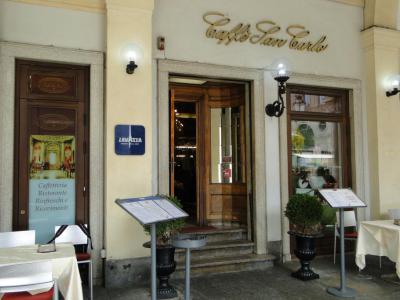
5) Caffè San Carlo (San Carlo Cafe)
Caffè San Carlo, one of Turin’s most renowned historic cafés, has been a symbol of elegance and intellectual life since it first opened in 1822. Situated in the heart of Piazza San Carlo, the café quickly became a gathering place for the city’s elite, attracting writers, politicians, artists, and aristocrats. Its foundation coincided with a period when Turin was shaping its identity as a cultural and political capital of the Kingdom of Sardinia, making the café an important stage for both social and intellectual exchange.
The interior of Caffè San Carlo is as remarkable as its history. Visitors are greeted by a lavish display of 19th-century décor, including gilded mirrors, crystal chandeliers, and marble columns. Frescoes and ornate details create an atmosphere of grandeur that reflects the Belle Époque spirit, offering a sense of timeless refinement. It is not simply a café but an architectural jewel that embodies the elegance of Turin’s past while continuing to serve as a vibrant meeting spot today.
For tourists, a visit to Caffè San Carlo is both a culinary and cultural experience. Beyond its refined atmosphere, the café is celebrated for its traditional offerings, from fine espresso and pastries to regional specialties such as gianduiotti, the city’s famous hazelnut chocolates. Sitting beneath the vaulted ceilings with a coffee in hand allows visitors to step into the same environment once enjoyed by historic figures of Italian culture and politics.
Today, Caffè San Carlo remains a living institution, balancing its heritage with a welcoming modern spirit. Whether pausing for a morning coffee, sampling sweets, or simply soaking in the historic ambiance of Piazza San Carlo, guests find themselves part of a tradition that has endured for more than 200 years. It continues to represent not only the art of Italian coffee but also the enduring charm of Turin’s cultural identity.
The interior of Caffè San Carlo is as remarkable as its history. Visitors are greeted by a lavish display of 19th-century décor, including gilded mirrors, crystal chandeliers, and marble columns. Frescoes and ornate details create an atmosphere of grandeur that reflects the Belle Époque spirit, offering a sense of timeless refinement. It is not simply a café but an architectural jewel that embodies the elegance of Turin’s past while continuing to serve as a vibrant meeting spot today.
For tourists, a visit to Caffè San Carlo is both a culinary and cultural experience. Beyond its refined atmosphere, the café is celebrated for its traditional offerings, from fine espresso and pastries to regional specialties such as gianduiotti, the city’s famous hazelnut chocolates. Sitting beneath the vaulted ceilings with a coffee in hand allows visitors to step into the same environment once enjoyed by historic figures of Italian culture and politics.
Today, Caffè San Carlo remains a living institution, balancing its heritage with a welcoming modern spirit. Whether pausing for a morning coffee, sampling sweets, or simply soaking in the historic ambiance of Piazza San Carlo, guests find themselves part of a tradition that has endured for more than 200 years. It continues to represent not only the art of Italian coffee but also the enduring charm of Turin’s cultural identity.
6) Via Garibaldi (Garibaldi Street)
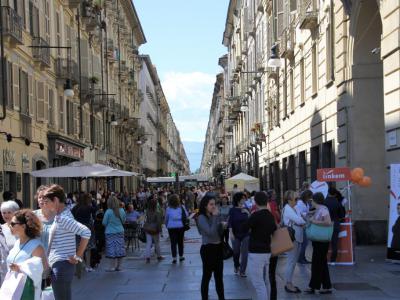
Garibaldi Street ranks among Turin’s oldest and most energetic thoroughfares, a strip where history refuses to stay buried under cobblestones. It began life in the Roman era as the Decumanus Maximus of Julia Augusta Taurinorum, the grand east–west line that stitched together the Decuman Gate and the Praetoria Gate. Fragments of these ancient entrances still peek through the city-one absorbed into Madama Palace, another near Consolation Square. By the Middle Ages, the road had earned the name Dora Grossa, tied to the nearby Dora River and its role as the city’s marketplace. By the 1700s, it had pavement, sidewalks, and no shortage of churches keeping watch over the trade.
The Savoy rulers decided the street needed polish to match their ambitions. They called in architect Benedetto Alfieri, who gave it the uniform façades and measured rhythm of baroque planning. The 19th century added another twist: after Italian unification, the street was rechristened for Giuseppe Garibaldi, the fiery general whose name still marches down its length. Along the way, you’ll spot the churches of the Holy Martyrs, Holy Trinity, and San Dalmazzo, as well as aristocratic palaces, each with stories baked into their walls.
Today, Garibaldi Street runs from Castle Square to Statute Square, free of cars and full of bustle. Boutiques, cafés, and gelaterias sit shoulder to shoulder with historic façades, while markets and musicians keep the street humming. Walking here is less a stroll than a straight shot through two millennia of Turin’s history.
The Savoy rulers decided the street needed polish to match their ambitions. They called in architect Benedetto Alfieri, who gave it the uniform façades and measured rhythm of baroque planning. The 19th century added another twist: after Italian unification, the street was rechristened for Giuseppe Garibaldi, the fiery general whose name still marches down its length. Along the way, you’ll spot the churches of the Holy Martyrs, Holy Trinity, and San Dalmazzo, as well as aristocratic palaces, each with stories baked into their walls.
Today, Garibaldi Street runs from Castle Square to Statute Square, free of cars and full of bustle. Boutiques, cafés, and gelaterias sit shoulder to shoulder with historic façades, while markets and musicians keep the street humming. Walking here is less a stroll than a straight shot through two millennia of Turin’s history.
7) Biblioteca Reale di Torino (Royal Library of Turin)
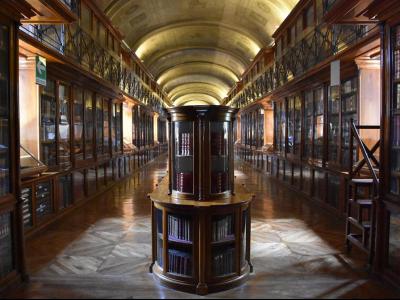
The Royal Library of Turin (Biblioteca Reale di Torino) is one of the city’s most treasured cultural institutions. Established in 1839 by King Charles Albert of Savoy, the library was created to preserve and expand the royal collection of manuscripts, rare books, and works of art. Housed within the Royal Palace complex, it forms part of the historic heart of Turin and reflects the intellectual ambitions of the Savoy dynasty, who sought to transform the city into a flourishing centre of knowledge and culture. Its neoclassical interiors, carefully designed to emphasize harmony and refinement, provide an elegant setting for centuries of history preserved in written form.
The library boasts an extraordinary collection of over 200,000 volumes, along with manuscripts, engravings, maps, and drawings that span from the Middle Ages to the modern period. Among its most prized possessions are works by Renaissance masters, including the world-famous Codex on the Flight of Birds and the celebrated self-portrait attributed to Leonardo da Vinci. Visitors can also find collections related to the House of Savoy and materials that trace Italy’s political and cultural transformations. These unique treasures make the library not only a repository of knowledge but also a showcase of artistic genius.
Today, the Royal Library remains an active research institution, welcoming visitors eager to discover its masterpieces. Temporary exhibitions highlight items from its vast holdings, often centered on themes of art, science, and history. For travelers exploring Turin’s Royal Museums, the library is an essential stop, offering a quiet yet profound encounter with Italy’s intellectual and artistic heritage. Its blend of royal grandeur and scholarly depth ensures a memorable experience for anyone interested in culture, history, or the enduring power of books.
The library boasts an extraordinary collection of over 200,000 volumes, along with manuscripts, engravings, maps, and drawings that span from the Middle Ages to the modern period. Among its most prized possessions are works by Renaissance masters, including the world-famous Codex on the Flight of Birds and the celebrated self-portrait attributed to Leonardo da Vinci. Visitors can also find collections related to the House of Savoy and materials that trace Italy’s political and cultural transformations. These unique treasures make the library not only a repository of knowledge but also a showcase of artistic genius.
Today, the Royal Library remains an active research institution, welcoming visitors eager to discover its masterpieces. Temporary exhibitions highlight items from its vast holdings, often centered on themes of art, science, and history. For travelers exploring Turin’s Royal Museums, the library is an essential stop, offering a quiet yet profound encounter with Italy’s intellectual and artistic heritage. Its blend of royal grandeur and scholarly depth ensures a memorable experience for anyone interested in culture, history, or the enduring power of books.
8) Duomo di Torino e Cappella della Sacra Sindone (Turin Cathedral and Chapel of the Holy Shroud)
The Shroud of Turin has stirred fascination for centuries, tied to the Savoy family since 1453 and still regarded as one of the city’s most famous treasures. These days it rests in a climate-controlled glass case inside the Baroque Chapel of the Holy Shroud, linked directly to both Turin Cathedral and the Royal Palace. The chapel itself was the brainchild of Guarino Guarini, a priest-architect who preferred geometry with a flair. In the late 17th century he designed a dome so intricate that light seems to bend into patterns of mystery, amplifying the aura of the relic it protects.
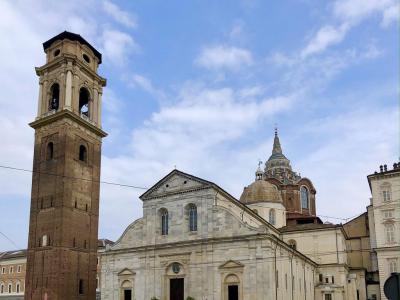
Turin Cathedral, built between 1491 and 1498, has its own layered story. It replaced three earlier churches-one tradition even credits a consecration by Lombard King Agilulf in the early 600s. Dedicated to Saint John the Baptist, the new structure became the city’s main cathedral and, somewhat unusually for Turin, remains its only pure Renaissance building. Its bright marble façade is a calm counterpoint to the surrounding swirl of baroque architecture. Later centuries added their own touches: Filippo Juvarra polished up the bell tower, and Guarini’s chapel gave the complex its most dramatic feature.
That chapel dome is a marvel in itself-six stacked levels rising in a hexagon, crowned by a lantern shaped as a twelve-pointed star with the dove of the Holy Spirit at its center. Step inside, and you’ll find a space that still manages to look both daring and devotional.
The cathedral and chapel together serve as a lesson in contrasts: Renaissance restraint, baroque bravado, and the enduring mystery of the Shroud that continues to draw pilgrims and skeptics alike.
Turin Cathedral, built between 1491 and 1498, has its own layered story. It replaced three earlier churches-one tradition even credits a consecration by Lombard King Agilulf in the early 600s. Dedicated to Saint John the Baptist, the new structure became the city’s main cathedral and, somewhat unusually for Turin, remains its only pure Renaissance building. Its bright marble façade is a calm counterpoint to the surrounding swirl of baroque architecture. Later centuries added their own touches: Filippo Juvarra polished up the bell tower, and Guarini’s chapel gave the complex its most dramatic feature.
That chapel dome is a marvel in itself-six stacked levels rising in a hexagon, crowned by a lantern shaped as a twelve-pointed star with the dove of the Holy Spirit at its center. Step inside, and you’ll find a space that still manages to look both daring and devotional.
The cathedral and chapel together serve as a lesson in contrasts: Renaissance restraint, baroque bravado, and the enduring mystery of the Shroud that continues to draw pilgrims and skeptics alike.
9) Porta Palatina (Palatine Gate)
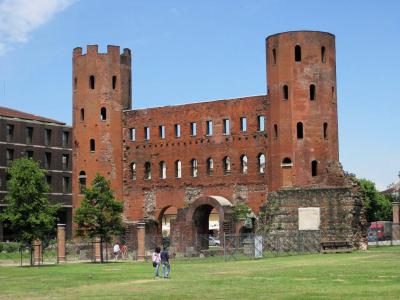
The Palatine Gate is among the best-preserved Roman gates in northern Italy, a structure that has stood watch since the 1st century CE. Back then, it marked the northern entrance to Julia Augusta Taurinorum, the Roman settlement that grew into modern Turin. The gate opened onto the Decumanus Maximus, the grand east–west street of the Roman grid-a layout that still dictates much of the city’s traffic today. Known to the ancients as the Right-Side Main Gate, its towers still rise nearly 99 feet, while the central span stretches 66 feet across with neat rows of windows. Four arched openings survive: two roomy enough for carts and horses, two narrow enough to remind pedestrians of their place in the Roman pecking order.
The name “Palatine” remains a puzzle. Some think it nodded to a Senate House, others to the City Hall, or even to the amphitheater that once stood in Borgo Dora. Over the years, the gate collected new nicknames-Count’s Gate, Doranea Gate-each tied to whatever role the city imagined for it at the time.
History kept rewriting its script. In the Middle Ages, the gate was fortified into a proper stronghold; by the Renaissance, it had been absorbed into the elegant gardens of the House of Savoy. Nearby, archaeological traces of the amphitheater and Roman walls continue to hint at the larger settlement that once surrounded it.
Now planted in Cesare Augusto Square, the Palatine Gate offers more than a backdrop for photos-it is a reminder that Turin’s streets have been funneling people and trade for nearly two millennia, and they’re not about to stop.
The name “Palatine” remains a puzzle. Some think it nodded to a Senate House, others to the City Hall, or even to the amphitheater that once stood in Borgo Dora. Over the years, the gate collected new nicknames-Count’s Gate, Doranea Gate-each tied to whatever role the city imagined for it at the time.
History kept rewriting its script. In the Middle Ages, the gate was fortified into a proper stronghold; by the Renaissance, it had been absorbed into the elegant gardens of the House of Savoy. Nearby, archaeological traces of the amphitheater and Roman walls continue to hint at the larger settlement that once surrounded it.
Now planted in Cesare Augusto Square, the Palatine Gate offers more than a backdrop for photos-it is a reminder that Turin’s streets have been funneling people and trade for nearly two millennia, and they’re not about to stop.
