Custom Walk in Oslo, Norway by eporx40_f4574 created on 2025-11-27
Guide Location: Norway » Oslo
Guide Type: Custom Walk
# of Sights: 9
Tour Duration: 7 Hour(s)
Travel Distance: 18.8 Km or 11.7 Miles
Share Key: ZGY92
Guide Type: Custom Walk
# of Sights: 9
Tour Duration: 7 Hour(s)
Travel Distance: 18.8 Km or 11.7 Miles
Share Key: ZGY92
How It Works
Please retrieve this walk in the GPSmyCity app. Once done, the app will guide you from one tour stop to the next as if you had a personal tour guide. If you created the walk on this website or come to the page via a link, please follow the instructions below to retrieve the walk in the app.
Retrieve This Walk in App
Step 1. Download the app "GPSmyCity: Walks in 1K+ Cities" on Apple App Store or Google Play Store.



Step 2. In the GPSmyCity app, download(or launch) the guide "Oslo Map and Walking Tours".
Step 3. Tap the menu button located at upper right corner of the "Walks" screen and select "Retrieve custom walk". Enter the share key: ZGY92
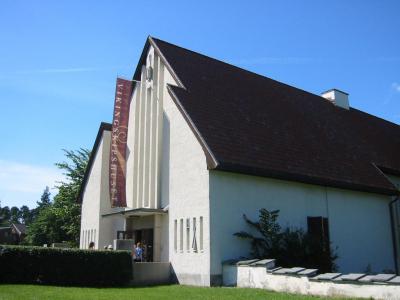
1) Viking Ship Museum (must see)
Situated on the Bygdøy peninsula in Oslo, the Viking Ship Museum forms an integral part of the Museum of Cultural History at the University of Oslo. Within its walls lie three burial ships from the Viking era, unearthed as significant archaeological discoveries from sites like Tune, Gokstad (Sandefjord), Oseberg (Tønsberg), and the Borre mound cemetery.
The museum gains its greatest renown for hosting the remarkably intact Oseberg ship, extracted from the world's largest documented ship burial. Alongside this, the Viking Ship Museum boasts the Gokstad ship and Tune ship as its main draws. Expanding the experience, the Viking Age exhibition presents an array of artifacts, encompassing sleds, beds, a horse cart, wood carvings, tent components, buckets, and various grave goods.
In 1913, Swedish scholar Gabriel Gustafson put forth a dedicated architectural concept aimed at housing Viking Age discoveries that had surfaced during the late 19th and early 20th centuries. The University of Oslo had previously offered temporary refuge to the Gokstad and Oseberg ships. An architectural competition was organized, ultimately won by Arnstein Arneberg.
The construction of the Oseberg ship hall received funding from the Norwegian Parliament, leading to the relocation of the ship from the university's provisional shelters in 1926. Subsequently, the halls for the Gokstad and Tune ships were finalized by 1932. Nonetheless, the completion of the last hall faced delays, partly due to World War II, reaching its conclusion in 1957. This final hall accommodates the majority of the other findings, primarily sourced from the Oseberg site.
Why You Should Visit:
The best place to see real Viking ships in a great conservation state and other pieces of Viking history.
The building is a wonderful setting for the ships. Pretty cheap entrance ticket as well.
Outside café and pleasant sitting out area, weather permitting.
Tip:
There's a locker you can use for free where you can put your bags, since they only allow small purses.
Your ticket also covers free entry to the Museum of Cultural History nearby within 48 hours.
The museum gains its greatest renown for hosting the remarkably intact Oseberg ship, extracted from the world's largest documented ship burial. Alongside this, the Viking Ship Museum boasts the Gokstad ship and Tune ship as its main draws. Expanding the experience, the Viking Age exhibition presents an array of artifacts, encompassing sleds, beds, a horse cart, wood carvings, tent components, buckets, and various grave goods.
In 1913, Swedish scholar Gabriel Gustafson put forth a dedicated architectural concept aimed at housing Viking Age discoveries that had surfaced during the late 19th and early 20th centuries. The University of Oslo had previously offered temporary refuge to the Gokstad and Oseberg ships. An architectural competition was organized, ultimately won by Arnstein Arneberg.
The construction of the Oseberg ship hall received funding from the Norwegian Parliament, leading to the relocation of the ship from the university's provisional shelters in 1926. Subsequently, the halls for the Gokstad and Tune ships were finalized by 1932. Nonetheless, the completion of the last hall faced delays, partly due to World War II, reaching its conclusion in 1957. This final hall accommodates the majority of the other findings, primarily sourced from the Oseberg site.
Why You Should Visit:
The best place to see real Viking ships in a great conservation state and other pieces of Viking history.
The building is a wonderful setting for the ships. Pretty cheap entrance ticket as well.
Outside café and pleasant sitting out area, weather permitting.
Tip:
There's a locker you can use for free where you can put your bags, since they only allow small purses.
Your ticket also covers free entry to the Museum of Cultural History nearby within 48 hours.
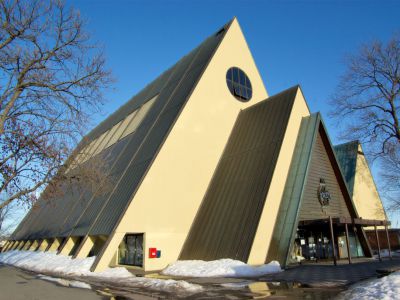
2) Fram Museum (must see)
The Fram Museum stands as a tribute to Norwegian polar exploration, recounting its history and tales. Situated on the Bygdøy peninsula in Oslo, it shares space with a cluster of other remarkable museums, including the Kon-Tiki Museum, the Norwegian Museum of Cultural History, the Viking Ship Museum, and the Norwegian Maritime Museum. Nearby, one can find the Bygdøy Royal Estate, the designated summer retreat for the King of Norway, and the historic Oscarshall.
Established on May 20, 1936, the Fram Museum commemorates the broader journey of Norwegian polar exploration, with a special focus on three renowned explorers – Fridtjof Nansen, Otto Sverdrup, and Roald Amundsen. Within its walls, visitors can also encounter captivating visuals of the polar region's wildlife, including polar bears and penguins.
Central to the Fram Museum is the original exploration vessel, also named Fram. Preserving its authentic interior, the museum invites visitors to step inside the ship and witness its history firsthand. The creation of Fram was overseen by Colin Archer, a shipbuilder of Scots-Norwegian origin, who designed the vessel based on the specifications outlined by Norwegian Arctic explorer Fridtjof Nansen. In 1891, Nansen secured funding from both the Norwegian government and private sources to bring this ship to life.
In May 2009, the Fram Museum and the Norwegian Maritime Museum entered into a collaborative agreement, granting the Fram Museum the responsibility of showcasing the Gjøa, the first ship to successfully navigate the Northwest Passage. In 1906, Roald Amundsen and his crew achieved this remarkable feat after a three-year expedition. Housed in its dedicated building within the museum complex, the Gjøa was made fully accessible to visitors in 2017.
Why You Should Visit:
This museum is the most comprehensive exhibit on polar exploration that you're likely to see.
The collection includes many photographs, maps, and equipment; the displays have timelines, journal entries, and historical contents.
There are also several specific rooms that simulate the conditions in the Arctic (and the Antarctic), like the one you go in freezing and windy conditions.
The facility offers lockers, snacks, and drinks so there's no need to rush out of it.
Tip:
Consider buying the museum pack that gets you into the 3 museums all right next to each other: Fram, Kon-Tiki, and the Marine Museum.
Established on May 20, 1936, the Fram Museum commemorates the broader journey of Norwegian polar exploration, with a special focus on three renowned explorers – Fridtjof Nansen, Otto Sverdrup, and Roald Amundsen. Within its walls, visitors can also encounter captivating visuals of the polar region's wildlife, including polar bears and penguins.
Central to the Fram Museum is the original exploration vessel, also named Fram. Preserving its authentic interior, the museum invites visitors to step inside the ship and witness its history firsthand. The creation of Fram was overseen by Colin Archer, a shipbuilder of Scots-Norwegian origin, who designed the vessel based on the specifications outlined by Norwegian Arctic explorer Fridtjof Nansen. In 1891, Nansen secured funding from both the Norwegian government and private sources to bring this ship to life.
In May 2009, the Fram Museum and the Norwegian Maritime Museum entered into a collaborative agreement, granting the Fram Museum the responsibility of showcasing the Gjøa, the first ship to successfully navigate the Northwest Passage. In 1906, Roald Amundsen and his crew achieved this remarkable feat after a three-year expedition. Housed in its dedicated building within the museum complex, the Gjøa was made fully accessible to visitors in 2017.
Why You Should Visit:
This museum is the most comprehensive exhibit on polar exploration that you're likely to see.
The collection includes many photographs, maps, and equipment; the displays have timelines, journal entries, and historical contents.
There are also several specific rooms that simulate the conditions in the Arctic (and the Antarctic), like the one you go in freezing and windy conditions.
The facility offers lockers, snacks, and drinks so there's no need to rush out of it.
Tip:
Consider buying the museum pack that gets you into the 3 museums all right next to each other: Fram, Kon-Tiki, and the Marine Museum.
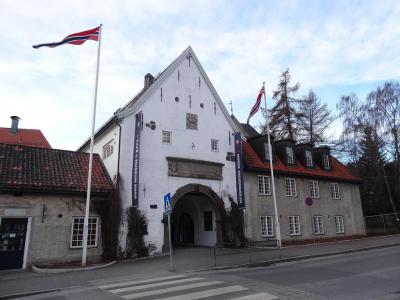
3) Norwegian Museum of Cultural History (must see)
Situated in Oslo, the Norwegian Museum of Cultural History (Norsk Folkemuseum) stands as a repository of cultural heritage. Its extensive assortment comprises artifacts from diverse societal segments and geographical regions within the country. A highlight of the museum is its expansive open-air section featuring over 150 structures sourced from urban and rural locales.
Nestled on the Bygdøy peninsula, the Norwegian Museum of Cultural History finds itself in close proximity to a cluster of fellow museums, including the Viking Ship Museum, the Fram Museum, the Kon-Tiki Museum, and the Norwegian Maritime Museum.
Originating in 1894 under the guidance of librarian and historian Hans Aall (1869–1946), the museum's inception saw the construction of temporary exhibition edifices and the relocation of numerous rural structures. The museum officially welcomed the public in 1901. In a significant development, the collections of King Oscar II, located nearby, were integrated into the museum in 1907. At its core stands a collection of five transplanted buildings, with the iconic Gol Stave Church leading the way. This ensemble is hailed as the world's inaugural open-air museum, established in 1881.
The museum features notable structures like the 13th-century Gol Stave Church, merged into Norsk Folkemuseum in 1907. Among five medieval buildings displayed, there's the 14th-century Rauland farmhouse, a tenement from 15 Wessels gate (1865) with seven flats showcasing 19th to 20th-century interiors. One flat mimics a 2002 Pakistani immigrant family's living space. In 1951, Norsk Folkemuseum acquired Sami collections from the University of Oslo's Ethnographic Museum.
Enriching its holdings, the museum boasts an expansive photographic archive, a substantial portion of which comprises works by the renowned photographer Anders Beer Wilse (1865–1949). Throughout its existence, the museum has been a hub of research, delving into areas such as architecture, furnishings, attire, textiles, technological and societal customs, agriculture, collective memory, and Sami culture.
Why You Should Visit:
To get a keen insight into Norwegian life across hundreds of years.
Tip:
Plan to spend at least 3-4 hours to give this skansen/museum justice.
It is worth taking the free guided tours (about 1h) for the interesting info about the buildings and cultural history.
Nestled on the Bygdøy peninsula, the Norwegian Museum of Cultural History finds itself in close proximity to a cluster of fellow museums, including the Viking Ship Museum, the Fram Museum, the Kon-Tiki Museum, and the Norwegian Maritime Museum.
Originating in 1894 under the guidance of librarian and historian Hans Aall (1869–1946), the museum's inception saw the construction of temporary exhibition edifices and the relocation of numerous rural structures. The museum officially welcomed the public in 1901. In a significant development, the collections of King Oscar II, located nearby, were integrated into the museum in 1907. At its core stands a collection of five transplanted buildings, with the iconic Gol Stave Church leading the way. This ensemble is hailed as the world's inaugural open-air museum, established in 1881.
The museum features notable structures like the 13th-century Gol Stave Church, merged into Norsk Folkemuseum in 1907. Among five medieval buildings displayed, there's the 14th-century Rauland farmhouse, a tenement from 15 Wessels gate (1865) with seven flats showcasing 19th to 20th-century interiors. One flat mimics a 2002 Pakistani immigrant family's living space. In 1951, Norsk Folkemuseum acquired Sami collections from the University of Oslo's Ethnographic Museum.
Enriching its holdings, the museum boasts an expansive photographic archive, a substantial portion of which comprises works by the renowned photographer Anders Beer Wilse (1865–1949). Throughout its existence, the museum has been a hub of research, delving into areas such as architecture, furnishings, attire, textiles, technological and societal customs, agriculture, collective memory, and Sami culture.
Why You Should Visit:
To get a keen insight into Norwegian life across hundreds of years.
Tip:
Plan to spend at least 3-4 hours to give this skansen/museum justice.
It is worth taking the free guided tours (about 1h) for the interesting info about the buildings and cultural history.
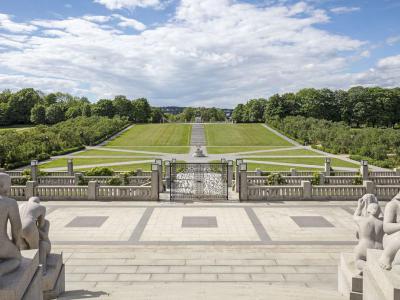
4) Frogner Park (must see)
Frogner Park (Frognerparken) resides in the Frogner borough of Oslo, and holds historical ties to Frogner Manor. Situated in the southern part of the park, the manor house now hosts the Oslo City Museum. Both the park and the entire borough draw their names from the aforementioned Frogner Manor.
At the heart of Frogner Park stands the renowned Vigeland (Vigelandsanlegget) installation. This enduring sculpture collection was crafted by Gustav Vigeland throughout the 1920s to 1943. Despite occasional misidentification as the "Vigeland (Sculpture) Park," it's essential to clarify that the Vigeland installation isn't an independent park but rather the name attributed to the sculptures within Frogner Park. These sculptures coexist with substantial structures like bridges and fountains, forming a cohesive artistic landscape.
The earlier version of Frogner Manor's park, established in the 18th century by its proprietor, the distinguished military officer Hans Jacob Scheel, was comparatively smaller and concentrated around the manor house. This park followed baroque design principles. In addition to the sculpture collection, the area accommodates the manor house, an adjacent pavilion, Frognerbadet (the Frogner Baths), and Frogner Stadium. Dominating the park's center is the Frogner Pond.
Encompassing a sprawling 45 hectares, Frogner Park earns the distinction of being the largest park within the city. Notably, the sculpture installation within it holds the distinction of being the world's most expansive collection of sculptures crafted by a single artist. With its annual footfall ranging between 1 to 2 million visitors, Frogner Park ranks as Norway's premier tourist attraction. It remains accessible to the public throughout the year.
Why You Should Visit:
One of the most unique artistic experiences imaginable. Even if you're not into art, Vigeland's opus is amazing.
Each of the five areas offers a different experience and the walk in the park suddenly becomes something totally different and memorable.
Tip:
Check out the rose garden, and if you have time, the Oslo City Museum in the old farm buildings (also free to enter).
If the weather is suitable you could even take a swim in the open air swimming pool.
At the heart of Frogner Park stands the renowned Vigeland (Vigelandsanlegget) installation. This enduring sculpture collection was crafted by Gustav Vigeland throughout the 1920s to 1943. Despite occasional misidentification as the "Vigeland (Sculpture) Park," it's essential to clarify that the Vigeland installation isn't an independent park but rather the name attributed to the sculptures within Frogner Park. These sculptures coexist with substantial structures like bridges and fountains, forming a cohesive artistic landscape.
The earlier version of Frogner Manor's park, established in the 18th century by its proprietor, the distinguished military officer Hans Jacob Scheel, was comparatively smaller and concentrated around the manor house. This park followed baroque design principles. In addition to the sculpture collection, the area accommodates the manor house, an adjacent pavilion, Frognerbadet (the Frogner Baths), and Frogner Stadium. Dominating the park's center is the Frogner Pond.
Encompassing a sprawling 45 hectares, Frogner Park earns the distinction of being the largest park within the city. Notably, the sculpture installation within it holds the distinction of being the world's most expansive collection of sculptures crafted by a single artist. With its annual footfall ranging between 1 to 2 million visitors, Frogner Park ranks as Norway's premier tourist attraction. It remains accessible to the public throughout the year.
Why You Should Visit:
One of the most unique artistic experiences imaginable. Even if you're not into art, Vigeland's opus is amazing.
Each of the five areas offers a different experience and the walk in the park suddenly becomes something totally different and memorable.
Tip:
Check out the rose garden, and if you have time, the Oslo City Museum in the old farm buildings (also free to enter).
If the weather is suitable you could even take a swim in the open air swimming pool.
5) Aker Brygge Wharf (must see)
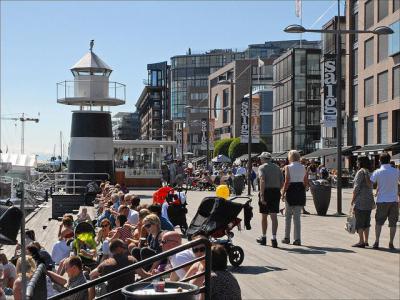
Aker Brygge in Oslo is a vibrant neighborhood known for its shopping, dining, and entertainment options. Once an industrial area with a shipyard that operated until 1982, it underwent significant redevelopment starting in the mid-1980s, transforming into a commercial and residential hub.
This redevelopment involved a mix of demolishing old industrial buildings and repurposing workshop halls into shopping areas, culminating in a modern district completed in 1998. The area now features shops, restaurants, a cinema, offices, residential apartments, a small boat harbor, and a ferry terminal. Further reorganization between 2010 and 2014 enhanced public spaces and added a new district.
Today, Aker Brygge attracts around 12 million visitors annually and is a leader in waterfront development in Norway. It combines public areas with cultural sites, such as the Astrup Fearnley Museum of Modern Art, and various artworks like the 'Sundial for Spatial Echoes' by Tomás Saraceno and the 'South Oslo' sculpture by Jacqueline Donachie.
The local pier is a popular spot for people-watching, dining at food trucks, and relaxing. The Aker Brygge Marina offers boat rentals, kayaking, and saunas, making it a great place to experience the Oslo Fjord.
Still, the most popular activity at Aker Brygge is strolling along the promenade, which offers abundant outdoor seating-estimated at around 2,500 seats-allowing visitors to enjoy the blend of old-world and modern architecture. The wharf frequently hosts pop-up shops, fashion shows, concerts, and art exhibits, ensuring a lively atmosphere. Aker Brygge provides enough entertainment for a visitor to easily spend an entire day enjoying the sights and activities.
This redevelopment involved a mix of demolishing old industrial buildings and repurposing workshop halls into shopping areas, culminating in a modern district completed in 1998. The area now features shops, restaurants, a cinema, offices, residential apartments, a small boat harbor, and a ferry terminal. Further reorganization between 2010 and 2014 enhanced public spaces and added a new district.
Today, Aker Brygge attracts around 12 million visitors annually and is a leader in waterfront development in Norway. It combines public areas with cultural sites, such as the Astrup Fearnley Museum of Modern Art, and various artworks like the 'Sundial for Spatial Echoes' by Tomás Saraceno and the 'South Oslo' sculpture by Jacqueline Donachie.
The local pier is a popular spot for people-watching, dining at food trucks, and relaxing. The Aker Brygge Marina offers boat rentals, kayaking, and saunas, making it a great place to experience the Oslo Fjord.
Still, the most popular activity at Aker Brygge is strolling along the promenade, which offers abundant outdoor seating-estimated at around 2,500 seats-allowing visitors to enjoy the blend of old-world and modern architecture. The wharf frequently hosts pop-up shops, fashion shows, concerts, and art exhibits, ensuring a lively atmosphere. Aker Brygge provides enough entertainment for a visitor to easily spend an entire day enjoying the sights and activities.
6) Akershus Fortress (must see)
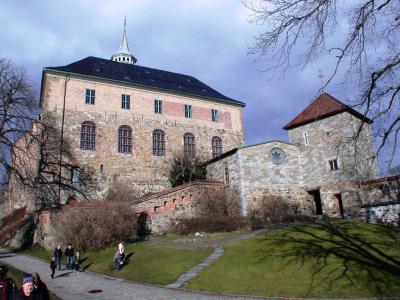
Akershus Fortress (Akershus Festning), also known as Akershus Castle (Akershus Slott), is a medieval fortification in Oslo, central to the history of Norway. The exact date of its construction is unknown but is believed to have started in the late 1290s under King Haakon V. The fortress is the namesake of the county of Akershus, which used to encompass most of Eastern Norway.
Throughout its history, Akershus Fortress has withstood numerous sieges, including those by Swedish and Danish forces between 1308 and 1532. Despite these attacks, the fortress was never captured by a foreign enemy. However, during World War II, it surrendered to Nazi Germany without a fight and later became a site for executions by the German occupiers and post-war trials. The fortress was liberated in 1945 by the Norwegian resistance.
Akershus Castle also served as a royal residence during the Middle Ages, playing a key role in the shift of Norway's capital from Bergen to Oslo. Several notable Norwegian royals, including King Haakon V, resided there. After a significant fire in 1624, King Christian IV ordered the relocation of Oslo closer to the fortress, subsequently renaming the city Christiania. The fortress was modernized into a Renaissance-style castle and continued to function primarily as a palace until the 19th century.
In addition to its military and royal functions, Akershus has also been used as a prison, holding many rebels and criminals throughout its history. Some prisoners were famous, like the notorious criminal and writer Gjest Baardsen, who served there 18 years after being given a life sentence; the legendary bank robber Ole Høiland, who committed suicide at Akershus upon his second internment; and Lars Haetta, who was sentenced to death for rebellion but was later pardoned when he began translating the Christian Bible into Sami.
Today, Akershus Fortress is still a military area but is open to the public daily. Visitors can explore the castle, the Norwegian Armed Forces Museum, and Norway's Resistance Museum. The fortress also houses the Royal Mausoleum, the final resting place for several Norwegian monarchs. The Office of the Norwegian Prime Minister is temporarily located near the fortress, and the site is still guarded by His Majesty the King’s Guard.
Throughout its history, Akershus Fortress has withstood numerous sieges, including those by Swedish and Danish forces between 1308 and 1532. Despite these attacks, the fortress was never captured by a foreign enemy. However, during World War II, it surrendered to Nazi Germany without a fight and later became a site for executions by the German occupiers and post-war trials. The fortress was liberated in 1945 by the Norwegian resistance.
Akershus Castle also served as a royal residence during the Middle Ages, playing a key role in the shift of Norway's capital from Bergen to Oslo. Several notable Norwegian royals, including King Haakon V, resided there. After a significant fire in 1624, King Christian IV ordered the relocation of Oslo closer to the fortress, subsequently renaming the city Christiania. The fortress was modernized into a Renaissance-style castle and continued to function primarily as a palace until the 19th century.
In addition to its military and royal functions, Akershus has also been used as a prison, holding many rebels and criminals throughout its history. Some prisoners were famous, like the notorious criminal and writer Gjest Baardsen, who served there 18 years after being given a life sentence; the legendary bank robber Ole Høiland, who committed suicide at Akershus upon his second internment; and Lars Haetta, who was sentenced to death for rebellion but was later pardoned when he began translating the Christian Bible into Sami.
Today, Akershus Fortress is still a military area but is open to the public daily. Visitors can explore the castle, the Norwegian Armed Forces Museum, and Norway's Resistance Museum. The fortress also houses the Royal Mausoleum, the final resting place for several Norwegian monarchs. The Office of the Norwegian Prime Minister is temporarily located near the fortress, and the site is still guarded by His Majesty the King’s Guard.
7) Heimen Husfliden
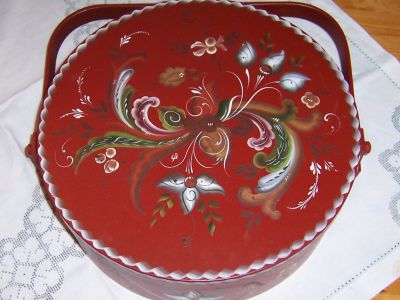
Heimen Husfliden stands as a remarkable enterprise dedicated to crafting distinctive and precious Norwegian and Scandinavian traditional attire, handicrafts, knitting and weaving threads, and needlework embellishments. Their creations are imbued with the richness of time-honored patterns and techniques.
Within their offerings, you'll find an array of garments including sweaters, cardigans, dresses, and jewelry, alongside cozy slippers, blankets, exquisite tapestries, and elegant tablecloths. The collection also extends to encompass floral paintings, intricate wrought iron pieces, and finely crafted tin and wood articles.
A true highlight is the inclusion of the bunad, Norway's national costume. With a legacy spanning 128 years, Heimen Husfliden has firmly established itself as Norway's premier source for bunads. Boasting an impressive selection of over 150 distinct bunads hailing from various corners of Norway, Heimen Husfliden has also assumed the role of the nation's foremost supplier for both bunads and their accompanying accessories.
For those seeking more than mere souvenirs, Heimen Husfliden stores offer a treasure trove of possibilities. Here, one can uncover items that are not only larger in significance but also promise a lasting and cherished memory.
Within their offerings, you'll find an array of garments including sweaters, cardigans, dresses, and jewelry, alongside cozy slippers, blankets, exquisite tapestries, and elegant tablecloths. The collection also extends to encompass floral paintings, intricate wrought iron pieces, and finely crafted tin and wood articles.
A true highlight is the inclusion of the bunad, Norway's national costume. With a legacy spanning 128 years, Heimen Husfliden has firmly established itself as Norway's premier source for bunads. Boasting an impressive selection of over 150 distinct bunads hailing from various corners of Norway, Heimen Husfliden has also assumed the role of the nation's foremost supplier for both bunads and their accompanying accessories.
For those seeking more than mere souvenirs, Heimen Husfliden stores offer a treasure trove of possibilities. Here, one can uncover items that are not only larger in significance but also promise a lasting and cherished memory.
8) Royal Palace (must see)
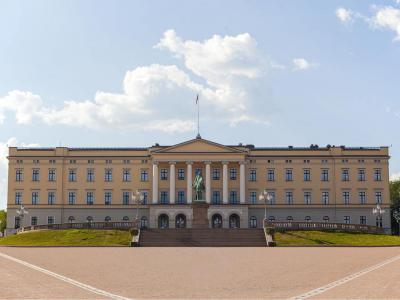
The Royal Palace (Slottet) in Oslo was constructed in the first half of the 19th century as the residence for King Karl III Johan of Norway. Originally from France, the king (also known as Karl XIV Johan of Sweden) reigned over Norway and Sweden from 1818 to 1844. Today, the palace serves as the official residence of the Norwegian monarch (whereas the Crown Prince resides at the Skaugum estate in Asker, west of Oslo).
Situated at the end of Karl Johans Gate, the palace is surrounded by Palace Park (Slottsparken) and is fronted by Palace Square (Slottsplassen). Before its completion, Norwegian royalty resided in Paléet, a grand townhouse in Christiania (now Oslo). The construction of the Royal Palace began in 1824 and lasted for nearly 25 years, based on the designs by Danish-born architect Hans Linstow.
Despite adopting a simpler three-story neo-classical design, the palace remained unfinished when King Karl passed away in 1844. His son and successor, Oscar I, and his wife, Queen Josephine, became its first residents five years later.
The Royal Palace Chapel, consecrated in 1844, is used for religious services and various events of the Norwegian royal family, such as baptisms and confirmations.
Following the dissolution of the Union with Sweden in 1905, the palace became the permanent royal residence of Norway’s new monarch, King Haakon VII. Significant renovations were undertaken during the reign of King Harald V to address structural issues and modernize the building. Public access to the palace began in 2002, and the daily changing of the guard has since become a popular attraction for visitors.
Moreover, in 2017, the former palace stables were renovated and converted into a versatile art venue called The Queen Sonja Art Stable (Dronning Sonja KunstStall). Open to the public, this building serves as an art gallery, museum, and concert hall.
Guided tours of the palace, predominantly in Norwegian, are offered throughout the afternoon during the summer months. However, English-language tours are also available daily at 12 pm, 2 pm, 2:20 pm, and 4 pm. Tickets for these guided tours can be purchased online starting from the 1st of March each year.
Tip:
Changing of the royal guards is at 1:30 pm daily. You can always politely approach one of the guard soldiers and take a nice photo or have a chat with them :)
The garden is peaceful and freely accessible – you can have a picnic there and quietly enjoy nature.
Situated at the end of Karl Johans Gate, the palace is surrounded by Palace Park (Slottsparken) and is fronted by Palace Square (Slottsplassen). Before its completion, Norwegian royalty resided in Paléet, a grand townhouse in Christiania (now Oslo). The construction of the Royal Palace began in 1824 and lasted for nearly 25 years, based on the designs by Danish-born architect Hans Linstow.
Despite adopting a simpler three-story neo-classical design, the palace remained unfinished when King Karl passed away in 1844. His son and successor, Oscar I, and his wife, Queen Josephine, became its first residents five years later.
The Royal Palace Chapel, consecrated in 1844, is used for religious services and various events of the Norwegian royal family, such as baptisms and confirmations.
Following the dissolution of the Union with Sweden in 1905, the palace became the permanent royal residence of Norway’s new monarch, King Haakon VII. Significant renovations were undertaken during the reign of King Harald V to address structural issues and modernize the building. Public access to the palace began in 2002, and the daily changing of the guard has since become a popular attraction for visitors.
Moreover, in 2017, the former palace stables were renovated and converted into a versatile art venue called The Queen Sonja Art Stable (Dronning Sonja KunstStall). Open to the public, this building serves as an art gallery, museum, and concert hall.
Guided tours of the palace, predominantly in Norwegian, are offered throughout the afternoon during the summer months. However, English-language tours are also available daily at 12 pm, 2 pm, 2:20 pm, and 4 pm. Tickets for these guided tours can be purchased online starting from the 1st of March each year.
Tip:
Changing of the royal guards is at 1:30 pm daily. You can always politely approach one of the guard soldiers and take a nice photo or have a chat with them :)
The garden is peaceful and freely accessible – you can have a picnic there and quietly enjoy nature.
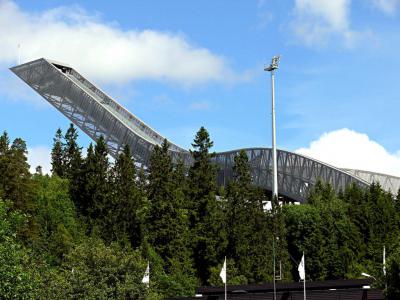
9) Holmenkollen Ski Museum & Ski Jump Tower
Situated at the foot of the Holmenkollen ski jump in Oslo, the Holmenkollen Ski Museum stands as a testament to skiing heritage. Established in 1923, it proudly claims the title of the world's oldest ski museum. The brainchild of architect Hjalmar Welhaven, this museum owes its inception to his visionary drive. Its remarkable collection of antique and historic skis finds its origins in Welhaven's personal assortment.
Initially housed within a building nestled in Oslo's Frognerseteren neighborhood, the museum underwent a significant shift in 1951 during the reconstruction of Holmenkollbakken. This transition saw the relocation of the museum's collection to new and improved quarters at Holmenkollbakken.
Within its walls, the museum unveils an astounding panorama of skiing history spanning over 4,000 years. This journey begins with ancient rock carvings hailing from the Stone Age and meanders through time to encompass the skiers and skis of the Viking Age. Notably, it showcases the gear that played pivotal roles in the polar expeditions led by Fridtjof Nansen and Roald Amundsen.
The Ski Jump Tower plays a vital role in defining the identity of Oslo. Within the panoramic view of Oslo, its distinctive silhouette stands out as a prominent icon. From its summit, the breathtaking panoramic vista of the fjord unfolds in a fantastic display. This architectural marvel defies conventions, and it's no surprise that it ranks among Oslo's most frequented tourist destinations.
Why You Should Visit:
Museum, coffee shop, souvenir shop, ski simulator and view from ski jump tower all in one!
Tip:
Go all the way up as the views are amazing and you have a greater appreciation of ski jumping.
If you go when the museum first opens or about 1.5 hours before it closes, the line is shorter.
For thrill seekers, there's a zip line going down from the top, which is expensive but exhilarating!
Initially housed within a building nestled in Oslo's Frognerseteren neighborhood, the museum underwent a significant shift in 1951 during the reconstruction of Holmenkollbakken. This transition saw the relocation of the museum's collection to new and improved quarters at Holmenkollbakken.
Within its walls, the museum unveils an astounding panorama of skiing history spanning over 4,000 years. This journey begins with ancient rock carvings hailing from the Stone Age and meanders through time to encompass the skiers and skis of the Viking Age. Notably, it showcases the gear that played pivotal roles in the polar expeditions led by Fridtjof Nansen and Roald Amundsen.
The Ski Jump Tower plays a vital role in defining the identity of Oslo. Within the panoramic view of Oslo, its distinctive silhouette stands out as a prominent icon. From its summit, the breathtaking panoramic vista of the fjord unfolds in a fantastic display. This architectural marvel defies conventions, and it's no surprise that it ranks among Oslo's most frequented tourist destinations.
Why You Should Visit:
Museum, coffee shop, souvenir shop, ski simulator and view from ski jump tower all in one!
Tip:
Go all the way up as the views are amazing and you have a greater appreciation of ski jumping.
If you go when the museum first opens or about 1.5 hours before it closes, the line is shorter.
For thrill seekers, there's a zip line going down from the top, which is expensive but exhilarating!
