Custom Walk in Madrid, Spain by bartosc76_445d4 created on 2025-12-03
Guide Location: Spain » Madrid
Guide Type: Custom Walk
# of Sights: 12
Tour Duration: 2 Hour(s)
Travel Distance: 3.9 Km or 2.4 Miles
Share Key: UZ7U8
Guide Type: Custom Walk
# of Sights: 12
Tour Duration: 2 Hour(s)
Travel Distance: 3.9 Km or 2.4 Miles
Share Key: UZ7U8
How It Works
Please retrieve this walk in the GPSmyCity app. Once done, the app will guide you from one tour stop to the next as if you had a personal tour guide. If you created the walk on this website or come to the page via a link, please follow the instructions below to retrieve the walk in the app.
Retrieve This Walk in App
Step 1. Download the app "GPSmyCity: Walks in 1K+ Cities" on Apple App Store or Google Play Store.



Step 2. In the GPSmyCity app, download(or launch) the guide "Madrid Map and Walking Tours".
Step 3. Tap the menu button located at upper right corner of the "Walks" screen and select "Retrieve custom walk". Enter the share key: UZ7U8
1) Puerta del Sol (Gate of the Sun) (must see)
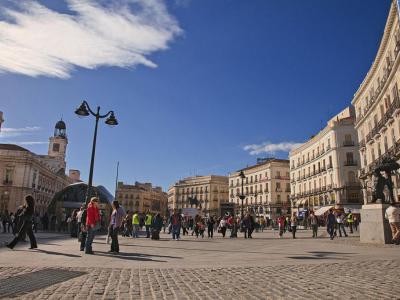
One of Madrid’s most popular gathering places, the Gate of the Sun is always buzzing with life. Historically, it marked the city’s original eastern entrance, where a gatehouse and castle once stood. Over the centuries, these structures gave way to churches, and in the late 19th century, the area transformed into the square we know today, becoming a hub of café culture and social activity.
Shaped like a half-moon, the area features a modern glass train station facing the statue of Carlos III on horseback at its center. Opposite, a red-brick government building, originally a post office from the reign of Carlos III, now houses the regional government. Later repurposed as the Ministry of the Interior, it gained its distinctive clocktower in 1866. This building, however, has a darker past-during the Franco regime, its basement cells were notorious for human rights abuses.
The Gate of the Sun itself has witnessed significant historical drama. On May 2, 1808, the Spanish uprising against French occupation began here, though the rebellion was ultimately quashed. In 1912, Prime Minister José Canalejas was assassinated in the square, and in 1931, the proclamation of the Second Republic was made from the Ministry’s balcony.
Today, it remains a focal point for festive events, bringing together locals and visitors alike. Nearby side streets offer a treasure trove of nightlife, with bars and clubs opening their doors late, creating a vibrant after-hours scene.
While here, you can also have a chance to eat like a local in a number of family-run restaurants, authentic taverns and tapas bars tucked away from the usual tourist paths. One such hidden gem is La Mallorquina, famed for its “napolitanas” and ring-shaped pastries, which can be enjoyed in an upstairs salon overlooking the square.
Shaped like a half-moon, the area features a modern glass train station facing the statue of Carlos III on horseback at its center. Opposite, a red-brick government building, originally a post office from the reign of Carlos III, now houses the regional government. Later repurposed as the Ministry of the Interior, it gained its distinctive clocktower in 1866. This building, however, has a darker past-during the Franco regime, its basement cells were notorious for human rights abuses.
The Gate of the Sun itself has witnessed significant historical drama. On May 2, 1808, the Spanish uprising against French occupation began here, though the rebellion was ultimately quashed. In 1912, Prime Minister José Canalejas was assassinated in the square, and in 1931, the proclamation of the Second Republic was made from the Ministry’s balcony.
Today, it remains a focal point for festive events, bringing together locals and visitors alike. Nearby side streets offer a treasure trove of nightlife, with bars and clubs opening their doors late, creating a vibrant after-hours scene.
While here, you can also have a chance to eat like a local in a number of family-run restaurants, authentic taverns and tapas bars tucked away from the usual tourist paths. One such hidden gem is La Mallorquina, famed for its “napolitanas” and ring-shaped pastries, which can be enjoyed in an upstairs salon overlooking the square.
2) Real Academia de Bellas Artes (Royal Academy of Fine Arts)
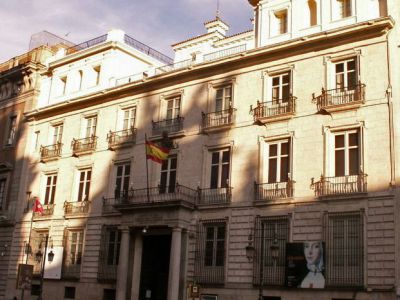
The Fine Arts Academy, situated in a 18th-century palace near the Gate of the Sun ("Puerto del Sol"), boasts an impressive list of former students, including Dalí and Picasso. Inside its walls, an art gallery showcases a diverse range of artworks spanning from the 15th century to the present day. Notable pieces include drawings by renowned artists such as Raphael and Titian, not to mention the exceptional collection of old masters, featuring paintings by Rubens and Van Dyck. Spanish artists from the 16th to the 19th centuries are well-represented, with works by El Greco, Murillo Ribera, Velazquez, Zurbaran, and Alejandrina Gessler y Lacroix, one of the pioneering female painters admitted to the academy.
A dedicated room pays homage to Goya, a former director of the academy, showcasing his notable paintings of Manuel Godoy, a self-portrait painted in 1815, and "The Madhouse." Another room is devoted to Picasso, exhibiting a portion of his celebrated "Suite Vollard" collection of drawings.
Within the academy's premises, you'll also find the National Chalcography Museum, which houses engraved plates used by esteemed painters like Goya on copper or brass. Additionally, limited edition prints are available for purchase.
Why You Should Visit:
Rich collection featuring beloved old masters transitioning into more modern artworks as you ascend.
The art can be enjoyed in spacious and aesthetically pleasing rooms that provide a comfortable and intimate setting for relaxation.
Tip:
Entry is free on Wednesdays, and there is a senior discount on paydays.
A dedicated room pays homage to Goya, a former director of the academy, showcasing his notable paintings of Manuel Godoy, a self-portrait painted in 1815, and "The Madhouse." Another room is devoted to Picasso, exhibiting a portion of his celebrated "Suite Vollard" collection of drawings.
Within the academy's premises, you'll also find the National Chalcography Museum, which houses engraved plates used by esteemed painters like Goya on copper or brass. Additionally, limited edition prints are available for purchase.
Why You Should Visit:
Rich collection featuring beloved old masters transitioning into more modern artworks as you ascend.
The art can be enjoyed in spacious and aesthetically pleasing rooms that provide a comfortable and intimate setting for relaxation.
Tip:
Entry is free on Wednesdays, and there is a senior discount on paydays.
3) Mondo Disko
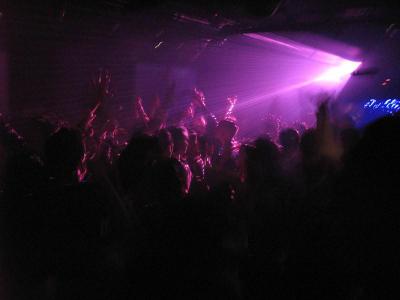
Mondo Disko is a premier destination in Madrid for electronic music enthusiasts, drawing a diverse crowd predominantly in their mid-twenties. This vibrant venue offers an exceptional array of electronic genres, with a primary focus on house and techno. The dancefloor provides a comfortable space to groove, accompanied by crystal-clear sound and captivating light displays that enhance the club experience.
Mondo Disko consistently showcases top-tier talent from the electronic music scene, featuring both renowned local DJs and acclaimed international artists. While the entrance fee may be higher, it typically includes a complimentary drink.
Mondo Disko consistently showcases top-tier talent from the electronic music scene, featuring both renowned local DJs and acclaimed international artists. While the entrance fee may be higher, it typically includes a complimentary drink.
4) Edificio Metropolis (Metropolis Building)
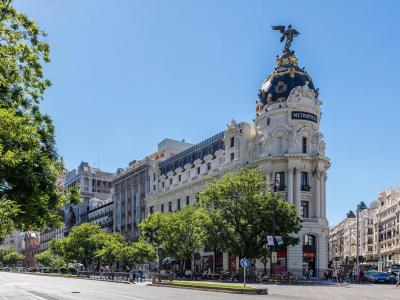
Easily recognized for its French-inspired architecture, the Metrópolis Building stands at the junction of Calle Alcalá and Gran Vía, anchoring this important Madrid intersection with its elegant presence. Completed in 1911, the structure was originally commissioned by the Union and Fenix insurance company and designed by French architects Jules and Raymond Février.
At ground level, the building presents a restrained facade that gradually ascends into richly decorated upper floors, framed by colonnades. Each pair of columns serve as pedestals for allegorical statues symbolizing Commerce, Mining, Industry, and Agriculture. At the rounded corner of the structure, a tower rises, topped by a double-layered dome made of dark slate accented with gilded ornaments.
Initially, the dome supported a bronze statue of a mythical Phoenix, with the figure of Ganymede riding atop it-a symbol of the Union and Fenix brand. When the company sold the building in the 1970s, the statue was moved to their new headquarters on Castellana Boulevard. In its place now stands a statue of Winged Victory, while the original Phoenix statue rests in the garden of the Union and Fenix building.
Tip: For a small fee, you can enjoy great views of the Metrópolis Building from the rooftop of the nearby Circle of Fine Arts just across the street.
At ground level, the building presents a restrained facade that gradually ascends into richly decorated upper floors, framed by colonnades. Each pair of columns serve as pedestals for allegorical statues symbolizing Commerce, Mining, Industry, and Agriculture. At the rounded corner of the structure, a tower rises, topped by a double-layered dome made of dark slate accented with gilded ornaments.
Initially, the dome supported a bronze statue of a mythical Phoenix, with the figure of Ganymede riding atop it-a symbol of the Union and Fenix brand. When the company sold the building in the 1970s, the statue was moved to their new headquarters on Castellana Boulevard. In its place now stands a statue of Winged Victory, while the original Phoenix statue rests in the garden of the Union and Fenix building.
Tip: For a small fee, you can enjoy great views of the Metrópolis Building from the rooftop of the nearby Circle of Fine Arts just across the street.
5) Instituto Cervantes (Cervantes Institute)
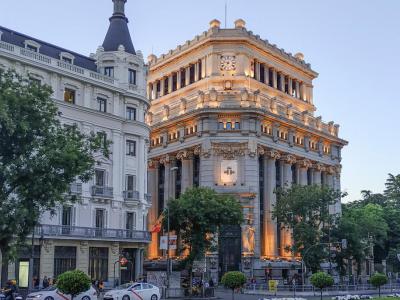
The Cervantes Institute, established in 1991, is a public institution dedicated to promoting the Spanish language and disseminating Hispanic cultures worldwide. It operates from two main locations in Madrid: one is situated on the bustling Calle de Alcalá, near Gran Vía, while the other is in Alcalá de Henares, the birthplace of the renowned writer Miguel de Cervantes.
The headquarters in the Chueca and Salesas neighborhoods is housed in the iconic Caryatid Building ("Edificio de las Cariátides"), formerly the headquarters of Spain's Central Bank ("Banco Central"). This architectural marvel, designed by Antonio Palacios and Joaquín Otamendi, marked a significant departure from the city's traditional norms. While similar office buildings were commonly found in American cities like Boston and Chicago, as well as in England, it was a novelty in Madrid.
With a presence in 88 cities across 45 countries on five continents, the Cervantes Institute offers a vibrant cultural program that caters to diverse audiences. This includes exhibitions, workshops, lectures, film screenings, concerts, and more.
The headquarters in the Chueca and Salesas neighborhoods is housed in the iconic Caryatid Building ("Edificio de las Cariátides"), formerly the headquarters of Spain's Central Bank ("Banco Central"). This architectural marvel, designed by Antonio Palacios and Joaquín Otamendi, marked a significant departure from the city's traditional norms. While similar office buildings were commonly found in American cities like Boston and Chicago, as well as in England, it was a novelty in Madrid.
With a presence in 88 cities across 45 countries on five continents, the Cervantes Institute offers a vibrant cultural program that caters to diverse audiences. This includes exhibitions, workshops, lectures, film screenings, concerts, and more.
6) Plaza de Cibeles (Cibeles Square)
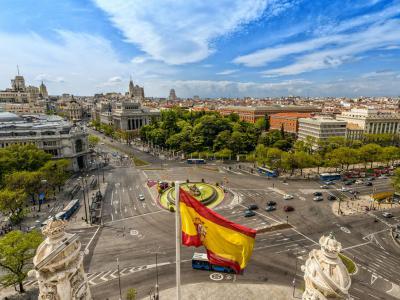
Traffic flows continuously day and night around Cibeles Square, serving as a vital intersection connecting various parts of the city. At the heart of it stands the iconic Cibeles Fountain, a prominent landmark of Madrid that depicts Cibele, the goddess of nature, riding in a chariot pulled by two lions. The fountain symbolizes the fertility of the surrounding land and has become a gathering spot for Real Madrid football club fans to celebrate important victories.
Located on a large block at the corner of Calle de Alcalá and Paseo del Prado, you'll find the magnificent Bank of Spain (Banco de España) with its grand entrance adorned with sculptures by Jerónimo Suñol. Across Calle de Alcalá, on the northwest corner, is the Buenavista Palace ("Palacio de Buenavista"), originally built for the Duchess of Alba in the 18th century and now serving as the headquarters of the Spanish army.
On the northeast corner of the square stands the neo-Baroque Linares Palace ("Palacio de Linares"). Constructed in the late 19th century for the Marquis of Linares, it boasts opulent interiors and is rumored to be haunted. Guided tours are available on Saturdays and Sundays at 11am, noon, and 1pm. Within the same building, you'll find Casa de América, a cultural center focused on Latin American arts, hosting vibrant exhibitions, concerts, and discussions. Admission is free, and their operating hours are Mon-Fri: 9 am–3pm, 4–8pm; Sat: 11am–3pm.
Dominating the square is the elegant white Cibeles Palace, formally known as the Palace of Communications ("Palacio de Comunicaciones"), formerly the main post office and now serving as the City Hall. Designed by renowned architect Antonio Palacios, who was responsible for several of Madrid's grandest buildings in the early 20th century, it boasts ornate and elaborate features. The building also houses CentroCentro, a cultural space with regular exhibitions. Inside, visitors can enjoy the intricate interior and access the observation deck (open from Tuesday to Sunday, 10am to 8pm) for panoramic views of the city. Additionally, there is a chic terrace bar on the sixth floor, open from 1pm, where visitors can relax and enjoy a drink.
Located on a large block at the corner of Calle de Alcalá and Paseo del Prado, you'll find the magnificent Bank of Spain (Banco de España) with its grand entrance adorned with sculptures by Jerónimo Suñol. Across Calle de Alcalá, on the northwest corner, is the Buenavista Palace ("Palacio de Buenavista"), originally built for the Duchess of Alba in the 18th century and now serving as the headquarters of the Spanish army.
On the northeast corner of the square stands the neo-Baroque Linares Palace ("Palacio de Linares"). Constructed in the late 19th century for the Marquis of Linares, it boasts opulent interiors and is rumored to be haunted. Guided tours are available on Saturdays and Sundays at 11am, noon, and 1pm. Within the same building, you'll find Casa de América, a cultural center focused on Latin American arts, hosting vibrant exhibitions, concerts, and discussions. Admission is free, and their operating hours are Mon-Fri: 9 am–3pm, 4–8pm; Sat: 11am–3pm.
Dominating the square is the elegant white Cibeles Palace, formally known as the Palace of Communications ("Palacio de Comunicaciones"), formerly the main post office and now serving as the City Hall. Designed by renowned architect Antonio Palacios, who was responsible for several of Madrid's grandest buildings in the early 20th century, it boasts ornate and elaborate features. The building also houses CentroCentro, a cultural space with regular exhibitions. Inside, visitors can enjoy the intricate interior and access the observation deck (open from Tuesday to Sunday, 10am to 8pm) for panoramic views of the city. Additionally, there is a chic terrace bar on the sixth floor, open from 1pm, where visitors can relax and enjoy a drink.
7) Puerta de Alcala (Alcala Gate)
Standing as one of Madrid’s most iconic landmarks, Alcalá is a lasting symbol of King Carlos III’s vision for urban renewal in the city’s eastern districts. Designed by renowned architect Francesco Sabatini, it replaced an earlier Baroque gateway originally constructed by Felipe III to mark his wife’s grand entry into Madrid.
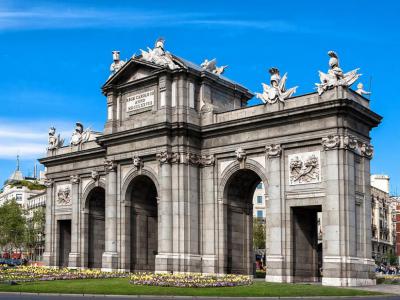
Construction on this colossal Neo-Classical city gate began in 1769 and spanned nine years. At the time, it was Europe’s largest such structure, predating other renowned triumphal arches like the Arc de Triomphe in Paris and Berlin’s Brandenburg Gate. Built from granite, it features an imposing pediment and five arches-three central and two rectangular outer ones-adorned with classical statues and finely detailed reliefs. The name “Alcalá” traces its roots to the Arabic term “al-qalat,” meaning castle or fortification, reflecting the original route’s connection to the fortified town of Alcalá de Henares.
Once marking Madrid’s eastern boundary, the gateway now stands within Independence Square, surrounded by well-tended gardens. Its grandeur is particularly striking at night, when illuminated by soft, golden lighting. Situated near Retiro Park and the upscale Salamanca district, Alcalá is perfectly positioned for visitors to experience its beauty as part of a larger exploration of Madrid’s attractions. Stroll through the nearby park, enjoy a coffee at one of the surrounding terraces, or simply marvel at the architectural elegance of this historic landmark.
Construction on this colossal Neo-Classical city gate began in 1769 and spanned nine years. At the time, it was Europe’s largest such structure, predating other renowned triumphal arches like the Arc de Triomphe in Paris and Berlin’s Brandenburg Gate. Built from granite, it features an imposing pediment and five arches-three central and two rectangular outer ones-adorned with classical statues and finely detailed reliefs. The name “Alcalá” traces its roots to the Arabic term “al-qalat,” meaning castle or fortification, reflecting the original route’s connection to the fortified town of Alcalá de Henares.
Once marking Madrid’s eastern boundary, the gateway now stands within Independence Square, surrounded by well-tended gardens. Its grandeur is particularly striking at night, when illuminated by soft, golden lighting. Situated near Retiro Park and the upscale Salamanca district, Alcalá is perfectly positioned for visitors to experience its beauty as part of a larger exploration of Madrid’s attractions. Stroll through the nearby park, enjoy a coffee at one of the surrounding terraces, or simply marvel at the architectural elegance of this historic landmark.

8) Monumento a Alfonso XII (Monument to Alfonso XII)
Retiro Park’s “Pleasure Lake” is one of its most visited spots-and for good reason. On its eastern edge stands the park’s largest preserved monument, a towering tribute to King Alfonso XII. Unveiled in 1922, the monument had been in the works for two decades, originally commissioned by Queen Maria Cristina and funded by public donations. The winning design came from Catalan architect José Grases Riera, best known for his work on Madrid’s ornate Longoria Palace.
Up close, the monument is even more impressive. Around twenty sculptors contributed to its rich detail, from the proud stone lions guarding the pond, to figures of mermaids and symbolic carvings representing Science, Agriculture, the Army, and the Navy. The centerpiece, of course, is the bronze equestrian statue of Alfonso XII himself. Just below it, a wide staircase leads down to the lake, offering a popular spot to sit and watch the sunset reflect across the water.
Here’s a tip: if you’re curious about the view from the top, you can actually climb up to the monument’s viewpoint during special guided visits organized by the Madrid City Council. These are part of the “Pasea Madrid” program and include fascinating stories about the monument’s creation, plus sweeping views of Retiro Park. Visits typically take place on Tuesdays and Thursdays, between 3 and 5:30 in the afternoon. Slots fill up fast, so be sure to book early. The viewpoint is also open during select months like September and October-so keep an eye out if you’re planning ahead.
Up close, the monument is even more impressive. Around twenty sculptors contributed to its rich detail, from the proud stone lions guarding the pond, to figures of mermaids and symbolic carvings representing Science, Agriculture, the Army, and the Navy. The centerpiece, of course, is the bronze equestrian statue of Alfonso XII himself. Just below it, a wide staircase leads down to the lake, offering a popular spot to sit and watch the sunset reflect across the water.
Here’s a tip: if you’re curious about the view from the top, you can actually climb up to the monument’s viewpoint during special guided visits organized by the Madrid City Council. These are part of the “Pasea Madrid” program and include fascinating stories about the monument’s creation, plus sweeping views of Retiro Park. Visits typically take place on Tuesdays and Thursdays, between 3 and 5:30 in the afternoon. Slots fill up fast, so be sure to book early. The viewpoint is also open during select months like September and October-so keep an eye out if you’re planning ahead.
9) Fuente de la Alcachofa (Fountain of the Artichoke)
This impressive fountain is often called the Fountain of the Triton due to the mythological duo of triton and nymph decorating its base. It was originally part of an grand plan to beautify the Salón del Prado, Madrid’s very first tree-lined promenade, during the reign of Carlos III. However, as the city modernized and traffic grew too heavy, the fountain was given a new home. In 1877, nearly a century after its creation, it was moved to the peaceful southwest corner of Retiro Park.
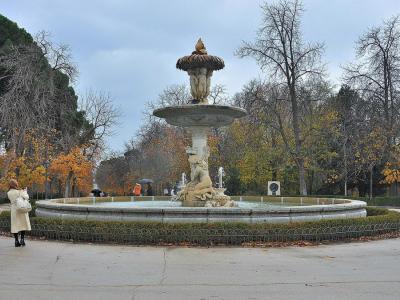
Crafted from granite and white stone, the fountain showcases signature baroque flair-swirling marine deities, leafy flourishes, and of course, the ever-present movement of water, symbolizing the essence of life. At the very top, you’ll notice something unusual: an artichoke. It’s not just there for decoration. This plant was valued for both its healing properties and its role in cooking, and over the centuries, it has also come to represent fertility.
At the base of the fountain, circling around its wide stone bowl, stand the triton and the nereid, lifting the city’s coat of arms-myth and meaning sculpted into stone, flowing with echoes of Madrid’s past.
Crafted from granite and white stone, the fountain showcases signature baroque flair-swirling marine deities, leafy flourishes, and of course, the ever-present movement of water, symbolizing the essence of life. At the very top, you’ll notice something unusual: an artichoke. It’s not just there for decoration. This plant was valued for both its healing properties and its role in cooking, and over the centuries, it has also come to represent fertility.
At the base of the fountain, circling around its wide stone bowl, stand the triton and the nereid, lifting the city’s coat of arms-myth and meaning sculpted into stone, flowing with echoes of Madrid’s past.
10) Museo Nacional del Prado (Prado National Museum) (must see)
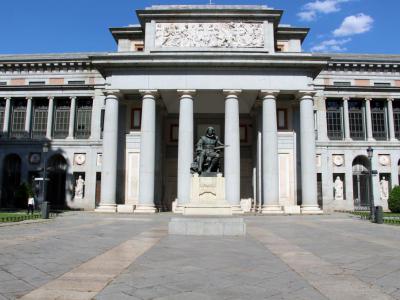
The Prado National Museum stands as Madrid's top tourist attraction, renowned for its rich art collection that spans centuries and was predominantly acquired by the Spanish royal family over the past 200 years. The institution is organized by national schools and received a significant rejuvenation with the controversial €152 million extension designed by Rafael Moneo. Upon entering, follow the suggested route by bearing right into the central hallway, known as the Hall of the Muses ("Sala de las Musas"). From there, you will be guided through the collections on the ground floor before proceeding upstairs.
The collection of Spanish paintings is truly remarkable, starting with stunning 12th-century Romanesque frescoes and encompassing works by nearly every influential Spanish painter: from the renowned El Greco, who hailed from Crete but worked in Toledo during the 1570s, to the outstanding Francisco de Goya, known for his masterpieces depicting 18th-century Bourbon Spain. Don't miss the collection of works by Diego Velázquez, including his renowned masterpiece, "Las Meninas", either.
Meanwhile, the Italian painting collection boasts the most comprehensive assembly of painters from the Venice School within a single museum, including Titian's magnificent equestrian portrait, "Emperor Carlos V at Mühlberg". Notable works by Raphael, Tintoretto, Veronese, and Caravaggio can also be found. The early Flemish works are equally impressive, featuring Hieronymus Bosch's renowned triptych, the mesmerizing "Garden of Earthly Delights". Keep an eye out for Pieter Bruegel the Elder's "Triumph of Death", one of the most chilling canvases ever painted, as well as Rogier van der Weyden's "Descent from the Cross" and the extensive Rubens collection.
While German and French paintings have a lesser representation, they are still worth exploring, especially the works by Dürer, Cranach, and Poussin. Downstairs in the basement, you'll encounter a dazzling display of jewels that once belonged to the Grand Dauphin Louis, son of Louis XIV and father of Felipe V, Spain's first Bourbon king.
The new wing of the museum houses temporary exhibition spaces, restoration workshops, a sculpture gallery, as well as a restaurant, café, and shops, providing visitors with a comprehensive experience.
***HEMINGWAY'S MADRID***
Although Ernest Hemingway was not a usual lover of museums, Prado was an exception for him. He recognized this cultural site as a treasure, with its exhibited works by Picasso, Velazquez, Goya, El Greco and many other international artists. The writer was especially fascinated by Goya, whom he considered a genius.
Tip:
To enter, tickets can be purchased at the Puerta de Goya, opposite the Hotel Ritz on Calle Felipe IV, while the actual entrance is located at the Puerta de los Jerónimos at the back, leading into the museum's new extension. To avoid the lengthy queues, it is advisable to buy tickets in advance from the museum's website.
You have the option of enjoying a free visit during the last two hours of the day, which is a great way to save on your travel expenses while still being able to experience the museum. However, if you intend to spend an entire day here, you can have your ticket and audio guide stamped, allowing you to temporarily exit the museum for lunch and then return to continue exploring.
The collection of Spanish paintings is truly remarkable, starting with stunning 12th-century Romanesque frescoes and encompassing works by nearly every influential Spanish painter: from the renowned El Greco, who hailed from Crete but worked in Toledo during the 1570s, to the outstanding Francisco de Goya, known for his masterpieces depicting 18th-century Bourbon Spain. Don't miss the collection of works by Diego Velázquez, including his renowned masterpiece, "Las Meninas", either.
Meanwhile, the Italian painting collection boasts the most comprehensive assembly of painters from the Venice School within a single museum, including Titian's magnificent equestrian portrait, "Emperor Carlos V at Mühlberg". Notable works by Raphael, Tintoretto, Veronese, and Caravaggio can also be found. The early Flemish works are equally impressive, featuring Hieronymus Bosch's renowned triptych, the mesmerizing "Garden of Earthly Delights". Keep an eye out for Pieter Bruegel the Elder's "Triumph of Death", one of the most chilling canvases ever painted, as well as Rogier van der Weyden's "Descent from the Cross" and the extensive Rubens collection.
While German and French paintings have a lesser representation, they are still worth exploring, especially the works by Dürer, Cranach, and Poussin. Downstairs in the basement, you'll encounter a dazzling display of jewels that once belonged to the Grand Dauphin Louis, son of Louis XIV and father of Felipe V, Spain's first Bourbon king.
The new wing of the museum houses temporary exhibition spaces, restoration workshops, a sculpture gallery, as well as a restaurant, café, and shops, providing visitors with a comprehensive experience.
***HEMINGWAY'S MADRID***
Although Ernest Hemingway was not a usual lover of museums, Prado was an exception for him. He recognized this cultural site as a treasure, with its exhibited works by Picasso, Velazquez, Goya, El Greco and many other international artists. The writer was especially fascinated by Goya, whom he considered a genius.
Tip:
To enter, tickets can be purchased at the Puerta de Goya, opposite the Hotel Ritz on Calle Felipe IV, while the actual entrance is located at the Puerta de los Jerónimos at the back, leading into the museum's new extension. To avoid the lengthy queues, it is advisable to buy tickets in advance from the museum's website.
You have the option of enjoying a free visit during the last two hours of the day, which is a great way to save on your travel expenses while still being able to experience the museum. However, if you intend to spend an entire day here, you can have your ticket and audio guide stamped, allowing you to temporarily exit the museum for lunch and then return to continue exploring.
11) Plaza Canovas del Castillo (Canovas del Castillo Square)
Ensure that your camera is fully charged and that you have ample storage space for photos when you visit Plaza Canovas del Castillo, as it would be a shame not to capture some mementos of this picturesque square.
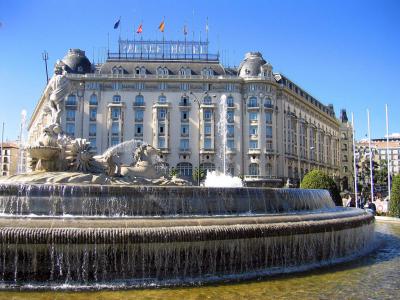
Although the name "plaza" may seem grand, it is actually Madrid's most popular and beautiful roundabout. Encircled by magnificent Baroque buildings, the focal point of the square is the magnificent Neptune Fountain ("Fuente de Neptuno"). This grand fountain features a large basin adorned with a statue of Neptune riding a chariot pulled by two horses, symbolizing his dominion over the seas. Designed by Ventura Rodríguez in 1777, the fountain was part of a grand plan by King Carlos III to enhance the beauty of eastern Madrid.
In the late 19th century, the square was renamed in honor of Antonio Cánovas del Castillo, a renowned historian and influential statesman in Spain who played a key role in drafting the Spanish Constitution and advocated for religious freedom. However, his political stance against the independence of Cuba had detrimental consequences: his opposition eventually contributed to the Spanish-American War in 1898. Furthermore, Cánovas del Castillo's darker side emerged when, in response to a bomb explosion during a religious gathering in 1896, he ordered the arrest and torture of over 300 individuals, many of whom were innocent. He was assassinated in 1897 by an Italian anarchist.
Although the name "plaza" may seem grand, it is actually Madrid's most popular and beautiful roundabout. Encircled by magnificent Baroque buildings, the focal point of the square is the magnificent Neptune Fountain ("Fuente de Neptuno"). This grand fountain features a large basin adorned with a statue of Neptune riding a chariot pulled by two horses, symbolizing his dominion over the seas. Designed by Ventura Rodríguez in 1777, the fountain was part of a grand plan by King Carlos III to enhance the beauty of eastern Madrid.
In the late 19th century, the square was renamed in honor of Antonio Cánovas del Castillo, a renowned historian and influential statesman in Spain who played a key role in drafting the Spanish Constitution and advocated for religious freedom. However, his political stance against the independence of Cuba had detrimental consequences: his opposition eventually contributed to the Spanish-American War in 1898. Furthermore, Cánovas del Castillo's darker side emerged when, in response to a bomb explosion during a religious gathering in 1896, he ordered the arrest and torture of over 300 individuals, many of whom were innocent. He was assassinated in 1897 by an Italian anarchist.
12) Plaza de las Cortes (Cortes Square)
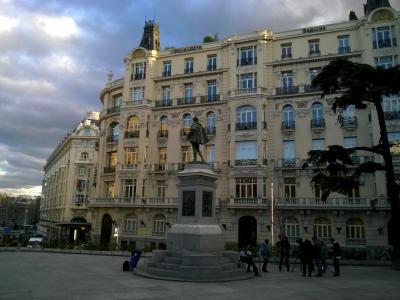
Plaza de las Cortes is a prominent square surrounded by neoclassical buildings that showcase some of Madrid's finest architecture. Every corner reveals a structure with intricate details to appreciate. On the northern side stands the Parliament Palace ("Palacio de las Cortes"), a 19th-century building where the lower house of the Spanish parliament convenes. Its entrance is guarded by two bronze lions, crafted from a cannon melted down during the African War of 1859–60. Another notable landmark is the Westin Palace, which opened in 1912 as the largest and most modern hotel in Europe, with over 400 rooms, telephones, and en suite toilets.
At the center of the triangular-shaped square stands a grand statue honoring the renowned Spanish writer, Miguel de Cervantes. Erected in 1835, it was the first secular statue in Madrid that wasn't dedicated to royalty at the time. In 2009, a time capsule was discovered within its pedestal, containing a well-preserved 1819 printing of "Don Quixote" and other publications and artifacts. These items are now held at the Regional Archaeological Museum ("Museo Arqueológico Regional") in Alcalá de Henares, near Cervantes' birthplace in 1547.
Although many details of Cervantes' early life are debated, it is known that he and his family resided in Cordoba for several years before returning to Madrid. He worked for a cardinal in Rome before joining the Spanish military, where he was severely wounded in the Battle of Lepanto in 1571. Despite his injuries, he survived and received recognition for his bravery. In 1575, Cervantes and his brother Rodrigo were captured by the Ottomans while aboard the galley Sol. They were held captive in Algiers, with only Rodrigo being released after their family paid a ransom. Cervantes remained in captivity until his freedom was finally secured in 1580.
Following his release, Cervantes held various government positions, including an intelligence agent in Africa and a tax collector in Seville. It was during this period that he completed some of his most famous works, including "La Galatea" in 1585. He later returned to Madrid, where he spent the rest of his life. In 1605, he published the first volume of "Don Quixote", followed by the second volume ten years later, cementing his status as one of the most renowned figures in Spanish literature.
At the center of the triangular-shaped square stands a grand statue honoring the renowned Spanish writer, Miguel de Cervantes. Erected in 1835, it was the first secular statue in Madrid that wasn't dedicated to royalty at the time. In 2009, a time capsule was discovered within its pedestal, containing a well-preserved 1819 printing of "Don Quixote" and other publications and artifacts. These items are now held at the Regional Archaeological Museum ("Museo Arqueológico Regional") in Alcalá de Henares, near Cervantes' birthplace in 1547.
Although many details of Cervantes' early life are debated, it is known that he and his family resided in Cordoba for several years before returning to Madrid. He worked for a cardinal in Rome before joining the Spanish military, where he was severely wounded in the Battle of Lepanto in 1571. Despite his injuries, he survived and received recognition for his bravery. In 1575, Cervantes and his brother Rodrigo were captured by the Ottomans while aboard the galley Sol. They were held captive in Algiers, with only Rodrigo being released after their family paid a ransom. Cervantes remained in captivity until his freedom was finally secured in 1580.
Following his release, Cervantes held various government positions, including an intelligence agent in Africa and a tax collector in Seville. It was during this period that he completed some of his most famous works, including "La Galatea" in 1585. He later returned to Madrid, where he spent the rest of his life. In 1605, he published the first volume of "Don Quixote", followed by the second volume ten years later, cementing his status as one of the most renowned figures in Spanish literature.
