Custom Walk in Funchal, Portugal by matthews987_9a5278 created on 2025-12-22
Guide Location: Portugal » Funchal
Guide Type: Custom Walk
# of Sights: 10
Tour Duration: 3 Hour(s)
Travel Distance: 7 Km or 4.3 Miles
Share Key: BDJE2
Guide Type: Custom Walk
# of Sights: 10
Tour Duration: 3 Hour(s)
Travel Distance: 7 Km or 4.3 Miles
Share Key: BDJE2
How It Works
Please retrieve this walk in the GPSmyCity app. Once done, the app will guide you from one tour stop to the next as if you had a personal tour guide. If you created the walk on this website or come to the page via a link, please follow the instructions below to retrieve the walk in the app.
Retrieve This Walk in App
Step 1. Download the app "GPSmyCity: Walks in 1K+ Cities" on Apple App Store or Google Play Store.



Step 2. In the GPSmyCity app, download(or launch) the guide "Funchal Map and Walking Tours".
Step 3. Tap the menu button located at upper right corner of the "Walks" screen and select "Retrieve custom walk". Enter the share key: BDJE2
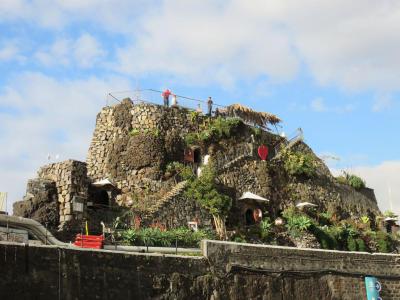
1) Forte de São José (São José Fort)
São José Fort, located at the maritime entrance to Funchal, is a noteworthy historical site that offers visitors a remarkable panoramic view of the Atlantic. It was constructed in the mid-18th century as part of Funchal's defensive infrastructure, which was vital to protect the city's port and commercial trade. The fort is situated on a rock formation known as Isle of San José (Ilhéu de São José), where the discoverers of Madeira, João Gonçalves Zarco, and Tristão Vaz Teixeira, sought refuge upon their arrival to the island, which was then heavily forested.
Despite its importance, the fort was later used as headquarters for British troops during the occupation of Madeira between 1801 and 1807 and was subsequently transformed into a prison. The monument fell into disrepair for many years until a private individual acquired it and undertook a significant effort to restore and revitalize the site.
Today, Forte de São José is a special place of interest for tourists visiting Madeira, not only for its historical significance but also for its architectural and cultural value. A visit to this site is highly recommended for anyone exploring the capital city of Madeira.
Despite its importance, the fort was later used as headquarters for British troops during the occupation of Madeira between 1801 and 1807 and was subsequently transformed into a prison. The monument fell into disrepair for many years until a private individual acquired it and undertook a significant effort to restore and revitalize the site.
Today, Forte de São José is a special place of interest for tourists visiting Madeira, not only for its historical significance but also for its architectural and cultural value. A visit to this site is highly recommended for anyone exploring the capital city of Madeira.
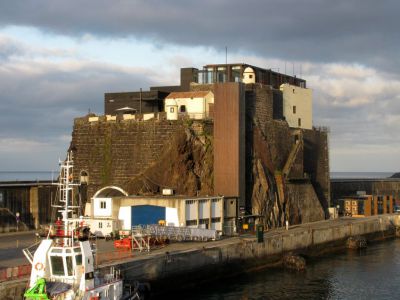
2) Fortaleza de Nossa Senhora da Conceição (Fort of Our Lady of the Conception)
The Fort of Our Lady of the Conception, also known as the Islet Fortress, was built to enhance the defenses of Funchal and safeguard trade at the harbor from pirate assaults. Although the need for a fortification had been felt since the mid-15th century, it was only in 1654 that construction began, based on a blueprint designed by Bartolomeu João, the royal master builder. Initially round-shaped, the fortress was primarily utilized as a registry for vessels arriving at the port of Funchal.
In 1670, the fortress garrison requested the construction of a chapel, which was erected together with a cistern in 1687. By 1703, it was decided that the fort should be reshaped to accommodate more artillery.
In the mid-19th century, the fortress underwent improvements, including the construction of a large storehouse and the installation of a crane. Later that century, the harbor's wall was extended, connecting the islet to Madeira. In the 20th century, during port expansion works, a tunnel was excavated inside the islet, providing access to the rest of the pier.
During the 1950s, the military occupied the fort and expanded the existing buildings, such as the barracks and the command building. The military presence ended in the 1970s, marking the conclusion of the fortress's long military career.
In 1992, the building was handed over to the Autonomous Region of Madeira, which initiated a renovation project led by architect José Luís Meneses, winner of the Town Hall of Funchal's Heritage Recuperation award in 1998. At that time, the space was first explored as a restaurant, the first of several attempts to transform it into a destination for food and nightlife.
The most recent rehabilitation efforts have left the islet looking as it does today, preserving parts of the previous phases of construction. Currently, the site houses the Design Centre, owned by renowned Madeiran interior designer Nini Andrade Silva, which includes an exhibition area and a restaurant. The view from the fortress provides a breathtaking panorama of Funchal, encompassing the entire bay and amphitheater, which are characteristic of this beautiful city.
In 1670, the fortress garrison requested the construction of a chapel, which was erected together with a cistern in 1687. By 1703, it was decided that the fort should be reshaped to accommodate more artillery.
In the mid-19th century, the fortress underwent improvements, including the construction of a large storehouse and the installation of a crane. Later that century, the harbor's wall was extended, connecting the islet to Madeira. In the 20th century, during port expansion works, a tunnel was excavated inside the islet, providing access to the rest of the pier.
During the 1950s, the military occupied the fort and expanded the existing buildings, such as the barracks and the command building. The military presence ended in the 1970s, marking the conclusion of the fortress's long military career.
In 1992, the building was handed over to the Autonomous Region of Madeira, which initiated a renovation project led by architect José Luís Meneses, winner of the Town Hall of Funchal's Heritage Recuperation award in 1998. At that time, the space was first explored as a restaurant, the first of several attempts to transform it into a destination for food and nightlife.
The most recent rehabilitation efforts have left the islet looking as it does today, preserving parts of the previous phases of construction. Currently, the site houses the Design Centre, owned by renowned Madeiran interior designer Nini Andrade Silva, which includes an exhibition area and a restaurant. The view from the fortress provides a breathtaking panorama of Funchal, encompassing the entire bay and amphitheater, which are characteristic of this beautiful city.
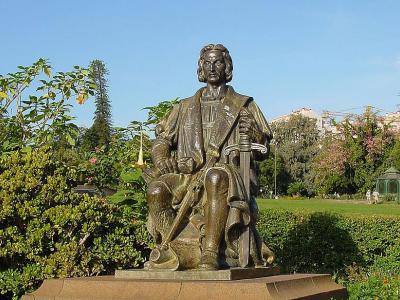
3) Estátua de Cristóvão Colombo (Statue of Christopher Columbus)
Located in the center of Funchal, Santa Catarina Park is a serene oasis with shady trees and lawns. Overlooking the harbor, within this park, stands the statue of Christopher Columbus, created by Portuguese sculptor Henrique Moreira. The City Hall acquired the statue, which was inaugurated in 1968. The bronze statue rests on a stone base, placed near the viewpoint from where one can see the city. The statue serves as a reminder of Columbus's voyages to the Americas and his stopovers in Madeira in 1475, 1480, and 1492.
In addition to the statue, several other things on the island commemorate Columbus's presence, such as the Columbus library, Columbus House, and Columbus's ship, the Santa Maria.
In addition to the statue, several other things on the island commemorate Columbus's presence, such as the Columbus library, Columbus House, and Columbus's ship, the Santa Maria.
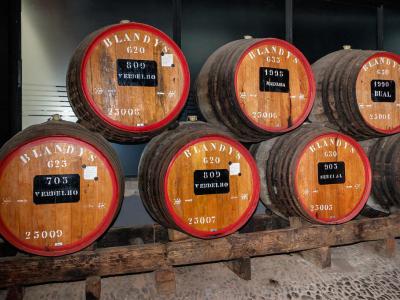
4) Blandy's Wine Lodge (must see)
Blandy's Wine Lodge should not be missed when visiting Funchal. This old winery is situated right in the heart of the city. It offers a large spectrum of services, including wine tours, tasting rooms, winemaking techniques and of course a specialty shop where you can purchase the truly original Madeiran wine.
5) Estátua de João Gonçalves Zarco (Statue of João Gonçalves Zarco)
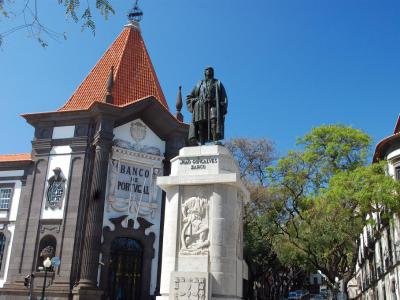
The Statue of João Gonçalves Zarco, located in the city of Funchal is a historical monument that pays tribute to a prominent Portuguese navigator and noble knight. João Gonçalves Zarco was appointed by the Infante to manage the Island of Madeira and organize its settlement in the early 15th century.
To preserve the memory of João Gonçalves Zarco, the Governing Board entrusted the sculptor Francisco Franco with the task of creating this statue. The architect Cristiano da Silva was charged with the design of the foundation, where allegoric figures relating to the Discoveries, such as Conquer, Settlement, Wisdom, and Evangelisation, are depicted. The statue was erected in 1914.
After the final location at the intersection of Arriaga Avenue and Zarco Avenue was chosen, the monument was eventually inaugurated in 1934. A former version of this statue won the gold medal in the Iberian-American Exhibition in Seville in 1929.
To preserve the memory of João Gonçalves Zarco, the Governing Board entrusted the sculptor Francisco Franco with the task of creating this statue. The architect Cristiano da Silva was charged with the design of the foundation, where allegoric figures relating to the Discoveries, such as Conquer, Settlement, Wisdom, and Evangelisation, are depicted. The statue was erected in 1914.
After the final location at the intersection of Arriaga Avenue and Zarco Avenue was chosen, the monument was eventually inaugurated in 1934. A former version of this statue won the gold medal in the Iberian-American Exhibition in Seville in 1929.
6) Fortaleza e Palácio de São Lourenço (Saint Lawrence Fortress)
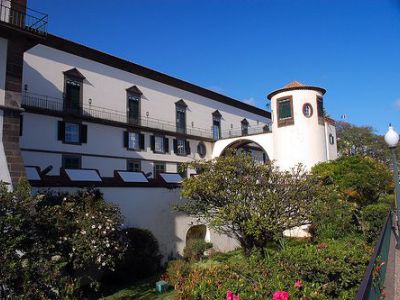
Funchal's initial fortress was constructed between 1529 and 1540 in response to an incident in which a boat moored in the harbor of Funchal was plundered, following the entreaties of the local population. However, the fortification, which was finished in the latter half of the 16th century, was inadequate for all of the necessary fortification requirements, and as a result, it was easily overcome by French pirates in 1566.
Numerous alterations, extensions, and improvements were made to the primitive original structure in the following years until the 19th century, resulting in Saint Lawrence Fortress and Palace (Fortaleza e Palácio de São Lourenço), which is still standing today, and is one of the finest examples of Portuguese fortification from the 16th and 17th centuries.
The Saint Lawrence Fortress initially served as a dwelling for many island captains and governors before gradually evolving into a national residential palace. It was designated a National Monument in August of 1943 and now functions as the residence of the Prime Minister of the Autonomous Region and the Military Command.
The fortress presently houses a permanent exhibit, which was created by the Military Command and opened in July of 1993 and pertains to the history and growth of the fortress. The National Palace within the fortress can be visited after scheduling an appointment with the office of the Prime Minister.
Numerous alterations, extensions, and improvements were made to the primitive original structure in the following years until the 19th century, resulting in Saint Lawrence Fortress and Palace (Fortaleza e Palácio de São Lourenço), which is still standing today, and is one of the finest examples of Portuguese fortification from the 16th and 17th centuries.
The Saint Lawrence Fortress initially served as a dwelling for many island captains and governors before gradually evolving into a national residential palace. It was designated a National Monument in August of 1943 and now functions as the residence of the Prime Minister of the Autonomous Region and the Military Command.
The fortress presently houses a permanent exhibit, which was created by the Military Command and opened in July of 1993 and pertains to the history and growth of the fortress. The National Palace within the fortress can be visited after scheduling an appointment with the office of the Prime Minister.
7) Teleférico Funchal-Monte (Funchal-Monte Cable Car) (must see)
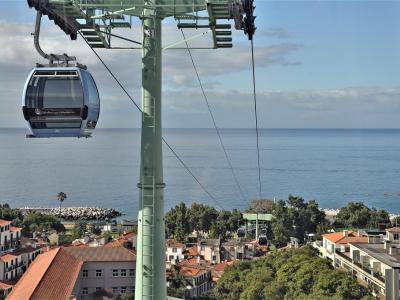
The Funchal–Monte Cable Car offers one of Madeira’s most memorable experiences, gliding from the edge of Funchal’s old town up to the hillside village of Monte. Inaugurated in 2000, this modern gondola lift travels along a 3,200-meter cable line with a vertical rise of around 560 meters. The ride takes about fifteen minutes each way, carrying up to six passengers per cabin. The views unfold dramatically-the harbor, the city’s red rooftops, and the blue Atlantic opening out beneath you.
The cabins are comfortable and fitted with large, clear windows that offer panoramas over gardens, ravines, homes, and terraced hillsides. The ascent feels smooth rather than frightening, making it appealing even to those unsure about heights. Midway along the route, the landscape becomes greener and more rural until the line reaches its upper station, positioned between Babosas Village and the Mount Garden.
Stepping out at the top, visitors find themselves in Monte, a quieter, cooler village first established in 1565 as the parish of Our Lady of the Mount. Its leafy gardens, narrow lanes, small cafes, and scenic viewpoints offer a gentler pace compared to downtown Funchal. From here, travelers can explore nearby gardens, enjoy refreshments in Babosas Village or continue their visit to the Church of Our Lady of the Monte.
When it is time to return, there are two options. One is simply to board the cable car for a glide back down to the city. The other is the island’s famous traditional wicker-basket toboggan ride: a hand-guided descent on wooden runners, steered by two drivers who expertly guide passengers down the winding streets toward Funchal. Safe, lively, and entirely unique to Madeira, it provides a playful contrast to the calm, scenic ascent by cable car.
The cabins are comfortable and fitted with large, clear windows that offer panoramas over gardens, ravines, homes, and terraced hillsides. The ascent feels smooth rather than frightening, making it appealing even to those unsure about heights. Midway along the route, the landscape becomes greener and more rural until the line reaches its upper station, positioned between Babosas Village and the Mount Garden.
Stepping out at the top, visitors find themselves in Monte, a quieter, cooler village first established in 1565 as the parish of Our Lady of the Mount. Its leafy gardens, narrow lanes, small cafes, and scenic viewpoints offer a gentler pace compared to downtown Funchal. From here, travelers can explore nearby gardens, enjoy refreshments in Babosas Village or continue their visit to the Church of Our Lady of the Monte.
When it is time to return, there are two options. One is simply to board the cable car for a glide back down to the city. The other is the island’s famous traditional wicker-basket toboggan ride: a hand-guided descent on wooden runners, steered by two drivers who expertly guide passengers down the winding streets toward Funchal. Safe, lively, and entirely unique to Madeira, it provides a playful contrast to the calm, scenic ascent by cable car.
8) Câmara Municipal (City Hall)
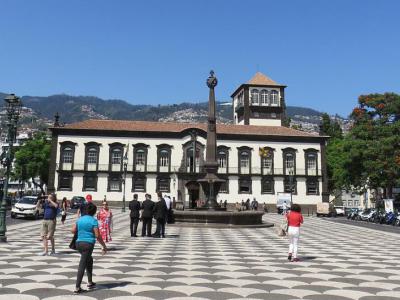
The first Funchal town hall was built in 1486 on Duque Square. The town council moved several times afterward, finally settling in Cathedral Square in 1802. Still dissatisfied with the facilities, the council eventually purchased the Carvalhal Esmeraldo Palace in 1883, adjoining the present-day Municipal Square.
Francisco António Camara Leme built his home, the Carvalhal Esmeraldo Palace in 1758. Although the original structure dates from the mid-18th century, it was later remodeled by the renowned Portuguese architects Raul Lino and Carlos Ramos during intensive restoration works around 1940. Construction materials included masonry, stone, wood, cast iron, and decorative tiles.
As you approach the City Hall, pay attention to the impressive entrance doorway carved in gray stone. On the second floor, the reception area is lined with eleven windows, each with its own small balcony. The ground-floor windows retain 17th-century wrought-iron security gratings. From the entrance, an extravagant interior staircase leads to the central courtyard. Here visitors encounter the sculpture “Leda and the Swan”, created by Madeiran sculptor Germano José Salles. The sculpture depicts the myth in which Zeus, disguised as a swan, approaches Leda-an ancient legend long admired for its symbolism and dramatic narrative.
Francisco António Camara Leme built his home, the Carvalhal Esmeraldo Palace in 1758. Although the original structure dates from the mid-18th century, it was later remodeled by the renowned Portuguese architects Raul Lino and Carlos Ramos during intensive restoration works around 1940. Construction materials included masonry, stone, wood, cast iron, and decorative tiles.
As you approach the City Hall, pay attention to the impressive entrance doorway carved in gray stone. On the second floor, the reception area is lined with eleven windows, each with its own small balcony. The ground-floor windows retain 17th-century wrought-iron security gratings. From the entrance, an extravagant interior staircase leads to the central courtyard. Here visitors encounter the sculpture “Leda and the Swan”, created by Madeiran sculptor Germano José Salles. The sculpture depicts the myth in which Zeus, disguised as a swan, approaches Leda-an ancient legend long admired for its symbolism and dramatic narrative.
9) Forte de São João Baptista (Fortress of São João Baptista)
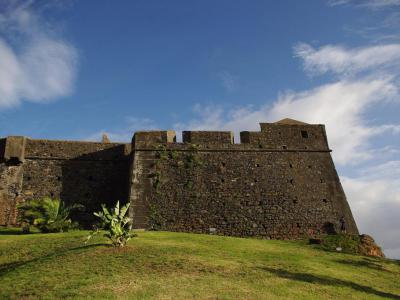
Situated at an altitude of 111 meters above sea level, one can discover the imposing Fortress of São João Baptista do Pico, also known as Fortaleza do Pico. With a breathtaking view of the Atlantic landscape, this monument is an absolute must-see among the many fascinating points of interest waiting to be explored in Funchal.
Originally constructed in the 17th century, this fortification was designed to reinforce the city's defensive system against frequent attacks by privateers. In its first phase, it served not only as a strategic lookout but also as a powder magazine for all of the forts and towers on the island.
In the mid-20th century, the Fortress of São João Baptista do Pico was handed over to the Navy and became home to the Navy's Communications Center. Today, it is occupied by the Funchal Naval Radio Telegraph Station, and as a result, the city's residents have affectionately nicknamed it 'Pico Rádio'.
In recent years, the Fortress of São João Baptista do Pico has undergone various renovation projects. It now includes a versatile space for hosting concerts and conferences, as well as a cafeteria where visitors can comfortably admire the spectacular views over Funchal.
Originally constructed in the 17th century, this fortification was designed to reinforce the city's defensive system against frequent attacks by privateers. In its first phase, it served not only as a strategic lookout but also as a powder magazine for all of the forts and towers on the island.
In the mid-20th century, the Fortress of São João Baptista do Pico was handed over to the Navy and became home to the Navy's Communications Center. Today, it is occupied by the Funchal Naval Radio Telegraph Station, and as a result, the city's residents have affectionately nicknamed it 'Pico Rádio'.
In recent years, the Fortress of São João Baptista do Pico has undergone various renovation projects. It now includes a versatile space for hosting concerts and conferences, as well as a cafeteria where visitors can comfortably admire the spectacular views over Funchal.
10) Museu Monte Palace (Monte Palace Museum)
Nestled within the Monte Palace Madeira Gardens, the Monte Palace Museum is an absolute treasure trove of fascinating artifacts and exhibits that leave visitors feeling captivated and inspired. As soon as you step inside this museum, you will be surrounded by an incredible collection of artifacts that have been sourced from a variety of different geographic locations and cultures.
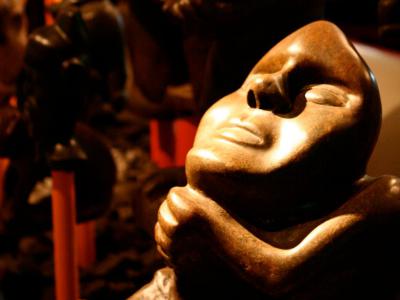
The Monte Palace Museum is divided into three galleries, each with its own unique charm and character. The 'African Passion' collection is one of the highlights of the museum, showcasing a mesmerizing collection of over 1000 contemporary Zimbabwean sculptures dating back to the years 1966 to 1969.
The 'Mother Nature Secrets' collection is equally impressive, featuring hundreds of minerals that have been sourced from some of the world's most fascinating locations, including Brazil, Portugal, South Africa, Zambia, Peru, Argentina, and North America. Visitors to this gallery can marvel at around 700 different samples of minerals, each one more striking and beautiful than the last.
Of course, the beauty of the Monte Palace Museum is not limited to its collections and exhibits alone. The museum is set amidst one of the most incredible tropical gardens in the archipelago, with over 100,000 different plant species spread out over an area of 70,000 m². Visitors can stroll through this lush garden, surrounded by exotic flora and fauna, and enjoy the sights, sounds, and scents of nature at its most stunning.
The Monte Palace Museum is divided into three galleries, each with its own unique charm and character. The 'African Passion' collection is one of the highlights of the museum, showcasing a mesmerizing collection of over 1000 contemporary Zimbabwean sculptures dating back to the years 1966 to 1969.
The 'Mother Nature Secrets' collection is equally impressive, featuring hundreds of minerals that have been sourced from some of the world's most fascinating locations, including Brazil, Portugal, South Africa, Zambia, Peru, Argentina, and North America. Visitors to this gallery can marvel at around 700 different samples of minerals, each one more striking and beautiful than the last.
Of course, the beauty of the Monte Palace Museum is not limited to its collections and exhibits alone. The museum is set amidst one of the most incredible tropical gardens in the archipelago, with over 100,000 different plant species spread out over an area of 70,000 m². Visitors can stroll through this lush garden, surrounded by exotic flora and fauna, and enjoy the sights, sounds, and scents of nature at its most stunning.
