Custom Walk in Oslo, Norway by calccch_2b363 created on 2026-01-08
Guide Location: Norway » Oslo
Guide Type: Custom Walk
# of Sights: 7
Tour Duration: 10 Hour(s)
Travel Distance: 29.1 Km or 18.1 Miles
Share Key: R9T4R
Guide Type: Custom Walk
# of Sights: 7
Tour Duration: 10 Hour(s)
Travel Distance: 29.1 Km or 18.1 Miles
Share Key: R9T4R
How It Works
Please retrieve this walk in the GPSmyCity app. Once done, the app will guide you from one tour stop to the next as if you had a personal tour guide. If you created the walk on this website or come to the page via a link, please follow the instructions below to retrieve the walk in the app.
Retrieve This Walk in App
Step 1. Download the app "GPSmyCity: Walks in 1K+ Cities" on Apple App Store or Google Play Store.



Step 2. In the GPSmyCity app, download(or launch) the guide "Oslo Map and Walking Tours".
Step 3. Tap the menu button located at upper right corner of the "Walks" screen and select "Retrieve custom walk". Enter the share key: R9T4R
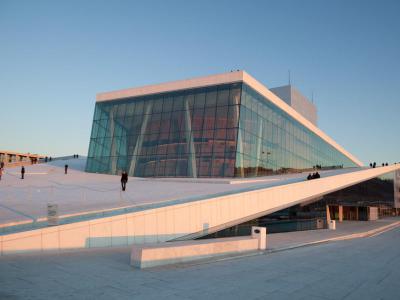
1) Oslo Opera House
The Oslo Opera House is a notable building that hosts the Norwegian National Ballet, the Opera Orchestra, and the Ballet School. Situated right by the harbour, its unique angled, white exterior looks as if it rises from the water, allowing visitors to climb the roof for stunning views of Oslo and the fjord throughout the year.
At street level, large windows offer a peek into rehearsals and workshop activities inside. The interior features mainly oak, and the main hall has a horseshoe shape, similar to traditional theatres. Designed by the Norwegian architecture firm Snøhetta, the building has won several prestigious awards.
The Norwegian National Opera & Ballet offers a diverse program from three stages: The Main House with 1369 seats, the Second House with 400 seats, and the Studio with 200 seats. Additionally, the opera roof and foyer are used for concerts. Guided tours are available in both Norwegian and English.
At street level, large windows offer a peek into rehearsals and workshop activities inside. The interior features mainly oak, and the main hall has a horseshoe shape, similar to traditional theatres. Designed by the Norwegian architecture firm Snøhetta, the building has won several prestigious awards.
The Norwegian National Opera & Ballet offers a diverse program from three stages: The Main House with 1369 seats, the Second House with 400 seats, and the Studio with 200 seats. Additionally, the opera roof and foyer are used for concerts. Guided tours are available in both Norwegian and English.
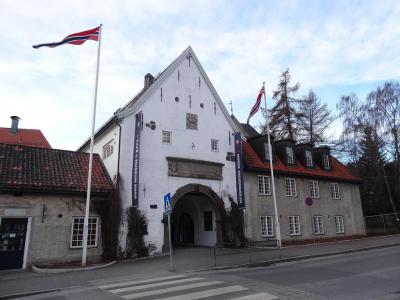
2) Norwegian Museum of Cultural History (must see)
Situated in Oslo, the Norwegian Museum of Cultural History (Norsk Folkemuseum) stands as a repository of cultural heritage. Its extensive assortment comprises artifacts from diverse societal segments and geographical regions within the country. A highlight of the museum is its expansive open-air section featuring over 150 structures sourced from urban and rural locales.
Nestled on the Bygdøy peninsula, the Norwegian Museum of Cultural History finds itself in close proximity to a cluster of fellow museums, including the Viking Ship Museum, the Fram Museum, the Kon-Tiki Museum, and the Norwegian Maritime Museum.
Originating in 1894 under the guidance of librarian and historian Hans Aall (1869–1946), the museum's inception saw the construction of temporary exhibition edifices and the relocation of numerous rural structures. The museum officially welcomed the public in 1901. In a significant development, the collections of King Oscar II, located nearby, were integrated into the museum in 1907. At its core stands a collection of five transplanted buildings, with the iconic Gol Stave Church leading the way. This ensemble is hailed as the world's inaugural open-air museum, established in 1881.
The museum features notable structures like the 13th-century Gol Stave Church, merged into Norsk Folkemuseum in 1907. Among five medieval buildings displayed, there's the 14th-century Rauland farmhouse, a tenement from 15 Wessels gate (1865) with seven flats showcasing 19th to 20th-century interiors. One flat mimics a 2002 Pakistani immigrant family's living space. In 1951, Norsk Folkemuseum acquired Sami collections from the University of Oslo's Ethnographic Museum.
Enriching its holdings, the museum boasts an expansive photographic archive, a substantial portion of which comprises works by the renowned photographer Anders Beer Wilse (1865–1949). Throughout its existence, the museum has been a hub of research, delving into areas such as architecture, furnishings, attire, textiles, technological and societal customs, agriculture, collective memory, and Sami culture.
Why You Should Visit:
To get a keen insight into Norwegian life across hundreds of years.
Tip:
Plan to spend at least 3-4 hours to give this skansen/museum justice.
It is worth taking the free guided tours (about 1h) for the interesting info about the buildings and cultural history.
Nestled on the Bygdøy peninsula, the Norwegian Museum of Cultural History finds itself in close proximity to a cluster of fellow museums, including the Viking Ship Museum, the Fram Museum, the Kon-Tiki Museum, and the Norwegian Maritime Museum.
Originating in 1894 under the guidance of librarian and historian Hans Aall (1869–1946), the museum's inception saw the construction of temporary exhibition edifices and the relocation of numerous rural structures. The museum officially welcomed the public in 1901. In a significant development, the collections of King Oscar II, located nearby, were integrated into the museum in 1907. At its core stands a collection of five transplanted buildings, with the iconic Gol Stave Church leading the way. This ensemble is hailed as the world's inaugural open-air museum, established in 1881.
The museum features notable structures like the 13th-century Gol Stave Church, merged into Norsk Folkemuseum in 1907. Among five medieval buildings displayed, there's the 14th-century Rauland farmhouse, a tenement from 15 Wessels gate (1865) with seven flats showcasing 19th to 20th-century interiors. One flat mimics a 2002 Pakistani immigrant family's living space. In 1951, Norsk Folkemuseum acquired Sami collections from the University of Oslo's Ethnographic Museum.
Enriching its holdings, the museum boasts an expansive photographic archive, a substantial portion of which comprises works by the renowned photographer Anders Beer Wilse (1865–1949). Throughout its existence, the museum has been a hub of research, delving into areas such as architecture, furnishings, attire, textiles, technological and societal customs, agriculture, collective memory, and Sami culture.
Why You Should Visit:
To get a keen insight into Norwegian life across hundreds of years.
Tip:
Plan to spend at least 3-4 hours to give this skansen/museum justice.
It is worth taking the free guided tours (about 1h) for the interesting info about the buildings and cultural history.
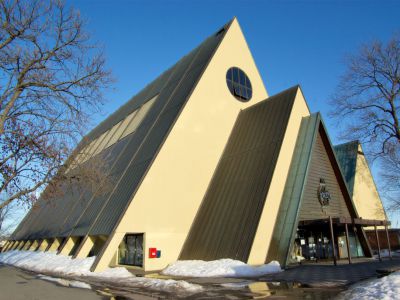
3) Fram Museum (must see)
The Fram Museum stands as a tribute to Norwegian polar exploration, recounting its history and tales. Situated on the Bygdøy peninsula in Oslo, it shares space with a cluster of other remarkable museums, including the Kon-Tiki Museum, the Norwegian Museum of Cultural History, the Viking Ship Museum, and the Norwegian Maritime Museum. Nearby, one can find the Bygdøy Royal Estate, the designated summer retreat for the King of Norway, and the historic Oscarshall.
Established on May 20, 1936, the Fram Museum commemorates the broader journey of Norwegian polar exploration, with a special focus on three renowned explorers – Fridtjof Nansen, Otto Sverdrup, and Roald Amundsen. Within its walls, visitors can also encounter captivating visuals of the polar region's wildlife, including polar bears and penguins.
Central to the Fram Museum is the original exploration vessel, also named Fram. Preserving its authentic interior, the museum invites visitors to step inside the ship and witness its history firsthand. The creation of Fram was overseen by Colin Archer, a shipbuilder of Scots-Norwegian origin, who designed the vessel based on the specifications outlined by Norwegian Arctic explorer Fridtjof Nansen. In 1891, Nansen secured funding from both the Norwegian government and private sources to bring this ship to life.
In May 2009, the Fram Museum and the Norwegian Maritime Museum entered into a collaborative agreement, granting the Fram Museum the responsibility of showcasing the Gjøa, the first ship to successfully navigate the Northwest Passage. In 1906, Roald Amundsen and his crew achieved this remarkable feat after a three-year expedition. Housed in its dedicated building within the museum complex, the Gjøa was made fully accessible to visitors in 2017.
Why You Should Visit:
This museum is the most comprehensive exhibit on polar exploration that you're likely to see.
The collection includes many photographs, maps, and equipment; the displays have timelines, journal entries, and historical contents.
There are also several specific rooms that simulate the conditions in the Arctic (and the Antarctic), like the one you go in freezing and windy conditions.
The facility offers lockers, snacks, and drinks so there's no need to rush out of it.
Tip:
Consider buying the museum pack that gets you into the 3 museums all right next to each other: Fram, Kon-Tiki, and the Marine Museum.
Established on May 20, 1936, the Fram Museum commemorates the broader journey of Norwegian polar exploration, with a special focus on three renowned explorers – Fridtjof Nansen, Otto Sverdrup, and Roald Amundsen. Within its walls, visitors can also encounter captivating visuals of the polar region's wildlife, including polar bears and penguins.
Central to the Fram Museum is the original exploration vessel, also named Fram. Preserving its authentic interior, the museum invites visitors to step inside the ship and witness its history firsthand. The creation of Fram was overseen by Colin Archer, a shipbuilder of Scots-Norwegian origin, who designed the vessel based on the specifications outlined by Norwegian Arctic explorer Fridtjof Nansen. In 1891, Nansen secured funding from both the Norwegian government and private sources to bring this ship to life.
In May 2009, the Fram Museum and the Norwegian Maritime Museum entered into a collaborative agreement, granting the Fram Museum the responsibility of showcasing the Gjøa, the first ship to successfully navigate the Northwest Passage. In 1906, Roald Amundsen and his crew achieved this remarkable feat after a three-year expedition. Housed in its dedicated building within the museum complex, the Gjøa was made fully accessible to visitors in 2017.
Why You Should Visit:
This museum is the most comprehensive exhibit on polar exploration that you're likely to see.
The collection includes many photographs, maps, and equipment; the displays have timelines, journal entries, and historical contents.
There are also several specific rooms that simulate the conditions in the Arctic (and the Antarctic), like the one you go in freezing and windy conditions.
The facility offers lockers, snacks, and drinks so there's no need to rush out of it.
Tip:
Consider buying the museum pack that gets you into the 3 museums all right next to each other: Fram, Kon-Tiki, and the Marine Museum.
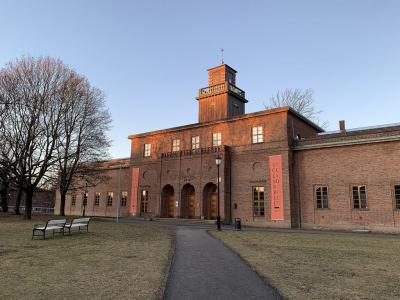
4) Vigeland Museum (must see)
Vigeland-museet, or the Vigeland Museum, is located in the Frogner district of Oslo. It was created as a tribute to Gustav Vigeland, a renowned Norwegian sculptor. Vigeland himself first offered to donate a large portion of his works to Oslo council in 1919. Two years later, work started on a building to house Vigeland’s donated collection. It was designed in the neo-Classical style by Lorentz Ree and Carl Buch. The building was completed in 1930. Vigeland himself took up residence in one of the many studios that were rented out to artists. The museum functioned as a sculpture gallery and school.
Following Vigeland’s death in 1943, the museum was opened to the public in 1947, as a memorial to the artist. Today, it is funded and owned by the city council. The Vigeland Museum contains small sculptures, paintings and sketches by Vigeland and other Norwegian artists. Vigeland’s larger works are gathered in the Vigeland Sculpture Park, the outdoor, better-known portion of the museum. It lies to the north of the main building and is a free public park. Both attractions are within easy reach of Oslo city center by tram, and lie within a walking distance of Frogner plass station, on the Frogner line.
Why You Should Visit:
Gives you a much better understanding and appreciation for the outdoor sculpture park.
For some of Vigeland's seminal work, you'll get to see the plaster casts and the concept from paper to initial model to full-scale model.
Following Vigeland’s death in 1943, the museum was opened to the public in 1947, as a memorial to the artist. Today, it is funded and owned by the city council. The Vigeland Museum contains small sculptures, paintings and sketches by Vigeland and other Norwegian artists. Vigeland’s larger works are gathered in the Vigeland Sculpture Park, the outdoor, better-known portion of the museum. It lies to the north of the main building and is a free public park. Both attractions are within easy reach of Oslo city center by tram, and lie within a walking distance of Frogner plass station, on the Frogner line.
Why You Should Visit:
Gives you a much better understanding and appreciation for the outdoor sculpture park.
For some of Vigeland's seminal work, you'll get to see the plaster casts and the concept from paper to initial model to full-scale model.
5) Frogner Park (must see)
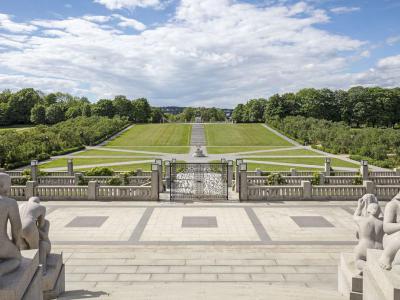
Frogner Park (Frognerparken) resides in the Frogner borough of Oslo, and holds historical ties to Frogner Manor. Situated in the southern part of the park, the manor house now hosts the Oslo City Museum. Both the park and the entire borough draw their names from the aforementioned Frogner Manor.
At the heart of Frogner Park stands the renowned Vigeland (Vigelandsanlegget) installation. This enduring sculpture collection was crafted by Gustav Vigeland throughout the 1920s to 1943. Despite occasional misidentification as the "Vigeland (Sculpture) Park," it's essential to clarify that the Vigeland installation isn't an independent park but rather the name attributed to the sculptures within Frogner Park. These sculptures coexist with substantial structures like bridges and fountains, forming a cohesive artistic landscape.
The earlier version of Frogner Manor's park, established in the 18th century by its proprietor, the distinguished military officer Hans Jacob Scheel, was comparatively smaller and concentrated around the manor house. This park followed baroque design principles. In addition to the sculpture collection, the area accommodates the manor house, an adjacent pavilion, Frognerbadet (the Frogner Baths), and Frogner Stadium. Dominating the park's center is the Frogner Pond.
Encompassing a sprawling 45 hectares, Frogner Park earns the distinction of being the largest park within the city. Notably, the sculpture installation within it holds the distinction of being the world's most expansive collection of sculptures crafted by a single artist. With its annual footfall ranging between 1 to 2 million visitors, Frogner Park ranks as Norway's premier tourist attraction. It remains accessible to the public throughout the year.
Why You Should Visit:
One of the most unique artistic experiences imaginable. Even if you're not into art, Vigeland's opus is amazing.
Each of the five areas offers a different experience and the walk in the park suddenly becomes something totally different and memorable.
Tip:
Check out the rose garden, and if you have time, the Oslo City Museum in the old farm buildings (also free to enter).
If the weather is suitable you could even take a swim in the open air swimming pool.
At the heart of Frogner Park stands the renowned Vigeland (Vigelandsanlegget) installation. This enduring sculpture collection was crafted by Gustav Vigeland throughout the 1920s to 1943. Despite occasional misidentification as the "Vigeland (Sculpture) Park," it's essential to clarify that the Vigeland installation isn't an independent park but rather the name attributed to the sculptures within Frogner Park. These sculptures coexist with substantial structures like bridges and fountains, forming a cohesive artistic landscape.
The earlier version of Frogner Manor's park, established in the 18th century by its proprietor, the distinguished military officer Hans Jacob Scheel, was comparatively smaller and concentrated around the manor house. This park followed baroque design principles. In addition to the sculpture collection, the area accommodates the manor house, an adjacent pavilion, Frognerbadet (the Frogner Baths), and Frogner Stadium. Dominating the park's center is the Frogner Pond.
Encompassing a sprawling 45 hectares, Frogner Park earns the distinction of being the largest park within the city. Notably, the sculpture installation within it holds the distinction of being the world's most expansive collection of sculptures crafted by a single artist. With its annual footfall ranging between 1 to 2 million visitors, Frogner Park ranks as Norway's premier tourist attraction. It remains accessible to the public throughout the year.
Why You Should Visit:
One of the most unique artistic experiences imaginable. Even if you're not into art, Vigeland's opus is amazing.
Each of the five areas offers a different experience and the walk in the park suddenly becomes something totally different and memorable.
Tip:
Check out the rose garden, and if you have time, the Oslo City Museum in the old farm buildings (also free to enter).
If the weather is suitable you could even take a swim in the open air swimming pool.
6) Vigeland Sculpture Park
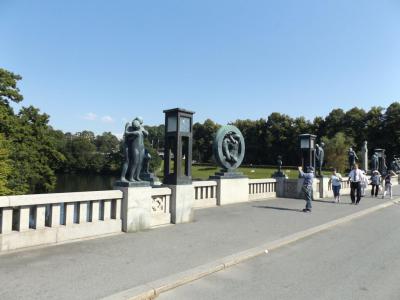
Nestled within Frogner Park, a sprawling green expanse in the western outskirts of the city, lies the Vigeland Sculpture Park. Encompassing an impressive 80 acres, this park boasts a collection of 212 statues, all masterfully crafted by the renowned Norwegian sculptor, Gustav Vigeland. Adjacent to the park is the Vigeland Museum, a repository for many of the artist’s smaller sculptures and paintings. These two attractions came into being when Vigeland generously gifted several of his works to the city of Oslo in 1919. Following meticulous planning, the park was unveiled to the public in the year 1940.
At the heart of the park takes center stage a bridge that stretches from the Main Gate to the focal point, the Fountain sculpture. Along this bridge route, a third of the park's sculptures are gracefully displayed, each adorned in striking bronze. Notably, the beloved Angry Boy sculpture can be admired here. Culminating the bridge's path is the Fountain-an elaborate bronze Gothic masterpiece originally conceived for a location outside the Norwegian Parliament. This splendid sculpture is encircled by an expansive mosaic showcasing bold black and white designs.
Crowning the highest elevation within the park is the Monolith, indisputably the most celebrated attraction. Purposefully positioned, this colossal granite tower, hewn from a singular massive rock, showcases an assembly of over one hundred intricately carved human figures. The park has served as a wellspring of inspiration for music, literature, and even made a notable appearance in the successful Norwegian independent film 'Elling'. As a welcoming gift to the public, this park remains accessible throughout daylight hours all year round.
Tip:
Combine with the Vigeland Museum located right outside the park. Do it on the same day so that you can compare what you saw in the park to what you see in the museum.
At the heart of the park takes center stage a bridge that stretches from the Main Gate to the focal point, the Fountain sculpture. Along this bridge route, a third of the park's sculptures are gracefully displayed, each adorned in striking bronze. Notably, the beloved Angry Boy sculpture can be admired here. Culminating the bridge's path is the Fountain-an elaborate bronze Gothic masterpiece originally conceived for a location outside the Norwegian Parliament. This splendid sculpture is encircled by an expansive mosaic showcasing bold black and white designs.
Crowning the highest elevation within the park is the Monolith, indisputably the most celebrated attraction. Purposefully positioned, this colossal granite tower, hewn from a singular massive rock, showcases an assembly of over one hundred intricately carved human figures. The park has served as a wellspring of inspiration for music, literature, and even made a notable appearance in the successful Norwegian independent film 'Elling'. As a welcoming gift to the public, this park remains accessible throughout daylight hours all year round.
Tip:
Combine with the Vigeland Museum located right outside the park. Do it on the same day so that you can compare what you saw in the park to what you see in the museum.
7) Holmenkollen Ski Museum & Ski Jump Tower
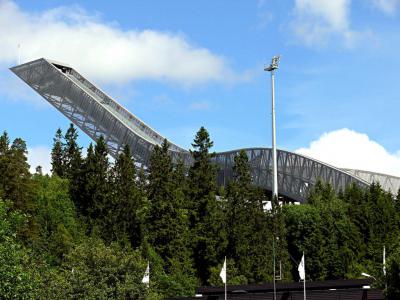
Situated at the foot of the Holmenkollen ski jump in Oslo, the Holmenkollen Ski Museum stands as a testament to skiing heritage. Established in 1923, it proudly claims the title of the world's oldest ski museum. The brainchild of architect Hjalmar Welhaven, this museum owes its inception to his visionary drive. Its remarkable collection of antique and historic skis finds its origins in Welhaven's personal assortment.
Initially housed within a building nestled in Oslo's Frognerseteren neighborhood, the museum underwent a significant shift in 1951 during the reconstruction of Holmenkollbakken. This transition saw the relocation of the museum's collection to new and improved quarters at Holmenkollbakken.
Within its walls, the museum unveils an astounding panorama of skiing history spanning over 4,000 years. This journey begins with ancient rock carvings hailing from the Stone Age and meanders through time to encompass the skiers and skis of the Viking Age. Notably, it showcases the gear that played pivotal roles in the polar expeditions led by Fridtjof Nansen and Roald Amundsen.
The Ski Jump Tower plays a vital role in defining the identity of Oslo. Within the panoramic view of Oslo, its distinctive silhouette stands out as a prominent icon. From its summit, the breathtaking panoramic vista of the fjord unfolds in a fantastic display. This architectural marvel defies conventions, and it's no surprise that it ranks among Oslo's most frequented tourist destinations.
Why You Should Visit:
Museum, coffee shop, souvenir shop, ski simulator and view from ski jump tower all in one!
Tip:
Go all the way up as the views are amazing and you have a greater appreciation of ski jumping.
If you go when the museum first opens or about 1.5 hours before it closes, the line is shorter.
For thrill seekers, there's a zip line going down from the top, which is expensive but exhilarating!
Initially housed within a building nestled in Oslo's Frognerseteren neighborhood, the museum underwent a significant shift in 1951 during the reconstruction of Holmenkollbakken. This transition saw the relocation of the museum's collection to new and improved quarters at Holmenkollbakken.
Within its walls, the museum unveils an astounding panorama of skiing history spanning over 4,000 years. This journey begins with ancient rock carvings hailing from the Stone Age and meanders through time to encompass the skiers and skis of the Viking Age. Notably, it showcases the gear that played pivotal roles in the polar expeditions led by Fridtjof Nansen and Roald Amundsen.
The Ski Jump Tower plays a vital role in defining the identity of Oslo. Within the panoramic view of Oslo, its distinctive silhouette stands out as a prominent icon. From its summit, the breathtaking panoramic vista of the fjord unfolds in a fantastic display. This architectural marvel defies conventions, and it's no surprise that it ranks among Oslo's most frequented tourist destinations.
Why You Should Visit:
Museum, coffee shop, souvenir shop, ski simulator and view from ski jump tower all in one!
Tip:
Go all the way up as the views are amazing and you have a greater appreciation of ski jumping.
If you go when the museum first opens or about 1.5 hours before it closes, the line is shorter.
For thrill seekers, there's a zip line going down from the top, which is expensive but exhilarating!
