Custom Walk in Mdina, Malta by yaosun5656_ae38a7 created on 2026-01-09
Guide Location: Malta » Mdina
Guide Type: Custom Walk
# of Sights: 6
Tour Duration: 1 Hour(s)
Travel Distance: 1.7 Km or 1.1 Miles
Share Key: 65Y8Y
Guide Type: Custom Walk
# of Sights: 6
Tour Duration: 1 Hour(s)
Travel Distance: 1.7 Km or 1.1 Miles
Share Key: 65Y8Y
How It Works
Please retrieve this walk in the GPSmyCity app. Once done, the app will guide you from one tour stop to the next as if you had a personal tour guide. If you created the walk on this website or come to the page via a link, please follow the instructions below to retrieve the walk in the app.
Retrieve This Walk in App
Step 1. Download the app "GPSmyCity: Walks in 1K+ Cities" on Apple App Store or Google Play Store.



Step 2. In the GPSmyCity app, download(or launch) the guide "Mdina Map and Walking Tours".
Step 3. Tap the menu button located at upper right corner of the "Walks" screen and select "Retrieve custom walk". Enter the share key: 65Y8Y

1) Carmelite Church and Priory (must see)
The Carmelite Church and Priory, nestled in the heart of Mdina, offers a unique opportunity to immerse oneself in the spiritual way of life embraced by the friars who reside within its walls. Stepping into this captivating 17th-century building allows visitors to explore not only the impressive church but also the rooms of the priory and a museum that holds treasures from the past.
The Church, erected between 1660 and 1675, holds significant importance in the realm of Baroque architecture, making it a must-see for history and art enthusiasts alike. Notably, it stands out as the first church to be constructed in Malta with an elliptical plan, adding to its architectural distinction. As visitors enter the church, their attention is immediately drawn to the focal point of the main altar, where a spectacular painting of The Annunciation by Stefano Erardi (1677) commands reverence. The artistic splendor doesn't end there, as other notable works by the renowned local artist Giuseppe Cali adorn the church, further enriching the visual experience for all who visit.
Venturing into the Priory, guests are met with even more impressive artistic treasures. The Refectory, where the friars gather for communal meals, serves as a true testament to the grandeur of Baroque art. Here, paintings, sculptures, and architecture seamlessly intertwine, creating an atmosphere of awe and wonder. The attention to detail and the blend of artistic elements in the Refectory make it a place of deep contemplation and reflection.
Wandering through the Priory's cloisters, visitors will find themselves bathed in natural light, courtesy of a courtyard that connects the Priory to the Church. These serene cloisters serve as a tranquil space for the friars to meditate and find solace amidst their spiritual practices.
The Church, erected between 1660 and 1675, holds significant importance in the realm of Baroque architecture, making it a must-see for history and art enthusiasts alike. Notably, it stands out as the first church to be constructed in Malta with an elliptical plan, adding to its architectural distinction. As visitors enter the church, their attention is immediately drawn to the focal point of the main altar, where a spectacular painting of The Annunciation by Stefano Erardi (1677) commands reverence. The artistic splendor doesn't end there, as other notable works by the renowned local artist Giuseppe Cali adorn the church, further enriching the visual experience for all who visit.
Venturing into the Priory, guests are met with even more impressive artistic treasures. The Refectory, where the friars gather for communal meals, serves as a true testament to the grandeur of Baroque art. Here, paintings, sculptures, and architecture seamlessly intertwine, creating an atmosphere of awe and wonder. The attention to detail and the blend of artistic elements in the Refectory make it a place of deep contemplation and reflection.
Wandering through the Priory's cloisters, visitors will find themselves bathed in natural light, courtesy of a courtyard that connects the Priory to the Church. These serene cloisters serve as a tranquil space for the friars to meditate and find solace amidst their spiritual practices.

2) Falson Palace
Falson Palace is a remarkable medieval townhouse. Originally constructed around 1495, it stands as the second oldest building in Mdina, after the ground floor of Saint Sofia Palace. The palace was purposefully built as a residence for the Maltese nobility and was named after the Falson family, who have historical ties to the property.
Over the centuries, the palace underwent several alterations and expansions. During the rule of the Order of St. John, it might have hosted important figures, such as Philippe Villiers de L'Isle-Adam, the first Grand Master in Malta. The architect responsible for the distinctive upper floor windows remains unknown, although it is speculated that Jacobo Dimeg might have been involved in their creation.
Since 2007, the palace has been open to the public as the Palazzo Falson Historic House Museum, managed by the Fondazzjoni Patrimonju Malti, a Maltese heritage foundation. The museum provides a unique glimpse into the past, recreating the atmosphere of a historic home. With seventeen rooms to explore, visitors can step back in time and witness the domestic belongings and antique collections that once adorned the residence.
Each room serves a specific purpose, capturing different aspects of daily life. Among them are the Kitchen, Armoury, and Carpet Gallery. Additionally, visitors have the opportunity to explore Capt. Gollcher's Library, Studio, and Study, offering insights into his personal interests and passions.
One of the most prized possessions in the museum is the rare 10-hour French Revolution-era timepiece. This extraordinary watch is one of only three known to exist, crafted by the renowned maker Robert Robin (1742-1799). Robin, who had been the favored watchmaker of King Louis XVI, created this watch during the time of the Revolution's Decimal time. The timepiece holds immense historical significance and is a testament to both craftsmanship and historical events.
Over the centuries, the palace underwent several alterations and expansions. During the rule of the Order of St. John, it might have hosted important figures, such as Philippe Villiers de L'Isle-Adam, the first Grand Master in Malta. The architect responsible for the distinctive upper floor windows remains unknown, although it is speculated that Jacobo Dimeg might have been involved in their creation.
Since 2007, the palace has been open to the public as the Palazzo Falson Historic House Museum, managed by the Fondazzjoni Patrimonju Malti, a Maltese heritage foundation. The museum provides a unique glimpse into the past, recreating the atmosphere of a historic home. With seventeen rooms to explore, visitors can step back in time and witness the domestic belongings and antique collections that once adorned the residence.
Each room serves a specific purpose, capturing different aspects of daily life. Among them are the Kitchen, Armoury, and Carpet Gallery. Additionally, visitors have the opportunity to explore Capt. Gollcher's Library, Studio, and Study, offering insights into his personal interests and passions.
One of the most prized possessions in the museum is the rare 10-hour French Revolution-era timepiece. This extraordinary watch is one of only three known to exist, crafted by the renowned maker Robert Robin (1742-1799). Robin, who had been the favored watchmaker of King Louis XVI, created this watch during the time of the Revolution's Decimal time. The timepiece holds immense historical significance and is a testament to both craftsmanship and historical events.
3) Basilica of St. Paul
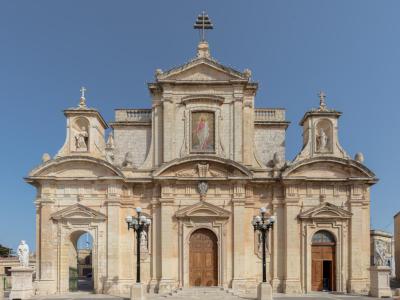
The Basilica of Saint Paul in Rabat, stands as a historical and religious treasure deeply entwined with the rich tapestry of Maltese history. This venerable church is situated on a site that has witnessed centuries of transformation, beginning with its origins in the ancient Roman city of Melite, which encompassed the present-day areas of Mdina and much of Rabat.
It is worth noting that several churches preceded the current basilica, which itself was constructed in the 17th century. In 1336, Bishop Hilarius referred to the church as "ecclesia Sancti Pauli de crypta," acknowledging its existence and the presence of a cemetery and the remnants of a Roman ditch.
The present-day Basilica of Saint Paul was commissioned to replace a previous church completed in 1578. This ambitious endeavor was made possible through the generous contributions of Guzmana Navarra, a noblewoman, and was executed based on architectural plans prepared by Francesco Buonamici. Construction commenced in 1653 and reached completion in 1683 under the skilled hands of Lorenzo Gafà.
Adjacent to the Basilica of Saint Paul is a smaller church dedicated to Saint Publius, which underwent renovations in 1692 and later in 1726 under the supervision of Salvu Borg. The historical significance of this religious complex is further underscored by its elevation to the status of a Minor Basilica in 2020.
The heart of the Basilica of Saint Paul lies in its grotto, accessible through the adjoining church of Saint Publius. This sacred space holds profound significance, as it is traditionally believed to be where Saint Paul resided and preached during his three-month stay in Malta in 60 A.D. In 1748, Grand Master Pinto donated a statue of Saint Paul to the grotto, further enhancing its sanctity. The grotto has received visits from various Popes, including Pope John Paul II in 1990 and 2001, Pope Benedict XVI in 2010, and most recently, Pope Francis during his apostolic journey to the Maltese islands in April 2022.
It is worth noting that several churches preceded the current basilica, which itself was constructed in the 17th century. In 1336, Bishop Hilarius referred to the church as "ecclesia Sancti Pauli de crypta," acknowledging its existence and the presence of a cemetery and the remnants of a Roman ditch.
The present-day Basilica of Saint Paul was commissioned to replace a previous church completed in 1578. This ambitious endeavor was made possible through the generous contributions of Guzmana Navarra, a noblewoman, and was executed based on architectural plans prepared by Francesco Buonamici. Construction commenced in 1653 and reached completion in 1683 under the skilled hands of Lorenzo Gafà.
Adjacent to the Basilica of Saint Paul is a smaller church dedicated to Saint Publius, which underwent renovations in 1692 and later in 1726 under the supervision of Salvu Borg. The historical significance of this religious complex is further underscored by its elevation to the status of a Minor Basilica in 2020.
The heart of the Basilica of Saint Paul lies in its grotto, accessible through the adjoining church of Saint Publius. This sacred space holds profound significance, as it is traditionally believed to be where Saint Paul resided and preached during his three-month stay in Malta in 60 A.D. In 1748, Grand Master Pinto donated a statue of Saint Paul to the grotto, further enhancing its sanctity. The grotto has received visits from various Popes, including Pope John Paul II in 1990 and 2001, Pope Benedict XVI in 2010, and most recently, Pope Francis during his apostolic journey to the Maltese islands in April 2022.

4) Mdina Gate (must see)
The Mdina Gate stands as a grand entrance to the ancient fortified city of Mdina, connecting it to the newer suburb of Rabat. Designed by de Mondion, a renowned builder for the Order of St. John, the Mdina Gate was constructed a few meters to the left of the original gate in 1724. The remains of the original gate are still visible, integrated into the now solid walls that surround the entrance. The construction of the new gate was primarily aimed at enlarging the nearby palace, Palazzo Giuratale, which had suffered significant damage during the devastating earthquake of 1693. Upon completion, the new palace was renamed Palazzo Vilhena in honor of Grand Master Vilhena.
Above the gate, one can behold the imposing coat of arms. The lions featured in the coat of arms are not only displayed as statues on the bridge in front of the gate but are also replicated in the sculptures situated at the outer end of the bridge. These lions serve as powerful symbols of strength and nobility, encapsulating the spirit of the historic city they guard.
On the inner side of the Mdina Gate, visitors are greeted by three statues of patron saints, each carrying palm branches as a symbol of their martyrdom. These statues pay homage to three revered figures: St. Publius, St. Paul and St. Agatha.
Above the gate, one can behold the imposing coat of arms. The lions featured in the coat of arms are not only displayed as statues on the bridge in front of the gate but are also replicated in the sculptures situated at the outer end of the bridge. These lions serve as powerful symbols of strength and nobility, encapsulating the spirit of the historic city they guard.
On the inner side of the Mdina Gate, visitors are greeted by three statues of patron saints, each carrying palm branches as a symbol of their martyrdom. These statues pay homage to three revered figures: St. Publius, St. Paul and St. Agatha.
5) Mdina Dungeons Museum (must see)
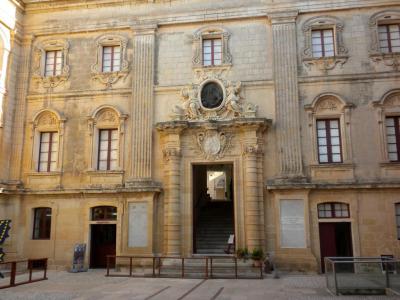
Nestled just a stone's throw away from the main gate of Mdina, the ancient walled city of Malta, lies a unique and intriguing tourist attraction known as the Mdina Dungeons. Located beneath the historic Vilhena Palace, this museum offers visitors a glimpse into the forgotten and often grim aspects of medieval Malta's past.
As visitors venture into the dimly lit passageways, they are transported back in time to an era when the dungeons served as a place of confinement and punishment. The labyrinthine underground passages and chambers exude an authentic atmosphere, immersing guests in the eerie ambiance of a bygone era. Sound effects heighten the experience, allowing visitors to feel the chilling presence of the past.
The museum meticulously recreates scenes from the past, shedding light on the harsh realities of prison life during the medieval period in Malta. Here, guests can witness and understand the brutality that prisoners endured in these cells. The Mdina Dungeons don't shy away from displaying the grim instruments of torture that were all too commonly employed during those times.
Stepping into the recreated cells, visitors can almost feel the weight of history bearing down on them. Scenes of despair, suffering, and survival come to life, leaving a lasting impression of the struggles faced by those held captive in these dungeons centuries ago.
The significance of the Mdina Dungeons lies not only in its haunting presentation but also in its educational value. While showcasing the darker side of Malta's history, the museum offers contextual explanations of the medieval era and the role prisons played during that time. It provides insights into the justice system of the past and how prisoners were treated in comparison to modern times.
As visitors venture into the dimly lit passageways, they are transported back in time to an era when the dungeons served as a place of confinement and punishment. The labyrinthine underground passages and chambers exude an authentic atmosphere, immersing guests in the eerie ambiance of a bygone era. Sound effects heighten the experience, allowing visitors to feel the chilling presence of the past.
The museum meticulously recreates scenes from the past, shedding light on the harsh realities of prison life during the medieval period in Malta. Here, guests can witness and understand the brutality that prisoners endured in these cells. The Mdina Dungeons don't shy away from displaying the grim instruments of torture that were all too commonly employed during those times.
Stepping into the recreated cells, visitors can almost feel the weight of history bearing down on them. Scenes of despair, suffering, and survival come to life, leaving a lasting impression of the struggles faced by those held captive in these dungeons centuries ago.
The significance of the Mdina Dungeons lies not only in its haunting presentation but also in its educational value. While showcasing the darker side of Malta's history, the museum offers contextual explanations of the medieval era and the role prisons played during that time. It provides insights into the justice system of the past and how prisoners were treated in comparison to modern times.

6) St. Paul's Cathedral (must see)
Saint Paul's Cathedral is a remarkable Roman Catholic cathedral. It is dedicated to Saint Paul the Apostle.
Originally founded in the 12th century, the cathedral's history is intertwined with a legend. According to tradition, the cathedral stands on the very spot where the Roman governor Publius met Saint Paul after the Apostle's shipwreck on the island of Malta. This historical connection has made the cathedral a place of pilgrimage and reverence for Christians around the world.
However, the original cathedral suffered severe damage in the devastating 1693 Sicily earthquake. As a result, it had to be dismantled and subsequently rebuilt in the Baroque style. The reconstruction project was carried out between 1696 and 1705, under the skillful design of the renowned Maltese architect, Lorenzo Gafà. His work on Saint Paul's Cathedral is considered his masterpiece and showcases the elegance and grandeur typical of Baroque architecture.
Saint Paul's Cathedral serves as the seat of the Roman Catholic Archdiocese of Malta. Nevertheless, since the 19th century, its responsibilities have been shared with Saint John's Co-Cathedral in Valletta, which is also of great significance to the island's religious heritage.
Adjacent to the cathedral is the Cathedral Museum, which was established in 1897. The museum's collection is a treasure trove of secular and ecclesiastical artifacts. Spanning from the 14th to the early 20th century, the exhibits encompass an array of religious and secular artworks.
Among them are medieval panels, which were formerly located within the cathedral, providing insight into the island's historical religious art. The museum also houses a money gallery featuring numerous ancient coins (although closed for refurbishment in early 2020), religious vestments, historical furniture, and a remarkable permanent exhibition of 76 original woodcuts by the renowned German artist Albrecht Dürer.
Originally founded in the 12th century, the cathedral's history is intertwined with a legend. According to tradition, the cathedral stands on the very spot where the Roman governor Publius met Saint Paul after the Apostle's shipwreck on the island of Malta. This historical connection has made the cathedral a place of pilgrimage and reverence for Christians around the world.
However, the original cathedral suffered severe damage in the devastating 1693 Sicily earthquake. As a result, it had to be dismantled and subsequently rebuilt in the Baroque style. The reconstruction project was carried out between 1696 and 1705, under the skillful design of the renowned Maltese architect, Lorenzo Gafà. His work on Saint Paul's Cathedral is considered his masterpiece and showcases the elegance and grandeur typical of Baroque architecture.
Saint Paul's Cathedral serves as the seat of the Roman Catholic Archdiocese of Malta. Nevertheless, since the 19th century, its responsibilities have been shared with Saint John's Co-Cathedral in Valletta, which is also of great significance to the island's religious heritage.
Adjacent to the cathedral is the Cathedral Museum, which was established in 1897. The museum's collection is a treasure trove of secular and ecclesiastical artifacts. Spanning from the 14th to the early 20th century, the exhibits encompass an array of religious and secular artworks.
Among them are medieval panels, which were formerly located within the cathedral, providing insight into the island's historical religious art. The museum also houses a money gallery featuring numerous ancient coins (although closed for refurbishment in early 2020), religious vestments, historical furniture, and a remarkable permanent exhibition of 76 original woodcuts by the renowned German artist Albrecht Dürer.
