Custom Walk in Sao Paulo, Brazil by recinos22_2eb797 created on 2026-01-10
Guide Location: Brazil » Sao Paulo
Guide Type: Custom Walk
# of Sights: 10
Tour Duration: 6 Hour(s)
Travel Distance: 15.1 Km or 9.4 Miles
Share Key: WLVDZ
Guide Type: Custom Walk
# of Sights: 10
Tour Duration: 6 Hour(s)
Travel Distance: 15.1 Km or 9.4 Miles
Share Key: WLVDZ
How It Works
Please retrieve this walk in the GPSmyCity app. Once done, the app will guide you from one tour stop to the next as if you had a personal tour guide. If you created the walk on this website or come to the page via a link, please follow the instructions below to retrieve the walk in the app.
Retrieve This Walk in App
Step 1. Download the app "GPSmyCity: Walks in 1K+ Cities" on Apple App Store or Google Play Store.



Step 2. In the GPSmyCity app, download(or launch) the guide "Sao Paulo Map and Walking Tours".
Step 3. Tap the menu button located at upper right corner of the "Walks" screen and select "Retrieve custom walk". Enter the share key: WLVDZ
1) Jardins District
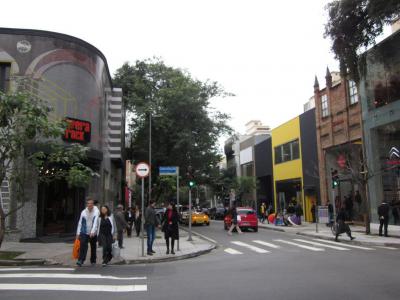
Jardins is an unofficial area located in the western part of São Paulo. It encompasses the streets of four upscale neighborhoods, all belonging to the Pinheiros sub-prefecture: Jardim Paulista and Jardim América in the Jardim Paulista district, and Jardim Europa and Jardim Paulistano in the Pinheiros district. These neighborhoods are situated in the southern portion of Avenida Paulista and are considered an integral part of the region. While popular belief mistakenly associates Jardins with the South Zone of São Paulo, it is governed by the Pinheiros Subprefecture and officially classified as part of the West Zone.
Covering a network of 28 streets, this area is renowned as one of the most prestigious regions in the city. It boasts a wide range of high-quality services and shops. Countless well-regarded restaurants, bars, and eateries bring life to the neighborhood both during the day and at night. Additionally, the region has a strong tradition of high-end shopping, notably along the internationally recognized Rua Oscar Freire and its upscale commercial establishments. The boundaries of Jardins are defined by Avenida Paulista, Rua Estados Unidos, and Avenida Nove de Julho, or by Brigadeiro Luís Antônio and Rebouças for many residents.
Covering a network of 28 streets, this area is renowned as one of the most prestigious regions in the city. It boasts a wide range of high-quality services and shops. Countless well-regarded restaurants, bars, and eateries bring life to the neighborhood both during the day and at night. Additionally, the region has a strong tradition of high-end shopping, notably along the internationally recognized Rua Oscar Freire and its upscale commercial establishments. The boundaries of Jardins are defined by Avenida Paulista, Rua Estados Unidos, and Avenida Nove de Julho, or by Brigadeiro Luís Antônio and Rebouças for many residents.
2) Beco do Batman (Batman Alley) (must see)
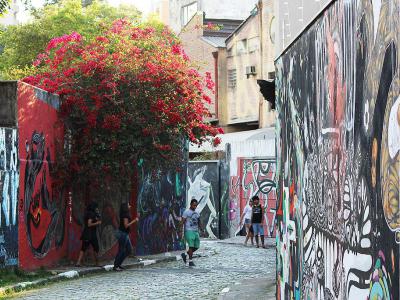
Batman's Alley (Beco do Batman) refers to the area surrounding Gonçalo Afonso Street and Medeiros de Albuquerque Street in São Paulo's Vila Madalena neighborhood. It has gained popularity among tourists due to its abundance of vibrant graffiti adorning the streets.
The name for this area originated from a graffiti artwork of Batman, the iconic character from DC Comics, which was painted on one of the walls in the 1980s. Subsequently, local art students began enriching the walls with an array of psychedelic and cubist-inspired designs.
During the 2014 FIFA World Cup, Vila Madalena attracted a significant influx of visitors, increasing reported incidents of theft and assault in and around Beco do Batman between 2013 and 2014.
Presently, the graffiti in Batman's Alley is consistently maintained and looked after by members of the local community. They undertake regular renovations to ensure the artwork remains vibrant and well-preserved.
The name for this area originated from a graffiti artwork of Batman, the iconic character from DC Comics, which was painted on one of the walls in the 1980s. Subsequently, local art students began enriching the walls with an array of psychedelic and cubist-inspired designs.
During the 2014 FIFA World Cup, Vila Madalena attracted a significant influx of visitors, increasing reported incidents of theft and assault in and around Beco do Batman between 2013 and 2014.
Presently, the graffiti in Batman's Alley is consistently maintained and looked after by members of the local community. They undertake regular renovations to ensure the artwork remains vibrant and well-preserved.
3) Football Museum (must see)
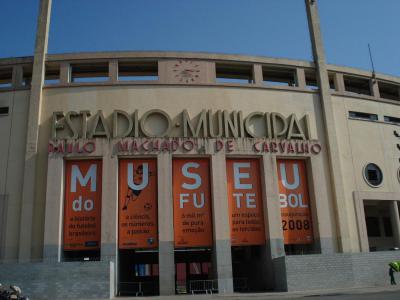
The Football Museum, located in the Pacaembu Stadium, is a 7,000 square mile facility dedicated to all things football. For a true fan of football, this exhibition hall is the thing to see. What makes this center unique is that it is dedicated to the national sport of Brazil and presents the game with no team bias whatsoever. The museum does an excellent job of telling the history of football and intertwining it with the history of the world.
Whether you are a fan of football, or not, you will enjoy an awesome multimedia experience as soon as you enter the building. The rooms are divided into sections that display different elements of the football experience. Banners, flags, and other fan items decorate the rooms. Photographs of football greats such as Pelé, Rivelino, Gilmar, Romário, and others line the walls. Video recordings of fan reactions play as you tour the movie theater.
There are also recordings of sports journalists such as Juca Kfouri, Daniel Piza, and Marcelo Tas announcing goals. The museum pays homage to the world cup and patrons will enjoy viewing the goals of football stars in the multimedia room.
Why You Should Visit:
Football history all under one roof!
Information is available in many languages and there are interactive activities that appeal to all ages.
You can even walk around the soccer field and experience the grandiosity of a football stadium first-hand.
Tip:
Make sure to see if there's a street market in front of the stadium, and include some of the best pastel and garapa (sugar cane juice) in your program.
Saturdays are free of charge but bear in mind the Museum is closed when games take place in Pacaembu, so you'd better check beforehand.
Whether you are a fan of football, or not, you will enjoy an awesome multimedia experience as soon as you enter the building. The rooms are divided into sections that display different elements of the football experience. Banners, flags, and other fan items decorate the rooms. Photographs of football greats such as Pelé, Rivelino, Gilmar, Romário, and others line the walls. Video recordings of fan reactions play as you tour the movie theater.
There are also recordings of sports journalists such as Juca Kfouri, Daniel Piza, and Marcelo Tas announcing goals. The museum pays homage to the world cup and patrons will enjoy viewing the goals of football stars in the multimedia room.
Why You Should Visit:
Football history all under one roof!
Information is available in many languages and there are interactive activities that appeal to all ages.
You can even walk around the soccer field and experience the grandiosity of a football stadium first-hand.
Tip:
Make sure to see if there's a street market in front of the stadium, and include some of the best pastel and garapa (sugar cane juice) in your program.
Saturdays are free of charge but bear in mind the Museum is closed when games take place in Pacaembu, so you'd better check beforehand.
4) Casa das Rosas (House of Roses)
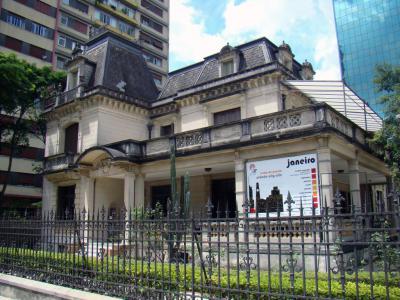
House of Roses is an art and poetry center that features a French style design. Built between 1928 and 1935 by the office of architect Francisco de Paula Ramos de Azevedo, the four-story building is one of the last mansions built in the city of Sao Paulo. House of Roses currently serves as a poetry and arts center.
The interior of the mansion features a mix of styles from Art Deco, Renaissance, Neoclassical, and English. Belgian glass and crystals decorate the dwelling and the entrance-way features a stone and marble design. Two of the most stunning elements of the 30-room house are the garden and stained-glass window that greets all who pass through the entrance hallway. The garden is known as one of the most beautiful in Sao Paulo.
Photography, writing, poetry, other artistic events occur regularly. In addition, the country’s first library is located in the building. The library features a collection of books from Ramos de Azevedo and rare first collection books. You must receive permission in advance to photograph the interior. Photography of the exterior is allowed with certain restrictions.
In addition to cultural events, courses and periodic exhibitions, it has one of the city's largest and most beautiful rose gardens. In the back of the mansion is a coffee shop-restaurant, offering indoors as well as pleasant outdoors sitting – good place for a quiet lunch! House of Roses is a treat you should not miss.
The interior of the mansion features a mix of styles from Art Deco, Renaissance, Neoclassical, and English. Belgian glass and crystals decorate the dwelling and the entrance-way features a stone and marble design. Two of the most stunning elements of the 30-room house are the garden and stained-glass window that greets all who pass through the entrance hallway. The garden is known as one of the most beautiful in Sao Paulo.
Photography, writing, poetry, other artistic events occur regularly. In addition, the country’s first library is located in the building. The library features a collection of books from Ramos de Azevedo and rare first collection books. You must receive permission in advance to photograph the interior. Photography of the exterior is allowed with certain restrictions.
In addition to cultural events, courses and periodic exhibitions, it has one of the city's largest and most beautiful rose gardens. In the back of the mansion is a coffee shop-restaurant, offering indoors as well as pleasant outdoors sitting – good place for a quiet lunch! House of Roses is a treat you should not miss.
5) Galvão Bueno Street
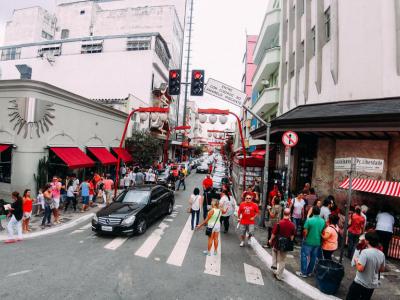
Galvão Bueno Street in Liberdade is the epitome of the Asian atmosphere. It has oriental-style lamps and has been part of the Japanese neighborhood since 1974. The street is home not only to the Japanese but also to the Chinese, Taiwanese, and Koreans since the 1950s. It features a towering nine-meter tall red torii, symbolizing the entrance to Shinto Shrines, which serves as a landmark.
As the main thoroughfare of Liberdade, Galvão Bueno Street bustles with activity from early morning until evening. Local residents, businesspeople, and tourists flock to the street in search of Oriental products or affordable Asian cuisine for lunch. The avenue resembles an open-air market every day, particularly on weekends.
People from all over the world and Brazil come here to discover Asian grocery stores, Japanese bookshops, antique shops, and the So-Go Plaza Shopping mall-a central place for everything oriental, including anime and manga items. The area is lively with street vendors selling colorful knick-knacks and artwork under bright umbrellas for shade.
The street derives its name from Dr. Carlos Mariano Galvão Bueno, a lawyer and professor who lived in the 1880s, as opposed to the more contemporary Galvão Bueno, who is a sports broadcaster at Rede Globo-clarifying any potential confusion.
Galvão Bueno Street intersects with the Viaduto do Glicério, a large highway in Liberdade, offering an interesting opportunity for photography. While the view may not be entirely panoramic, it provides a fairly good glimpse of the vastness of the city of São Paulo.
As the main thoroughfare of Liberdade, Galvão Bueno Street bustles with activity from early morning until evening. Local residents, businesspeople, and tourists flock to the street in search of Oriental products or affordable Asian cuisine for lunch. The avenue resembles an open-air market every day, particularly on weekends.
People from all over the world and Brazil come here to discover Asian grocery stores, Japanese bookshops, antique shops, and the So-Go Plaza Shopping mall-a central place for everything oriental, including anime and manga items. The area is lively with street vendors selling colorful knick-knacks and artwork under bright umbrellas for shade.
The street derives its name from Dr. Carlos Mariano Galvão Bueno, a lawyer and professor who lived in the 1880s, as opposed to the more contemporary Galvão Bueno, who is a sports broadcaster at Rede Globo-clarifying any potential confusion.
Galvão Bueno Street intersects with the Viaduto do Glicério, a large highway in Liberdade, offering an interesting opportunity for photography. While the view may not be entirely panoramic, it provides a fairly good glimpse of the vastness of the city of São Paulo.
6) Liberdade District (must see)
The name Liberdade (literary meaning Freedom) comes from the 1888 abolition of slavery in Brazil. Before abolition, slaves and convicts were executed in the public square now known as Liberty Square.
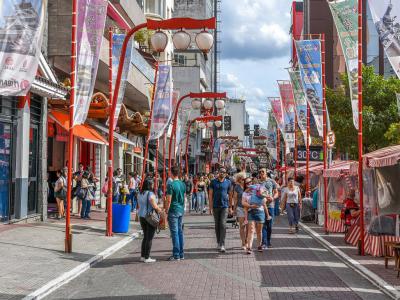
In the early 1900s, the area became popular with Japanese immigrants. Today, over one million Japanese and Brazilian-Japanese people call this neighborhood home, making Liberdade the largest Japanese community outside Japan. In 1974, a nine-meter-tall traditional Japanese gate was erected, marking the entrance to Liberdade with stunning detail.
Liberdade is a vibrant spot for tourists and locals to immerse themselves in Asian culture. You’ll find Japanese comics (known as manga), cosplay enthusiasts dressed as their favorite anime characters, Japanese candy and gifts, and restaurants serving sushi and sashimi. Don’t miss the chance to enjoy a karaoke bar for a fun cultural experience.
Galvao Bueno Street is one of the main thoroughfares in Liberdade, lined with antique shops, bookstores, grocers, and an anime and manga mall. The street features a pedestrian bridge over the Glicerio Viaduct, a perfect spot for photos of Sao Paulo.
The Museum of Japanese Immigration offers a fascinating glimpse into the history and culture of Japanese immigrants in Brazil. Visitors can explore exhibits detailing the journeys, traditions, and daily lives of Japanese settlers, as well as their contributions to Brazilian society.
On weekends, the Liberdade street market offers traditional Japanese food, household items, and souvenirs, making it a lively destination for visitors.
Tip:
Visit on the weekend to take part in the street market. Check out the food stalls and try Japanese favorites such as ramen noodles, yakisoba (fried noodles), and gyoza (dumplings).
In the early 1900s, the area became popular with Japanese immigrants. Today, over one million Japanese and Brazilian-Japanese people call this neighborhood home, making Liberdade the largest Japanese community outside Japan. In 1974, a nine-meter-tall traditional Japanese gate was erected, marking the entrance to Liberdade with stunning detail.
Liberdade is a vibrant spot for tourists and locals to immerse themselves in Asian culture. You’ll find Japanese comics (known as manga), cosplay enthusiasts dressed as their favorite anime characters, Japanese candy and gifts, and restaurants serving sushi and sashimi. Don’t miss the chance to enjoy a karaoke bar for a fun cultural experience.
Galvao Bueno Street is one of the main thoroughfares in Liberdade, lined with antique shops, bookstores, grocers, and an anime and manga mall. The street features a pedestrian bridge over the Glicerio Viaduct, a perfect spot for photos of Sao Paulo.
The Museum of Japanese Immigration offers a fascinating glimpse into the history and culture of Japanese immigrants in Brazil. Visitors can explore exhibits detailing the journeys, traditions, and daily lives of Japanese settlers, as well as their contributions to Brazilian society.
On weekends, the Liberdade street market offers traditional Japanese food, household items, and souvenirs, making it a lively destination for visitors.
Tip:
Visit on the weekend to take part in the street market. Check out the food stalls and try Japanese favorites such as ramen noodles, yakisoba (fried noodles), and gyoza (dumplings).

7) Liberdade Market
The Liberdade Market, also known as the Liberdade Street Fair, is a vibrant art and handicraft fair located in the Liberdade district of São Paulo. This popular open-air market has been operating since 1975 and takes place every Saturday and Sunday near the Liberdade Metro station. Throughout the year, the market hosts a variety of attractions, festivals, and artistic events.
The Japanese community has made significant contributions to the market and the surrounding area. They have introduced flower production, rice cultivation, vegetable farming, mushroom cultivation, and macrobiotic food. In addition to these agricultural contributions, the Japanese have also brought their martial arts expertise. This cultural exchange has not only enriched Brazilian culture but has also influenced and modified their traditions.
The Liberdade neighborhood proudly houses the largest Japanese population outside of Japan. While most Japanese-Brazilians now primarily speak Portuguese, some individuals still maintain fluency in the Japanese language. Similarly, among the Chinese and Korean communities residing in the area, some can communicate in their ancestral languages, preserving their cultural heritage.
The Japanese community has made significant contributions to the market and the surrounding area. They have introduced flower production, rice cultivation, vegetable farming, mushroom cultivation, and macrobiotic food. In addition to these agricultural contributions, the Japanese have also brought their martial arts expertise. This cultural exchange has not only enriched Brazilian culture but has also influenced and modified their traditions.
The Liberdade neighborhood proudly houses the largest Japanese population outside of Japan. While most Japanese-Brazilians now primarily speak Portuguese, some individuals still maintain fluency in the Japanese language. Similarly, among the Chinese and Korean communities residing in the area, some can communicate in their ancestral languages, preserving their cultural heritage.
8) Sao Paulo Cathedral (must see)
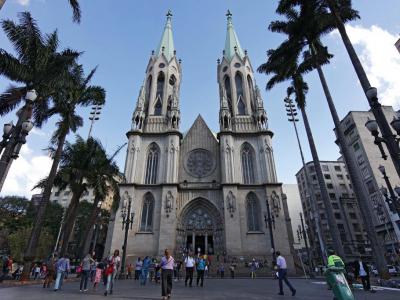
Construction of Sao Paulo Cathedral began in 1913 and was finally completed in 1954, but this sacred site has hosted churches and cathedrals since 1589. Its impressive Neo-Gothic facade and soaring Renaissance-style dome make it one of the city’s most striking landmarks.
The twin towers, reaching 92 meters, were finished in 1967, and inside, the cathedral can hold up to 8,000 visitors. The capitals are decorated with carved Brazilian crops like coffee branches and pineapples, a charming nod to the country’s heritage.
The crypt holds fascinating history as well. Among the tombs of Sao Paulo’s archbishops and bishops, you’ll find the remains of Tibirica, a Guaianas chief who welcomed the first Jesuits in the 1500s and helped make the founding of Sao Paulo possible. Marble sculptures tell stories of Job and Saint Jerome, making the crypt both impressive and reflective.
Music lovers will be thrilled by the cathedral’s enormous 1954 organ, one of the largest in Latin America, boasting 12,000 pipes and intricate Gothic-style carvings. And don’t miss the carillon-the heaviest and largest in Central and South America-with its 61 bells filling the air with resounding tones.
Tip:
Tourists should be aware that the plaza around the cathedral can attract drug addicts, beggars, and grifters. It is safest to visit during the day and maintain a low profile. The contrast between the sacred interior and the bustling, sometimes chaotic exterior offers a striking portrait of São Paulo’s unique and complex character.
The twin towers, reaching 92 meters, were finished in 1967, and inside, the cathedral can hold up to 8,000 visitors. The capitals are decorated with carved Brazilian crops like coffee branches and pineapples, a charming nod to the country’s heritage.
The crypt holds fascinating history as well. Among the tombs of Sao Paulo’s archbishops and bishops, you’ll find the remains of Tibirica, a Guaianas chief who welcomed the first Jesuits in the 1500s and helped make the founding of Sao Paulo possible. Marble sculptures tell stories of Job and Saint Jerome, making the crypt both impressive and reflective.
Music lovers will be thrilled by the cathedral’s enormous 1954 organ, one of the largest in Latin America, boasting 12,000 pipes and intricate Gothic-style carvings. And don’t miss the carillon-the heaviest and largest in Central and South America-with its 61 bells filling the air with resounding tones.
Tip:
Tourists should be aware that the plaza around the cathedral can attract drug addicts, beggars, and grifters. It is safest to visit during the day and maintain a low profile. The contrast between the sacred interior and the bustling, sometimes chaotic exterior offers a striking portrait of São Paulo’s unique and complex character.

9) Arts & Crafts Fair in the Republic Square
The Republic Square stands as a prominent landmark in São Paulo, exuding a sense of tradition. Situated in the heart of the city, it attracts a diverse array of individuals, each with their own unique style, all eager to explore this renowned site that holds a piece of the metropolis' history. Formerly known as the "Largo dos Curros," it once served as a gathering place for the inhabitants of 19th-century São Paulo, who delighted in witnessing rodeos and bullfights during the season. Inspired by European urbanization models, this location acts as a bridge between the old and new centers of the city. The square's fame is further augmented by its beloved Arts & Crafts Fair.
The inception of the Arts & Crafts Fair can be traced back to the late 1940s when collectors convened at this venue to exchange stamps, banknotes, coins, and medals. In the 1960s, artists and craftsmen started showcasing their creations here, subsequently attracting a community of hippies who chose to settle in the area.
Today, the Arts & Crafts Fair encompasses an impressive expanse, housing over 600 stalls and markets offering a wide range of crafts. Visitors can peruse vibrant landscape paintings from Brazil's northeastern regions, intricate wood carvings, and an assortment of charming household trinkets sourced from all corners of Brazil and neighboring countries. Beyond the artistic wonders on display, the fair also boasts a gastronomic section that is particularly enticing. It is here that you can relish a delectable pastel, a true culinary delight.
The inception of the Arts & Crafts Fair can be traced back to the late 1940s when collectors convened at this venue to exchange stamps, banknotes, coins, and medals. In the 1960s, artists and craftsmen started showcasing their creations here, subsequently attracting a community of hippies who chose to settle in the area.
Today, the Arts & Crafts Fair encompasses an impressive expanse, housing over 600 stalls and markets offering a wide range of crafts. Visitors can peruse vibrant landscape paintings from Brazil's northeastern regions, intricate wood carvings, and an assortment of charming household trinkets sourced from all corners of Brazil and neighboring countries. Beyond the artistic wonders on display, the fair also boasts a gastronomic section that is particularly enticing. It is here that you can relish a delectable pastel, a true culinary delight.
10) Mercado Municipal (Municipal Market) (must see)
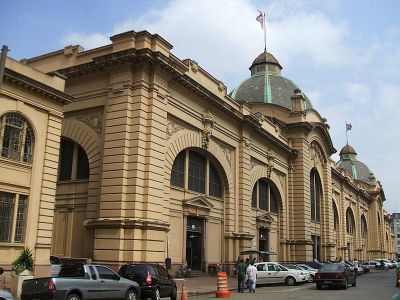
This enormous eclectic-style market first opened in 1933. Since then, it has remained committed to serving as a central public market offering fruits, vegetables, meats, cereals, and spices.
The Municipal Market was inspired by the Berlin Central Market, featuring a covered building with side turrets. Its exterior combines neoclassical and Gothic influences, with grand columns and arches. Glazed windows flood the interior with natural light.
Inside, visitors can admire the market’s fabulous stained-glass windows, arranged in 32 panels. These were designed by Brazilian stained-glass master Conrado Sorgenicht Filho, who also created works for more than 300 churches across Brazil. Instead of religious themes, the panels here depict scenes of food production, perfectly suited to the market’s spirit.
On the first floor, visitors will find a wide range of food retailers. You can buy just about any ingredient imaginable - from Brazilian nuts, coffee, and fresh fish to oysters, meats, fruits, and vegetables.
The second floor is home to several restaurants where you can enjoy local specialties. To give you an idea of the market’s impressive scale, it employs over 1,500 workers, and more than 350 tons of food are traded here each day.
Tip:
Try the famous mortadella sandwich. The market is bustling at lunchtime, so if you love a hectic, immersive experience, try lunchtime. For a quieter pace, go before or after lunch.
The Municipal Market was inspired by the Berlin Central Market, featuring a covered building with side turrets. Its exterior combines neoclassical and Gothic influences, with grand columns and arches. Glazed windows flood the interior with natural light.
Inside, visitors can admire the market’s fabulous stained-glass windows, arranged in 32 panels. These were designed by Brazilian stained-glass master Conrado Sorgenicht Filho, who also created works for more than 300 churches across Brazil. Instead of religious themes, the panels here depict scenes of food production, perfectly suited to the market’s spirit.
On the first floor, visitors will find a wide range of food retailers. You can buy just about any ingredient imaginable - from Brazilian nuts, coffee, and fresh fish to oysters, meats, fruits, and vegetables.
The second floor is home to several restaurants where you can enjoy local specialties. To give you an idea of the market’s impressive scale, it employs over 1,500 workers, and more than 350 tons of food are traded here each day.
Tip:
Try the famous mortadella sandwich. The market is bustling at lunchtime, so if you love a hectic, immersive experience, try lunchtime. For a quieter pace, go before or after lunch.
