Custom Walk in Istanbul, Turkey by dvituma8263 created on 2026-01-11
Guide Location: Turkey » Istanbul
Guide Type: Custom Walk
# of Sights: 7
Tour Duration: 4 Hour(s)
Travel Distance: 9.3 Km or 5.8 Miles
Share Key: T8EYH
Guide Type: Custom Walk
# of Sights: 7
Tour Duration: 4 Hour(s)
Travel Distance: 9.3 Km or 5.8 Miles
Share Key: T8EYH
How It Works
Please retrieve this walk in the GPSmyCity app. Once done, the app will guide you from one tour stop to the next as if you had a personal tour guide. If you created the walk on this website or come to the page via a link, please follow the instructions below to retrieve the walk in the app.
Retrieve This Walk in App
Step 1. Download the app "GPSmyCity: Walks in 1K+ Cities" on Apple App Store or Google Play Store.



Step 2. In the GPSmyCity app, download(or launch) the guide "Istanbul Map and Walking Tours".
Step 3. Tap the menu button located at upper right corner of the "Walks" screen and select "Retrieve custom walk". Enter the share key: T8EYH
1) Hatice Sultan Palace
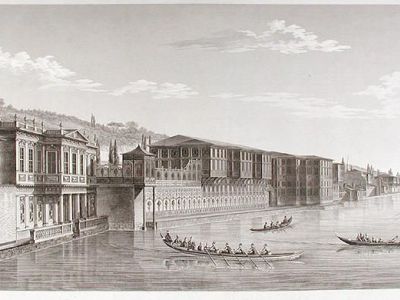
The Hatice Sultan Palace, located by the Bosporus in Istanbul's Ortaköy area, is an important historical site with a rich background. Built in the late 1800s, this impressive building near the water showcases Ottoman architectural style, including a red roof, neoclassical design, detailed woodwork and plaster, a marble courtyard, and rooms arranged to highlight both its looks and practicality.
Originally, it was the summer home of Hatice Sultan, Sultan Murat V's daughter. Over time, the palace has changed its role multiple times, adapting to the needs of the community. After the Ottoman dynasty was exiled and the Turkish Republic was established, it became an orphanage and then a primary school, contributing significantly to local education. Its position in Ortaköy makes it a key part of the area's cultural identity and a highlight on the Bosphorus walk.
The palace not only reflects Hatice Sultan's life, including her personal challenges and marriage choice, but also the broader narrative of change and adaptation. Its recent conversion into a luxury hotel complex, after significant updates including the nearby Fehime Sultan Yalı, represents the latest phase in its life, merging opulence with its historical narrative.
The Hatice Sultan Palace is more than just an example of Ottoman architectural achievement; it's a living piece of history that tells the stories of those who lived there and the societal shifts in Turkey. With its preserved structure and decorative details, the Hatice Sultan Palace is a symbol of Istanbul's cultural and historical richness, proudly standing along the Bosporus.
Originally, it was the summer home of Hatice Sultan, Sultan Murat V's daughter. Over time, the palace has changed its role multiple times, adapting to the needs of the community. After the Ottoman dynasty was exiled and the Turkish Republic was established, it became an orphanage and then a primary school, contributing significantly to local education. Its position in Ortaköy makes it a key part of the area's cultural identity and a highlight on the Bosphorus walk.
The palace not only reflects Hatice Sultan's life, including her personal challenges and marriage choice, but also the broader narrative of change and adaptation. Its recent conversion into a luxury hotel complex, after significant updates including the nearby Fehime Sultan Yalı, represents the latest phase in its life, merging opulence with its historical narrative.
The Hatice Sultan Palace is more than just an example of Ottoman architectural achievement; it's a living piece of history that tells the stories of those who lived there and the societal shifts in Turkey. With its preserved structure and decorative details, the Hatice Sultan Palace is a symbol of Istanbul's cultural and historical richness, proudly standing along the Bosporus.
2) Ortakoy Mosque (Buyuk Mecidiye Camii)
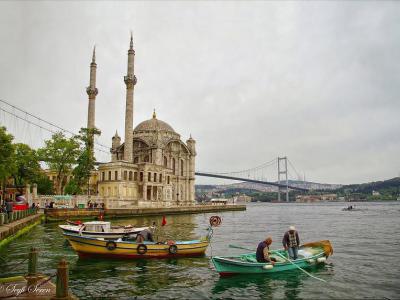
Ideally perched on the waters of the Bosphorus Strait, the "Grand Imperial Mosque" (Buyuk Mecidiye Camii) is actually rather "pint-sized" as compared to other mosques, but has been built with huge windows to illuminate its understated elegance. Now simply referred to as the Ortaköy Mosque, it was built in 1854 by Sultan Abdülmecid, who employed the talents of the same accomplished team of architects behind the Dolmabahçe Palace and many other buildings in and around Istanbul. The architecture is quite unique – a skillful blend of Ottoman and European Neo-Baroque influences, breaking away from the traditional Ottoman multi-domed style.
The landscape is breathtaking and surrounded by countless waterfront cafés, restaurants and clubs. Just in front of the mosque, a viewing platform offers views of the Bosphorus Bridge – the first to connect Asia to Europe; an enchanting place to smoke a hookah, play tavla (backgammon) and just enjoy the view and the incessant maritime traffic.
Tip:
Don't miss the collection of small boutiques scattered in the vicinity of the mosque, selling everything from siphoners to blue beads to home accessories and ladies' jewelry. Quite a few wool-combers' shops around, too!
The landscape is breathtaking and surrounded by countless waterfront cafés, restaurants and clubs. Just in front of the mosque, a viewing platform offers views of the Bosphorus Bridge – the first to connect Asia to Europe; an enchanting place to smoke a hookah, play tavla (backgammon) and just enjoy the view and the incessant maritime traffic.
Tip:
Don't miss the collection of small boutiques scattered in the vicinity of the mosque, selling everything from siphoners to blue beads to home accessories and ladies' jewelry. Quite a few wool-combers' shops around, too!
3) Istiklal Caddesi (Independence Avenue) (must see)
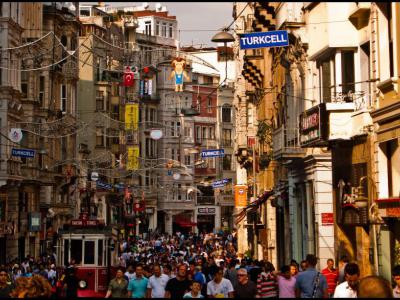
Welcome to the most organic facet of modern Istanbul - Istiklal Avenue - a mosaic of cultures and ideas that feels both Turkish and unmistakably European. Indeed, here East meets West, sharing a drink, grabbing a bite, and staying up past midnight. In this collision of life, languages, and late-night pastry shops, embassies stand shoulder to shoulder with indie bookstores, street musicians jam beside polished art galleries, and the air hums with both espresso machines and the murmur of ten thousand footsteps.
Moving through Istiklal, you can't miss the sight capturing everyone’s attention - the nostalgic red tram. The only vehicle allowed here, it quietly glides down the middle, linking Taksim and Tünel squares. Its slow pace contrasts with the endless flow of people from every corner of the world. Riding it isn’t about distance; it’s about presence - sharing a moment with Istanbul’s glorious chaos.
Look left, right, and a little skyward. All along this avenue, history and art live side by side. Historic cinemas such as Atlas and Beyoğlu still light their marquees, and elegant passages like Çiçek and Hazzopulo recall the Belle Époque charm of old Istanbul. The Church of Saint Antoine, with its Venetian Gothic façade, stands as a reminder of the city’s layered faiths and communities. Nearby, galleries such as SALT Beyoğlu, ARTER, and the Mısır Apartments bring contemporary energy to the street’s historic architecture.
Take a turn down any alley, and Istanbul will reward your curiosity. Here, the tempo softens with small smoky taverns, cafés, and rooftop terraces inviting visitors to pause - to taste, to listen, to observe. The hum of conversation, the scent of coffee, the echo of live music: all merge into one continuous story of Istanbul - vibrant, diverse, and always in motion. Indeed, this street doesn’t walk - it dances.
Just remember - keep your wallet close, your eyes anywhere but in front of you (a neat trick that clears your path), and avoid walking the minor alleys after midnight.
Moving through Istiklal, you can't miss the sight capturing everyone’s attention - the nostalgic red tram. The only vehicle allowed here, it quietly glides down the middle, linking Taksim and Tünel squares. Its slow pace contrasts with the endless flow of people from every corner of the world. Riding it isn’t about distance; it’s about presence - sharing a moment with Istanbul’s glorious chaos.
Look left, right, and a little skyward. All along this avenue, history and art live side by side. Historic cinemas such as Atlas and Beyoğlu still light their marquees, and elegant passages like Çiçek and Hazzopulo recall the Belle Époque charm of old Istanbul. The Church of Saint Antoine, with its Venetian Gothic façade, stands as a reminder of the city’s layered faiths and communities. Nearby, galleries such as SALT Beyoğlu, ARTER, and the Mısır Apartments bring contemporary energy to the street’s historic architecture.
Take a turn down any alley, and Istanbul will reward your curiosity. Here, the tempo softens with small smoky taverns, cafés, and rooftop terraces inviting visitors to pause - to taste, to listen, to observe. The hum of conversation, the scent of coffee, the echo of live music: all merge into one continuous story of Istanbul - vibrant, diverse, and always in motion. Indeed, this street doesn’t walk - it dances.
Just remember - keep your wallet close, your eyes anywhere but in front of you (a neat trick that clears your path), and avoid walking the minor alleys after midnight.
4) Grand Hotel de Londres Bar
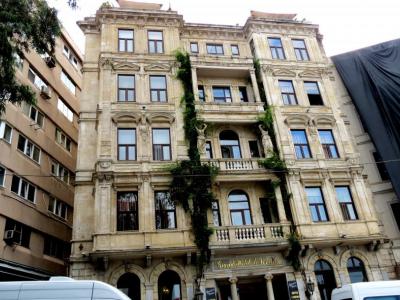
Imagine flapper-era glamour meeting Istanbul skyline... This 1920s-style rooftop bar still reigns as one of the city’s most authentic hideouts-no pretension, no influencer armies-just locals, expats, and the occasional stray breeze carrying the scent of the Bosphorus. Whether it’s a frosty beer or a glass of Turkish tea, everything tastes better when paired with that glittering view of the Golden Horn and the Old City.
The lounge bar serves drinks and meals from 4 pm to late at night for those who missed dinner time. Come around sunset-say, between 7 and 9 pm-and the city puts on a free show. Minarets glow, ferries drift like lazy fireflies, and Istanbul’s skyline slips from gold to indigo. The menu is friendly to your wallet, and the relaxed crowd (largely devoid of tourists) makes it easy to linger longer than you planned.
Downstairs, the building tells another story. Once a refined city hotel for 19th-century European travelers (particularly the Brits, who had a soft spot for it), it still wears its age gracefully. The walls whisper history in oil paint and faded frames-worth a pause as you wander the stairway.
And if the weather turns brisk, retreat indoors. The main hall and lobby bar still hum with that quiet, timeworn charm that makes you want to order coffee slowly, as if you’re sharing it with the ghosts of Istanbul’s grand past...
The lounge bar serves drinks and meals from 4 pm to late at night for those who missed dinner time. Come around sunset-say, between 7 and 9 pm-and the city puts on a free show. Minarets glow, ferries drift like lazy fireflies, and Istanbul’s skyline slips from gold to indigo. The menu is friendly to your wallet, and the relaxed crowd (largely devoid of tourists) makes it easy to linger longer than you planned.
Downstairs, the building tells another story. Once a refined city hotel for 19th-century European travelers (particularly the Brits, who had a soft spot for it), it still wears its age gracefully. The walls whisper history in oil paint and faded frames-worth a pause as you wander the stairway.
And if the weather turns brisk, retreat indoors. The main hall and lobby bar still hum with that quiet, timeworn charm that makes you want to order coffee slowly, as if you’re sharing it with the ghosts of Istanbul’s grand past...
5) Istanbul Modern (Art Museum)
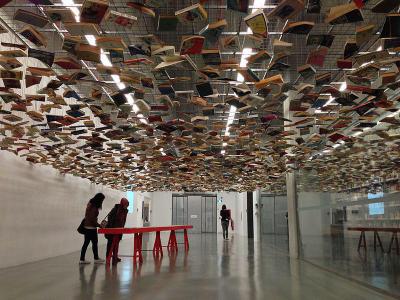
Here, on the edge of the Sea of Marmara, Istanbul reimagines itself. The Istanbul Modern is a thought-provoking manifesto in glass and light that gleams with a cool, contemporary shimmer. Inside its walls - a sharp contrast to the centuries-old minarets, domes, and Ottoman arches - this museum gives voice to the artists who’ve been left out of the global modern art conversation, displaying their work in a space that feels equal parts gallery, think-tank, and seaside escape...
Housed in a former maritime warehouse, it keeps things humble on the exterior - looking more like a cargo terminal than a castle. But step inside, and the openness, the light, the views of the city skyline all make sense.
The museum stretches across two airy floors. The upper level is home to its permanent collection - a vivid showcase of Turkish creativity - alongside classrooms, a design-forward gift shop, and a café with waterfront calm. Below, rotating exhibitions, Istanbul Modern Cinema, and a serene library keep the dialogue between film, art, and memory alive.
The ticket may cost a little extra by local standards, but what you gain here - the atmosphere and curation - more than balances the scales. And that nice little café – a must for any museum worth its salt – delivers a pleasant addition to a day of cultural exploration without emptying your wallet.
You can wander freely or take an audio guide - available in both English and Turkish - that will walk you through the highlights in about 45 minutes, making this a perfect pit stop for both casual wanderers and deep thinkers.
Indeed, if you're looking for a fresh angle on Turkish identity and artistic expression, this is the place. And before you leave, stop by the gift shop - a hidden trove of inspired keepsakes, including jewelry that might just rival the art upstairs...
Housed in a former maritime warehouse, it keeps things humble on the exterior - looking more like a cargo terminal than a castle. But step inside, and the openness, the light, the views of the city skyline all make sense.
The museum stretches across two airy floors. The upper level is home to its permanent collection - a vivid showcase of Turkish creativity - alongside classrooms, a design-forward gift shop, and a café with waterfront calm. Below, rotating exhibitions, Istanbul Modern Cinema, and a serene library keep the dialogue between film, art, and memory alive.
The ticket may cost a little extra by local standards, but what you gain here - the atmosphere and curation - more than balances the scales. And that nice little café – a must for any museum worth its salt – delivers a pleasant addition to a day of cultural exploration without emptying your wallet.
You can wander freely or take an audio guide - available in both English and Turkish - that will walk you through the highlights in about 45 minutes, making this a perfect pit stop for both casual wanderers and deep thinkers.
Indeed, if you're looking for a fresh angle on Turkish identity and artistic expression, this is the place. And before you leave, stop by the gift shop - a hidden trove of inspired keepsakes, including jewelry that might just rival the art upstairs...
6) Galip Dede Caddesi (Street)
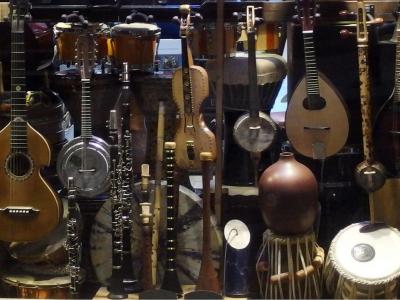
It won't be an exaggeration to call this narrow, cobblestoned slope in Istanbul’s Tünel district the city’s unofficial temple to sound. Musicians and music-lovers of all stripes have come here for years to worship the art of noise. On this street, every other doorway seems to hum, strum, or jingle, and the shops spill over with instruments of every kind, from pocket-sized percussion to showpiece ouds gleaming in the window.
A Mey pipe here goes for around $200 apiece, while an entry-level, budget model of baglama (a plucked string instrument) might set you back $400, which is not bad, come to think of it, for something you can serenade the sunset with...
Weekdays in the early afternoon, when it's not very crowded, are the best time to visit. Between the music stores, you’ll find quirky craft boutiques and artsy hideouts selling everything from handmade jewelry to one-of-a-kind keepsakes. The air buzzes with color, chatter, and just enough chaos to make it feel alive.
And when the scent of fresh soap hits you, that’s the Home Spa store - stocked with organic oils, cheerful bathrobes, and enough aromatic temptation to make you reconsider your suitcase space.
A final word of wisdom: stop at one of the juice stands along the way. A splash of fresh orange or pomegranate will keep you cool, hydrated, and ready to keep jamming down the street.
A Mey pipe here goes for around $200 apiece, while an entry-level, budget model of baglama (a plucked string instrument) might set you back $400, which is not bad, come to think of it, for something you can serenade the sunset with...
Weekdays in the early afternoon, when it's not very crowded, are the best time to visit. Between the music stores, you’ll find quirky craft boutiques and artsy hideouts selling everything from handmade jewelry to one-of-a-kind keepsakes. The air buzzes with color, chatter, and just enough chaos to make it feel alive.
And when the scent of fresh soap hits you, that’s the Home Spa store - stocked with organic oils, cheerful bathrobes, and enough aromatic temptation to make you reconsider your suitcase space.
A final word of wisdom: stop at one of the juice stands along the way. A splash of fresh orange or pomegranate will keep you cool, hydrated, and ready to keep jamming down the street.
7) Galata Tower (must see)
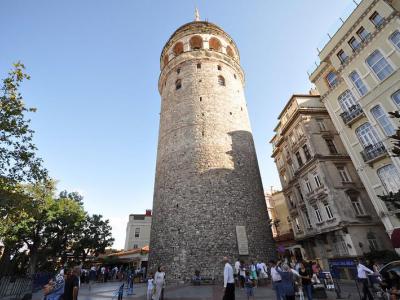
The Galata Tower, one of Istanbul’s most recognizable landmarks, rises above the city as a lasting emblem of power, endurance, and transformation. Erected in 1348 by Genoese merchants, it originally bore the name the “Tower of Christ” and served both as a watchtower and defensive stronghold for the independent Genoese colony of Galata, located across the Golden Horn from Byzantine Constantinople. Standing nine stories tall and approximately 67 meters high, the stone tower was the tallest structure of its time and offered an unmatched panoramic view of the city and sea. Even today, its circular viewing platform provides visitors with a 360-degree perspective of Istanbul’s skyline, encompassing the Bosphorus, Golden Horn, and the city’s historic landmarks.
When the Ottomans conquered Constantinople in 1453, the tower’s purpose evolved to meet new needs. Sultan Mehmed II converted it into a fire watchtower, capitalizing on its strategic vantage point to spot fires that frequently broke out in the city’s wooden neighborhoods. Over the centuries, it also served as a prison for sailors, a warehouse, and briefly as an observatory. These changing uses reflected the Ottoman practice of adapting existing structures to fit new civic or administrative functions, integrating the Genoese-built monument into the life of the empire.
Perhaps the most famous tale linked to the Galata Tower is that of Hezarfen Ahmed Çelebi, a 17th-century Ottoman aviator who reportedly leapt from its summit wearing artificial wings and glided across the Bosphorus. Though likely embellished, the story captures the inventive spirit and imagination long associated with Istanbul’s cultural identity.
Throughout its history, the tower suffered multiple fires, notably in 1794 and 1831, prompting major restorations that eventually gave it its distinctive conical roof. It continued to function as a fire lookout post until the 1960s before being restored once more and opened to the public as a museum and viewpoint.
Today, the Galata Tower remains a highlight for visitors who can ascend by elevator to its observation deck, enjoy a drink at the café, or dine at the restaurant offering evening cabaret shows. Surrounded by lively streets, music shops, and historic charm, the tower encapsulates nearly seven centuries of Istanbul’s layered heritage-where Genoese ambition, Ottoman resilience, and modern vitality meet in a single, soaring monument.
When the Ottomans conquered Constantinople in 1453, the tower’s purpose evolved to meet new needs. Sultan Mehmed II converted it into a fire watchtower, capitalizing on its strategic vantage point to spot fires that frequently broke out in the city’s wooden neighborhoods. Over the centuries, it also served as a prison for sailors, a warehouse, and briefly as an observatory. These changing uses reflected the Ottoman practice of adapting existing structures to fit new civic or administrative functions, integrating the Genoese-built monument into the life of the empire.
Perhaps the most famous tale linked to the Galata Tower is that of Hezarfen Ahmed Çelebi, a 17th-century Ottoman aviator who reportedly leapt from its summit wearing artificial wings and glided across the Bosphorus. Though likely embellished, the story captures the inventive spirit and imagination long associated with Istanbul’s cultural identity.
Throughout its history, the tower suffered multiple fires, notably in 1794 and 1831, prompting major restorations that eventually gave it its distinctive conical roof. It continued to function as a fire lookout post until the 1960s before being restored once more and opened to the public as a museum and viewpoint.
Today, the Galata Tower remains a highlight for visitors who can ascend by elevator to its observation deck, enjoy a drink at the café, or dine at the restaurant offering evening cabaret shows. Surrounded by lively streets, music shops, and historic charm, the tower encapsulates nearly seven centuries of Istanbul’s layered heritage-where Genoese ambition, Ottoman resilience, and modern vitality meet in a single, soaring monument.
