Custom Walk in Cologne, Germany by d_mi173639 created on 2026-01-31
Guide Location: Germany » Cologne
Guide Type: Custom Walk
# of Sights: 10
Tour Duration: 2 Hour(s)
Travel Distance: 2.8 Km or 1.7 Miles
Share Key: RURUU
Guide Type: Custom Walk
# of Sights: 10
Tour Duration: 2 Hour(s)
Travel Distance: 2.8 Km or 1.7 Miles
Share Key: RURUU
How It Works
Please retrieve this walk in the GPSmyCity app. Once done, the app will guide you from one tour stop to the next as if you had a personal tour guide. If you created the walk on this website or come to the page via a link, please follow the instructions below to retrieve the walk in the app.
Retrieve This Walk in App
Step 1. Download the app "GPSmyCity: Walks in 1K+ Cities" on Apple App Store or Google Play Store.



Step 2. In the GPSmyCity app, download(or launch) the guide "Cologne Map and Walking Tours".
Step 3. Tap the menu button located at upper right corner of the "Walks" screen and select "Retrieve custom walk". Enter the share key: RURUU
1) Cathedral Square Floor Paintings
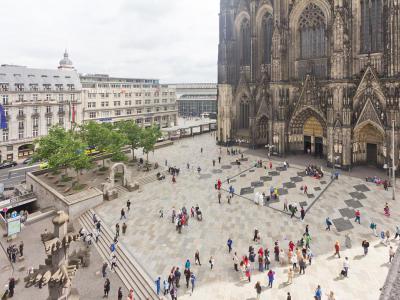
The Cathedral [Dom] Square attracts professional artists who come here to draw pictures on the pavement. Among the floor paintings the most noticeable are the portrait of German composer Ludwig van Beethoven and a replica of the world famous Mona Lisa.
2) Kreuzblume (Finials of the Cologne Cathedral)
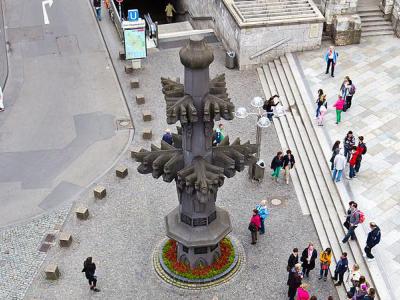
The Finials of Cologne Cathedral are an impressive architectural feature that form the tops of the north and south towers at a height of 149 to 157 meters. They consist of a central stem entwined with two differently sized leaf wreaths and date back to the last construction phase of the cathedral in 1880. The plans for the finials were based on the original medieval facade plan F by master builder Ernst Friedrich Zwirner. The finials were originally designed to have a diameter of 5.20 meters, but due to natural limitations of the material to be mined, the final diameter of the lower blade ring is 4.58 meters and the height around eight meters.
A copy of these finials, executed in concrete, has been standing below the steps in front of the west facade of the cathedral since 1991. Despite being a replica, the concrete finials give visitors a glimpse into the impressive engineering and architectural feats that went into building the original Finials of Cologne Cathedral over a century ago.
A copy of these finials, executed in concrete, has been standing below the steps in front of the west facade of the cathedral since 1991. Despite being a replica, the concrete finials give visitors a glimpse into the impressive engineering and architectural feats that went into building the original Finials of Cologne Cathedral over a century ago.
3) Fruh Brauhaus
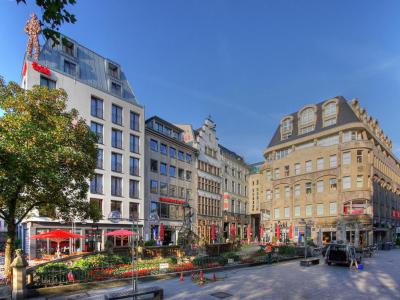
Brauhaus Früh is perhaps the most popular biergarten (beer-garden) in Cologne's Old Town. Also known as Früh am Dom for being located directly opposite the Cologne Cathedral, this brewery is named after its first owner, Peter Josef Früh.
Converting the building of the former Central Theater and Schützenliesel restaurant, at Am Hof 12, into a top-fermentation facility in 1904 marked the first milestone for Cölner Hofbräu P. Josef Früh KG. Here the beer was brewed right in the cellars. Over the years, the location has been continuously expanded and developed.
During World War II, the building, like the rest of Cologne, was severely damaged by bombing raids, with its main section completely burned down in February 1944. In 1987, the production was moved to the Fühlingen district of Cologne, and Früh became a draft beer pub. Gradually, the pub incorporated three neighboring houses and now has about 1400 seats, including the beer-garden. There are several uniquely decorated halls - "Armorial Hall", "Winter Garden", "Bell Tower", and "Roman cellar" (here you can see the remains of the ancient Roman masonry, as well as old equipment of the brewery). The establishment is currently run by the fifth generation of the Früh family.
In addition to the freshly tapped Früh Kölsch, the beer-house offers a large range of meat dishes and snacks, prepared especially to go with the brew. Here you can also discover the art of traditional brewing and serving beer – waiters carrying "perforated" trays, in the holes of which glasses are inserted.
In 2003 the Feinkosttheke delicatessen was opened next to the beer-house, offering Früh's homemade specialties, spices, mustard and sauces.
Converting the building of the former Central Theater and Schützenliesel restaurant, at Am Hof 12, into a top-fermentation facility in 1904 marked the first milestone for Cölner Hofbräu P. Josef Früh KG. Here the beer was brewed right in the cellars. Over the years, the location has been continuously expanded and developed.
During World War II, the building, like the rest of Cologne, was severely damaged by bombing raids, with its main section completely burned down in February 1944. In 1987, the production was moved to the Fühlingen district of Cologne, and Früh became a draft beer pub. Gradually, the pub incorporated three neighboring houses and now has about 1400 seats, including the beer-garden. There are several uniquely decorated halls - "Armorial Hall", "Winter Garden", "Bell Tower", and "Roman cellar" (here you can see the remains of the ancient Roman masonry, as well as old equipment of the brewery). The establishment is currently run by the fifth generation of the Früh family.
In addition to the freshly tapped Früh Kölsch, the beer-house offers a large range of meat dishes and snacks, prepared especially to go with the brew. Here you can also discover the art of traditional brewing and serving beer – waiters carrying "perforated" trays, in the holes of which glasses are inserted.
In 2003 the Feinkosttheke delicatessen was opened next to the beer-house, offering Früh's homemade specialties, spices, mustard and sauces.
4) Kölner Dom (Cologne Cathedral) (must see)
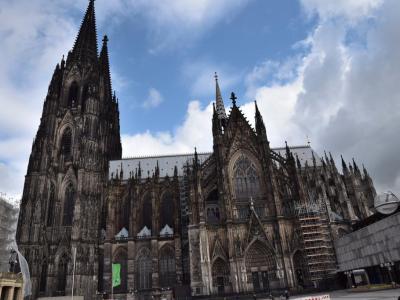
The Cologne Cathedral - a place where Gothic ambition met a 600-year-long construction delay and still came out looking fabulous... Indeed, the magnitude of this building dwarfs your expectations and your camera’s field of view.
This towering masterpiece is Germany’s most visited landmark, with 20,000 people dropping by daily - not bad for a church that took over six centuries to finish. At 157 meters (that’s 515 feet for those who still think in feet), it’s the tallest twin-spired church on Earth, the second-tallest church in Europe, and the third tallest in the world. Clearly, Cologne doesn’t do things halfway...
Construction began in 1248, then took a casual break around 1560. The west tower wasn't completed until 1880, when 19th-century officials unearthed the original blueprints and reasoned, “Why not finish it?”
But the site’s sacred history runs much deeper than that. Since the 4th century, Christians have been building here. The "Old Cathedral" stood from 818 to 1248, and even earlier, a baptistery once graced the eastern end.
So, what kicked off this giant Gothic project? A golden box. Specifically, the Shrine of the Three Kings, believed to hold relics of the Three Wise Men (also known as the Magi - the ones who visited baby Jesus and offered him gifts). Its construction started at the eastern arm to house the shrine, then the west front followed - until everything just kind of stopped in 1473. The work-in-progress look lasted for centuries, complete with a giant crane stuck on top for 400 years. Talk about an eternal fixer-upper...
The cathedral's highlights include the 1322 black marble High Altar and that aforementioned blingy shrine, which began in 1190 and shines brighter than a royal wedding. There's also the 10th-century Gero Crucifix, the 1290 Milan Madonna, and a legal twist - a 13th-century stone tablet that once granted rights to Cologne’s Jewish residents.
And, of course, there are bells - eleven in total. The Saint Peter Bell, cast in 1922, was once the biggest free-swinging bell in the world. You’ll feel it before you hear it...
Insider Tip:
Don’t skip the rear mosaics - they're stunning. Brave the climb for sky-high views, or sneak into the underground parking to see the cathedral’s ancient roots... literally.
This towering masterpiece is Germany’s most visited landmark, with 20,000 people dropping by daily - not bad for a church that took over six centuries to finish. At 157 meters (that’s 515 feet for those who still think in feet), it’s the tallest twin-spired church on Earth, the second-tallest church in Europe, and the third tallest in the world. Clearly, Cologne doesn’t do things halfway...
Construction began in 1248, then took a casual break around 1560. The west tower wasn't completed until 1880, when 19th-century officials unearthed the original blueprints and reasoned, “Why not finish it?”
But the site’s sacred history runs much deeper than that. Since the 4th century, Christians have been building here. The "Old Cathedral" stood from 818 to 1248, and even earlier, a baptistery once graced the eastern end.
So, what kicked off this giant Gothic project? A golden box. Specifically, the Shrine of the Three Kings, believed to hold relics of the Three Wise Men (also known as the Magi - the ones who visited baby Jesus and offered him gifts). Its construction started at the eastern arm to house the shrine, then the west front followed - until everything just kind of stopped in 1473. The work-in-progress look lasted for centuries, complete with a giant crane stuck on top for 400 years. Talk about an eternal fixer-upper...
The cathedral's highlights include the 1322 black marble High Altar and that aforementioned blingy shrine, which began in 1190 and shines brighter than a royal wedding. There's also the 10th-century Gero Crucifix, the 1290 Milan Madonna, and a legal twist - a 13th-century stone tablet that once granted rights to Cologne’s Jewish residents.
And, of course, there are bells - eleven in total. The Saint Peter Bell, cast in 1922, was once the biggest free-swinging bell in the world. You’ll feel it before you hear it...
Insider Tip:
Don’t skip the rear mosaics - they're stunning. Brave the climb for sky-high views, or sneak into the underground parking to see the cathedral’s ancient roots... literally.
5) Hohenzollernbrücke (Hohenzollern Bridge) (must see)
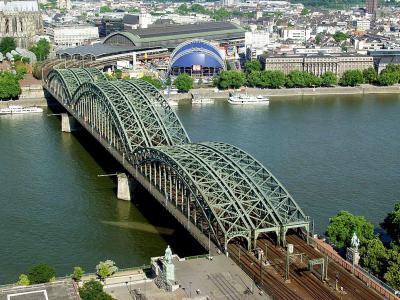
The Hohenzollern Bridge-Cologne’s grand old crossing that’s equal parts iron, history, and sentimental hardware. Stretching across the Rhine like a steel spine, it’s the city’s most beloved blend of romance and railway precision.
Built in 1911 to replace the overworked Cathedral Bridge, this heavy-duty thoroughfare was Cologne’s answer to the rising tide of traffic. It handled trains, trams, cars, pedestrians-you name it. Its name is a royal nod to the House of Hohenzollern, the Prussian dynasty that once ruled over this corner of the world. In fact, the whole project was inaugurated by none other than Kaiser Wilhelm II, who likely admired it for being both majestic and punctual.
Watch your step-or your stirrup-because each end of the bridge is guarded by towering equestrian statues of German emperors and Prussian kings. On one side: Friedrich Wilhelm IV and Wilhelm I. On the other: Friedrich III and Wilhelm II. A cavalry of stone to usher you across.
Now, history took a turn in 1945 when German forces-perhaps not appreciating the bridge’s architectural flair-blew it up during their retreat. Luckily, the bridge rose from the ashes, rebuilt by 1959, and polished up again in the '80s. It still carries trains today-lots of them-and now features pedestrian paths and bike lanes too.
But wait-this is no longer just a bridge. Since 2008, it’s become Cologne’s unofficial temple of love. Couples attach padlocks to the railings, whisper sweet nothings, and toss the keys into the Rhine. By 2015, over half a million locks had been added. That’s a lot of commitment. And a lot of extra weight, too...
A place where steel meets sentiment, this is the best spot to gaze at the Cologne Cathedral from across the water-and maybe reflect on the nature of love, war, and urban planning...
Pro tip:
Go at night. The city lights up, the cathedral glows like a Gothic lantern, and the bridge hums with quiet magic. Trust us, it’s a whole different mood after sunset.
Built in 1911 to replace the overworked Cathedral Bridge, this heavy-duty thoroughfare was Cologne’s answer to the rising tide of traffic. It handled trains, trams, cars, pedestrians-you name it. Its name is a royal nod to the House of Hohenzollern, the Prussian dynasty that once ruled over this corner of the world. In fact, the whole project was inaugurated by none other than Kaiser Wilhelm II, who likely admired it for being both majestic and punctual.
Watch your step-or your stirrup-because each end of the bridge is guarded by towering equestrian statues of German emperors and Prussian kings. On one side: Friedrich Wilhelm IV and Wilhelm I. On the other: Friedrich III and Wilhelm II. A cavalry of stone to usher you across.
Now, history took a turn in 1945 when German forces-perhaps not appreciating the bridge’s architectural flair-blew it up during their retreat. Luckily, the bridge rose from the ashes, rebuilt by 1959, and polished up again in the '80s. It still carries trains today-lots of them-and now features pedestrian paths and bike lanes too.
But wait-this is no longer just a bridge. Since 2008, it’s become Cologne’s unofficial temple of love. Couples attach padlocks to the railings, whisper sweet nothings, and toss the keys into the Rhine. By 2015, over half a million locks had been added. That’s a lot of commitment. And a lot of extra weight, too...
A place where steel meets sentiment, this is the best spot to gaze at the Cologne Cathedral from across the water-and maybe reflect on the nature of love, war, and urban planning...
Pro tip:
Go at night. The city lights up, the cathedral glows like a Gothic lantern, and the bridge hums with quiet magic. Trust us, it’s a whole different mood after sunset.
6) Groß St. Martin (Great St. Martin Church) (must see)
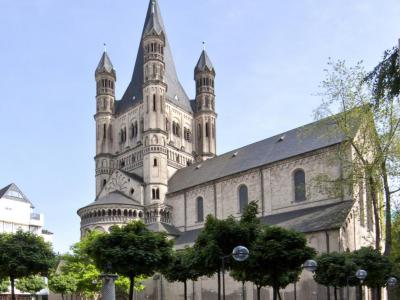
Ah, the Great Saint Martin Church-this seriously good-looking temple with a riverside address and medieval drama to spare is proof that if a building can survive fire, war, and questionable Baroque interior design choices, it deserves your full attention.
This Romanesque heavyweight was built between 1150 and 1250, and its iconic tower has been photobombing Old Town’s skyline ever since. But the site’s résumé goes way back. In Roman times, this spot was actually an island in the Rhine, where they built a humble chapel-probably to appease both the gods and the weather.
In the 10th century, a new church was built. In 1150: Boom. Fire. Ashes. Time to build again! By 1172, they’d got a fancy tri-apsidal structure. It survived another fire in 1185. But in 1378, the towers' roofs caught fire again, and by 1434, a storm decided to finish the job and blew them clean off. Truly, the medieval weather had no chill...
In the 1700s, someone got ambitious with the interior, adding Baroque decorations. Not everyone was thrilled. Some clergy officials thought it looked more Versailles than virtue, and out came the paintbrushes.
Then came the French in 1794. They stuck around for 20 years, turned the abbey into barracks, and eventually pulled the plug on the monastery altogether. Monks out, soldiers in. Not exactly a spiritual upgrade...
By 1847, restoration kicked off, and not a moment too soon. Because in World War II, the church took a beating-fires again, naturally-but was lovingly rebuilt between 1948 and 1985. Now, that’s what we call long-term commitment...
Pro tip:
The entrance plays hard to get-it’s tucked away at the back. And if you fancy ancient basements, head downstairs to see the Roman foundations. Because nothing says timeless like a church that’s literally built on history.
This Romanesque heavyweight was built between 1150 and 1250, and its iconic tower has been photobombing Old Town’s skyline ever since. But the site’s résumé goes way back. In Roman times, this spot was actually an island in the Rhine, where they built a humble chapel-probably to appease both the gods and the weather.
In the 10th century, a new church was built. In 1150: Boom. Fire. Ashes. Time to build again! By 1172, they’d got a fancy tri-apsidal structure. It survived another fire in 1185. But in 1378, the towers' roofs caught fire again, and by 1434, a storm decided to finish the job and blew them clean off. Truly, the medieval weather had no chill...
In the 1700s, someone got ambitious with the interior, adding Baroque decorations. Not everyone was thrilled. Some clergy officials thought it looked more Versailles than virtue, and out came the paintbrushes.
Then came the French in 1794. They stuck around for 20 years, turned the abbey into barracks, and eventually pulled the plug on the monastery altogether. Monks out, soldiers in. Not exactly a spiritual upgrade...
By 1847, restoration kicked off, and not a moment too soon. Because in World War II, the church took a beating-fires again, naturally-but was lovingly rebuilt between 1948 and 1985. Now, that’s what we call long-term commitment...
Pro tip:
The entrance plays hard to get-it’s tucked away at the back. And if you fancy ancient basements, head downstairs to see the Roman foundations. Because nothing says timeless like a church that’s literally built on history.
7) Alter Markt (Old Market)
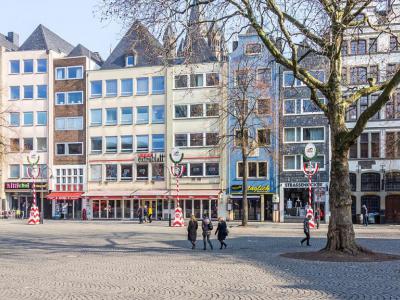
In the Old Market Square of Cologne, cobblestones carry gossip older than most European countries.
Once connected to the Hay Market, this lively square has seen everything from Renaissance flair to full-blown weaver revolts. Today, it's home to beautiful façades, a dramatic fountain, and, come winter, one of Cologne’s coziest Christmas Markets. But don’t let the mulled wine distract you from the centuries of drama baked into these stones.
Markets and homes have stood here since at least the year 922-that’s not a typo... The oldest surviving building dates back to 1580, though many historic structures were wiped out during WWII bombings. Still, Cologne rebuilt with style, as it always does.
One particularly spicy chapter unfolded here in 1371: the Cologne Weaver Uprising. Picture disgruntled guild members facing off with the city council. The weavers lost-badly-and were either arrested or politely escorted out of town with pitchforks (not the musical kind).
At the heart of the square stands the Jan von Werth fountain, completed in 1884. The story it tells is pure soap opera. Young Jan, a lowly farm boy, fell for Griet. But Griet wanted someone with a bit more... coin. Heartbroken, Jan headed off to the Thirty Years’ War, leveled up to war hero status, and returned to find Griet peddling fruit in the square. She gasped, “Jan, who would’ve thought it?” To this, he shrugged and delivered the ultimate verbal mic drop: “Griet, the one who should have” (and with these words, he turned away).
Around the square, you’ll find old-school German architecture, statues of the city’s founders, and-up near house No. 24-a cheeky little sculpture called Kallendresser. It shows a man relieving himself into a gutter. Tasteful? Not exactly. But pointed absolutely-it’s likely a rebellious jab at the city hall conveniently located on the square’s west side.
Today, the Old Market is car-free and people-full. With its bars, restaurants, and ice cream shops, it buzzes well into the night. So, come here for the history, stay for the beer-and maybe watch out for flying weaver spindles...
Once connected to the Hay Market, this lively square has seen everything from Renaissance flair to full-blown weaver revolts. Today, it's home to beautiful façades, a dramatic fountain, and, come winter, one of Cologne’s coziest Christmas Markets. But don’t let the mulled wine distract you from the centuries of drama baked into these stones.
Markets and homes have stood here since at least the year 922-that’s not a typo... The oldest surviving building dates back to 1580, though many historic structures were wiped out during WWII bombings. Still, Cologne rebuilt with style, as it always does.
One particularly spicy chapter unfolded here in 1371: the Cologne Weaver Uprising. Picture disgruntled guild members facing off with the city council. The weavers lost-badly-and were either arrested or politely escorted out of town with pitchforks (not the musical kind).
At the heart of the square stands the Jan von Werth fountain, completed in 1884. The story it tells is pure soap opera. Young Jan, a lowly farm boy, fell for Griet. But Griet wanted someone with a bit more... coin. Heartbroken, Jan headed off to the Thirty Years’ War, leveled up to war hero status, and returned to find Griet peddling fruit in the square. She gasped, “Jan, who would’ve thought it?” To this, he shrugged and delivered the ultimate verbal mic drop: “Griet, the one who should have” (and with these words, he turned away).
Around the square, you’ll find old-school German architecture, statues of the city’s founders, and-up near house No. 24-a cheeky little sculpture called Kallendresser. It shows a man relieving himself into a gutter. Tasteful? Not exactly. But pointed absolutely-it’s likely a rebellious jab at the city hall conveniently located on the square’s west side.
Today, the Old Market is car-free and people-full. With its bars, restaurants, and ice cream shops, it buzzes well into the night. So, come here for the history, stay for the beer-and maybe watch out for flying weaver spindles...
8) Heumarkt (Hay Market) (must see)
Welcome to Cologne’s Hay Market-where the past smells faintly of hay, spice, and maybe a little too much fish.
Dating all the way back to Roman times, this square is one of Central Europe’s oldest markets. In the Middle Ages, it bloomed into a buzzing trade hub. Originally, Hay Market and Old Market were one big commercial jumble simply called the Old Market. But as the centuries marched on and city life got more complex, the two parted ways-amicably, we assume...
By the 13th century, Cologne was booming, with a population of over 40,000-massive by medieval standards. Hay Market, thanks to its prime location, became the go-to spot for everything from cheese to chickpeas. Traders hawked vegetables, fish, grain, spices, and yes, actual hay. In 1492, while Columbus was off looking for India, a grain scale was added here to keep the deals honest.
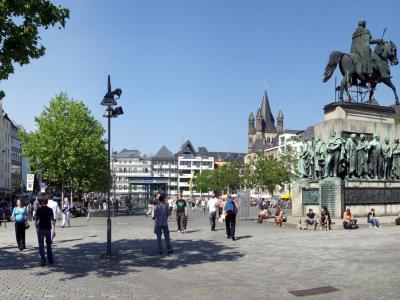
But this wasn’t just your average muddy medieval market. During the Renaissance, Hay Market leveled up in beauty, drawing comparisons to Venice’s St. Mark’s Square. Today, it’s still charming, paved in brick, framed by neatly trimmed trees, and peppered with restaurants that definitely know how to plate a schnitzel.
In 1580, the Cologne stock exchange took root here, too-proof that not just onions were traded. Closer to our days, in 1878, the square got a serious upgrade in the form of a dramatic equestrian statue of Prussia’s King Friedrich Wilhelm III. The Market Hall was added in 1904, and historic flair has been going strong here ever since.
Though nobody comes here for hay anymore, Hay Market is far from quiet. These days, it’s one of the city’s liveliest squares-packed with pubs, breweries, and cafés perfect for watching the world go by. And in winter, it transforms into a holiday wonderland with a cheerful Christmas market and a festive ice-skating rink.
Hay Market may have traded its wagons and wheat for lattes and selfies-but its spirit is very much alive and thriving.
Dating all the way back to Roman times, this square is one of Central Europe’s oldest markets. In the Middle Ages, it bloomed into a buzzing trade hub. Originally, Hay Market and Old Market were one big commercial jumble simply called the Old Market. But as the centuries marched on and city life got more complex, the two parted ways-amicably, we assume...
By the 13th century, Cologne was booming, with a population of over 40,000-massive by medieval standards. Hay Market, thanks to its prime location, became the go-to spot for everything from cheese to chickpeas. Traders hawked vegetables, fish, grain, spices, and yes, actual hay. In 1492, while Columbus was off looking for India, a grain scale was added here to keep the deals honest.
But this wasn’t just your average muddy medieval market. During the Renaissance, Hay Market leveled up in beauty, drawing comparisons to Venice’s St. Mark’s Square. Today, it’s still charming, paved in brick, framed by neatly trimmed trees, and peppered with restaurants that definitely know how to plate a schnitzel.
In 1580, the Cologne stock exchange took root here, too-proof that not just onions were traded. Closer to our days, in 1878, the square got a serious upgrade in the form of a dramatic equestrian statue of Prussia’s King Friedrich Wilhelm III. The Market Hall was added in 1904, and historic flair has been going strong here ever since.
Though nobody comes here for hay anymore, Hay Market is far from quiet. These days, it’s one of the city’s liveliest squares-packed with pubs, breweries, and cafés perfect for watching the world go by. And in winter, it transforms into a holiday wonderland with a cheerful Christmas market and a festive ice-skating rink.
Hay Market may have traded its wagons and wheat for lattes and selfies-but its spirit is very much alive and thriving.
9) 4711 House of Fragrances
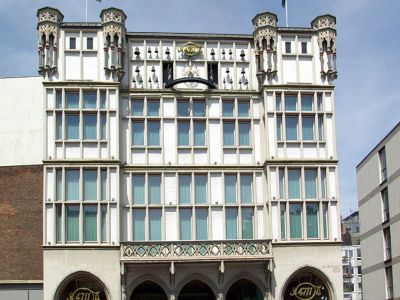
If you’ve ever wondered where the phrase “Eau de Cologne” got its start, follow your nose to the 4711 House of Fragrances-part museum, part perfume playground, and all-around aromatic adventure.
Back in the early 1700s, an Italian-born perfumer named Johann Maria Farina set up a shop in the city. He created a light, citrusy fragrance that reminded him of “an Italian spring morning”-a stark contrast to the heavy, musky scents popular at the time. This he poetically dubbed “Eau de Cologne” (or “Water from Cologne”) in honor of his new hometown.
Farina’s creation became wildly popular across European courts as the must-have splash for royals and nobles who probably appreciated smelling like lemon zest instead of battlefield sweat. The fragrance was so successful that “Eau de Cologne” became a generic term for light, fresh scents.
But the story didn't stop there. Later in the century, another Cologne-based entrepreneurial wild card, Wilhelm Mülhens, brewed up his own “miracle water,” marketing it as medicine. During the French occupation, a soldier doing a building census randomly numbered Mülhens’ workshop as “4711.” And voilà-the most famous house number in fragrance history was born.
In 1810, Napoleon demanded that all medicinal products reveal their ingredients. Rather than spill the secret sauce, Mülhens pivoted. Forget medicine-this was now officially a perfume. Smart move. He even tried to borrow prestige by buying the rights to the Farina name... except the Farina family wasn’t selling it and took him to court. So in 1881, Mülhens finally embraced the 4711 name for good. Drama? Oh yes. But it smelled great.
Though the original building didn’t survive, the modern 4711 flagship store still draws scent lovers from around the world. Inside, you’ll find a museum, antique Rosoli bottles, old-school perfume flasks, and the legendary Fragrance Fountain, which continuously flows with the iconic 4711 Eau de Cologne. And just to keep things classy, the building even serenades the street with 20 bells chiming out three melodies every hour.
Hot tip:
You can blend your own personal fragrance or simply stock up on gift-worthy scents and quirky souvenirs. Just don’t blame us if you leave smelling like royalty...
Back in the early 1700s, an Italian-born perfumer named Johann Maria Farina set up a shop in the city. He created a light, citrusy fragrance that reminded him of “an Italian spring morning”-a stark contrast to the heavy, musky scents popular at the time. This he poetically dubbed “Eau de Cologne” (or “Water from Cologne”) in honor of his new hometown.
Farina’s creation became wildly popular across European courts as the must-have splash for royals and nobles who probably appreciated smelling like lemon zest instead of battlefield sweat. The fragrance was so successful that “Eau de Cologne” became a generic term for light, fresh scents.
But the story didn't stop there. Later in the century, another Cologne-based entrepreneurial wild card, Wilhelm Mülhens, brewed up his own “miracle water,” marketing it as medicine. During the French occupation, a soldier doing a building census randomly numbered Mülhens’ workshop as “4711.” And voilà-the most famous house number in fragrance history was born.
In 1810, Napoleon demanded that all medicinal products reveal their ingredients. Rather than spill the secret sauce, Mülhens pivoted. Forget medicine-this was now officially a perfume. Smart move. He even tried to borrow prestige by buying the rights to the Farina name... except the Farina family wasn’t selling it and took him to court. So in 1881, Mülhens finally embraced the 4711 name for good. Drama? Oh yes. But it smelled great.
Though the original building didn’t survive, the modern 4711 flagship store still draws scent lovers from around the world. Inside, you’ll find a museum, antique Rosoli bottles, old-school perfume flasks, and the legendary Fragrance Fountain, which continuously flows with the iconic 4711 Eau de Cologne. And just to keep things classy, the building even serenades the street with 20 bells chiming out three melodies every hour.
Hot tip:
You can blend your own personal fragrance or simply stock up on gift-worthy scents and quirky souvenirs. Just don’t blame us if you leave smelling like royalty...
10) NS Documentation Center (must see)
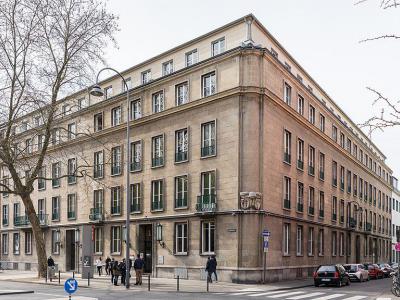
In the heart of Cologne stands a building once marked by silence, now filled with testimony-the NS Documentation Center, housed in the former headquarters of the Cologne Gestapo. From 1935 to 1945, this unassuming structure served as a key site of Nazi terror. Known as the EL-DE Haus-a name derived from the initials of businessman Leopold Dahmen, who leased the still-unfinished building to the Nazis-it became a dark chapter in the city’s history.
Beneath its ground floor, ten prison cells were constructed in the basement. Today, that space endures as one of the most chilling and best-preserved Nazi detention sites in Germany. The Gestapo Prison memorial is now the country’s largest memorial dedicated to victims of Nazi persecution. More than 1,800 inscriptions-carved or written on the cell walls by prisoners-remain, bearing raw witness to suffering, hope, despair, and resistance.
The permanent exhibition above examines the rise and machinery of National Socialism, with a particular focus on Cologne’s experience under the regime. Visitors will encounter detailed accounts of Nazi propaganda, administrative structures, systemic racism, and the deportation and murder of the city’s Jewish population. Stories of local resistance movements also find their place here-quiet acts of defiance that stood against overwhelming force.
The Center functions not only as a museum but as a research institution. Its library and archives continue to support scholarship on the Nazi era, ensuring that this part of history remains rigorously studied and publicly accessible.
A word to visitors:
Take the audio guide-it’s essential for grasping the deeper context behind what you’ll see. Start your journey in the basement, among the cells, and work your way upward. Lockers are available free of charge to store bags, leaving you free to absorb the weight of this place with undivided attention.
Beneath its ground floor, ten prison cells were constructed in the basement. Today, that space endures as one of the most chilling and best-preserved Nazi detention sites in Germany. The Gestapo Prison memorial is now the country’s largest memorial dedicated to victims of Nazi persecution. More than 1,800 inscriptions-carved or written on the cell walls by prisoners-remain, bearing raw witness to suffering, hope, despair, and resistance.
The permanent exhibition above examines the rise and machinery of National Socialism, with a particular focus on Cologne’s experience under the regime. Visitors will encounter detailed accounts of Nazi propaganda, administrative structures, systemic racism, and the deportation and murder of the city’s Jewish population. Stories of local resistance movements also find their place here-quiet acts of defiance that stood against overwhelming force.
The Center functions not only as a museum but as a research institution. Its library and archives continue to support scholarship on the Nazi era, ensuring that this part of history remains rigorously studied and publicly accessible.
A word to visitors:
Take the audio guide-it’s essential for grasping the deeper context behind what you’ll see. Start your journey in the basement, among the cells, and work your way upward. Lockers are available free of charge to store bags, leaving you free to absorb the weight of this place with undivided attention.
