Custom Walk in Lyon, France by gdrmaq_57c4a created on 2026-01-15
Guide Location: France » Lyon
Guide Type: Custom Walk
# of Sights: 9
Tour Duration: 3 Hour(s)
Travel Distance: 6.8 Km or 4.2 Miles
Share Key: 3RC5C
Guide Type: Custom Walk
# of Sights: 9
Tour Duration: 3 Hour(s)
Travel Distance: 6.8 Km or 4.2 Miles
Share Key: 3RC5C
How It Works
Please retrieve this walk in the GPSmyCity app. Once done, the app will guide you from one tour stop to the next as if you had a personal tour guide. If you created the walk on this website or come to the page via a link, please follow the instructions below to retrieve the walk in the app.
Retrieve This Walk in App
Step 1. Download the app "GPSmyCity: Walks in 1K+ Cities" on Apple App Store or Google Play Store.



Step 2. In the GPSmyCity app, download(or launch) the guide "Lyon Map and Walking Tours".
Step 3. Tap the menu button located at upper right corner of the "Walks" screen and select "Retrieve custom walk". Enter the share key: 3RC5C
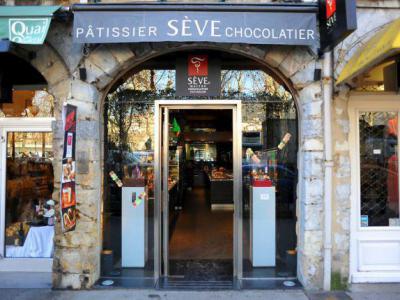
1) Sève Saint-Antoine Chocolaterie Patisserie
Sève is a home to master chocolate maker and artisan pastry chef from Lyon, Richard Sève. Awarded best pastry chef of the Rhône-Alpes region in 1999 and ranked among the top 10 chocolatiers in France, Sève is a trendsetter who is faithful to traditional recipes.
Pursuant to his dedication, he selects the ingredients in the region of origin and with the utmost care. In 2017, Sève joined a small group of French chocolatiers who travel the world in search of the best cocoa beans to produce their own chocolate, from bean to bar.
If you walk into his shop from the sun, your eyes may need a moment to adjust to the elegantly dark interior: a smart, modern touch that highlights the gems gleaming from under the glass counter tops.
Here, you will certainly find something to satisfy your inner sweet tooth – from delicate, sweet crisps and mouthwatering panettone to rich chocolates and home-made fruit jellies. Make sure to try their authentic praline tarts or the specialty sweet called The Stones of the Golden Mount. The first ever savoury macaroons of France, created by Sève, are also available in a variety of flavors – peach, apricot, caramel, rose petal and more– each stamped with the Sève insignia.
A member of the prestigious Relais Desserts association, as of January 2020 Richard Sève was appointed Chocolate Academician by the French Academy of Chocolate and Confectionery.
Pursuant to his dedication, he selects the ingredients in the region of origin and with the utmost care. In 2017, Sève joined a small group of French chocolatiers who travel the world in search of the best cocoa beans to produce their own chocolate, from bean to bar.
If you walk into his shop from the sun, your eyes may need a moment to adjust to the elegantly dark interior: a smart, modern touch that highlights the gems gleaming from under the glass counter tops.
Here, you will certainly find something to satisfy your inner sweet tooth – from delicate, sweet crisps and mouthwatering panettone to rich chocolates and home-made fruit jellies. Make sure to try their authentic praline tarts or the specialty sweet called The Stones of the Golden Mount. The first ever savoury macaroons of France, created by Sève, are also available in a variety of flavors – peach, apricot, caramel, rose petal and more– each stamped with the Sève insignia.
A member of the prestigious Relais Desserts association, as of January 2020 Richard Sève was appointed Chocolate Academician by the French Academy of Chocolate and Confectionery.
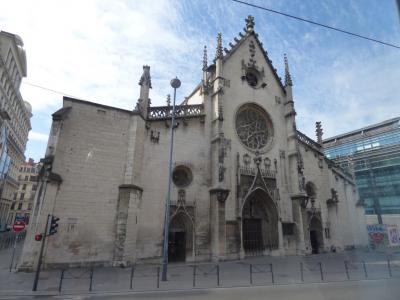
2) Eglise Saint-Bonaventure (Saint-Bonaventure Church)
The Saint-Bonaventure Church (Eglise Saint-Bonaventure) in Lyon holds a unique historical significance as the sole medieval church in the city to withstand the construction of Impériale Street (modern-day Republic Street). This church, originally part of a Franciscan monastery, came into prominence during the funeral of Cardinal Bonaventure in 1274, which drew such a large crowd that many attendees couldn't fit inside.
The need for a larger church was recognized by Jacques de Grolée, whose grandfather had initially granted the land to the monks. However, construction of the new church didn't commence until 1325. Completed in 1327, the church presented a remarkable architectural feature for its time: it faced south. This orientation was unconventional as churches typically faced east to capture the first light of dawn, which was believed to have the power to expel the Devil from the premises.
Jacques de Grolée, unfortunately, passed away before the church's completion and was laid to rest beneath the main altar. The church underwent further expansion in 1484, leading to its renaming in honor of the 13th-century cardinal. The French Revolution marked a period of indignity for the church as it was repurposed as a grain store, but it managed to survive this tumultuous phase.
Restoration work in 1806 under Joseph Fesch revived the church's grandeur. Today, Eglise Saint-Bonaventure is renowned for its 18 chapels, equally divided along the east and west sides of the nave, and it features an exquisite stained glass window depicting Saint Remigius baptizing Clovis I. This church not only serves as a place of worship but also as a testament to the rich historical and cultural heritage of Lyon.
The need for a larger church was recognized by Jacques de Grolée, whose grandfather had initially granted the land to the monks. However, construction of the new church didn't commence until 1325. Completed in 1327, the church presented a remarkable architectural feature for its time: it faced south. This orientation was unconventional as churches typically faced east to capture the first light of dawn, which was believed to have the power to expel the Devil from the premises.
Jacques de Grolée, unfortunately, passed away before the church's completion and was laid to rest beneath the main altar. The church underwent further expansion in 1484, leading to its renaming in honor of the 13th-century cardinal. The French Revolution marked a period of indignity for the church as it was repurposed as a grain store, but it managed to survive this tumultuous phase.
Restoration work in 1806 under Joseph Fesch revived the church's grandeur. Today, Eglise Saint-Bonaventure is renowned for its 18 chapels, equally divided along the east and west sides of the nave, and it features an exquisite stained glass window depicting Saint Remigius baptizing Clovis I. This church not only serves as a place of worship but also as a testament to the rich historical and cultural heritage of Lyon.

3) The Grand Temple de Lyon
The Grand Temple de Lyon, a prominent Protestant church in Lyon, holds significant historical and cultural value. Classified as a Historic Site in 2011, this church was constructed in 1879 under the architectural vision of Gaspard André. Its aesthetic appeal is heightened by the facade, renovated in 1885, which features intricate patterns forming arcs, adding to its historic charm.
Inside, the church is both functional and artistic. The furniture, installed concurrently with the facade renovation, complements the church's interior design. A notable feature is the pipe organ, crafted by Merklin in 1884. This instrument underwent restoration in 1923 following partial damage caused by a fire, preserving its historical integrity.
The Grand Temple de Lyon is not just a place of worship but also a cultural hub. It can accommodate up to 900 worshippers in its main hall. Beyond its religious function, the church is renowned for housing the Bibliothèque Populaire, a large Protestant library. This library, maintained in its original 19th-century style, echoes the rich heritage of the site.
Originally established in 1830 at the Temple du Change, it was relocated to its current location in 1859. With a collection of over 4500 books, the library covers a wide range of subjects including Protestant History, Philosophy, Theology, children's books, adult novels, and travel guides. However, access to this trove of knowledge is limited, with the library opening its doors to the public only on Heritage Day.
Furthermore, for over a decade, the Grand Temple de Lyon has been an active cultural center. It hosts various events such as concerts and exhibitions, which often focus on religious themes, showcasing paintings and sculptures. These events highlight the church's commitment to not only being a place of religious significance but also a center for cultural enrichment and community engagement.
Inside, the church is both functional and artistic. The furniture, installed concurrently with the facade renovation, complements the church's interior design. A notable feature is the pipe organ, crafted by Merklin in 1884. This instrument underwent restoration in 1923 following partial damage caused by a fire, preserving its historical integrity.
The Grand Temple de Lyon is not just a place of worship but also a cultural hub. It can accommodate up to 900 worshippers in its main hall. Beyond its religious function, the church is renowned for housing the Bibliothèque Populaire, a large Protestant library. This library, maintained in its original 19th-century style, echoes the rich heritage of the site.
Originally established in 1830 at the Temple du Change, it was relocated to its current location in 1859. With a collection of over 4500 books, the library covers a wide range of subjects including Protestant History, Philosophy, Theology, children's books, adult novels, and travel guides. However, access to this trove of knowledge is limited, with the library opening its doors to the public only on Heritage Day.
Furthermore, for over a decade, the Grand Temple de Lyon has been an active cultural center. It hosts various events such as concerts and exhibitions, which often focus on religious themes, showcasing paintings and sculptures. These events highlight the church's commitment to not only being a place of religious significance but also a center for cultural enrichment and community engagement.
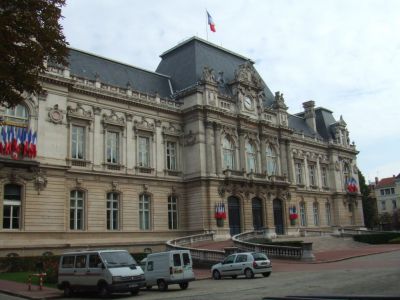
4) Préfecture du Rhône
Almost the entire building of the Rhône Prefecture (Préfecture du Rhône) is open to the public on Heritage Day, but at any time of the year you can visit only parts of it.
It was built in 1890 by Antonin Louvier who decided on an eclectic style – a mixture of elements from former styles – to create something original, so the columns recall ancient Rome, while the roof follows the style used by the architect Mansart.
The sculptures on the façade are by Martin and Pagny; on each side of the clock is a statue, one depicting Day – a woman pulling a veil over her face with an owl at her feet; the other represents Night – a man uncovering his face with a crowing rooster at his side. The medallions are by Aubert; they represent a locomotive, a weaving loom, a ship and a palette, paintbrush and compass.
In the gardens you will see four monuments, erected to Duphot, Victor de Laprade, Felix Mangini and Pierre Dufour.
The atrium has a vaulted ceiling supported by marble columns. The statues of the Roman Emperor Claudius and his brother Germanicus are by Printemps. You can admire two magnificent vases of Sevres porcelain: one in celadon, the other in turquoise. At the foot of the main staircase are statues of Coustou and Meissonier, sculpted by Enderlin.
It was built in 1890 by Antonin Louvier who decided on an eclectic style – a mixture of elements from former styles – to create something original, so the columns recall ancient Rome, while the roof follows the style used by the architect Mansart.
The sculptures on the façade are by Martin and Pagny; on each side of the clock is a statue, one depicting Day – a woman pulling a veil over her face with an owl at her feet; the other represents Night – a man uncovering his face with a crowing rooster at his side. The medallions are by Aubert; they represent a locomotive, a weaving loom, a ship and a palette, paintbrush and compass.
In the gardens you will see four monuments, erected to Duphot, Victor de Laprade, Felix Mangini and Pierre Dufour.
The atrium has a vaulted ceiling supported by marble columns. The statues of the Roman Emperor Claudius and his brother Germanicus are by Printemps. You can admire two magnificent vases of Sevres porcelain: one in celadon, the other in turquoise. At the foot of the main staircase are statues of Coustou and Meissonier, sculpted by Enderlin.
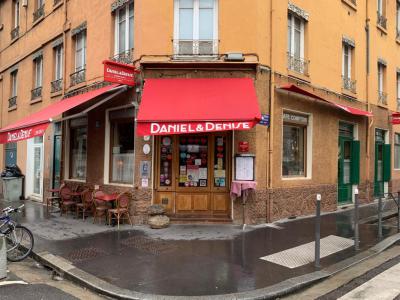
5) Daniel & Denise Créqui - Bouchon Lyonnais
The casual restaurants, known as bouchons, are unique to Lyon. Serving traditional Lyonnaise cuisine in a rather unpretentious, homey setting, they are an inseparable part of the local food scene. The variety of bouchons in Lyon makes it possible to dine at a different one every day for two weeks and not run out of options. The locals tend to frequent their favorite bouchons with an allegiance dating back to childhood.
One such place, called Daniel & Denise, was established by Daniel and Denise Créqui in 1968. Perhaps on a somewhat fancier side of bouchons, this restaurant is the former butcher’s shop. In 2004 it was acquired by the famed local chef Joseph Viola and his wife Françoise.
The place specializes on “mâchons” – traditional meals consisting of pork and beef products and red or white wine – the kind of which silk-weavers of Lyon used to have in the old days. Among many other local favourites, they also serve Lyonnaise cuisine classics such as traditional pork and veal sausages, caramelized fruit tart with pralines, foie gras and sweetbread pastries, a mixed omelet with assorted fillings, and rum-soaked sponge cake. These kind of dishes have made the city famous and are quite simply to die for.
Adding to the top-notch food quality is a friendly, warm atmosphere, with copper pans, wood panelling and red-and-white checked tablecloths. The service, under the watchful eye of Françoise, is a bit formal, which makes it perfect for a romantic meal or a business lunch. Like any other popular bouchon, reservations here are typically necessary.
One such place, called Daniel & Denise, was established by Daniel and Denise Créqui in 1968. Perhaps on a somewhat fancier side of bouchons, this restaurant is the former butcher’s shop. In 2004 it was acquired by the famed local chef Joseph Viola and his wife Françoise.
The place specializes on “mâchons” – traditional meals consisting of pork and beef products and red or white wine – the kind of which silk-weavers of Lyon used to have in the old days. Among many other local favourites, they also serve Lyonnaise cuisine classics such as traditional pork and veal sausages, caramelized fruit tart with pralines, foie gras and sweetbread pastries, a mixed omelet with assorted fillings, and rum-soaked sponge cake. These kind of dishes have made the city famous and are quite simply to die for.
Adding to the top-notch food quality is a friendly, warm atmosphere, with copper pans, wood panelling and red-and-white checked tablecloths. The service, under the watchful eye of Françoise, is a bit formal, which makes it perfect for a romantic meal or a business lunch. Like any other popular bouchon, reservations here are typically necessary.
6) Place des Martyrs de la Résistance (Martyrs' Square)
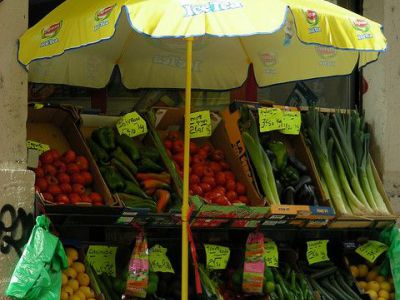
Martyrs' Square (Place des Martyrs de la Résistance), situated in Lyon, is a notable location known for its vibrant commercial atmosphere and historical significance. Located at the intersection of rue Garibaldi and rue Paul Bert, this area serves as a bustling hub for both locals and tourists.
The square itself is renowned for its diverse market, where a wide array of products can be found. It is particularly famous for its fresh fruit and vegetables, offering a taste of the local produce. In addition to these fresh goods, visitors can also find an assortment of cooking accessories and various other French products, catering to a range of needs and preferences.
The square thrives with the energy of local residents who frequent it regularly, creating a vibrant community atmosphere. It is also a destination for tourists who are fortunate enough to discover this shopping haven, adding to the multicultural and lively ambiance of the area.
The Martyrs' Square in Lyon is not just a commercial center but also a social and cultural meeting point, reflecting the rich urban life of the city. Its blend of historical significance, educational presence, and bustling market activity make it a unique and cherished part of Lyon.
The square itself is renowned for its diverse market, where a wide array of products can be found. It is particularly famous for its fresh fruit and vegetables, offering a taste of the local produce. In addition to these fresh goods, visitors can also find an assortment of cooking accessories and various other French products, catering to a range of needs and preferences.
The square thrives with the energy of local residents who frequent it regularly, creating a vibrant community atmosphere. It is also a destination for tourists who are fortunate enough to discover this shopping haven, adding to the multicultural and lively ambiance of the area.
The Martyrs' Square in Lyon is not just a commercial center but also a social and cultural meeting point, reflecting the rich urban life of the city. Its blend of historical significance, educational presence, and bustling market activity make it a unique and cherished part of Lyon.
7) Tour Part-Dieu
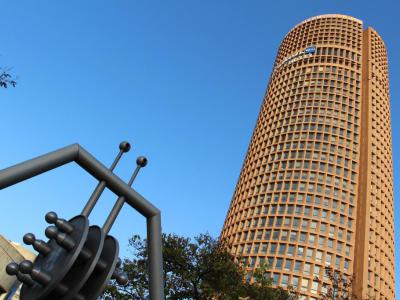
The Tour Part-Dieu, formerly known as the Tour du Crédit Lyonnais, is an iconic skyscraper located in the La Part-Dieu district of Lyon. Standing tall at 164.9 metres (541 feet) and comprising 42 floors, this building is a notable feature of the city's skyline. Completed in 1977, it currently ranks as the ninth-tallest building in France.
The architectural design of the Tour Part-Dieu is the work of the American firm Araldo Cossutta & Associates. The construction period spanned from 1972 to 1977. This skyscraper is distinguished by its cylindrical shape, which is crowned by a striking 23-metre-high pyramid, adding a unique aspect to its overall appearance.
An interesting architectural detail is that the top of the tower was designed to be roughly at the same height as the Notre Dame de Fourviere, aligning with the architect's vision. Initially, at its opening in 1977, the Tour Part-Dieu was the fourth tallest building in France and now stands as the tenth.
The building's usage is divided between hospitality and office space. The top 10 floors are occupied by the Radisson Blu Hotel Lyon, which holds the distinction of being the highest hotel in Europe. The remaining floors are utilized as office spaces.
Significantly, the Tour Part-Dieu is the tallest skyscraper in France outside the Ile-de-France region. On its 31st anniversary, the building underwent a rebranding, officially adopting the name Tour Part-Dieu on September 22, 2008. Along with the name change, a new logo was introduced, but it retains its affectionate nickname "The Pencil," a moniker it has been known by since its inception. This nickname is a nod to the tower's distinctive shape and has become an endearing part of its identity among locals and visitors alike.
The architectural design of the Tour Part-Dieu is the work of the American firm Araldo Cossutta & Associates. The construction period spanned from 1972 to 1977. This skyscraper is distinguished by its cylindrical shape, which is crowned by a striking 23-metre-high pyramid, adding a unique aspect to its overall appearance.
An interesting architectural detail is that the top of the tower was designed to be roughly at the same height as the Notre Dame de Fourviere, aligning with the architect's vision. Initially, at its opening in 1977, the Tour Part-Dieu was the fourth tallest building in France and now stands as the tenth.
The building's usage is divided between hospitality and office space. The top 10 floors are occupied by the Radisson Blu Hotel Lyon, which holds the distinction of being the highest hotel in Europe. The remaining floors are utilized as office spaces.
Significantly, the Tour Part-Dieu is the tallest skyscraper in France outside the Ile-de-France region. On its 31st anniversary, the building underwent a rebranding, officially adopting the name Tour Part-Dieu on September 22, 2008. Along with the name change, a new logo was introduced, but it retains its affectionate nickname "The Pencil," a moniker it has been known by since its inception. This nickname is a nod to the tower's distinctive shape and has become an endearing part of its identity among locals and visitors alike.
8) Parc de la Tête d'Or (Park of the Golden Head) (must see)
In 1530, the lands of the Park of the Golden Head (Parc de la Tete d'Or) belonged to the wealthy Lambert family. The name "gold head" is believed to come from the legend that a treasure featuring a gold head of Christ might be buried on the Lambert's land. The chances of this were bleak. The land was mostly a swampy flood zone. No place to bury a golden head.
Planning for an urban park began as early as 1812. Under the administration of Mayor Claude-Marius Vaisse the land was bought in 1856. Work began with landscape designers Eugene and Denis Bulher. The park was opened in 1857. A dam was built to hold back flood waters of the Rhone. That helped. No heads were discovered.
The park is a large grassy savannah-like area of gentle hills and hummocks. A dike that parts the land from the Rhone, once a site for fairs and exhibitions, now holds buildings devoted to entertainments and a 3,000 seat amphitheater. A lake of 40 acres has boats, a pier, and two wooded islands.
The Isle of Tamarisks can be reached only by boat. The Isle of Remembrance is accessible through an underwater tunnel. Once known as the Isle of Swans, it holds a memorial honoring fallen soldiers.
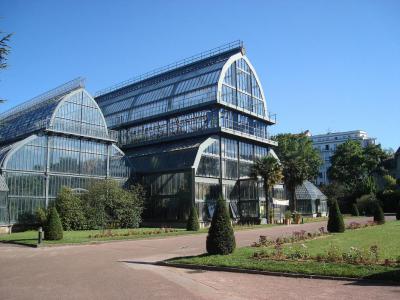
There are four rose gardens, enormous greenhouses, a botanical garden, a zoo and a velodrome for cycling events. The zoo features animal themes like the "African Plain," populated with cranes, flamingos, crocodiles, antelopes, porcupines, sand cats, bat-eared foxes, and turtles. To this day, still no heads.
Planning for an urban park began as early as 1812. Under the administration of Mayor Claude-Marius Vaisse the land was bought in 1856. Work began with landscape designers Eugene and Denis Bulher. The park was opened in 1857. A dam was built to hold back flood waters of the Rhone. That helped. No heads were discovered.
The park is a large grassy savannah-like area of gentle hills and hummocks. A dike that parts the land from the Rhone, once a site for fairs and exhibitions, now holds buildings devoted to entertainments and a 3,000 seat amphitheater. A lake of 40 acres has boats, a pier, and two wooded islands.
The Isle of Tamarisks can be reached only by boat. The Isle of Remembrance is accessible through an underwater tunnel. Once known as the Isle of Swans, it holds a memorial honoring fallen soldiers.
There are four rose gardens, enormous greenhouses, a botanical garden, a zoo and a velodrome for cycling events. The zoo features animal themes like the "African Plain," populated with cranes, flamingos, crocodiles, antelopes, porcupines, sand cats, bat-eared foxes, and turtles. To this day, still no heads.
9) Musée d'Art Contemporain (Museum of Modern Art)
The Museum of Modern Art (Musée d'Art Contemporain), located in Lyon, is an institution dedicated to contemporary art. The idea to establish this museum was conceived in 1983, with its organization taking shape in 1984. Initially, it operated within the Museum of Fine Arts of Lyon under the name Saint-Pierre Contemporary Art Museum. In 1988, it gained official recognition as a contemporary art museum from the Directorate of Museums of France.
A notable development occurred in 1995 when the museum relocated to the 6th borough of Lyon, occupying a building designed by the renowned architect Renzo Piano. This new venue was inaugurated on December 19, 1995, and it quickly garnered attention, attracting nearly 130,000 visitors in just two months during the 3rd Biennial of Lyon.
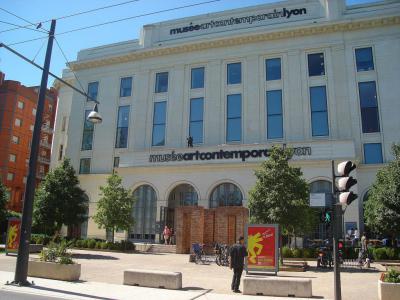
Architecturally, the building presents a blend of styles, featuring a 1930s facade alongside a modern brick structure. It encompasses an area of 2700 square meters and is accessible through two side entrances. Over the years, the museum has hosted more than a hundred exhibitions, underlining its active role in the contemporary art scene.
One of the distinctive aspects of the Museum of Modern Art is its philosophy of presenting site-specific works created by artists directly within its space. This approach has led to the formation of the largest European collection of group installations housed in a museum, a highlight of its permanent collection. These permanent installations are complemented by a series of temporary exhibitions. To accommodate the setup of new exhibitions, the museum typically undergoes a closure period of nearly six months each year.
The museum has earned a reputation as a symbol of "an open city and an uninhibited art," reflecting its commitment to fostering a dynamic and accessible contemporary art scene in Lyon.
A notable development occurred in 1995 when the museum relocated to the 6th borough of Lyon, occupying a building designed by the renowned architect Renzo Piano. This new venue was inaugurated on December 19, 1995, and it quickly garnered attention, attracting nearly 130,000 visitors in just two months during the 3rd Biennial of Lyon.
Architecturally, the building presents a blend of styles, featuring a 1930s facade alongside a modern brick structure. It encompasses an area of 2700 square meters and is accessible through two side entrances. Over the years, the museum has hosted more than a hundred exhibitions, underlining its active role in the contemporary art scene.
One of the distinctive aspects of the Museum of Modern Art is its philosophy of presenting site-specific works created by artists directly within its space. This approach has led to the formation of the largest European collection of group installations housed in a museum, a highlight of its permanent collection. These permanent installations are complemented by a series of temporary exhibitions. To accommodate the setup of new exhibitions, the museum typically undergoes a closure period of nearly six months each year.
The museum has earned a reputation as a symbol of "an open city and an uninhibited art," reflecting its commitment to fostering a dynamic and accessible contemporary art scene in Lyon.
