Custom Walk in Christchurch, New Zealand by maninderjitsingh7_38de9f created on 2026-01-26
Guide Location: New Zealand » Christchurch
Guide Type: Custom Walk
# of Sights: 9
Tour Duration: 4 Hour(s)
Travel Distance: 9.1 Km or 5.7 Miles
Share Key: CVZ8T
Guide Type: Custom Walk
# of Sights: 9
Tour Duration: 4 Hour(s)
Travel Distance: 9.1 Km or 5.7 Miles
Share Key: CVZ8T
How It Works
Please retrieve this walk in the GPSmyCity app. Once done, the app will guide you from one tour stop to the next as if you had a personal tour guide. If you created the walk on this website or come to the page via a link, please follow the instructions below to retrieve the walk in the app.
Retrieve This Walk in App
Step 1. Download the app "GPSmyCity: Walks in 1K+ Cities" on Apple App Store or Google Play Store.



Step 2. In the GPSmyCity app, download(or launch) the guide "Christchurch Map and Walking Tours".
Step 3. Tap the menu button located at upper right corner of the "Walks" screen and select "Retrieve custom walk". Enter the share key: CVZ8T
1) Bridge of Remembrance
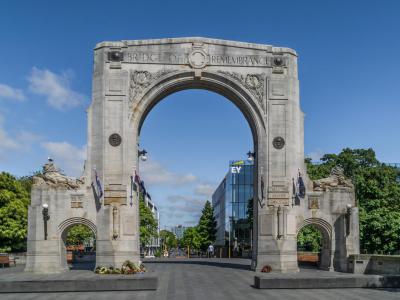
Edward George Wright, civil engineer, was commissioned to build a bridge over the river Avon at Cashel Street in Christchurch in 1873. The bridge became pedestrianized in 1977 and it links Oxford and Cambridge Terraces over the Avon. In 1919, as World War I ended, Mrs Wyn Irwin, secretary of the Bridge of Remembrance Committee, wrote to The Press suggesting a memorial arch on the bridge.
The Memorial Arch was unveiled by Lord Jellicoe, hero of the Battle of Jutland, in November 1924. Soldiers crossed over the Avon this way in the Great War, on their way to the railway station and then by ship to the front.
The design was by William Gummer. Gummer had designed other memorials including the Dunedin Cenotaph war memorial. The central frame of the Remembrance Bridge memorial has the inscription "Quid non-pro Patria" ("What will a man not do for his country"). The arch is adorned with a cross, torches, coat of arms, laurel wreaths and stone lions.
On April 2, 1985 the Bridge of Remembrance was listed as a Category I with the New Zealand Historic Places Trust.
The Memorial Arch was unveiled by Lord Jellicoe, hero of the Battle of Jutland, in November 1924. Soldiers crossed over the Avon this way in the Great War, on their way to the railway station and then by ship to the front.
The design was by William Gummer. Gummer had designed other memorials including the Dunedin Cenotaph war memorial. The central frame of the Remembrance Bridge memorial has the inscription "Quid non-pro Patria" ("What will a man not do for his country"). The arch is adorned with a cross, torches, coat of arms, laurel wreaths and stone lions.
On April 2, 1985 the Bridge of Remembrance was listed as a Category I with the New Zealand Historic Places Trust.
2) Riverside Market
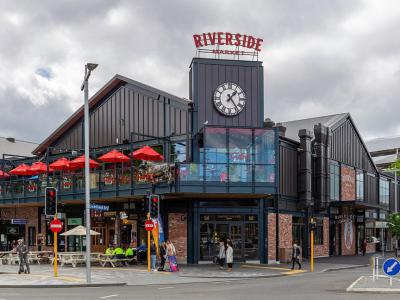
Riverside Market serves as a vibrant hub throughout the day and transforms into an inviting event space after dark with its 'After-Hours Market Experience'. This unique venue offers exclusive access for large-scale gatherings, accompanied by a diverse culinary experience featuring specialty dishes and locally crafted beverages.
Spanning three floors, including an elegant mezzanine, Riverside Market has garnered acclaim for its innovative design and exceptional customer service, earning accolades and recognition. Proudly supporting local businesses, Riverside Market embodies the creative spirit of Christchurch. With its charming brick walls, tasteful lighting, and cozy ambiance, Riverside Market promises a welcoming atmosphere that has captured global acclaim.
Spanning three floors, including an elegant mezzanine, Riverside Market has garnered acclaim for its innovative design and exceptional customer service, earning accolades and recognition. Proudly supporting local businesses, Riverside Market embodies the creative spirit of Christchurch. With its charming brick walls, tasteful lighting, and cozy ambiance, Riverside Market promises a welcoming atmosphere that has captured global acclaim.
3) Canterbury Earthquake National Memorial
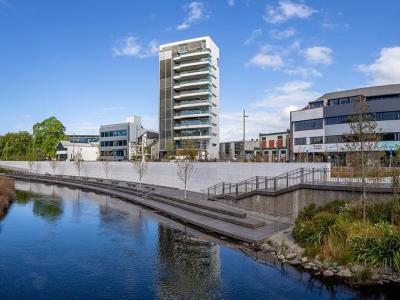
The Canterbury Earthquake National Memorial can be found on both sides of the Avon River, downstream of the Montreal Street Bridge. There was a call for "Ideas to Remember." What was needed was "A place where people can spend time in reflection..." Slavonian architect Grega Vezjak's design filled the bill.
The memorial should: 1) Honor the 185 people who died; 2) Give thanks for those who helped in rescue and recovery; 3) Permit people to share experiences; 4) Provide a space for an annual gathering on 22 February and other events; and 5) become a point for contemplation and remembering. The Memorial has done all these things.
The memorial is designed to provide two different areas on either side of the curving Avon River. A space of parkland is on the north bank. It has trees, seating and gardens. Across the river on the south bank is the memorial wall with the names of those who died. The Maori name for the memorial is "Oi Manawa", "tremor of the heart."
Nondescript forms of concrete in the river remind one of the destructive tectonic forces of the earthquake. Water flows between and around these forms. The water of the river flowing by evokes the violence of the quake and the oppressive silence that followed.
There is a simple balance in the design, creating a feeling of sadness and loss. One can sit quietly, listening to the sounds of nature.
The memorial should: 1) Honor the 185 people who died; 2) Give thanks for those who helped in rescue and recovery; 3) Permit people to share experiences; 4) Provide a space for an annual gathering on 22 February and other events; and 5) become a point for contemplation and remembering. The Memorial has done all these things.
The memorial is designed to provide two different areas on either side of the curving Avon River. A space of parkland is on the north bank. It has trees, seating and gardens. Across the river on the south bank is the memorial wall with the names of those who died. The Maori name for the memorial is "Oi Manawa", "tremor of the heart."
Nondescript forms of concrete in the river remind one of the destructive tectonic forces of the earthquake. Water flows between and around these forms. The water of the river flowing by evokes the violence of the quake and the oppressive silence that followed.
There is a simple balance in the design, creating a feeling of sadness and loss. One can sit quietly, listening to the sounds of nature.
4) Canterbury Museum (must see)
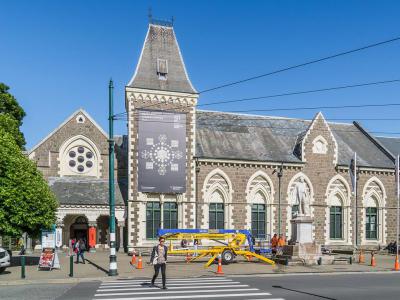
Canterbury Museum may be found in the center of Christchurch. It was founded in 1867 by Julius von Haast, an explorer and geologist. The Museum was based mainly on von Haast's own collections. The museum is a Victorian Gothic Revival building, designed by Benjamin Mountfort, a prominent New Zealand architect dedicated to all things Gothic.
The museum never stopped growing. By 1876 another building had been added and an inner courtyard, which was roofed over in 1882. A new wing was added in 1958, next to Christ's College. Another wing came along in 1977. Strengthening measures were taken in the 1990s. A four-storey section was built in 1995.
The museum experienced some damage to its facade in the earthquakes of 2010-2011, but it still emerged in sound condition. Almost all of the collections were undamaged. The statue of William Rolleston, however, was knocked off its plinth. Rolleston was the superintendent of Canterbury Province until 1877.
The Museum show-cases displays on Antarctica, costumes, indigenous birds, and the history of the Maori and European peoples in New Zealand. Also covered are Asian decorative arts, geology and natural sciences. Access is also available to research materials.
The museum never stopped growing. By 1876 another building had been added and an inner courtyard, which was roofed over in 1882. A new wing was added in 1958, next to Christ's College. Another wing came along in 1977. Strengthening measures were taken in the 1990s. A four-storey section was built in 1995.
The museum experienced some damage to its facade in the earthquakes of 2010-2011, but it still emerged in sound condition. Almost all of the collections were undamaged. The statue of William Rolleston, however, was knocked off its plinth. Rolleston was the superintendent of Canterbury Province until 1877.
The Museum show-cases displays on Antarctica, costumes, indigenous birds, and the history of the Maori and European peoples in New Zealand. Also covered are Asian decorative arts, geology and natural sciences. Access is also available to research materials.
5) Chief Post Office
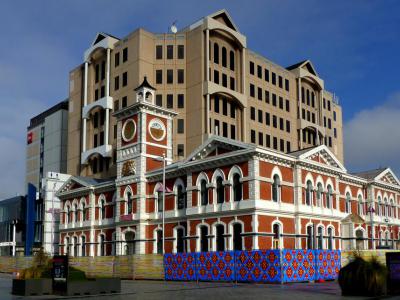
In 1863 it was decided Christchurch would replace Lyttelton as the main Post Town. Christchurch's post office was too small and located in Market Square, later known as Victoria Square. Architect William Henry Clayton would design the Christchurch Post Office.
The design of the building is Italianate with Venetian Gothic touches. The upper windows have pointed arches. A four faced clock turret clock was installed in the Post Office tower in 1879. It is thought to be an imitation of London's Great Clock of Westminster. On the east face of the tower, under the clock, is the coat of arms of the United Kingdom.
Like other buildings on the Square, the Chief Post Office has suffered quake damages over the years. It has lost tenants since the devastating quake of 2011. In 2018 came the announcement that the building would be repaired and restored. Building Owner Gordon Chamberlain said the process would take about two years.
Scheduled repairs include the facade and clock tower, overall strengthening and replacing the roof.
The design of the building is Italianate with Venetian Gothic touches. The upper windows have pointed arches. A four faced clock turret clock was installed in the Post Office tower in 1879. It is thought to be an imitation of London's Great Clock of Westminster. On the east face of the tower, under the clock, is the coat of arms of the United Kingdom.
Like other buildings on the Square, the Chief Post Office has suffered quake damages over the years. It has lost tenants since the devastating quake of 2011. In 2018 came the announcement that the building would be repaired and restored. Building Owner Gordon Chamberlain said the process would take about two years.
Scheduled repairs include the facade and clock tower, overall strengthening and replacing the roof.
6) Cathedral Square
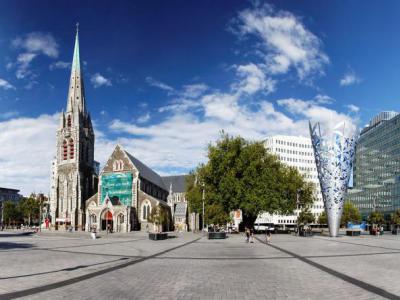
Cathedral Square, locally known simply as the Square, is the geographical centre and heart of Christchurch.
It was intended that Cathedral Square be named for Protestant martyr Nicholas Ridley, burned at the stake in 1555. Ridley's fellow martyrs, Cranmer and Latimer, have their squares but Ridley's square was envisaged for ChristChurch Cathedral in 1850.
The square was planned in the form of a cross. It was originally conceived as a private area for the Cathedral and a grammar school. However, from the very beginning, the square became a place for meetings and communal events. In 1974 the square was redeveloped. In 2000 Gray tiles were laid, making a grid pattern over an enormous area.
The square is a magnet for colorful characters. Ian Brackenbury, aka "The Wizard", mounts a ladder and begins his discourse. He wears a tall, pointed witch's hat and a black academic gown and he claims to be a false prophet of the Church of England. Then there's the Bible Lady, Renee Stanton. She competes with the false prophet for attention.
Cathedral Square has a large number of historical buildings and statues that are registered as heritage items with Heritage New Zealand. Among them are the ChristChurch Cathedral, Press Building, former Chief Post Office, Old Government Building, Citizens' War Memorial, Godley Statue and others.
In 2011 a disastrous earthquake rocked Christchurch. ChristChurch Cathedral, The crown jewel of the square, was left a gutted ruin. It is still in a damaged state today but plans are to restore it and not to pull it down. Some of the other historical buildings are also damaged by the earthquake.
Today the square is alive with visitors and buskers, food kiosks and hope.
It was intended that Cathedral Square be named for Protestant martyr Nicholas Ridley, burned at the stake in 1555. Ridley's fellow martyrs, Cranmer and Latimer, have their squares but Ridley's square was envisaged for ChristChurch Cathedral in 1850.
The square was planned in the form of a cross. It was originally conceived as a private area for the Cathedral and a grammar school. However, from the very beginning, the square became a place for meetings and communal events. In 1974 the square was redeveloped. In 2000 Gray tiles were laid, making a grid pattern over an enormous area.
The square is a magnet for colorful characters. Ian Brackenbury, aka "The Wizard", mounts a ladder and begins his discourse. He wears a tall, pointed witch's hat and a black academic gown and he claims to be a false prophet of the Church of England. Then there's the Bible Lady, Renee Stanton. She competes with the false prophet for attention.
Cathedral Square has a large number of historical buildings and statues that are registered as heritage items with Heritage New Zealand. Among them are the ChristChurch Cathedral, Press Building, former Chief Post Office, Old Government Building, Citizens' War Memorial, Godley Statue and others.
In 2011 a disastrous earthquake rocked Christchurch. ChristChurch Cathedral, The crown jewel of the square, was left a gutted ruin. It is still in a damaged state today but plans are to restore it and not to pull it down. Some of the other historical buildings are also damaged by the earthquake.
Today the square is alive with visitors and buskers, food kiosks and hope.
7) Chalice Sculpture
While a student at Hastings Boys' High School in New Zealand, Francis Neil Dawson launched his art career by painting "April Fool" in white on the roof of the school. Years later he climaxed his penchant for art in public places by creating The Chalice, an enormous, upside down metallic cone in Cathedral Square in Christchurch.
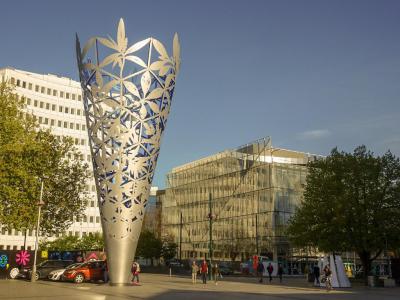
Dawson's forte is optical illusions assisted by the use of patterns, like moire. The Chalice, also called The Millennium Cone, is a steel and aluminum sculpture. It was commissioned for the 150th anniversary of Christchurch and Canterbury by the Canterbury Association in 2001.
The sculpture is of aluminum on a hexagonal steel framework. Forty-two aluminum leaves of native plants are woven through the honeycombed steel. The native tree species represented are Mapou, Kowhai, Mahoe, Totara, Karamu, Titoki, Maratata and Koromiko. The Cone is 59 feet high. The base diameter is 6.5 feet. Top diameter is 28 feet.
The base of the sculpture is dark granite with a diameter of ten feet. The cone is painted silver on the outside and blue inside. At night it may be lighted inside and out.
Dawson's forte is optical illusions assisted by the use of patterns, like moire. The Chalice, also called The Millennium Cone, is a steel and aluminum sculpture. It was commissioned for the 150th anniversary of Christchurch and Canterbury by the Canterbury Association in 2001.
The sculpture is of aluminum on a hexagonal steel framework. Forty-two aluminum leaves of native plants are woven through the honeycombed steel. The native tree species represented are Mapou, Kowhai, Mahoe, Totara, Karamu, Titoki, Maratata and Koromiko. The Cone is 59 feet high. The base diameter is 6.5 feet. Top diameter is 28 feet.
The base of the sculpture is dark granite with a diameter of ten feet. The cone is painted silver on the outside and blue inside. At night it may be lighted inside and out.
8) Cardboard Cathedral (must see)
The dust from the 2011 Christchurch earthquake had barely settled when the well known Japanese "disaster architect" Shigaru Ban was invited to Christchurch to design a temporary cathedral. The cathedral needed to be capable of holding concerts and events as well as services. Ban created the design pro bono.
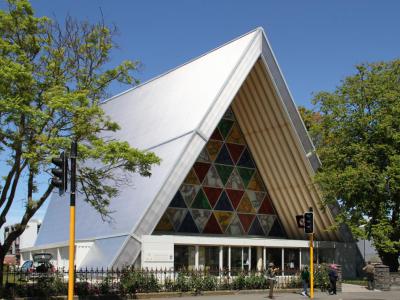
The "Cardboard Cathedral" is an A-frame style building. The roof is 69 feet above the altar. Materials include wood, steel, and 96 24-inch diameter waterproof cardboard tubes. Eight shipping containers provide the walls and the roof is polycarbonate. The foundation is a concrete slab. The cathedral can hold up to 700 people.
It is the only cathedral in the world made substantially of cardboard. Its environmentally conscious use of paper tubes as an architectural material has drawn acclaims from around the world.
Lonely Planet named Christchurch one of the "top 10 cities to travel" in October 2012, and the cathedral was cited as one of the reasons that makes the city an exciting place.
The "Cardboard Cathedral" is an A-frame style building. The roof is 69 feet above the altar. Materials include wood, steel, and 96 24-inch diameter waterproof cardboard tubes. Eight shipping containers provide the walls and the roof is polycarbonate. The foundation is a concrete slab. The cathedral can hold up to 700 people.
It is the only cathedral in the world made substantially of cardboard. Its environmentally conscious use of paper tubes as an architectural material has drawn acclaims from around the world.
Lonely Planet named Christchurch one of the "top 10 cities to travel" in October 2012, and the cathedral was cited as one of the reasons that makes the city an exciting place.
9) Sign of the Takahe
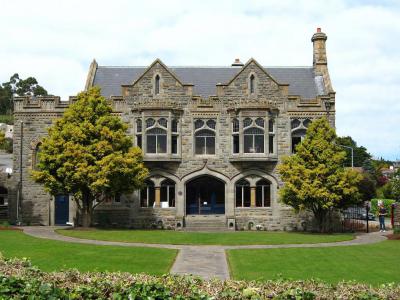
The Sign of the Takahe holds great historical importance in Christchurch due to its unique neo-Gothic architectural style. It was initially part of a larger plan by Harry Ell, a local councilor and Member of Parliament, aiming to establish rest houses along Summit Road for walkers in the Port Hills area. These rest houses offered panoramic views of Christchurch and Lyttelton Harbour. Alongside the Sign of the Takahe, there were three other structures: the Sign of the Kiwi, the Sign of the Bellbird, and the Sign of the Packhorse.
Construction of the Sign of the Takahe began in 1918 and took nearly three decades to complete. Initially opening in 1920 as the Tram Terminus Rest House, it featured a tram terminus and a tearoom. However, it wasn't until after Ell died in 1934 that the project reached its full realization under architect J.G. Collins. The Christchurch City Council acquired the building in 1942, and it was finally finished in 1948, opening to the public the following year.
The Sign of the Takahe pays homage to the native New Zealand flightless bird, the Takahē, and symbolizes the resilience and ingenuity during the Great Depression. The construction process involved cost-saving measures such as local stone quarrying, hand-chiseling of stone, and repurposing materials like Kauri beams and timber from packing cases for the dining room ceilings.
One of its notable features is the dining room fireplace, a replica of one found in the historic Haddon Hall in Derbyshire, England. Today, the Sign of the Takahe operates as a cafe and bar, hosting weddings and events. It's designated as a Category I heritage site by Heritage New Zealand, ensuring its preservation for future generations.
Construction of the Sign of the Takahe began in 1918 and took nearly three decades to complete. Initially opening in 1920 as the Tram Terminus Rest House, it featured a tram terminus and a tearoom. However, it wasn't until after Ell died in 1934 that the project reached its full realization under architect J.G. Collins. The Christchurch City Council acquired the building in 1942, and it was finally finished in 1948, opening to the public the following year.
The Sign of the Takahe pays homage to the native New Zealand flightless bird, the Takahē, and symbolizes the resilience and ingenuity during the Great Depression. The construction process involved cost-saving measures such as local stone quarrying, hand-chiseling of stone, and repurposing materials like Kauri beams and timber from packing cases for the dining room ceilings.
One of its notable features is the dining room fireplace, a replica of one found in the historic Haddon Hall in Derbyshire, England. Today, the Sign of the Takahe operates as a cafe and bar, hosting weddings and events. It's designated as a Category I heritage site by Heritage New Zealand, ensuring its preservation for future generations.
