Custom Walk in Saigon/HoChiMinh City, Vietnam by jenmlee1063_23684c created on 2026-02-14
Guide Location: Vietnam » Saigon/HoChiMinh City
Guide Type: Custom Walk
# of Sights: 14
Tour Duration: 6 Hour(s)
Travel Distance: 13.5 Km or 8.4 Miles
Share Key: BF4VU
Guide Type: Custom Walk
# of Sights: 14
Tour Duration: 6 Hour(s)
Travel Distance: 13.5 Km or 8.4 Miles
Share Key: BF4VU
How It Works
Please retrieve this walk in the GPSmyCity app. Once done, the app will guide you from one tour stop to the next as if you had a personal tour guide. If you created the walk on this website or come to the page via a link, please follow the instructions below to retrieve the walk in the app.
Retrieve This Walk in App
Step 1. Download the app "GPSmyCity: Walks in 1K+ Cities" on Apple App Store or Google Play Store.



Step 2. In the GPSmyCity app, download(or launch) the guide "Saigon/HoChiMinh City Map and Walking Tours".
Step 3. Tap the menu button located at upper right corner of the "Walks" screen and select "Retrieve custom walk". Enter the share key: BF4VU
1) Independence Palace (must see)
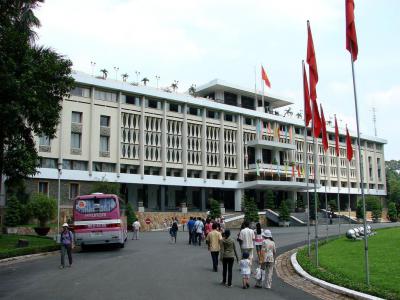
Few places in Ho Chi Minh City carry as much symbolic weight as the Independence Palace – better known to many as the Reunification Palace. This is the very spot where tanks famously rolled through the gates, marking the end of the Vietnam War and the beginning of a new chapter in the nation’s history.
The palace stands on the grounds of the former Norodom Palace, once home to the French governor of Cochinchina. Over the decades it has seen a revolving cast of occupants – Japanese forces during World War II, French colonial leaders, and later the presidents of South Vietnam. After a dramatic bombing in the early 1960s destroyed much of the old residence, a sleek modernist structure was commissioned from renowned architect Ngo Viet Thu, who envisioned a building that would reflect both authority and optimism.
Step inside today and it feels like time has paused in the 1970s. Vast reception halls gleam with polished wood and period furniture. A cinema and game room still display retro fittings, while the underground bunkers reveal rows of maps, radio equipment, and tunnels designed for quick escape. On the front lawn, the tanks that once forced the gates remain on display – silent but powerful reminders of that decisive moment.
Did you know? The palace’s architecture was deliberately designed with feng shui principles in mind, including symbolic motifs intended to bring balance and harmony to the nation?
Tip: Plan to give yourself at least an hour or two. Start with the grand ceremonial halls before making your way to the basement command center. Free guided tours in multiple languages are often available, and they add invaluable context to what might otherwise feel like a time capsule.
The palace stands on the grounds of the former Norodom Palace, once home to the French governor of Cochinchina. Over the decades it has seen a revolving cast of occupants – Japanese forces during World War II, French colonial leaders, and later the presidents of South Vietnam. After a dramatic bombing in the early 1960s destroyed much of the old residence, a sleek modernist structure was commissioned from renowned architect Ngo Viet Thu, who envisioned a building that would reflect both authority and optimism.
Step inside today and it feels like time has paused in the 1970s. Vast reception halls gleam with polished wood and period furniture. A cinema and game room still display retro fittings, while the underground bunkers reveal rows of maps, radio equipment, and tunnels designed for quick escape. On the front lawn, the tanks that once forced the gates remain on display – silent but powerful reminders of that decisive moment.
Did you know? The palace’s architecture was deliberately designed with feng shui principles in mind, including symbolic motifs intended to bring balance and harmony to the nation?
Tip: Plan to give yourself at least an hour or two. Start with the grand ceremonial halls before making your way to the basement command center. Free guided tours in multiple languages are often available, and they add invaluable context to what might otherwise feel like a time capsule.
2) War Remnants Museum (must see)
The War Remnants Museum is one of Ho Chi Minh City’s most visited sites, offering a sobering look at the Vietnam War – known in Vietnam as the American War – from a local perspective. It is not a lighthearted stop, but rather a deeply thought-provoking experience that leaves a lasting impression on most visitors.
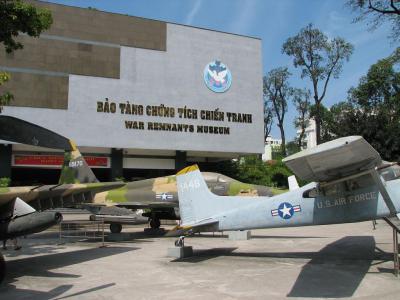
The museum is arranged across several themed galleries and an outdoor courtyard. On the grounds stand original military vehicles and equipment such as tanks, artillery, helicopters, and fighter jets, as well as large ordnance once used during the conflict. Inside, the galleries house exhibits that document the war through photography, artifacts, and detailed narratives.
Among the most powerful displays are those dedicated to the consequences of chemical warfare, particularly the use of Agent Orange, with striking images and personal stories illustrating its devastating long-term effects. Another section focuses on the treatment of prisoners, including reconstructions of the so-called “tiger cages” where detainees were once confined. Visitors will also find exhibits about major wartime events, including atrocities that shaped global awareness of the conflict.
While much of the material is harrowing, the museum also highlights the work of international war correspondents and photojournalists, whose striking images helped bring the realities of the war to audiences worldwide. The inclusion of historical artifacts such as a French guillotine further broadens the scope of the museum, reminding visitors that Vietnam’s struggles for independence extended beyond the American War.
The War Remnants Museum provides one of the most comprehensive and impactful accounts of modern Vietnamese history. It is an essential stop for anyone wishing to understand the human cost of war and the resilience of the Vietnamese people.
Tip: Starting from the upper floors and working your way down helps the exhibits flow more coherently.
The museum is arranged across several themed galleries and an outdoor courtyard. On the grounds stand original military vehicles and equipment such as tanks, artillery, helicopters, and fighter jets, as well as large ordnance once used during the conflict. Inside, the galleries house exhibits that document the war through photography, artifacts, and detailed narratives.
Among the most powerful displays are those dedicated to the consequences of chemical warfare, particularly the use of Agent Orange, with striking images and personal stories illustrating its devastating long-term effects. Another section focuses on the treatment of prisoners, including reconstructions of the so-called “tiger cages” where detainees were once confined. Visitors will also find exhibits about major wartime events, including atrocities that shaped global awareness of the conflict.
While much of the material is harrowing, the museum also highlights the work of international war correspondents and photojournalists, whose striking images helped bring the realities of the war to audiences worldwide. The inclusion of historical artifacts such as a French guillotine further broadens the scope of the museum, reminding visitors that Vietnam’s struggles for independence extended beyond the American War.
The War Remnants Museum provides one of the most comprehensive and impactful accounts of modern Vietnamese history. It is an essential stop for anyone wishing to understand the human cost of war and the resilience of the Vietnamese people.
Tip: Starting from the upper floors and working your way down helps the exhibits flow more coherently.
3) Tan Dinh Church
The Tan Dinh Church was built by French colonists in the late 19th century. The parish church is the second largest next to the Notre Dame Basilica in Ho Chi Minh City.
Construction of the building began in 1870 and The Tan Dinh Church was completed and opened to the public in 1876. The structure was enlarged in 1896 and later in 1926. Two large bell towers housing 6 bells were built near its gate. A wealthy family gifted three altars made of Italian marble in 1929. The church building underwent a major restoration and renovation in 1976 when it celebrated its 100th anniversary.
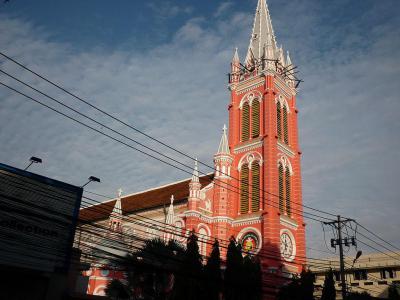
The Tan Dinh Church has a pink façade with decorative designs. The main tower has a 3 meter high bronze cross. There are two smaller lamp towers with air holes and patterns. The dome is covered with fish scale shaped tiles and the galleries are adorned with statues of angels. The large chancel has gothic pillars that lead to the main altar. There are statues of female saints to the left and of male saints to the right. The Tan Dinh Church is an active place of worship with a vibrant congregation who are involved in many charity activities.
Construction of the building began in 1870 and The Tan Dinh Church was completed and opened to the public in 1876. The structure was enlarged in 1896 and later in 1926. Two large bell towers housing 6 bells were built near its gate. A wealthy family gifted three altars made of Italian marble in 1929. The church building underwent a major restoration and renovation in 1976 when it celebrated its 100th anniversary.
The Tan Dinh Church has a pink façade with decorative designs. The main tower has a 3 meter high bronze cross. There are two smaller lamp towers with air holes and patterns. The dome is covered with fish scale shaped tiles and the galleries are adorned with statues of angels. The large chancel has gothic pillars that lead to the main altar. There are statues of female saints to the left and of male saints to the right. The Tan Dinh Church is an active place of worship with a vibrant congregation who are involved in many charity activities.
4) Notre-Dame Cathedral of Saigon (must see)
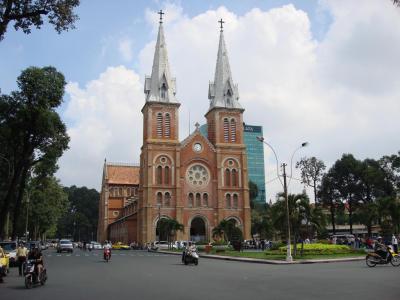
Nestled in the heart of District 1, the Notre-Dame Cathedral Basilica of Saigon is a stunning reminder of colonial ambition and timeless faith. Construction began in 1877, and by 1880 the building was consecrated. Later, in 1895, twin bell towers were added, each soaring about 57.6 meters and topped by 3.5-meter crosses, making them among the tallest church towers in Vietnam.
The cathedral’s walls and roof have seen many seasons, and since 2017 it has been under a major restoration project. The renovation is ongoing, with roof work, the restoration of the zinc towers, bell towers, and much of the external façade well underway. The cathedral remains under an ongoing restoration project, ensuring its preservation for future generations.
Did you know? Two enormous iron crosses – each nearly 4 meters high and weighing a bout 600 kg-were removed in early 2023 and shipped to Belgium for restoration because centuries of weather had left them badly corroded.
Despite the ongoing work, the cathedral continues to welcome worshippers and visitors. Masses are still held daily (with a bilingual service in English on Sundays), and the square in front remains open for photography, quiet reflection, and taking in the view of those towers reaching sky-high.
Inside, you’ll be wowed by the stained glass windows, the arches, and the soft light filtering in – you can almost feel the old stones breathing history. Though parts of the interior may be closed during restoration, there’s enough visible charm to make it worth the visit.
Tip: Come in the morning or early evening when the light glows off the red bricks and the square is less crowded. Always check ahead for interior access because some sections may be closed due to the restoration work.
The cathedral’s walls and roof have seen many seasons, and since 2017 it has been under a major restoration project. The renovation is ongoing, with roof work, the restoration of the zinc towers, bell towers, and much of the external façade well underway. The cathedral remains under an ongoing restoration project, ensuring its preservation for future generations.
Did you know? Two enormous iron crosses – each nearly 4 meters high and weighing a bout 600 kg-were removed in early 2023 and shipped to Belgium for restoration because centuries of weather had left them badly corroded.
Despite the ongoing work, the cathedral continues to welcome worshippers and visitors. Masses are still held daily (with a bilingual service in English on Sundays), and the square in front remains open for photography, quiet reflection, and taking in the view of those towers reaching sky-high.
Inside, you’ll be wowed by the stained glass windows, the arches, and the soft light filtering in – you can almost feel the old stones breathing history. Though parts of the interior may be closed during restoration, there’s enough visible charm to make it worth the visit.
Tip: Come in the morning or early evening when the light glows off the red bricks and the square is less crowded. Always check ahead for interior access because some sections may be closed due to the restoration work.
5) Central Post Office (must see)
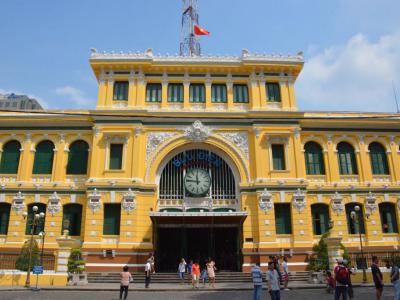
Right in the heart of District 1, stands the Saigon Central Post Office – a living postcard from colonial times. Originally designed by the famous Gustave Eiffel and erected in 1860, the building was rebuilt between 1886 and 1891 according to Alfred Foulhoux’s design to meet the increasing demand. It blends Gothic, Renaissance, and French colonial styles into one striking façade.
Outside, its bright yellow walls, green shutters, and intricate ironwork capture your attention immediately. A large classic clock hovers above the main entrance, flanked by these tall arched windows and names of inventors like Volta, Faraday, and Ohm etched into the walls – little tributes to the era of telegraphy and early communication.
Step inside and you’re transported back in time: under a high vaulted ceiling, sun streams through domed windows onto marble-tiled floors. Vintage wooden telephone booths, old-fashioned benches, and two giant historic maps – one of Saigon and surroundings from 1892, the other showing telegraphic lines to Cambodia from 1936 – line the central hall. At the far end, a portrait of Ho Chi Minh watches over the bustle of postal counters and souvenir stalls.
Did you know? The Central Post Office offered a letter-writing service that assisted both locals who could not write and foreigners who needed translation help. Duong Van Ngo, known as Vietnam's last public letter writer, worked here for over 70 years until 2023.
Even though many services are modernized, the post office still functions fully – postcards, stamps, parcels, even express delivery. And yes, you can (and should) send a postcard from here: it’s one of the most charming souvenirs you’ll get in Saigon.
Tip: Visit in the morning when the light enhances the interior’s warmth and the crowds are thinner. Bring enough small cash for postcards and stamps – you’ll want both before you leave.
Outside, its bright yellow walls, green shutters, and intricate ironwork capture your attention immediately. A large classic clock hovers above the main entrance, flanked by these tall arched windows and names of inventors like Volta, Faraday, and Ohm etched into the walls – little tributes to the era of telegraphy and early communication.
Step inside and you’re transported back in time: under a high vaulted ceiling, sun streams through domed windows onto marble-tiled floors. Vintage wooden telephone booths, old-fashioned benches, and two giant historic maps – one of Saigon and surroundings from 1892, the other showing telegraphic lines to Cambodia from 1936 – line the central hall. At the far end, a portrait of Ho Chi Minh watches over the bustle of postal counters and souvenir stalls.
Did you know? The Central Post Office offered a letter-writing service that assisted both locals who could not write and foreigners who needed translation help. Duong Van Ngo, known as Vietnam's last public letter writer, worked here for over 70 years until 2023.
Even though many services are modernized, the post office still functions fully – postcards, stamps, parcels, even express delivery. And yes, you can (and should) send a postcard from here: it’s one of the most charming souvenirs you’ll get in Saigon.
Tip: Visit in the morning when the light enhances the interior’s warmth and the crowds are thinner. Bring enough small cash for postcards and stamps – you’ll want both before you leave.
6) City Hall (People's Committee Building) (must see)
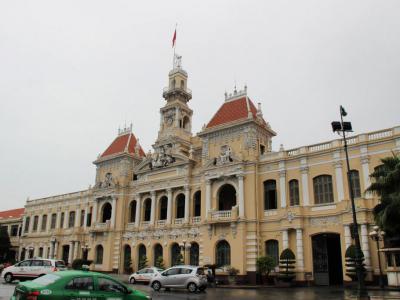
At the northern end of Nguyen Hue Boulevard stands one of Ho Chi Minh City’s most photographed landmarks: the former Hôtel de Ville, now officially the People’s Committee Building. With its pale yellow façade, ornate balconies, and central bell tower, the building looks as if it has been transported straight from a French provincial town square – except that here, palms sway in the tropical breeze.
Designed by French architect Paul Gardès and completed in 1908, the structure was once the proud City Hall of Saigon. It kept that name until 1954, then served as the administrative center of South Vietnam until the reunification in 1975, when it became the People’s Committee headquarters. Despite the changes in government, the building itself has remained remarkably consistent: elegant, symmetrical, and always a backdrop for important events in the city.
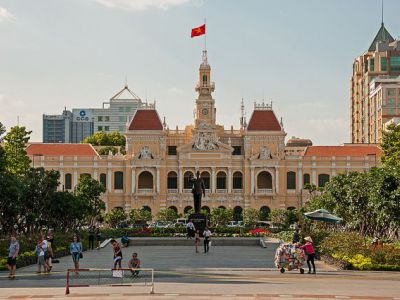
Out front you’ll find a bronze statue of Uncle Ho gently teaching a child – a favorite photo spot for both locals and visitors. The gardens around the building are carefully tended, with seasonal flowers adding bursts of color that make the whole square look like a giant open-air stage. At night, the entire façade glows under soft golden lighting, giving it an almost theatrical appearance.
Did you know? The bell tower perched above the central pediment is not just decorative – it was inspired by town halls in northern France, meant to symbolize both civic pride and the colonial authorities’ “voice” ringing out across the city.
Unfortunately, the interior remains off-limits since it houses government offices, so you can’t wander the halls. Still, the best “show” is outside. For the most magical photos, arrive just before sunset when the sky deepens to pink and the lights switch on – your snapshots will look like they belong on a vintage postcard.
Designed by French architect Paul Gardès and completed in 1908, the structure was once the proud City Hall of Saigon. It kept that name until 1954, then served as the administrative center of South Vietnam until the reunification in 1975, when it became the People’s Committee headquarters. Despite the changes in government, the building itself has remained remarkably consistent: elegant, symmetrical, and always a backdrop for important events in the city.
Out front you’ll find a bronze statue of Uncle Ho gently teaching a child – a favorite photo spot for both locals and visitors. The gardens around the building are carefully tended, with seasonal flowers adding bursts of color that make the whole square look like a giant open-air stage. At night, the entire façade glows under soft golden lighting, giving it an almost theatrical appearance.
Did you know? The bell tower perched above the central pediment is not just decorative – it was inspired by town halls in northern France, meant to symbolize both civic pride and the colonial authorities’ “voice” ringing out across the city.
Unfortunately, the interior remains off-limits since it houses government offices, so you can’t wander the halls. Still, the best “show” is outside. For the most magical photos, arrive just before sunset when the sky deepens to pink and the lights switch on – your snapshots will look like they belong on a vintage postcard.
7) Ho Chi Minh Square
Right in the heart of the city, Ho Chi Minh Square is where colonial charm, modern commerce, and political symbolism all meet in one open space. Framed by the grand façade of the People’s Committee Building (the former City Hall) and overlooked by a bronze statue of Ho Chi Minh himself, the square is both a ceremonial stage and a favorite hangout for locals. Families often stroll here in the evenings, children darting around while couples pose for photos in front of the flowerbeds.
Once lined with French villas and colonial offices, the square today also rubs shoulders with sleek international boutiques and glittering hotels. Just across the way stands the historic Rex Hotel, whose rooftop bar became legendary during the Vietnam War as the place where correspondents and officials traded stories under the neon glow of Saigon nights.
Tip: visit at dusk, when the heat eases and the lights come on. That’s when the square really comes alive – perfect for an evening stroll with a coconut ice cream in hand.
Once lined with French villas and colonial offices, the square today also rubs shoulders with sleek international boutiques and glittering hotels. Just across the way stands the historic Rex Hotel, whose rooftop bar became legendary during the Vietnam War as the place where correspondents and officials traded stories under the neon glow of Saigon nights.
Tip: visit at dusk, when the heat eases and the lights come on. That’s when the square really comes alive – perfect for an evening stroll with a coconut ice cream in hand.
8) Saigon Opera House (must see)
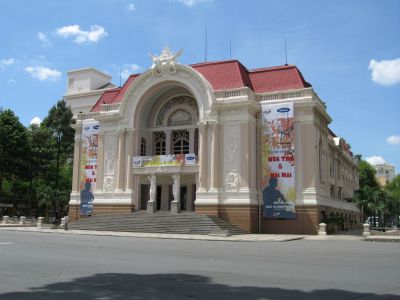
The Saigon Opera House, officially known as the Municipal Theatre, is one of Ho Chi Minh City’s most striking landmarks and a masterpiece of French colonial architecture. Built between 1898 and 1900 by French architect Félix Olivier, with contributions from Ernest Guichard and Eugène Ferret, the theater was inspired by the Petit Palais in Paris. Its ornate façade, with arched windows, grand balconies, and intricate sculptures, reflects the city’s colonial past and stands as a cultural treasure in modern-day Vietnam.
Over the decades, the Opera House has had a colorful history. It was damaged during World War II, later repurposed as temporary housing for displaced families, and even served as the National Assembly for South Vietnam in the 1950s. After reunification, its original role as a performing arts venue was restored. A major renovation in 1998 brought the theater back to its full glory in time for Saigon’s 300th anniversary celebrations.
Inside, visitors will find an opulent space adorned with chandeliers, gilded décor, and plush seating. The auditorium accommodates about 1,800 people across three levels, offering excellent acoustics for a wide range of performances. Today, the Opera House hosts an eclectic program that includes opera, ballet, classical concerts, traditional Vietnamese music, and modern cultural shows.
Experiencing a live performance in such a historic setting is a highlight of any trip to Ho Chi Minh City. Even if you don’t attend a show, the building itself is worth admiring for its grandeur and elegance.
For the best experience, consider booking tickets online in advance. Many shows include extras such as a complimentary welcome drink with certain ticket categories.
Over the decades, the Opera House has had a colorful history. It was damaged during World War II, later repurposed as temporary housing for displaced families, and even served as the National Assembly for South Vietnam in the 1950s. After reunification, its original role as a performing arts venue was restored. A major renovation in 1998 brought the theater back to its full glory in time for Saigon’s 300th anniversary celebrations.
Inside, visitors will find an opulent space adorned with chandeliers, gilded décor, and plush seating. The auditorium accommodates about 1,800 people across three levels, offering excellent acoustics for a wide range of performances. Today, the Opera House hosts an eclectic program that includes opera, ballet, classical concerts, traditional Vietnamese music, and modern cultural shows.
Experiencing a live performance in such a historic setting is a highlight of any trip to Ho Chi Minh City. Even if you don’t attend a show, the building itself is worth admiring for its grandeur and elegance.
For the best experience, consider booking tickets online in advance. Many shows include extras such as a complimentary welcome drink with certain ticket categories.
9) Nguyen Hue Walking Street (must see)
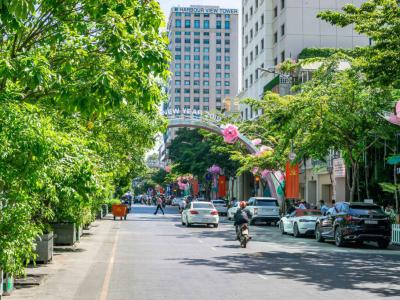
If there’s one place that captures the pulse of Ho Chi Minh City, it’s Nguyen Hue Walking Street. Stretching from the Saigon River to the grand façade of the People’s Committee Building, this broad, tree-lined boulevard is both the city’s stage and its playground. Closed to traffic since 2015, the avenue has become a magnet for families, street performers, and anyone who wants to enjoy the city without dodging motorbikes.
During the day, the wide granite-paved promenade offers a welcome breather from the bustle of surrounding streets. Benches, fountains, and shade trees provide resting spots, while cafés and bubble tea shops lure visitors with a cold drink. But it’s after sunset that Nguyen Hue really shows off: neon billboards blaze, kids whizz by on hoverboards, and impromptu dance groups claim their patches of pavement.
Did you know? The street features one of the largest interactive fountains in Southeast Asia, with water and light shows choreographed every evening.
The architecture along the way tells its own story. Sleek skyscrapers rise behind colonial gems such as the Rex Hotel and the Saigon Opera House. Hidden among modern shopfronts you’ll also find quirky cafés tucked into old apartment blocks ¬– a reminder of how the city layers past and present.
Festivals and holidays bring the boulevard to life on a bigger scale. During Lunar New Year, the entire street transforms into a flower road, decorated with elaborate floral displays and lanterns that attract millions of visitors. It’s one of the city’s proudest traditions.
Tip: For the best experience, come in the evening when the temperatures drop and the energy rises. Grab a ice cream from a street vendor, find a spot by the lotus fountain, and simply watch Saigon swirl around you.
During the day, the wide granite-paved promenade offers a welcome breather from the bustle of surrounding streets. Benches, fountains, and shade trees provide resting spots, while cafés and bubble tea shops lure visitors with a cold drink. But it’s after sunset that Nguyen Hue really shows off: neon billboards blaze, kids whizz by on hoverboards, and impromptu dance groups claim their patches of pavement.
Did you know? The street features one of the largest interactive fountains in Southeast Asia, with water and light shows choreographed every evening.
The architecture along the way tells its own story. Sleek skyscrapers rise behind colonial gems such as the Rex Hotel and the Saigon Opera House. Hidden among modern shopfronts you’ll also find quirky cafés tucked into old apartment blocks ¬– a reminder of how the city layers past and present.
Festivals and holidays bring the boulevard to life on a bigger scale. During Lunar New Year, the entire street transforms into a flower road, decorated with elaborate floral displays and lanterns that attract millions of visitors. It’s one of the city’s proudest traditions.
Tip: For the best experience, come in the evening when the temperatures drop and the energy rises. Grab a ice cream from a street vendor, find a spot by the lotus fountain, and simply watch Saigon swirl around you.
10) Bitexco Financial Tower (must see)
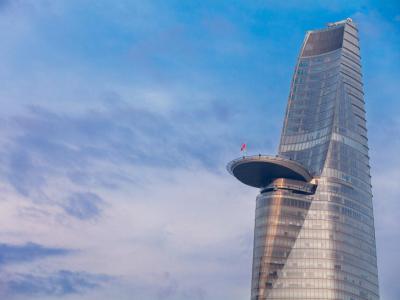
Soaring above District 1 like a futuristic lotus reaching for the sky, Bitexco Financial Tower is one of Saigon’s most striking modern landmarks. Designed by Carlos Zapata Studio with French firm AREP, its neo-futuristic form – with a helipad jutting out from its side – is meant to echo Vietnam’s national flower. It opened in 2010, stands 262.5 meters tall with 68 floors above ground (plus basements), and was once the tallest building in Vietnam.
Inside you’ll find Icon68, a six-floor shopping and entertainment complex at the base of the tower. It’s home to fashion labels, cafés, a multipurpose food court, and a cinema – perfect for when you need a break from walking.
On higher levels, there are upscale restaurants and lounges that offer both global cuisine and rooftop views.
The real draw is the Saigon Skydeck on the 49th floor, about 178-180 meters up. Here you get 360-degree views of the city’s skyline, the Saigon River, Ben Thanh Market, Notre Dame Cathedral, and beyond. It’s a fantastic place for sunrise, sunset, or city-lights photography.
Did you know? The helipad on the 52nd floor extends out from the main structure – 22 meters past the building’s edge, making it one of the most visually dramatic architectural features in Saigon.
Inside you’ll find Icon68, a six-floor shopping and entertainment complex at the base of the tower. It’s home to fashion labels, cafés, a multipurpose food court, and a cinema – perfect for when you need a break from walking.
On higher levels, there are upscale restaurants and lounges that offer both global cuisine and rooftop views.
The real draw is the Saigon Skydeck on the 49th floor, about 178-180 meters up. Here you get 360-degree views of the city’s skyline, the Saigon River, Ben Thanh Market, Notre Dame Cathedral, and beyond. It’s a fantastic place for sunrise, sunset, or city-lights photography.
Did you know? The helipad on the 52nd floor extends out from the main structure – 22 meters past the building’s edge, making it one of the most visually dramatic architectural features in Saigon.
11) Ben Thanh Market (must see)
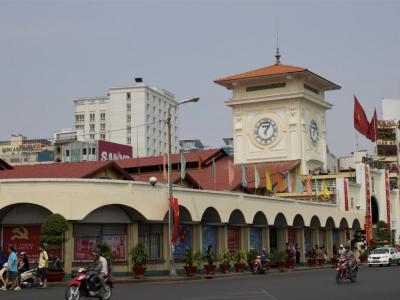
Ben Thanh Market is where Saigon shows its colors, flavors, and its irresistible energy all at once. The iconic market building with the clock tower has been a landmark since 1914, standing as a symbol of both colonial architecture and local commerce.
Inside the day market (open roughly 6 AM to 6 PM daily), you’ll find endless alleys of vendors selling everything from handcrafted lacquerware, vibrant textiles, silks and national dresses called Ao Dai, to dried fruits, spices, coffee beans, and fresh produce.
The four main entrances act like portals to different specialties: textiles and garments through the South Gate; seafood, flowers, and fresh food in the North; snacks and cosmetics in the East; crafts and souvenirs in the West.
As evening falls, the market transforms. The indoor stalls close off at 6 PM, and then surrounding streets light up with night-market energy: food vendors set up outside the gates, grilling seafood, serving pho, banh mi, tropical fruits, and sweet treats. The night market runs most evenings until about 10 or 11 PM depending on the crowd and what vendors are open.
Did you know? The market was originally built on what used to be a pond area (called Bo Ret), and its drainage issues during rains are still a familiar headache for vendors and visitors.
Tip: Go early in the morning if you want to beat the crowds, see fresh produce, and enjoy cooler temperatures. If you’re after food and local street-scene vibes, evenings are unbeatable but be ready to bargain.
Inside the day market (open roughly 6 AM to 6 PM daily), you’ll find endless alleys of vendors selling everything from handcrafted lacquerware, vibrant textiles, silks and national dresses called Ao Dai, to dried fruits, spices, coffee beans, and fresh produce.
The four main entrances act like portals to different specialties: textiles and garments through the South Gate; seafood, flowers, and fresh food in the North; snacks and cosmetics in the East; crafts and souvenirs in the West.
As evening falls, the market transforms. The indoor stalls close off at 6 PM, and then surrounding streets light up with night-market energy: food vendors set up outside the gates, grilling seafood, serving pho, banh mi, tropical fruits, and sweet treats. The night market runs most evenings until about 10 or 11 PM depending on the crowd and what vendors are open.
Did you know? The market was originally built on what used to be a pond area (called Bo Ret), and its drainage issues during rains are still a familiar headache for vendors and visitors.
Tip: Go early in the morning if you want to beat the crowds, see fresh produce, and enjoy cooler temperatures. If you’re after food and local street-scene vibes, evenings are unbeatable but be ready to bargain.
12) Bui Vien Street (must see)
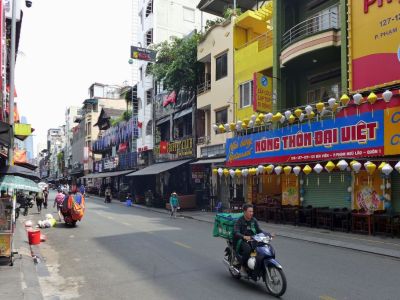
Bui Vien Street is the vibrant heart of the city’s backpacker area and a must-visit destination for travelers seeking nightlife, culture, and energy. Often compared to Bangkok’s Khao San Road, it is a lively strip filled with restaurants, bars, hostels, and street vendors. Day or night, the street is buzzing with locals, tourists, and expats who come together to enjoy the unique mix of Vietnamese and international influences.
By day, Bui Vien offers plenty of cafes and eateries serving everything from local Vietnamese dishes to Western comfort food. Travelers can enjoy a bowl of phở, sample street snacks, or sip strong Vietnamese iced coffee while watching the world go by. Many travel agencies and shops along the street also offer convenient services such as bus tickets, tours, and motorbike rentals, making it a practical stop for those exploring the rest of Vietnam.
At night, Bui Vien transforms into one of Ho Chi Minh City’s most famous nightlife districts. Neon lights, music, and performances fill the street as bars and clubs come alive, many with open-front seating spilling onto the sidewalks. Street performers, live bands, and DJs create a festival-like atmosphere, while vendors weave through the crowds selling everything from grilled skewers to late-night snacks. For those looking to meet other travelers or experience the city’s party scene, this is the place to be.
Despite its reputation as a party street, Bui Vien offers something for all types of visitors. Those who prefer a quieter evening can enjoy a drink at a rooftop bar or explore the side alleys where smaller restaurants and local shops provide a more laid-back vibe.
By day, Bui Vien offers plenty of cafes and eateries serving everything from local Vietnamese dishes to Western comfort food. Travelers can enjoy a bowl of phở, sample street snacks, or sip strong Vietnamese iced coffee while watching the world go by. Many travel agencies and shops along the street also offer convenient services such as bus tickets, tours, and motorbike rentals, making it a practical stop for those exploring the rest of Vietnam.
At night, Bui Vien transforms into one of Ho Chi Minh City’s most famous nightlife districts. Neon lights, music, and performances fill the street as bars and clubs come alive, many with open-front seating spilling onto the sidewalks. Street performers, live bands, and DJs create a festival-like atmosphere, while vendors weave through the crowds selling everything from grilled skewers to late-night snacks. For those looking to meet other travelers or experience the city’s party scene, this is the place to be.
Despite its reputation as a party street, Bui Vien offers something for all types of visitors. Those who prefer a quieter evening can enjoy a drink at a rooftop bar or explore the side alleys where smaller restaurants and local shops provide a more laid-back vibe.
13) Binh Tay Market
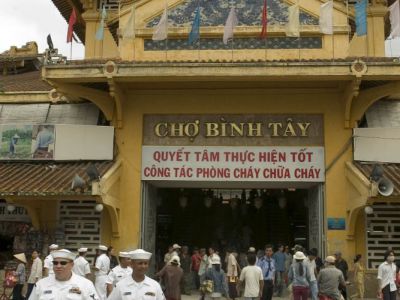
The Binh Tay Market located in the Cho Lon area of Ho Ch Minh City draws tourists looking for bargains. It is also famous because of its unique Chinese architecture. It is a large wholesale market with a green central courtyard.
The Binh Tay market was funded by a wealthy Chinese trader, Quach Dam who came from Chiu Chow in China and made his fortune in Saigon. His trade name was Thong Heip and was nicknamed handicapped Thong by the local Chinese. He came to the city as a poor man who started recycling garbage. He soon diversified and became one of the most successful businessmen in the city.
At the center of Binh Tay Market is a courtyard. A statue of its founder once stood at the center surrounded by four bronze lions. The original statue was removed and a glass altar was placed at the location between 1976 and 1980. One can find the original statue in the Museum of Fine Arts. Shops selling international branded cosmetics are located on the second floor of the market. An array of bowls pots and pans for homes and restaurants are also on sale. It is known to the locals as a wholesale market where retailers come to buy products in bulk. Tourists can find interesting souvenirs here at bargain prices.
The Binh Tay market was funded by a wealthy Chinese trader, Quach Dam who came from Chiu Chow in China and made his fortune in Saigon. His trade name was Thong Heip and was nicknamed handicapped Thong by the local Chinese. He came to the city as a poor man who started recycling garbage. He soon diversified and became one of the most successful businessmen in the city.
At the center of Binh Tay Market is a courtyard. A statue of its founder once stood at the center surrounded by four bronze lions. The original statue was removed and a glass altar was placed at the location between 1976 and 1980. One can find the original statue in the Museum of Fine Arts. Shops selling international branded cosmetics are located on the second floor of the market. An array of bowls pots and pans for homes and restaurants are also on sale. It is known to the locals as a wholesale market where retailers come to buy products in bulk. Tourists can find interesting souvenirs here at bargain prices.
14) Chinatown
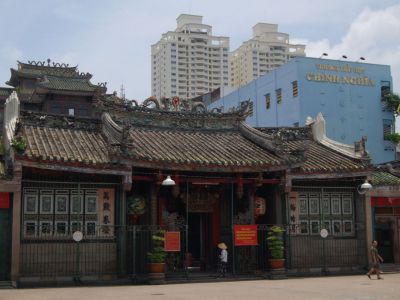
Cho Lon, commonly known as Saigon's Chinatown, boasts a rich history that spans several centuries. Its origins can be traced back to the 18th century when Chinese traders settled in the region. These early migrants introduced their vibrant culture, customs, and commercial enterprises, giving rise to a unique Chinese community within Saigon.
With the passage of time, Cho Lon flourished into a thriving commercial quarter, renowned for its lively markets, temples, and traditional Chinese architectural landmarks. It evolved into a diverse melting pot, where Chinese, Vietnamese, and various other ethnic groups coexisted, fostering a distinctive multicultural ambiance.
In the present day, Cho Lon remains a vibrant neighborhood that serves as both a thriving commercial hub and a center of cultural activity. It is celebrated for its bustling street markets, which offer a wide array of Chinese products, herbs, spices, and traditional handicrafts. The streets of Cho Lon are permeated with the enticing aromas of Chinese cuisine, beckoning visitors to savor an extensive range of flavors and culinary delights.
An intriguing facet of Cho Lon is its housing of some of the oldest and most significant Chinese temples in Ho Chi Minh City. These temples hold immense spiritual and cultural significance, drawing both worshippers and tourists to their hallowed premises.
With the passage of time, Cho Lon flourished into a thriving commercial quarter, renowned for its lively markets, temples, and traditional Chinese architectural landmarks. It evolved into a diverse melting pot, where Chinese, Vietnamese, and various other ethnic groups coexisted, fostering a distinctive multicultural ambiance.
In the present day, Cho Lon remains a vibrant neighborhood that serves as both a thriving commercial hub and a center of cultural activity. It is celebrated for its bustling street markets, which offer a wide array of Chinese products, herbs, spices, and traditional handicrafts. The streets of Cho Lon are permeated with the enticing aromas of Chinese cuisine, beckoning visitors to savor an extensive range of flavors and culinary delights.
An intriguing facet of Cho Lon is its housing of some of the oldest and most significant Chinese temples in Ho Chi Minh City. These temples hold immense spiritual and cultural significance, drawing both worshippers and tourists to their hallowed premises.
