Custom Walk in Stockholm, Sweden by jroos_9fbbbb created on 2026-02-15
Guide Location: Sweden » Stockholm
Guide Type: Custom Walk
# of Sights: 10
Tour Duration: 2 Hour(s)
Travel Distance: 2.4 Km or 1.5 Miles
Share Key: 343TG
Guide Type: Custom Walk
# of Sights: 10
Tour Duration: 2 Hour(s)
Travel Distance: 2.4 Km or 1.5 Miles
Share Key: 343TG
How It Works
Please retrieve this walk in the GPSmyCity app. Once done, the app will guide you from one tour stop to the next as if you had a personal tour guide. If you created the walk on this website or come to the page via a link, please follow the instructions below to retrieve the walk in the app.
Retrieve This Walk in App
Step 1. Download the app "GPSmyCity: Walks in 1K+ Cities" on Apple App Store or Google Play Store.



Step 2. In the GPSmyCity app, download(or launch) the guide "Stockholm Map and Walking Tours".
Step 3. Tap the menu button located at upper right corner of the "Walks" screen and select "Retrieve custom walk". Enter the share key: 343TG

1) Konsthantverkarna (The Artisans)
Sweden is renowned for its exceptional craftsmanship, particularly in ceramics, glass, wood, metal, and textiles. While some of the finest work often originates from the countryside, the Artisans (Konsthantverkarna) offers a remarkable opportunity to experience high-quality Swedish handicrafts within the city. Located just off Östermalmstorg, this establishment serves as both a gallery and a boutique, making it a prime destination for those seeking unique and beautifully crafted gifts.
The Artisans (Konsthantverkarna), founded in 1946 by pioneering architect Marianne von Münchow, is Sweden's oldest and largest center for handicrafts. Over 70 years, it has grown into Sweden’s leading contemporary crafts association, promoting crafts as a vital cultural expression despite societal changes.
Today, the association is home to a diverse group of members ranging in age from 28 to 83, with a wide variety of backgrounds and skills. The gallery at Artisans hosts around 10 exhibitions annually, showcasing the work of both Swedish and international artists, and offering a broad array of contemporary handicrafts in materials such as concrete, glass, ceramics, metal, textiles, and wood.
The Artisans shop presents a wide range of products, from practical items to exclusive and conceptual handicrafts. Whether you are searching for the perfect wedding gift, a unique piece of jewelry for a loved one, or a candlestick to brighten your home, Artisans offers a curated selection to meet your needs.
The Artisans (Konsthantverkarna), founded in 1946 by pioneering architect Marianne von Münchow, is Sweden's oldest and largest center for handicrafts. Over 70 years, it has grown into Sweden’s leading contemporary crafts association, promoting crafts as a vital cultural expression despite societal changes.
Today, the association is home to a diverse group of members ranging in age from 28 to 83, with a wide variety of backgrounds and skills. The gallery at Artisans hosts around 10 exhibitions annually, showcasing the work of both Swedish and international artists, and offering a broad array of contemporary handicrafts in materials such as concrete, glass, ceramics, metal, textiles, and wood.
The Artisans shop presents a wide range of products, from practical items to exclusive and conceptual handicrafts. Whether you are searching for the perfect wedding gift, a unique piece of jewelry for a loved one, or a candlestick to brighten your home, Artisans offers a curated selection to meet your needs.
2) Stockholm City Museum
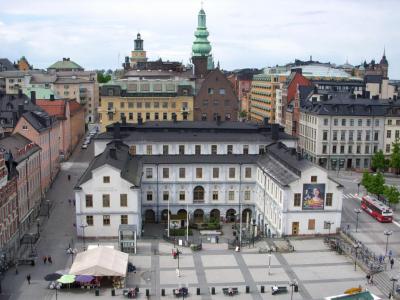
The Stockholm City Museum in Stockholm is dedicated to documenting, preserving, and exhibiting the rich history of the city. Located in the historic South City Hall (Södra Stadshuset) on Södermalm, the museum occupies a building completed in 1685. The museum itself has been housed here since the 1930s and officially opened its doors to the public in 1942. As the largest municipal museum in Sweden, it boasts an impressive collection of 300,000 historical items, 20,000 works of art, and 3 million photographs.
The museum has two main permanent exhibitions. The first, "The Stockholm Exhibition – Based on a True Story," traces Stockholm's history from its earliest days to future visions imagined by children. Opened in two parts (2010 and 2011), it covers both early and recent developments, highlighting key areas like Slussen, Östermalmstorg, Kungsträdgården, and Sergels Torg.
The second permanent exhibition, "About Houses – Architecture & Building Preservation in Stockholm," guides visitors through the evolution of architectural styles in the city, showcasing examples from the late 19th century up to the 1970s. This exhibition highlights the importance of preserving Stockholm's architectural heritage.
In addition to these permanent exhibitions, the museum frequently hosts smaller, temporary exhibitions, including photographic displays, which add variety to its offerings.
A unique feature of the museum is its model of the planet Mercury, part of the Sweden Solar System – the world's largest scale model of the solar system. This model, located in the museum's yard, is heated and kept warm, representing Mercury at a scale of 1:20,000,000. The model is 25 centimeters in diameter and situated 2.9 kilometers from the giant spherical Avicii Arena, which represents the sun.
The Stockholm City Museum also offers amenities such as a café and a shop. During the summer, the museum hosts various events, including dance evenings, making it not only a place of learning but also a lively cultural hub.
The museum has two main permanent exhibitions. The first, "The Stockholm Exhibition – Based on a True Story," traces Stockholm's history from its earliest days to future visions imagined by children. Opened in two parts (2010 and 2011), it covers both early and recent developments, highlighting key areas like Slussen, Östermalmstorg, Kungsträdgården, and Sergels Torg.
The second permanent exhibition, "About Houses – Architecture & Building Preservation in Stockholm," guides visitors through the evolution of architectural styles in the city, showcasing examples from the late 19th century up to the 1970s. This exhibition highlights the importance of preserving Stockholm's architectural heritage.
In addition to these permanent exhibitions, the museum frequently hosts smaller, temporary exhibitions, including photographic displays, which add variety to its offerings.
A unique feature of the museum is its model of the planet Mercury, part of the Sweden Solar System – the world's largest scale model of the solar system. This model, located in the museum's yard, is heated and kept warm, representing Mercury at a scale of 1:20,000,000. The model is 25 centimeters in diameter and situated 2.9 kilometers from the giant spherical Avicii Arena, which represents the sun.
The Stockholm City Museum also offers amenities such as a café and a shop. During the summer, the museum hosts various events, including dance evenings, making it not only a place of learning but also a lively cultural hub.
3) Swedish Printmakers Association
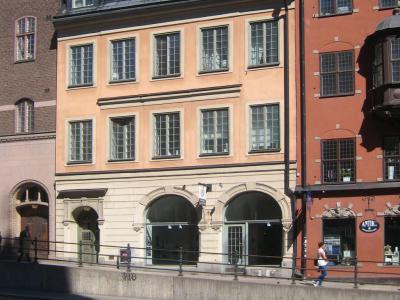
The Swedish Printmakers Association (Grafiska Sällskapet) brings under its umbrella almost 430 active printmakers from all over Sweden; their styles and techniques vary and encompass an array of means of expression. The association was founded in 1910 by a handful of artists with a firm intention, then as now, to further the interests of printmakers by arranging print exhibitions and distributing information about printmaking as an art form.
Pursuant to this agenda, today the association runs a gallery with a large collection of contemporary Swedish prints, which is regularly updated by its members. Each year, the new members are chosen by a jury carefully assessing the submitted works.
Right from the outset, the association has worked internationally, exhibiting in many countries, much as arranging foreign exhibitions at home. It functions as an information center and a meeting point for printmakers and those who like prints. The displayed works are available for sale and the staff are only keen to assist you with the choice.
Pursuant to this agenda, today the association runs a gallery with a large collection of contemporary Swedish prints, which is regularly updated by its members. Each year, the new members are chosen by a jury carefully assessing the submitted works.
Right from the outset, the association has worked internationally, exhibiting in many countries, much as arranging foreign exhibitions at home. It functions as an information center and a meeting point for printmakers and those who like prints. The displayed works are available for sale and the staff are only keen to assist you with the choice.
4) Södermalm
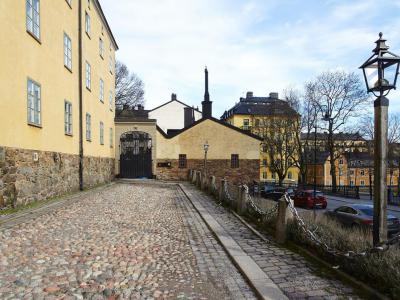
Södermalm, commonly referred to as Söder, is a vibrant and historically rich district located in the southern part of Stockholm's City Centre. It covers the island of the same name, formerly known as Åsön, which is nearly contiguous with the mainland due to its connection through a lock and man-made waterways.
This district is well-connected to the surrounding areas through several bridges. To the north, Slussen links Södermalm with Gamla stan, Stockholm's Old Town, while Västerbron connects it to Långholmen to the northwest. Other bridges, such as Liljeholmsbron, Årstabron, and Skansbron, provide access to various neighboring districts, including Liljeholmen, Årsta, and Johanneshov, respectively. Additionally, the Danvikstull Bridge connects Södermalm to Södra Hammarbyhamnen to the east.
Södermalm has a long history, first mentioned in historical records in 1288 as Suthaermalm. It remained predominantly rural until the early 17th century when urban development began. The district's initial urbanization included working-class housing, exemplified by the small red cottages that still stand in its northeastern part, and summer residences for wealthier families. In the 18th century, the humble cottages on Mariaberget's cliffs were replaced by larger buildings, many of which still exist today.
Historically viewed as a slum, Södermalm has undergone significant transformation. Today, it is recognized as a hub of bohemian culture, characterized by a lively atmosphere, creative industries, and an increasingly gentrified landscape. As a result, housing in Södermalm has become more expensive and exclusive, reflecting its status as one of Stockholm's most desirable neighborhoods.
This district is well-connected to the surrounding areas through several bridges. To the north, Slussen links Södermalm with Gamla stan, Stockholm's Old Town, while Västerbron connects it to Långholmen to the northwest. Other bridges, such as Liljeholmsbron, Årstabron, and Skansbron, provide access to various neighboring districts, including Liljeholmen, Årsta, and Johanneshov, respectively. Additionally, the Danvikstull Bridge connects Södermalm to Södra Hammarbyhamnen to the east.
Södermalm has a long history, first mentioned in historical records in 1288 as Suthaermalm. It remained predominantly rural until the early 17th century when urban development began. The district's initial urbanization included working-class housing, exemplified by the small red cottages that still stand in its northeastern part, and summer residences for wealthier families. In the 18th century, the humble cottages on Mariaberget's cliffs were replaced by larger buildings, many of which still exist today.
Historically viewed as a slum, Södermalm has undergone significant transformation. Today, it is recognized as a hub of bohemian culture, characterized by a lively atmosphere, creative industries, and an increasingly gentrified landscape. As a result, housing in Södermalm has become more expensive and exclusive, reflecting its status as one of Stockholm's most desirable neighborhoods.
5) Maria Magdalena Kyrka (Maria Magdalena Church)
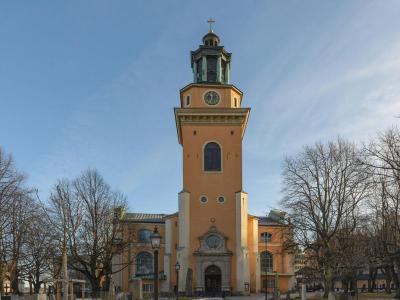
The Maria Magdalena Church (Maria Magdalena Kyrka), located in Stockholm, is a site rich in historical significance. Its origins date back to the 1350s when King Magnus Eriksson, with the approval of Pope Clement VI, established a funeral chapel dedicated to Mary Magdalene. Early depictions of this chapel show a modest structure featuring a single nave with a prominent tower topped by a sharp spire.
In the early 1520s, after Gustav Vasa liberated Stockholm, his troops, led by Peder Fredag, suffered heavy losses during an attack by Christian II of Denmark. As a result, Vasa ordered the chapel and other religious structures around Stockholm to be destroyed in 1527 following the introduction of Protestantism. The site remained unused until King John III began constructing a new church in 1588, but it wasn't completed until 1634, years after his death. The church, with a Baroque design by architects Nicodemus Tessin the Elder and Younger, was finally inaugurated in 1676.
One of the church's artistic highlights is the painting of the high altar, "The Adoration of the Shepherds at the Nativity," created by Louis Masreliez around 1800. The church also features a Baroque pulpit designed by Carl Johan Cronstedt, unveiled in 1763, which includes a medallion depicting Mary Magdalene. Additionally, the church houses three notable organs: the oldest, dating from 1774, designed by Carl Fredrik Adelcrantz; a 50-stop organ added in 1927; and a smaller choir organ installed in 1986.
Among the church's most prized possessions is the baptismal font, made of copper with inscribed capitals, dating back to 1638. Remarkably, this font has survived multiple fires and renovations. However, the church's spire, celebrated as one of the most beautiful in Stockholm, was not as fortunate. It was destroyed in a fire in 1759, which also devastated approximately 300 surrounding buildings.
Carl Johan Cronstedt was later tasked with rebuilding the church, a project he completed in 1763, carefully maintaining its original design. The church has largely preserved its historical appearance, with an interior restoration undertaken in 1927 and an exterior color enhancement in 1986. Today, the Maria Magdalena Church stands as a testament to Stockholm's rich architectural and religious history.
In the early 1520s, after Gustav Vasa liberated Stockholm, his troops, led by Peder Fredag, suffered heavy losses during an attack by Christian II of Denmark. As a result, Vasa ordered the chapel and other religious structures around Stockholm to be destroyed in 1527 following the introduction of Protestantism. The site remained unused until King John III began constructing a new church in 1588, but it wasn't completed until 1634, years after his death. The church, with a Baroque design by architects Nicodemus Tessin the Elder and Younger, was finally inaugurated in 1676.
One of the church's artistic highlights is the painting of the high altar, "The Adoration of the Shepherds at the Nativity," created by Louis Masreliez around 1800. The church also features a Baroque pulpit designed by Carl Johan Cronstedt, unveiled in 1763, which includes a medallion depicting Mary Magdalene. Additionally, the church houses three notable organs: the oldest, dating from 1774, designed by Carl Fredrik Adelcrantz; a 50-stop organ added in 1927; and a smaller choir organ installed in 1986.
Among the church's most prized possessions is the baptismal font, made of copper with inscribed capitals, dating back to 1638. Remarkably, this font has survived multiple fires and renovations. However, the church's spire, celebrated as one of the most beautiful in Stockholm, was not as fortunate. It was destroyed in a fire in 1759, which also devastated approximately 300 surrounding buildings.
Carl Johan Cronstedt was later tasked with rebuilding the church, a project he completed in 1763, carefully maintaining its original design. The church has largely preserved its historical appearance, with an interior restoration undertaken in 1927 and an exterior color enhancement in 1986. Today, the Maria Magdalena Church stands as a testament to Stockholm's rich architectural and religious history.
6) Seriegalleriet Bookstore
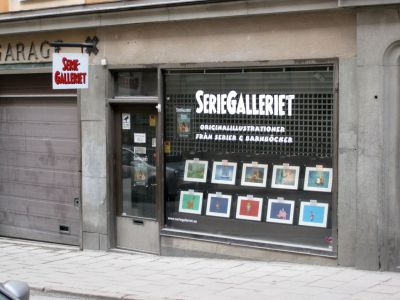
Seriegalleriet, located between Slussen and Mariatorget in the Södermalm district of Stockholm, is a unique bookstore that specializes in the artwork of comic books and animated films. Established in 2002, this gallery and store have become a cherished destination for comic book enthusiasts and art lovers alike. Seriegalleriet is renowned for its collection of original drawings and signed prints, offering a treasure trove of visual art from cartoons, picture books, and animated films.
The gallery is known for organizing regular exhibitions that showcase the work of famous cartoonists and illustrators. Artists such as Arne Anka, Rocky, Nemi, and Lotta Geffenblad have all been featured, allowing visitors to immerse themselves in the creative world of these iconic figures. In addition to exhibitions, Seriegalleriet offers a curated selection of framed pictures by popular artists, making it an ideal spot for finding unique gifts for comic book fans.
The appeal of Seriegalleriet extends beyond just collectors and comic book aficionados. Thanks to the widespread popularity of comic book culture, fueled by blockbuster Marvel and DC films and events like Comic Con, the gallery attracts a diverse audience. Whether you're a seasoned collector hunting for rare and vintage issues, or simply a curious visitor exploring the vibrant world of comics, Seriegalleriet provides a welcoming space for all.
In a city like Stockholm, which boasts a rich array of comic book stores, Seriegalleriet stands out for its focus on the artistic side of the medium. Its blend of exhibitions, collectible art, and framed pieces makes it a must-visit destination for anyone interested in the intersection of comics and visual art.
The gallery is known for organizing regular exhibitions that showcase the work of famous cartoonists and illustrators. Artists such as Arne Anka, Rocky, Nemi, and Lotta Geffenblad have all been featured, allowing visitors to immerse themselves in the creative world of these iconic figures. In addition to exhibitions, Seriegalleriet offers a curated selection of framed pictures by popular artists, making it an ideal spot for finding unique gifts for comic book fans.
The appeal of Seriegalleriet extends beyond just collectors and comic book aficionados. Thanks to the widespread popularity of comic book culture, fueled by blockbuster Marvel and DC films and events like Comic Con, the gallery attracts a diverse audience. Whether you're a seasoned collector hunting for rare and vintage issues, or simply a curious visitor exploring the vibrant world of comics, Seriegalleriet provides a welcoming space for all.
In a city like Stockholm, which boasts a rich array of comic book stores, Seriegalleriet stands out for its focus on the artistic side of the medium. Its blend of exhibitions, collectible art, and framed pieces makes it a must-visit destination for anyone interested in the intersection of comics and visual art.
7) Saint Eric's Cathedral
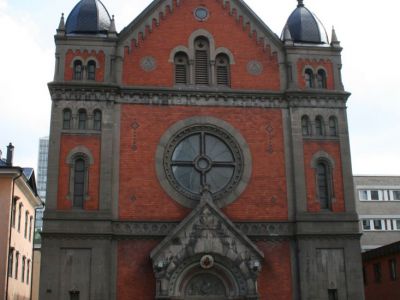
Saint Eric's Cathedral, located in the Södermalm district of Stockholm, is a prominent Catholic cathedral with a rich history and significant cultural and religious importance. Originally constructed in 1892, the cathedral stands as one of the most important 19th-century Roman Catholic churches in the city. The cathedral was elevated to its current status in 1953, coinciding with the creation of the Catholic Diocese of Stockholm, which remains the only Catholic diocese in Sweden.
The cathedral is named after Saint Eric, a 12th-century king of Sweden who was martyred and later canonized as the patron saint of both Stockholm and Sweden. His legacy is deeply intertwined with the history of the cathedral and the city, as he is depicted in the seal and coat of arms of Stockholm.
Following World War II, there was a substantial increase in the Catholic population of Stockholm, largely due to immigration. This growth necessitated the expansion of the cathedral, which was designed by architects Hans Westman and Ylva Lenormand and completed in 1983. The expansion was particularly notable as it coincided with the 200th anniversary of the re-establishment of the Catholic Church in Sweden after a long period of Lutheran dominance.
Saint Eric's Cathedral is known for its international congregation, reflecting the diverse population of Stockholm. Masses are celebrated in multiple languages, including Swedish, Latin, Italian, Croatian, Spanish, and Polish. The cathedral also offers special services, such as Latin Mass on the fourth Saturday of every month, adhering to the pre-1962 liturgical traditions. Rosary devotions are performed after Saturday Mass, and weekday masses are held in Swedish.
The cathedral is named after Saint Eric, a 12th-century king of Sweden who was martyred and later canonized as the patron saint of both Stockholm and Sweden. His legacy is deeply intertwined with the history of the cathedral and the city, as he is depicted in the seal and coat of arms of Stockholm.
Following World War II, there was a substantial increase in the Catholic population of Stockholm, largely due to immigration. This growth necessitated the expansion of the cathedral, which was designed by architects Hans Westman and Ylva Lenormand and completed in 1983. The expansion was particularly notable as it coincided with the 200th anniversary of the re-establishment of the Catholic Church in Sweden after a long period of Lutheran dominance.
Saint Eric's Cathedral is known for its international congregation, reflecting the diverse population of Stockholm. Masses are celebrated in multiple languages, including Swedish, Latin, Italian, Croatian, Spanish, and Polish. The cathedral also offers special services, such as Latin Mass on the fourth Saturday of every month, adhering to the pre-1962 liturgical traditions. Rosary devotions are performed after Saturday Mass, and weekday masses are held in Swedish.
8) Katarina Kyrka (Catherine's Church)
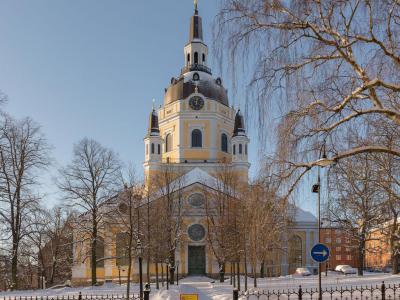
Catherine's Church (Katarina Kyrka) is one of Stockholm's most iconic churches, rich in history and architectural significance. Located on the site of the infamous Stockholm Bloodbath of 1520, the church's construction began in 1656 and was completed in 1695, though it faced numerous delays due to financial constraints during the reign of King Charles X of Sweden. The church was named in honor of his mother, Princess Catherine.
The church's architecture reflects the work of three architects over time. Originally designed by Jean de la Vallée in the 17th century, the church featured classical elements. After a fire in 1723, Göran Josua Adelcrantz, the city's architect, rebuilt the church with a larger, octagonal tower. Another fire in 1990 left only the exterior walls standing. Architect Ove Hidemark led the restoration, faithfully recreating the original 17th-century design, including a new organ by J. L. van den Heuvel Orgelbouw.
The church's cemetery is the final resting place for several notable Swedes, including Sten Sture the Elder, a prominent statesman and regent of Sweden during the late 15th and early 16th centuries; Sven Bergqvist, a famous football player; Cornelis Vreeswijk, a beloved Dutch-Swedish singer; and Anna Lindh, the Swedish Foreign Minister who was tragically assassinated in 2003.
Another notable feature of Catherine's Church is Karl XII's Stair, a double staircase leading from the cemetery to the southern entrance of the church. Constructed between 1712 and 1715, it was named after King Charles XII of Sweden and was dedicated in 1715. The stair's railing, crafted by blacksmith Benjamin Roth and later renovated by his son Carl Roth in 1776, features engraved pillars with a poem about the king.
Catherine's Church remains a symbol of resilience and continuity in Stockholm's history, reflecting both its tumultuous past and the enduring legacy of Swedish architecture.
The church's architecture reflects the work of three architects over time. Originally designed by Jean de la Vallée in the 17th century, the church featured classical elements. After a fire in 1723, Göran Josua Adelcrantz, the city's architect, rebuilt the church with a larger, octagonal tower. Another fire in 1990 left only the exterior walls standing. Architect Ove Hidemark led the restoration, faithfully recreating the original 17th-century design, including a new organ by J. L. van den Heuvel Orgelbouw.
The church's cemetery is the final resting place for several notable Swedes, including Sten Sture the Elder, a prominent statesman and regent of Sweden during the late 15th and early 16th centuries; Sven Bergqvist, a famous football player; Cornelis Vreeswijk, a beloved Dutch-Swedish singer; and Anna Lindh, the Swedish Foreign Minister who was tragically assassinated in 2003.
Another notable feature of Catherine's Church is Karl XII's Stair, a double staircase leading from the cemetery to the southern entrance of the church. Constructed between 1712 and 1715, it was named after King Charles XII of Sweden and was dedicated in 1715. The stair's railing, crafted by blacksmith Benjamin Roth and later renovated by his son Carl Roth in 1776, features engraved pillars with a poem about the king.
Catherine's Church remains a symbol of resilience and continuity in Stockholm's history, reflecting both its tumultuous past and the enduring legacy of Swedish architecture.
9) Fotografiska (Swedish Museum of Photography) (must see)
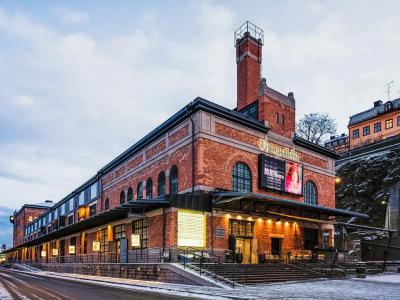
The Swedish Museum of Photography (Fotografiska) is a premier international destination for contemporary photography, showcasing works by globally renowned photographers such as Martin Schoeller, Robert Mapplethorpe, Nick Brandt, Annie Leibovitz, and David Drebin. The museum opened its doors on May 21, 2010, and is housed in a historic Art Nouveau building that once served as the Royal Customs Office at Stadgårdskai. This 1906 building, designed by Ferdinand Boberg, retains its original brick facade, although the interiors have been extensively renovated to accommodate the museum's needs.
The Swedish Museum of Photography boasts 2500 square meters of exhibition space spread over two floors, featuring an academy, bistro, cafe, bar, conference rooms, book and souvenir shop, photo gallery, and event spaces. It attracts over 500,000 visitors annually, making it one of Stockholm's key tourist attractions. The museum also offers a stunning panorama of Djurgården island and water views from its top-floor cafe.
Each year, the museum hosts four major exhibitions and about 20-25 smaller ones, highlighting both national and international photo artists. Beyond exhibitions, Fotografiska provides a rich array of educational programs, including courses, lectures, and workshops for both amateur and professional photographers. The museum also hosts concerts and artist talks, further enhancing its cultural offering.
The Swedish Museum of Photography restaurant is acclaimed for its commitment to sustainable gastronomy, focusing on seasonal, local, and organic produce. It serves lunch, dinner, and an extensive weekend brunch. The on-site bar aligns with the museum's sustainable ethos, offering organic, non-alcoholic beverages alongside alcoholic options. The cafe serves organic soups, pastries, and home-roasted coffee, and transforms into a bar in the evenings.
Tip:
The photography museum is barrier-free and accessible by wheelchairs and baby carriages. There are ramps at the entrances and lifts in the two stairwells, plus disabled toilets and changing tables on the ground floor and in the cafe on the second floor.
Dogs are not allowed in the building.
All payments at Fotografiska are made by card – no cash payments are possible.
The Swedish Museum of Photography boasts 2500 square meters of exhibition space spread over two floors, featuring an academy, bistro, cafe, bar, conference rooms, book and souvenir shop, photo gallery, and event spaces. It attracts over 500,000 visitors annually, making it one of Stockholm's key tourist attractions. The museum also offers a stunning panorama of Djurgården island and water views from its top-floor cafe.
Each year, the museum hosts four major exhibitions and about 20-25 smaller ones, highlighting both national and international photo artists. Beyond exhibitions, Fotografiska provides a rich array of educational programs, including courses, lectures, and workshops for both amateur and professional photographers. The museum also hosts concerts and artist talks, further enhancing its cultural offering.
The Swedish Museum of Photography restaurant is acclaimed for its commitment to sustainable gastronomy, focusing on seasonal, local, and organic produce. It serves lunch, dinner, and an extensive weekend brunch. The on-site bar aligns with the museum's sustainable ethos, offering organic, non-alcoholic beverages alongside alcoholic options. The cafe serves organic soups, pastries, and home-roasted coffee, and transforms into a bar in the evenings.
Tip:
The photography museum is barrier-free and accessible by wheelchairs and baby carriages. There are ramps at the entrances and lifts in the two stairwells, plus disabled toilets and changing tables on the ground floor and in the cafe on the second floor.
Dogs are not allowed in the building.
All payments at Fotografiska are made by card – no cash payments are possible.
10) Fjällgatan Terrace
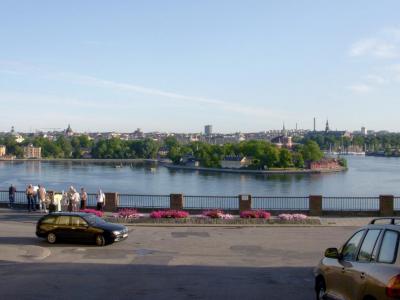
Fjällgatan Terrace in Stockholm is a beloved spot among locals, often referred to as the city's "balcony" due to its stunning panoramic views. This scenic street stretches along Stigberget Hill on Södermalm, from Renstiernas Street in the west to Erstagatan in the east. Positioned 27.8 meters above Saltsjön Bay, it offers an unobstructed vista of Stockholm's inlet, Gamla Stan, Skeppsholmen Island, and Djurgården Island, the latter being Stockholm's most visited tourist destination.
Historically significant, Fjällgatan was renamed in 1885 during a major street name revision, previously known as "Katarina Ostra Church Street" and before that, "Gallgebergets Street" due to its proximity to Södermalm's gallows on Stigberget, the execution site for much of the 16th and 17th centuries. In 1913, politician Anna Lindhagen campaigned to preserve the area south of Fjällgatan as a cultural reserve, a decision that was finally realized in 1956.
Fjällgatan is lined with well-preserved wooden houses dating back to the 1700s, marked as culturally and historically significant by the City Museum in Stockholm. Among these is Fjällgatan 37, the location of the summer cafe Fjällgatans Kafféstuga, which occupies a former dormitory built in 1872 by cereal wholesaler CH Matton. This dormitory was designed by architect Axel Kumlien, and a portion of Matton's cereal warehouse, demolished during the redevelopment of Stadsgården around the early 1900s, now forms part of the coffee house.
At Fjällgatan 34, visitors can find Stigbergets Borgarrum, a small living museum established by Anna Lindhagen. This museum showcases a mid-19th-century bourgeois household and includes two rooms that Lindhagen herself occupied in her later years. A memorial sculpture of Lindhagen has stood outside this house since 1987.
The northwestern end of the street features a cafe with a sunroom, allowing visitors to enjoy the view regardless of the weather. The combination of historical architecture, cultural significance, and breathtaking views makes Fjällgatan Terrace a cherished location for both Stockholmers and visitors alike.
Historically significant, Fjällgatan was renamed in 1885 during a major street name revision, previously known as "Katarina Ostra Church Street" and before that, "Gallgebergets Street" due to its proximity to Södermalm's gallows on Stigberget, the execution site for much of the 16th and 17th centuries. In 1913, politician Anna Lindhagen campaigned to preserve the area south of Fjällgatan as a cultural reserve, a decision that was finally realized in 1956.
Fjällgatan is lined with well-preserved wooden houses dating back to the 1700s, marked as culturally and historically significant by the City Museum in Stockholm. Among these is Fjällgatan 37, the location of the summer cafe Fjällgatans Kafféstuga, which occupies a former dormitory built in 1872 by cereal wholesaler CH Matton. This dormitory was designed by architect Axel Kumlien, and a portion of Matton's cereal warehouse, demolished during the redevelopment of Stadsgården around the early 1900s, now forms part of the coffee house.
At Fjällgatan 34, visitors can find Stigbergets Borgarrum, a small living museum established by Anna Lindhagen. This museum showcases a mid-19th-century bourgeois household and includes two rooms that Lindhagen herself occupied in her later years. A memorial sculpture of Lindhagen has stood outside this house since 1987.
The northwestern end of the street features a cafe with a sunroom, allowing visitors to enjoy the view regardless of the weather. The combination of historical architecture, cultural significance, and breathtaking views makes Fjällgatan Terrace a cherished location for both Stockholmers and visitors alike.
