Custom Walk in Toledo, Spain by cable_katie_a97b55 created on 2026-02-17
Guide Location: Spain » Toledo
Guide Type: Custom Walk
# of Sights: 12
Tour Duration: 2 Hour(s)
Travel Distance: 2.8 Km or 1.7 Miles
Share Key: JBQC9
Guide Type: Custom Walk
# of Sights: 12
Tour Duration: 2 Hour(s)
Travel Distance: 2.8 Km or 1.7 Miles
Share Key: JBQC9
How It Works
Please retrieve this walk in the GPSmyCity app. Once done, the app will guide you from one tour stop to the next as if you had a personal tour guide. If you created the walk on this website or come to the page via a link, please follow the instructions below to retrieve the walk in the app.
Retrieve This Walk in App
Step 1. Download the app "GPSmyCity: Walks in 1K+ Cities" on Apple App Store or Google Play Store.



Step 2. In the GPSmyCity app, download(or launch) the guide "Toledo Map and Walking Tours".
Step 3. Tap the menu button located at upper right corner of the "Walks" screen and select "Retrieve custom walk". Enter the share key: JBQC9
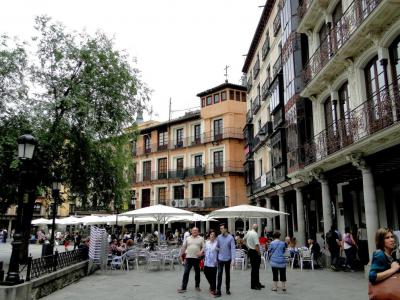
1) Plaza de Zocodover (Zocodover Square)
The name Zocodover has a curious ring to it, and for good reason. It comes from the Arabic word for “market of the beasts,” a straightforward reminder that what is today a lively plaza was once the place where horses, donkeys, and mules were traded. For medieval Toledo, this square was less a backdrop for leisurely promenades and more a utilitarian hub-part fairground, part marketplace, and, on occasion, even a bullring. The townspeople once entertained themselves here with cucañas, competitions to smash hanging clay pots, sometimes filled with sweets and, rather less delightfully, dead rats.
Commerce and spectacle were only half the story. Zocodover became Toledo’s civic stage, the space where victories were announced and grim punishments were carried out. During the Spanish Inquisition, public autos-de-fe were staged in the square, spectacles of fear designed to assert orthodoxy. Earlier, in the centuries of Muslim rule, the square thrived as a bustling bazaar filled with fabrics, spices, and voices in Arabic, Hebrew, and Latin dialects. When King Alfonso VI captured Toledo in 1085, reestablishing it as a Christian stronghold, the square did not lose its centrality; it simply changed costume, adapting to new rulers while retaining its role as the beating heart of the city.
The architecture surrounding the plaza tells this story in brick and stone. Over time, elegant arcaded buildings rose to enclose the space, offering shade for shoppers and a frame for processions. The tradition of the Tuesday market still endures, spilling into the nearby Merchants’ Promenade. Cafés and shops now inhabit the ground floors, but the sense of community gathering has not faded.
Stand amid the arcades, listen to the chatter, and imagine the swirl of animals, merchants, nobles, and pilgrims who once crowded the same cobblestones-proof that in Toledo, history prefers to be lived out loud.
Commerce and spectacle were only half the story. Zocodover became Toledo’s civic stage, the space where victories were announced and grim punishments were carried out. During the Spanish Inquisition, public autos-de-fe were staged in the square, spectacles of fear designed to assert orthodoxy. Earlier, in the centuries of Muslim rule, the square thrived as a bustling bazaar filled with fabrics, spices, and voices in Arabic, Hebrew, and Latin dialects. When King Alfonso VI captured Toledo in 1085, reestablishing it as a Christian stronghold, the square did not lose its centrality; it simply changed costume, adapting to new rulers while retaining its role as the beating heart of the city.
The architecture surrounding the plaza tells this story in brick and stone. Over time, elegant arcaded buildings rose to enclose the space, offering shade for shoppers and a frame for processions. The tradition of the Tuesday market still endures, spilling into the nearby Merchants’ Promenade. Cafés and shops now inhabit the ground floors, but the sense of community gathering has not faded.
Stand amid the arcades, listen to the chatter, and imagine the swirl of animals, merchants, nobles, and pilgrims who once crowded the same cobblestones-proof that in Toledo, history prefers to be lived out loud.
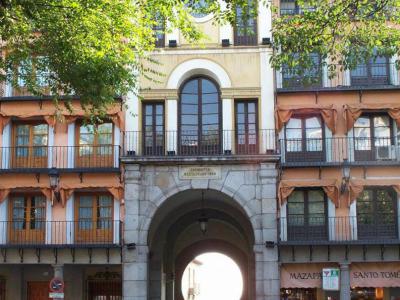
2) Arco de la Sangre (Blood Arch)
The Arco de la Sangre (Blood Arch), situated in Toledo, is an ancient horseshoe arch on the east side of Zocodover Square (Plaza de Zocodover), connecting with Cervantes Street (Calle de Cervantes). The arch dates back to Arab origin and was known as Bab-al-Yayl or "Gate of the Horses." It was a part of the inner wall of Alficen that surrounded the entire city. Despite the damage caused by the civil war, the arch survived and remained standing.
Not many visitors or residents of Toledo are aware of the small chapel hidden above the Blood Arch that contains an important Christ of the same name. During Holy Week, the chapel opens its windows, and visitors can catch a glimpse of its ancient traditions.
The Blood Arch was originally a gate that connected the Alcazaba with the Medina, and it was called the Alfada Gate (Puerta Alfadá) or the Gate of the Esplanade (Puerta de la Explanada). Its current name comes from the image of the Christ of the Blood that is kept in a small chapel above the horseshoe arch. This chapel was created during the reign of Henry IV, and it follows the Arab custom of placing an oratory over certain doors and arches to ensure a safe journey for anyone leaving the city and passing through the door.
The image of the Christ of the Blood comes from an old brotherhood founded during the times of Sancho III, and the chapel itself has a curious history. Along with the Brotherhood of the Holy Charity, it was founded after the reconquest by the Cid Campeador to assist the poor and provide spiritual and burial assistance. The Christ of the Blood brotherhood focused on spiritual aid, while the Brotherhood of Charity paid for the burial of the executed. The Clavicote, a kind of oval temple covered with a dome, was used to exhibit the corpses of the deceased in the center of Zocodover, looking for alms to facilitate their burial. During events in the square, the Clavicote was moved under the Arch of the Blood.
Not many visitors or residents of Toledo are aware of the small chapel hidden above the Blood Arch that contains an important Christ of the same name. During Holy Week, the chapel opens its windows, and visitors can catch a glimpse of its ancient traditions.
The Blood Arch was originally a gate that connected the Alcazaba with the Medina, and it was called the Alfada Gate (Puerta Alfadá) or the Gate of the Esplanade (Puerta de la Explanada). Its current name comes from the image of the Christ of the Blood that is kept in a small chapel above the horseshoe arch. This chapel was created during the reign of Henry IV, and it follows the Arab custom of placing an oratory over certain doors and arches to ensure a safe journey for anyone leaving the city and passing through the door.
The image of the Christ of the Blood comes from an old brotherhood founded during the times of Sancho III, and the chapel itself has a curious history. Along with the Brotherhood of the Holy Charity, it was founded after the reconquest by the Cid Campeador to assist the poor and provide spiritual and burial assistance. The Christ of the Blood brotherhood focused on spiritual aid, while the Brotherhood of Charity paid for the burial of the executed. The Clavicote, a kind of oval temple covered with a dome, was used to exhibit the corpses of the deceased in the center of Zocodover, looking for alms to facilitate their burial. During events in the square, the Clavicote was moved under the Arch of the Blood.
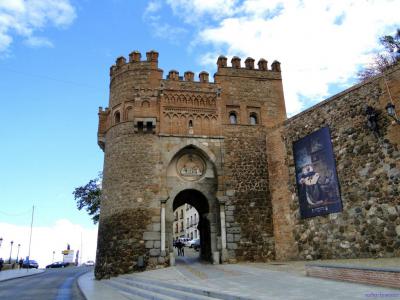
3) Puerta del Sol (Sun Gate)
The Sun Gate is one of Toledo’s most recognizable entrances, a structure that has watched centuries of travelers climb the steep slope toward the old city. Its name is thought to come either from a carved sun that once adorned its façade or from its orientation toward the rising sun in the east. The gate itself was built in the 14th century by the Knights Hospitaller, the military order founded in Jerusalem, who clearly wanted their handiwork to make a lasting impression.
Although the gate was part of Toledo’s defensive walls, it also drew on the city’s rich multicultural legacy. The design incorporates the graceful horseshoe arches of Islamic art, a style that remained influential long after Christian forces recaptured Toledo in 1085. The façade carries decorative brick patterns typical of Mudéjar architecture, while a central medallion shows Saint Ildefonso-Toledo’s patron saint-receiving his miraculous chasuble, framed by the radiant sun symbol that gave the gate its name.
For centuries, the square before the gate served as both marketplace and stage. Merchants and travelers once streamed through this entryway with caravans of goods, while heralds proclaimed royal decrees beneath its arch. It was a place where commerce, ritual, and civic life converged.
Today, the Sun Gate remains a favorite backdrop for photographs, its brick towers standing firm against the sky. Visitors who arrive here can pause to take in the view over the Tagus and imagine the countless generations who crossed this very threshold into Toledo’s historic heart.
Although the gate was part of Toledo’s defensive walls, it also drew on the city’s rich multicultural legacy. The design incorporates the graceful horseshoe arches of Islamic art, a style that remained influential long after Christian forces recaptured Toledo in 1085. The façade carries decorative brick patterns typical of Mudéjar architecture, while a central medallion shows Saint Ildefonso-Toledo’s patron saint-receiving his miraculous chasuble, framed by the radiant sun symbol that gave the gate its name.
For centuries, the square before the gate served as both marketplace and stage. Merchants and travelers once streamed through this entryway with caravans of goods, while heralds proclaimed royal decrees beneath its arch. It was a place where commerce, ritual, and civic life converged.
Today, the Sun Gate remains a favorite backdrop for photographs, its brick towers standing firm against the sky. Visitors who arrive here can pause to take in the view over the Tagus and imagine the countless generations who crossed this very threshold into Toledo’s historic heart.
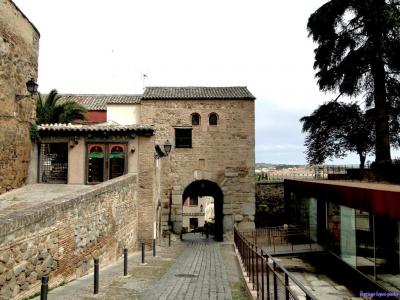
4) Puerta Bab al-Mardum (Blocked Gate)
Blocked Gate, also known as the Valmardón Gate, was built in the 10th century, making it one of the oldest gates in the city. Its Arabic name 'mardum' means 'blocked up'. This may be because the gate's function was taken over by the Sun Gate.
The gate has a rich history and is named after the nearby Mosque of Cristo de la Luz, which is also known as the Blocked Mosque. The gate and mosque are important examples of Toledo's multicultural heritage, which reflects the city's rich history and diverse cultural influences.
The Spanish name Valmardón is a rough, phonetic imitation of the original Arabic name. Despite its name, the Blocked Gate has not been blocked up and is still used as a city gate today. Visitors to Toledo can admire its beautiful architecture and imagine the many historical events that have taken place there.
The gate has a rich history and is named after the nearby Mosque of Cristo de la Luz, which is also known as the Blocked Mosque. The gate and mosque are important examples of Toledo's multicultural heritage, which reflects the city's rich history and diverse cultural influences.
The Spanish name Valmardón is a rough, phonetic imitation of the original Arabic name. Despite its name, the Blocked Gate has not been blocked up and is still used as a city gate today. Visitors to Toledo can admire its beautiful architecture and imagine the many historical events that have taken place there.

5) Ermita "Mezquita" del Cristo de la Luz (Mosque of Cristo de la Luz)
The Mosque of Cristo de la Luz may be small-barely a square of 26 feet on each side-but it carries more than a millennium of history in its brick and stone. Built in 999 CE, when Toledo was under Muslim rule, it was originally known as the Mosque of Bāb al-Mardūm, taking its name from the nearby “Blocked Gate.” Its founder, the wealthy courtier Ahmad ibn Ḥadīdī, employed an Moorish architect to design it. The latter left his name in an Arabic inscription on the façade, alongside a declaration that the patron hoped the building would secure him a place in paradise.
The design is a jewel of Mudéjar artistry shaped by Islamic tradition. Inside, four slender columns divide the space into nine bays, each crowned with a unique ribbed vault that creates a play of light and shadow. The arches are of the horseshoe type familiar from Córdoba, and one wall still preserves the mihrab, the niche indicating the direction of Mecca. In the 14th century, the original minaret was reworked into a bell tower, symbolizing the city’s shifting religious identity.
That transformation had begun centuries earlier: when King Alfonso VI of Castile retook Toledo in 1085, many mosques were converted into churches rather than destroyed. This one was dedicated to the Holy Cross, later acquiring the name “Christ of the Light” from a legend about King Alfonso’s horse kneeling to reveal a long-hidden statue of Saint Ildefonso.
Visitors are able to step into a serene hall where Mudéjar arches and Christian additions coexist. The effect is both scholarly and atmospheric, a vivid reminder of Toledo’s unique role as a meeting ground of civilizations.
The design is a jewel of Mudéjar artistry shaped by Islamic tradition. Inside, four slender columns divide the space into nine bays, each crowned with a unique ribbed vault that creates a play of light and shadow. The arches are of the horseshoe type familiar from Córdoba, and one wall still preserves the mihrab, the niche indicating the direction of Mecca. In the 14th century, the original minaret was reworked into a bell tower, symbolizing the city’s shifting religious identity.
That transformation had begun centuries earlier: when King Alfonso VI of Castile retook Toledo in 1085, many mosques were converted into churches rather than destroyed. This one was dedicated to the Holy Cross, later acquiring the name “Christ of the Light” from a legend about King Alfonso’s horse kneeling to reveal a long-hidden statue of Saint Ildefonso.
Visitors are able to step into a serene hall where Mudéjar arches and Christian additions coexist. The effect is both scholarly and atmospheric, a vivid reminder of Toledo’s unique role as a meeting ground of civilizations.
6) Convento de los Carmelitas Descalzos (Convent of the Discalced Carmelites)
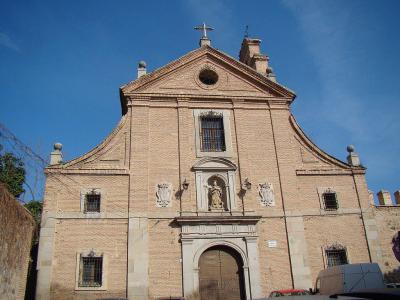
The Convent of the Discalced Carmelites in Toledo is a stunning 17th-century monastery complex that boasts of an elaborate façade and intricate azulejo decoration. The complex was built between 1643 and 1655 according to the plans of the Discalced Carmelite, Fray Pedro de San Bartolomé. The building is arranged around a patio and features a rectangular floor plan with three naves, and a wide transept with short arms. The central nave is double-width and higher than the lateral ones.
The interior of the monastery is adorned with decorative plasterwork of free design, which is typical of the 16th century in Toledo. The vaults of the central nave, choir, and transept are half-barreled, and there are frescoes portraying biblical scenes. The monastery’s spacious nave and chapels are glazed with the azulejo ceramic panels that are typical of the region. The exterior of the building is made of exposed brick with masonry rafas and cubic volumes and rectilinear profiles.
The stone doorway is of the altarpiece-body and attic type, with a niche and Tuscan pilasters as its fundamental supports. The tower rising from the central portion of the façade is composed of exposed brick and features a rose window with a cross marking the pediment. The central façade also has a religious sculpture in the center and an arched portal beneath it.
The Convento de los Carmelitas Descalzos is not just a religious building but also serves as a hostel where travelers and pilgrims can lodge, dine, and take part in prayer ceremonies. The history of the convent is extensive, and it is believed that John of the Cross took refuge here following his imprisonment. The monastery was used as a Minor Seminary in the 1830s and was handed back to the convent towards the end of the 19th century. During the Spanish Civil War, many friars were killed in the monastery.
Visitors to the Convento de los Carmelitas Descalzos can enjoy the relaxing ambiance within the church and cool down here on hot summer days. The monastery is located towards the northern end of the city center and can be reached by bus or on foot from other parts of the historic zone. Visitors can also drive and leave their car in one of the spaces in front of the church.
The interior of the monastery is adorned with decorative plasterwork of free design, which is typical of the 16th century in Toledo. The vaults of the central nave, choir, and transept are half-barreled, and there are frescoes portraying biblical scenes. The monastery’s spacious nave and chapels are glazed with the azulejo ceramic panels that are typical of the region. The exterior of the building is made of exposed brick with masonry rafas and cubic volumes and rectilinear profiles.
The stone doorway is of the altarpiece-body and attic type, with a niche and Tuscan pilasters as its fundamental supports. The tower rising from the central portion of the façade is composed of exposed brick and features a rose window with a cross marking the pediment. The central façade also has a religious sculpture in the center and an arched portal beneath it.
The Convento de los Carmelitas Descalzos is not just a religious building but also serves as a hostel where travelers and pilgrims can lodge, dine, and take part in prayer ceremonies. The history of the convent is extensive, and it is believed that John of the Cross took refuge here following his imprisonment. The monastery was used as a Minor Seminary in the 1830s and was handed back to the convent towards the end of the 19th century. During the Spanish Civil War, many friars were killed in the monastery.
Visitors to the Convento de los Carmelitas Descalzos can enjoy the relaxing ambiance within the church and cool down here on hot summer days. The monastery is located towards the northern end of the city center and can be reached by bus or on foot from other parts of the historic zone. Visitors can also drive and leave their car in one of the spaces in front of the church.
7) Monasterio de Santo Domingo el Antiguo (Monastery of Saint Dominic the Old)
The Monastery of Saint Dominic the Old may not shout for attention like Toledo’s mighty cathedral or fortress, but its story runs just as deep-stretching back over a thousand years. The site’s sacred life began in the 6th century, when the Visigoths built a church dedicated to Saint Leocadia alongside the city’s Roman walls. After the Muslim conquest of 711, that church was transformed into a mosque, a reminder of Toledo’s long role as a crossroads of faiths. When King Alfonso VI of León and Castile captured the city in 1085, he restored the building to Christian worship and reestablished it as a monastery. That act symbolized the return of Toledo to Christianity while still preserving traces of its Islamic past.
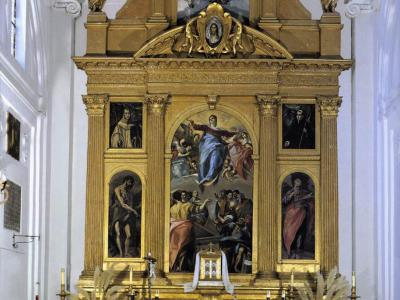
By the 14th century, the structure had fallen into disrepair, and its revival was entrusted to Gonzalo Ruiz de Toledo, Lord of Orgaz, a civic leader renowned for his piety and generosity to religious institutions. Under his patronage, the mosque’s old minaret was converted into a Mudéjar-style bell tower, with patterned brickwork and elegant arches that continue to fascinate modern admirers. Inside, the church took on a Latin-cross plan with three naves, a barrel vault, and a polygonal apse, later enriched by Gothic and Baroque chapels. The chancel was adorned with a magnificent 16th-century altar by sculptor Felipe Bigarny and paintings of the Passion and Resurrection by Francisco de Comontes.
The monastery is perhaps most famous for its connection with El Greco, the Greek-born painter who made Toledo his home. In 1577, fresh from Rome, he accepted his first major Spanish commission here. His masterpiece, The Burial of the Count of Orgaz (1586), still dominates the Chapel of the Conception, where the generous patron Gonzalo Ruiz de Toledo is depicted being laid to rest by Saints Stephen and Augustine. El Greco even painted himself and his son Jorge into the scene, creating a vivid intersection of art, faith, and local history.
For today’s visitors, a stop at the Monastery of Saint Dominic the Old offers more than a glimpse of Toledo’s artistic treasures. It invites you to wander through centuries of transformation-Visigothic, Islamic, Gothic, and Baroque-while standing in the very place where kings, saints, and artists left their mark on Spain’s story.
By the 14th century, the structure had fallen into disrepair, and its revival was entrusted to Gonzalo Ruiz de Toledo, Lord of Orgaz, a civic leader renowned for his piety and generosity to religious institutions. Under his patronage, the mosque’s old minaret was converted into a Mudéjar-style bell tower, with patterned brickwork and elegant arches that continue to fascinate modern admirers. Inside, the church took on a Latin-cross plan with three naves, a barrel vault, and a polygonal apse, later enriched by Gothic and Baroque chapels. The chancel was adorned with a magnificent 16th-century altar by sculptor Felipe Bigarny and paintings of the Passion and Resurrection by Francisco de Comontes.
The monastery is perhaps most famous for its connection with El Greco, the Greek-born painter who made Toledo his home. In 1577, fresh from Rome, he accepted his first major Spanish commission here. His masterpiece, The Burial of the Count of Orgaz (1586), still dominates the Chapel of the Conception, where the generous patron Gonzalo Ruiz de Toledo is depicted being laid to rest by Saints Stephen and Augustine. El Greco even painted himself and his son Jorge into the scene, creating a vivid intersection of art, faith, and local history.
For today’s visitors, a stop at the Monastery of Saint Dominic the Old offers more than a glimpse of Toledo’s artistic treasures. It invites you to wander through centuries of transformation-Visigothic, Islamic, Gothic, and Baroque-while standing in the very place where kings, saints, and artists left their mark on Spain’s story.
8) Monasterio de San Juan de los Reyes (Monastery of Saint John of the Monarchs) (must see)
Saint John of the Monarchs doesn’t merely occupy a corner of Toledo’s Town Hall Square-it embodies the aspirations, triumphs, and scars of a city that once served as the heartbeat of Spain. Its story is tied to one of the most famous unions in European history: the 1469 marriage of Isabella of Castile, then only eighteen, and Ferdinand of Aragon, nineteen. That political and romantic alliance set the foundations for the unification of Spain, and in gratitude for their victory over King Afonso V of Portugal at the Battle of Toro in 1476, the Catholic Monarchs commissioned a new Franciscan monastery in Toledo the following year. They intended it to serve as both a spiritual offering and their future burial place.
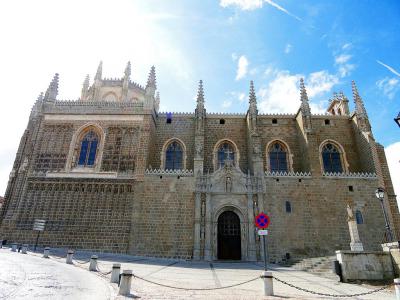
The architect chosen, Juan Guas-master of the flamboyant Isabelline Gothic style-oversaw the project between 1477 and 1504. The result was a monumental complex, a Latin-cross church with three naves, a tall nave flanked by side chapels, and a polygonal chancel. Overhead, star-shaped ribbed vaults unfold like stone lacework, while the cloisters combine Gothic verticality with ornate carvings of saints, plants, and mythical beasts. Later additions in the 16th century included a Renaissance altarpiece by Felipe Bigarny and striking paintings of the Passion and Resurrection by Francisco de Comontes, which brought warmth and color to the otherwise austere interior.
The exterior makes an equally powerful statement. The façade is framed by two elegant towers capped with spires, while heavy chains dangle along the walls-grim relics taken from Christians once held captive by the Moors, now transformed into symbols of liberation after the Reconquista.
Though Ferdinand and Isabella were ultimately buried in Granada, their intended mausoleum in Toledo still stands as a testament to their ambition and their role in shaping a united Spain. Today, visitors who step into San Juan de los Reyes can feel the blend of history and devotion in every arch and courtyard. The monastery’s survival through wars, including the damage inflicted during the Napoleonic occupation of 1808 before its careful restoration in the 20th century, has only deepened its aura.
The monastery offers a rare chance to experience Spain’s history not through books or monuments alone, but within the very walls that once echoed with the footsteps of monarchs, friars, and the faithful.
The architect chosen, Juan Guas-master of the flamboyant Isabelline Gothic style-oversaw the project between 1477 and 1504. The result was a monumental complex, a Latin-cross church with three naves, a tall nave flanked by side chapels, and a polygonal chancel. Overhead, star-shaped ribbed vaults unfold like stone lacework, while the cloisters combine Gothic verticality with ornate carvings of saints, plants, and mythical beasts. Later additions in the 16th century included a Renaissance altarpiece by Felipe Bigarny and striking paintings of the Passion and Resurrection by Francisco de Comontes, which brought warmth and color to the otherwise austere interior.
The exterior makes an equally powerful statement. The façade is framed by two elegant towers capped with spires, while heavy chains dangle along the walls-grim relics taken from Christians once held captive by the Moors, now transformed into symbols of liberation after the Reconquista.
Though Ferdinand and Isabella were ultimately buried in Granada, their intended mausoleum in Toledo still stands as a testament to their ambition and their role in shaping a united Spain. Today, visitors who step into San Juan de los Reyes can feel the blend of history and devotion in every arch and courtyard. The monastery’s survival through wars, including the damage inflicted during the Napoleonic occupation of 1808 before its careful restoration in the 20th century, has only deepened its aura.
The monastery offers a rare chance to experience Spain’s history not through books or monuments alone, but within the very walls that once echoed with the footsteps of monarchs, friars, and the faithful.
9) Juderia de Toledo (Jewish Quarter)
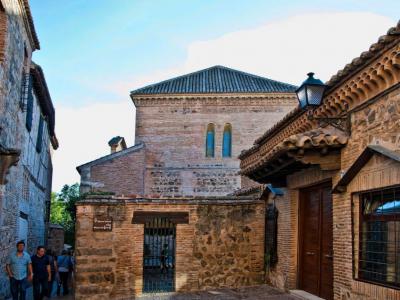
The Jewish quarter of Toledo, known as Juderia de Toledo, was the historic neighborhood where the Jewish community lived during the Middle Ages. Although they were not required to live within the quarter, it became the most populous and prosperous Jewish community of the Kingdom of Castile in the 12th and 13th centuries. For centuries, Jews coexisted relatively peacefully with Muslims and Christians in what was known as the city of the three cultures.
The Jewish quarter was home to various amenities, including markets, prayer spaces, public baths, bread ovens, palaces, and a wall. Near the Tagus River, visitors can find the Barrio del Degolladero, where beef cattle were ritually slaughtered according to Jewish tradition.
The richest Jewish families lived in the Barrio de Hamazelt, and the most famous Jew of Toledo, Samuel ha-Levi, resided in a street known today as San Juan de Dios. He served as the treasurer of King Peter of Castile and ordered the construction of the Synagogue of el Tránsito, which is now a museum. The mezuzah, a small box containing passages from Deuteronomy, was affixed to the door-post of each Jewish home to protect it, according to Jewish tradition.
Two Jewish places of worship have been preserved as museums today: Santa María la Blanca (formerly the Synagogue of Ibn Shushan) and El Tránsito. Every Friday before sunset, a rabbi sounded the shofar, a goat's horn, three times to announce the arrival of the Sabbath, a weekly holiday for the Jews, who rested while the rest of the city continued with its usual activities.
Each synagogue has an underground bath called a mikveh, where Jewish women would ritually purify themselves after menstruation and childbirth. The mikveh was also used to immerse non-kosher cooking vessels purchased by Jews before they could be used. The Jewish quarter of Toledo offers a glimpse into the rich history and culture of this community during the Middle Ages.
The Jewish quarter was home to various amenities, including markets, prayer spaces, public baths, bread ovens, palaces, and a wall. Near the Tagus River, visitors can find the Barrio del Degolladero, where beef cattle were ritually slaughtered according to Jewish tradition.
The richest Jewish families lived in the Barrio de Hamazelt, and the most famous Jew of Toledo, Samuel ha-Levi, resided in a street known today as San Juan de Dios. He served as the treasurer of King Peter of Castile and ordered the construction of the Synagogue of el Tránsito, which is now a museum. The mezuzah, a small box containing passages from Deuteronomy, was affixed to the door-post of each Jewish home to protect it, according to Jewish tradition.
Two Jewish places of worship have been preserved as museums today: Santa María la Blanca (formerly the Synagogue of Ibn Shushan) and El Tránsito. Every Friday before sunset, a rabbi sounded the shofar, a goat's horn, three times to announce the arrival of the Sabbath, a weekly holiday for the Jews, who rested while the rest of the city continued with its usual activities.
Each synagogue has an underground bath called a mikveh, where Jewish women would ritually purify themselves after menstruation and childbirth. The mikveh was also used to immerse non-kosher cooking vessels purchased by Jews before they could be used. The Jewish quarter of Toledo offers a glimpse into the rich history and culture of this community during the Middle Ages.
10) Iglesia de Santo Tome (Church of Saint Thomas) (must see)
The Church of Saint Thomas sits in the heart of Toledo and holds nearly a millennium of history within its walls. Its origins go back to the aftermath of 1085, when King Alfonso VI of León reclaimed the city from Muslim rule. Instead of demolishing the mosque that already stood on the site, he consecrated it as a Christian church-a common practice in reconquered cities, where sacred spaces were repurposed rather than destroyed. By the 14th century, however, the building had fallen into disrepair. The task of restoring and expanding it fell to Ruiz de Toledo, Lord of Orgaz and then mayor of the city. A generous patron of the Church, Ruiz de Toledo commissioned a reconstruction in which the former minaret was transformed into a graceful Mudéjar-style bell tower, its brick patterns and horseshoe arches preserving a hint of the site’s Islamic past within a Christian setting.
The architecture of the church reveals Toledo’s distinctive cultural layering. The layout follows the Latin cross, with three naves, a barrel vault, and a polygonal apse. The side chapels display ornate Baroque altarpieces, while the main chapel combines Gothic structure with Mudéjar decoration, crowned by a dome shaped like the eight-pointed Islamic Rub el Hizb star. A 16th-century baptismal font survives, and a later 19th-century chapel houses The Incredulity of Saint Thomas, a moving canvas by Vicente Portaña.
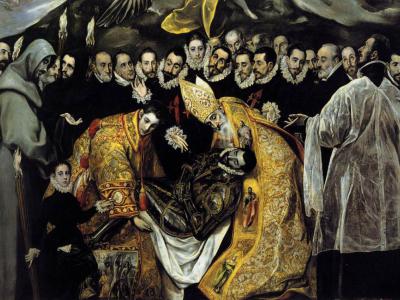
Yet what truly draws visitors from around the world is El Greco’s celebrated masterpiece, The Burial of the Count of Orgaz. Commissioned in 1586 to honor Ruiz de Toledo, the painting dramatizes the miraculous moment when Saints Stephen and Augustine descended from heaven to lay the Count in his grave. El Greco inserted his own likeness and that of his young son into the crowd of mourners, blending personal presence with historical memory in a swirl of elongated figures and luminous color. The painting remains one of the defining works of European Mannerism and a testament to Toledo’s role as the adopted home of the Cretan-born artist.
Saint Thomas offers more than a church visit. It is a vivid page from Spain’s past, where Roman, Islamic, Gothic, Renaissance, and Baroque traditions all converge. Standing within its star-vaulted nave, you glimpse the city’s shifting identities-and the extraordinary artistry that has made Toledo a cultural treasure.
The architecture of the church reveals Toledo’s distinctive cultural layering. The layout follows the Latin cross, with three naves, a barrel vault, and a polygonal apse. The side chapels display ornate Baroque altarpieces, while the main chapel combines Gothic structure with Mudéjar decoration, crowned by a dome shaped like the eight-pointed Islamic Rub el Hizb star. A 16th-century baptismal font survives, and a later 19th-century chapel houses The Incredulity of Saint Thomas, a moving canvas by Vicente Portaña.
Yet what truly draws visitors from around the world is El Greco’s celebrated masterpiece, The Burial of the Count of Orgaz. Commissioned in 1586 to honor Ruiz de Toledo, the painting dramatizes the miraculous moment when Saints Stephen and Augustine descended from heaven to lay the Count in his grave. El Greco inserted his own likeness and that of his young son into the crowd of mourners, blending personal presence with historical memory in a swirl of elongated figures and luminous color. The painting remains one of the defining works of European Mannerism and a testament to Toledo’s role as the adopted home of the Cretan-born artist.
Saint Thomas offers more than a church visit. It is a vivid page from Spain’s past, where Roman, Islamic, Gothic, Renaissance, and Baroque traditions all converge. Standing within its star-vaulted nave, you glimpse the city’s shifting identities-and the extraordinary artistry that has made Toledo a cultural treasure.
11) Iglesia de San Ildefonso (Church of San Ildefonso)
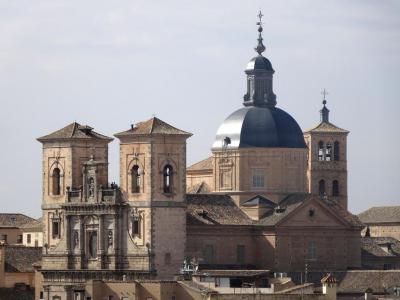
The Church of San Ildefonso, also known as the Jesuit Church, is a magnificent example of the Baroque style located in Toledo. Situated in one of the highest points in the city, it offers a breathtaking panoramic view of Toledo from its towers. The church is dedicated to Saint Ildefonso of Toledo, the patron saint of the city and Father of the Church.
The construction of the church took more than a century to complete, with work starting in 1629 on lands acquired by the Jesuits of Toledo in 1569. The location had previously hosted the houses of Juan Hurtado de Mendoza Rojas y Guzmán, count of Orgaz, and was also the birthplace of Saint Ildefonsus. The approach followed the example of the Jesuit churches of Palencia and Alcalá de Henares, as well as the Church of the Gesù in Rome.
The church's enormous dimensions and great architecture are expressed in the single nave flanked by side chapels that communicate among themselves, as well as the great dome that covers the area of the transept. The facade and reredos are in Baroque style and were designed by Francisco Bautista, who replaced Jesuit architect Pedro Sánchez after his death in 1633. Bartolomé Zumbigo, a native architect of Toledo, completed the towers and facade.
San Ildefonso was consecrated in 1718, although the sacristy, the main chapel, and the octave were incomplete at the time. The temple was finally completed in 1765 under the direction of Jose Hernandez Sierra, an architect from Salamanca. Unfortunately for the Jesuits, the church was seized just two years later, along with all other Jesuit properties in Spain, under the charge of instigating the Esquilache Riots. The Company of Jesus did not recover the church until the twentieth century.
The Church of San Ildefonso is a superb example of the Baroque style and a testament to the counter-reformation spirituality that influenced its design. Its historical and architectural significance make it a must-see destination for visitors to Toledo.
The construction of the church took more than a century to complete, with work starting in 1629 on lands acquired by the Jesuits of Toledo in 1569. The location had previously hosted the houses of Juan Hurtado de Mendoza Rojas y Guzmán, count of Orgaz, and was also the birthplace of Saint Ildefonsus. The approach followed the example of the Jesuit churches of Palencia and Alcalá de Henares, as well as the Church of the Gesù in Rome.
The church's enormous dimensions and great architecture are expressed in the single nave flanked by side chapels that communicate among themselves, as well as the great dome that covers the area of the transept. The facade and reredos are in Baroque style and were designed by Francisco Bautista, who replaced Jesuit architect Pedro Sánchez after his death in 1633. Bartolomé Zumbigo, a native architect of Toledo, completed the towers and facade.
San Ildefonso was consecrated in 1718, although the sacristy, the main chapel, and the octave were incomplete at the time. The temple was finally completed in 1765 under the direction of Jose Hernandez Sierra, an architect from Salamanca. Unfortunately for the Jesuits, the church was seized just two years later, along with all other Jesuit properties in Spain, under the charge of instigating the Esquilache Riots. The Company of Jesus did not recover the church until the twentieth century.
The Church of San Ildefonso is a superb example of the Baroque style and a testament to the counter-reformation spirituality that influenced its design. Its historical and architectural significance make it a must-see destination for visitors to Toledo.
12) Cuevas de Hercules (Cave of Hercules)
The Cave of Hercules is an ancient subterranean vaulted space located in Toledo. It is believed to date back to Roman times, possibly constructed in the second half of the 1st century, and served as a water reservoir supplied by the aqueduct bridge which brought water across the River Tagus. The cave is located under a building where the Church of San Ginés stood until 1841.
The structure was built in two construction phases and was covered with a barrel vault made of ashlar. The first half of the wall was constructed with Roman concrete and covered with opus signinum, while the second half of the northeast wall facing the street was built in the second Roman phase. A facade was added in opus quadratum of seven rows of ashlars, attached to the northeast lateral wall of the hydraulic structure of the first phase.
During the Visigothic era, it is probable that there was a Visigothic church on the property, and in the Al-Andalus period, constructions were developed, probably a mosque, in whose walls were embedded Visigothic reliefs. The property was later referred to as the church of San Ginés, and a series of changes were made, including the creation of five individual chapels at the end of the Late medieval epoch or the beginning of the Early modern age.
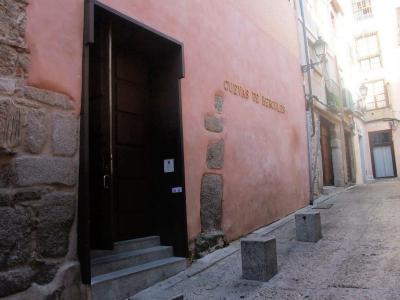
Today, the entrance to the Caves leads the visitor through a wide space with a metal and glass structure that houses the Museum of the Caves of Hercules. The museum showcases exhibitions of contemporary artists, organized by the Consorcio de Toledo. Visitors can explore the ancient subterranean space and learn about its rich history and cultural significance. The Cave of Hercules is a unique and fascinating site that offers a glimpse into the rich history of Toledo and Spain.
The structure was built in two construction phases and was covered with a barrel vault made of ashlar. The first half of the wall was constructed with Roman concrete and covered with opus signinum, while the second half of the northeast wall facing the street was built in the second Roman phase. A facade was added in opus quadratum of seven rows of ashlars, attached to the northeast lateral wall of the hydraulic structure of the first phase.
During the Visigothic era, it is probable that there was a Visigothic church on the property, and in the Al-Andalus period, constructions were developed, probably a mosque, in whose walls were embedded Visigothic reliefs. The property was later referred to as the church of San Ginés, and a series of changes were made, including the creation of five individual chapels at the end of the Late medieval epoch or the beginning of the Early modern age.
Today, the entrance to the Caves leads the visitor through a wide space with a metal and glass structure that houses the Museum of the Caves of Hercules. The museum showcases exhibitions of contemporary artists, organized by the Consorcio de Toledo. Visitors can explore the ancient subterranean space and learn about its rich history and cultural significance. The Cave of Hercules is a unique and fascinating site that offers a glimpse into the rich history of Toledo and Spain.
