Custom Walk in Seoul, South Korea by mikeyv86_6c2c2a created on 2026-02-28
Guide Location: South Korea » Seoul
Guide Type: Custom Walk
# of Sights: 5
Tour Duration: 2 Hour(s)
Travel Distance: 3 Km or 1.9 Miles
Share Key: HCXF5
Guide Type: Custom Walk
# of Sights: 5
Tour Duration: 2 Hour(s)
Travel Distance: 3 Km or 1.9 Miles
Share Key: HCXF5
How It Works
Please retrieve this walk in the GPSmyCity app. Once done, the app will guide you from one tour stop to the next as if you had a personal tour guide. If you created the walk on this website or come to the page via a link, please follow the instructions below to retrieve the walk in the app.
Retrieve This Walk in App
Step 1. Download the app "GPSmyCity: Walks in 1K+ Cities" on Apple App Store or Google Play Store.



Step 2. In the GPSmyCity app, download(or launch) the guide "Seoul Map and Walking Tours".
Step 3. Tap the menu button located at upper right corner of the "Walks" screen and select "Retrieve custom walk". Enter the share key: HCXF5
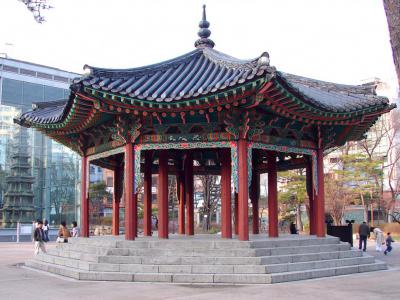
1) Tapgol Park
Tapgol Park holds the distinction of being Seoul’s first modern public park, officially established in 1897 on the site of the former Wongaksa Buddhist Temple, which had existed since the Joseon Dynasty in the 15th century. Its transformation from temple grounds into an urban garden marked a milestone in Seoul’s civic planning and public space design.
The park’s centerpiece is the stunning Wongaksa Ten‑Story Stone Pagoda, a 12-meter tall marble pagoda constructed in 1467, and designated as National Treasure No. 2 of South Korea. Visitors can also discover other historical fixtures like the Monument of Wongaksa-a 1471 tortoise‑base stele adorned with a dragon motif-and a series of bas‑relief sculptures and memorials commemorating the March 1, 1919 Independence Movement, during which the Proclamation of Independence was first read at the park’s famed Palgakjeong octagonal pavilion.
Today, Tapgol Park offers tourists a peaceful retreat-a green oasis amidst bustling Jongno. With shaded walking paths and benches, it’s a tranquil place to recharge while absorbing layers of Korean history-from the Joseon era and its Buddhist heritage to its role in the modern independence struggle.
The park’s centerpiece is the stunning Wongaksa Ten‑Story Stone Pagoda, a 12-meter tall marble pagoda constructed in 1467, and designated as National Treasure No. 2 of South Korea. Visitors can also discover other historical fixtures like the Monument of Wongaksa-a 1471 tortoise‑base stele adorned with a dragon motif-and a series of bas‑relief sculptures and memorials commemorating the March 1, 1919 Independence Movement, during which the Proclamation of Independence was first read at the park’s famed Palgakjeong octagonal pavilion.
Today, Tapgol Park offers tourists a peaceful retreat-a green oasis amidst bustling Jongno. With shaded walking paths and benches, it’s a tranquil place to recharge while absorbing layers of Korean history-from the Joseon era and its Buddhist heritage to its role in the modern independence struggle.
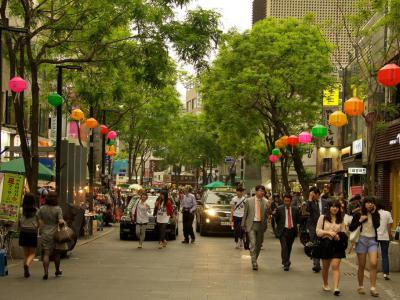
2) Insadong Shopping Street (must see)
The abundance of wooden tea houses (nearly 40), boutique galleries and street vendors offering traditional Korean snacks makes Insa-dong street in Seoul a true magnet for visitors of the Korean capital. Alongside the free entertainment the area is famous for, Insa-dong is also one of the key destinations in the city for buying traditional Korean art, products and souvenirs, such as hanbok (traditional clothing), hanji (traditional paper), traditional teas, pottery, and folk crafts.
There is a plethora of antique shops (more than 50), art galleries (80+), traditional stationery shops, handicraft shops, pottery and porcelain shops, bookstores, and art supply stores. On top of that, there are almost 100 restaurants specialized in traditional Korean cuisine. With such a variety on offer, one is really bound to be spoilt for choice here.
On Sundays the street turns pedestrian-only and is flooded with street performers, buskers and the lively crowds of young and old rushing to enjoy one of Seoul’s most exiting and creative neighborhoods. The tastefully decorated traditional teashops invite passers-by to relax in a calm zen-like atmosphere. For those interested in Korean traditional culture and crafts, Insa-dong is undoubtedly a must-see attraction which will leave imprint of Seoul in one's memory for the years to come.
There is a plethora of antique shops (more than 50), art galleries (80+), traditional stationery shops, handicraft shops, pottery and porcelain shops, bookstores, and art supply stores. On top of that, there are almost 100 restaurants specialized in traditional Korean cuisine. With such a variety on offer, one is really bound to be spoilt for choice here.
On Sundays the street turns pedestrian-only and is flooded with street performers, buskers and the lively crowds of young and old rushing to enjoy one of Seoul’s most exiting and creative neighborhoods. The tastefully decorated traditional teashops invite passers-by to relax in a calm zen-like atmosphere. For those interested in Korean traditional culture and crafts, Insa-dong is undoubtedly a must-see attraction which will leave imprint of Seoul in one's memory for the years to come.
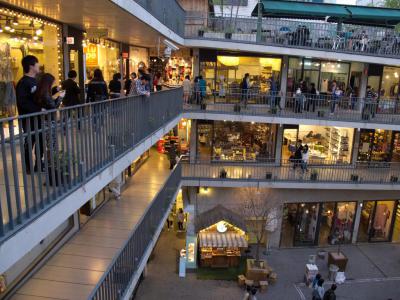
3) Ssamziegil Complex
Ssamziegil Complex is a modern shopping center that opened in 2004. There are four levels of shops centered around an open courtyard.
A 500 meter (1,640 foot) footpath begins at the first level and winds its way around the four levels until it reaches the top. This modern shopping center feels like a traditional shopping experience as visitors find quaint shops along the winding footpath.
The first floor features 12 original workshops that existed before the new shopping center was built.
The second floor has handicraft shops. On the third floor, you can find shops selling traditional Korean handicrafts. This is a great place to find a special souvenir or gift. Choose from hand painted fans, beautiful scarves, and smart neckties. For a unique souvenir, talented street artists can capture a quick, remarkable portrait or caricature.
The fourth floor has a book store, an art gallery, and SkyGarden. The views toward Insa-dong and the courtyard below are beautiful, so be sure to bring your camera.
A 500 meter (1,640 foot) footpath begins at the first level and winds its way around the four levels until it reaches the top. This modern shopping center feels like a traditional shopping experience as visitors find quaint shops along the winding footpath.
The first floor features 12 original workshops that existed before the new shopping center was built.
The second floor has handicraft shops. On the third floor, you can find shops selling traditional Korean handicrafts. This is a great place to find a special souvenir or gift. Choose from hand painted fans, beautiful scarves, and smart neckties. For a unique souvenir, talented street artists can capture a quick, remarkable portrait or caricature.
The fourth floor has a book store, an art gallery, and SkyGarden. The views toward Insa-dong and the courtyard below are beautiful, so be sure to bring your camera.
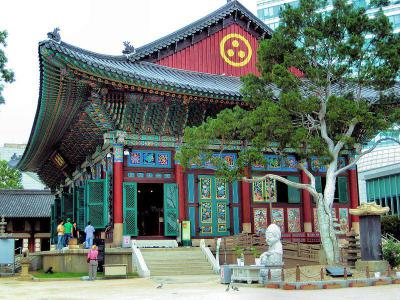
4) Jogyesa Temple
Jogyesa Temple serves as the spiritual headquarters of the Jogye Order, the main sect of Korean Buddhism. Though the temple's lineage traces back to the Joseon era, the present complex was established in 1910, originally named Gakhwangsa, and adopted the name Jogyesa in 1954 as a symbol of Korean religious independence after Japanese colonial rule. It was the first modern temple built inside Seoul’s four historic city gates.
Upon entering the temple grounds through the One-Pillar Gate, visitors are welcomed by the courtyard adorned with lotus lanterns and ancient trees, including a 500‑year-old white pine and a towering Chinese Scholar tree-both designated natural monuments for their cultural and environmental significance. The richly painted Main Buddha Hall, built in 1938, houses three magnificent golden Buddha statues and is surrounded by other notable buildings like Paradise Hall and a towering stone pagoda holding relics of Shakyamuni Buddha.
Jogyesa is not only a place of worship but also a cultural venue. Its Dharma Hall hosts year‑round lectures, rituals, and ceremonies, and the temple is a central site for the Lotus Lantern Festival each spring in celebration of Buddha’s birthday-when the grounds glow with thousands of illuminated lanterns and festive energy. For those looking to immerse more deeply, Jogyesa offers Templestay programs that include meditation, tea ceremonies, and communal meals.
Upon entering the temple grounds through the One-Pillar Gate, visitors are welcomed by the courtyard adorned with lotus lanterns and ancient trees, including a 500‑year-old white pine and a towering Chinese Scholar tree-both designated natural monuments for their cultural and environmental significance. The richly painted Main Buddha Hall, built in 1938, houses three magnificent golden Buddha statues and is surrounded by other notable buildings like Paradise Hall and a towering stone pagoda holding relics of Shakyamuni Buddha.
Jogyesa is not only a place of worship but also a cultural venue. Its Dharma Hall hosts year‑round lectures, rituals, and ceremonies, and the temple is a central site for the Lotus Lantern Festival each spring in celebration of Buddha’s birthday-when the grounds glow with thousands of illuminated lanterns and festive energy. For those looking to immerse more deeply, Jogyesa offers Templestay programs that include meditation, tea ceremonies, and communal meals.
5) Changdeokgung Palace (must see)
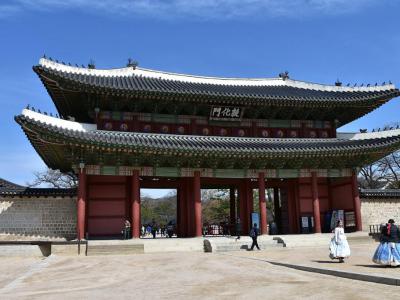
Changdeokgung Palace, also known as Prospering Virtue Palace, has a beautiful setting in one of Seoul's parks. The palace enjoys status as one of the Joseon Dynasty's Five Grand Palaces. One of the noteworthy things about this 15th-century palace is that it blends into the natural topography in a way not commonly seen in other buildings.
The Donhwamun Gate and Geumcheongyo Bridge are two of the oldest structures on the property built in the 15th century. Injeongjeon Hall served as an area for coronations, as well as the reception of envoys. Seonjeongjeon Hall was the location for daily meetings with the king and government ministers, while Juhamnu Pavilion was once the royal library.
Huijeongdang Hall, a residence for the king, and Daejojeon Hall, the queen's residence, are also noteworthy. Yeon-gyeongdang Residence is an 1827 audience hall. Huwon is a garden consisting of 78 acres in the back of the palace.
Changdeokgung Palace is a UNESCO World Heritage Site.
Why You Should Visit:
Although sometimes referred as a 'backup' palace to Gyeongbokgung, the interior is actually more complete. As such, you will be able to have a better understanding of how life in a palace is like. The "Secret Garden" is a must-see.
Tip:
Those wearing 'hanbok' can enter the palace free. You can also buy the Royal Palace Pass that gives you free entrance to 5 palaces (including the 'Secret Garden', which is a highlight of this palace visit).
The Donhwamun Gate and Geumcheongyo Bridge are two of the oldest structures on the property built in the 15th century. Injeongjeon Hall served as an area for coronations, as well as the reception of envoys. Seonjeongjeon Hall was the location for daily meetings with the king and government ministers, while Juhamnu Pavilion was once the royal library.
Huijeongdang Hall, a residence for the king, and Daejojeon Hall, the queen's residence, are also noteworthy. Yeon-gyeongdang Residence is an 1827 audience hall. Huwon is a garden consisting of 78 acres in the back of the palace.
Changdeokgung Palace is a UNESCO World Heritage Site.
Why You Should Visit:
Although sometimes referred as a 'backup' palace to Gyeongbokgung, the interior is actually more complete. As such, you will be able to have a better understanding of how life in a palace is like. The "Secret Garden" is a must-see.
Tip:
Those wearing 'hanbok' can enter the palace free. You can also buy the Royal Palace Pass that gives you free entrance to 5 palaces (including the 'Secret Garden', which is a highlight of this palace visit).
