Custom Walk in Warsaw, Poland by davor_duboka_5c9578 created on 2026-03-01
Guide Location: Poland » Warsaw
Guide Type: Custom Walk
# of Sights: 9
Tour Duration: 4 Hours
Travel Distance: 10.5 Km or 6.5 Miles
Share Key: 3ZH8H
Guide Type: Custom Walk
# of Sights: 9
Tour Duration: 4 Hours
Travel Distance: 10.5 Km or 6.5 Miles
Share Key: 3ZH8H
How It Works
Please retrieve this walk in the GPSmyCity app. Once done, the app will guide you from one tour stop to the next as if you had a personal tour guide. If you created the walk on this website or come to the page via a link, please follow the instructions below to retrieve the walk in the app.
Retrieve This Walk in App
Step 1. Download the app "GPSmyCity: Walks in 1K+ Cities" on Apple App Store or Google Play Store.



Step 2. In the GPSmyCity app, download(or launch) the guide "Warsaw Map and Walking Tours".
Step 3. Tap the menu button located at upper right corner of the "Walks" screen and select "Retrieve custom walk". Enter the share key: 3ZH8H
1) Koszyki Hall (must see)
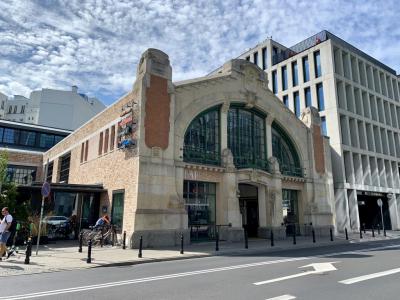
Koszyki Hall (Hala Koszyki) is a historic market and food hall situated in the southern-central part of Warsaw. It was originally established in 1909 and has since undergone redevelopment to become a multifunctional complex that houses retail spaces, offices, bookstores, upscale bars, and gourmet restaurants. This shopping arcade boasts an Art Nouveau architectural style.
The construction of Koszyki Hall took place over two years, from 1906 to 1908, and was completed in March 1909. The name of both the street and the new market can be translated as "shopping baskets." The building's exterior is adorned with sculptures and intricate carvings, featuring the mermaid, a symbol of Warsaw, as well as motifs related to animals and food. During its time, the structure was considered highly modern and equipped with all the necessary conveniences.
Unfortunately, the building suffered damage and fire during the Second World War, especially during the Warsaw Uprising. However, its steel frame prevented complete collapse, preserving the decorative architectural elements on the exterior of the side wings. The complex was subsequently restored to its original appearance in 1949 and was designated as a cultural heritage site in 1965.
In 2012, the building underwent another reconstruction, and the market hall reopened in October 2016. All of the original structural elements were incorporated into the new mixed-use building. Inside, you can find a variety of restaurants specializing in haute cuisine, bars, pubs, cafeterias, bookstores, and designer shops.
Today, Koszyki Hall is a paradise for food enthusiasts. If you have a hearty appetite, you're guaranteed to have a great time exploring the culinary delights it has to offer.
The construction of Koszyki Hall took place over two years, from 1906 to 1908, and was completed in March 1909. The name of both the street and the new market can be translated as "shopping baskets." The building's exterior is adorned with sculptures and intricate carvings, featuring the mermaid, a symbol of Warsaw, as well as motifs related to animals and food. During its time, the structure was considered highly modern and equipped with all the necessary conveniences.
Unfortunately, the building suffered damage and fire during the Second World War, especially during the Warsaw Uprising. However, its steel frame prevented complete collapse, preserving the decorative architectural elements on the exterior of the side wings. The complex was subsequently restored to its original appearance in 1949 and was designated as a cultural heritage site in 1965.
In 2012, the building underwent another reconstruction, and the market hall reopened in October 2016. All of the original structural elements were incorporated into the new mixed-use building. Inside, you can find a variety of restaurants specializing in haute cuisine, bars, pubs, cafeterias, bookstores, and designer shops.
Today, Koszyki Hall is a paradise for food enthusiasts. If you have a hearty appetite, you're guaranteed to have a great time exploring the culinary delights it has to offer.
2) Warsaw Ghetto Walls
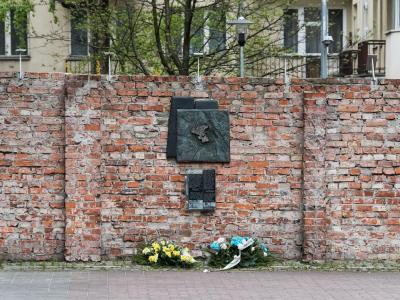
In 1940, the Nazi authorities started sealing off Warsaw’s Jewish district behind roughly 18 kilometers, or 11 miles, of brick walls. Construction began on April 1. The wall generally stood about three metres, or nearly ten feet, high, with barbed wire along the top. Guards could shoot anyone attempting to escape, and the ghetto’s boundaries were repeatedly altered over the following years.
After the Second World War, most sections of the wall that had survived both the Warsaw Ghetto Uprising and the later Warsaw Uprising were demolished. A few fragments, however, remain hidden between apartment buildings and along former property lines. These surviving sections give a clearer sense of how tightly the district was enclosed and how severely its residents were isolated.
As you explore the area, amid the preserved wall fragments, you can also seek out the Nożyk Synagogue, the only prewar synagogue in Warsaw that survived the conflict. For a fuller account of Jewish life in Poland and the history of the ghetto, visit the POLIN Museum of the History of Polish Jews.
After the Second World War, most sections of the wall that had survived both the Warsaw Ghetto Uprising and the later Warsaw Uprising were demolished. A few fragments, however, remain hidden between apartment buildings and along former property lines. These surviving sections give a clearer sense of how tightly the district was enclosed and how severely its residents were isolated.
As you explore the area, amid the preserved wall fragments, you can also seek out the Nożyk Synagogue, the only prewar synagogue in Warsaw that survived the conflict. For a fuller account of Jewish life in Poland and the history of the ghetto, visit the POLIN Museum of the History of Polish Jews.
3) Warsaw Uprising Museum (must see)
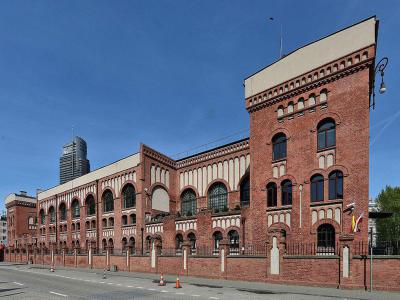
The Warsaw Uprising Museum is dedicated entirely to the Warsaw Uprising of 1944. The museum, more commonly called the Warsaw Rising Museum, was established in 1983 but wasn't opened until 2004.
The Warsaw Uprising was led by the Polish underground resistance with the purpose to liberate the city from German occupation. The uprising, which lasted 63 days, was the largest resistance movement during the war.
Opened on the 60th anniversary of the fighting, the Warsaw Uprising Museum offers a variety of exhibits that cover each district of the city. Patrons can view both a Nazi and a Communist section to see the atrocities and mistreatment that the Polish people have faced. They can view footage shot by insurgents in the Kino Palladium or watch a 3D film showing the ruins of Warsaw.
Other exhibits include replicas of the sewers and an insurgent hospital, a hangar that contains a B-24 Liberator and the children's room, which shows the uprising from the youth perspective.
The Warsaw Uprising Museum offers an observation tower that has a panoramic view of the city. The tower is 32 meters, or roughly 105 feet tall.
The Warsaw Uprising was led by the Polish underground resistance with the purpose to liberate the city from German occupation. The uprising, which lasted 63 days, was the largest resistance movement during the war.
Opened on the 60th anniversary of the fighting, the Warsaw Uprising Museum offers a variety of exhibits that cover each district of the city. Patrons can view both a Nazi and a Communist section to see the atrocities and mistreatment that the Polish people have faced. They can view footage shot by insurgents in the Kino Palladium or watch a 3D film showing the ruins of Warsaw.
Other exhibits include replicas of the sewers and an insurgent hospital, a hangar that contains a B-24 Liberator and the children's room, which shows the uprising from the youth perspective.
The Warsaw Uprising Museum offers an observation tower that has a panoramic view of the city. The tower is 32 meters, or roughly 105 feet tall.
4) Monte Cassino Monument
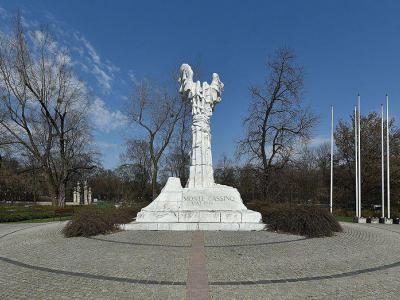
On your visit to Warsaw, take a guided tour to the must-visit Monte Cassino Monument. Dedicated to the Monte Cassino battle of 1944, this monument is located at the edge of the Karasinskis’ Park. This intense battle was fought by five Polish Units. The monument is designed by a Polish sculptor Gustaw zemla. Symbolizing the Polish Hussars and Nike, the sculpture features a pair of wings.
When allies landed successfully on September 1943 in Italy, there was an effort to map out a route to Rome from North of Naples. Liri Valley was the only possible route which was however blocked by hills around Cassino town occupied by the Germans.
Fierce battles raged between the Germans and Polish, Ghurkha, New Zealand, North African, French, US and British troops. The troops gradually gained ground and advanced towards a monastery located on top of the hill overlooking the city. Capturing the monastery would provide the necessary route to reach Rome for the Allied forces.
Heavy bombing resulted in the death of more than 25,000 lives that included Italian civilians. They were refugees living at that time in the monastery. The Polish Regiment then arrived at the completely destroyed monastery. 55 years after this event on May 18th 1999, the Monte Cassino Monument was unveiled.
When allies landed successfully on September 1943 in Italy, there was an effort to map out a route to Rome from North of Naples. Liri Valley was the only possible route which was however blocked by hills around Cassino town occupied by the Germans.
Fierce battles raged between the Germans and Polish, Ghurkha, New Zealand, North African, French, US and British troops. The troops gradually gained ground and advanced towards a monastery located on top of the hill overlooking the city. Capturing the monastery would provide the necessary route to reach Rome for the Allied forces.
Heavy bombing resulted in the death of more than 25,000 lives that included Italian civilians. They were refugees living at that time in the monastery. The Polish Regiment then arrived at the completely destroyed monastery. 55 years after this event on May 18th 1999, the Monte Cassino Monument was unveiled.
5) Warsaw Citadel
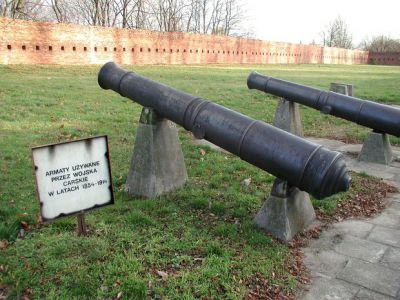
The Warsaw Citadel was built following the November Uprising of 1830, as per the orders of Tsar Nicholas I, who gained control of the city when the uprising was quelled. This fortress, which once served as a prison until the 1930s, was overseen by Major General Ivan Dehn as its chief architect, and Field Marshal Ivan Paskevich, the de facto Viceroy of Congress Poland, laid its cornerstone.
Covering an area of 36 hectares, the Warsaw Citadel is enclosed by imposing walls and takes the shape of a pentagon. It was constructed on the site of 76 demolished buildings, requiring the resettlement of more than fifteen thousand inhabitants. The construction project was completed in 1874, with a total cost of 11 million rubles, funded by the Bank of Poland and the city of Warsaw.
During times of peace, the Warsaw Citadel housed a garrison of five thousand Russian troops and boasted 555 pieces of artillery of various calibers by 1863. However, the advancement of modern rifled artillery rendered traditional fortifications obsolete by the twentieth century. In 1913, there were plans by the Tsarist authorities to demolish the fortress, but these plans were not carried out.
In 1915, when Warsaw fell under German control, many of the city's structures were destroyed, but fortunately, a significant part of the Citadel remained intact. In 1918, following Poland's regaining of independence, the Polish Army took control of the Warsaw Citadel.
Covering an area of 36 hectares, the Warsaw Citadel is enclosed by imposing walls and takes the shape of a pentagon. It was constructed on the site of 76 demolished buildings, requiring the resettlement of more than fifteen thousand inhabitants. The construction project was completed in 1874, with a total cost of 11 million rubles, funded by the Bank of Poland and the city of Warsaw.
During times of peace, the Warsaw Citadel housed a garrison of five thousand Russian troops and boasted 555 pieces of artillery of various calibers by 1863. However, the advancement of modern rifled artillery rendered traditional fortifications obsolete by the twentieth century. In 1913, there were plans by the Tsarist authorities to demolish the fortress, but these plans were not carried out.
In 1915, when Warsaw fell under German control, many of the city's structures were destroyed, but fortunately, a significant part of the Citadel remained intact. In 1918, following Poland's regaining of independence, the Polish Army took control of the Warsaw Citadel.

6) Fort Legionów
Fort Legionów, also known as Fort Wladimir, is a historic fortress located in Warsaw. Constructed between 1852 and 1854, it forms a critical part of the Warsaw Citadel's outer ring of six forts. This fort was initially built to serve two primary purposes: to defend the New Town's side and to protect the seasonal bridge over the River Vistula.
Originally, Fort Legionów featured a three-storey artillery turret design, encircled by a fortified ditch with three cofferdams and a counterscarp gallery. These structures were crucial in safeguarding the Warsaw Citadel and controlling the Vistula River.
Between 1866 and 1874, the fort underwent significant modernization. This included the addition of an “L” shaped battery emplacement between the bastion and the Vistula River, accompanied by two emergency brick shelters and a brick battery for riverbed control.
Despite the severe battles, particularly over the Polish Security Printing Works during the Warsaw Uprising, Fort Legionów remarkably survived. Post-1945, it was utilized for military purposes until 1999, when it was acquired by Agnieszka and Marcin Kreglicki, prominent Warsaw restaurateurs.
Today, Fort Legionów stands out as the only “mountainous” structure within the Warsaw Citadel, notable for its extensive underground system. The current owners have undertaken restoration efforts to bring back the fort's original appearance. Visitors can explore three underground complexes, including the underground halls on levels “0” and “-1”, rooms in the counterscarp gallery with mine-laying passageways, and a historical exhibit. Levels “-2” and “-3” house an underground armoury. In 1965, Fort Legionów was officially recognized as a monument, cementing its historical significance in Warsaw.
Originally, Fort Legionów featured a three-storey artillery turret design, encircled by a fortified ditch with three cofferdams and a counterscarp gallery. These structures were crucial in safeguarding the Warsaw Citadel and controlling the Vistula River.
Between 1866 and 1874, the fort underwent significant modernization. This included the addition of an “L” shaped battery emplacement between the bastion and the Vistula River, accompanied by two emergency brick shelters and a brick battery for riverbed control.
Despite the severe battles, particularly over the Polish Security Printing Works during the Warsaw Uprising, Fort Legionów remarkably survived. Post-1945, it was utilized for military purposes until 1999, when it was acquired by Agnieszka and Marcin Kreglicki, prominent Warsaw restaurateurs.
Today, Fort Legionów stands out as the only “mountainous” structure within the Warsaw Citadel, notable for its extensive underground system. The current owners have undertaken restoration efforts to bring back the fort's original appearance. Visitors can explore three underground complexes, including the underground halls on levels “0” and “-1”, rooms in the counterscarp gallery with mine-laying passageways, and a historical exhibit. Levels “-2” and “-3” house an underground armoury. In 1965, Fort Legionów was officially recognized as a monument, cementing its historical significance in Warsaw.
7) Barbakan warszawski (Warsaw Barbican)
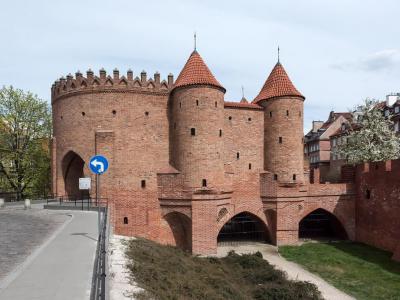
Ahead of you stands the Warsaw Barbican, one of the few surviving reminders of the walls, gates, and fortifications that once protected the city. Built in 1540, it was designed by the Italian Renaissance architect Jan Baptist the Venetian and replaced an earlier gateway on Nowomiejska Street.
As you approach, notice the Barbican’s broad semicircular shape and thick red-brick walls. It was originally built as a three-level defensive bastion, measuring some 14 meters wide and 15 meters high. Beyond the walls once lay a moat roughly 30 meters across, forming an additional barrier against attackers.
The Barbican was part of a larger effort to strengthen Warsaw’s medieval defenses, which had fallen into disrepair by the 16th century. Ironically, by the time it was finished, advances in artillery had already made this type of fortification outdated. It was used in active defense only once, during the Swedish invasion of 1656.
In later centuries, parts of the structure were dismantled to create a wider entrance into the city. By the 19th century, sections of the Barbican had even been absorbed into apartment buildings.
Like much of Warsaw, the Barbican was almost destroyed during the Second World War. The structure you see today was reconstructed in the 1950s using 17th-century drawings and historical records. As you walk through the archway, take a moment to imagine the former moat and city walls stretching out on either side.
The Barbican is now managed by the Museum of Warsaw. To explore the city’s history in greater depth, continue toward the museum’s main buildings in the Old Town Market Square.
As you approach, notice the Barbican’s broad semicircular shape and thick red-brick walls. It was originally built as a three-level defensive bastion, measuring some 14 meters wide and 15 meters high. Beyond the walls once lay a moat roughly 30 meters across, forming an additional barrier against attackers.
The Barbican was part of a larger effort to strengthen Warsaw’s medieval defenses, which had fallen into disrepair by the 16th century. Ironically, by the time it was finished, advances in artillery had already made this type of fortification outdated. It was used in active defense only once, during the Swedish invasion of 1656.
In later centuries, parts of the structure were dismantled to create a wider entrance into the city. By the 19th century, sections of the Barbican had even been absorbed into apartment buildings.
Like much of Warsaw, the Barbican was almost destroyed during the Second World War. The structure you see today was reconstructed in the 1950s using 17th-century drawings and historical records. As you walk through the archway, take a moment to imagine the former moat and city walls stretching out on either side.
The Barbican is now managed by the Museum of Warsaw. To explore the city’s history in greater depth, continue toward the museum’s main buildings in the Old Town Market Square.
8) The Mermaid
The Baltic Sea was home to two mermaids once upon a time. These half-women, half-fish sisters eventually got bored of their aquatic life. Their decision to come to the shore led the first sister to the Danish Straits. She settled at the Port of Copenhagen entrance. The other sister reached the port of Gdansk and then swam across the river Vistula right to the end. She finally rested on a sandy bank at the foot of Old Town in Warsaw.
When the fishermen here found that someone was letting their hard caught fishes go, they were furious and decided to punish the culprit. When they found that it was none other than the mermaid, they decided to let her stay. For their generosity, the villagers were entertained by the mermaid every evening with lilting songs.
When a rich merchant decided to make money showcasing here at a fair, he captured her and kept her in a wooden shed. A village lad heard her cries and set her free with the help of his friends. In gratitude, the mermaid promised to defend the village which later grew into the city of Warsaw.
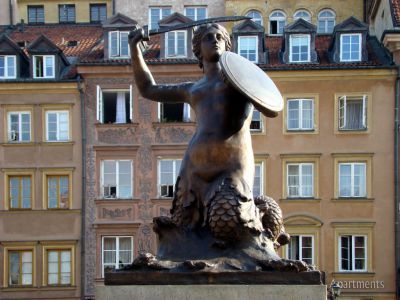
Today, the mermaid stands in defense wielding a sword and carrying a shield. She continues to protect the city of Warsaw. Enjoy a visit to the mermaid’s statue at the Old Town.
When the fishermen here found that someone was letting their hard caught fishes go, they were furious and decided to punish the culprit. When they found that it was none other than the mermaid, they decided to let her stay. For their generosity, the villagers were entertained by the mermaid every evening with lilting songs.
When a rich merchant decided to make money showcasing here at a fair, he captured her and kept her in a wooden shed. A village lad heard her cries and set her free with the help of his friends. In gratitude, the mermaid promised to defend the village which later grew into the city of Warsaw.
Today, the mermaid stands in defense wielding a sword and carrying a shield. She continues to protect the city of Warsaw. Enjoy a visit to the mermaid’s statue at the Old Town.
9) Fryderyk Chopin Museum
Chopin was a born and raised Warsawian who is perhaps the most well-known Pole internationally. His work has been performed thousands and thousands of times in different music halls and parlors around the world.
If you love music, your trip to Warsaw is certainly incomplete without a visit to this museum that showcases melodies in their very essence. History and works of the genius composer Chopin are displayed here in the form of documents and original manuscripts written by him, as well as sculptures, photographs and letters, piano competitions, or recitals of his works.
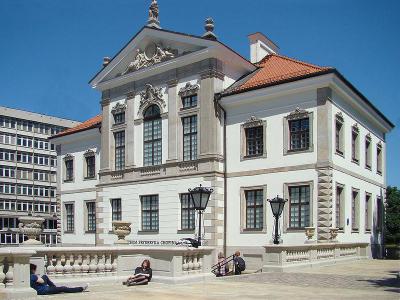
Refurbished for the 200th anniversary (2010) of Frédéric Chopin's birth, this multimedia museum is one of the most modern museums in Poland. Its collections are displayed on five levels of exhibition space in 15 rooms. As you enter the museum you will be struck by the majestic Pompeian style frescoes, stucco, and the rich ceilings. Some museums can be too bright, but this one sets a nice, tranquil mood.
Why You Should Visit:
Even if you're not interested in Chopin's life, this is definitely worth checking out for all the interactive exhibits and, of course, the listening room in the basement. The building itself is gorgeous, making a lovely setting, but not one that is too distracting.
If you love music, your trip to Warsaw is certainly incomplete without a visit to this museum that showcases melodies in their very essence. History and works of the genius composer Chopin are displayed here in the form of documents and original manuscripts written by him, as well as sculptures, photographs and letters, piano competitions, or recitals of his works.
Refurbished for the 200th anniversary (2010) of Frédéric Chopin's birth, this multimedia museum is one of the most modern museums in Poland. Its collections are displayed on five levels of exhibition space in 15 rooms. As you enter the museum you will be struck by the majestic Pompeian style frescoes, stucco, and the rich ceilings. Some museums can be too bright, but this one sets a nice, tranquil mood.
Why You Should Visit:
Even if you're not interested in Chopin's life, this is definitely worth checking out for all the interactive exhibits and, of course, the listening room in the basement. The building itself is gorgeous, making a lovely setting, but not one that is too distracting.
