Custom Walk in Inverness, Scotland by beavorshayne_f59ab5 created on 2026-03-01
Guide Location: Scotland » Inverness
Guide Type: Custom Walk
# of Sights: 13
Tour Duration: 2 Hour(s)
Travel Distance: 3.2 Km or 2 Miles
Share Key: PDDKE
Guide Type: Custom Walk
# of Sights: 13
Tour Duration: 2 Hour(s)
Travel Distance: 3.2 Km or 2 Miles
Share Key: PDDKE
How It Works
Please retrieve this walk in the GPSmyCity app. Once done, the app will guide you from one tour stop to the next as if you had a personal tour guide. If you created the walk on this website or come to the page via a link, please follow the instructions below to retrieve the walk in the app.
Retrieve This Walk in App
Step 1. Download the app "GPSmyCity: Walks in 1K+ Cities" on Apple App Store or Google Play Store.



Step 2. In the GPSmyCity app, download(or launch) the guide "Inverness Map and Walking Tours".
Step 3. Tap the menu button located at upper right corner of the "Walks" screen and select "Retrieve custom walk". Enter the share key: PDDKE
1) The Keg
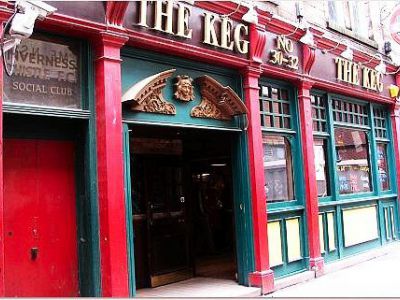
Nestled in the heart of Inverness on Baron Taylor's Street, The Keg is a quintessential locals' bar that manages to blend affordability, charm, and an unmistakably friendly atmosphere. Despite its central location, The Keg feels less like a tourist hotspot and more like a well-loved community hub, offering a warm welcome to regulars and newcomers alike.
The vibe at The Keg is unapologetically down-to-earth. As soon as you step through the door, you’re likely to hear the familiar refrain of "the usual, please," underscoring the bar’s close-knit and loyal clientele. The absence of bouncers is a testament to its unique "in-house" conflict resolution, where any playful roughhousing-or "play-fighting," as the regulars fondly call it-is part of its no-frills, self-regulated charm.
If you’re looking for a night out that won’t break the bank, The Keg is an excellent choice. With cheap drinks and food, it’s a haven for budget-conscious patrons looking to enjoy a lively evening in the city center. While it doesn’t yet offer real ale, its inclusion in the Highlands & Western Isles Branch Area’s listings reflects its standing as a key player in the local bar scene.
Music plays a central role at The Keg, with local DJs spinning a lively mix of tunes that are almost guaranteed to get you on your feet. Whether you're grooving to chart-toppers or eclectic beats, the bar's music selection caters to a wide range of tastes, ensuring an energized and dynamic atmosphere.
Whether you're a visitor seeking a slice of Inverness life or a local in search of familiar faces, The Keg delivers a night out that is anything but boring.
The vibe at The Keg is unapologetically down-to-earth. As soon as you step through the door, you’re likely to hear the familiar refrain of "the usual, please," underscoring the bar’s close-knit and loyal clientele. The absence of bouncers is a testament to its unique "in-house" conflict resolution, where any playful roughhousing-or "play-fighting," as the regulars fondly call it-is part of its no-frills, self-regulated charm.
If you’re looking for a night out that won’t break the bank, The Keg is an excellent choice. With cheap drinks and food, it’s a haven for budget-conscious patrons looking to enjoy a lively evening in the city center. While it doesn’t yet offer real ale, its inclusion in the Highlands & Western Isles Branch Area’s listings reflects its standing as a key player in the local bar scene.
Music plays a central role at The Keg, with local DJs spinning a lively mix of tunes that are almost guaranteed to get you on your feet. Whether you're grooving to chart-toppers or eclectic beats, the bar's music selection caters to a wide range of tastes, ensuring an energized and dynamic atmosphere.
Whether you're a visitor seeking a slice of Inverness life or a local in search of familiar faces, The Keg delivers a night out that is anything but boring.
2) Victorian Market
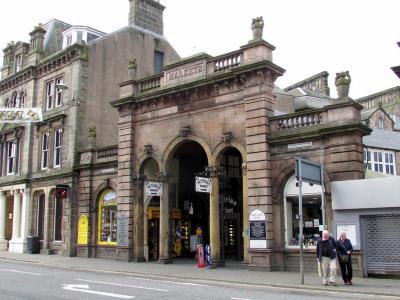
The Victorian Market, nestled in the heart of Inverness, is a charming covered market that blends history, architecture, and local enterprise. This historic market, originally constructed in 1870 and rebuilt after a fire in 1890, boasts a striking Victorian-style building with ornate features like glass, timber, and cast-iron roof, as well as round-headed shopfronts. The surviving Academy Street entrance, scarred with knife marks from fish merchants of old, adds a unique historical touch.
Within the market, three distinct areas-Market Hall, Market Arcade, and Queensgate Arcade-host over 30 independent businesses. These shops, cafés, and services, many of which have been trading for generations, offer a wide range of high-quality goods. From clothing and accessories to gifts and souvenirs, visitors can discover unique products while experiencing a warm Highland welcome. The refurbished Market Hall provides a vibrant social hub, featuring a central seating area surrounded by stalls showcasing the best of Highland food producers. It’s an ideal spot for families and groups to enjoy local delicacies.
A must-visit destination, the Victorian Market captures the essence of Inverness with its blend of history, community spirit, and modern-day shopping. Whether you're hunting for treasures, indulging in refreshments, or simply soaking up the atmosphere, this iconic market is sure to leave a lasting impression.
Within the market, three distinct areas-Market Hall, Market Arcade, and Queensgate Arcade-host over 30 independent businesses. These shops, cafés, and services, many of which have been trading for generations, offer a wide range of high-quality goods. From clothing and accessories to gifts and souvenirs, visitors can discover unique products while experiencing a warm Highland welcome. The refurbished Market Hall provides a vibrant social hub, featuring a central seating area surrounded by stalls showcasing the best of Highland food producers. It’s an ideal spot for families and groups to enjoy local delicacies.
A must-visit destination, the Victorian Market captures the essence of Inverness with its blend of history, community spirit, and modern-day shopping. Whether you're hunting for treasures, indulging in refreshments, or simply soaking up the atmosphere, this iconic market is sure to leave a lasting impression.
3) Inverness East Church
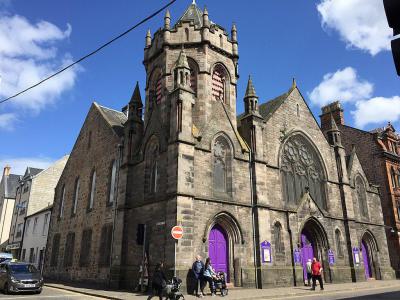
Inverness East Church, a Category B listed building, is a landmark steeped in rich history and architectural evolution. Originally opened in 1798 as a chapel of ease for the Church of Scotland, the building underwent significant transformations over the centuries. Rebuilt in 1852–1853 and enhanced with a distinctive street frontage in 1897–1898 by the architectural firm Ross & Macbeth, the structure became a symbol of resilience and community adaptability.
The church's journey reflects pivotal moments in Scottish ecclesiastical history. During the disruption of 1843, it left the Church of Scotland, becoming Inverness East Free Church. In 1900, it joined the United Presbyterian Church of Scotland to form the United Free Church of Scotland, only to return to the Church of Scotland in 1929 alongside many other United Free churches. Throughout these transitions, the church served a parish that included the city center of Inverness and the surrounding areas of Longman, Drakies, and Raigmore.
In addition to its role as a place of worship, Inverness East Church made a tangible impact through its outreach initiatives. Notably, "The Shack," a former rent office on the Raigmore estate, became a vital hub for community support. It provided a drop-in space for those in need and served as the base for various congregation-led activities, underscoring the church's commitment to social welfare.
In 2022, the Inverness Presbytery announced plans to merge the parish with Inshes Church and close East Church. After 225 years of service, the final worship service was held on March 5, 2023. Dr. A. T. B. McGowan, the church's last minister, retired in 2019, marking the end of an era.
The building's story took an exciting turn in 2024 when it was purchased by Cultarlann Inbhir Nis, a charity dedicated to promoting Gaelic culture. Plans are underway to transform the historic site into a vibrant Gaelic cultural center, ensuring that the legacy of Inverness East Church continues in a new and meaningful way.
The church's journey reflects pivotal moments in Scottish ecclesiastical history. During the disruption of 1843, it left the Church of Scotland, becoming Inverness East Free Church. In 1900, it joined the United Presbyterian Church of Scotland to form the United Free Church of Scotland, only to return to the Church of Scotland in 1929 alongside many other United Free churches. Throughout these transitions, the church served a parish that included the city center of Inverness and the surrounding areas of Longman, Drakies, and Raigmore.
In addition to its role as a place of worship, Inverness East Church made a tangible impact through its outreach initiatives. Notably, "The Shack," a former rent office on the Raigmore estate, became a vital hub for community support. It provided a drop-in space for those in need and served as the base for various congregation-led activities, underscoring the church's commitment to social welfare.
In 2022, the Inverness Presbytery announced plans to merge the parish with Inshes Church and close East Church. After 225 years of service, the final worship service was held on March 5, 2023. Dr. A. T. B. McGowan, the church's last minister, retired in 2019, marking the end of an era.
The building's story took an exciting turn in 2024 when it was purchased by Cultarlann Inbhir Nis, a charity dedicated to promoting Gaelic culture. Plans are underway to transform the historic site into a vibrant Gaelic cultural center, ensuring that the legacy of Inverness East Church continues in a new and meaningful way.
4) Free North Church
The Free North Church is a historic, Protestant church in Inverness. It rests on Bank Street at the northeast bank of the River Ness. The Free North Church is located near a number of other tourist destinations in the city. Some of these include the Grieg Street Bridge, Inverness Castle and the Egypt War Memorial.
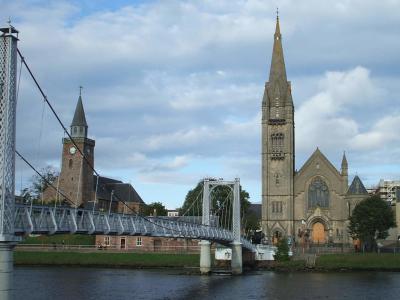
The Gothic-style church was completed in 1893 from a design by architect Alexander Ross. The grand-size of the church allows for a congregation of up to 1,300. The church offers a tower, stair-tower, gable and porch. Its octagonal spire, which reaches 170 feet, is the tallest in the city.
Visitors can explore the grounds of the Free North Church, including the historic cemetery. Those wanting to join the church during worship are welcome to be part of the congregation during the 11 AM or 5:30 PM services on Sundays.
The Gothic-style church was completed in 1893 from a design by architect Alexander Ross. The grand-size of the church allows for a congregation of up to 1,300. The church offers a tower, stair-tower, gable and porch. Its octagonal spire, which reaches 170 feet, is the tallest in the city.
Visitors can explore the grounds of the Free North Church, including the historic cemetery. Those wanting to join the church during worship are welcome to be part of the congregation during the 11 AM or 5:30 PM services on Sundays.
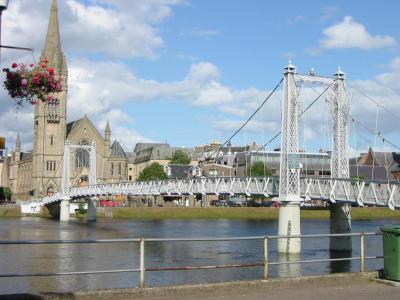
5) Greig Street Bridge (must see)
The Greig Street Bridge is a pedestrian footbridge that crosses the River Ness. The Greig Street Bridge can be reached from Bank Street on the east side of the river or Huntly Street to the West.
The suspension bridge was completed in 1881 by civil engineer C. Manners. It is made of two side spans that are 67 feet and a central span of 201 feet. The total distance of the bridge is 335 feet long.
The bridge has warren trusses with handrails that pedestrians can use as they pass over the river. Some of the most notable features of the bridge are the ornamental towers on each side. The towers use latticework to create a unique visage that makes the bridge as attractive to view from far away as up close.
Visitors should also take note of the arches beneath the towers. Though they are functional, they also form the perfect frame for a photo on the bridge with the Free North Church in the distance.
The suspension bridge was completed in 1881 by civil engineer C. Manners. It is made of two side spans that are 67 feet and a central span of 201 feet. The total distance of the bridge is 335 feet long.
The bridge has warren trusses with handrails that pedestrians can use as they pass over the river. Some of the most notable features of the bridge are the ornamental towers on each side. The towers use latticework to create a unique visage that makes the bridge as attractive to view from far away as up close.
Visitors should also take note of the arches beneath the towers. Though they are functional, they also form the perfect frame for a photo on the bridge with the Free North Church in the distance.
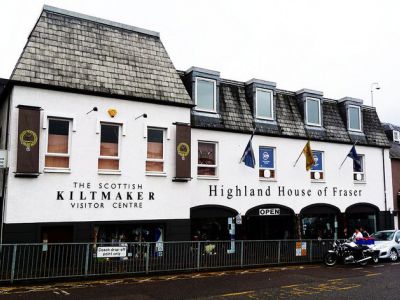
6) Highland House of Fraser
The Highland House of Fraser is a kilt shop located on Huntly Street near the banks of the River Ness. The Highland House of Fraser is a fun stop for those who are interested in the traditional garb of Scotland. It is not simply a shop but also the location of the Scottish Kiltmaker Visitor Centre.
Visitors will learn about the history and tradition of the kilt from its invention to today. They will see the kiltmaking workshop that has tartans and various costumes on display. There is also a short film that visitors can watch that has a humorous take on the history of the kilt.
Visitors to the Highland House of Fraser can speak with kiltmakers and learn about this specialized art. They can watch the making of the kilt as they learn about cutting, pleating and stitching the fabric. They will also learn the correct way to wear a kilt, which is a common question among visitors to Scotland.
Along with kilts, the Highland House of Fraser offers numerous souvenirs. Items like face masks, jewelry and ornaments are offered in the store.
Visitors will learn about the history and tradition of the kilt from its invention to today. They will see the kiltmaking workshop that has tartans and various costumes on display. There is also a short film that visitors can watch that has a humorous take on the history of the kilt.
Visitors to the Highland House of Fraser can speak with kiltmakers and learn about this specialized art. They can watch the making of the kilt as they learn about cutting, pleating and stitching the fabric. They will also learn the correct way to wear a kilt, which is a common question among visitors to Scotland.
Along with kilts, the Highland House of Fraser offers numerous souvenirs. Items like face masks, jewelry and ornaments are offered in the store.
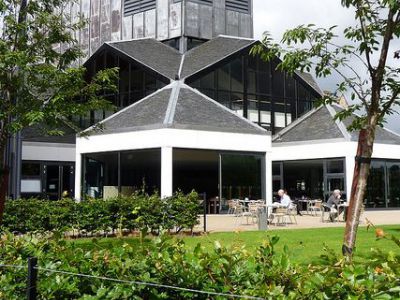
7) Eden Court Theater (must see)
Eden Court Theatre, located near the scenic banks of the River Ness in Inverness, is a cornerstone of Scotland’s cultural landscape. Originally opened on April 15, 1976, by actor Andrew Cruickshank MBE, the theatre brought a modern performance venue to the Highlands, a region that had been without a dedicated theatre since the 1930s. Built on the site of the historic Bishop’s Palace, the theatre’s architecture cleverly integrates Gothic heritage with contemporary design, a concept developed by architects Law Dunbar and Naismith.
The theatre has a rich history tied to Inverness's cultural evolution, succeeding earlier venues like the Theatre Royal and the Empire Theatre. These iconic spaces, which once hosted performances by luminaries such as Harry Lauder and The Corries, were lost to fire and demolition. The legacy of these venues lives on through the names of Eden Court’s refurbished spaces.
In 2007, Eden Court was extensively refurbished and expanded by Page\Park Architects and Robertson Construction, adding a second theatre, two cinemas, and upgraded facilities. Now Scotland's largest combined arts center, it features the 840-seat Empire Theatre, the 270-seat One Touch Theatre, and two cinemas, La Scala (125 seats) and Playhouse (78 seats).
The venue continues to honor its community ties and historical roots. For example, the One Touch Theatre's name references the local diabetes monitor produced by LifeScan, while the Jim Love Studio commemorates the late editor of the Inverness Courier. Eden Court also plays host to the annual Inverness Film Festival, showcasing Scottish premieres and international films.
With its rich history, state-of-the-art facilities, and vibrant programming, Eden Court Theatre remains a cultural hub, providing a dynamic space for art, film, and performance in the heart of the Highlands.
The theatre has a rich history tied to Inverness's cultural evolution, succeeding earlier venues like the Theatre Royal and the Empire Theatre. These iconic spaces, which once hosted performances by luminaries such as Harry Lauder and The Corries, were lost to fire and demolition. The legacy of these venues lives on through the names of Eden Court’s refurbished spaces.
In 2007, Eden Court was extensively refurbished and expanded by Page\Park Architects and Robertson Construction, adding a second theatre, two cinemas, and upgraded facilities. Now Scotland's largest combined arts center, it features the 840-seat Empire Theatre, the 270-seat One Touch Theatre, and two cinemas, La Scala (125 seats) and Playhouse (78 seats).
The venue continues to honor its community ties and historical roots. For example, the One Touch Theatre's name references the local diabetes monitor produced by LifeScan, while the Jim Love Studio commemorates the late editor of the Inverness Courier. Eden Court also plays host to the annual Inverness Film Festival, showcasing Scottish premieres and international films.
With its rich history, state-of-the-art facilities, and vibrant programming, Eden Court Theatre remains a cultural hub, providing a dynamic space for art, film, and performance in the heart of the Highlands.
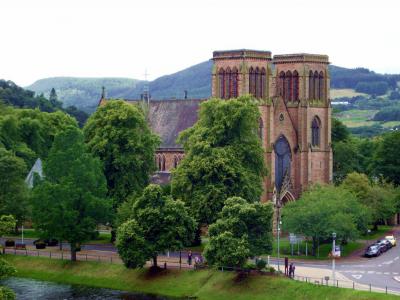
8) Inverness Cathedral (must see)
Inverness Cathedral is a Scottish Episcopal Church on the banks of the River Ness. The cathedral, also known as the Cathedral Church of Saint Andrew, is the seat of of the Bishop of Moray, Ross and Caithness. It was the first new Protestant cathedral built in Britain after the Reformation.
Inverness Cathedral was built in 1869 from a design by architect Alexander Ross. The cathedral is made from red tarradale stone and peterhead granite. The cathedral is noted for having the most northerly change-ringing church bells in the world.
The cathedral welcomes visitors throughout the year. The church doors are open from 10 AM to 4 PM daily. Likewise, the cathedral's gift shop and cafe are open every day except Christmas. A cathedral supervisor is on-hand to help with any questions.
Along with church services, Inverness Cathedral regularly hosts live music events, morning coffee and special events. Tourists are welcome to attend church services and any of the special events as they please.
Inverness Cathedral was built in 1869 from a design by architect Alexander Ross. The cathedral is made from red tarradale stone and peterhead granite. The cathedral is noted for having the most northerly change-ringing church bells in the world.
The cathedral welcomes visitors throughout the year. The church doors are open from 10 AM to 4 PM daily. Likewise, the cathedral's gift shop and cafe are open every day except Christmas. A cathedral supervisor is on-hand to help with any questions.
Along with church services, Inverness Cathedral regularly hosts live music events, morning coffee and special events. Tourists are welcome to attend church services and any of the special events as they please.
9) River Ness
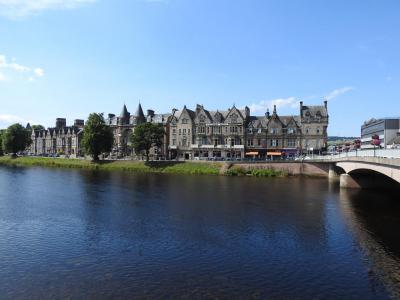
The River Ness is a picturesque short river located in the Great Glen of Scotland, originating at Loch Dochfour, which lies at the northern end of the famous Loch Ness, and flowing northeast for six miles (10 kilometers) before emptying into the Moray Firth at Inverness. The river’s course runs parallel to the Caledonian Canal for its initial stretch, offering serene views and rich historical significance.
One of the river’s highlights is the Ness Islands, a cluster of wooded islets located within the river at Inverness. These islands are connected to the shore by charming footbridges, providing visitors with a peaceful retreat amid nature.
Bridges have been central to the River Ness’s history. A 15th-century timber bridge was replaced by a stone structure in 1685, which stood until a flood destroyed it in 1849. Immortalized by J.M.W. Turner, it was succeeded by a suspension bridge and later the current concrete Ness Bridge in 1961. Notable bridges also include the Victorian-era Greig Street and Infirmary Bridges.
The River Ness is also steeped in folklore and legend. The first recorded sighting of the Loch Ness Monster is said to have occurred here in AD 565 when Saint Columba reportedly banished a "water monster" back into the river after it attacked one of his disciples. This incident is one of the earliest accounts linking the area to the enduring Loch Ness Monster legend.
Another fascinating tale involves Saint Columba’s visit to King Bridei I of Pictland, whose residence was on the River Ness. According to tradition, Columba used a miraculous white pebble from the river to heal the king’s wizard, Broichan, who had suffered a seizure. The stone, which floated on water and was believed to have healing properties, was kept in the royal treasury and became a symbol of miraculous healing.
The River Ness is a remarkable blend of natural beauty, historical significance, and legendary lore, making it a must-visit site for those exploring the Highlands and seeking to uncover Scotland’s rich heritage.
One of the river’s highlights is the Ness Islands, a cluster of wooded islets located within the river at Inverness. These islands are connected to the shore by charming footbridges, providing visitors with a peaceful retreat amid nature.
Bridges have been central to the River Ness’s history. A 15th-century timber bridge was replaced by a stone structure in 1685, which stood until a flood destroyed it in 1849. Immortalized by J.M.W. Turner, it was succeeded by a suspension bridge and later the current concrete Ness Bridge in 1961. Notable bridges also include the Victorian-era Greig Street and Infirmary Bridges.
The River Ness is also steeped in folklore and legend. The first recorded sighting of the Loch Ness Monster is said to have occurred here in AD 565 when Saint Columba reportedly banished a "water monster" back into the river after it attacked one of his disciples. This incident is one of the earliest accounts linking the area to the enduring Loch Ness Monster legend.
Another fascinating tale involves Saint Columba’s visit to King Bridei I of Pictland, whose residence was on the River Ness. According to tradition, Columba used a miraculous white pebble from the river to heal the king’s wizard, Broichan, who had suffered a seizure. The stone, which floated on water and was believed to have healing properties, was kept in the royal treasury and became a symbol of miraculous healing.
The River Ness is a remarkable blend of natural beauty, historical significance, and legendary lore, making it a must-visit site for those exploring the Highlands and seeking to uncover Scotland’s rich heritage.
10) Castle Gallery
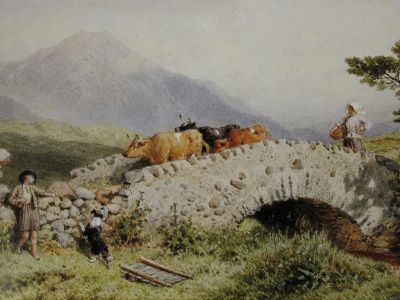
Nestled in the shadow of Inverness Castle, the Castle Gallery is a beacon of contemporary art and creativity in the Scottish Highlands. Established in 2001, the gallery has become a celebrated destination for art lovers, known for its exceptional collection of original fine and applied arts. The building itself, dating back to the early 18th century, has been meticulously restored to create a serene, two-floor space ideal for showcasing art.
The Castle Gallery is renowned for its dynamic exhibitions, hosting four solo exhibitions and three mixed exhibitions annually. These displays include fine paintings, handmade prints, glass, ceramics, sculpture, and designer jewelry. This ever-evolving collection ensures a fresh and engaging experience with every visit.
Director Denise Collins, with decades of experience in the art world, has established the gallery as a hub for emerging and established talent. She has a special passion for handmade prints, curating an extraordinary selection from some of Britain’s finest printmakers. The gallery has been described by The Independent newspaper as "one of the best reasons to visit Inverness."
More than just a gallery, the Castle Gallery is a community of artistically minded individuals. The friendly team-Denise, Juliette, Rochelle, and Belinda-are active creators themselves, offering visitors a deeper understanding of the techniques and perspectives of their showcased artists. Whether you’re looking for a special gift or a unique piece of art, the Castle Gallery’s staff are on hand to assist, including a convenient worldwide pack-and-send service.
This independent gallery, dedicated to high-quality handmade art, is truly an inspirational space that embodies the creative spirit of Scotland.
The Castle Gallery is renowned for its dynamic exhibitions, hosting four solo exhibitions and three mixed exhibitions annually. These displays include fine paintings, handmade prints, glass, ceramics, sculpture, and designer jewelry. This ever-evolving collection ensures a fresh and engaging experience with every visit.
Director Denise Collins, with decades of experience in the art world, has established the gallery as a hub for emerging and established talent. She has a special passion for handmade prints, curating an extraordinary selection from some of Britain’s finest printmakers. The gallery has been described by The Independent newspaper as "one of the best reasons to visit Inverness."
More than just a gallery, the Castle Gallery is a community of artistically minded individuals. The friendly team-Denise, Juliette, Rochelle, and Belinda-are active creators themselves, offering visitors a deeper understanding of the techniques and perspectives of their showcased artists. Whether you’re looking for a special gift or a unique piece of art, the Castle Gallery’s staff are on hand to assist, including a convenient worldwide pack-and-send service.
This independent gallery, dedicated to high-quality handmade art, is truly an inspirational space that embodies the creative spirit of Scotland.
11) Inverness Castle (must see)
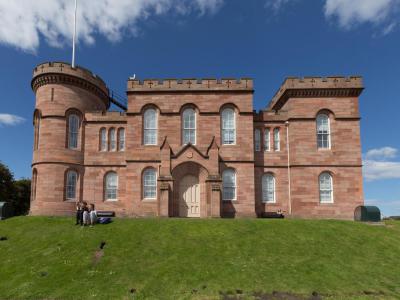
Perched on a cliff overlooking the River Ness, Inverness Castle has stood as a sentinel of Scottish history since 1057, though its current red sandstone structure dates to 1836. A Category A listed building, the castle has witnessed centuries of rebellion, royal intrigue, and architectural transformation.
The site's first castle is believed to have been constructed by Malcolm III of Scotland and later fortified by Shaw Macduff, the first chief of Clan Mackintosh, under Malcolm IV in 1163. The original fortress endured dramatic events, including partial destruction by Robert the Bruce in 1307 and the fiery retaliation by Lord Alexander, 3rd Lord of the Isles, in 1428 after being imprisoned there by James I.
The modern castle, a striking example of early castellated architecture, was designed by William Burn and completed in 1836. Featuring a symmetrical main façade and castellated towers, its southern block once housed the County Buildings and Sheriff Court. The northern block, added in 1848 by Thomas Brown II, served as a prison and courthouse. Surrounding bastioned walls were designed by Joseph Mitchell, completing the fortress-like aesthetic.
Over the centuries, the castle became a repository of military history, displaying captured field guns from battles such as the Battle of Loos and the Crimean War. Today, only the gun from Loos remains, preserved at the Clan Cameron Museum.
Inverness Castle transitioned from a seat of county governance to a judicial hub before the relocation of court functions in 2020. Closed for extensive renovations in 2021, the castle is slated to reopen in 2025, promising a renewed space for public engagement with its storied past.
The site's first castle is believed to have been constructed by Malcolm III of Scotland and later fortified by Shaw Macduff, the first chief of Clan Mackintosh, under Malcolm IV in 1163. The original fortress endured dramatic events, including partial destruction by Robert the Bruce in 1307 and the fiery retaliation by Lord Alexander, 3rd Lord of the Isles, in 1428 after being imprisoned there by James I.
The modern castle, a striking example of early castellated architecture, was designed by William Burn and completed in 1836. Featuring a symmetrical main façade and castellated towers, its southern block once housed the County Buildings and Sheriff Court. The northern block, added in 1848 by Thomas Brown II, served as a prison and courthouse. Surrounding bastioned walls were designed by Joseph Mitchell, completing the fortress-like aesthetic.
Over the centuries, the castle became a repository of military history, displaying captured field guns from battles such as the Battle of Loos and the Crimean War. Today, only the gun from Loos remains, preserved at the Clan Cameron Museum.
Inverness Castle transitioned from a seat of county governance to a judicial hub before the relocation of court functions in 2020. Closed for extensive renovations in 2021, the castle is slated to reopen in 2025, promising a renewed space for public engagement with its storied past.
12) Flora McDonald Statue
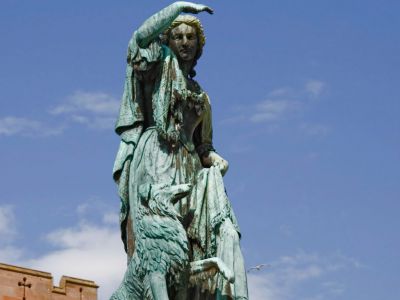
The Flora McDonald Statue is a historical landmark located near Inverness Castle. The Flora McDonald Statue is a monument to Flora McDonald who helped Prince Charles Edward Stuart evade capture by government troops after the Battle of Culloden in April 1746. She disguised the prince as her handmaiden while escaping on a boat to Skye, an island west of Inverness.
She was arrested for helping Prince Charles Edward Stuart escape and held in the Tower of London but released under a general amnesty in June 1747. She later married Allan MacDonald and the couple emigrated to North Carolina in 1773. Their support for the British government during the American War of Independence meant the loss of their American estates and they returned to Scotland, where Flora died in 1790.
The bronze statue was designed by Andrew Davidson. It was completed in 1899 and placed in front of Sheriff Court. She shields her eyes as she looks over the valley of the River Ness. A bronze, Scottish dog lies at the feet of the statue.
Along with the statue is a bronze plaque shaped like a shield. Written in both Gaelic and English, the plaque reads: "The preserver of Prince Charles Edward Stuart will be mentioned in history and if courage and fidelity be virtues, mentioned with honor."
She was arrested for helping Prince Charles Edward Stuart escape and held in the Tower of London but released under a general amnesty in June 1747. She later married Allan MacDonald and the couple emigrated to North Carolina in 1773. Their support for the British government during the American War of Independence meant the loss of their American estates and they returned to Scotland, where Flora died in 1790.
The bronze statue was designed by Andrew Davidson. It was completed in 1899 and placed in front of Sheriff Court. She shields her eyes as she looks over the valley of the River Ness. A bronze, Scottish dog lies at the feet of the statue.
Along with the statue is a bronze plaque shaped like a shield. Written in both Gaelic and English, the plaque reads: "The preserver of Prince Charles Edward Stuart will be mentioned in history and if courage and fidelity be virtues, mentioned with honor."
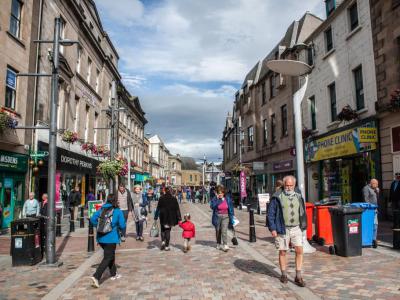
13) High Street
High Street is the main shopping street in Inverness. High Street stretches east to west from Eastgate to Broad Street. This street is open to foot-traffic in order to provide shoppers with a safe, carefree experience.
High Street is comprised mostly of local, Scottish boutiques with a few larger retailers like Top Shop, Lush and WH Smith that are located here. Smaller boutiques sell items that are perfect as souvenirs. Card shops, clothing, shoes and jewelry are just some of the items a shopper will find along High Street.
There are also a number of places to eat on High Street. Try traditional Scottish food or look for fast food chains that provide a sense of home.
There are many interesting places to visit near High Street. Some of these include the Culloden Battlefield, the Caledonian Canal, Cawdor Castle and Clava Cairns. A large mall, Eastgate Shopping Centre, is only steps away from High Street. The mall provides even more shopping and dining options.
High Street is comprised mostly of local, Scottish boutiques with a few larger retailers like Top Shop, Lush and WH Smith that are located here. Smaller boutiques sell items that are perfect as souvenirs. Card shops, clothing, shoes and jewelry are just some of the items a shopper will find along High Street.
There are also a number of places to eat on High Street. Try traditional Scottish food or look for fast food chains that provide a sense of home.
There are many interesting places to visit near High Street. Some of these include the Culloden Battlefield, the Caledonian Canal, Cawdor Castle and Clava Cairns. A large mall, Eastgate Shopping Centre, is only steps away from High Street. The mall provides even more shopping and dining options.
