Custom Walk in Trondheim, Norway by ba_hen_8bade2 created on 2026-03-07
Guide Location: Norway » Trondheim
Guide Type: Custom Walk
# of Sights: 8
Tour Duration: 3 Hour(s)
Travel Distance: 7.3 Km or 4.5 Miles
Share Key: CKF6C
Guide Type: Custom Walk
# of Sights: 8
Tour Duration: 3 Hour(s)
Travel Distance: 7.3 Km or 4.5 Miles
Share Key: CKF6C
How It Works
Please retrieve this walk in the GPSmyCity app. Once done, the app will guide you from one tour stop to the next as if you had a personal tour guide. If you created the walk on this website or come to the page via a link, please follow the instructions below to retrieve the walk in the app.
Retrieve This Walk in App
Step 1. Download the app "GPSmyCity: Walks in 1K+ Cities" on Apple App Store or Google Play Store.



Step 2. In the GPSmyCity app, download(or launch) the guide "Trondheim Map and Walking Tours".
Step 3. Tap the menu button located at upper right corner of the "Walks" screen and select "Retrieve custom walk". Enter the share key: CKF6C
1) Archbishop's Palace & Museum (must see)
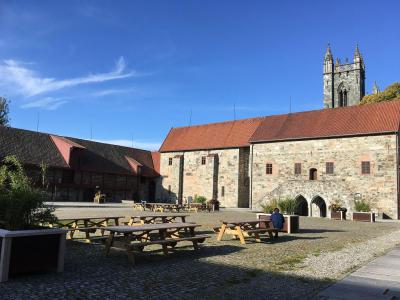
For hundreds of years the Archbishop's palace and castle in Trondheim was the medieval seat of authority for the Catholic Archbishop of Nidaros, now known as Trondheim. After Catholiscism was banned, the castle/palace became royal property. With the Sovereignty Act of 1660, it was the residence for the local bailiff.
The castle was upgraded and expanded. It was used as a residential palace and as a military facility. Today the palace houses a museum, holding archeological finds from the Bishop's Palace. Two large wooden buildings in the palace were destroyed by fire in 1983. Excavations of the buildings in the 1990s are the largest such digs in Norway.
One hundred twenty archeologists from twelve different countries recovered about 160,000 artifacts and the remains of foundations of 100 buildings. Three mints were discovered, stacked one above the other. The lowest mint was in the best condition. It apparently was used to mint coins for Archbishop Gaute Ivarsson.
In addition to exhibits from the digs, the museum holds models of the Archbishop's Palace as seen through the ages and 120 sculptures, including some from Nidaros Cathedral.
The "Armory" located in the Palace is the Army Museum in Trondheim. It is a museum of the Norwegian Army and a museum of resistance. There are weapons and armor and uniforms displayed, from Viking times, the Middle Ages and the union with Denmark and Sweden. Lastly, there are items from the Nazi occupation of Norway in World War II.
The Regalia of Norway (the Crown and crown jewels, etc.) had been stored in the west part of the Castle since 1826. They are on permanent display in the castle.
The castle was upgraded and expanded. It was used as a residential palace and as a military facility. Today the palace houses a museum, holding archeological finds from the Bishop's Palace. Two large wooden buildings in the palace were destroyed by fire in 1983. Excavations of the buildings in the 1990s are the largest such digs in Norway.
One hundred twenty archeologists from twelve different countries recovered about 160,000 artifacts and the remains of foundations of 100 buildings. Three mints were discovered, stacked one above the other. The lowest mint was in the best condition. It apparently was used to mint coins for Archbishop Gaute Ivarsson.
In addition to exhibits from the digs, the museum holds models of the Archbishop's Palace as seen through the ages and 120 sculptures, including some from Nidaros Cathedral.
The "Armory" located in the Palace is the Army Museum in Trondheim. It is a museum of the Norwegian Army and a museum of resistance. There are weapons and armor and uniforms displayed, from Viking times, the Middle Ages and the union with Denmark and Sweden. Lastly, there are items from the Nazi occupation of Norway in World War II.
The Regalia of Norway (the Crown and crown jewels, etc.) had been stored in the west part of the Castle since 1826. They are on permanent display in the castle.
2) Nidaros Cathedral (must see)
King Olav II reigned in Norway from 1015 to 1028. He is also Saint Olav, the patron saint of Norway. Nidaros Cathedral was built to be the burial site of Saint Olav. It took over 230 years before it was complete in 1300. The cathedral has also served as the coronation site of the kings of Norway.
The cathedral was named Nidaros, after the original name for Trondheim. It was Catholic until 1537, when it was swept up in the Protestant Reformation and taken over by the New Church of Norway. It is the world's northernmost medieval cathedral.
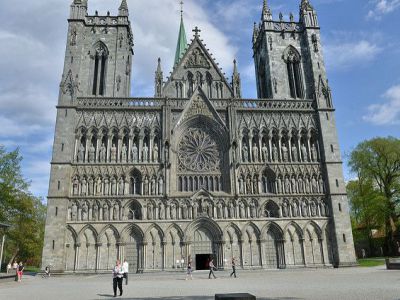
The great stone church can seat 1,850 souls. It shows Gothic and Romanesque architectural influences. In 1814 the cathedral served as a polling station in Norway's first national election.
There were fires in 1327 and again in 1531. In 1708 the cathedral was totally burned down, leaving only the stone walls. In 1719 it was struck by lightning and once more burned.
Restoration began in 1869. It was declared completed in 2001 but maintenance of the structure continues. The west facade of the cathedral is alive with carved figures and animals. Only five of the actual medieval statues have survived intact. Those not unscathed can be found in the Archbishop's Palace museum.
Saint Michael perches at the highest point of the north tower, wings spread while he sticks it to the devil in the form of a dragon. The facade is covered with masks, angels, gargoyles and as many creatures as can be imagined.
The octagon shaped choir and its ambulatory are the oldest parts of the Cathedral. The ambulatory is joined to the choir by a stone screen with three arches. The center arch frames the figure of Christ the Teacher. At the site of the medieval high altar is a silver reliquary holding an arm of Saint Olav.
A second altar is in the intersection of the transept and the nave. The altar holds a modern crucifix commissioned by Norwegian-American immigrants of the 20th century.
Each year Nidaros cathedral is the venue for Olav's Wake, the anniversary of Saint Olav's death.
The cathedral was named Nidaros, after the original name for Trondheim. It was Catholic until 1537, when it was swept up in the Protestant Reformation and taken over by the New Church of Norway. It is the world's northernmost medieval cathedral.
The great stone church can seat 1,850 souls. It shows Gothic and Romanesque architectural influences. In 1814 the cathedral served as a polling station in Norway's first national election.
There were fires in 1327 and again in 1531. In 1708 the cathedral was totally burned down, leaving only the stone walls. In 1719 it was struck by lightning and once more burned.
Restoration began in 1869. It was declared completed in 2001 but maintenance of the structure continues. The west facade of the cathedral is alive with carved figures and animals. Only five of the actual medieval statues have survived intact. Those not unscathed can be found in the Archbishop's Palace museum.
Saint Michael perches at the highest point of the north tower, wings spread while he sticks it to the devil in the form of a dragon. The facade is covered with masks, angels, gargoyles and as many creatures as can be imagined.
The octagon shaped choir and its ambulatory are the oldest parts of the Cathedral. The ambulatory is joined to the choir by a stone screen with three arches. The center arch frames the figure of Christ the Teacher. At the site of the medieval high altar is a silver reliquary holding an arm of Saint Olav.
A second altar is in the intersection of the transept and the nave. The altar holds a modern crucifix commissioned by Norwegian-American immigrants of the 20th century.
Each year Nidaros cathedral is the venue for Olav's Wake, the anniversary of Saint Olav's death.
3) Trondheim Synagogue and Jewish Museum
The Trondheim Synagogue and the Jewish Museum in Trondheim, are significant cultural and historical landmarks, highlighting the importance of preserving and sharing Jewish tradition, culture, and history in Central and Northern Norway.
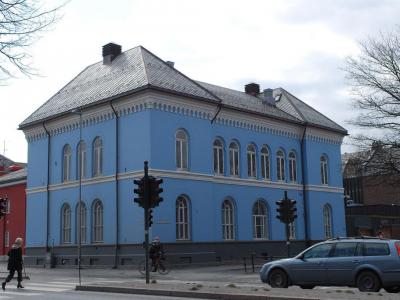
The Trondheim Synagogue, the second northernmost synagogue globally after Fairbanks, Alaska, has served the Jewish community since its opening on October 13, 1925, replacing the Saint Jørgensveita Synagogue from 1899. Opposite the Archbishop's Palace and the Nidaros Cathedral, it houses the Jewish Museum, showcasing Trondheim's Jewish history, daily life, culture, and religious practices.
The Jewish Museum Trondheim, established on May 12, 1997, during Trondheim's 1000th-anniversary celebrations, serves as a publicly supported cultural history museum. Its main focus is on documenting the Jewish experience in Central and Northern Norway, with a particular emphasis on life before, during, and after World War II. Through its exhibitions, the museum aims to educate visitors on various topics such as immigration, diversity, identity, integration, and the impacts of antisemitism and genocide, all while emphasizing the relationship between minority cultures and the majority society.
Trondheim Synagogue and the Jewish Museum in Trondheim play a vital role in preserving and sharing the rich tapestry of Jewish life and history in Norway. Through their exhibitions, educational programs, and collaborations, they contribute significantly to fostering understanding and appreciation of Jewish heritage in the region, enriching the cultural diversity and historical awareness of Trondheim and beyond.
The Trondheim Synagogue, the second northernmost synagogue globally after Fairbanks, Alaska, has served the Jewish community since its opening on October 13, 1925, replacing the Saint Jørgensveita Synagogue from 1899. Opposite the Archbishop's Palace and the Nidaros Cathedral, it houses the Jewish Museum, showcasing Trondheim's Jewish history, daily life, culture, and religious practices.
The Jewish Museum Trondheim, established on May 12, 1997, during Trondheim's 1000th-anniversary celebrations, serves as a publicly supported cultural history museum. Its main focus is on documenting the Jewish experience in Central and Northern Norway, with a particular emphasis on life before, during, and after World War II. Through its exhibitions, the museum aims to educate visitors on various topics such as immigration, diversity, identity, integration, and the impacts of antisemitism and genocide, all while emphasizing the relationship between minority cultures and the majority society.
Trondheim Synagogue and the Jewish Museum in Trondheim play a vital role in preserving and sharing the rich tapestry of Jewish life and history in Norway. Through their exhibitions, educational programs, and collaborations, they contribute significantly to fostering understanding and appreciation of Jewish heritage in the region, enriching the cultural diversity and historical awareness of Trondheim and beyond.
4) Sverresborg Trondelag Folk Museum (must see)
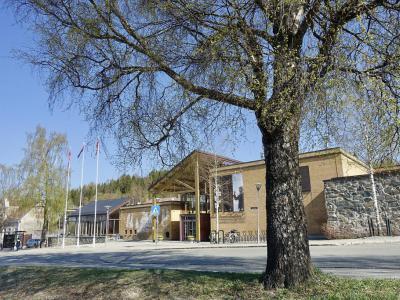
The Sverresborg Trøndelag Folk Museum, situated in the picturesque city of Trondheim, stands as a significant tribute to the cultural heritage of the Trøndelag region. Established in 1909 by a group of enthusiastic citizens of Trondheim, the museum aims to preserve the city's unique and historic buildings. Over the years, it has become the third largest cultural history museum in Norway, reflecting its founders' mission of safeguarding the area's architectural and historical legacy.
Located strategically near the ruins of King Sverre's Castle, the museum covers an impressive area of more than 70 acres, housing over 80 historical buildings. These structures, meticulously preserved, represent the distinctive building techniques of the Trøndelag region. Notable among them is the stave church from Haltdalen, dating back to 1170 A.D., offering visitors a glimpse into the region's distant past.
Beyond its architectural treasures, the museum boasts a collection of over 300,000 artifacts, offering insights into the daily lives, work, and thoughts of people throughout history. These artifacts, ranging from everyday items to extraordinary pieces, serve as windows into past societies' beliefs, opinions, and lifestyles. Approximately 5,000 of these artifacts are on display at any given time, enriching the museum's rural department and various permanent and seasonal exhibitions.
The museum's commitment to showcasing human experiences across time allows visitors to embark on a journey through history. It emphasizes the importance of cultural preservation and the role of ordinary objects in understanding our collective past. More than just a repository of buildings and artifacts, the Sverresborg Trøndelag Folk Museum serves as a dynamic hub of cultural heritage and education, inviting all to explore and appreciate the diverse tapestry of Trøndelag's history.
Located strategically near the ruins of King Sverre's Castle, the museum covers an impressive area of more than 70 acres, housing over 80 historical buildings. These structures, meticulously preserved, represent the distinctive building techniques of the Trøndelag region. Notable among them is the stave church from Haltdalen, dating back to 1170 A.D., offering visitors a glimpse into the region's distant past.
Beyond its architectural treasures, the museum boasts a collection of over 300,000 artifacts, offering insights into the daily lives, work, and thoughts of people throughout history. These artifacts, ranging from everyday items to extraordinary pieces, serve as windows into past societies' beliefs, opinions, and lifestyles. Approximately 5,000 of these artifacts are on display at any given time, enriching the museum's rural department and various permanent and seasonal exhibitions.
The museum's commitment to showcasing human experiences across time allows visitors to embark on a journey through history. It emphasizes the importance of cultural preservation and the role of ordinary objects in understanding our collective past. More than just a repository of buildings and artifacts, the Sverresborg Trøndelag Folk Museum serves as a dynamic hub of cultural heritage and education, inviting all to explore and appreciate the diverse tapestry of Trøndelag's history.
5) Thomas Angells Gate
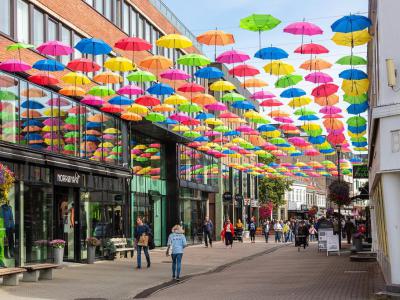
Thomas Angells Gate, located in the heart of Trondheim, holds significant cultural and architectural value. Named after Thomas Angell, a prominent merchant and philanthropist from the 17th century, the street boasts a picturesque scene, with buildings painted in various colors and representing different architectural styles spanning many centuries. This mix of designs reflects Trondheim's rich history and adds to the street's charm. People, both locals and tourists, are attracted to its cobblestone paths, lined with charming shops, cafes, and restaurants, creating a lively and welcoming atmosphere.
In addition to its visual and historical appeal, Thomas Angells Gate is known for offering a unique shopping experience. Situated away from the main Nordre Gate Street, it provides a diverse range of retail options, from specialty boutiques to stores offering distinctive items. This aspect of exploration makes it a favored destination for those seeking special gifts or unique finds.
As visitors stroll along Thomas Angells Gate, they can appreciate the intricate craftsmanship of the buildings' facades, which feature ornate details and traditional wooden elements, honoring Norway's architectural heritage and enhancing the street's beauty. Thomas Angells Gate embodies Trondheim's rich past and dynamic present, blending historical significance, architectural beauty, and distinctive shopping opportunities.
In addition to its visual and historical appeal, Thomas Angells Gate is known for offering a unique shopping experience. Situated away from the main Nordre Gate Street, it provides a diverse range of retail options, from specialty boutiques to stores offering distinctive items. This aspect of exploration makes it a favored destination for those seeking special gifts or unique finds.
As visitors stroll along Thomas Angells Gate, they can appreciate the intricate craftsmanship of the buildings' facades, which feature ornate details and traditional wooden elements, honoring Norway's architectural heritage and enhancing the street's beauty. Thomas Angells Gate embodies Trondheim's rich past and dynamic present, blending historical significance, architectural beauty, and distinctive shopping opportunities.
6) Nordre Gate Street
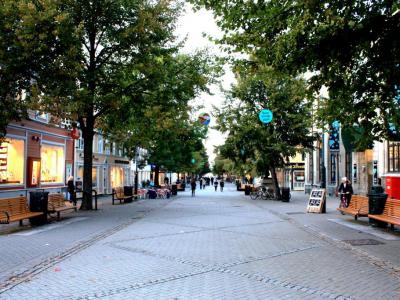
Trondheim is filled with shops. But there are special shopping locales having a high density of stores. Nordre Gate is one of them. It is the main pedestrianized shopping street in Trondheim. It is in the city center with international stores and local stores. Clothes, food, jewelry, electronics and a lots of other items are available.
The northern end of Nordre Gate is known for nightlife and private parties after hours. It is recommended to make friends in the area. Invitations are required. One guest to a household. The word for pre-parties before going out is "Vorspiel." For after-parties, say "Nachspiel."
Cafes are very popular in Norway, and especially in Trondheim. There are several coffee-and-cake venues on Nordre Gate. Many become pubs at night.
Thomas Angells Gate crosses Nordre Gate in the middle. It is a smaller street also known for shopping. It features record stores and electronics.
The northern end of Nordre Gate is known for nightlife and private parties after hours. It is recommended to make friends in the area. Invitations are required. One guest to a household. The word for pre-parties before going out is "Vorspiel." For after-parties, say "Nachspiel."
Cafes are very popular in Norway, and especially in Trondheim. There are several coffee-and-cake venues on Nordre Gate. Many become pubs at night.
Thomas Angells Gate crosses Nordre Gate in the middle. It is a smaller street also known for shopping. It features record stores and electronics.
7) Bakklandet (must see)
Bakklandet is sometimes referred to as "Old Trondheim." This is inaccurate. The first settlements of Trondheim were in Kalvskinnet. Bakklandet is an area along the river Nidelva, that flows through the city to the fjords and the sea. The Bakklandet area today may be an idyllic tourist mecca, but originally it was a center for trade.
Bakklandet was an open area outside the city. It was first developed in the early 17th century. The city had grown and needed to build across the river Nidelva. Bakklandet became the first suburb of Trondheim. As fate would have it, the Swedes attacked Trondheim in 1658 and they burned Bakklandet to the ground.
In 1681 the city bridge was thrown across the Nidelva, connecting Trondheim to Bakklandet and Kristiansten Fortress. Traffic increased and trade and opportunities with it. Fires remained a problem. Ships were forbidden to store flammable goods on board. Trading houses built piers in Bakklandet. Business grew apace.
The Swedes came back in 1718. This time they did not burn down Bakklandet. Norwegian troops did that, to create a defensive open area around Trondheim. In the wake of the Swedes came reconstruction once more. By 1770 the streets were paved and Bakklandet was back in business.
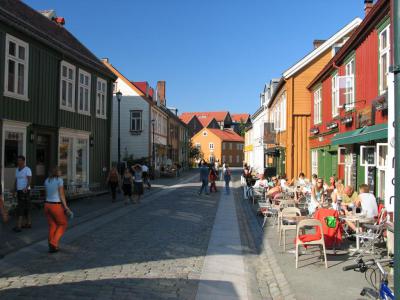
The neighborhood of Bakklandet today is composed of smallish wooden houses and narrow streets. The old warehouse buildings along the river stand in the water on their pilings. Tourists wander over the plank walkways of the Old Town Bridge. They stop to take a look at the view of the town and the river.
Bakklandet was an open area outside the city. It was first developed in the early 17th century. The city had grown and needed to build across the river Nidelva. Bakklandet became the first suburb of Trondheim. As fate would have it, the Swedes attacked Trondheim in 1658 and they burned Bakklandet to the ground.
In 1681 the city bridge was thrown across the Nidelva, connecting Trondheim to Bakklandet and Kristiansten Fortress. Traffic increased and trade and opportunities with it. Fires remained a problem. Ships were forbidden to store flammable goods on board. Trading houses built piers in Bakklandet. Business grew apace.
The Swedes came back in 1718. This time they did not burn down Bakklandet. Norwegian troops did that, to create a defensive open area around Trondheim. In the wake of the Swedes came reconstruction once more. By 1770 the streets were paved and Bakklandet was back in business.
The neighborhood of Bakklandet today is composed of smallish wooden houses and narrow streets. The old warehouse buildings along the river stand in the water on their pilings. Tourists wander over the plank walkways of the Old Town Bridge. They stop to take a look at the view of the town and the river.
8) Gamle Bybro (Old Town Bridge) (must see)
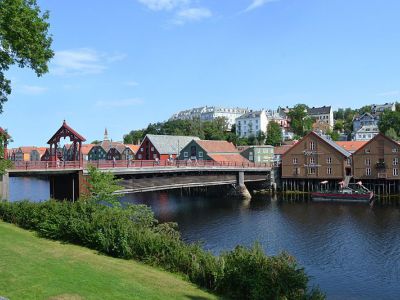
After the great fire of 1681, Johan Caspar von Cicignon, a renowned general and military engineer, built a bridge across the Nidelva river. It led from central Trondheim to the Bakklandet district and Kristiansten Fortress. A military access was necessary to the fortress at this point. The bridge functioned as a guarded city gate until 1816.
The Old Town Bridge was made with wood. The actual bridge today is a reconstruction by municipal engineer Carl Adolf Dahl in 1861. Dahl was the executive engineer of the city for public works in the latter half of the 19th century. Initially there was a sentry guardhouse at each end of the bridge.
King Christian V of Denmark financed the bridge construction himself. It was completed in 1685. Old Town Bridge took the place of the original Elgeseter Bridge nearby. After the Old Town Bridge opened, the Elgeseter Bridge was neglected and allowed to deteriorate and collapse.
One guard house was later demolished but the excise house on the west bank is still extant and in use as a day care center. The carved gates of the Old Town Bridge are the distinctive earmarks of Trondheim. Walk under the gates and take in the view of the fortress and the colorful houses of Bakklandet.
Old Town Bridge has been called the "Gate of Happiness". This is from the waltz lyrics of Norwegian composer Kristian Oskar Hoddo, "Nidelven quiet and beautiful you are." Hoddo wrote the lyrics while contemplating the river from the bridge in 1940. He later became a member of the anti-Nazi resistance. He was executed in Trondheim in 1943.
The Old Town Bridge was made with wood. The actual bridge today is a reconstruction by municipal engineer Carl Adolf Dahl in 1861. Dahl was the executive engineer of the city for public works in the latter half of the 19th century. Initially there was a sentry guardhouse at each end of the bridge.
King Christian V of Denmark financed the bridge construction himself. It was completed in 1685. Old Town Bridge took the place of the original Elgeseter Bridge nearby. After the Old Town Bridge opened, the Elgeseter Bridge was neglected and allowed to deteriorate and collapse.
One guard house was later demolished but the excise house on the west bank is still extant and in use as a day care center. The carved gates of the Old Town Bridge are the distinctive earmarks of Trondheim. Walk under the gates and take in the view of the fortress and the colorful houses of Bakklandet.
Old Town Bridge has been called the "Gate of Happiness". This is from the waltz lyrics of Norwegian composer Kristian Oskar Hoddo, "Nidelven quiet and beautiful you are." Hoddo wrote the lyrics while contemplating the river from the bridge in 1940. He later became a member of the anti-Nazi resistance. He was executed in Trondheim in 1943.
