Custom Walk in Antwerp, Belgium by chloe_stoyanovski_556f4 created on 2026-03-13
Guide Location: Belgium » Antwerp
Guide Type: Custom Walk
# of Sights: 10
Tour Duration: 3 Hour(s)
Travel Distance: 7.3 Km or 4.5 Miles
Share Key: 5TE6G
Guide Type: Custom Walk
# of Sights: 10
Tour Duration: 3 Hour(s)
Travel Distance: 7.3 Km or 4.5 Miles
Share Key: 5TE6G
How It Works
Please retrieve this walk in the GPSmyCity app. Once done, the app will guide you from one tour stop to the next as if you had a personal tour guide. If you created the walk on this website or come to the page via a link, please follow the instructions below to retrieve the walk in the app.
Retrieve This Walk in App
Step 1. Download the app "GPSmyCity: Walks in 1K+ Cities" on Apple App Store or Google Play Store.



Step 2. In the GPSmyCity app, download(or launch) the guide "Antwerp Map and Walking Tours".
Step 3. Tap the menu button located at upper right corner of the "Walks" screen and select "Retrieve custom walk". Enter the share key: 5TE6G
1) Antwerpen-Centraal (Antwerp Central Station) (must see)
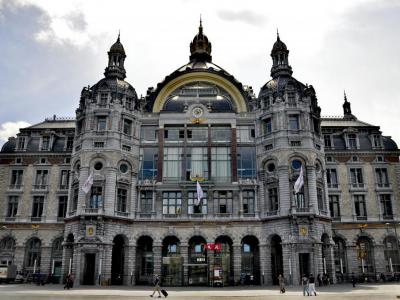
Antwerp is a perfect blend of old and new, renowned for its great effort in preserving historic buildings. One such building is the Antwerp Central Station, aka Middenstatie (Middle station). The latter name – now an antiquated expression in Dutch – is seen on the plaque fixed on the north wall of the Station.
A key landmark in the city, this mighty edifice is one of the finest examples of railway architecture in Belgium. It's been repeatedly voted among the world’s most impressive railway stations, including number four in 2009 by the U.S. Newsweek magazine, and number one in 2014 by the British-American magazine Mashable.
The original stone-clad structure, with a steel platform covering, was designed by Louis Delacenserie. It was built between 1895 and 1905 as a replacement for the first terminus of the Brussels-Mechelen-Antwerp railway.
Because of its unique architecture, historians still struggle to attribute the Antwerpen-Centraal to any particular style. The eclectic mix features a Neo-Gothic front, a massive dome over the iron-glass waiting hall, for which the building has been colloquially referred to as the "spoorwegkathedraal" ("railroad cathedral"), and a modern multilevel platform system. Another notable element, the viaduct leading into the Station, was designed by local architect, Jan Van Asperen.
During WWII, the train hall sustained severe damage by V-2 rockets, which is still visible today due to a lasting wave-distortion in the roof.
Recently, the Station was completely renovated, and in 2007 had an underground tunnel opened. Today it operates 14 railways tracts at four different terminals and plays a vital role in connecting various parts of Belgium.
If you're an architecture buff or railway enthusiast, having the Antwerpen-Centraal on your list of things to see is a must! But even if you're neither of these, we still recommend visiting it, just for the spectacle.
A key landmark in the city, this mighty edifice is one of the finest examples of railway architecture in Belgium. It's been repeatedly voted among the world’s most impressive railway stations, including number four in 2009 by the U.S. Newsweek magazine, and number one in 2014 by the British-American magazine Mashable.
The original stone-clad structure, with a steel platform covering, was designed by Louis Delacenserie. It was built between 1895 and 1905 as a replacement for the first terminus of the Brussels-Mechelen-Antwerp railway.
Because of its unique architecture, historians still struggle to attribute the Antwerpen-Centraal to any particular style. The eclectic mix features a Neo-Gothic front, a massive dome over the iron-glass waiting hall, for which the building has been colloquially referred to as the "spoorwegkathedraal" ("railroad cathedral"), and a modern multilevel platform system. Another notable element, the viaduct leading into the Station, was designed by local architect, Jan Van Asperen.
During WWII, the train hall sustained severe damage by V-2 rockets, which is still visible today due to a lasting wave-distortion in the roof.
Recently, the Station was completely renovated, and in 2007 had an underground tunnel opened. Today it operates 14 railways tracts at four different terminals and plays a vital role in connecting various parts of Belgium.
If you're an architecture buff or railway enthusiast, having the Antwerpen-Centraal on your list of things to see is a must! But even if you're neither of these, we still recommend visiting it, just for the spectacle.
2) Dageraadplaats (Dawn Square)
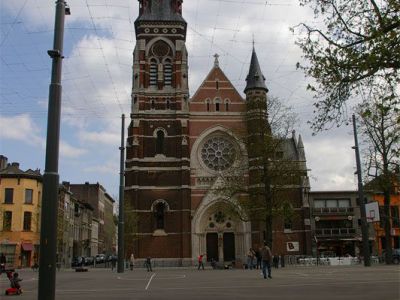
Dawn Square (Dageraadplaats) in Antwerp serves as the vibrant heart of the Zurenborg neighborhood, known for its stunning architecture and cozy atmosphere. This square is especially popular for its array of pubs and restaurants, including notable spots like De Moeskop, Zeezicht, and Primo, which offer a welcoming environment for both locals and tourists.
One of the most enchanting features of Dawn Square is its artificial starry sky, which illuminates the square at night, creating a magical ambiance that complements the area's distinctive architectural backdrop. The square is not marked by monuments or public buildings, emphasizing its role as a casual gathering rather than a ceremonial space.
Dawn Square is also family-friendly, featuring a playground where children can play freely while their parents relax at nearby café patios. The square's layout includes a basketball court and picnic tables under the trees, making it a perfect spot for community interaction and outdoor enjoyment.
On sunny days, the square becomes lively with children riding bikes and residents socializing in the sun. The lack of formal structures within the square adds to its charm, making it a true community space where everyday life unfolds naturally.
For visitors to Antwerp, a day exploring Zurenborg with Dawn Square as a starting point is highly recommended. The neighborhood's stately mansions, quaint squares, and the bustling life of Dawn Square encapsulate the unique spirit of this beloved area.
One of the most enchanting features of Dawn Square is its artificial starry sky, which illuminates the square at night, creating a magical ambiance that complements the area's distinctive architectural backdrop. The square is not marked by monuments or public buildings, emphasizing its role as a casual gathering rather than a ceremonial space.
Dawn Square is also family-friendly, featuring a playground where children can play freely while their parents relax at nearby café patios. The square's layout includes a basketball court and picnic tables under the trees, making it a perfect spot for community interaction and outdoor enjoyment.
On sunny days, the square becomes lively with children riding bikes and residents socializing in the sun. The lack of formal structures within the square adds to its charm, making it a true community space where everyday life unfolds naturally.
For visitors to Antwerp, a day exploring Zurenborg with Dawn Square as a starting point is highly recommended. The neighborhood's stately mansions, quaint squares, and the bustling life of Dawn Square encapsulate the unique spirit of this beloved area.
3) Stadspark (City Park)
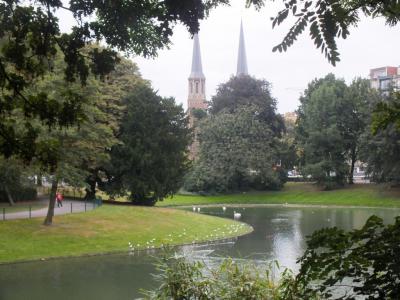
The Stadspark is an English styled park laid out over 35 acres of land not very far from Antwerp Centraal Station. This triangular park located between Rubenslei, Van Eycklei and Quinten Matsijslei is the only park located in the city center of Antwerp. Constructed in the late 1860s by architect E. Van Cuyck, the Park is a conversion of an old Spanish fortification.
A pond in the Park adds to the scenery while also playing host to some common water birds. A white pedestrian bridge was constructed over the pond which makes it even more picturesque. Various statues decorate the Park along with war memorials. A World War II bunker has remained a part of the Park since it was created. Today, the Park is a destination for joggers, rollerbladers and elderly walkers. You can often see rabbits around the Park who are more than willing to jog (or hop) along with you. However, the Park is too centrally located and cannot manage to take you completely away from the traffic noises arising from the city.
The Park is filled with different kinds of trees, some of which are not even native to the land. Open all times of the day, you can visit the park anytime you prefer although a day light visit is recommended. Once here, you can always go back to shopping areas which are located just outside the Park.
A pond in the Park adds to the scenery while also playing host to some common water birds. A white pedestrian bridge was constructed over the pond which makes it even more picturesque. Various statues decorate the Park along with war memorials. A World War II bunker has remained a part of the Park since it was created. Today, the Park is a destination for joggers, rollerbladers and elderly walkers. You can often see rabbits around the Park who are more than willing to jog (or hop) along with you. However, the Park is too centrally located and cannot manage to take you completely away from the traffic noises arising from the city.
The Park is filled with different kinds of trees, some of which are not even native to the land. Open all times of the day, you can visit the park anytime you prefer although a day light visit is recommended. Once here, you can always go back to shopping areas which are located just outside the Park.

4) Botanic Gardens
Right in the heart of the city, amidst the chaos of the urban life of Antwerp is a quiet and tranquil place. What started off as a small medicinal garden to benefit the students of medicine and science is today one of the most loved public gardens in Antwerp. Created over 200 years ago, the Botanic Gardens were strictly used by Saint Elisabeth Hospital that still stands and functions today. A popular stop for locals, the Botanical Gardens till date is a relatively undiscovered haven of peace and serenity within Antwerp.
Boasting a wide variety of over 2000 species of plants the Botanical Gardens are a protected landscape. In fact, many of the plants grown within the Botanical Gardens are categorized as endangered species and are legally protected. Embellished with ornate lamp posts and sculptures, the Botanical Gardens have picture perfect scenery with a little pond to add to the beauty of its greenery. The Gardens also have within them a green house, which unfortunately is closed for visitors.
Dominating the Gardens is the statue of Peeter van Coudenberghe, a pharmacist and botanist who lived during the 16th century. An avid gardener, Peeter was known for his extensively grown herb garden. So passionate was he about his plants, he stored them in an underground repository during the harsh winters. For tranquility or for the love of botany, the Gardens must be visited if you are in Antwerp.
Boasting a wide variety of over 2000 species of plants the Botanical Gardens are a protected landscape. In fact, many of the plants grown within the Botanical Gardens are categorized as endangered species and are legally protected. Embellished with ornate lamp posts and sculptures, the Botanical Gardens have picture perfect scenery with a little pond to add to the beauty of its greenery. The Gardens also have within them a green house, which unfortunately is closed for visitors.
Dominating the Gardens is the statue of Peeter van Coudenberghe, a pharmacist and botanist who lived during the 16th century. An avid gardener, Peeter was known for his extensively grown herb garden. So passionate was he about his plants, he stored them in an underground repository during the harsh winters. For tranquility or for the love of botany, the Gardens must be visited if you are in Antwerp.
5) Plantin-Moretus Museum (must see)
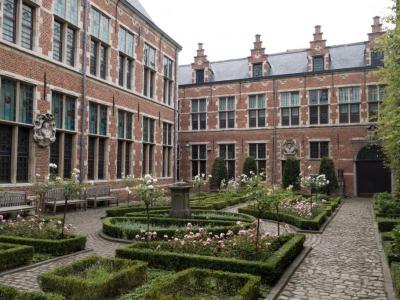
One of the most fascinating museums one can encounter in Antwerp is the Plantin-Moretus Museum. Home to one of the most prolific printing presses of the 16th and 17th century, the Platin–Moretus Museum is a must visit in Antwerp.
Founded by Christoffel Plantin, a Frenchman who from being a mere bookbinder became the most noted publisher and printer of the Renaissance period, the printing press was one of the key factors in establishing Antwerp as one of Europe’s leading cities with regard to the spread of typography and inventions in printing technology. Plantin’s son-in-law, Jan Moretus, played a vital role in bringing newer technologies and inventions to the press after the death of Plantin.
After running successfully for over two centuries the company was sold to the city of Antwerp in 1876. The Museum is located in the former residence and printing establishment of the Platin–Moretus family. Its location is listed as a World Heritage Site by UNESCO.
The Museum houses some of the world’s oldest surviving printing presses and some extraordinary tools, dyes and matrices that were in use. The most prized possession of the Museum remains the extensive library and antique books that are a century or two old. Also noteworthy are the rich and elaborate interiors and the architecture of the building that speak of the opulence of the Platin-Moretus family.
Founded by Christoffel Plantin, a Frenchman who from being a mere bookbinder became the most noted publisher and printer of the Renaissance period, the printing press was one of the key factors in establishing Antwerp as one of Europe’s leading cities with regard to the spread of typography and inventions in printing technology. Plantin’s son-in-law, Jan Moretus, played a vital role in bringing newer technologies and inventions to the press after the death of Plantin.
After running successfully for over two centuries the company was sold to the city of Antwerp in 1876. The Museum is located in the former residence and printing establishment of the Platin–Moretus family. Its location is listed as a World Heritage Site by UNESCO.
The Museum houses some of the world’s oldest surviving printing presses and some extraordinary tools, dyes and matrices that were in use. The most prized possession of the Museum remains the extensive library and antique books that are a century or two old. Also noteworthy are the rich and elaborate interiors and the architecture of the building that speak of the opulence of the Platin-Moretus family.
6) Grote Markt (Great Market Square) (must see)
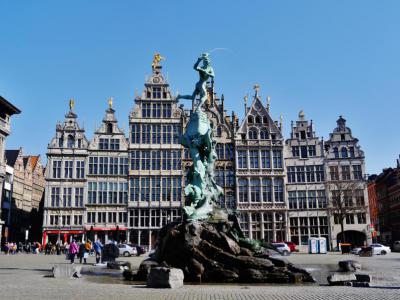
Right in the heart of the city, the Great Market Square is one of the favorite locations for locals as well as tourists. Filled with cafés and restaurant, the Great Market Square is a popular destination if you want to just kick back, bask in the sun with a chilled glass of beer or stroll around lazily admiring the architecture of the city. Dominated by the elegant and grant Renaissance style City Hall on one side and a row of guild houses and old patrician houses on the other, the Great Market Square is a magnet for those who love studying city architecture.
The center of the square holds the magnificent fountain that bears the well sculpted statue of Silvius Brabo, the local mythical hero. As legend has it, the water way was once governed by a giant who demanded a high toll from those who wanted to enter the city. Those failing to meet the requirements, were punished by having their hand cut off. It was Brabo, who fought the giant and cut off his hand and threw it in the Scheldt river.
One of the best ways to enjoy a perfect day in Antwerp is to sit in an open terrace restaurant amidst the elegantly constructed buildings of the Great Market Square, have an authentic Belgian meal on the table and admire the city as it moves past you.
The center of the square holds the magnificent fountain that bears the well sculpted statue of Silvius Brabo, the local mythical hero. As legend has it, the water way was once governed by a giant who demanded a high toll from those who wanted to enter the city. Those failing to meet the requirements, were punished by having their hand cut off. It was Brabo, who fought the giant and cut off his hand and threw it in the Scheldt river.
One of the best ways to enjoy a perfect day in Antwerp is to sit in an open terrace restaurant amidst the elegantly constructed buildings of the Great Market Square, have an authentic Belgian meal on the table and admire the city as it moves past you.
7) Vlaeykensgang Historic Alley
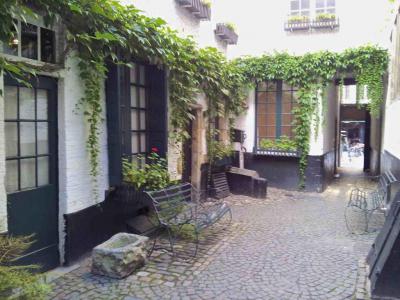
Great Market Square in itself gives you a glimpse of life in Antwerp as it was a few centuries ago. Parallel to the Square are several alleys that manage to reflect the lifestyle, ambiance and feel of the years gone by as they are still preserved and almost untouched by the hands of time. One such place is Vlaeykensgang, and the entrance to this alley is through a small doorway.
Easy to overlook, once found this alley will transport you to the 16th century. A perfect place to walk and get the true feel of the city, the Vlaeykensgang is filled with authentic peasant houses and residential complexes.
Although today, these may seem like the perfect refuge from the urbanization and the pace of city life, back in those days, these alleys were not considered as places suitable for living. Cramped up and over populated with large families, poor sanitation are just some of the problems one faced here. However today, Vlaeykensgang is looked at as an idealistic and artistic refuge from the hectic city life.
Easy to overlook, once found this alley will transport you to the 16th century. A perfect place to walk and get the true feel of the city, the Vlaeykensgang is filled with authentic peasant houses and residential complexes.
Although today, these may seem like the perfect refuge from the urbanization and the pace of city life, back in those days, these alleys were not considered as places suitable for living. Cramped up and over populated with large families, poor sanitation are just some of the problems one faced here. However today, Vlaeykensgang is looked at as an idealistic and artistic refuge from the hectic city life.
8) Cathedral of Our Lady (must see)
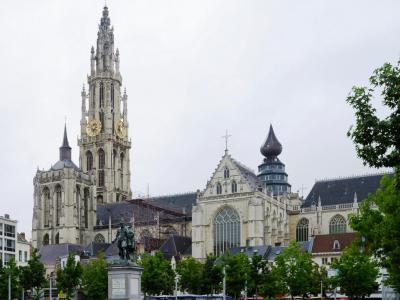
Overlooking the city of Antwerp since the 14th century is the beautiful Cathedral of Our Lady, which till date dominates the city’s skyline. Built by architects Jan and Pieter Appelmans, the Cathedral boasts a magnificent Gothic structure with hints of Baroque style complementing the interiors of the building.
Whether you are a history buff or an admirer of architecture, the Cathedral of Our Lady is one structure that has something to offer every visitor. The structure stands as the epitome of the perfect combination of artistic architecture, breathtaking interiors and a dramatic past making it a tantalizing site to visit.
Although the construction of the structure began in 1352, it took more than a century to complete the entire construction. The Cathedral that stands today rests on the same site where once stood a small chapel dedicated to Our Lady. The chapel traced its history to early 10th century and it was subsequently followed by the construction of a Romanesque Church.
The Gothic Cathedral that took its place was considered one of the most magnificent structures of its time and one of the largest cathedrals in the whole of Benelux. However despite all its glories, the Cathedral of Our Lady has faced a very turbulent past. From natural fires to raids, plunders and assault by iconoclasts, the structure has born tremendous damage over the years. But it has stood the test of time and stands proudly today in the city of Antwerp.
Whether you are a history buff or an admirer of architecture, the Cathedral of Our Lady is one structure that has something to offer every visitor. The structure stands as the epitome of the perfect combination of artistic architecture, breathtaking interiors and a dramatic past making it a tantalizing site to visit.
Although the construction of the structure began in 1352, it took more than a century to complete the entire construction. The Cathedral that stands today rests on the same site where once stood a small chapel dedicated to Our Lady. The chapel traced its history to early 10th century and it was subsequently followed by the construction of a Romanesque Church.
The Gothic Cathedral that took its place was considered one of the most magnificent structures of its time and one of the largest cathedrals in the whole of Benelux. However despite all its glories, the Cathedral of Our Lady has faced a very turbulent past. From natural fires to raids, plunders and assault by iconoclasts, the structure has born tremendous damage over the years. But it has stood the test of time and stands proudly today in the city of Antwerp.
9) Groenplaats (Green Square)
Antwerp is the perfect destination if you love to laze around on a warm summer’s day under the sun or enjoy watching the city from the comfort of a cozy café. Yet another famous square in Antwerp is the Green Square. Although not as green as the name suggests, the Green Square, is a popular destination amongst both tourists and locals during summer and on weekends.
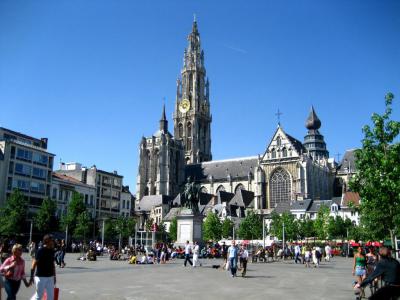
Overlooking the Square in the north is the elegant Cathedral of Our Lady. Back in the medieval times, the Green Square was used as a cemetery that was attached to the Cathedral. With the Austrian occupation of Antwerp in the 18th century, Emperor Joseph II abolished cemeteries within the walls of the city. Although the premises were then converted to a square for town use, the age old name couldn’t get converted and locals still call it Green Place.
Today the center of the square is dominated by the statue of the much loved Flemish painter Sir Peter Paul Rubens. Installed in 1843, this bronze statue replaced a crucifix that overlooked the cemetery. Created by sculptor Willem Geefs, the statue commemorated death bicentenary of the city’s beloved artist.
Overlooking the Square in the north is the elegant Cathedral of Our Lady. Back in the medieval times, the Green Square was used as a cemetery that was attached to the Cathedral. With the Austrian occupation of Antwerp in the 18th century, Emperor Joseph II abolished cemeteries within the walls of the city. Although the premises were then converted to a square for town use, the age old name couldn’t get converted and locals still call it Green Place.
Today the center of the square is dominated by the statue of the much loved Flemish painter Sir Peter Paul Rubens. Installed in 1843, this bronze statue replaced a crucifix that overlooked the cemetery. Created by sculptor Willem Geefs, the statue commemorated death bicentenary of the city’s beloved artist.
10) Meir Shopping Street (must see)
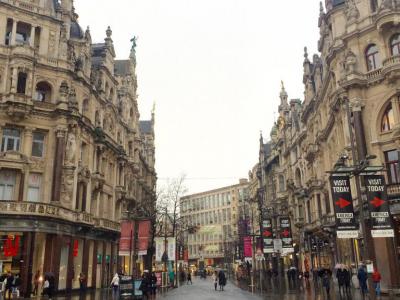
Meir is a famous shopping destination for the city of Antwerp and, along with the New Street in Brussels, one of the most important shopping areas in Belgium. The Meir shopping district encompasses the streets surrounding Our Lady’s Cathedral all the way to the Central Station. Once used to store wet wood for furniture, the area has come a long way to be recognized as one of the prime areas for shopping in the country. Once being a small street on the outskirts of the city, today Meir is an integral part of the city center.
With the opening of the Stadsfeestzaal Shopping Centre in 2007, the Meir has become the most expensive shopping destination in the economic union of Benelux. The area is home to all major shopping brands and attracts over 200,000 visitors from neighboring states and other European countries.
Along with being a shopping capital, the Meir has also seen the richness of architecture and the lavishness of the rich. It is home to some exquisite buildings such as ‘Osterrieth House’ at number 85 and the Royal Residence of the Belgian Kings, both built in the old Rococo style by architect Van Baurscheit. Whether for a shopping experience or just visiting to catch a glimpse of the past, Meir is a place that all must visit.
With the opening of the Stadsfeestzaal Shopping Centre in 2007, the Meir has become the most expensive shopping destination in the economic union of Benelux. The area is home to all major shopping brands and attracts over 200,000 visitors from neighboring states and other European countries.
Along with being a shopping capital, the Meir has also seen the richness of architecture and the lavishness of the rich. It is home to some exquisite buildings such as ‘Osterrieth House’ at number 85 and the Royal Residence of the Belgian Kings, both built in the old Rococo style by architect Van Baurscheit. Whether for a shopping experience or just visiting to catch a glimpse of the past, Meir is a place that all must visit.
