Custom Walk in Mumbai, India by kpratik_kadam_47c77 created on 2026-03-20
Guide Location: India » Mumbai
Guide Type: Custom Walk
# of Sights: 15
Tour Duration: 11 Hour(s)
Travel Distance: 29.3 Km or 18.2 Miles
Share Key: 4NP8W
Guide Type: Custom Walk
# of Sights: 15
Tour Duration: 11 Hour(s)
Travel Distance: 29.3 Km or 18.2 Miles
Share Key: 4NP8W
How It Works
Please retrieve this walk in the GPSmyCity app. Once done, the app will guide you from one tour stop to the next as if you had a personal tour guide. If you created the walk on this website or come to the page via a link, please follow the instructions below to retrieve the walk in the app.
Retrieve This Walk in App
Step 1. Download the app "GPSmyCity: Walks in 1K+ Cities" on Apple App Store or Google Play Store.



Step 2. In the GPSmyCity app, download(or launch) the guide "Mumbai Map and Walking Tours".
Step 3. Tap the menu button located at upper right corner of the "Walks" screen and select "Retrieve custom walk". Enter the share key: 4NP8W
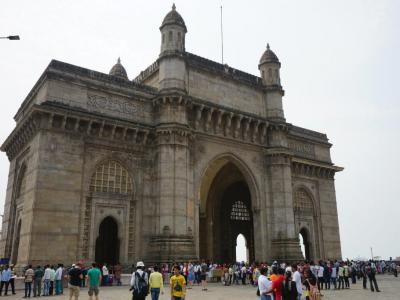
1) Gateway of India (must see)
The Gateway of India rises at the edge of Mumbai’s harbor, standing as a defining symbol of the city's modern history. Conceived to commemorate the 1911 visit of King George V and Queen Mary, the first by a reigning British monarch, the monumental arch marked Mumbai’s position as the western gateway of the British Empire. Built on reclaimed land at Apollo Bunder, the site had long served as a strategic landing point for ships entering the city. Its foundations were laid in 1913, though construction began only after land reclamation was completed, and the structure was formally inaugurated in 1924.
Designed by Scottish architect George Wittet, the Gateway represents Indo-Saracenic architecture, blending Islamic and European forms with Indian decorative elements. The monument is organized around a grand pointed central arch, crowned by a domed pavilion. Built from locally sourced yellow basalt, its central arch and dome are balanced by smaller turrets, latticework, and inscriptions inspired by Hindu design traditions. The carved stone screens and ornamental details draw from Islamic jali work and Indian temple architecture.
History gave the Gateway a powerful and unexpected final role. In 1948, it became the symbolic exit point for the last British troops leaving independent India. A structure built to welcome empire thus quietly marked its end, transforming the Gateway from a ceremonial entrance into a lasting marker of political change and collective memory. Today, the Gateway of India remains a lively focal point along the waterfront, set directly opposite the historic Taj Mahal Hotel. Boats depart from nearby jetties toward Elephanta Island or for harbor cruises.
Designed by Scottish architect George Wittet, the Gateway represents Indo-Saracenic architecture, blending Islamic and European forms with Indian decorative elements. The monument is organized around a grand pointed central arch, crowned by a domed pavilion. Built from locally sourced yellow basalt, its central arch and dome are balanced by smaller turrets, latticework, and inscriptions inspired by Hindu design traditions. The carved stone screens and ornamental details draw from Islamic jali work and Indian temple architecture.
History gave the Gateway a powerful and unexpected final role. In 1948, it became the symbolic exit point for the last British troops leaving independent India. A structure built to welcome empire thus quietly marked its end, transforming the Gateway from a ceremonial entrance into a lasting marker of political change and collective memory. Today, the Gateway of India remains a lively focal point along the waterfront, set directly opposite the historic Taj Mahal Hotel. Boats depart from nearby jetties toward Elephanta Island or for harbor cruises.
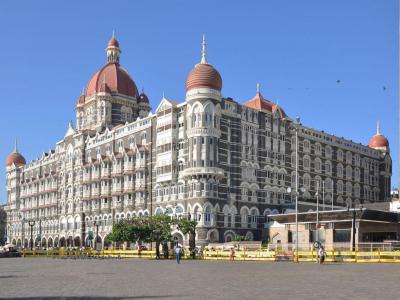
2) Taj Mahal Palace Hotel
The Taj Mahal Palace Hotel, opened in 1903, was commissioned by Indian industrialist Jamsetji Tata at a time when luxury hotels in colonial Mumbai largely excluded Indian guests. Its name was inspired by the Taj Mahal in Agra. Today, it continues to function as a working luxury hotel. Visitors can admire its exterior from the promenade or step inside its public spaces.
The historic 1903 structure, often called the Taj Mahal Palace, forms the original part of the hotel complex and is easily recognized by its large red dome facing the Gateway of India. A modern high-rise addition, the Taj Tower, was built beside it in 1973. Architecturally, the red dome combines a rich blend of Indo-Saracenic, Islamic, and European design influences. The palace building features arched balconies, intricate stonework, and decorative elements inspired by Moorish traditions.
Throughout the 20th century, the Taj Mahal Palace Hotel became closely linked to Mumbai’s social, political, and cultural life. It hosted royalty, world leaders, writers, and film stars, with notable guests including Lord Mountbatten, the first Governor-General of independent India, and Bill Clinton, the 42nd President of the United States. The hotel has also appeared in international cinema, most recently as a filming location for Christopher Nolan’s “Tenet”.
Visitors can step inside the Taj Mahal Palace to experience some of its historic interiors. One of the most striking architectural highlights is the Cantilever Grand Staircase, an elegant marble staircase designed to appear as if it is floating without visible support. Afterwards stop by the famous Sea Lounge, a café overlooking the Gateway of India and Mumbai Harbor. The lounge is well known for its traditional afternoon tea service, where guests can enjoy tea, pastries, and light snacks while taking in views of the waterfront.
The historic 1903 structure, often called the Taj Mahal Palace, forms the original part of the hotel complex and is easily recognized by its large red dome facing the Gateway of India. A modern high-rise addition, the Taj Tower, was built beside it in 1973. Architecturally, the red dome combines a rich blend of Indo-Saracenic, Islamic, and European design influences. The palace building features arched balconies, intricate stonework, and decorative elements inspired by Moorish traditions.
Throughout the 20th century, the Taj Mahal Palace Hotel became closely linked to Mumbai’s social, political, and cultural life. It hosted royalty, world leaders, writers, and film stars, with notable guests including Lord Mountbatten, the first Governor-General of independent India, and Bill Clinton, the 42nd President of the United States. The hotel has also appeared in international cinema, most recently as a filming location for Christopher Nolan’s “Tenet”.
Visitors can step inside the Taj Mahal Palace to experience some of its historic interiors. One of the most striking architectural highlights is the Cantilever Grand Staircase, an elegant marble staircase designed to appear as if it is floating without visible support. Afterwards stop by the famous Sea Lounge, a café overlooking the Gateway of India and Mumbai Harbor. The lounge is well known for its traditional afternoon tea service, where guests can enjoy tea, pastries, and light snacks while taking in views of the waterfront.
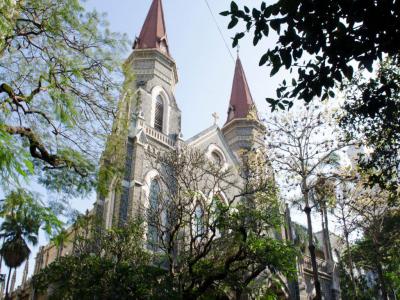
3) Holy Name Cathedral
The Holy Name Cathedral serves as the headquarters of the Roman Catholic Archdiocese of Bombay and the seat of the Archbishop of Bombay. Constructed between 1902 and 1905, the cathedral is designed primarily in the Neo-Gothic style. Its architecture features pointed arches, ribbed vaults, large stained-glass windows, twin towers and spires rising to approximately 130 feet.
Inside the bell tower hang three large bells cast in Stuttgart, Germany, dedicated to the Holy Name, the Virgin Mary, and Saint Joseph. In recognition of its historical and architectural importance, Holy Name Cathedral was declared a heritage building in 1998. The marble high altar holds a life-sized statue of Jesus Christ accompanied by an image of the Virgin Mary. The richly decorated interior also includes painted ceilings and frescoes created by the Italian artist Antonio Moscheni and his assistants, whose work is considered among the finest examples of ecclesiastical painting in Mumbai.
The cathedral has also witnessed important moments in the history of the Catholic Church in India. It was visited by Pope Paul VI in 1964 and later by Pope John Paul II in 1986. Today, the cathedral remains an active place of worship and continues to serve the Catholic community of Mumbai.
Inside the bell tower hang three large bells cast in Stuttgart, Germany, dedicated to the Holy Name, the Virgin Mary, and Saint Joseph. In recognition of its historical and architectural importance, Holy Name Cathedral was declared a heritage building in 1998. The marble high altar holds a life-sized statue of Jesus Christ accompanied by an image of the Virgin Mary. The richly decorated interior also includes painted ceilings and frescoes created by the Italian artist Antonio Moscheni and his assistants, whose work is considered among the finest examples of ecclesiastical painting in Mumbai.
The cathedral has also witnessed important moments in the history of the Catholic Church in India. It was visited by Pope Paul VI in 1964 and later by Pope John Paul II in 1986. Today, the cathedral remains an active place of worship and continues to serve the Catholic community of Mumbai.

4) Rajabai Tower
On your visit to South Mumbai, one structure that has an overpowering presence in the region is the Rajabai Tower. One just cannot miss the glorious, ornate tower, standing poignantly, overlooking the High Court in Mumbai.
The construction of the Rajabai Tower was initiated on 1 March 1869. Financed by Premchand Roychand, the founding father of the Bombay Stock Exchange, the construction of this structure is believed to have taken a sum of Rs. 200,000 a great amount for any construction. The Tower gets its name from Premchand’s mother, Rajabai. It is said that Rajabai was blind and the Tower with its chimes every hour allowed her to keep time.
Flaunting a brilliant blend of Venetian and Gothic style of architecture, the Tower was designed by renowned British architect, Sir Gilbert Scott, who also worked on the Big Ben in London. Soaring at a height of 85m, the Tower took nine years to be completed and when the project concluded in 1878, it was the tallest building in the region. Constructed with the famous buff coloured Kurla stone, the Tower boasts some of the best stained glass windows in the country. The insides of the Tower are not open for visitors since like most tall structures around the world, the site became prone to suicide attempts.
The construction of the Rajabai Tower was initiated on 1 March 1869. Financed by Premchand Roychand, the founding father of the Bombay Stock Exchange, the construction of this structure is believed to have taken a sum of Rs. 200,000 a great amount for any construction. The Tower gets its name from Premchand’s mother, Rajabai. It is said that Rajabai was blind and the Tower with its chimes every hour allowed her to keep time.
Flaunting a brilliant blend of Venetian and Gothic style of architecture, the Tower was designed by renowned British architect, Sir Gilbert Scott, who also worked on the Big Ben in London. Soaring at a height of 85m, the Tower took nine years to be completed and when the project concluded in 1878, it was the tallest building in the region. Constructed with the famous buff coloured Kurla stone, the Tower boasts some of the best stained glass windows in the country. The insides of the Tower are not open for visitors since like most tall structures around the world, the site became prone to suicide attempts.
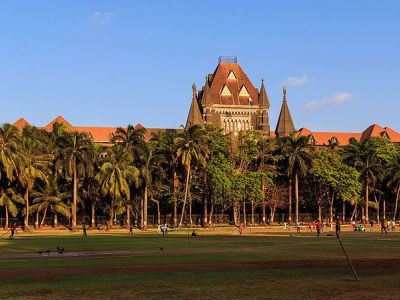
5) High Court
One building that just cannot be missed in Mumbai is the High Court. Standing tall in dark brown, this majestic building truly is a representation of authority, law and order. Located just opposite the Rajabai Towers, this impressive structure has an overpowering presence in South Mumbai.
Inaugurated in the mid-19th century, the High Court stands as one of the oldest structures in Mumbai. The construction of the building was completed in the month of November in 1878. Designed by British engineer Col. J.A. Fuller, the layout of the building is said to have been inspired from a German Castle. Boasting a brilliant English Gothic style, the High Court commands a degree of respect like no other in Mumbai.
The Bombay High Court had its first sitting in 1879, and for over a century now, it has stood as a pillar of constitution, law and justice. Although the name of the city changed from Bombay to Mumbai in 1995, as an institution, the court did not follow and is still regarded as the Bombay High Court. With a sanctioned strength of 75 Judges, the Bombay High Court asserts jurisdiction over states of Maharashtra & Goa, and the Union Territories of Daman and Diu and Dadra and Nagar Haveli.
Inaugurated in the mid-19th century, the High Court stands as one of the oldest structures in Mumbai. The construction of the building was completed in the month of November in 1878. Designed by British engineer Col. J.A. Fuller, the layout of the building is said to have been inspired from a German Castle. Boasting a brilliant English Gothic style, the High Court commands a degree of respect like no other in Mumbai.
The Bombay High Court had its first sitting in 1879, and for over a century now, it has stood as a pillar of constitution, law and justice. Although the name of the city changed from Bombay to Mumbai in 1995, as an institution, the court did not follow and is still regarded as the Bombay High Court. With a sanctioned strength of 75 Judges, the Bombay High Court asserts jurisdiction over states of Maharashtra & Goa, and the Union Territories of Daman and Diu and Dadra and Nagar Haveli.
6) Hutatma Chowk (Martyrs’ Square)
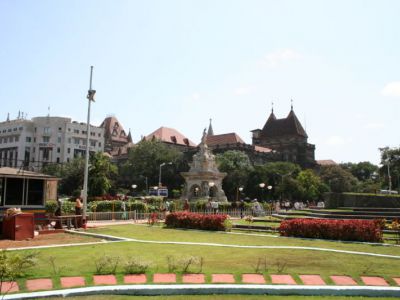
Martyrs’ Square is a historic public space known for both its monuments and its connection to the events that shaped modern Maharashtra. During the colonial period the square formed part of Mumbai’s administrative and commercial center, surrounded by grand Victorian-era buildings that reflected the city’s rise as a major port and financial hub. Originally known as Flora Fountain, the square was renamed Martyrs’ Square to honor those who died during the Samyukta Maharashtra movement, which called for the creation of a separate Marathi-speaking state.
At the center of the square stands a memorial statue of a torch-bearing martyr, commemorating the protesters who lost their lives in demonstrations in the 1950s during the struggle for statehood. The monument serves as a reminder of the political movement that eventually led to the formation of the state of Maharashtra in 1960.
Beside the memorial rises the elegant Flora Fountain, one of Mumbai’s best-known colonial monuments. Installed in 1864 and carved from Portland stone, the fountain was built in honor of Sir Bartle Frere, then Governor of Bombay. Designed by architect Norman Shaw and sculpted by James Forsythe, it depicts Flora, the Roman goddess of flowers and abundance.
Today, Martyrs’ Square functions both as a busy intersection and a place of remembrance. Looking toward the western side of the square, you will find the Central Telegraph Office, a historic communications building that once served as a key hub for telegraph and postal services during the colonial period. On the southwest side of the square stands the office of the Assistant Government Pleader, part of the government legal services that operate near the courts. From there, walking south brings you to the imposing Bombay High Court, a major landmark of Victorian Gothic architecture completed in 1878 and still functioning as one of India’s most important judicial institutions.
At the center of the square stands a memorial statue of a torch-bearing martyr, commemorating the protesters who lost their lives in demonstrations in the 1950s during the struggle for statehood. The monument serves as a reminder of the political movement that eventually led to the formation of the state of Maharashtra in 1960.
Beside the memorial rises the elegant Flora Fountain, one of Mumbai’s best-known colonial monuments. Installed in 1864 and carved from Portland stone, the fountain was built in honor of Sir Bartle Frere, then Governor of Bombay. Designed by architect Norman Shaw and sculpted by James Forsythe, it depicts Flora, the Roman goddess of flowers and abundance.
Today, Martyrs’ Square functions both as a busy intersection and a place of remembrance. Looking toward the western side of the square, you will find the Central Telegraph Office, a historic communications building that once served as a key hub for telegraph and postal services during the colonial period. On the southwest side of the square stands the office of the Assistant Government Pleader, part of the government legal services that operate near the courts. From there, walking south brings you to the imposing Bombay High Court, a major landmark of Victorian Gothic architecture completed in 1878 and still functioning as one of India’s most important judicial institutions.
7) Fashion Street
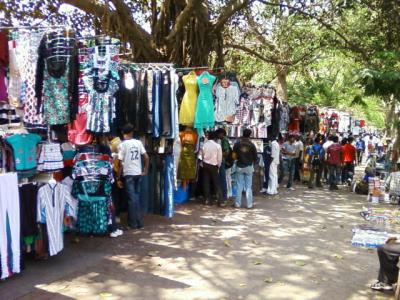
Fashion Street is one of Mumbai’s most energetic shopping areas. Known for its lively rows of street stalls, the market offers visitors a contrast to the historic colonial buildings nearby. The market developed in the late 20th century when small vendors began setting up temporary roadside stalls. Over time, it expanded into a long stretch of organized booths, now numbering in the hundreds, selling T-shirts, jeans, dresses, textiles, jewelry, bags, sunglasses, and imitation designer brands.
One of the defining features of Fashion Street is the shopping experience itself. Price tags are rarely displayed, and bargaining is expected, turning every purchase into a lively negotiation between buyer and seller. The stalls are tightly packed and constantly refreshed with new merchandise, creating a dynamic marketplace where styles change quickly and vendors adapt to shifting trends.
Visitors exploring the area will also find a variety of street food vendors and nearby restaurants offering local snacks and meals.
One of the defining features of Fashion Street is the shopping experience itself. Price tags are rarely displayed, and bargaining is expected, turning every purchase into a lively negotiation between buyer and seller. The stalls are tightly packed and constantly refreshed with new merchandise, creating a dynamic marketplace where styles change quickly and vendors adapt to shifting trends.
Visitors exploring the area will also find a variety of street food vendors and nearby restaurants offering local snacks and meals.
8) Kamala Nehru Park
The Kamala Nehru Park is a small public park, opened in 1952 and named after Kamala Nehru, an Indian independence activist and social reformer. It covers roughly 4,000 square meters and serves as a quiet green retreat within the busy city of Mumbai. From its elevated lawns and terraces, visitors can enjoy views over Back Bay, Girgaon Chowpatty beach, and the curve of Marine Drive.
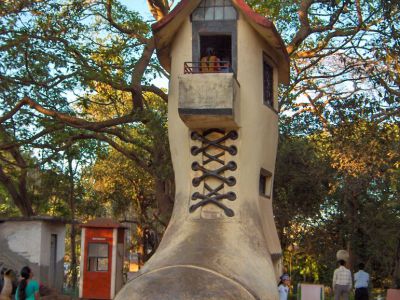
One of the park’s most recognizable features is the playful “Old Woman’s Shoe” structure, a large boot-shaped building inspired by the nursery rhyme “There Was an Old Woman Who Lived in a Shoe”. Children can climb inside the structure and look out from its windows. In 2018, a lily pond and a floral selfie point were added.
Unlike many modern parks filled with rides and amusement facilities, Kamala Nehru Park offers open lawns, shaded paths, and flower beds that encourage visitors to relax or enjoy simple outdoor activities. The park is particularly lively in the early morning and late afternoon, when residents come to walk, exercise, or enjoy the cooler air. As evening approaches, visitors gather along the viewpoints to watch the sun set over the Arabian Sea. Soon after, the lights along Marine Drive begin to glow, forming the famous “Queen’s Necklace”.
One of the park’s most recognizable features is the playful “Old Woman’s Shoe” structure, a large boot-shaped building inspired by the nursery rhyme “There Was an Old Woman Who Lived in a Shoe”. Children can climb inside the structure and look out from its windows. In 2018, a lily pond and a floral selfie point were added.
Unlike many modern parks filled with rides and amusement facilities, Kamala Nehru Park offers open lawns, shaded paths, and flower beds that encourage visitors to relax or enjoy simple outdoor activities. The park is particularly lively in the early morning and late afternoon, when residents come to walk, exercise, or enjoy the cooler air. As evening approaches, visitors gather along the viewpoints to watch the sun set over the Arabian Sea. Soon after, the lights along Marine Drive begin to glow, forming the famous “Queen’s Necklace”.
9) Hanging Gardens
The Hanging Gardens are one of the most pleasant green spaces on Malabar Hill, where visitors can enjoy one of the most scenic viewpoints in Mumbai. The park was laid out in 1881 on terraced slopes above the city and later renovated in 1921.
The gardens were created not only as a public park but also as a protective cover for large water reservoirs located beneath the hill. Built above three reservoirs capable of storing millions of gallons of water, the landscaped grounds were designed to shield the city’s drinking water supply from contamination. This unusual arrangement is what gave the site its popular name.
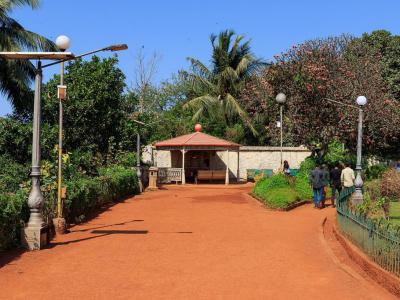
One of the most recognizable features of the gardens is the collection of carefully trimmed hedges shaped into animals and other playful forms. Along the northern side of the park, visitors will find a small pavilion that offers a shaded place to pause and enjoy the surrounding greenery. Near the central paths, a decorative fountain adds a focal point to the garden layout. On the western side of the gardens, a modest clock tower stands among the trees. From this edge of the park, visitors can also glimpse views toward Back Bay and the Arabian Sea.
The gardens were created not only as a public park but also as a protective cover for large water reservoirs located beneath the hill. Built above three reservoirs capable of storing millions of gallons of water, the landscaped grounds were designed to shield the city’s drinking water supply from contamination. This unusual arrangement is what gave the site its popular name.
One of the most recognizable features of the gardens is the collection of carefully trimmed hedges shaped into animals and other playful forms. Along the northern side of the park, visitors will find a small pavilion that offers a shaded place to pause and enjoy the surrounding greenery. Near the central paths, a decorative fountain adds a focal point to the garden layout. On the western side of the gardens, a modest clock tower stands among the trees. From this edge of the park, visitors can also glimpse views toward Back Bay and the Arabian Sea.
10) Mani Bhavan Gandhi Museum (must see)
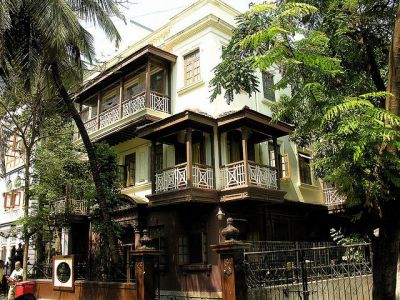
The Mani Bhavan is a modest two-story building which played an important role in India’s struggle for independence. Between 1917 and 1934 it served as the Mumbai headquarters of the father of modern India Mahatma Gandhi whenever he visited the city. The house originally belonged to his supporter Revashankar Jagjeevan Jhaveri, who offered it as a base for Gandhi’s work during a crucial period of political change.
During those seventeen years, the building became a center of strategy, discussion, and activism. Several key campaigns associated with Gandhi began here, including the Non-Cooperation Movement, the Civil Disobedience Movement, the Swadeshi campaign encouraging the boycott of foreign goods, and the broader philosophy of Satyagraha. The house also welcomed many influential visitors and thinkers of the time.
After Gandhi’s death, the property was taken over in 1955 by the Gandhi Smarak Nidhi organization, which transformed it into a museum preserving the memory of his work. Visitors usually begin their exploration on the ground floor, where a research library and picture gallery introduce the life and philosophy of Mahatma Gandhi. The library contains books, documents, and archival material related to Gandhi’s writings and the Indian independence movement, while the gallery displays historic photographs and publications connected to his campaigns and political activities.
Moving up to the first floor, visitors encounter one of the museum’s most distinctive exhibits: a series of 28 miniature dioramas created by artist Sushila Gokhale Patel. These detailed scenes portray key moments in Gandhi’s life, including his early activism in South Africa, the launch of the Non-Cooperation Movement, and major milestones of India’s independence struggle.
Continuing to the second floor, visitors reach the room where Gandhi lived and worked during his stays in Bombay. Preserved close to its original appearance, the space contains personal items such as his spinning wheel, simple bedding, and writing desk. The museum also displays copies of letters Gandhi wrote to world leaders, including Franklin D. Roosevelt and Adolf Hitler, offering insight into his global influence and the ideas that shaped modern India.
During those seventeen years, the building became a center of strategy, discussion, and activism. Several key campaigns associated with Gandhi began here, including the Non-Cooperation Movement, the Civil Disobedience Movement, the Swadeshi campaign encouraging the boycott of foreign goods, and the broader philosophy of Satyagraha. The house also welcomed many influential visitors and thinkers of the time.
After Gandhi’s death, the property was taken over in 1955 by the Gandhi Smarak Nidhi organization, which transformed it into a museum preserving the memory of his work. Visitors usually begin their exploration on the ground floor, where a research library and picture gallery introduce the life and philosophy of Mahatma Gandhi. The library contains books, documents, and archival material related to Gandhi’s writings and the Indian independence movement, while the gallery displays historic photographs and publications connected to his campaigns and political activities.
Moving up to the first floor, visitors encounter one of the museum’s most distinctive exhibits: a series of 28 miniature dioramas created by artist Sushila Gokhale Patel. These detailed scenes portray key moments in Gandhi’s life, including his early activism in South Africa, the launch of the Non-Cooperation Movement, and major milestones of India’s independence struggle.
Continuing to the second floor, visitors reach the room where Gandhi lived and worked during his stays in Bombay. Preserved close to its original appearance, the space contains personal items such as his spinning wheel, simple bedding, and writing desk. The museum also displays copies of letters Gandhi wrote to world leaders, including Franklin D. Roosevelt and Adolf Hitler, offering insight into his global influence and the ideas that shaped modern India.
11) Chhatrapati Shivaji Maharaj Terminus (Victoria Terminus) (must see)
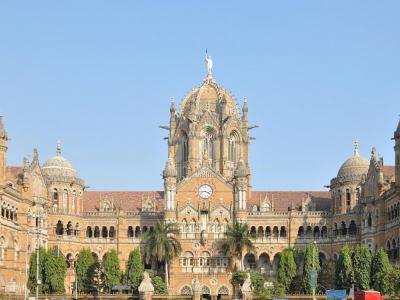
Victoria Terminus is a masterpiece of 19th-century railway architecture. The station was built between 1878 and 1887 and inaugurated during the Golden Jubilee of Queen Victoria. Originally intended to serve as the headquarters of the Great Indian Peninsula Railway, the building reflected Bombay’s growing importance as a major port and transportation hub linking the city with the rest of the Indian subcontinent. In 1996, the station was renamed in honor of the Maratha ruler Chhatrapati Shivaji.
Designed by British architect Frederick William Stevens, the station is widely regarded as one of the finest examples of Victorian Gothic Revival architecture in India. The structure blends European Gothic forms with Indian decorative elements, creating a richly detailed façade. Pointed arches, stained-glass windows, carved stonework, and ornate turrets define the exterior, while the central ribbed dome crowns the building.
Several symbolic sculptures add to the building’s character. At the entrance, stone figures of a lion at the left and a tiger at the right represent Britain and India, reflecting the colonial era in which the station was constructed. Atop the central dome stands a four-meter-high statue of a female figure holding a torch and a spoked wheel, symbolizing progress. Closer to the windows and arches, you’ll notice highly detailed stone relief panels filled with plants, animals, and ornamental patterns.
Looking closely at the façade above the ground-floor arches. It features a series of ten circular portrait medallions, representing key figures in the history of the Indian railways and the British administration. Among these prominent figures is the medallion of Jagannath Shankarsheth, a celebrated Indian philanthropist and one of the railway’s first Indian directors. Facing the building, you can find it on the far right wing of the structure, being the third medallion from the left.
Today, Victoria Terminus remains one of the busiest railway stations in India, serving more than three million passengers each day through its suburban and long-distance rail networks.
Designed by British architect Frederick William Stevens, the station is widely regarded as one of the finest examples of Victorian Gothic Revival architecture in India. The structure blends European Gothic forms with Indian decorative elements, creating a richly detailed façade. Pointed arches, stained-glass windows, carved stonework, and ornate turrets define the exterior, while the central ribbed dome crowns the building.
Several symbolic sculptures add to the building’s character. At the entrance, stone figures of a lion at the left and a tiger at the right represent Britain and India, reflecting the colonial era in which the station was constructed. Atop the central dome stands a four-meter-high statue of a female figure holding a torch and a spoked wheel, symbolizing progress. Closer to the windows and arches, you’ll notice highly detailed stone relief panels filled with plants, animals, and ornamental patterns.
Looking closely at the façade above the ground-floor arches. It features a series of ten circular portrait medallions, representing key figures in the history of the Indian railways and the British administration. Among these prominent figures is the medallion of Jagannath Shankarsheth, a celebrated Indian philanthropist and one of the railway’s first Indian directors. Facing the building, you can find it on the far right wing of the structure, being the third medallion from the left.
Today, Victoria Terminus remains one of the busiest railway stations in India, serving more than three million passengers each day through its suburban and long-distance rail networks.
12) Saint Thomas' Cathedral
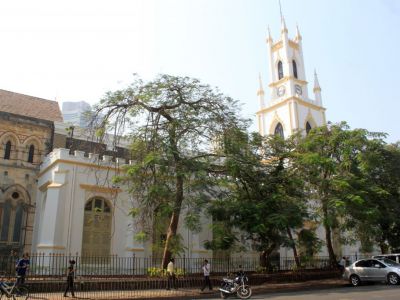
Saint Thomas’ Cathedral has stood for more than three centuries and is regarded as the oldest Anglican church in the city. It serves as the cathedral church of the Diocese of Mumbai within the Church of North India and was dedicated to Saint Thomas the Apostle, who is traditionally believed to have introduced Christianity to India. In 2004, the cathedral received the UNESCO Asia-Pacific Heritage Award for Culture Heritage Conservation.
The foundation stone of the church was laid in 1676, although the building was not completed and consecrated for divine service until Christmas Day in 1718. At the time, Bombay was a fortified British settlement. Over the centuries, it has remained an important landmark and continues to serve an active congregation. Historically, Saint Thomas’ Cathedral served as the "Zero Point" from which all distances in Bombay were measured. There is still a milestone within the cathedral grounds marking "0 miles".
The cathedral’s interior is often likened to a "Miniature Westminster Abbey" due to its extensive collection of intricate white marble memorials and monuments dedicated to the British officers, judges, and high-ranking administrators who governed and lived within the fortified settlement during the 18th and 19th centuries.
The cathedral also maintains a long association with the Cathedral and John Connon School, one of Mumbai’s oldest educational institutions. Established in 1860, the school was originally founded in part to provide choristers for the church. To this day, the cathedral hosts several school events, including the Founder’s Day Service on 14 November, the annual Christmas Carol Service.
The foundation stone of the church was laid in 1676, although the building was not completed and consecrated for divine service until Christmas Day in 1718. At the time, Bombay was a fortified British settlement. Over the centuries, it has remained an important landmark and continues to serve an active congregation. Historically, Saint Thomas’ Cathedral served as the "Zero Point" from which all distances in Bombay were measured. There is still a milestone within the cathedral grounds marking "0 miles".
The cathedral’s interior is often likened to a "Miniature Westminster Abbey" due to its extensive collection of intricate white marble memorials and monuments dedicated to the British officers, judges, and high-ranking administrators who governed and lived within the fortified settlement during the 18th and 19th centuries.
The cathedral also maintains a long association with the Cathedral and John Connon School, one of Mumbai’s oldest educational institutions. Established in 1860, the school was originally founded in part to provide choristers for the church. To this day, the cathedral hosts several school events, including the Founder’s Day Service on 14 November, the annual Christmas Carol Service.
13) Town Hall
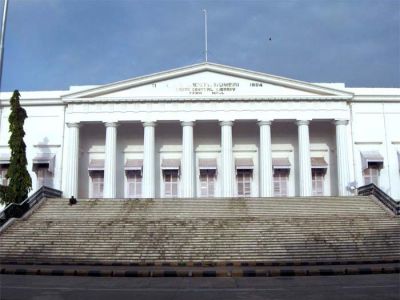
Located in the Fort area of South Mumbai is an imperial building housing the Asiatic Society of Bombay and a museum- the Town Hall. The origin of the Asiatic Society can be traced back to 1804 when the first meeting of Literary Society of Bombay was held. In 1811, James McKintosh proposed the idea of the Town Hall. The structure consisting of a portico with 8 Doric pillars was designed by Colonel Thomas Cowper in 1830. The marble statutes of benefactors of the city, wrought iron loggias, parquet flooring and spiral staircases are all a part of the exquisite edifice which is highly influenced by Greek and Roman architectural styles. The construction cost of this neolithic building was around 500,000 pounds and the construction materials were brought from England.
The library contains a collection 800,000 books making it Mumbai’s largest library. One of the valuable reserves in the library is a first edition copy of “Inferno” by Dante. On the other hand a rare gold mohur(coin) belonging to the great Mughal Emperor, Akbar is exhibited in the museum along with a numismatic collection of over 1000 ancient coins. These treasures can be viewed with permission only but the library is open to the public. The library aims at encouraging research in sciences, literature and oriental arts.
The library contains a collection 800,000 books making it Mumbai’s largest library. One of the valuable reserves in the library is a first edition copy of “Inferno” by Dante. On the other hand a rare gold mohur(coin) belonging to the great Mughal Emperor, Akbar is exhibited in the museum along with a numismatic collection of over 1000 ancient coins. These treasures can be viewed with permission only but the library is open to the public. The library aims at encouraging research in sciences, literature and oriental arts.
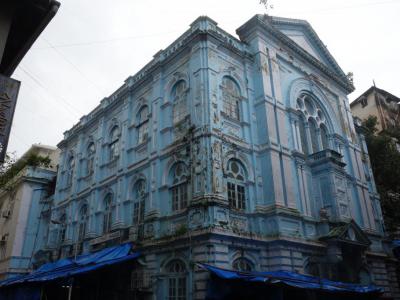
14) Keneseth Eliyahoo Synagogue
The Keneseth Eliyahoo Synagogue is a historic synagogue associated with Orthodox Judaism. Completed in 1884, it is the second-oldest Baghdadi Jewish synagogue in the city. The building was commissioned by Jacob Elias Sassoon, the grandson of David Sassoon, a prominent Jewish merchant and philanthropist who had settled in Bombay after leaving Baghdad in the early 19th century.
The structure features a stone masonry base with a brick masonry superstructure. Although long known as the “Blue Synagogue of Mumbai” because of its bright exterior, a major restoration carried out from 2018 to 2019 revealed that the synagogue’s original appearance was off-white with indigo borders. The building was subsequently restored to this historic color scheme, while the well-known nickname has remained in use.
Inside, the synagogue displays finely ornamented pillars and elegant decorative details. The sanctuary faces west toward Jerusalem, and the bimah, used for the reading of the Torah, is positioned at the center of the prayer hall. A tall stained-glass arch rises above the sacred space. As in many traditional synagogues, a gallery on the upper level provides seating for female worshipers. The synagogue houses Torah scrolls and other religious objects associated with the Sassoon family, as well as rooms used for community gatherings and education.
The structure features a stone masonry base with a brick masonry superstructure. Although long known as the “Blue Synagogue of Mumbai” because of its bright exterior, a major restoration carried out from 2018 to 2019 revealed that the synagogue’s original appearance was off-white with indigo borders. The building was subsequently restored to this historic color scheme, while the well-known nickname has remained in use.
Inside, the synagogue displays finely ornamented pillars and elegant decorative details. The sanctuary faces west toward Jerusalem, and the bimah, used for the reading of the Torah, is positioned at the center of the prayer hall. A tall stained-glass arch rises above the sacred space. As in many traditional synagogues, a gallery on the upper level provides seating for female worshipers. The synagogue houses Torah scrolls and other religious objects associated with the Sassoon family, as well as rooms used for community gatherings and education.
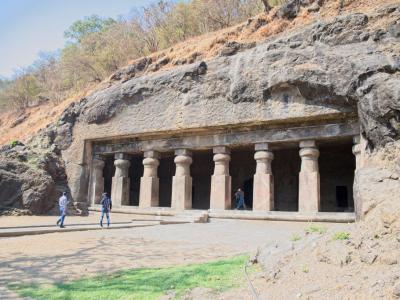
15) Elephanta Caves (must see)
Elephanta Caves are a series of cave temples on Elephanta Island. The majority of these temples are dedicated to Shiva, who is one of the principal deities in Hinduism. The cave temples are thought to have been built between the 5th and 6th centuries.
There two groups of seven caves on the island. The main cave, known as Cave 1 or the Great Cave is the primary site for tourists. The 130-foot cave has a grand hall with east and west wings. A number of carvings and friezes depict the traditional views of Shiva slaying Andhaka, the wedding of Shiva and many others.
The Linga Shrine is the primary shrine in Cave 1. There are four entrances into the free-standing shrine. Each of these entrances are guarded by two dvarapalas. Inside of the shrine is the Linga, which is an abstract representation of Shiva.
Elephanta Island is located in Mumbai Harbor. It is only reachable by ferry from the Gateway of India. The ferry is about a 1.5 hour trip each way. The monument is open from 6 AM through 6 PM daily.
There two groups of seven caves on the island. The main cave, known as Cave 1 or the Great Cave is the primary site for tourists. The 130-foot cave has a grand hall with east and west wings. A number of carvings and friezes depict the traditional views of Shiva slaying Andhaka, the wedding of Shiva and many others.
The Linga Shrine is the primary shrine in Cave 1. There are four entrances into the free-standing shrine. Each of these entrances are guarded by two dvarapalas. Inside of the shrine is the Linga, which is an abstract representation of Shiva.
Elephanta Island is located in Mumbai Harbor. It is only reachable by ferry from the Gateway of India. The ferry is about a 1.5 hour trip each way. The monument is open from 6 AM through 6 PM daily.
