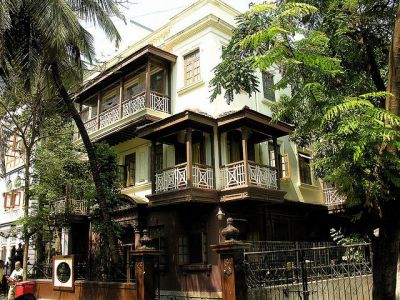


Mani Bhavan Gandhi Museum, Mumbai (must see)
The Mani Bhavan is a modest two-story building which played an important role in India’s struggle for independence. Between 1917 and 1934 it served as the Mumbai headquarters of the father of modern India Mahatma Gandhi whenever he visited the city. The house originally belonged to his supporter Revashankar Jagjeevan Jhaveri, who offered it as a base for Gandhi’s work during a crucial period of political change.
During those seventeen years, the building became a center of strategy, discussion, and activism. Several key campaigns associated with Gandhi began here, including the Non-Cooperation Movement, the Civil Disobedience Movement, the Swadeshi campaign encouraging the boycott of foreign goods, and the broader philosophy of Satyagraha. The house also welcomed many influential visitors and thinkers of the time.
After Gandhi’s death, the property was taken over in 1955 by the Gandhi Smarak Nidhi organization, which transformed it into a museum preserving the memory of his work. Visitors usually begin their exploration on the ground floor, where a research library and picture gallery introduce the life and philosophy of Mahatma Gandhi. The library contains books, documents, and archival material related to Gandhi’s writings and the Indian independence movement, while the gallery displays historic photographs and publications connected to his campaigns and political activities.
Moving up to the first floor, visitors encounter one of the museum’s most distinctive exhibits: a series of 28 miniature dioramas created by artist Sushila Gokhale Patel. These detailed scenes portray key moments in Gandhi’s life, including his early activism in South Africa, the launch of the Non-Cooperation Movement, and major milestones of India’s independence struggle.
Continuing to the second floor, visitors reach the room where Gandhi lived and worked during his stays in Bombay. Preserved close to its original appearance, the space contains personal items such as his spinning wheel, simple bedding, and writing desk. The museum also displays copies of letters Gandhi wrote to world leaders, including Franklin D. Roosevelt and Adolf Hitler, offering insight into his global influence and the ideas that shaped modern India.
During those seventeen years, the building became a center of strategy, discussion, and activism. Several key campaigns associated with Gandhi began here, including the Non-Cooperation Movement, the Civil Disobedience Movement, the Swadeshi campaign encouraging the boycott of foreign goods, and the broader philosophy of Satyagraha. The house also welcomed many influential visitors and thinkers of the time.
After Gandhi’s death, the property was taken over in 1955 by the Gandhi Smarak Nidhi organization, which transformed it into a museum preserving the memory of his work. Visitors usually begin their exploration on the ground floor, where a research library and picture gallery introduce the life and philosophy of Mahatma Gandhi. The library contains books, documents, and archival material related to Gandhi’s writings and the Indian independence movement, while the gallery displays historic photographs and publications connected to his campaigns and political activities.
Moving up to the first floor, visitors encounter one of the museum’s most distinctive exhibits: a series of 28 miniature dioramas created by artist Sushila Gokhale Patel. These detailed scenes portray key moments in Gandhi’s life, including his early activism in South Africa, the launch of the Non-Cooperation Movement, and major milestones of India’s independence struggle.
Continuing to the second floor, visitors reach the room where Gandhi lived and worked during his stays in Bombay. Preserved close to its original appearance, the space contains personal items such as his spinning wheel, simple bedding, and writing desk. The museum also displays copies of letters Gandhi wrote to world leaders, including Franklin D. Roosevelt and Adolf Hitler, offering insight into his global influence and the ideas that shaped modern India.
Want to visit this sight? Check out these Self-Guided Walking Tours in Mumbai. Alternatively, you can download the mobile app "GPSmyCity: Walks in 1K+ Cities" from Apple App Store or Google Play Store. The app turns your mobile device to a personal tour guide and it works offline, so no data plan is needed when traveling abroad.
Download The GPSmyCity App



Mani Bhavan Gandhi Museum on Map
Sight Name: Mani Bhavan Gandhi Museum
Sight Location: Mumbai, India (See walking tours in Mumbai)
Sight Type: Museum/Gallery
Guide(s) Containing This Sight:
Sight Location: Mumbai, India (See walking tours in Mumbai)
Sight Type: Museum/Gallery
Guide(s) Containing This Sight:
Nearby Sights
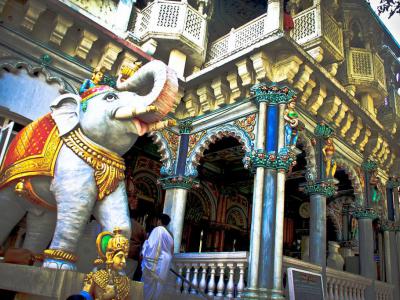
Walking Tours in Mumbai, India

Create Your Own Walk in Mumbai
Creating your own self-guided walk in Mumbai is easy and fun. Choose the city attractions that you want to see and a walk route map will be created just for you. You can even set your hotel as the start point of the walk.
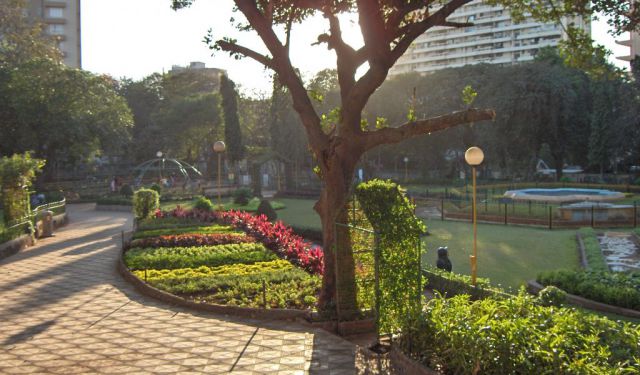
Malabar Hill Walking Tour
When the American writer Mark Twain arrived in Bombay during his world lecture tour, the view from Malabar Hill left a strong impression. In his travel book “Following the Equator”, he admired the city’s coastal setting, describing Mumbai as “by far the handsomest city in India”.
Malabar Hill is one of Mumbai’s most historic and prestigious neighborhoods, rising above the western... view more
Tour Duration: 2 Hour(s)
Travel Distance: 3.4 Km or 2.1 Miles
Malabar Hill is one of Mumbai’s most historic and prestigious neighborhoods, rising above the western... view more
Tour Duration: 2 Hour(s)
Travel Distance: 3.4 Km or 2.1 Miles
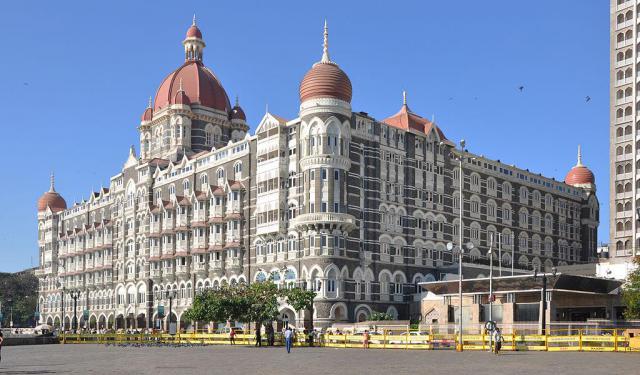
Mumbai Downtown Walking Tour
English writer Rudyard Kipling, who was born in Bombay in 1865, famously called it “the Mother of Cities”, a place that absorbs people from everywhere and keeps giving birth to new lives, ambitions, and contradictions.
Long before it became India’s largest city, the area consisted of seven low-lying islands along the Konkan coast, inhabited by fishing communities known as the Kolis.... view more
Tour Duration: 2 Hour(s)
Travel Distance: 3.9 Km or 2.4 Miles
Long before it became India’s largest city, the area consisted of seven low-lying islands along the Konkan coast, inhabited by fishing communities known as the Kolis.... view more
Tour Duration: 2 Hour(s)
Travel Distance: 3.9 Km or 2.4 Miles
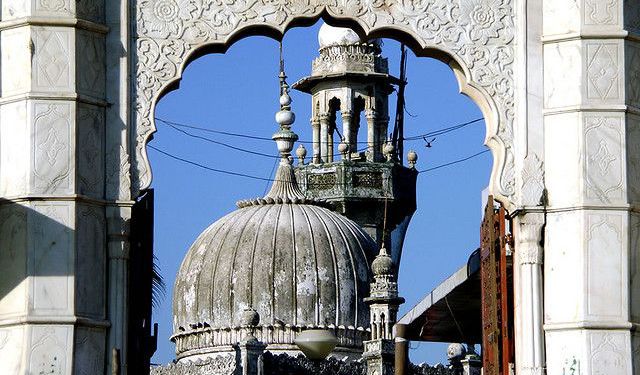
Mumbai's Historical Churches
The seven islands that later formed Mumbai were originally inhabited by Marathi-speaking Koli fishing communities, whose primary religion was Hinduism. Over time, the city’s strategic coastal position attracted traders and settlers from across the Indian Ocean world. Muslim communities became established through maritime trade and later expanded during the period of Mughal influence. Today,... view more
Tour Duration: 2 Hour(s)
Travel Distance: 3.8 Km or 2.4 Miles
Tour Duration: 2 Hour(s)
Travel Distance: 3.8 Km or 2.4 Miles
Useful Travel Guides for Planning Your Trip
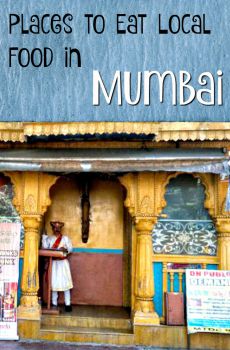
Places to Eat Local Food in Mumbai
As its said, in a city like Mumbai, anybody wanting a good meal any time of the day, there’s always a rush and a stomach will always be fed. Whether its a quick bite or to indulge yourself, there is a plethora of tastes and flavours, 24/7, vying to satiate your taste buds. Multifaceted,...
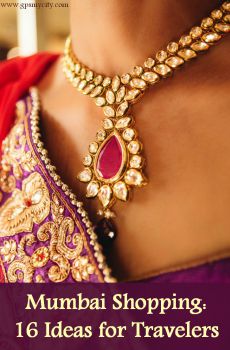
Mumbai Shopping: 16 Souvenir Ideas for Travelers
In India, a foreigner can't get far without insider knowledge, whether it's for souvenir shopping or something else. Mumbai (formerly known as Bombay) is by far the most popular and the largest of Indian cities, teeming with a plethora of things representative of India's millenia-long...