Custom Walk in Rio de Janeiro, Brazil by boneva_lila_22d575 created on 2026-03-21
Guide Location: Brazil » Rio de Janeiro
Guide Type: Custom Walk
# of Sights: 11
Tour Duration: 3 Hour(s)
Travel Distance: 7.2 Km or 4.5 Miles
Share Key: LDNYL
Guide Type: Custom Walk
# of Sights: 11
Tour Duration: 3 Hour(s)
Travel Distance: 7.2 Km or 4.5 Miles
Share Key: LDNYL
How It Works
Please retrieve this walk in the GPSmyCity app. Once done, the app will guide you from one tour stop to the next as if you had a personal tour guide. If you created the walk on this website or come to the page via a link, please follow the instructions below to retrieve the walk in the app.
Retrieve This Walk in App
Step 1. Download the app "GPSmyCity: Walks in 1K+ Cities" on Apple App Store or Google Play Store.



Step 2. In the GPSmyCity app, download(or launch) the guide "Rio de Janeiro Map and Walking Tours".
Step 3. Tap the menu button located at upper right corner of the "Walks" screen and select "Retrieve custom walk". Enter the share key: LDNYL
1) Candelária Church (must see)
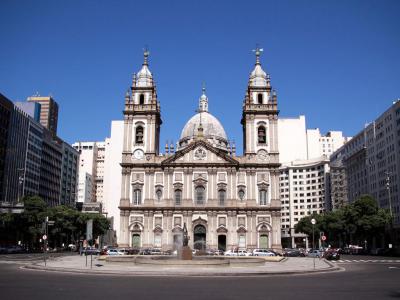
The Candelária Church is one of Rio de Janeiro’s most important and imposing Roman Catholic landmarks. Its origins lie in a quasi-legendary event from the early 17th century. According to tradition, a Portuguese couple survived a violent storm at sea aboard a ship named Candelária and vowed to build a chapel in gratitude if they reached land safely. Upon arriving in Rio de Janeiro, they fulfilled their oath by sponsoring a small chapel dedicated to Our Lady of the Candelária around 1609.
As Rio grew in size, wealth, and political importance, the modest chapel was gradually replaced by a far grander structure. Construction and decoration of the present church extended from 1775 through the late 19th century, resulting in a layered architectural composition. The façade retains a Baroque character, while the interior blends Neoclassical and Neo-Renaissance elements.
Inside, the scale is immediately impressive. Soaring columns, marble floors, and expansive spaces create a sense of solemn grandeur. The main altar was designed by Brazilian architect Archimedes Memória, while richly colored stained-glass windows produced in Germany filter light into the vast nave. The main entrance features monumental bronze doors created around 1901, and two impressive Art Nouveau bronze pulpits, added in 1931, further enrich the interior.
Beyond its architecture, Candelária has played a significant role in Brazil’s civic and social history, frequently serving as a site for public gatherings and memorials. Thanks to its excellent acoustics, the church is also renowned as a venue for concerts and organ recitals, making a visit particularly rewarding when music fills the space.
As Rio grew in size, wealth, and political importance, the modest chapel was gradually replaced by a far grander structure. Construction and decoration of the present church extended from 1775 through the late 19th century, resulting in a layered architectural composition. The façade retains a Baroque character, while the interior blends Neoclassical and Neo-Renaissance elements.
Inside, the scale is immediately impressive. Soaring columns, marble floors, and expansive spaces create a sense of solemn grandeur. The main altar was designed by Brazilian architect Archimedes Memória, while richly colored stained-glass windows produced in Germany filter light into the vast nave. The main entrance features monumental bronze doors created around 1901, and two impressive Art Nouveau bronze pulpits, added in 1931, further enrich the interior.
Beyond its architecture, Candelária has played a significant role in Brazil’s civic and social history, frequently serving as a site for public gatherings and memorials. Thanks to its excellent acoustics, the church is also renowned as a venue for concerts and organ recitals, making a visit particularly rewarding when music fills the space.
2) Museum of Tomorrow (must see)
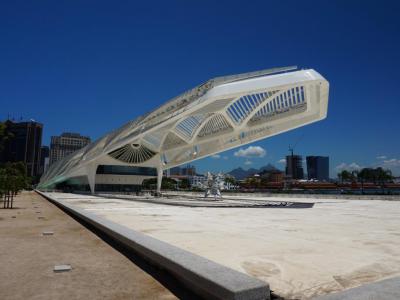
The Museum of Tomorrow, situated in Rio de Janeiro, is a science museum known for its unique architecture, designed by the Spanish neofuturistic architect Santiago Calatrava. The museum officially opened its doors on December 17, 2015, with President Dilma Rousseff in attendance.
The Museum of Tomorrow is located on Mauá Pier, within a spacious green area spanning approximately 30,000 square meters. The surroundings feature gardens, water features, a bike path, and leisure spaces. The museum building itself covers an area of 15,000 square meters and incorporates sustainable design principles inspired by nature. Santiago Calatrava's architectural vision integrates local natural resources, such as water from Guanabara Bay, which is used for the museum's interior air conditioning and then recycled in water features. Calatrava drew inspiration from the bromeliads at the Rio de Janeiro Botanical Garden when conceiving the museum's design.
The Museum of Tomorrow's architectural concept harmoniously blends with the landscape of the port area and Guanabara Bay. Notably, the building's roof boasts large steel structures that move like wings and serve as a foundation for solar energy collection panels. This sustainable approach aligns with the museum's pursuit of LEED (Leadership in Energy and Environmental Design) certification from the Green Building Council.
Inside, the museum's main exhibition invites visitors to explore five key thematic areas: Cosmos, Earth, Anthropocene, Tomorrow, and Us. This journey is facilitated through various experiments and interactive experiences. The museum ingeniously combines science with innovative design to emphasize the importance of sustainable urban development and an ecologically-conscious world.
The Museum of Tomorrow is located on Mauá Pier, within a spacious green area spanning approximately 30,000 square meters. The surroundings feature gardens, water features, a bike path, and leisure spaces. The museum building itself covers an area of 15,000 square meters and incorporates sustainable design principles inspired by nature. Santiago Calatrava's architectural vision integrates local natural resources, such as water from Guanabara Bay, which is used for the museum's interior air conditioning and then recycled in water features. Calatrava drew inspiration from the bromeliads at the Rio de Janeiro Botanical Garden when conceiving the museum's design.
The Museum of Tomorrow's architectural concept harmoniously blends with the landscape of the port area and Guanabara Bay. Notably, the building's roof boasts large steel structures that move like wings and serve as a foundation for solar energy collection panels. This sustainable approach aligns with the museum's pursuit of LEED (Leadership in Energy and Environmental Design) certification from the Green Building Council.
Inside, the museum's main exhibition invites visitors to explore five key thematic areas: Cosmos, Earth, Anthropocene, Tomorrow, and Us. This journey is facilitated through various experiments and interactive experiences. The museum ingeniously combines science with innovative design to emphasize the importance of sustainable urban development and an ecologically-conscious world.
3) Saint Benedict Church and Monastery (must see)
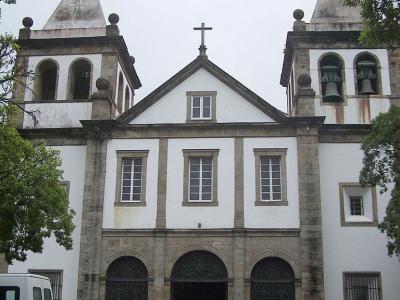
Saint Benedict Church and Monastery is one of Rio de Janeiro’s most important religious and artistic landmarks, rising above the city centre on Saint Benedict Hill. Its history began in 1590, when the land was donated to the Benedictine monks. Construction of the present complex started in 1633 and was completed in 1671, resulting in a refined example of Portuguese colonial architecture with strong Mannerist influences. The façade is marked by three entrance archways beneath a triangular gable, flanked by two towers topped with pyramidal spires. Passing through the entrance, visitors arrive at a tiled porch fitted with 19th-century iron gates.
While the exterior is relatively restrained, the interior is the church’s most famous feature. Almost every square inch of the walls and ceilings is covered in intricate wood carvings coated in 22-carat gold leaf. This massive decorative program took nearly a century to complete, spanning the years from 1668 to 1743. Look up to see a series of paintings depicting the life of Saint Benedict, framed by heavy, gold-covered scrollwork.
While admiring the church’s golden ornamentation, walk down the central aisle toward the far end of the nave. There, the High Altar displays the throne for the exposition of the Blessed Sacrament, positioned at the very top of the altar structure. Flanking the throne are statues of Saint Benedict and Saint Scholastica, his sister. Facing the altar, move into the right-hand side chapel, known as the Chapel of the Blessed Sacrament. It features some of the most delicate Rococo carvings in the church, lighter and more floral in character than the heavier Baroque decoration of the main nave. The silverwork here is particularly exquisite.
Beyond its artistic value, the monastery played a major role in education and urban development and remains active today. Visitors who attend the traditional Sunday 10:00 a.m. Mass can still hear Gregorian chant accompanied by organ music.
While the exterior is relatively restrained, the interior is the church’s most famous feature. Almost every square inch of the walls and ceilings is covered in intricate wood carvings coated in 22-carat gold leaf. This massive decorative program took nearly a century to complete, spanning the years from 1668 to 1743. Look up to see a series of paintings depicting the life of Saint Benedict, framed by heavy, gold-covered scrollwork.
While admiring the church’s golden ornamentation, walk down the central aisle toward the far end of the nave. There, the High Altar displays the throne for the exposition of the Blessed Sacrament, positioned at the very top of the altar structure. Flanking the throne are statues of Saint Benedict and Saint Scholastica, his sister. Facing the altar, move into the right-hand side chapel, known as the Chapel of the Blessed Sacrament. It features some of the most delicate Rococo carvings in the church, lighter and more floral in character than the heavier Baroque decoration of the main nave. The silverwork here is particularly exquisite.
Beyond its artistic value, the monastery played a major role in education and urban development and remains active today. Visitors who attend the traditional Sunday 10:00 a.m. Mass can still hear Gregorian chant accompanied by organ music.
4) Old Cathedral of Rio de Janeiro
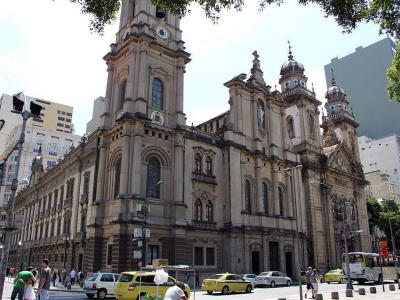
The Old Cathedral of Rio de Janeiro is one of the city’s most historically important religious buildings and a key witness to Brazil’s colonial and imperial eras. Originally founded as a Carmelite church in the 17th century, it was expanded and rebuilt in the mid-18th century as Rio de Janeiro grew in political importance. From around 1808 until 1976, it served as the city’s cathedral.
Its status changed in 1808, when the Portuguese royal court arrived in Rio while fleeing Napoleon’s invasion of Portugal. The church became the Royal Chapel and later the Imperial Chapel of independent Brazil. Kings John VI, Pedro I, and Pedro II all worshipped here, and the building hosted royal baptisms, weddings, and coronations, including the crowning of Dom Pedro I as Emperor in 1822.
While the exterior is relatively restrained, the interior ranks among the most harmonious church decorations in Rio. Executed largely after 1785, the Rococo woodwork is admired for its lightness and unity of style. Much of it was carved by Inácio Ferreira Pinto, one of Rio’s finest Rococo artists, who also created the main altarpiece. Gilded chapels, painted ceilings, oval portraits of the Apostles, and elegant balconies line the single-aisled nave, balanced by areas of plain white wall. The result is an interior of refined elegance that rewards anyone who steps inside, offering a contrast to the church’s modest exterior.
Its status changed in 1808, when the Portuguese royal court arrived in Rio while fleeing Napoleon’s invasion of Portugal. The church became the Royal Chapel and later the Imperial Chapel of independent Brazil. Kings John VI, Pedro I, and Pedro II all worshipped here, and the building hosted royal baptisms, weddings, and coronations, including the crowning of Dom Pedro I as Emperor in 1822.
While the exterior is relatively restrained, the interior ranks among the most harmonious church decorations in Rio. Executed largely after 1785, the Rococo woodwork is admired for its lightness and unity of style. Much of it was carved by Inácio Ferreira Pinto, one of Rio’s finest Rococo artists, who also created the main altarpiece. Gilded chapels, painted ceilings, oval portraits of the Apostles, and elegant balconies line the single-aisled nave, balanced by areas of plain white wall. The result is an interior of refined elegance that rewards anyone who steps inside, offering a contrast to the church’s modest exterior.
5) Palácio Tiradentes
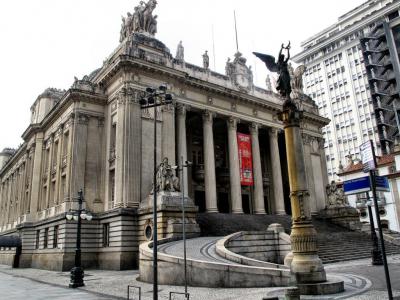
The Tiradentes Palace, located in the Centro neighborhood of Rio de Janeiro, was officially opened on May 6, 1926. It served as the former headquarters for the Chamber of Deputies of Brazil from 1926 to 1960 and currently houses the Legislative Assembly of the State of Rio de Janeiro. This grand structure replaced a previous building that had occupied the same location. The initial construction, known as the House of Chamber and Jail, was commissioned by the local government of Rio de Janeiro back in 1631.
The older imperial building was demolished in 1922 to make way for the Tiradentes Palace, an imposing edifice designed in the eclectic architectural style by Archimedes Memoria and Francisque Couchet. It was named in honor of Tiradentes, who was executed for his involvement in a conspiracy against the Portuguese crown in 1789, aimed at establishing a republic in Minas Gerais.
The architectural style of the building predominantly exhibits eclecticism, incorporating classical and Renaissance elements. In front of the palace stands a prominent statue of Tiradentes, created by sculptor Francisco de Andrade, which mirrors the portrayal of Tiradentes as a Christian martyr-like figure as depicted by the painter Décio Villares.
In 1960, the Tiradentes Palace became the home of the Legislative Assembly of the State of Guanabara, which existed from 1960 to 1975. Subsequently, it transitioned to housing the Legislative Assembly of the State of Rio de Janeiro, a role it continues to fulfill to this day. Notably, all Brazilian presidents from 1926 to 1960 took their oath of office at the Tiradentes Palace, starting with Washington Luís, who was the first to do so, and concluding with Juscelino Kubitschek.
Why You Should Visit:
The admire beautiful architecture while learning about a piece of Rio.
You can have a guided tour in Portuguese, but also in English, and it's for free.
During the tour you gain access to areas normally not accessible for the general public.
The older imperial building was demolished in 1922 to make way for the Tiradentes Palace, an imposing edifice designed in the eclectic architectural style by Archimedes Memoria and Francisque Couchet. It was named in honor of Tiradentes, who was executed for his involvement in a conspiracy against the Portuguese crown in 1789, aimed at establishing a republic in Minas Gerais.
The architectural style of the building predominantly exhibits eclecticism, incorporating classical and Renaissance elements. In front of the palace stands a prominent statue of Tiradentes, created by sculptor Francisco de Andrade, which mirrors the portrayal of Tiradentes as a Christian martyr-like figure as depicted by the painter Décio Villares.
In 1960, the Tiradentes Palace became the home of the Legislative Assembly of the State of Guanabara, which existed from 1960 to 1975. Subsequently, it transitioned to housing the Legislative Assembly of the State of Rio de Janeiro, a role it continues to fulfill to this day. Notably, all Brazilian presidents from 1926 to 1960 took their oath of office at the Tiradentes Palace, starting with Washington Luís, who was the first to do so, and concluding with Juscelino Kubitschek.
Why You Should Visit:
The admire beautiful architecture while learning about a piece of Rio.
You can have a guided tour in Portuguese, but also in English, and it's for free.
During the tour you gain access to areas normally not accessible for the general public.
6) Confeitaria Colombo (Colombo Confectionery) (must see)
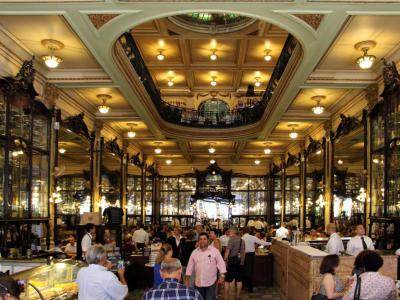
Confeitaria Colombo is one of Rio de Janeiro’s most celebrated historic cafés and a defining landmark of the city’s Belle Époque. Founded in 1894 by Portuguese immigrants, it was conceived as a refined European-style confectionery at a moment when Rio was reinventing itself as a modern capital. Today, it is frequently listed among the most beautiful cafés in the world.
The cafe’s architecture and interior design are central to its appeal. In the early 20th century, Colombo was remodeled in the fashionable Art Nouveau style, reflecting European trends of the time. Much of the wooden furniture was handcrafted by the artisan Antonio Borsoi, while towering mirrors imported from Belgium are framed in jacaranda wood. Portuguese tiles decorate the walls, and a large stained-glass skylight from France crowns the space, flooding the interior with light. An upper floor and tearoom were added in 1922, offering a quieter vantage point overlooking the main hall below.
Beyond its beauty, Colombo Confectionery has long been a place of conversation and influence. Heads of state and royalty, including Queen Elizabeth II of England, have visited, as have Brazilian presidents such as Getúlio Vargas. The café also served as a meeting place for Brazilian artists, musicians, and writers; composer Heitor Villa-Lobos and writer Lima Barreto were among those who gathered here.
Alongside coffee and traditional Portuguese pastries, Colombo offers classic Brazilian sweets. Trying a brigadeiro—made with condensed milk and chocolate—is almost obligatory.
The cafe’s architecture and interior design are central to its appeal. In the early 20th century, Colombo was remodeled in the fashionable Art Nouveau style, reflecting European trends of the time. Much of the wooden furniture was handcrafted by the artisan Antonio Borsoi, while towering mirrors imported from Belgium are framed in jacaranda wood. Portuguese tiles decorate the walls, and a large stained-glass skylight from France crowns the space, flooding the interior with light. An upper floor and tearoom were added in 1922, offering a quieter vantage point overlooking the main hall below.
Beyond its beauty, Colombo Confectionery has long been a place of conversation and influence. Heads of state and royalty, including Queen Elizabeth II of England, have visited, as have Brazilian presidents such as Getúlio Vargas. The café also served as a meeting place for Brazilian artists, musicians, and writers; composer Heitor Villa-Lobos and writer Lima Barreto were among those who gathered here.
Alongside coffee and traditional Portuguese pastries, Colombo offers classic Brazilian sweets. Trying a brigadeiro—made with condensed milk and chocolate—is almost obligatory.
7) Royal Portuguese Cabinet of Reading
The Royal Portuguese Cabinet of Reading is one of Rio de Janeiro’s most celebrated cultural landmarks and is widely regarded as one of the most beautiful libraries in the world. Founded in 1837 by Portuguese immigrants, it was created to preserve and promote the Portuguese language, literature, and heritage in Brazil.
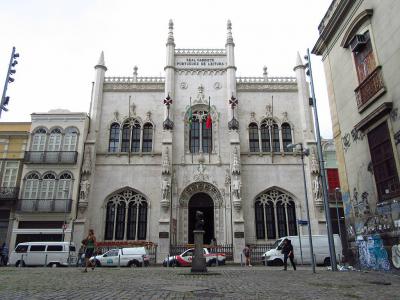
The current building was completed in 1887 and is a masterpiece of the Neo-Manueline style, inspired by the Gothic-Renaissance architecture of Portugal during the reign of King Manuel I, an era marked by great maritime discoveries. Emperor Pedro II laid the cornerstone in 1880, and the building was inaugurated seven years later by Imperial Princess Isabel. Its richly sculpted façade was inspired by Lisbon’s Jerónimos Monastery and constructed using stone quarried in Portugal and shipped across the Atlantic to Rio de Janeiro.
Before entering, pause on the sidewalk across the street. Look for the four statues standing in niches along the façade. From left to right, they represent major figures from Portuguese history: Pedro Álvares Cabral, the navigator credited as the European discoverer of Brazil; Luís de Camões, the greatest poet in the Portuguese language; Prince Henry the Navigator, a central figure in the early expansion of the Portuguese Empire; and Vasco da Gama, who opened the first maritime route between Europe and India. The intricate stone carvings around the windows and doors are characteristic of the Manueline style, featuring nautical motifs such as ropes and armillary spheres.
Immediately upon entering through the main doors, you pass into a small vestibule. Continue straight ahead to reach the heart of the library. The space opens into a vast, three-story-high rectangular hall, where every wall from floor to ceiling is lined with dark, intricately carved wooden shelves. This space houses the largest collection of Portuguese literature outside Portugal. While visitors cannot walk among the shelves, the central floor offers a full 360-degree view of the collection. Natural light pours in through a stained-glass skylight supported by a cast-iron frame, while an elegant silver-plated bronze chandelier hangs overhead. At the center of the room stands a statue of Pedro Álvares Cabral.
The current building was completed in 1887 and is a masterpiece of the Neo-Manueline style, inspired by the Gothic-Renaissance architecture of Portugal during the reign of King Manuel I, an era marked by great maritime discoveries. Emperor Pedro II laid the cornerstone in 1880, and the building was inaugurated seven years later by Imperial Princess Isabel. Its richly sculpted façade was inspired by Lisbon’s Jerónimos Monastery and constructed using stone quarried in Portugal and shipped across the Atlantic to Rio de Janeiro.
Before entering, pause on the sidewalk across the street. Look for the four statues standing in niches along the façade. From left to right, they represent major figures from Portuguese history: Pedro Álvares Cabral, the navigator credited as the European discoverer of Brazil; Luís de Camões, the greatest poet in the Portuguese language; Prince Henry the Navigator, a central figure in the early expansion of the Portuguese Empire; and Vasco da Gama, who opened the first maritime route between Europe and India. The intricate stone carvings around the windows and doors are characteristic of the Manueline style, featuring nautical motifs such as ropes and armillary spheres.
Immediately upon entering through the main doors, you pass into a small vestibule. Continue straight ahead to reach the heart of the library. The space opens into a vast, three-story-high rectangular hall, where every wall from floor to ceiling is lined with dark, intricately carved wooden shelves. This space houses the largest collection of Portuguese literature outside Portugal. While visitors cannot walk among the shelves, the central floor offers a full 360-degree view of the collection. Natural light pours in through a stained-glass skylight supported by a cast-iron frame, while an elegant silver-plated bronze chandelier hangs overhead. At the center of the room stands a statue of Pedro Álvares Cabral.
8) São Francisco da Penitência Church
The Church of the Third Order of São Francisco da Penitência is a colonial church located next to the Convent of Santo Antônio , on the hill of the same name, in the center of the city of Rio de Janeiro. For its exuberant Baroque decoration, it is considered one of the most important in the city and the country.
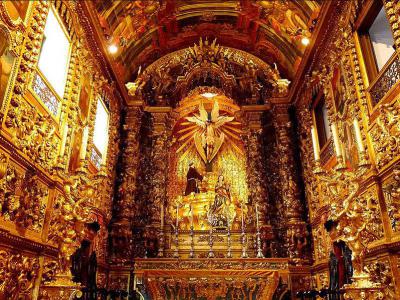
This Baroque style church was built back in 1726. Besides its great spiritual heritage, it has marvelous ornaments and decorations, such as the jacaranda wood carved altar or the roof panel depicting Saint Francis receiving the stigmata. With advance booking, you can take a guided tour of the underground passages under the church which were in use up until 1850.
Along with the church of São Francisco da Penitência it is the main showcase of total Baroque art in Rio de Janeiro. Currently the church functions as a Museum of Sacred Art. Don't hesitate to check out the museum for a small fee; the gold room is a spectacle to behold!
Why You Should Visit:
Overwhelming and beautiful, this church wows visitors with its elaborate architecture, magnificent statues, dazzling relics and impressive paintings.
What is more, the church exudes a rather serene feel, making it a perfect stop for anyone who needs a quick break.
This Baroque style church was built back in 1726. Besides its great spiritual heritage, it has marvelous ornaments and decorations, such as the jacaranda wood carved altar or the roof panel depicting Saint Francis receiving the stigmata. With advance booking, you can take a guided tour of the underground passages under the church which were in use up until 1850.
Along with the church of São Francisco da Penitência it is the main showcase of total Baroque art in Rio de Janeiro. Currently the church functions as a Museum of Sacred Art. Don't hesitate to check out the museum for a small fee; the gold room is a spectacle to behold!
Why You Should Visit:
Overwhelming and beautiful, this church wows visitors with its elaborate architecture, magnificent statues, dazzling relics and impressive paintings.
What is more, the church exudes a rather serene feel, making it a perfect stop for anyone who needs a quick break.
9) Theatro Municipal (Municipal Theatre) (must see)
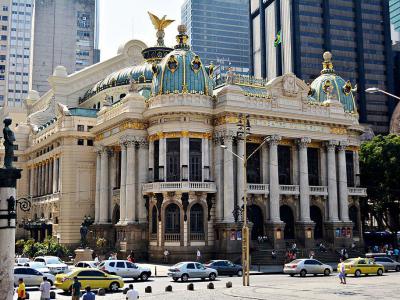
The Municipal Theatre of Rio de Janeiro is one of Brazil’s most important cultural institutions and a landmark of the city’s early 20th-century transformation. Inaugurated in 1909, its architectural design was inspired by the Garnier Palace in Paris, the home of the Paris Opera, reflecting the strong European influence on Brazil’s cultural elite at the time.
The exterior is a fine example of eclectic architecture, combining a Neoclassical structural framework with Art Nouveau ornamentation. Sculptures, columns, and decorative reliefs animate the façade, while inscriptions display the names of major Brazilian and European artists. Above it all rises an embellished dome, topped by a gilded bird that symbolically watches over both the building and the square below.
Inside, the theatre is equally impressive. Passing through the bronze and crystal doors, you enter the main reception hall. The floors are made of Italian marble, supported by columns of Carrara marble. Overhead, the ceiling is decorated with paintings by Brazilian Impressionist Eliseu Visconti. This is the most opulent part of the building, designed to impress guests upon arrival. Directly ahead from the vestibule stands the Grand Staircase, carved from coloured marble and flanked by bronze statues holding lamps. Above the staircase, look for the monumental ceiling painting by Rodolfo Amoedo. As you ascend, notice the transition from the bright, open entrance to the more intimate, velvet-lined upper tiers.
Two other highlights of the theatre—the Main Auditorium and the Noble Foyer—can only be seen by attending a performance or booking a guided tour. The Main Auditorium is a horseshoe-shaped theatre with four tiers of balconies. A massive bronze and crystal chandelier, weighing over a ton, hangs from the centre of the dome. Heavily inspired by the Palace of Versailles, the Noble Foyer features towering mirrors, Baccarat crystal chandeliers, and a grand ceiling painting by Eliseu Visconti. Doors from the foyer open onto a front balcony overlooking Cinelandia Square.
From its opening, the Municipal Theatre became the principal stage for opera, ballet, and symphonic music in Brazil, hosting international performers while also fostering national talent. Today, the theatre remains an active venue, with programming focused largely on classical music and ballet.
The exterior is a fine example of eclectic architecture, combining a Neoclassical structural framework with Art Nouveau ornamentation. Sculptures, columns, and decorative reliefs animate the façade, while inscriptions display the names of major Brazilian and European artists. Above it all rises an embellished dome, topped by a gilded bird that symbolically watches over both the building and the square below.
Inside, the theatre is equally impressive. Passing through the bronze and crystal doors, you enter the main reception hall. The floors are made of Italian marble, supported by columns of Carrara marble. Overhead, the ceiling is decorated with paintings by Brazilian Impressionist Eliseu Visconti. This is the most opulent part of the building, designed to impress guests upon arrival. Directly ahead from the vestibule stands the Grand Staircase, carved from coloured marble and flanked by bronze statues holding lamps. Above the staircase, look for the monumental ceiling painting by Rodolfo Amoedo. As you ascend, notice the transition from the bright, open entrance to the more intimate, velvet-lined upper tiers.
Two other highlights of the theatre—the Main Auditorium and the Noble Foyer—can only be seen by attending a performance or booking a guided tour. The Main Auditorium is a horseshoe-shaped theatre with four tiers of balconies. A massive bronze and crystal chandelier, weighing over a ton, hangs from the centre of the dome. Heavily inspired by the Palace of Versailles, the Noble Foyer features towering mirrors, Baccarat crystal chandeliers, and a grand ceiling painting by Eliseu Visconti. Doors from the foyer open onto a front balcony overlooking Cinelandia Square.
From its opening, the Municipal Theatre became the principal stage for opera, ballet, and symphonic music in Brazil, hosting international performers while also fostering national talent. Today, the theatre remains an active venue, with programming focused largely on classical music and ballet.
10) Biblioteca Nacional (National Library)
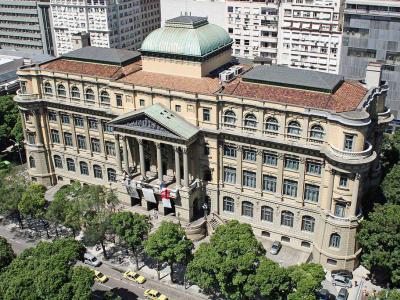
The National Library of Brazil is one of Rio de Janeiro’s most important cultural institutions. Its origins are linked to upheaval in Portugal rather than Brazil. After the devastating Lisbon earthquake of 1755 damaged the Royal Library of Portugal, parts of the collection were gradually transferred overseas. This process culminated in 1808, when the Portuguese royal court fled Napoleon’s invasion and relocated to Rio de Janeiro, bringing the Royal Library with it and laying the foundations for what is now the National Library.
Completed in 1910, the building was designed in an eclectic blend of Neoclassical and Art Nouveau styles. While the exterior is richly ornamented, the interior is particularly eye-catching. As soon as you enter, you are met by a grand bifurcated staircase of Carrara marble—an instant “wow” factor. Climb the first section of the staircase and you will find a bust of the library’s founder, King John VI of Portugal, on the landing. From here, look upward to admire the vibrant stained-glass skylight. The large stained-glass ceiling floods the marble foyer with colourful light. It features intricate geometric patterns and symbols associated with knowledge and the arts, framed by an elegant iron structure.
The National Library is the largest library in Latin America and one of the most extensive in the world, with a collection numbering in the millions, including books, manuscripts, maps, prints, photographs, and newspapers. At the heart of the institution is the Rare Works Division, often considered the soul of the library. It houses the original 60,000 volumes brought to Brazil by the Portuguese royal family in 1808 to escape Napoleon. Among its treasures are the 1459 Mainz Psalter and the Mogúncia Bible, making it one of the world’s most important bibliographic archives. Access to the Rare Works Division is possible only through an official guided tour, which usually departs from the ground-floor lobby and offers the only opportunity to step beyond the public areas.
Completed in 1910, the building was designed in an eclectic blend of Neoclassical and Art Nouveau styles. While the exterior is richly ornamented, the interior is particularly eye-catching. As soon as you enter, you are met by a grand bifurcated staircase of Carrara marble—an instant “wow” factor. Climb the first section of the staircase and you will find a bust of the library’s founder, King John VI of Portugal, on the landing. From here, look upward to admire the vibrant stained-glass skylight. The large stained-glass ceiling floods the marble foyer with colourful light. It features intricate geometric patterns and symbols associated with knowledge and the arts, framed by an elegant iron structure.
The National Library is the largest library in Latin America and one of the most extensive in the world, with a collection numbering in the millions, including books, manuscripts, maps, prints, photographs, and newspapers. At the heart of the institution is the Rare Works Division, often considered the soul of the library. It houses the original 60,000 volumes brought to Brazil by the Portuguese royal family in 1808 to escape Napoleon. Among its treasures are the 1459 Mainz Psalter and the Mogúncia Bible, making it one of the world’s most important bibliographic archives. Access to the Rare Works Division is possible only through an official guided tour, which usually departs from the ground-floor lobby and offers the only opportunity to step beyond the public areas.
11) Palacio do Catete / Museu da Republica
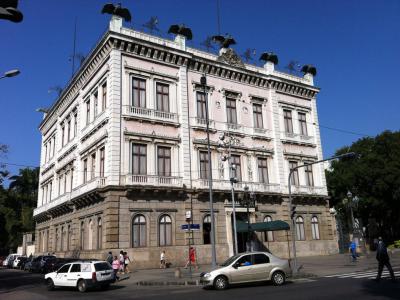
Located in the Catete neighborhood, this palace is another of Rio's fine examples of Neoclassical architecture. Built in the middle of the 19th century, it was the seat of power in Brazil from 1897 until 1960, when Brasilia became the country's capital. Today it hosts the Museu da República and a theater, as well as extensive gardens that are open to the public.
Various historical events happened in the palace halls, such as the death of President Afonso Pena in 1909; the signing of the declaration of war against the German Empire and its allies in 1917, during World War I; the visit and hosting of Cardinal Eugenio Pacelli, the future Pope Pius XII, in 1934; the declaration of war against the Axis in World War II in 1942; the suicide of President Getúlio Vargas in 1954, with a shot in the heart, in his bedroom on the third floor of the palace; among others.
Why You Should Visit:
Great for a picnic, a museum visit, or both. Beautifully designed by a German architect, the palace holds almost all of its original features.
The gardens are large, with beautiful imperial palms providing very welcome shade, and even a playground for kids to have fun.
Various historical events happened in the palace halls, such as the death of President Afonso Pena in 1909; the signing of the declaration of war against the German Empire and its allies in 1917, during World War I; the visit and hosting of Cardinal Eugenio Pacelli, the future Pope Pius XII, in 1934; the declaration of war against the Axis in World War II in 1942; the suicide of President Getúlio Vargas in 1954, with a shot in the heart, in his bedroom on the third floor of the palace; among others.
Why You Should Visit:
Great for a picnic, a museum visit, or both. Beautifully designed by a German architect, the palace holds almost all of its original features.
The gardens are large, with beautiful imperial palms providing very welcome shade, and even a playground for kids to have fun.
