Custom Walk in Rome, Italy by rustiafj_6cb35 created on 2026-03-26
Guide Location: Italy » Rome
Guide Type: Custom Walk
# of Sights: 15
Tour Duration: 2 Hour(s)
Travel Distance: 3.2 Km or 2 Miles
Share Key: X8Z7L
Guide Type: Custom Walk
# of Sights: 15
Tour Duration: 2 Hour(s)
Travel Distance: 3.2 Km or 2 Miles
Share Key: X8Z7L
How It Works
Please retrieve this walk in the GPSmyCity app. Once done, the app will guide you from one tour stop to the next as if you had a personal tour guide. If you created the walk on this website or come to the page via a link, please follow the instructions below to retrieve the walk in the app.
Retrieve This Walk in App
Step 1. Download the app "GPSmyCity: Walks in 1K+ Cities" on Apple App Store or Google Play Store.



Step 2. In the GPSmyCity app, download(or launch) the guide "Rome Map and Walking Tours".
Step 3. Tap the menu button located at upper right corner of the "Walks" screen and select "Retrieve custom walk". Enter the share key: X8Z7L
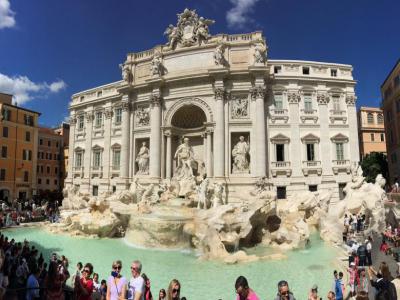
1) Piazza di Trevi & Fontana di Trevi (Trevi Square & Trevi Fountain) (must see)
The Trevi Fountain is one of Rome’s most iconic landmarks, drawing visitors to the eponymous Trevi Square all day long. Surprisingly, the fountain was not initially built in the heart of the city; instead, the city grew around it. Its name derives from the Latin word "trivium," which means “three streets,” as it sits at the junction of three streets: De Crocicchi, Poli, and Delle Muratte.
The fountain’s history dates back to 1629 when Pope Urban VIII commissioned Gian Lorenzo Bernini to redesign it, though his plans were never realized. Later, Pope Clement XII organized a competition in 1730, leading to Nicola Salvi's selection for the project, who incorporated the fountain into the rear of the Poli Palace. Salvi passed away before its completion. Giuseppe Pannini and other artists finalized the work in 1762.
Measuring over 26 meters in height and 49 meters in width, it is the largest Baroque fountain in Rome.
The Trevi Fountain features a Corinthian façade and bas-reliefs depicting the origins of the Acqua Vergine aqueduct, constructed in 19 BC. According to legend, a virgin guided Roman engineers to the aqueduct’s source, an event depicted in the fountain’s bas-reliefs. The aqueduct, which survived the Gothic invasions and was restored during the Middle Ages, still supplies water to the fountain today.
At the heart of the fountain is Oceanus, depicted riding a shell-shaped chariot drawn by two horses and guided by Tritons. The horses symbolize the sea’s contrasting moods-calm and turbulent. Flanking Oceanus are the statues of Abundance and Salubrity, representing prosperity and health. The symmetrical Rococo design combines dynamic artistry with Baroque grandeur, reflecting 18th-century European trends.
The Trevi Fountain is also known for the tradition of tossing coins, which promises a return to Rome. Popularized by the 1954 Hollywood film "Three Coins in the Fountain," visitors toss coins over their left shoulder with their right hand, generating daily about €3,000. This money, collected by municipal authorities, is donated to charity.
Celebrated in films like Roman Holiday and La Dolce Vita, the Trevi Fountain’s global fame is further evidenced by replicas worldwide. Access to the fountain is now limited to 400 visitors at a time, ensuring a more enjoyable visit to this timeless masterpiece. Surrounding the fountain are charming shops, restaurants, and gelaterias, making it a delightful spot to soak in Rome’s vibrant atmosphere.
Tip:
The fountain holds particular allure at night, especially after 10 pm when it is beautifully illuminated and the crowds dissipate, allowing you to enjoy the site almost exclusively.
The fountain’s history dates back to 1629 when Pope Urban VIII commissioned Gian Lorenzo Bernini to redesign it, though his plans were never realized. Later, Pope Clement XII organized a competition in 1730, leading to Nicola Salvi's selection for the project, who incorporated the fountain into the rear of the Poli Palace. Salvi passed away before its completion. Giuseppe Pannini and other artists finalized the work in 1762.
Measuring over 26 meters in height and 49 meters in width, it is the largest Baroque fountain in Rome.
The Trevi Fountain features a Corinthian façade and bas-reliefs depicting the origins of the Acqua Vergine aqueduct, constructed in 19 BC. According to legend, a virgin guided Roman engineers to the aqueduct’s source, an event depicted in the fountain’s bas-reliefs. The aqueduct, which survived the Gothic invasions and was restored during the Middle Ages, still supplies water to the fountain today.
At the heart of the fountain is Oceanus, depicted riding a shell-shaped chariot drawn by two horses and guided by Tritons. The horses symbolize the sea’s contrasting moods-calm and turbulent. Flanking Oceanus are the statues of Abundance and Salubrity, representing prosperity and health. The symmetrical Rococo design combines dynamic artistry with Baroque grandeur, reflecting 18th-century European trends.
The Trevi Fountain is also known for the tradition of tossing coins, which promises a return to Rome. Popularized by the 1954 Hollywood film "Three Coins in the Fountain," visitors toss coins over their left shoulder with their right hand, generating daily about €3,000. This money, collected by municipal authorities, is donated to charity.
Celebrated in films like Roman Holiday and La Dolce Vita, the Trevi Fountain’s global fame is further evidenced by replicas worldwide. Access to the fountain is now limited to 400 visitors at a time, ensuring a more enjoyable visit to this timeless masterpiece. Surrounding the fountain are charming shops, restaurants, and gelaterias, making it a delightful spot to soak in Rome’s vibrant atmosphere.
Tip:
The fountain holds particular allure at night, especially after 10 pm when it is beautifully illuminated and the crowds dissipate, allowing you to enjoy the site almost exclusively.
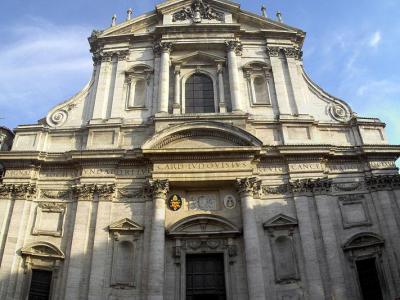
2) Chiesa di Sant' Ignazio di Loyola (Church of St. Ignatius of Loyola)
The Church of Saint Ignatius of Loyola at the Mars Field in Rome is a Baroque Latin Catholic titular church, dedicated to the founder of the Society of Jesus. Constructed between 1626 and 1650, it initially served as the chapel for the Roman College, later the Pontifical Gregorian University. This grand 17th-century preaching temple exemplifies the Counter-Reformation's architectural and religious fervor.
The church's history is rooted in the Roman College, established in 1551. Built on the land initially intended for a Poor Clares monastery, the available limited space prompted Jesuit architect Giovanni Tristano to complete a modest Church of the Annunciation in 1567. However, the church soon became inadequate for the college's growing student body.
After Ignatius of Loyola's canonization in 1622, Pope Gregory XV proposed building a larger church. His nephew, Cardinal Ludovico Ludovisi, commissioned Jesuit mathematician Orazio Grassi to design the new structure. Construction began in 1626 and culminated in 1650. The new church replaced the smaller one, occupying a quarter of the Roman College's block. Its Rococo square was added later.
The church's Latin cross plan, Corinthian pilasters, marble adornments, and gilded interiors mirror the Jesuit mother church, the Gesù. The grandiose frescoes painted on the nave ceiling by a Jesuit lay brother Andrea Pozzo, using the artistic technique called “deceive the eye,” create the illusion of a vast, open space, and are a major highlight.
Due to a lack of funds for a real dome, Pozzo painted an illusionary one, making the nave’s barrel vault appear as an idealized celestial vision where Saint Ignatius is received into heaven by Christ and the Virgin Mary. The artist's mastery of perspective, light, and shading gives the illusion of a towering cupola, visible from a specific marble disk in the nave floor. Another vantage point further east aligns with a second “deceive the eye” painting that depicts a tall, ribbed dome at the crossing- replacing the dome that was never built. The original painting, completed in 1685, was lost to fire, but in 1823, Francesco Manno faithfully recreated it based on Pozzo’s sketches and studies, preserving its striking visual deception.
The church's history is rooted in the Roman College, established in 1551. Built on the land initially intended for a Poor Clares monastery, the available limited space prompted Jesuit architect Giovanni Tristano to complete a modest Church of the Annunciation in 1567. However, the church soon became inadequate for the college's growing student body.
After Ignatius of Loyola's canonization in 1622, Pope Gregory XV proposed building a larger church. His nephew, Cardinal Ludovico Ludovisi, commissioned Jesuit mathematician Orazio Grassi to design the new structure. Construction began in 1626 and culminated in 1650. The new church replaced the smaller one, occupying a quarter of the Roman College's block. Its Rococo square was added later.
The church's Latin cross plan, Corinthian pilasters, marble adornments, and gilded interiors mirror the Jesuit mother church, the Gesù. The grandiose frescoes painted on the nave ceiling by a Jesuit lay brother Andrea Pozzo, using the artistic technique called “deceive the eye,” create the illusion of a vast, open space, and are a major highlight.
Due to a lack of funds for a real dome, Pozzo painted an illusionary one, making the nave’s barrel vault appear as an idealized celestial vision where Saint Ignatius is received into heaven by Christ and the Virgin Mary. The artist's mastery of perspective, light, and shading gives the illusion of a towering cupola, visible from a specific marble disk in the nave floor. Another vantage point further east aligns with a second “deceive the eye” painting that depicts a tall, ribbed dome at the crossing- replacing the dome that was never built. The original painting, completed in 1685, was lost to fire, but in 1823, Francesco Manno faithfully recreated it based on Pozzo’s sketches and studies, preserving its striking visual deception.
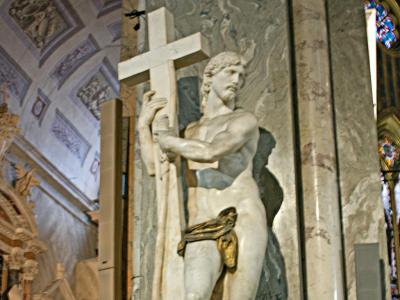
3) Basilica di Santa Maria sopra Minerva (Basilica of Saint Mary above Minerva) (must see)
Tucked away just behind the Pantheon in Minerva Square, Santa Maria above Minerva is a Dominican church and a hidden gem of both religious and architectural importance. This is the only surviving example of original Gothic religious architecture in Rome, as most medieval churches were modified with Baroque designs.
Despite its somewhat unassuming facade, the Santa Maria above Minerva – formerly the Dominican order's headquarters – also boasts an intriguing history and some truly magnificent artistic treasures. Chief among them are Michelangelo’s Christ the Redeemer sculpture and the Carafa Chapel's frescoes.
The former is found to the left of the main altar. The sculpture's first version, begun in 1515, was abandoned due to a flaw in the marble. The one we see today, completed in 1521, received acclaim for its artistry, particularly its lifelike knees. Originally, Michelangelo depicted Christ unclothed to symbolize his triumph over sin, however, a bronze loincloth was added in 1546.
The Carafa Chapel, commissioned by Cardinal Oliviero Carafa in honor of Saint Thomas Aquinas, was inaugurated in 1493. Lavishly adorned with frescoes by Florentine painter Filippino Lippi, it shows the scenes of Saint Thomas's life, including him debating with heretics, as well as some allegorical ones like him presenting Cardinal Carafa to the Virgin Mary. These frescoes are widely recognized as the best Renaissance painting in Rome outside the Sistine Chapel.
Looking up, you can't fail to notice the stunning deep blue painted ceiling and the round stained glass windows, rightfully regarded as the finest in the city.
The basilica also holds the remains of the Saint Catherine of Siena and early Renaissance painter Fra Angelico.
In 1628, the Convent of Minerva became the seat of the Congregation of the Holy Office, where the Roman Inquisition held trials, including that of Galileo Galilei. In 1633, Galileo was tried for heresy for supporting the theory that the Earth revolves around the Sun. Facing interrogation under threat of torture, he was found "vehemently suspect of heresy" and forced to recant. Galileo was sentenced to house arrest for life, and his works were banned. His trial marked a defining moment in the conflict between science and religion. Legend claims that, after his abjuration, Galileo allegedly muttered the rebellious phrase: "and yet it moves..."
Despite its somewhat unassuming facade, the Santa Maria above Minerva – formerly the Dominican order's headquarters – also boasts an intriguing history and some truly magnificent artistic treasures. Chief among them are Michelangelo’s Christ the Redeemer sculpture and the Carafa Chapel's frescoes.
The former is found to the left of the main altar. The sculpture's first version, begun in 1515, was abandoned due to a flaw in the marble. The one we see today, completed in 1521, received acclaim for its artistry, particularly its lifelike knees. Originally, Michelangelo depicted Christ unclothed to symbolize his triumph over sin, however, a bronze loincloth was added in 1546.
The Carafa Chapel, commissioned by Cardinal Oliviero Carafa in honor of Saint Thomas Aquinas, was inaugurated in 1493. Lavishly adorned with frescoes by Florentine painter Filippino Lippi, it shows the scenes of Saint Thomas's life, including him debating with heretics, as well as some allegorical ones like him presenting Cardinal Carafa to the Virgin Mary. These frescoes are widely recognized as the best Renaissance painting in Rome outside the Sistine Chapel.
Looking up, you can't fail to notice the stunning deep blue painted ceiling and the round stained glass windows, rightfully regarded as the finest in the city.
The basilica also holds the remains of the Saint Catherine of Siena and early Renaissance painter Fra Angelico.
In 1628, the Convent of Minerva became the seat of the Congregation of the Holy Office, where the Roman Inquisition held trials, including that of Galileo Galilei. In 1633, Galileo was tried for heresy for supporting the theory that the Earth revolves around the Sun. Facing interrogation under threat of torture, he was found "vehemently suspect of heresy" and forced to recant. Galileo was sentenced to house arrest for life, and his works were banned. His trial marked a defining moment in the conflict between science and religion. Legend claims that, after his abjuration, Galileo allegedly muttered the rebellious phrase: "and yet it moves..."
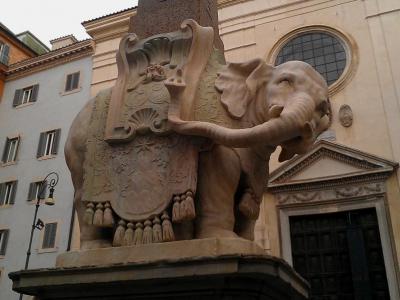
4) Piazza della Minerva & Obelisco della Minerva (Minerva Square & Elephant and Obelisk Statue)
During the 1600s, elephants were regarded by the Catholic Church as symbols of strength, intelligence, and sexual morality due to their monogamous nature and brief mating periods occurring once every two years. In 1667, Gian Lorenzo Bernini designed the elephant that carries the Obelisk of Santa Maria sopra Minerva for Pope Alexander VII. Obelisks were associated with wisdom, leading Alexander to have an inscription added to the base that reads, "A robust intelligence is required to support solid wisdom."
The red granite obelisk, unearthed in 1665 during excavations near the neighboring church of Santa Maria sopra Minerva, is believed to have been brought to Rome in the 1st century AD for the temple dedicated to the Egyptian goddess Isis, which once stood in this location. Originally erected by Pharaoh Apries of the Twenty-sixth Dynasty of Egypt around 580 BC in his capital city of Sais, the obelisk stands at a height of 5.47 meters and is the smallest among the 13 ancient obelisks currently found in Rome. It is considered to be part of a pair, with the other obelisk located in the city of Urbino.
In more recent times, Salvador Dali's painting "The Elephants" portrays two elephants with elongated legs facing each other while carrying fragmented obelisks, making visual references to the statue of the elephant in Rome.
The red granite obelisk, unearthed in 1665 during excavations near the neighboring church of Santa Maria sopra Minerva, is believed to have been brought to Rome in the 1st century AD for the temple dedicated to the Egyptian goddess Isis, which once stood in this location. Originally erected by Pharaoh Apries of the Twenty-sixth Dynasty of Egypt around 580 BC in his capital city of Sais, the obelisk stands at a height of 5.47 meters and is the smallest among the 13 ancient obelisks currently found in Rome. It is considered to be part of a pair, with the other obelisk located in the city of Urbino.
In more recent times, Salvador Dali's painting "The Elephants" portrays two elephants with elongated legs facing each other while carrying fragmented obelisks, making visual references to the statue of the elephant in Rome.
5) Pantheon (must see)
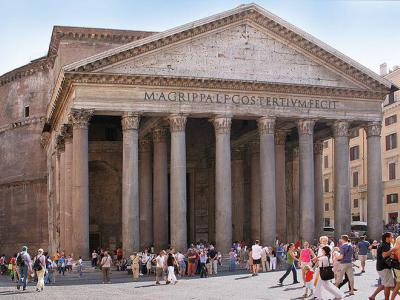
The Pantheon is one of Rome’s most iconic landmarks, renowned for its architectural brilliance. Originally a Roman temple, its name comes from the Ancient Greek "pan theos," which means dedication to all gods. Built on the site of a temple commissioned by consul Marcus Agrippa during Augustus’ reign, the current structure was completed under Emperor Hadrian around 126 AD. It was transformed into a Catholic Church of Saint Mary and the Martyrs in 609 AD, ensuring its preservation through centuries.
The Pantheon’s unique design combines a classical portico supported by Corinthian granite columns with a domed cylindrical structure (called a rotunda). The unsupported concrete dome, still the largest of its kind in the world, features a central oculus that provides natural light, ventilation, and symbolic celestial connections. The rotunda's harmonious dimensions-43 meters in both height and diameter-epitomize Roman engineering excellence, while its original massive bronze doors, each weighing over 20 tons, and intricate drainage system (allowing to effectively divert rainwater) highlight the ingenuity of its creators.
Throughout its history, the Pantheon has been a vibrant part of Roman life. It served as a burial site during the Renaissance, housing notable figures like painter Raphael and Italian kings Victor Emmanuel II and Umberto I. Its materials, such as bronze, have been repurposed for other projects like Bernini’s baldachin above the high altar of Saint Peter's Basilica. However, its core structure remains remarkably intact. Today, the church still host religious ceremonies, including masses, weddings, and Pentecost celebrations.
The Pantheon’s influence extends far beyond Rome. Its dome inspired architectural marvels like the Florence Cathedral and Rotunda of the U.S. Capital in Washington D.C., while its combination of classical and modern elements shaped countless government and academic buildings worldwide.
With over six million annual visitors, the Pantheon remains a symbol of Roman ingenuity and artistic achievement. Tourists can enjoy free entry to this historic site or soak in its splendor from Rotonda Square, savoring gelato while marveling at its timeless beauty.
Tip:
Incredible at night (from the outside), it is especially so if you enjoy musicians with talent and engagement... but beware of pickpockets.
The Pantheon’s unique design combines a classical portico supported by Corinthian granite columns with a domed cylindrical structure (called a rotunda). The unsupported concrete dome, still the largest of its kind in the world, features a central oculus that provides natural light, ventilation, and symbolic celestial connections. The rotunda's harmonious dimensions-43 meters in both height and diameter-epitomize Roman engineering excellence, while its original massive bronze doors, each weighing over 20 tons, and intricate drainage system (allowing to effectively divert rainwater) highlight the ingenuity of its creators.
Throughout its history, the Pantheon has been a vibrant part of Roman life. It served as a burial site during the Renaissance, housing notable figures like painter Raphael and Italian kings Victor Emmanuel II and Umberto I. Its materials, such as bronze, have been repurposed for other projects like Bernini’s baldachin above the high altar of Saint Peter's Basilica. However, its core structure remains remarkably intact. Today, the church still host religious ceremonies, including masses, weddings, and Pentecost celebrations.
The Pantheon’s influence extends far beyond Rome. Its dome inspired architectural marvels like the Florence Cathedral and Rotunda of the U.S. Capital in Washington D.C., while its combination of classical and modern elements shaped countless government and academic buildings worldwide.
With over six million annual visitors, the Pantheon remains a symbol of Roman ingenuity and artistic achievement. Tourists can enjoy free entry to this historic site or soak in its splendor from Rotonda Square, savoring gelato while marveling at its timeless beauty.
Tip:
Incredible at night (from the outside), it is especially so if you enjoy musicians with talent and engagement... but beware of pickpockets.
6) Piazza della Rotonda & Fontana del Pantheon (Rotunda Square & Fountain of the Pantheon)
As with so many of Rome's wonderful squares, upon arriving at the Rotonda Square you will find a sea of people enjoying themselves: some sitting almost up against the fountain, some kids running around, tourist families orienting themselves and deciding whether to venture into the monumental ancient Pantheon.
The Pantheon itself needs no introduction, as its fame is recognized worldwide; however, if you're exploring Rome's fountains, you'll find delight in admiring the Fontana del Pantheon, appreciating its artistic merits, and seeking the best angle to observe its intricate details.
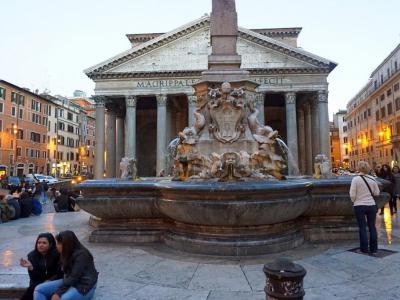
Originally built in 1575, the fountain acquired its current appearance in 1711 under the direction of Pope Clement XI. Atop a lofty pedestal, a magnificent 20-foot red marble Egyptian obelisk was placed. This obelisk, brought to Rome from ancient times, was once part of a pair created for the Temple of Ra in Heliopolis (the other obelisk can still be found in the Minerva Square – or Piazza della Minerva – located behind the Pantheon).
In addition to the ancient obelisk, the Baroque-style art adorning the fountain is playful and distinctive. Take note of the whimsical dolphins, adorned with teeth, which were a popular feature of Baroque design during that period. These dolphins possess cartoon-like expressions and even seem to sport eyebrows, adding a touch of charm and humor to the fountain's overall aesthetic.
The Pantheon itself needs no introduction, as its fame is recognized worldwide; however, if you're exploring Rome's fountains, you'll find delight in admiring the Fontana del Pantheon, appreciating its artistic merits, and seeking the best angle to observe its intricate details.
Originally built in 1575, the fountain acquired its current appearance in 1711 under the direction of Pope Clement XI. Atop a lofty pedestal, a magnificent 20-foot red marble Egyptian obelisk was placed. This obelisk, brought to Rome from ancient times, was once part of a pair created for the Temple of Ra in Heliopolis (the other obelisk can still be found in the Minerva Square – or Piazza della Minerva – located behind the Pantheon).
In addition to the ancient obelisk, the Baroque-style art adorning the fountain is playful and distinctive. Take note of the whimsical dolphins, adorned with teeth, which were a popular feature of Baroque design during that period. These dolphins possess cartoon-like expressions and even seem to sport eyebrows, adding a touch of charm and humor to the fountain's overall aesthetic.
7) Chiesa di San Luigi dei Francesi (Church of St. Louis of the French)
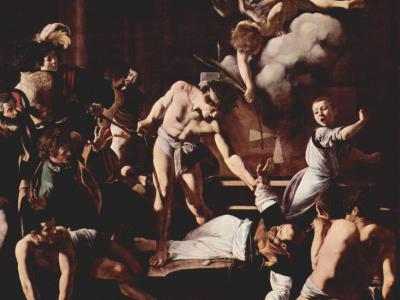
The Church of St. Louis of the French, also known as the French Church, in Rome is a 16th-century Baroque church dedicated to France’s patron saint, Saint Louis IX. Located near Piazza Navona, it serves as the national church of France in Rome. The church is best known for its stunning trio of Caravaggio paintings in the Contarelli Chapel, depicting scenes from the life of Saint Matthew. Built between 1518 and 1589, its ornate interior features French and Italian artistic influences.
The Contarelli Chapel, situated as the fifth and final chapel on the left, towards the main altar, is a pilgrimage destination for art enthusiasts. It is adorned with three astonishingly dramatic works by Caravaggio, the baroque master known for his captivating use of light and shadow. The three paintings, "Calling of Saint Matthew", "Saint Matthew and the Angel", and "Martyrdom of Saint Matthew", are arranged from left to right. Caravaggio's unparalleled command of light elevates these works to unparalleled heights.
However, when these paintings were initially unveiled, they stirred considerable controversy among the clergy of San Luigi, who viewed the artist's dramatically realistic style as scandalously disrespectful. The first version of the altarpiece was even rejected, and the priests expressed discontent with the other two paintings as well. Over time, Caravaggio's patron, Cardinal Francesco del Monte, who secured the commission and staunchly defended the artworks, has been fully vindicated.
The Contarelli Chapel, situated as the fifth and final chapel on the left, towards the main altar, is a pilgrimage destination for art enthusiasts. It is adorned with three astonishingly dramatic works by Caravaggio, the baroque master known for his captivating use of light and shadow. The three paintings, "Calling of Saint Matthew", "Saint Matthew and the Angel", and "Martyrdom of Saint Matthew", are arranged from left to right. Caravaggio's unparalleled command of light elevates these works to unparalleled heights.
However, when these paintings were initially unveiled, they stirred considerable controversy among the clergy of San Luigi, who viewed the artist's dramatically realistic style as scandalously disrespectful. The first version of the altarpiece was even rejected, and the priests expressed discontent with the other two paintings as well. Over time, Caravaggio's patron, Cardinal Francesco del Monte, who secured the commission and staunchly defended the artworks, has been fully vindicated.
8) L'Artigianato
L'artigianato originated from the concept of a store brimming with unique, sought-after, and original items, often possessing practicality and even necessity. These items fulfill a deeply human desire-the joy of owning something delightful that brings happiness to loved ones or simply enhances everyday comfort at home or elsewhere.
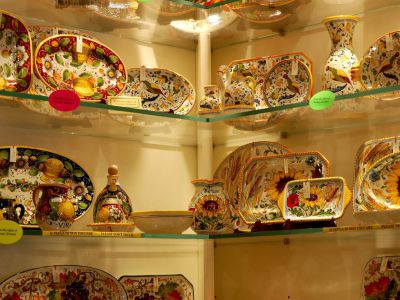
In 2008, the shop opened its doors at the present location of Piazza Navona 84, one of Rome's most splendid and renowned historical squares. Stepping inside, you will immediately feel at ease within a beautiful and inviting ambiance, adorned with timeless decor and staffed by knowledgeable and friendly individuals. Alongside the essential Capodimonte porcelain, you will discover traditional artistic ceramics, Murano glass, as well as contemporary design brands such as Alessi, Bialetti, and La Pavoni. L'Artigianato also offers an array of souvenirs and keepsakes. In essence, it caters to everyone: children, teenagers, and people of all ages, as evidenced by the multitude of customers who visit not only from Italy but from all corners of the globe.
Whether you seek an extensive selection of items, endless gift ideas, a comprehensive glimpse into the world of craftsmanship, or simply the opportunity to spend leisure time in a delightful manner, immersing yourself in unforgettable moments between the wonders of a store and the marvels of ancient Rome, this establishment is a must-visit destination.
In 2008, the shop opened its doors at the present location of Piazza Navona 84, one of Rome's most splendid and renowned historical squares. Stepping inside, you will immediately feel at ease within a beautiful and inviting ambiance, adorned with timeless decor and staffed by knowledgeable and friendly individuals. Alongside the essential Capodimonte porcelain, you will discover traditional artistic ceramics, Murano glass, as well as contemporary design brands such as Alessi, Bialetti, and La Pavoni. L'Artigianato also offers an array of souvenirs and keepsakes. In essence, it caters to everyone: children, teenagers, and people of all ages, as evidenced by the multitude of customers who visit not only from Italy but from all corners of the globe.
Whether you seek an extensive selection of items, endless gift ideas, a comprehensive glimpse into the world of craftsmanship, or simply the opportunity to spend leisure time in a delightful manner, immersing yourself in unforgettable moments between the wonders of a store and the marvels of ancient Rome, this establishment is a must-visit destination.
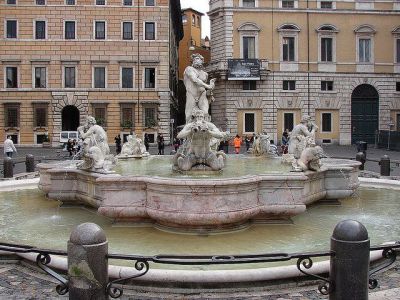
9) Fontana del Moro (Fountain of the Moor)
Situated on the southern end of Navona Square, the impressive Fountain of the Moor is one of the three magnificent statues adorning the square. The original fountain, crafted in 1575 by Giacomo della Porta, features Pietrasanta marble, also known as "holy stone" because of its usage in parts of St. Peter's Basilica. While della Porta allowed his students to add four tritons blowing shells and four masks around the basin's border, the fountain lacked a centerpiece, as public fountains during that era were not intended for embellishment.
An amusing anecdote surrounds the history of the fountain: In 1652, Olympia Maidalchini resided in a house overlooking the fountain and found it unsatisfactory, believing it did not match the grandeur she desired. Determined to rectify the situation, she implored her brother-in-law, Pope Innocent X, to take action. The pope provided a small sum of money to Bernini, instructing him to create something worthy of his rather assertive sister-in-law. Allegedly, the modest payment offended the esteemed artist, and he assigned the task to one of his students, who produced three dolphins holding a shell. Both Bernini and "Donna" Olympia were unimpressed with the student's work. Consequently, Olympia voiced her discontent to the Pope, who dug deeper into his coffers, prompting Bernini to produce the exquisite statue of the Moor holding a dolphin. However, Bernini may have gone slightly overboard, as the statue was so large that the basin had to be enlarged to accommodate it.
During a restoration of the fountain in 1874, the original statues were relocated to the Galleria Borghese and replaced with copies. In September 2011, the fountain suffered damage when a vandal attacked it with a hammer. This unfortunate incident occurred on the same night that the Trevi Fountain was also targeted by the vandal.
An amusing anecdote surrounds the history of the fountain: In 1652, Olympia Maidalchini resided in a house overlooking the fountain and found it unsatisfactory, believing it did not match the grandeur she desired. Determined to rectify the situation, she implored her brother-in-law, Pope Innocent X, to take action. The pope provided a small sum of money to Bernini, instructing him to create something worthy of his rather assertive sister-in-law. Allegedly, the modest payment offended the esteemed artist, and he assigned the task to one of his students, who produced three dolphins holding a shell. Both Bernini and "Donna" Olympia were unimpressed with the student's work. Consequently, Olympia voiced her discontent to the Pope, who dug deeper into his coffers, prompting Bernini to produce the exquisite statue of the Moor holding a dolphin. However, Bernini may have gone slightly overboard, as the statue was so large that the basin had to be enlarged to accommodate it.
During a restoration of the fountain in 1874, the original statues were relocated to the Galleria Borghese and replaced with copies. In September 2011, the fountain suffered damage when a vandal attacked it with a hammer. This unfortunate incident occurred on the same night that the Trevi Fountain was also targeted by the vandal.
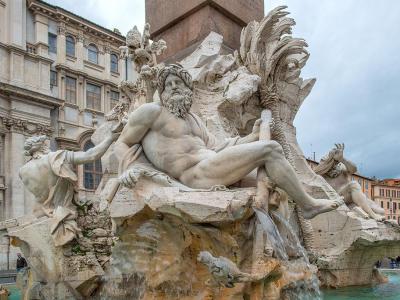
10) Fontana dei Quattro Fiumi (Fountain of the Four Rivers) (must see)
The focal point of Navona Square, the Fountain of the Four Rivers has been in place since the 17th century. While Rome has a longstanding affinity for fountains, dating back to antiquity, the Baroque era brought a new dimension to these water features, showcasing the generosity of the papacy.
In the case of the Fountain of the Four Rivers, Pope Innocent X, whose family seat – the Pamphili Palace – overlooks the square, entrusted the task to one of the most groundbreaking artists of the time, Gian Lorenzo Bernini. Created in 1651, the fountain was Rome's pinnacle achievement in fountain design, a symbolic masterpiece brimming with the dynamic and dramatic elements sought after by Baroque artists. Its central Egyptian obelisk is crowned with the Pamphili emblem, a dove with an olive twig.
Pope Innocent X chose Bernini after being secretly shown his model. The fountain was innovative, combining sculpture and architecture in a way unmatched by previous Roman fountains.
Here, the travertine base supports sculptures of four river gods, representing the major rivers of the continents over which papal authority had extended at that time. These include the Nile (for Africa), the Danube (for Europe), the Ganges (for Asia), and the Plate (for the Americas). Each figure conveys symbolic details: the Ganges is depicted holding a long oar, symbolizing the river's navigability; the Nile's veiled head signifies its unknown source; the Danube, the largest river near Rome touches the Pope's coat of arms; and the Plate sits atop a pile of coins, reflecting America’s wealth.
The fountain's unveiling on June 12, 1651, was marked by grand celebrations orchestrated by the Pamphili family. Allegorical figures of Fame and Curiosity paraded the streets, urging Romans to witness the reveal. The crowd marveled at the lifelike sculptures and water features, described as naturalistic and astonishing.
However, the project faced significant public opposition. Critics condemned its expense during the famine of 1646 to 1648, expressing their discontent through pasquinades demanding "Bread, not fountains." Street vendors and Roman Jews lamented their displacement from the square's market, which was closed to enhance its splendor.
Despite the controversy, the Fountain of the Four Rivers remains a cornerstone of Rome’s cultural and architectural legacy, blending mythology, artistry, and geographical narratives.
Tip:
To capture the essence of this fountain in photographs, it is recommended to shoot from various angles and positions, so as to get as much detail as possible. With ample space surrounding the fountain, take your time to find the perfect shot-or perhaps even multiple perfect shots.
In the case of the Fountain of the Four Rivers, Pope Innocent X, whose family seat – the Pamphili Palace – overlooks the square, entrusted the task to one of the most groundbreaking artists of the time, Gian Lorenzo Bernini. Created in 1651, the fountain was Rome's pinnacle achievement in fountain design, a symbolic masterpiece brimming with the dynamic and dramatic elements sought after by Baroque artists. Its central Egyptian obelisk is crowned with the Pamphili emblem, a dove with an olive twig.
Pope Innocent X chose Bernini after being secretly shown his model. The fountain was innovative, combining sculpture and architecture in a way unmatched by previous Roman fountains.
Here, the travertine base supports sculptures of four river gods, representing the major rivers of the continents over which papal authority had extended at that time. These include the Nile (for Africa), the Danube (for Europe), the Ganges (for Asia), and the Plate (for the Americas). Each figure conveys symbolic details: the Ganges is depicted holding a long oar, symbolizing the river's navigability; the Nile's veiled head signifies its unknown source; the Danube, the largest river near Rome touches the Pope's coat of arms; and the Plate sits atop a pile of coins, reflecting America’s wealth.
The fountain's unveiling on June 12, 1651, was marked by grand celebrations orchestrated by the Pamphili family. Allegorical figures of Fame and Curiosity paraded the streets, urging Romans to witness the reveal. The crowd marveled at the lifelike sculptures and water features, described as naturalistic and astonishing.
However, the project faced significant public opposition. Critics condemned its expense during the famine of 1646 to 1648, expressing their discontent through pasquinades demanding "Bread, not fountains." Street vendors and Roman Jews lamented their displacement from the square's market, which was closed to enhance its splendor.
Despite the controversy, the Fountain of the Four Rivers remains a cornerstone of Rome’s cultural and architectural legacy, blending mythology, artistry, and geographical narratives.
Tip:
To capture the essence of this fountain in photographs, it is recommended to shoot from various angles and positions, so as to get as much detail as possible. With ample space surrounding the fountain, take your time to find the perfect shot-or perhaps even multiple perfect shots.
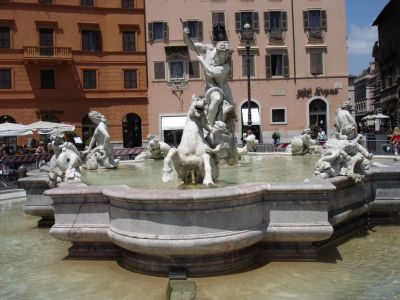
11) Fontana del Nettuno (Fountain of Neptune)
In Rome, many of the significant fountains were dedicated to mythological water gods and nymphs as a token of gratitude for the arrival of fresh water through the aqueducts. The Fountain of Neptune, situated on the northern end of Navona Square, exemplifies this tradition. The ancient Aqua Virgo Aqueduct was restored in 1453, and by 1570, numerous pipes connected to it supplied water to different parts of the city. The quantity of public fountains in a particular area was determined by the size of its population, and as evidenced by the three fountains within, Navona Square was densely inhabited.
Commissioned by Pope Gregory XIII in 1574, the Fountain of Neptune was created by Giacomo della Porta. The lower basin is crafted from white marble, while the upper basin is made of Pietrasanta marble. When initially constructed, the fountain did not feature any statues, as public fountains of the time were predominantly utilitarian and adorned sculptures were reserved for private gardens. As the 19th century approached, public fountains lost their significance as water suppliers due to the advent of interior plumbing. Nevertheless, they retained their "status symbol" importance, and in 1878, Antonio della Bitta and Gregorio Zappala won a competition to embellish the fountain with statues. Della Bitta sculpted the central piece, depicting Neptune engaged in a battle with an octopus, while Zappala contributed sculptures of the Nereids, cupids, and walruses.
Commissioned by Pope Gregory XIII in 1574, the Fountain of Neptune was created by Giacomo della Porta. The lower basin is crafted from white marble, while the upper basin is made of Pietrasanta marble. When initially constructed, the fountain did not feature any statues, as public fountains of the time were predominantly utilitarian and adorned sculptures were reserved for private gardens. As the 19th century approached, public fountains lost their significance as water suppliers due to the advent of interior plumbing. Nevertheless, they retained their "status symbol" importance, and in 1878, Antonio della Bitta and Gregorio Zappala won a competition to embellish the fountain with statues. Della Bitta sculpted the central piece, depicting Neptune engaged in a battle with an octopus, while Zappala contributed sculptures of the Nereids, cupids, and walruses.
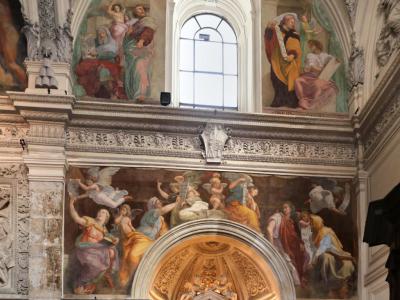
12) Chiesa di Santa Maria della Pace (Church of Saint Mary of Peace)
In 1656, Pope Alexander VII commissioned Pietro da Cortona (1596–1669) to expand the small Peace Square (“Piazza della Pace”) in front of the 15th-century church of Saint Mary, so as to accommodate the carriages of wealthy parishioners. Cortona's solution involved designing a new church facade with a semicircular portico, demolishing select buildings to create a more spacious approach to the church, adding arches to architecturally unify the piazza, and constructing a series of small-size palaces. The outcome became one of Rome's most charming architectural ensembles.
Inside, you can find several magnificent Renaissance treasures, starting with Raphael's fresco above the first altar on the right, which depicts the Four Sibyls (exact replicas of Michelangelo's but with a more relaxed style). Meanwhile, the Cesi Chapel, located second on the right, features exquisite decorations designed by Sangallo in the mid-16th century. Across from it, you'll find Peruzzi's remarkable fresco of the Madonna and Child. Additionally, the octagon beneath the dome serves as an art gallery in itself, displaying works by Arpino, Gentileschi, and others, while Cozzo's "Eternity" adorns the lantern above.
Behind the church lies its cloister – designed by Bramante, the architect of Saint Peter's Basilica – which stands as the first embodiment of the High Renaissance style in Rome. The cloister now hosts an exhibition space and a delightful coffee bar on its upper level.
Inside, you can find several magnificent Renaissance treasures, starting with Raphael's fresco above the first altar on the right, which depicts the Four Sibyls (exact replicas of Michelangelo's but with a more relaxed style). Meanwhile, the Cesi Chapel, located second on the right, features exquisite decorations designed by Sangallo in the mid-16th century. Across from it, you'll find Peruzzi's remarkable fresco of the Madonna and Child. Additionally, the octagon beneath the dome serves as an art gallery in itself, displaying works by Arpino, Gentileschi, and others, while Cozzo's "Eternity" adorns the lantern above.
Behind the church lies its cloister – designed by Bramante, the architect of Saint Peter's Basilica – which stands as the first embodiment of the High Renaissance style in Rome. The cloister now hosts an exhibition space and a delightful coffee bar on its upper level.
13) Basilica di Sant'Agostino (Basilica of St. Augustine in Campo Marzio)
Basilica of St. Augustine in Campo Marzio, one of Rome's earliest Renaissance churches, is renowned for its façade crafted from travertine sourced from the Colosseum. This sacred place holds a special connection to motherhood, primarily due to the presence of Jacopo Tatti's statue, the Madonna del Parto ("Pregnant Madonna"). It is believed to possess the power to aid pregnant women, and thus it is surrounded by photographs of newborn babies and their elated parents. However, in a more distant past, during the 16th century, Basilica of St. Augustine became a haven for Rome's creative community, attracting affluent patrons and well-connected artists.
As you venture further inside the church, you will encounter Raphael's vibrant fresco of a blue-robed Isaiah, adorning the third pillar on the left. Just below it, Sansovino's sculpture, influenced by Leonardo da Vinci, depicts a rugged Saint Anne and the Madonna with Child.
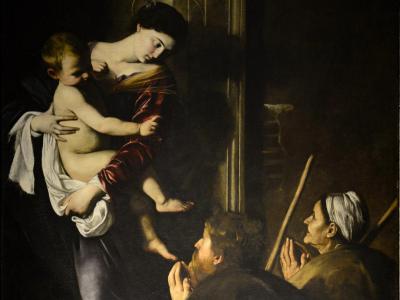
The most bustling crowds gather around the first chapel on the left. Here, you may discover Caravaggio's masterpiece, the Madonna of the Pilgrims, painted in 1605, which exemplifies a characteristic style that was considered revolutionary for its realistic portrayal. It actually caused quite a stir in Rome as it depicted a kneeling pilgrim with meticulous attention to detail, including dirt on the soles of his feet. The Madonna herself stands in a humble pose within a weathered doorway, deviating from the typical majestic depictions of the era.
As you venture further inside the church, you will encounter Raphael's vibrant fresco of a blue-robed Isaiah, adorning the third pillar on the left. Just below it, Sansovino's sculpture, influenced by Leonardo da Vinci, depicts a rugged Saint Anne and the Madonna with Child.
The most bustling crowds gather around the first chapel on the left. Here, you may discover Caravaggio's masterpiece, the Madonna of the Pilgrims, painted in 1605, which exemplifies a characteristic style that was considered revolutionary for its realistic portrayal. It actually caused quite a stir in Rome as it depicted a kneeling pilgrim with meticulous attention to detail, including dirt on the soles of his feet. The Madonna herself stands in a humble pose within a weathered doorway, deviating from the typical majestic depictions of the era.
14) Giolitti
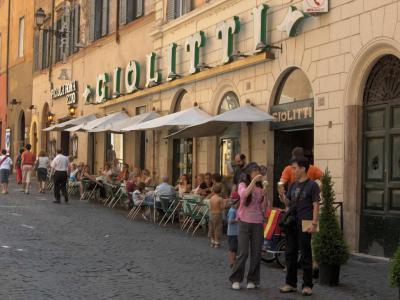
Opened over a century ago, the Giolitti shop nestled on the side of Piazza di Monte Citorio has retained its historic allure and charming features. This delightful café offers a cozy spot for breakfast, coffee, and, most notably, a remarkable gelato experience that comes highly recommended! Undoubtedly, Giolitti stands as one of the most beloved gelaterias in Rome, attracting both locals and vacationing visitors seeking a quick frozen treat-just as Gregory Peck and Audrey Hepburn did in the iconic film "Roman Holiday."
With a selection of over a hundred flavors of ice cream, ranging from traditional to exotic, Giolitti spoils its patrons with choices. Indulge in refreshing delights like ice cream-stuffed biscuits or decadent sundaes such as the "coppa giolitti," featuring chocolate, cream, zabaglione, whipped cream, and hazelnut. The gelateria caters to lactose-intolerant individuals as well, offering numerous sorbet options.
At Giolitti, the strict observance of traditional Italian bar etiquette is still cherished. Start by paying at the register near the entrance, where you can choose between a cup or a cone (although the cone may be tempting, a cup is often easier to handle, especially in hot weather). Then, armed with your receipt, make your way to the back of the shop and join the line to be served. The key is to establish eye contact with the gelato server. Use your maneuvering time to decide on your desired flavor and confidently place your order once eye contact is established. If you desire an extra touch of indulgence, you can request your gelato "con panna," which means it will be topped with a generous dollop of whipped cream.
If the bustling atmosphere feels a bit overwhelming, you can request to be seated on the other side of the shop, albeit at a slightly higher cost. Consider this a worthwhile investment in tranquility, as you will be served promptly and avoid the lines and crowds near the serving bar. As an added perk, you'll have access to free WiFi. So, sit back, relax, and savor your gelato in peace!
With a selection of over a hundred flavors of ice cream, ranging from traditional to exotic, Giolitti spoils its patrons with choices. Indulge in refreshing delights like ice cream-stuffed biscuits or decadent sundaes such as the "coppa giolitti," featuring chocolate, cream, zabaglione, whipped cream, and hazelnut. The gelateria caters to lactose-intolerant individuals as well, offering numerous sorbet options.
At Giolitti, the strict observance of traditional Italian bar etiquette is still cherished. Start by paying at the register near the entrance, where you can choose between a cup or a cone (although the cone may be tempting, a cup is often easier to handle, especially in hot weather). Then, armed with your receipt, make your way to the back of the shop and join the line to be served. The key is to establish eye contact with the gelato server. Use your maneuvering time to decide on your desired flavor and confidently place your order once eye contact is established. If you desire an extra touch of indulgence, you can request your gelato "con panna," which means it will be topped with a generous dollop of whipped cream.
If the bustling atmosphere feels a bit overwhelming, you can request to be seated on the other side of the shop, albeit at a slightly higher cost. Consider this a worthwhile investment in tranquility, as you will be served promptly and avoid the lines and crowds near the serving bar. As an added perk, you'll have access to free WiFi. So, sit back, relax, and savor your gelato in peace!
15) Piazza Colonna & Colonna di Marco Aurelio (Column Square & Column of Marcus Aurelius)
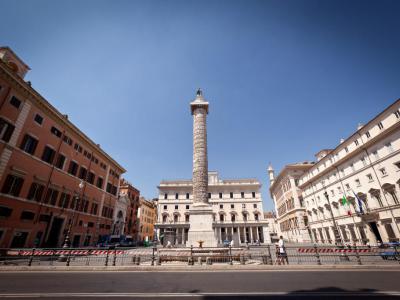
Column Square in Rome derives its name from the monumental Column of Marcus Aurelius. Erected in 193 AD, it commemorates the emperor's wars against Germanic tribes along the Danube River. Modeled after Trajan’s Column, this 40-meter Doric column features intricate spiral reliefs depicting scenes from these military campaigns.
At a closer look, binoculars or a long-lens camera can reveal intricate images, including a depiction of the so-called "Miracle Rain" attributed to divine intervention. At a desperate moment during one of Marcus Aurelius' battles, the surrounded Romans, suffering from heat and thirst, were saved by a rainstorm. According to legend, the rain was invoked by an Egyptian magician, and while the Romans drank and regained strength, the storm unleashed fire and thunderbolts upon their enemies. This event reinforced the Romans' belief in their divine right to overcome barbarianism and marked a pivotal moment in the campaign.
The column houses an internal staircase leading to a platform at the top. Originally part of the Field of Mars, possibly situated near the Temple of Marcus Aurelius (now gone), it also served as a funerary monument. In the 16th century, Pope Sixtus V restored the column, placing a statue of Saint Paul on top of it. The latter was done perhaps to Christianize the site or emulate Trajan’s Column, where the same pope had a statue of Saint Peter installed.
The surrounding square evolved over centuries, bordered by prominent structures from different eras. One such is the Chigi Palace. Built in 1562, it now serves as the residence of Italy’s Prime Minister. Another one, Wedekind Palace, constructed in 1838, incorporates Etruscan columns sourced from the ancient city of Veii, which the Romans conquered in the 4th century BC. Other significant buildings include Ferrajoli Palace, once a Papal post office, and Galleria Alberto Sordi, formerly known as the Colonna Gallery, a 19th-century addition.
The square also features a fountain constructed in 1577 to provide clean drinking water to the residents of Rome, restored in 1830. Crafted from pink marble sourced from the Greek island of Chios, it features an oval basin adorned with 16 intricately carved white-marble lion heads. At each end of the basin, two groups of dolphins entwine their tails around seashells, spouting water from their mouths, adding further to the site’s aesthetic appeal.
At a closer look, binoculars or a long-lens camera can reveal intricate images, including a depiction of the so-called "Miracle Rain" attributed to divine intervention. At a desperate moment during one of Marcus Aurelius' battles, the surrounded Romans, suffering from heat and thirst, were saved by a rainstorm. According to legend, the rain was invoked by an Egyptian magician, and while the Romans drank and regained strength, the storm unleashed fire and thunderbolts upon their enemies. This event reinforced the Romans' belief in their divine right to overcome barbarianism and marked a pivotal moment in the campaign.
The column houses an internal staircase leading to a platform at the top. Originally part of the Field of Mars, possibly situated near the Temple of Marcus Aurelius (now gone), it also served as a funerary monument. In the 16th century, Pope Sixtus V restored the column, placing a statue of Saint Paul on top of it. The latter was done perhaps to Christianize the site or emulate Trajan’s Column, where the same pope had a statue of Saint Peter installed.
The surrounding square evolved over centuries, bordered by prominent structures from different eras. One such is the Chigi Palace. Built in 1562, it now serves as the residence of Italy’s Prime Minister. Another one, Wedekind Palace, constructed in 1838, incorporates Etruscan columns sourced from the ancient city of Veii, which the Romans conquered in the 4th century BC. Other significant buildings include Ferrajoli Palace, once a Papal post office, and Galleria Alberto Sordi, formerly known as the Colonna Gallery, a 19th-century addition.
The square also features a fountain constructed in 1577 to provide clean drinking water to the residents of Rome, restored in 1830. Crafted from pink marble sourced from the Greek island of Chios, it features an oval basin adorned with 16 intricately carved white-marble lion heads. At each end of the basin, two groups of dolphins entwine their tails around seashells, spouting water from their mouths, adding further to the site’s aesthetic appeal.
