Custom Walk in Rotterdam, Netherlands by kgwoolsey1022_9a6b3d created on 2026-03-30
Guide Location: Netherlands » Rotterdam
Guide Type: Custom Walk
# of Sights: 11
Tour Duration: 4 Hour(s)
Travel Distance: 9.3 Km or 5.8 Miles
Share Key: QYJF7
Guide Type: Custom Walk
# of Sights: 11
Tour Duration: 4 Hour(s)
Travel Distance: 9.3 Km or 5.8 Miles
Share Key: QYJF7
How It Works
Please retrieve this walk in the GPSmyCity app. Once done, the app will guide you from one tour stop to the next as if you had a personal tour guide. If you created the walk on this website or come to the page via a link, please follow the instructions below to retrieve the walk in the app.
Retrieve This Walk in App
Step 1. Download the app "GPSmyCity: Walks in 1K+ Cities" on Apple App Store or Google Play Store.



Step 2. In the GPSmyCity app, download(or launch) the guide "Rotterdam Map and Walking Tours".
Step 3. Tap the menu button located at upper right corner of the "Walks" screen and select "Retrieve custom walk". Enter the share key: QYJF7
1) Oude Haven (Old Harbor)
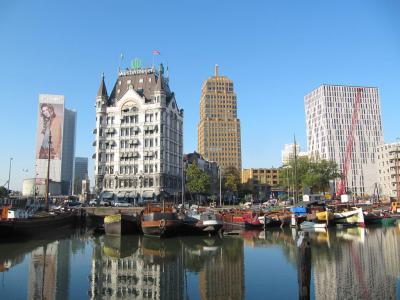
The Old Harbor is one of Rotterdam's oldest port areas, with its origins dating back to the early 14th century. The first jetty was constructed around 1350, marking the beginning of the city’s development as a major maritime hub. Over the centuries, the harbor played a vital role in Rotterdam’s growth, facilitating trade and commerce. However, the devastation of World War II heavily damaged much of the area, leaving only a few historical structures standing.
The Old Harbor is one of Rotterdam's oldest areas, now the city's entertainment hub. With its cafés and restaurants lining the water, the area offers a perfect mix of historic charm and modern appeal. Many of the establishments feature outdoor terraces, allowing visitors to relax and watch the boats. As night falls, Old Harbor comes alive with a nightlife scene popular for the ones looking to enjoy a drink or dance along the water.
The harbor’s rich history is still visible today through the traditional sailing boats moored along the docks. One of the most prominent landmarks in Old Harbor is the White House-standing at 43 meters tall, it was once Europe’s tallest skyscraper when it was completed in 1898. The White House, one of the few buildings to survive the bombings of World War II, can be admired for its distinctive Art Nouveau architecture.
The Old Harbor is one of Rotterdam's oldest areas, now the city's entertainment hub. With its cafés and restaurants lining the water, the area offers a perfect mix of historic charm and modern appeal. Many of the establishments feature outdoor terraces, allowing visitors to relax and watch the boats. As night falls, Old Harbor comes alive with a nightlife scene popular for the ones looking to enjoy a drink or dance along the water.
The harbor’s rich history is still visible today through the traditional sailing boats moored along the docks. One of the most prominent landmarks in Old Harbor is the White House-standing at 43 meters tall, it was once Europe’s tallest skyscraper when it was completed in 1898. The White House, one of the few buildings to survive the bombings of World War II, can be admired for its distinctive Art Nouveau architecture.
2) Kubuswoningen (Cube Houses)
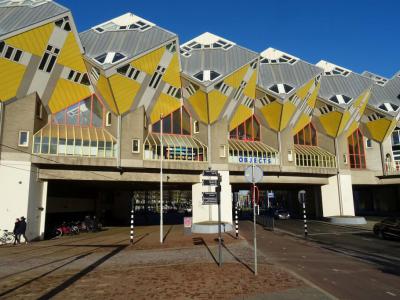
Few buildings capture Rotterdam’s spirit of creativity quite like the Cube Houses, the city’s most playful architectural experiment. Designed by Dutch architect Piet Blom, these yellow cubes seem to balance on their tips, tilted 45 degrees as if defying gravity. Blom’s goal was to create an “urban forest”, where each cube represents a tree and together they form a sculptural canopy above the streets below.
Built in the 1980s as part of a larger urban renewal project, the Cube Houses were conceived in collaboration with city planners who wanted to bring life and imagination back to Rotterdam. Each Cube House rises three stories high. The lower level contains a kitchen and living room, the middle floor holds two bedrooms and a bathroom, and the top level often serves as a small garden, workspace, or viewing area.
The complex also functions as a pedestrian bridge across a busy intersection, maintaining a car-free environment. Around the cubes, visitors will find a lively community of cafés, restaurants, small offices, studios, and even a playground.
Those curious about what life is like inside one of these tilted wonders can visit the Show Cube Museum, which offers a peek into their design and history. And for the truly adventurous, a few of the cubes have been converted into overnight accommodations-perfect for anyone eager to experience Rotterdam from a slightly different angle.
Built in the 1980s as part of a larger urban renewal project, the Cube Houses were conceived in collaboration with city planners who wanted to bring life and imagination back to Rotterdam. Each Cube House rises three stories high. The lower level contains a kitchen and living room, the middle floor holds two bedrooms and a bathroom, and the top level often serves as a small garden, workspace, or viewing area.
The complex also functions as a pedestrian bridge across a busy intersection, maintaining a car-free environment. Around the cubes, visitors will find a lively community of cafés, restaurants, small offices, studios, and even a playground.
Those curious about what life is like inside one of these tilted wonders can visit the Show Cube Museum, which offers a peek into their design and history. And for the truly adventurous, a few of the cubes have been converted into overnight accommodations-perfect for anyone eager to experience Rotterdam from a slightly different angle.
3) Markthal (Market Hall) (must see)
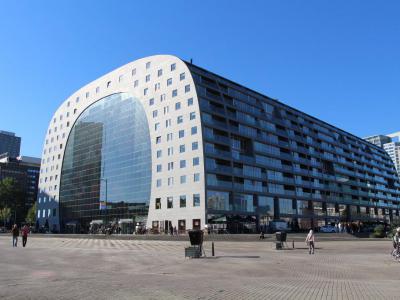
The Market Hall is a multi-use complex that combines apartments, offices, retail spaces, and one of Rotterdam’s most popular markets, all under a single monumental arch. Opened in 2014, the building is celebrated for its dramatic horseshoe-shaped arch and its massive glass facades composed of smaller window panels. A 34-metre high steel cable structure supports these glass walls, making it Europe’s largest cable-supported glass façade. Beneath it lies an extensive underground parking garage that adds to its functional design.
Inside, visitors are greeted by a space of vivid artwork covering the interior arch. Created by Dutch artists Arno Coenen and Iris Roskam, Horn of Plenty depicts giant fruits, vegetables, fish, flowers, and insects in dazzling colour. The digital artwork was so enormous that the artists had to borrow computing power from Pixar Studios. This spectacular mural has earned the Market Hall nicknames such as “The Largest Artwork in the World” and “The Sistine Chapel of Rotterdam”.
During the building’s construction, archaeologists unearthed the remains of a 10th-century farmstead, including a house with two stoves and several fireplaces. A small exhibition beside the central staircases displays these finds, offering visitors a glimpse of Rotterdam’s early settlement history.
Today, the Market Hall stands as the largest indoor market in the Netherlands. It hosts more than 100 produce stalls, 15 food shops, and eight restaurants. Shoppers can browse local cheeses, fresh fish, fruit and vegetables, poultry, flowers, and plants. For those eager to sample their purchases, plenty of indoor seating areas are available-making the Market Hall both a culinary destination and a modern architectural icon.
Inside, visitors are greeted by a space of vivid artwork covering the interior arch. Created by Dutch artists Arno Coenen and Iris Roskam, Horn of Plenty depicts giant fruits, vegetables, fish, flowers, and insects in dazzling colour. The digital artwork was so enormous that the artists had to borrow computing power from Pixar Studios. This spectacular mural has earned the Market Hall nicknames such as “The Largest Artwork in the World” and “The Sistine Chapel of Rotterdam”.
During the building’s construction, archaeologists unearthed the remains of a 10th-century farmstead, including a house with two stoves and several fireplaces. A small exhibition beside the central staircases displays these finds, offering visitors a glimpse of Rotterdam’s early settlement history.
Today, the Market Hall stands as the largest indoor market in the Netherlands. It hosts more than 100 produce stalls, 15 food shops, and eight restaurants. Shoppers can browse local cheeses, fresh fish, fruit and vegetables, poultry, flowers, and plants. For those eager to sample their purchases, plenty of indoor seating areas are available-making the Market Hall both a culinary destination and a modern architectural icon.
4) St. Laurenskerk (St. Lawrence Church)
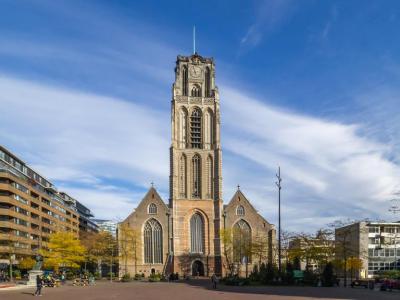
Saint Lawrence Church is Rotterdam’s only remaining medieval building. Construction began in 1449 and was completed in 1525. It was also the city’s first all-stone structure. The tower, originally added in 1621, has been rebuilt several times over the centuries.
When the Reformation reached Rotterdam in 1572, the church was converted from Catholic to Protestant worship. During the Second World War, the building suffered severe damage in the Rotterdam Blitz-only the tower and outer walls remained standing. For years, citizens debated whether to restore or demolish it, but restoration began in 1952 and was completed in 1968. The present church blends preserved medieval masonry with postwar reconstruction.
Among its notable features is the copper choir fence dating from 1713. Inside, visitors can see memorials to Dutch naval heroes such as admirals Kortenaar, Witte de With, and officer Van Brakel. The bronze doors, designed by Italian sculptor Giacomo Manzù, depict themes of war and peace and mark one of the church’s most admired details. In front of the church stands a statue of Desiderius Erasmus, the famous Rotterdam-born humanist and theologian, who remains one of the city’s most celebrated historical figures. The statue, installed in 1622, miraculously survived the World War II bombing that destroyed the surrounding area.
Religious services resumed in 1971 with the founding of the Laurenspastoraat community. Today, Saint Lawrence Church continues to serve as a place of worship for both the Laurenspastoraat and the Open Grenzen congregations. The church also houses a permanent exhibition dedicated to Rotterdam’s history. Spread across 20 side chapels, the displays combine artifacts, photographs, and audiovisual installations that trace the city’s medieval beginnings, the devastation of World War II, and its subsequent rebirth.
When the Reformation reached Rotterdam in 1572, the church was converted from Catholic to Protestant worship. During the Second World War, the building suffered severe damage in the Rotterdam Blitz-only the tower and outer walls remained standing. For years, citizens debated whether to restore or demolish it, but restoration began in 1952 and was completed in 1968. The present church blends preserved medieval masonry with postwar reconstruction.
Among its notable features is the copper choir fence dating from 1713. Inside, visitors can see memorials to Dutch naval heroes such as admirals Kortenaar, Witte de With, and officer Van Brakel. The bronze doors, designed by Italian sculptor Giacomo Manzù, depict themes of war and peace and mark one of the church’s most admired details. In front of the church stands a statue of Desiderius Erasmus, the famous Rotterdam-born humanist and theologian, who remains one of the city’s most celebrated historical figures. The statue, installed in 1622, miraculously survived the World War II bombing that destroyed the surrounding area.
Religious services resumed in 1971 with the founding of the Laurenspastoraat community. Today, Saint Lawrence Church continues to serve as a place of worship for both the Laurenspastoraat and the Open Grenzen congregations. The church also houses a permanent exhibition dedicated to Rotterdam’s history. Spread across 20 side chapels, the displays combine artifacts, photographs, and audiovisual installations that trace the city’s medieval beginnings, the devastation of World War II, and its subsequent rebirth.
5) Museum Rotterdam
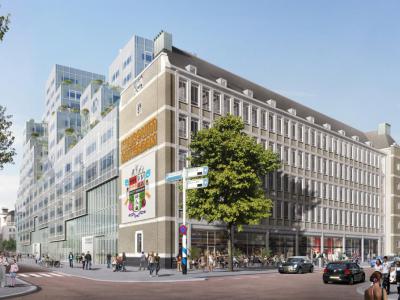
Museum Rotterdam was founded in 1905 as Museum of Antiquities, by a bourgeois elite that wanted to educate Rotterdam's growing working class population, attracted by the development of the transit port. It later became the Historical Museum of Rotterdam that glorified Rotterdam's Golden Age in a time that the modern city centre lacked its previous historical references due to its destruction in the bombardment of 1940.
In recent years the museum has changed its aims and ambitions again. The contemporary transnational city, and not the past city, has become central to its museum policies. In 2010 it dropped the 'Historical' in its name to continue as Museum Rotterdam.
Since 2016, the museum opened a new main location in the historical heart of Rotterdam, adjacent to the City Hall. Here the story of Rotterdam, the city with a young heart and an old soul, is told in new ways.
Why You Should Visit:
Gives a pretty good overview of how the city developed through a time-lapse map, a few built models, and a variety of unearthed archaeological finds.
A special theme is the oil industry, given that oil & gas transport, storage and refinery made Rotterdam the commercial power it is today.
You can also see authentic footage on the post-WWII reconstruction, where devastating bombing destroyed the complete historical center.
There is even a special exhibition about people emigrating to the United States from the Hotel New York in Rotterdam.
In recent years the museum has changed its aims and ambitions again. The contemporary transnational city, and not the past city, has become central to its museum policies. In 2010 it dropped the 'Historical' in its name to continue as Museum Rotterdam.
Since 2016, the museum opened a new main location in the historical heart of Rotterdam, adjacent to the City Hall. Here the story of Rotterdam, the city with a young heart and an old soul, is told in new ways.
Why You Should Visit:
Gives a pretty good overview of how the city developed through a time-lapse map, a few built models, and a variety of unearthed archaeological finds.
A special theme is the oil industry, given that oil & gas transport, storage and refinery made Rotterdam the commercial power it is today.
You can also see authentic footage on the post-WWII reconstruction, where devastating bombing destroyed the complete historical center.
There is even a special exhibition about people emigrating to the United States from the Hotel New York in Rotterdam.
6) Het Schielandshuis
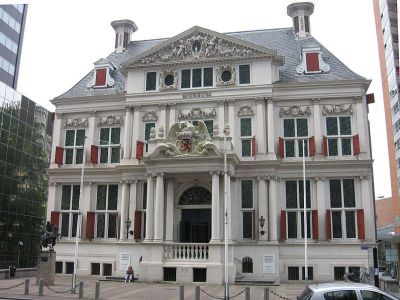
The Schielandshuis, a 17th-century edifice, graces the heart of Rotterdam on Korte Hoogstraat. Erected between 1662 and 1665 by decree of the Schieland Water Board, it underwent extensive restoration before finally unveiling as a museum in 1986. Once a domicile and a venue for gatherings, the building's regal presence was reminiscent of a city palace.
For nearly 150 years, this architectural marvel served as the abode of the Polder Council. Crafted by Pieter Post, a luminary of Dutch classicism, the same mind behind Maastricht's city hall, Leiden's Waag, and Gouda's Waag, among other notable structures. Collaborating with Jacob van Campen, Post also lent his genius to the design of Mauritshuis and Huis ten Bosch.
In October 1811, Napoleon I and Marie Louise occupied Schielandshuis, even removing the gate for their carriages. Later, Tsar Alexander I refused to enter Napoleon's room. In 1841, Rotterdam acquired the building, intending a museum. Collector F.J.O. Boijmans' pledge led to Museum Boijmans' founding in 1849. In 1938, the museum moved to its current location as Museum Boijmans Van Beuningen.
In 1978, the City Council endorsed a 17th-century-style restoration of the Schielandshuis. In 1986, the museum's grand reopening took place. Over time, towering neighbors joined the building's surroundings. In 2011, the museum adopted the moniker Museum Rotterdam, signifying its focus on the city's essence rather than solely its history. The transition to Timmerhuis in 2016 led to new occupants: Rotterdam Partners, Rotterdam Tourist Information, the Rotterdam Council for Art and Culture, and NAi Publishers.
For nearly 150 years, this architectural marvel served as the abode of the Polder Council. Crafted by Pieter Post, a luminary of Dutch classicism, the same mind behind Maastricht's city hall, Leiden's Waag, and Gouda's Waag, among other notable structures. Collaborating with Jacob van Campen, Post also lent his genius to the design of Mauritshuis and Huis ten Bosch.
In October 1811, Napoleon I and Marie Louise occupied Schielandshuis, even removing the gate for their carriages. Later, Tsar Alexander I refused to enter Napoleon's room. In 1841, Rotterdam acquired the building, intending a museum. Collector F.J.O. Boijmans' pledge led to Museum Boijmans' founding in 1849. In 1938, the museum moved to its current location as Museum Boijmans Van Beuningen.
In 1978, the City Council endorsed a 17th-century-style restoration of the Schielandshuis. In 1986, the museum's grand reopening took place. Over time, towering neighbors joined the building's surroundings. In 2011, the museum adopted the moniker Museum Rotterdam, signifying its focus on the city's essence rather than solely its history. The transition to Timmerhuis in 2016 led to new occupants: Rotterdam Partners, Rotterdam Tourist Information, the Rotterdam Council for Art and Culture, and NAi Publishers.
7) Maritime Museum of Rotterdam (must see)
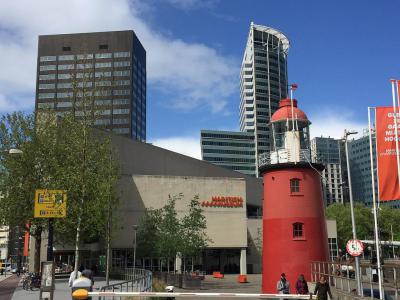
The Maritime Museum Rotterdam focuses on the city’s maritime and shipping history, offering visitors both modern exhibits and access to an extensive collection of artifacts. Founded in 1874 by Prince Henry of the Netherlands, it consists of two linked components: the indoor museum and the adjacent Museum Harbour.
Inside the museum, exhibitions designed for all ages include stories of ships, offshore platforms and maritime innovation. Among the standout pieces are the Mataró ship model, over six centuries old and Europe’s oldest ship model; The Itinerario by the Dutch explorer Jan Huygen van Linschoten, one of the world’s most important travel journals; pen‑and‑ink drawings by Willem van de Velde the Younger, a renowned Dutch maritime artist; and a set of sea charts by Joan Blaeu, a leading 17th‑century cartographer. The museum’s collection spans over one million objects, covering six centuries of Dutch maritime history.
The Museum Harbour offers an outdoor experience in the oldest and largest museum harbour in the Netherlands, located where the port of Rotterdam first took shape. Visitors can explore historic vessels such as steam tugs, a grain elevator, and the red cast‑iron lighthouse known as the Low Light of the Hook of Holland, which once guided ships up the New Waterway. In addition to its permanent collection, the museum hosts rotating exhibitions, educational programs, and special events aimed at exploring Rotterdam's pivotal role in global shipping and trade.
Tip: Some of the ships in the outer harbour section can be boarded and explored free of charge. A café and museum shop are available on site, and the museum’s library houses the Netherlands’ most comprehensive maritime‑related book collection, open by appointment for rare materials.
Inside the museum, exhibitions designed for all ages include stories of ships, offshore platforms and maritime innovation. Among the standout pieces are the Mataró ship model, over six centuries old and Europe’s oldest ship model; The Itinerario by the Dutch explorer Jan Huygen van Linschoten, one of the world’s most important travel journals; pen‑and‑ink drawings by Willem van de Velde the Younger, a renowned Dutch maritime artist; and a set of sea charts by Joan Blaeu, a leading 17th‑century cartographer. The museum’s collection spans over one million objects, covering six centuries of Dutch maritime history.
The Museum Harbour offers an outdoor experience in the oldest and largest museum harbour in the Netherlands, located where the port of Rotterdam first took shape. Visitors can explore historic vessels such as steam tugs, a grain elevator, and the red cast‑iron lighthouse known as the Low Light of the Hook of Holland, which once guided ships up the New Waterway. In addition to its permanent collection, the museum hosts rotating exhibitions, educational programs, and special events aimed at exploring Rotterdam's pivotal role in global shipping and trade.
Tip: Some of the ships in the outer harbour section can be boarded and explored free of charge. A café and museum shop are available on site, and the museum’s library houses the Netherlands’ most comprehensive maritime‑related book collection, open by appointment for rare materials.
8) Pilgrim Fathers Church
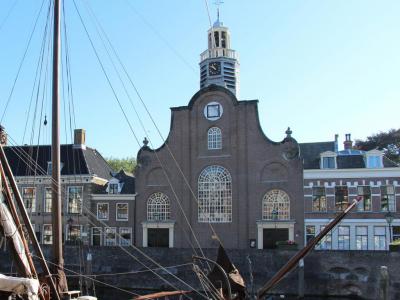
The origins of the Old or Pilgrim Fathers' Church can be traced back to 1417 when the site witnessed the consecration of the Roman Catholic Saint Anthony church. The first visual representation of the church dates back to 1512. In 1574, during the Reformation, the church underwent changes in alignment with its new Protestant identity.
In 1608, English Dissenters found refuge in the Netherlands. After leaving the Church of England, they formed their own religious group. After living in Leiden for eleven years, they became known as Pilgrims and set off for America in 1620 from Delfshaven on the ship Speedwell. Their aim was to worship freely and preserve their English identity.
Historical records indicate that the Pilgrim Fathers gathered in prayer on the dock adjacent to the church. It was much later that the church came to be known as Pilgrim Fathers' Church, a name bestowed by American visitors.
The Old or Pilgrim Fathers' Church boasts an airy and expansive interior. White plastered arches delineate the nave from the aisles. The unadorned walls are adorned with commemorative panels listing the names of the vicars who tended to the congregation from 1574. The intricately carved pulpit originates from the 18th century.
Typical of Dutch Protestant churches, the pulpit is situated within a rectangular enclosure. This space also accommodated the church council during services and served as the site for baptisms. The choir area features stained-glass windows illustrating the six days of Creation. The church is home to a 44-bell carillon, although the oldest bell cast in 1464 is now on exhibit due to its cracked condition.
In 1608, English Dissenters found refuge in the Netherlands. After leaving the Church of England, they formed their own religious group. After living in Leiden for eleven years, they became known as Pilgrims and set off for America in 1620 from Delfshaven on the ship Speedwell. Their aim was to worship freely and preserve their English identity.
Historical records indicate that the Pilgrim Fathers gathered in prayer on the dock adjacent to the church. It was much later that the church came to be known as Pilgrim Fathers' Church, a name bestowed by American visitors.
The Old or Pilgrim Fathers' Church boasts an airy and expansive interior. White plastered arches delineate the nave from the aisles. The unadorned walls are adorned with commemorative panels listing the names of the vicars who tended to the congregation from 1574. The intricately carved pulpit originates from the 18th century.
Typical of Dutch Protestant churches, the pulpit is situated within a rectangular enclosure. This space also accommodated the church council during services and served as the site for baptisms. The choir area features stained-glass windows illustrating the six days of Creation. The church is home to a 44-bell carillon, although the oldest bell cast in 1464 is now on exhibit due to its cracked condition.
9) Euromast Tower (must see)
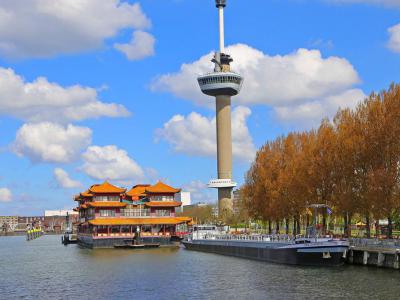
Euromast is an observation tower that was built for the 1960 Floriade International Garden Festival. The imposing structure was originally 101-meters (331-feet) tall and was Rotterdam's tallest building. In 1970, the Space Tower antennae was added, and the building is now 185-meters (606-feet) tall.
The tower is built on an underground 4,200,000-pound concrete block for stability. The crow's nest observation platform is 96 meters (315 feet) tall. The observation platform is home to a restaurant that serves brunch, lunch, and dinner.
Visitors can take an elevator to the Euroscoop at the top of the 185-meter-tall (606-foot-tall) tower. Adventurous travelers can even spend the night in the Euromast. There are several luxury suites.
Thrill-seekers can abseil or cable glide down the Euromast. Abseiling will allow you to walk down the outside wall in a climbing harness. Cable gliding is much more exciting. Guests hang from a cable track while zooming down at speeds up to 100 kilometers per hour (62 miles per hour).
The tower is built on an underground 4,200,000-pound concrete block for stability. The crow's nest observation platform is 96 meters (315 feet) tall. The observation platform is home to a restaurant that serves brunch, lunch, and dinner.
Visitors can take an elevator to the Euroscoop at the top of the 185-meter-tall (606-foot-tall) tower. Adventurous travelers can even spend the night in the Euromast. There are several luxury suites.
Thrill-seekers can abseil or cable glide down the Euromast. Abseiling will allow you to walk down the outside wall in a climbing harness. Cable gliding is much more exciting. Guests hang from a cable track while zooming down at speeds up to 100 kilometers per hour (62 miles per hour).
10) Het Park
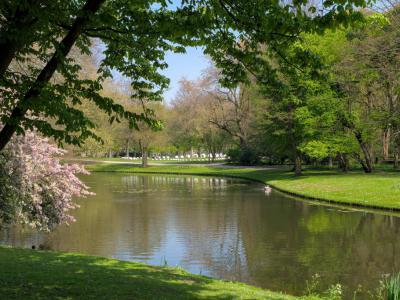
Following the Oude Plantage, Het Park holds the distinction of being Rotterdam's second-oldest park, situated to the west of the city center.
The land where Het Park now stands was acquired discreetly in 1851 by the Rotterdam Municipality with initial plans to establish a slaughterhouse. Opposition arose from Delfshaven, as the land fell within its territory, which was not yet a part of Rotterdam. In response to these concerns and at the urging of the council, the Rotterdam Municipality decided in 1852 to transform the area into a "public walk."
Though it presents as a unified space, Het Park is actually composed of two segments, harkening back to the location's historical use as two separate country estates. The eastern portion, now home to Parkzicht, was once the estate of J. Valckenier and was developed between 1852 and 1863 according to plans by the Zocher company. The western portion, where the De Heuvel estate stood, previously owned by J.A. Nottebohm, was incorporated into Het Park circa 1886 with certain alterations. The dividing line between these estates corresponds to the current placement of the Rhododendronallee.
Conceived by Jan David Zocher Jr. and his son Louis Paul Zocher in 1852, Het Park's design adheres to the principles of the English landscape style. The park saw an expansion in 1875 with the addition of the De Heuvel estate.
In 1914, the Norwegian Seamen's Church, constructed of wood, was erected on the western side of the park. This church was bestowed upon Rotterdam by the newly independent Norway and was transported to the Netherlands in kit form. A portion of the park's western side was lost due to the construction of the Maastunnel in 1937. Consequently, the Norwegian Seamen's Church was relocated to its current position on Westzeedijk.
As of December 2010, Het Park holds the esteemed designation of a National Monument.
The land where Het Park now stands was acquired discreetly in 1851 by the Rotterdam Municipality with initial plans to establish a slaughterhouse. Opposition arose from Delfshaven, as the land fell within its territory, which was not yet a part of Rotterdam. In response to these concerns and at the urging of the council, the Rotterdam Municipality decided in 1852 to transform the area into a "public walk."
Though it presents as a unified space, Het Park is actually composed of two segments, harkening back to the location's historical use as two separate country estates. The eastern portion, now home to Parkzicht, was once the estate of J. Valckenier and was developed between 1852 and 1863 according to plans by the Zocher company. The western portion, where the De Heuvel estate stood, previously owned by J.A. Nottebohm, was incorporated into Het Park circa 1886 with certain alterations. The dividing line between these estates corresponds to the current placement of the Rhododendronallee.
Conceived by Jan David Zocher Jr. and his son Louis Paul Zocher in 1852, Het Park's design adheres to the principles of the English landscape style. The park saw an expansion in 1875 with the addition of the De Heuvel estate.
In 1914, the Norwegian Seamen's Church, constructed of wood, was erected on the western side of the park. This church was bestowed upon Rotterdam by the newly independent Norway and was transported to the Netherlands in kit form. A portion of the park's western side was lost due to the construction of the Maastunnel in 1937. Consequently, the Norwegian Seamen's Church was relocated to its current position on Westzeedijk.
As of December 2010, Het Park holds the esteemed designation of a National Monument.
11) Erasmusbrug (Erasmus Bridge) (must see)
Erasmus Bridge crosses the Nieuwe Mass River. This combination cable-stayed and bascule bridge was completed in 1996. The modern bridge was named after Desiderius Erasmus, a Renaissance humanist and Catholic priest. Erasmus was born in Rotterdam in 1446 and is considered one of the greatest scholars of the northern Renaissance.
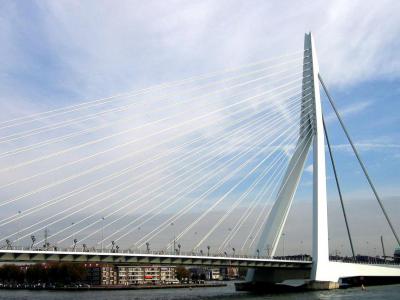
Erasmus Bridge is Rotterdam's most iconic landmark and is featured in the city's logo. The bridge is 802 meters (2,631 feet) long. The cable-stayed portion has a 139-meter (456-foot) asymmetrical bent pylon with an eye-catching horizontal base. This striking feature has earned it "The Swan" nickname.
The south portion of the bridge has an 89-meter (292-foot) long bascule bridge to allow large ships to pass under the bridge.
The bridge has been featured in films and events. It was in Jackie Chan's 1998 film Who Am I?. Several planes dramatically flew under the bridge during the 2005 Red Bull Air Race.
Erasmus Bridge is Rotterdam's most iconic landmark and is featured in the city's logo. The bridge is 802 meters (2,631 feet) long. The cable-stayed portion has a 139-meter (456-foot) asymmetrical bent pylon with an eye-catching horizontal base. This striking feature has earned it "The Swan" nickname.
The south portion of the bridge has an 89-meter (292-foot) long bascule bridge to allow large ships to pass under the bridge.
The bridge has been featured in films and events. It was in Jackie Chan's 1998 film Who Am I?. Several planes dramatically flew under the bridge during the 2005 Red Bull Air Race.
