Custom Walk in Paris, France by paprika-narrows_5g_c2d4ea created on 2026-03-31
Guide Location: France » Paris
Guide Type: Custom Walk
# of Sights: 6
Tour Duration: 2 Hour(s)
Travel Distance: 4.3 Km or 2.7 Miles
Share Key: 2EMQC
Guide Type: Custom Walk
# of Sights: 6
Tour Duration: 2 Hour(s)
Travel Distance: 4.3 Km or 2.7 Miles
Share Key: 2EMQC
How It Works
Please retrieve this walk in the GPSmyCity app. Once done, the app will guide you from one tour stop to the next as if you had a personal tour guide. If you created the walk on this website or come to the page via a link, please follow the instructions below to retrieve the walk in the app.
Retrieve This Walk in App
Step 1. Download the app "GPSmyCity: Walks in 1K+ Cities" on Apple App Store or Google Play Store.



Step 2. In the GPSmyCity app, download(or launch) the guide "Paris Map and Walking Tours".
Step 3. Tap the menu button located at upper right corner of the "Walks" screen and select "Retrieve custom walk". Enter the share key: 2EMQC
1) Musee du Louvre (Louvre Museum) (must see)
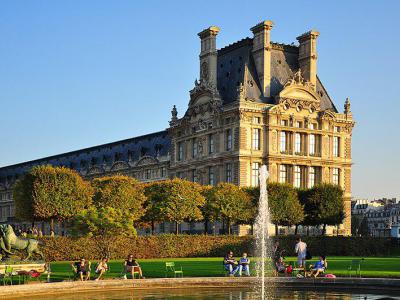
The Louvre Museum, or simply the Louvre, is perhaps the most famous art museum in the world. Originally built as a fortress in the late 12th century, under King Philip II, it later transitioned into a royal residence under King Francis I, in 1546. The Louvre’s current palace structure developed through multiple expansions, although it ceased being a royal residence in 1682 when Louis XIV moved his household to Versailles.
In 1692, the Louvre became home to the Academy of Inscriptions and Fine Writing and the Royal Academy of Painting and Sculpture, which held public exhibitions, or “salons,” marking its early transformation into a public cultural space. During the French Revolution, it was formally established as a museum by the National Assembly, with an initial exhibition of 537 works, mostly from royal and church collections. Following its brief closure due to structural concerns, the Louvre reopened and rapidly expanded its collection under Napoleon Bonaparte, who renamed it Napoleon Museum. Though many seized artworks had to be returned after Napoleon's fall, subsequent monarchs continued to add to the collection, and acquisitions continued through donations and bequests during the Third Republic (between 1870 and 1940).
Today, the Louvre’s collection comprises approximately 500,000 objects housed in over 72,000 square meters of space, with 35,000 pieces displayed at any given time. Divided into eight departments-ranging from Egyptian and Near Eastern Antiquities to Paintings and Islamic Art-the museum showcases everything from sculptures and ornamental works of art to paintings and archaeological artifacts from around the globe. Key masterpieces here include the "Venus de Milo," the "Winged Victory of Samothrace," "The Raft of the Medusa," and, famously, Leonardo da Vinci's "Mona Lisa." For many, the chance to see the Mona Lisa is the main reason for visiting.
Beyond the high-profile pieces, the Louvre's lesser-visited Sully and Richelieu wings reveal the full extent of its treasures. The Richelieu wing is particularly celebrated for its elegant design, glass-covered courtyards, and grand architecture. Its centerpiece is the Napoleon III apartments, adorned with immense chandeliers, red velvet, intricate moldings, and lavish gilded decor-a testament to the opulence that impresses all who enter.
With almost 9 million visitors in 2023, the Louvre remains the most-visited museum globally, surpassing even the Vatican Museums. For those planning to visit, advance ticket purchases are essential, and using the quieter Lions Gate helps ease entry. For a more serene experience, Friday afternoons, when the museum stays open late, are ideal. Once inside, a map is crucial for navigating the expansive galleries, allowing visitors to prioritize the exhibits that resonate most.
In 1692, the Louvre became home to the Academy of Inscriptions and Fine Writing and the Royal Academy of Painting and Sculpture, which held public exhibitions, or “salons,” marking its early transformation into a public cultural space. During the French Revolution, it was formally established as a museum by the National Assembly, with an initial exhibition of 537 works, mostly from royal and church collections. Following its brief closure due to structural concerns, the Louvre reopened and rapidly expanded its collection under Napoleon Bonaparte, who renamed it Napoleon Museum. Though many seized artworks had to be returned after Napoleon's fall, subsequent monarchs continued to add to the collection, and acquisitions continued through donations and bequests during the Third Republic (between 1870 and 1940).
Today, the Louvre’s collection comprises approximately 500,000 objects housed in over 72,000 square meters of space, with 35,000 pieces displayed at any given time. Divided into eight departments-ranging from Egyptian and Near Eastern Antiquities to Paintings and Islamic Art-the museum showcases everything from sculptures and ornamental works of art to paintings and archaeological artifacts from around the globe. Key masterpieces here include the "Venus de Milo," the "Winged Victory of Samothrace," "The Raft of the Medusa," and, famously, Leonardo da Vinci's "Mona Lisa." For many, the chance to see the Mona Lisa is the main reason for visiting.
Beyond the high-profile pieces, the Louvre's lesser-visited Sully and Richelieu wings reveal the full extent of its treasures. The Richelieu wing is particularly celebrated for its elegant design, glass-covered courtyards, and grand architecture. Its centerpiece is the Napoleon III apartments, adorned with immense chandeliers, red velvet, intricate moldings, and lavish gilded decor-a testament to the opulence that impresses all who enter.
With almost 9 million visitors in 2023, the Louvre remains the most-visited museum globally, surpassing even the Vatican Museums. For those planning to visit, advance ticket purchases are essential, and using the quieter Lions Gate helps ease entry. For a more serene experience, Friday afternoons, when the museum stays open late, are ideal. Once inside, a map is crucial for navigating the expansive galleries, allowing visitors to prioritize the exhibits that resonate most.
2) Jardin des Tuileries (Tuileries Garden) (must see)
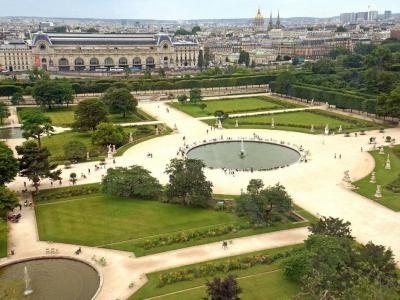
Centermost of all the Paris city parks, the Tuileries Garden forms part of the triumphal axis (the so-called "Grand Axe") stretching from La Défense plaza all the way to the Louvre. The garden is almost totally flat and has a circular fountain in the middle, which is most popular in summer.
Originally, this Italian Renaissance-style garden was created for Queen Catherine de Médici, who in the 16th century began construction of a palace just outside the western walls of the capital. The garden took the name of the tile factories (called "tuileries") that it replaced. First opened to the public in 1667, it became fully accessible only after the French Revolution.
In 1789, following the fall of the Bastille, King Louis XVI and his wife, Marie Antoinette, moved into the Tuileries Palace as a publicity stunt to get "closer to the people". Sadly, this stunt eventually produced the undesired effect and resulted in the royal family being locked up in the palace under house arrest. Three years later, the palace came under attack in what proved to be the defining moment of the Revolution. The French monarchy was abolished, and quite radically so, with the help of the then newly-invented guillotine installed in the nearby Concorde Square. The last words of the king rising to the scaffold were: "Gentlemen, I am innocent of everything of which I am accused. I hope that my blood may cement the good fortune of the French."
In the 19th century, Napoleon merged the Tuileries with the Louvre in a bid to create one huge super-palace complex. The project was barely completed when the bloody uprising of the Paris Commune in 1871 saw the former royal Tuileries Palace set on fire and completely destroyed. But the palace garden survived and to date retains the general outline of its original master plan.
In the 1990s, the landscape was renewed as part of the Grand Louvre project. Now free to access, the park is an oasis of calm amid the bustle of Paris. At visitors' disposal are a good number of green chairs to sit on and enjoy ice cream or drinks, plus a pond with small rented boats, from which one can enjoy a marvelous view of the Eiffel Tower or simply unwind to the chirp of the local birds.
Originally, this Italian Renaissance-style garden was created for Queen Catherine de Médici, who in the 16th century began construction of a palace just outside the western walls of the capital. The garden took the name of the tile factories (called "tuileries") that it replaced. First opened to the public in 1667, it became fully accessible only after the French Revolution.
In 1789, following the fall of the Bastille, King Louis XVI and his wife, Marie Antoinette, moved into the Tuileries Palace as a publicity stunt to get "closer to the people". Sadly, this stunt eventually produced the undesired effect and resulted in the royal family being locked up in the palace under house arrest. Three years later, the palace came under attack in what proved to be the defining moment of the Revolution. The French monarchy was abolished, and quite radically so, with the help of the then newly-invented guillotine installed in the nearby Concorde Square. The last words of the king rising to the scaffold were: "Gentlemen, I am innocent of everything of which I am accused. I hope that my blood may cement the good fortune of the French."
In the 19th century, Napoleon merged the Tuileries with the Louvre in a bid to create one huge super-palace complex. The project was barely completed when the bloody uprising of the Paris Commune in 1871 saw the former royal Tuileries Palace set on fire and completely destroyed. But the palace garden survived and to date retains the general outline of its original master plan.
In the 1990s, the landscape was renewed as part of the Grand Louvre project. Now free to access, the park is an oasis of calm amid the bustle of Paris. At visitors' disposal are a good number of green chairs to sit on and enjoy ice cream or drinks, plus a pond with small rented boats, from which one can enjoy a marvelous view of the Eiffel Tower or simply unwind to the chirp of the local birds.
3) Musee de l'Orangerie (Orangerie Museum) (must see)
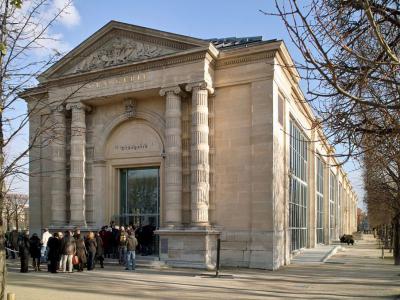
Situated in the picturesque Tuileries Gardens near the Place de la Concorde, l'Orangerie is celebrated worldwide for its remarkable collection of Impressionist and Post-Impressionist masterpieces; a cultural treasure that attracts art aficionados and tourists from across the globe.
Originally constructed in the 19th century as an orangery for growing citrus trees, the building was later repurposed into an art museum in 1927. Following extensive renovations in the 2000s, it reopened its doors in 2006 with a renewed focus on showcasing its extraordinary collection.
One of the museum's main highlights is the breathtaking exhibition of Claude Monet's iconic Water Lilies (Nymphéas) series. These immersive and expansive canvases were specifically crafted by Monet to be displayed in the museum's oval-shaped rooms. The intention behind these works was to create a serene and soothing ambiance, where the stress of the outside world could be momentarily transcended through the vibrant colors and delicate brushwork. Illuminated by the gentle natural light that filters through the ceiling, the painted water lily garden envelops visitors in a distinct and enchanting atmosphere, perfectly capturing Monet's original vision. The experience is particularly captivating during mid-morning on sunny days. Visitors are encouraged to start their viewing journey from the center of the room, gradually approaching the canvases to appreciate the intricate brushstrokes up close.
Beyond Monet's Water Lilies, the Musée de l'Orangerie houses an impressive collection of artworks by other renowned painters. The lower level features the Jean Walter and Paul Guillaume Collection, which includes captivating pieces by notable artists such as Renoir, Cézanne, Modigliani, Matisse, Picasso, and Rousseau, thus offering a comprehensive overview of the artistic movements that revolutionized the art world during the late 19th and early 20th centuries.
With its central location, captivating collection, and tranquil atmosphere, the Musée de l'Orangerie is an absolute must-visit for those eager to explore the beauty and richness of Impressionist art in the heart of Paris.
Tip:
Within the museum grounds, you may find a small, well-stocked gift shop offering a diverse selection of items. Additionally, a small self-service café is available, perfect for those seeking a quick snack or a cup of coffee to rejuvenate.
For a convenient and efficient experience, it is worth considering purchasing a combined ticket for the Musée de l'Orangerie and the Musée d'Orsay. This cost-effective option not only provides access to both museums but also allows you to bypass the lines when entering the latter, saving valuable time during your visit.
Originally constructed in the 19th century as an orangery for growing citrus trees, the building was later repurposed into an art museum in 1927. Following extensive renovations in the 2000s, it reopened its doors in 2006 with a renewed focus on showcasing its extraordinary collection.
One of the museum's main highlights is the breathtaking exhibition of Claude Monet's iconic Water Lilies (Nymphéas) series. These immersive and expansive canvases were specifically crafted by Monet to be displayed in the museum's oval-shaped rooms. The intention behind these works was to create a serene and soothing ambiance, where the stress of the outside world could be momentarily transcended through the vibrant colors and delicate brushwork. Illuminated by the gentle natural light that filters through the ceiling, the painted water lily garden envelops visitors in a distinct and enchanting atmosphere, perfectly capturing Monet's original vision. The experience is particularly captivating during mid-morning on sunny days. Visitors are encouraged to start their viewing journey from the center of the room, gradually approaching the canvases to appreciate the intricate brushstrokes up close.
Beyond Monet's Water Lilies, the Musée de l'Orangerie houses an impressive collection of artworks by other renowned painters. The lower level features the Jean Walter and Paul Guillaume Collection, which includes captivating pieces by notable artists such as Renoir, Cézanne, Modigliani, Matisse, Picasso, and Rousseau, thus offering a comprehensive overview of the artistic movements that revolutionized the art world during the late 19th and early 20th centuries.
With its central location, captivating collection, and tranquil atmosphere, the Musée de l'Orangerie is an absolute must-visit for those eager to explore the beauty and richness of Impressionist art in the heart of Paris.
Tip:
Within the museum grounds, you may find a small, well-stocked gift shop offering a diverse selection of items. Additionally, a small self-service café is available, perfect for those seeking a quick snack or a cup of coffee to rejuvenate.
For a convenient and efficient experience, it is worth considering purchasing a combined ticket for the Musée de l'Orangerie and the Musée d'Orsay. This cost-effective option not only provides access to both museums but also allows you to bypass the lines when entering the latter, saving valuable time during your visit.
4) Musee d'Orsay (Orsay Museum) (must see)
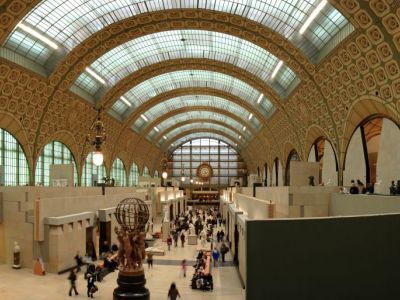
One of the world's most renowned art museums, the Orsay is housed in a former railway station, showcasing an exceptional collection of artworks primarily from the 19th and early 20th centuries – from Impressionist and Post-Impressionist to opulent Art Nouveau pieces.
With its prime location on the Left Bank of the Seine River, the Orsay also offers breathtaking panoramic views of Paris, including stunning vistas of famous landmarks such as the Louvre Museum, Notre-Dame Cathedral, and the Eiffel Tower from its upper floors.
The museum building itself is an architectural marvel, blending historic charm with modern elements. Originally built as the Gare d'Orsay in the late 19th century, the station was transformed into a museum in 1986. Its grandeur and unique layout provide an ideal setting for the remarkable artworks on display.
The permanent collection features an extensive array of masterpieces by celebrated artists, such as Vincent van Gogh's "Starry Night Over the Rhône", Édouard Manet's "Olympia", Pierre-Auguste Renoir's "Bal du moulin de la Galette", and Paul Cézanne's "Apples and Oranges". These, along with countless others, offer an immersive journey through the revolutionary movements that shaped the art world during the 19th and early 20th centuries.
In addition to its renowned painting collection, the museum also boasts an impressive assortment of sculptures, decorative arts, and photography. Visitors can appreciate the exquisite craftsmanship of Art Nouveau furniture, delicate sculptures by Auguste Rodin, and the innovative photographic works of pioneers such as Eugène Atget.
Beyond the artistic treasures, the Musée d'Orsay offers a variety of amenities to enhance the experience, from the several cafes and restaurants to the museum shop, which provides an opportunity to bring home a piece of art through a wide selection of books, prints, and unique souvenirs.
Whether you are an art enthusiast, a history lover, or simply seeking an enriching cultural experience, a visit to the Orsay is essential.
Why You Should Visit:
For a smaller, more intimate venue and beautiful artwork by the masters, this is the perfect destination!
Not only houses paintings and sculpture but also displays decorative furnishings that would have only graced a palace!
Tip:
The secret pleasure here is the gorgeous 5th-floor restaurant under the huge clock and with one of the best views of Paris. Excellent value for money.
With its prime location on the Left Bank of the Seine River, the Orsay also offers breathtaking panoramic views of Paris, including stunning vistas of famous landmarks such as the Louvre Museum, Notre-Dame Cathedral, and the Eiffel Tower from its upper floors.
The museum building itself is an architectural marvel, blending historic charm with modern elements. Originally built as the Gare d'Orsay in the late 19th century, the station was transformed into a museum in 1986. Its grandeur and unique layout provide an ideal setting for the remarkable artworks on display.
The permanent collection features an extensive array of masterpieces by celebrated artists, such as Vincent van Gogh's "Starry Night Over the Rhône", Édouard Manet's "Olympia", Pierre-Auguste Renoir's "Bal du moulin de la Galette", and Paul Cézanne's "Apples and Oranges". These, along with countless others, offer an immersive journey through the revolutionary movements that shaped the art world during the 19th and early 20th centuries.
In addition to its renowned painting collection, the museum also boasts an impressive assortment of sculptures, decorative arts, and photography. Visitors can appreciate the exquisite craftsmanship of Art Nouveau furniture, delicate sculptures by Auguste Rodin, and the innovative photographic works of pioneers such as Eugène Atget.
Beyond the artistic treasures, the Musée d'Orsay offers a variety of amenities to enhance the experience, from the several cafes and restaurants to the museum shop, which provides an opportunity to bring home a piece of art through a wide selection of books, prints, and unique souvenirs.
Whether you are an art enthusiast, a history lover, or simply seeking an enriching cultural experience, a visit to the Orsay is essential.
Why You Should Visit:
For a smaller, more intimate venue and beautiful artwork by the masters, this is the perfect destination!
Not only houses paintings and sculpture but also displays decorative furnishings that would have only graced a palace!
Tip:
The secret pleasure here is the gorgeous 5th-floor restaurant under the huge clock and with one of the best views of Paris. Excellent value for money.
5) Sainte-Chapelle (Holy Chapel) (must see)
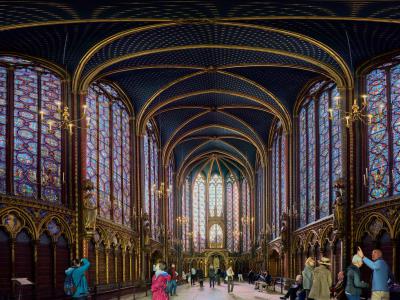
The Holy Chapel on the City Island in Paris is a stunning 13th-century example of Rayonnant Gothic architecture. Commissioned by King Louis IX who led the 7th and 8th Crusades to the Holy Land, it was designed as a grand reliquary to house sacred relics, such as the Crown of Thorns purportedly worn by Jesus himself, which Louis acquired in Constantinople.
This two-story chapel has an upper level with remarkable stained-glass windows, reserved for the royal family, while its lower level, adorned with floral designs, served palace courtiers and staff. The Holy Chapel was once part of the medieval City Palace, the former residence of French kings until the 14th century, alongside the neighboring Conciergerie, which later became a prison.
The chapel faced considerable damage over the centuries, particularly during the French Revolution when its sculptures were destroyed, royal emblems defaced, and interiors looted. By the 19th century, extensive restoration efforts were undertaken to revive its medieval charm. Skilled craftsmanship was applied to restore the chapel, making it a blend of medieval and 19th-century artistry. Miraculously, around two-thirds of the original stained glass survived, creating a captivating effect, especially when sunlight illuminates the intricate biblical scenes depicted in the windows.
Architecturally, the Holy Chapel is distinguished by its simplicity and harmony. Unlike many Gothic churches, it lacks flying buttresses, relying instead on deep buttresses and metal supports for stability. A rose window on the west front, added in the 15th century, features scenes of the Apocalypse, while a cedarwood spire captures the essence of Gothic style. The chapel was intended to symbolize Jerusalem, a vision of paradise for the saved at the Last Judgment.
Today, Holy Chapel remains a marvel of medieval design and an enduring symbol of King Louis IX’s devotion and legacy.
This two-story chapel has an upper level with remarkable stained-glass windows, reserved for the royal family, while its lower level, adorned with floral designs, served palace courtiers and staff. The Holy Chapel was once part of the medieval City Palace, the former residence of French kings until the 14th century, alongside the neighboring Conciergerie, which later became a prison.
The chapel faced considerable damage over the centuries, particularly during the French Revolution when its sculptures were destroyed, royal emblems defaced, and interiors looted. By the 19th century, extensive restoration efforts were undertaken to revive its medieval charm. Skilled craftsmanship was applied to restore the chapel, making it a blend of medieval and 19th-century artistry. Miraculously, around two-thirds of the original stained glass survived, creating a captivating effect, especially when sunlight illuminates the intricate biblical scenes depicted in the windows.
Architecturally, the Holy Chapel is distinguished by its simplicity and harmony. Unlike many Gothic churches, it lacks flying buttresses, relying instead on deep buttresses and metal supports for stability. A rose window on the west front, added in the 15th century, features scenes of the Apocalypse, while a cedarwood spire captures the essence of Gothic style. The chapel was intended to symbolize Jerusalem, a vision of paradise for the saved at the Last Judgment.
Today, Holy Chapel remains a marvel of medieval design and an enduring symbol of King Louis IX’s devotion and legacy.
6) Cathedrale Notre-Dame (Notre-Dame Cathedral) (must see)
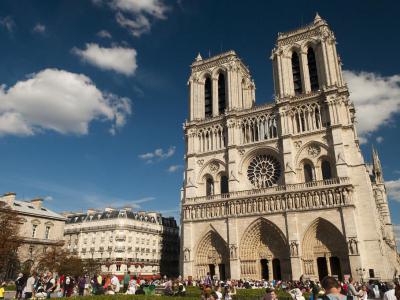
While the Eiffel Tower is an instantly recognizable symbol of France, the Notre-Dame Cathedral is an unmistakable symbol of Paris. Notre-Dame de Paris, or "Our Lady of Paris," is a medieval Catholic church renowned for its French Gothic appearance. Among other features, this cathedral showcases period architectural innovations such as the rib vault and flying buttress, as well as large rose windows and rich sculptural decoration. Notre-Dame’s architectural and historical significance is underscored by its vast pipe organs, iconic bells, and its role in hosting significant ceremonies like Napoleon’s coronation, the celebration of the Liberation of Paris in 1944, and the funerals of presidents Charles de Gaulle and François Mitterrand.
Before Notre-Dame, a temple to Jupiter and later a cathedral dedicated to Saint Étienne occupied the site. Construction of Notre-Dame began in 1163 and concluded in 1260, incorporating architectural advancements in four major stages, with additions in the 13th century enhancing stability and light. At the time of its construction, it was the most ambitious cathedral project ever undertaken in France, its vaults rising over 33 meters and holding a national height record for several decades.
In 1431, Notre-Dame saw the coronation of King Henry VI, and during the French Revolution, suffered vandalism when it was repurposed as a warehouse. In the 19th century, Victor Hugo’s novel, The Hunchback of Notre-Dame, spurred its restoration, largely preserving Notre-Dame’s legacy.
Amid the Second World War, upon the Fall of France, there were fears that the German invaders might destroy the freshly renovated stained glass of the rose window. As a result, the lion's portion of it was hidden and re-installed only after the war.
In 2019, a fire severely damaged the cathedral's oak roof and spire. Firefighters saved much of the building, including the world's biggest 13th-century glass window and other artifacts and relics which were temporarily removed for safety. Though many decorations have been removed over time, the cathedral retains Gothic, Baroque, and 19th-century sculptures, altarpieces, and revered relics, including the Crown of Thorns and fragments from the True Cross.
As a symbol of Paris and France, Notre-Dame is renowned for its traditional Lent sermons since the 1830s and attracts annually around 12 million visitors.
Before Notre-Dame, a temple to Jupiter and later a cathedral dedicated to Saint Étienne occupied the site. Construction of Notre-Dame began in 1163 and concluded in 1260, incorporating architectural advancements in four major stages, with additions in the 13th century enhancing stability and light. At the time of its construction, it was the most ambitious cathedral project ever undertaken in France, its vaults rising over 33 meters and holding a national height record for several decades.
In 1431, Notre-Dame saw the coronation of King Henry VI, and during the French Revolution, suffered vandalism when it was repurposed as a warehouse. In the 19th century, Victor Hugo’s novel, The Hunchback of Notre-Dame, spurred its restoration, largely preserving Notre-Dame’s legacy.
Amid the Second World War, upon the Fall of France, there were fears that the German invaders might destroy the freshly renovated stained glass of the rose window. As a result, the lion's portion of it was hidden and re-installed only after the war.
In 2019, a fire severely damaged the cathedral's oak roof and spire. Firefighters saved much of the building, including the world's biggest 13th-century glass window and other artifacts and relics which were temporarily removed for safety. Though many decorations have been removed over time, the cathedral retains Gothic, Baroque, and 19th-century sculptures, altarpieces, and revered relics, including the Crown of Thorns and fragments from the True Cross.
As a symbol of Paris and France, Notre-Dame is renowned for its traditional Lent sermons since the 1830s and attracts annually around 12 million visitors.
