Custom Walk in Shanghai, China by snazsmythe_4db554 created on 2026-04-02
Guide Location: China » Shanghai
Guide Type: Custom Walk
# of Sights: 11
Tour Duration: 5 Hour(s)
Travel Distance: 13.4 Km or 8.3 Miles
Share Key: KVJL8
Guide Type: Custom Walk
# of Sights: 11
Tour Duration: 5 Hour(s)
Travel Distance: 13.4 Km or 8.3 Miles
Share Key: KVJL8
How It Works
Please retrieve this walk in the GPSmyCity app. Once done, the app will guide you from one tour stop to the next as if you had a personal tour guide. If you created the walk on this website or come to the page via a link, please follow the instructions below to retrieve the walk in the app.
Retrieve This Walk in App
Step 1. Download the app "GPSmyCity: Walks in 1K+ Cities" on Apple App Store or Google Play Store.



Step 2. In the GPSmyCity app, download(or launch) the guide "Shanghai Map and Walking Tours".
Step 3. Tap the menu button located at upper right corner of the "Walks" screen and select "Retrieve custom walk". Enter the share key: KVJL8
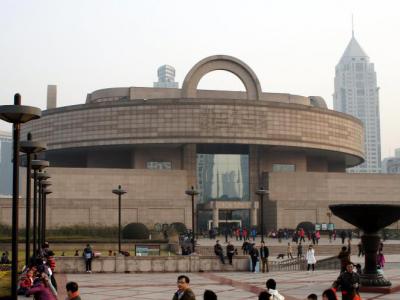
1) Shanghai Museum (must see)
To get a thorough look at some of the world's best-preserved and exquisite Chinese artifacts, you should visit the Shanghai Museum. It has been open since 1952 and boasts an impressive collection of ancient Chinese art, consisting of nearly one million exhibits spanning over 5,000 years, from China's Neolithic period to the Qing dynasty.
The museum's architecture resembles an ancient Chinese "ding" pot, and its layout draws inspiration from traditional Chinese cosmology, where a square base symbolizes earth and a rounded roof represents heaven. Inside, you'll find ten permanent exhibitions and three rotating international exhibitions. The items are well-displayed, allowing visitors to take photos without needing a flashlight.
After a roughly 15-minute wait for security clearance, you are free to explore the museum at your own pace, although your actual visit time might be limited due to a tight schedule. The museum offers guided tours and audio guides for those who prefer independent exploration.
According to the museum brochure, there are nearly 130,000 pieces of national treasures across 21 categories, including bronze, ceramics, calligraphy, paintings, jade and ivory works, bamboo and lacquer wares, oracle bones, seals, coins, and artifacts from various ethnic minorities.
One of the museum's highlights is the ground-floor bronze gallery, featuring artifacts dating back to 2200 BC. This early period of Chinese art may not be familiar to many visitors, making these exhibits seem less visually appealing. However, the diversity of shapes and craftsmanship demonstrates the advanced technology of ancient China.
On the first floor, the ceramics gallery proudly displays pieces from nearly every era of Chinese history, while the second-floor painting gallery showcases incredibly realistic depictions of animals, especially birds.
The top floor houses a colorful and striking gallery dedicated to various Chinese ethnic minorities, challenging the perception of China as a homogeneous culture. Next door on the same floor is an exhibition of Ming- and Qing-period furniture, which proves more interesting than one might expect.
Tip:
Clean bathrooms on each floor, a tea house on the 2nd floor, and before leaving the museum, don't forget to check out the on-site bookstore for a wide choice of beautiful books on China, in case you're interested in any!
The museum's architecture resembles an ancient Chinese "ding" pot, and its layout draws inspiration from traditional Chinese cosmology, where a square base symbolizes earth and a rounded roof represents heaven. Inside, you'll find ten permanent exhibitions and three rotating international exhibitions. The items are well-displayed, allowing visitors to take photos without needing a flashlight.
After a roughly 15-minute wait for security clearance, you are free to explore the museum at your own pace, although your actual visit time might be limited due to a tight schedule. The museum offers guided tours and audio guides for those who prefer independent exploration.
According to the museum brochure, there are nearly 130,000 pieces of national treasures across 21 categories, including bronze, ceramics, calligraphy, paintings, jade and ivory works, bamboo and lacquer wares, oracle bones, seals, coins, and artifacts from various ethnic minorities.
One of the museum's highlights is the ground-floor bronze gallery, featuring artifacts dating back to 2200 BC. This early period of Chinese art may not be familiar to many visitors, making these exhibits seem less visually appealing. However, the diversity of shapes and craftsmanship demonstrates the advanced technology of ancient China.
On the first floor, the ceramics gallery proudly displays pieces from nearly every era of Chinese history, while the second-floor painting gallery showcases incredibly realistic depictions of animals, especially birds.
The top floor houses a colorful and striking gallery dedicated to various Chinese ethnic minorities, challenging the perception of China as a homogeneous culture. Next door on the same floor is an exhibition of Ming- and Qing-period furniture, which proves more interesting than one might expect.
Tip:
Clean bathrooms on each floor, a tea house on the 2nd floor, and before leaving the museum, don't forget to check out the on-site bookstore for a wide choice of beautiful books on China, in case you're interested in any!
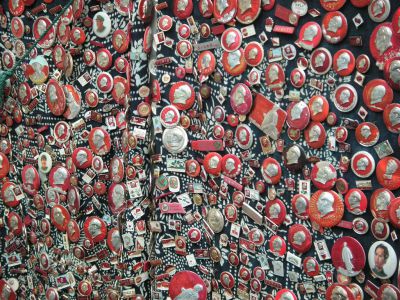
2) Fang Bang Road Indoor Antique Market
The Fang Bang Road Indoor Antique Market in Shanghai is a distinctive destination for both locals and tourists alike, offering a unique glimpse into the rich tapestry of Chinese culture and history through its diverse array of collectibles and artifacts. This five-story flea market has become a bustling hub of activity, particularly over the weekend. Notably, the market spreads its offerings across three floors regularly, while the weekend market especially thrives on the third and fourth floors, with the latter being exclusively open to small local vendors during these days.
Visitors to the Fang Bang Road Indoor Antique Market are treated to an eclectic selection of items that range from ethnic Yunnan bags to meticulously reproduced traditional furniture, providing a tangible connection to China's diverse cultural heritage. The market is renowned for its extensive collection that includes porcelain items, old jade pendants, used furniture pieces, Qing Dynasty coins, Chairman Mao buttons, old Russian cameras, Buddhist statues, and propaganda posters from the 1950s. Additionally, those with a penchant for nostalgia can sift through boxes of yellowing photographs, each telling its own story of days gone by.
This market is not just a shopping destination but a vibrant cultural experience, attracting a wide array of visitors and vendors from Shanghai and beyond. It offers an unparalleled opportunity for tourists to immerse themselves in the search for authentic artifacts and to learn more about Chinese history and culture through the treasures they find.
Visitors to the Fang Bang Road Indoor Antique Market are treated to an eclectic selection of items that range from ethnic Yunnan bags to meticulously reproduced traditional furniture, providing a tangible connection to China's diverse cultural heritage. The market is renowned for its extensive collection that includes porcelain items, old jade pendants, used furniture pieces, Qing Dynasty coins, Chairman Mao buttons, old Russian cameras, Buddhist statues, and propaganda posters from the 1950s. Additionally, those with a penchant for nostalgia can sift through boxes of yellowing photographs, each telling its own story of days gone by.
This market is not just a shopping destination but a vibrant cultural experience, attracting a wide array of visitors and vendors from Shanghai and beyond. It offers an unparalleled opportunity for tourists to immerse themselves in the search for authentic artifacts and to learn more about Chinese history and culture through the treasures they find.
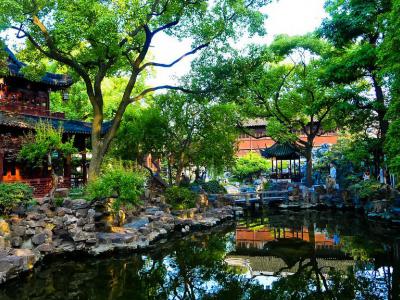
3) Yuyuan Garden (must see)
This lovely classical Chinese garden was built in 1577, under the Ming Dynasty, by a high-ranking imperial court official who dedicated it to his elderly father, and quite fittingly so, as ‘yu’ means peace and comfort in Chinese. Probably because of this name or good luck, despite changing fortunes, the garden had miraculously survived the passage of centuries and was reopened to the public in 1961.
For those unfamiliar with Chinese gardening, this would be a great introduction to its elegance manifested, among other things, in the hidden bat and dragon features and, in this particular case, a huge authentic rockery dating back to the Ming period. Overall, the garden has less emphasis on flora and more on water and the harmonious position of elements.
It may well look small, but you will be amazed at how much actually fits in here. The corridors, archways and zigzag bridges all are carefully placed with a great deal of meaning. Of special interest is the Ming-style rosewood furniture in three halls within the garden, one of which is historically famous as the headquarters of the anti-imperialist “Little Sword” society during the Taiping uprising in the 1850s-60s. The roofs and tops of the walls here are decorated with incredible carvings of dragons, horses, and warriors.
Among other highlights is the famous Jade Rock, a 5-ton boulder said to have been one of the private collection items of the Song Dynasty Emperor Huizong. Interestingly enough, this rock's 72 holes are reportedly positioned so as to make the water or smoke sent into one of the holes, come out from all the other holes simultaneously. Sometimes, the guides show another trick with a coin dropped into a hole at the top and exiting from a certain hole down below (each time different) in accordance, they say, with the person's astrological sign.
Tip:
Depending on the time of your visit, the garden may be quite crowded – but that's China! Try coming early, as closer to the opening hours as possible; otherwise, later in the day, the queues are usually long! Don't forget a bottle of water or check out a two-storey teahouse on the island in the middle of the garden. The Queen of England herself once dropped in for a cup of tea there, so these days it’s a bit pricey, but you’re welcome to poke about anyway.
For those unfamiliar with Chinese gardening, this would be a great introduction to its elegance manifested, among other things, in the hidden bat and dragon features and, in this particular case, a huge authentic rockery dating back to the Ming period. Overall, the garden has less emphasis on flora and more on water and the harmonious position of elements.
It may well look small, but you will be amazed at how much actually fits in here. The corridors, archways and zigzag bridges all are carefully placed with a great deal of meaning. Of special interest is the Ming-style rosewood furniture in three halls within the garden, one of which is historically famous as the headquarters of the anti-imperialist “Little Sword” society during the Taiping uprising in the 1850s-60s. The roofs and tops of the walls here are decorated with incredible carvings of dragons, horses, and warriors.
Among other highlights is the famous Jade Rock, a 5-ton boulder said to have been one of the private collection items of the Song Dynasty Emperor Huizong. Interestingly enough, this rock's 72 holes are reportedly positioned so as to make the water or smoke sent into one of the holes, come out from all the other holes simultaneously. Sometimes, the guides show another trick with a coin dropped into a hole at the top and exiting from a certain hole down below (each time different) in accordance, they say, with the person's astrological sign.
Tip:
Depending on the time of your visit, the garden may be quite crowded – but that's China! Try coming early, as closer to the opening hours as possible; otherwise, later in the day, the queues are usually long! Don't forget a bottle of water or check out a two-storey teahouse on the island in the middle of the garden. The Queen of England herself once dropped in for a cup of tea there, so these days it’s a bit pricey, but you’re welcome to poke about anyway.
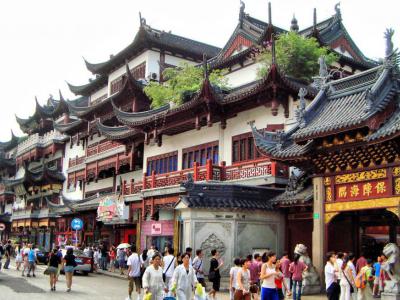
4) Antiques Market of Shanghai Old Town
The Antiques Market of Shanghai Old Town, nestled in the basement of the Huabao building within the bustling Yu Garden Shopping Complex, stands as Shanghai's premier indoor antique market. This sprawling subterranean haven hosts over 200 established antique dealers, creating a labyrinthine treasure trove of historical artifacts and curiosities that echo China's rich and multifaceted past.
A visit to the market is akin to stepping back in time, with each stall and corner brimming with items that tell tales of days gone by. Shoppers can find an eclectic array of merchandise, ranging from intricately embroidered silk jackets and dressing gowns to lustrous freshwater pearls. The market also offers an impressive selection of ceramic tea sets that reflect China's long-standing tea culture, alongside Cultural Revolution posters that capture a pivotal era in the nation's history. Additionally, visitors can discover beautifully crafted wooden fans and painted scrolls, each piece adding to the market's allure as a center for Chinese antiquities and craftsmanship.
The history of this market stretches back to before 1949, preceding the Cultural Revolution of the 1960s and 70s, when it served as a holiday market selling folk antiques and handicrafts. Today, it has evolved into a vibrant destination that attracts tens of thousands of visitors daily, drawn by the vast assortment of goods on offer. The Antiques Market of Shanghai Old Town is not just a place for buying antiques; it's a cultural journey that offers a glimpse into China's storied past, making it a must-visit for locals and tourists alike.
Tip:
Beware – you will definitely have to bring out your haggling skills here! Whatever the price the dealer asks you initially, try to bargain for at least 40% less.
A visit to the market is akin to stepping back in time, with each stall and corner brimming with items that tell tales of days gone by. Shoppers can find an eclectic array of merchandise, ranging from intricately embroidered silk jackets and dressing gowns to lustrous freshwater pearls. The market also offers an impressive selection of ceramic tea sets that reflect China's long-standing tea culture, alongside Cultural Revolution posters that capture a pivotal era in the nation's history. Additionally, visitors can discover beautifully crafted wooden fans and painted scrolls, each piece adding to the market's allure as a center for Chinese antiquities and craftsmanship.
The history of this market stretches back to before 1949, preceding the Cultural Revolution of the 1960s and 70s, when it served as a holiday market selling folk antiques and handicrafts. Today, it has evolved into a vibrant destination that attracts tens of thousands of visitors daily, drawn by the vast assortment of goods on offer. The Antiques Market of Shanghai Old Town is not just a place for buying antiques; it's a cultural journey that offers a glimpse into China's storied past, making it a must-visit for locals and tourists alike.
Tip:
Beware – you will definitely have to bring out your haggling skills here! Whatever the price the dealer asks you initially, try to bargain for at least 40% less.
5) Shi Liu Pu Cloth Market (上海十六铺面料城)
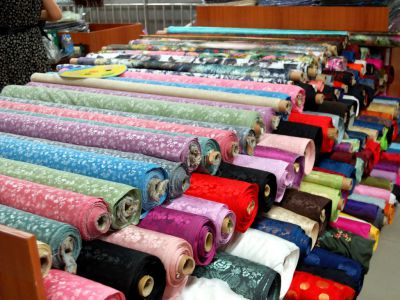
Apart from the traditional silk, in Shanghai you can find any kind of fabric material at very accessible prices. The best place where to find fabrics of any type are Shi Liu Pu Cloth Market at 168 Dong Men Road. The market is very popular among expats living in Shanghai, and offers a complete choice of any kind of fabric materials.
Entire market is organized and devoted to fabrics, where tourists can buy raw material for sewing or order pieces of clothes or even buy the traditional cheongsam (Chinese dress). Here you will find everything you can search for, not just silk, but also linen, cashmere, mixed fabrics. It’s recommended to bargain, as prices are never fixed but change depending on the day (usually higher on weekends and busy seasons in general) and if you are a first-timer.
Prices vary also depending if the material is bought per meter or the finished product. A silk half linen and half silk is usually RMB250 or the same material around RMB50 per meter. Cashmere is usually more expensive, especially if it comes from Mongolia. A tailor-made dress or a jumper in cashmere can be bought between RMB600 and RMB900.
Entire market is organized and devoted to fabrics, where tourists can buy raw material for sewing or order pieces of clothes or even buy the traditional cheongsam (Chinese dress). Here you will find everything you can search for, not just silk, but also linen, cashmere, mixed fabrics. It’s recommended to bargain, as prices are never fixed but change depending on the day (usually higher on weekends and busy seasons in general) and if you are a first-timer.
Prices vary also depending if the material is bought per meter or the finished product. A silk half linen and half silk is usually RMB250 or the same material around RMB50 per meter. Cashmere is usually more expensive, especially if it comes from Mongolia. A tailor-made dress or a jumper in cashmere can be bought between RMB600 and RMB900.
Image Courtesy of Angela Corrias.
6) Shanghai Tower
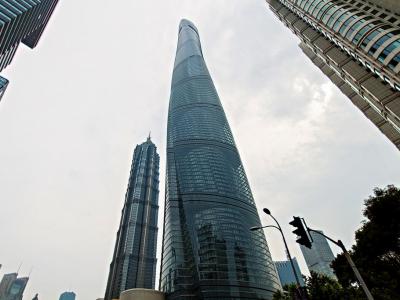
Shanghai Tower stands as a symbol of architectural achievement and sustainable design in Lujiazui, Pudong, Shanghai. This 128-story skyscraper, reaching a height of 632 meters (2,073 feet), is not only the tallest building in China but also ranks as the third tallest in the world based on height to its architectural top. Since its completion, it has been recognized as the world's tallest and largest building to receive LEED Platinum certification, highlighting its commitment to high energy efficiency and sustainable building practices.
Designed by the international design firm Gensler and owned by the Shanghai Municipal Government, Shanghai Tower is a beacon of modern design and efficiency. It is notably the tallest among the trio of supertall buildings in Pudong, which includes the Jin Mao Tower and the Shanghai World Financial Center, marking the area as a distinctive skyline.
The tower's construction began in November 2008 and reached its highest point on August 4, 2013. The exterior was completed by the summer of 2015, with the entire project considered finished in September 2014. Despite initial plans to open in November 2014, the building welcomed the public in February 2015. The observation deck, offering unparalleled views from the world's highest point within a building or structure at 562 meters, was opened to visitors in July 2016. This deck, situated on the 118th floor, has been accessible to the public since April 26, 2017, following a test run period in 2018.
Shanghai Tower also held the title for the world's second-fastest elevators, reaching speeds of up to 20.5 meters per second, until 2017 when the Guangzhou CTF Finance Center surpassed it. The building's tiered design facilitates a division into nine separate zones for office, retail, and leisure use, exemplifying a blend of functionality and aesthetic appeal. This iconic structure not only dominates the skyline but also sets a precedent for future developments in urban architecture and sustainable design.
Designed by the international design firm Gensler and owned by the Shanghai Municipal Government, Shanghai Tower is a beacon of modern design and efficiency. It is notably the tallest among the trio of supertall buildings in Pudong, which includes the Jin Mao Tower and the Shanghai World Financial Center, marking the area as a distinctive skyline.
The tower's construction began in November 2008 and reached its highest point on August 4, 2013. The exterior was completed by the summer of 2015, with the entire project considered finished in September 2014. Despite initial plans to open in November 2014, the building welcomed the public in February 2015. The observation deck, offering unparalleled views from the world's highest point within a building or structure at 562 meters, was opened to visitors in July 2016. This deck, situated on the 118th floor, has been accessible to the public since April 26, 2017, following a test run period in 2018.
Shanghai Tower also held the title for the world's second-fastest elevators, reaching speeds of up to 20.5 meters per second, until 2017 when the Guangzhou CTF Finance Center surpassed it. The building's tiered design facilitates a division into nine separate zones for office, retail, and leisure use, exemplifying a blend of functionality and aesthetic appeal. This iconic structure not only dominates the skyline but also sets a precedent for future developments in urban architecture and sustainable design.
7) Shanghai World Financial Center
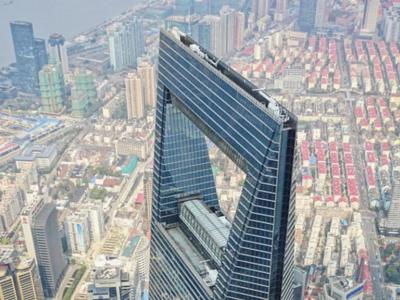
The Shanghai World Financial Center is an emblematic supertall skyscraper that graces the skyline of the Pudong district in Shanghai. Conceived by the visionary minds at Kohn Pedersen Fox and brought to life by the Mori Building Company, this mixed-use tower is a testament to architectural excellence and engineering prowess. The structure's integrity is ensured by Leslie E. Robertson Associates, while China State Construction and Shanghai Construction (Group) General Company jointly constructed it.
Rising to a staggering height of 492 meters (1,614.2 feet), the Shanghai World Financial Center was, upon its completion on 14 September 2007, the second tallest building in the world, surpassed only by Taipei 101. Notably, it claimed the title of the tallest building in the world by roof height and became the tallest structure in China-a record it held until the completion of the adjacent Shanghai Tower in 2013. It opened to the public on August 28, 2008, and the observation deck, providing panoramic views from 474 m (1,555 feet) above ground, opened on August 30.
The skyscraper's multifaceted functionality encompasses offices, hotels, conference rooms, observation decks, and ground-floor shopping malls. A notable feature is the Park Hyatt Shanghai, which occupies floors 79 to 93. At the time of its completion, this hotel component, with its 174 rooms and suites, was the highest hotel in the world, offering unparalleled luxury and breathtaking views.
The design of the Shanghai World Financial Center has received widespread acclaim, earning the distinction of being named the best-completed skyscraper of 2008 by architects. Its presence, alongside the Shanghai Tower and The Jin Mao Tower, creates a remarkable trio of supertall skyscrapers in close proximity to each other-the world's first such grouping, showcasing Shanghai's prominence as a global architectural and financial hub.
Rising to a staggering height of 492 meters (1,614.2 feet), the Shanghai World Financial Center was, upon its completion on 14 September 2007, the second tallest building in the world, surpassed only by Taipei 101. Notably, it claimed the title of the tallest building in the world by roof height and became the tallest structure in China-a record it held until the completion of the adjacent Shanghai Tower in 2013. It opened to the public on August 28, 2008, and the observation deck, providing panoramic views from 474 m (1,555 feet) above ground, opened on August 30.
The skyscraper's multifaceted functionality encompasses offices, hotels, conference rooms, observation decks, and ground-floor shopping malls. A notable feature is the Park Hyatt Shanghai, which occupies floors 79 to 93. At the time of its completion, this hotel component, with its 174 rooms and suites, was the highest hotel in the world, offering unparalleled luxury and breathtaking views.
The design of the Shanghai World Financial Center has received widespread acclaim, earning the distinction of being named the best-completed skyscraper of 2008 by architects. Its presence, alongside the Shanghai Tower and The Jin Mao Tower, creates a remarkable trio of supertall skyscrapers in close proximity to each other-the world's first such grouping, showcasing Shanghai's prominence as a global architectural and financial hub.
8) Jin Mao Tower (must see)
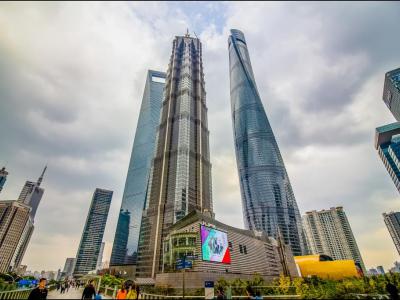
The Jin Mao Tower, an iconic emblem of Shanghai's modern skyline, is a magnificent 88-story skyscraper that reaches a height of 420.5 meters (1,380 feet). Nestled in the heart of Shanghai, it comprises a diverse mix of elements including a shopping mall, premium office spaces, and the prestigious Grand Hyatt Shanghai Hotel, which occupies the 53rd to 87th floors. Remarkably, upon its completion, the Grand Hyatt Shanghai held the title of the world's highest hotel, a testament to the tower's ambitious design and engineering.
The Jin Mao Tower is a quintessential part of the Lujiazui skyline, harmoniously standing alongside other architectural giants such as the Oriental Pearl Tower, the Shanghai World Financial Center, and the Shanghai Tower. This ensemble of skyscrapers, visible from the historic Bund, symbolizes the city's rapid development and its aspirations for the future. The Jin Mao Tower held the title of China's tallest building from 1999 to 2007, before being surpassed by the Shanghai World Financial Center. In 2015, the Shanghai Tower joined them, forming the world's first trio of adjacent supertall skyscrapers, each taller and more ambitious than the last.
The architectural design of the Jin Mao Tower, crafted by the renowned Chicago-based firm Skidmore, Owings & Merrill (SOM), is a modern interpretation of traditional Chinese aesthetics. The building's postmodern form is inspired by the ancient tiered pagoda, featuring a series of setbacks that create a rhythmic pattern as the tower ascends towards the sky. Its design intricately weaves the number 8, a symbol of prosperity in Chinese culture, into its structural and thematic elements. The tower has 88 floors, cleverly divided into 16 segments, each decreasing in height by 1/8 relative to the 16-story base, showcasing a fusion of modern engineering and cultural tribute.
Why You Should Visit:
It is one of the more interesting buildings architecturally in the area and you can get an up-close view of it from the high-story windows.
On top of that, it is immediately surrounded by some of the tallest buildings in the world, so you get to see those up close as well.
Tip:
Make sure you go downstairs upon entering the building to reach the observation elevator but don't be too focused on the exterior views to miss the view inside down 88 floors, which is amazing!
The Jin Mao Tower is a quintessential part of the Lujiazui skyline, harmoniously standing alongside other architectural giants such as the Oriental Pearl Tower, the Shanghai World Financial Center, and the Shanghai Tower. This ensemble of skyscrapers, visible from the historic Bund, symbolizes the city's rapid development and its aspirations for the future. The Jin Mao Tower held the title of China's tallest building from 1999 to 2007, before being surpassed by the Shanghai World Financial Center. In 2015, the Shanghai Tower joined them, forming the world's first trio of adjacent supertall skyscrapers, each taller and more ambitious than the last.
The architectural design of the Jin Mao Tower, crafted by the renowned Chicago-based firm Skidmore, Owings & Merrill (SOM), is a modern interpretation of traditional Chinese aesthetics. The building's postmodern form is inspired by the ancient tiered pagoda, featuring a series of setbacks that create a rhythmic pattern as the tower ascends towards the sky. Its design intricately weaves the number 8, a symbol of prosperity in Chinese culture, into its structural and thematic elements. The tower has 88 floors, cleverly divided into 16 segments, each decreasing in height by 1/8 relative to the 16-story base, showcasing a fusion of modern engineering and cultural tribute.
Why You Should Visit:
It is one of the more interesting buildings architecturally in the area and you can get an up-close view of it from the high-story windows.
On top of that, it is immediately surrounded by some of the tallest buildings in the world, so you get to see those up close as well.
Tip:
Make sure you go downstairs upon entering the building to reach the observation elevator but don't be too focused on the exterior views to miss the view inside down 88 floors, which is amazing!

9) Oriental Pearl Tower (must see)
The Oriental Pearl Tower in Shanghai is one of the city's tallest structures, offering breathtaking views of the Huangpu River and the Bund. This architectural marvel draws inspiration from a Tang Dynasty poem by Bai Juyi, which evokes the imagery of pearls gently falling onto a jade plate.
Standing at an impressive height of 468 meters, the tower features a distinctive design comprising a series of interconnected spheres supported by slanted columns. It is set amidst a lush green lawn reminiscent of the jade plate depicted in the poem that served as its muse. These spheres house various commercial and recreational spaces. The tower is equipped with double-decker elevators capable of carrying up to fifty passengers at a swift speed of 7 meters per second.
Within the Oriental Pearl Tower, you'll find a revolving restaurant, a hotel, a shopping area, facilities for children's entertainment, as well as radio and TV stations. The observation deck is particularly notable, featuring a glass floor that allows visitors to peer down to the ground below. Additionally, it houses the Shanghai Municipal History Museum.
As an iconic symbol of modern Shanghai, the Oriental Pearl Tower holds a distinguished place among the World Federation of Great Towers due to its remarkable fusion of Chinese traditions and cutting-edge technology in its design.
Tip:
The lines to go up the tower are long. Forget going on the Chinese New Year Holiday or the first week of October – National Holiday week.
View it from the Bund which is across the river. It is most beautiful at night when the lights are on but be reminded all lights go out at 10 pm.
Standing at an impressive height of 468 meters, the tower features a distinctive design comprising a series of interconnected spheres supported by slanted columns. It is set amidst a lush green lawn reminiscent of the jade plate depicted in the poem that served as its muse. These spheres house various commercial and recreational spaces. The tower is equipped with double-decker elevators capable of carrying up to fifty passengers at a swift speed of 7 meters per second.
Within the Oriental Pearl Tower, you'll find a revolving restaurant, a hotel, a shopping area, facilities for children's entertainment, as well as radio and TV stations. The observation deck is particularly notable, featuring a glass floor that allows visitors to peer down to the ground below. Additionally, it houses the Shanghai Municipal History Museum.
As an iconic symbol of modern Shanghai, the Oriental Pearl Tower holds a distinguished place among the World Federation of Great Towers due to its remarkable fusion of Chinese traditions and cutting-edge technology in its design.
Tip:
The lines to go up the tower are long. Forget going on the Chinese New Year Holiday or the first week of October – National Holiday week.
View it from the Bund which is across the river. It is most beautiful at night when the lights are on but be reminded all lights go out at 10 pm.
10) Natural Wild Insect Kingdom
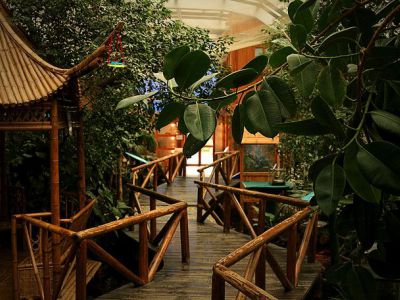
The Natural Wild Insect Kingdom, Shanghai is the first living pet and insect museum in China. Besides insects, it has other aquatic and land animals. The object of the museum is to educate children through interactive programs and shows about the different types of natural habitats and the insects and other creatures that live in them.
The Natural Wild Insect Kingdom has exhibits grouped according to habitat. Countryside, forest, valley, desert, swamp and rainforest are some of the habitat groups showcased at the museum. There are also zones like the butterfly valley, insect gallery and a zone dedicated to amphibians and reptiles. It covers over 3000 square meters and hosts over 200 species. The museum is designed that visitors can clearly view all the creatures within.
Entertaining shows are held for children like an insect parade, a honey gathering show and food grabbing show. Children are encouraged to take part in interactive activities like touching, feeding exhibits and fishing for goldfish. There is a café and toy shop at the basement level where visitors can relax after touring the museum. They can rent a bucket and net from the well stocked toy shop for the goldfish fishing activity.
The Natural Wild Insect Kingdom has exhibits grouped according to habitat. Countryside, forest, valley, desert, swamp and rainforest are some of the habitat groups showcased at the museum. There are also zones like the butterfly valley, insect gallery and a zone dedicated to amphibians and reptiles. It covers over 3000 square meters and hosts over 200 species. The museum is designed that visitors can clearly view all the creatures within.
Entertaining shows are held for children like an insect parade, a honey gathering show and food grabbing show. Children are encouraged to take part in interactive activities like touching, feeding exhibits and fishing for goldfish. There is a café and toy shop at the basement level where visitors can relax after touring the museum. They can rent a bucket and net from the well stocked toy shop for the goldfish fishing activity.
11) Bund Sightseeing Tunnel
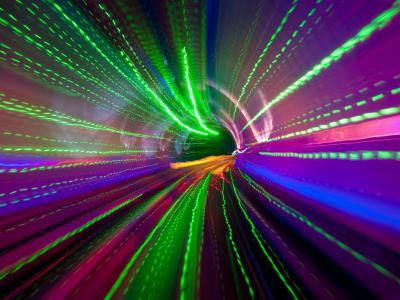
The Bund Sightseeing Tunnel is an underwater tunnel fitted with spectacular audio-visual effects for entertaining adults and children who go across the Huang Pu River from downtown Shanghai to Pudong. The ride through lasts 6 minutes.
The tunnel was completed and opened to the public in the year 2000. There are two entrances, one on the Bund at Nanjing Donglu and the other in Pudong near the Riverside promenade.
Visitors board a small carriage at one end. The carriage takes them through the tunnel that flashes kaleidoscopic neon lights in varying patterns. Blow up dolls pop up during the ride and sway in front of the carriage. A voice commentary tells the geological story of the earth as the carriages rush along to the other bank of the river. The intention is to take visitors on a ride from space to the centre of the earth and back again.
The Bund Sightseeing Tunnel ride is more expensive than getting across the river on the Metro or by ferry. The ride is, however, quicker and more fun for visitors, especially children.
The tunnel was completed and opened to the public in the year 2000. There are two entrances, one on the Bund at Nanjing Donglu and the other in Pudong near the Riverside promenade.
Visitors board a small carriage at one end. The carriage takes them through the tunnel that flashes kaleidoscopic neon lights in varying patterns. Blow up dolls pop up during the ride and sway in front of the carriage. A voice commentary tells the geological story of the earth as the carriages rush along to the other bank of the river. The intention is to take visitors on a ride from space to the centre of the earth and back again.
The Bund Sightseeing Tunnel ride is more expensive than getting across the river on the Metro or by ferry. The ride is, however, quicker and more fun for visitors, especially children.
