Custom Walk in Rio de Janeiro, Brazil by egschaefer_45ddfb created on 2026-04-09
Guide Location: Brazil » Rio de Janeiro
Guide Type: Custom Walk
# of Sights: 8
Tour Duration: 2 Hour(s)
Travel Distance: 3 Km or 1.9 Miles
Share Key: 3X5L8
Guide Type: Custom Walk
# of Sights: 8
Tour Duration: 2 Hour(s)
Travel Distance: 3 Km or 1.9 Miles
Share Key: 3X5L8
How It Works
Please retrieve this walk in the GPSmyCity app. Once done, the app will guide you from one tour stop to the next as if you had a personal tour guide. If you created the walk on this website or come to the page via a link, please follow the instructions below to retrieve the walk in the app.
Retrieve This Walk in App
Step 1. Download the app "GPSmyCity: Walks in 1K+ Cities" on Apple App Store or Google Play Store.



Step 2. In the GPSmyCity app, download(or launch) the guide "Rio de Janeiro Map and Walking Tours".
Step 3. Tap the menu button located at upper right corner of the "Walks" screen and select "Retrieve custom walk". Enter the share key: 3X5L8
1) Escadaria Selarón (Selarón Steps) (must see)
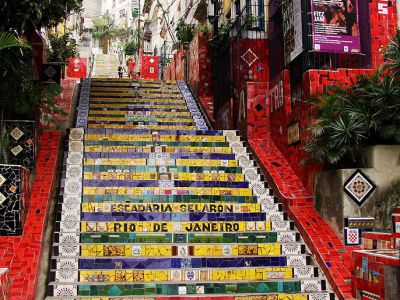
Escadaria Selarón, renowned worldwide, comprises a remarkable set of stairs that stretch between Joaquim Silva Street and Pinto Martins Street, spanning both the Lapa and Santa Teresa neighborhoods of Rio de Janeiro. These steps are the creative masterpiece of Jorge Selarón, an artist originally from Chile, who referred to it as "my tribute to the Brazilian people." His endeavor began in 1990 with the intention of rejuvenating the deteriorated steps in front of his home. Initially, it was a secondary project compared to his primary passion, painting, but it quickly evolved into an all-consuming obsession. Selarón himself regarded this work as "never complete" and asserted that "This eccentric and one-of-a-kind dream will only conclude on the day of my demise."
Initially, Selarón sourced tiles for this project from various construction sites and heaps of discarded materials on the streets of Rio. However, in subsequent years, a significant portion of the tiles was contributed by visitors from across the globe. In total, there are 215 steps spanning a length of 125 meters, adorned with over 2,000 tiles representing more than 60 different countries. Among these 2,000+ tiles, roughly 300 were meticulously hand-painted by Selarón himself, featuring an image of a pregnant African woman. Selarón remained reticent about this imagery, merely commenting that it pertained to a "personal issue from my past."
Why You Should Visit:
Not only are the 215 steps a dedication to the Brazilian people but to all who bought tiles from other countries and cities. Find yours!
The story of Selarón's 20-year project just adds to the fun of exploring the plethora of beautiful and/or interesting tiles.
Tip:
If you want your photo taken sitting on steps, you might have to wait a while. Try to arrive early or, at the least, go a few flights up where very few are waiting.
The neighborhood looks a bit unsafe so if you go make sure you don't show off your belongings too much (after dark it's a no-go area!).
Initially, Selarón sourced tiles for this project from various construction sites and heaps of discarded materials on the streets of Rio. However, in subsequent years, a significant portion of the tiles was contributed by visitors from across the globe. In total, there are 215 steps spanning a length of 125 meters, adorned with over 2,000 tiles representing more than 60 different countries. Among these 2,000+ tiles, roughly 300 were meticulously hand-painted by Selarón himself, featuring an image of a pregnant African woman. Selarón remained reticent about this imagery, merely commenting that it pertained to a "personal issue from my past."
Why You Should Visit:
Not only are the 215 steps a dedication to the Brazilian people but to all who bought tiles from other countries and cities. Find yours!
The story of Selarón's 20-year project just adds to the fun of exploring the plethora of beautiful and/or interesting tiles.
Tip:
If you want your photo taken sitting on steps, you might have to wait a while. Try to arrive early or, at the least, go a few flights up where very few are waiting.
The neighborhood looks a bit unsafe so if you go make sure you don't show off your belongings too much (after dark it's a no-go area!).
2) Arcos da Lapa
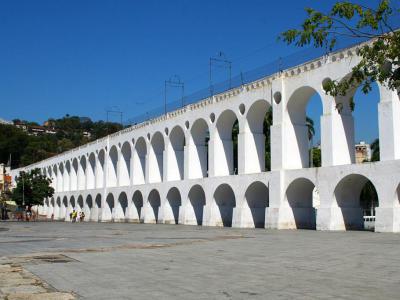
The Arcos da Lapa stands as a historical aqueduct located in Rio de Janeiro. Its construction took place during the mid-18th century with the primary purpose of providing the city's inhabitants with a supply of fresh water from the Carioca River. It serves as a prime example of colonial architecture and engineering.
Situated in the heart of the city within the Lapa neighborhood, the Arcos da Lapa has played a significant role in the region since the late 19th century.
In Rio's early history, the city lacked clean water, so plans began in 1602 to build a canal system bringing water from the Carioca River source on Santa Teresa hill. In 1744, Governor Gomes Freire de Andrade commissioned a larger aqueduct, inspired by Portugal's Águas Livres Aqueduct, which was completed in 1750.
The most striking feature of the aqueduct is the section that links the Santa Teresa and Santo Antônio hills in what is now the Lapa neighborhood. This segment spans 270 meters and comprises two levels of imposing arches, totaling 42 arches in all, with a maximum height of 17.6 meters.
At the close of the 19th century, the aqueduct was taken out of service as alternative water supply methods for Rio were developed. In 1896, the structure was repurposed to serve as a viaduct for a tram line, known as the Santa Teresa Tramway (Bonde de Santa Teresa), which facilitates transportation between the city center and the hilly Santa Teresa neighborhood. This picturesque tram ride has since become a popular attraction for both locals and tourists.
Why You Should Visit:
This is the place to go at night on the weekends! Lots of fun, lots and lots of performers, dancers, vendors and bars, and a great atmosphere. Worth checking out at least once.
Tip:
There are some great happening bars with amazing local music; check out specific days to catch attractions like Samba nights.
Also make sure you visit the Escadaria Selarón ('Selaron Steps'), which are very pretty and just a 10-minute walk away.
Situated in the heart of the city within the Lapa neighborhood, the Arcos da Lapa has played a significant role in the region since the late 19th century.
In Rio's early history, the city lacked clean water, so plans began in 1602 to build a canal system bringing water from the Carioca River source on Santa Teresa hill. In 1744, Governor Gomes Freire de Andrade commissioned a larger aqueduct, inspired by Portugal's Águas Livres Aqueduct, which was completed in 1750.
The most striking feature of the aqueduct is the section that links the Santa Teresa and Santo Antônio hills in what is now the Lapa neighborhood. This segment spans 270 meters and comprises two levels of imposing arches, totaling 42 arches in all, with a maximum height of 17.6 meters.
At the close of the 19th century, the aqueduct was taken out of service as alternative water supply methods for Rio were developed. In 1896, the structure was repurposed to serve as a viaduct for a tram line, known as the Santa Teresa Tramway (Bonde de Santa Teresa), which facilitates transportation between the city center and the hilly Santa Teresa neighborhood. This picturesque tram ride has since become a popular attraction for both locals and tourists.
Why You Should Visit:
This is the place to go at night on the weekends! Lots of fun, lots and lots of performers, dancers, vendors and bars, and a great atmosphere. Worth checking out at least once.
Tip:
There are some great happening bars with amazing local music; check out specific days to catch attractions like Samba nights.
Also make sure you visit the Escadaria Selarón ('Selaron Steps'), which are very pretty and just a 10-minute walk away.
3) Catedral Metropolitana de São Sebastião
The Metropolitan Cathedral of Saint Sebastian, also known as the Metropolitan Cathedral of Rio de Janeiro, serves as the headquarters for the Roman Catholic Archdiocese of São Sebastião do Rio de Janeiro. It is where the Metropolitan Archbishops of Rio de Janeiro carry out their religious duties, and it is dedicated to Saint Sebastian, the patron saint of the city.
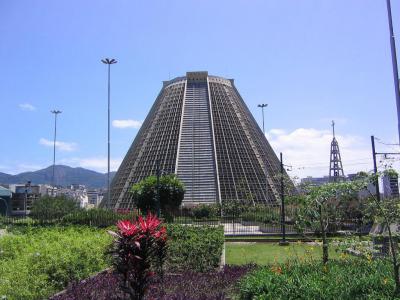
Designed by Edgar de Oliveira da Fonseca, the cathedral boasts a modern architectural style inspired by Mayan pyramids. The current cathedral was constructed between 1964 and 1979, replacing a series of churches that had previously served as cathedrals since 1676. The most recent and notable of these was the Church of Our Lady of Mount Carmel of the Ancient See, now referred to as the Old Cathedral, which was built in the 18th century and declared Rio's cathedral in the early 19th century.
The New Cathedral, as it is sometimes called, is situated in the city center. It has a distinctive conical shape with an internal diameter of 96 meters (315 feet), an external diameter of 106 meters, and an overall height of 75 meters (246 feet). The interior of the cathedral covers 8,000 square meters and provides seating for 5,000 people, with the ability to accommodate up to 20,000 individuals when standing. The cathedral's four rectangular stained glass windows reach an impressive height of 64 meters (210 feet), extending from the floor to the ceiling.
The interior design of the cathedral was created by Father Paulo Lachen Maier, while the sculptures were crafted by Humberto Cozzo. Additionally, the Chapel of the Blessed Sacrament features two candelabras created by Niccola Zanotto.
Why You Should Visit:
Majestic on the inside, free of charge, and with very minimal crowds. The massive coloured glass windows are as tall as the church itself and are beautiful beyond belief.
Tip:
Try to go during the middle of the day since the church relies on natural illumination and going earlier / later can leave it dark inside.
As the location is so close to Cinelândia and all of its attractions, you can do both on the same day.
Designed by Edgar de Oliveira da Fonseca, the cathedral boasts a modern architectural style inspired by Mayan pyramids. The current cathedral was constructed between 1964 and 1979, replacing a series of churches that had previously served as cathedrals since 1676. The most recent and notable of these was the Church of Our Lady of Mount Carmel of the Ancient See, now referred to as the Old Cathedral, which was built in the 18th century and declared Rio's cathedral in the early 19th century.
The New Cathedral, as it is sometimes called, is situated in the city center. It has a distinctive conical shape with an internal diameter of 96 meters (315 feet), an external diameter of 106 meters, and an overall height of 75 meters (246 feet). The interior of the cathedral covers 8,000 square meters and provides seating for 5,000 people, with the ability to accommodate up to 20,000 individuals when standing. The cathedral's four rectangular stained glass windows reach an impressive height of 64 meters (210 feet), extending from the floor to the ceiling.
The interior design of the cathedral was created by Father Paulo Lachen Maier, while the sculptures were crafted by Humberto Cozzo. Additionally, the Chapel of the Blessed Sacrament features two candelabras created by Niccola Zanotto.
Why You Should Visit:
Majestic on the inside, free of charge, and with very minimal crowds. The massive coloured glass windows are as tall as the church itself and are beautiful beyond belief.
Tip:
Try to go during the middle of the day since the church relies on natural illumination and going earlier / later can leave it dark inside.
As the location is so close to Cinelândia and all of its attractions, you can do both on the same day.
4) São Francisco da Penitência Church
The Church of the Third Order of São Francisco da Penitência is a colonial church located next to the Convent of Santo Antônio , on the hill of the same name, in the center of the city of Rio de Janeiro. For its exuberant Baroque decoration, it is considered one of the most important in the city and the country.
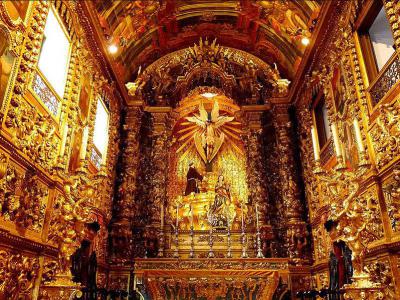
This Baroque style church was built back in 1726. Besides its great spiritual heritage, it has marvelous ornaments and decorations, such as the jacaranda wood carved altar or the roof panel depicting Saint Francis receiving the stigmata. With advance booking, you can take a guided tour of the underground passages under the church which were in use up until 1850.
Along with the church of São Francisco da Penitência it is the main showcase of total Baroque art in Rio de Janeiro. Currently the church functions as a Museum of Sacred Art. Don't hesitate to check out the museum for a small fee; the gold room is a spectacle to behold!
Why You Should Visit:
Overwhelming and beautiful, this church wows visitors with its elaborate architecture, magnificent statues, dazzling relics and impressive paintings.
What is more, the church exudes a rather serene feel, making it a perfect stop for anyone who needs a quick break.
This Baroque style church was built back in 1726. Besides its great spiritual heritage, it has marvelous ornaments and decorations, such as the jacaranda wood carved altar or the roof panel depicting Saint Francis receiving the stigmata. With advance booking, you can take a guided tour of the underground passages under the church which were in use up until 1850.
Along with the church of São Francisco da Penitência it is the main showcase of total Baroque art in Rio de Janeiro. Currently the church functions as a Museum of Sacred Art. Don't hesitate to check out the museum for a small fee; the gold room is a spectacle to behold!
Why You Should Visit:
Overwhelming and beautiful, this church wows visitors with its elaborate architecture, magnificent statues, dazzling relics and impressive paintings.
What is more, the church exudes a rather serene feel, making it a perfect stop for anyone who needs a quick break.
5) Santo Antônio Convent
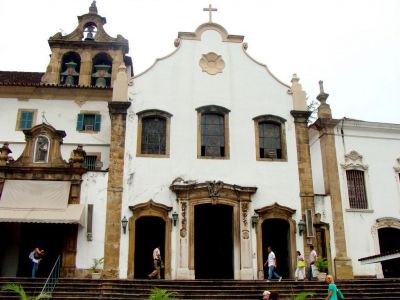
The Convent of Santo Antonio is a Catholic monastery that belongs to the Franciscan Province of the Immaculate Conception of Brazil. It is situated on top of Santo Antônio Hill, overlooking the Largo da Carioca square in the heart of Rio de Janeiro. This convent, along with the nearby Church of the Third Order of São Francisco da Penitência, constitutes one of the oldest and most significant colonial establishments still standing in the city.
Inside the church, you'll find a simple and traditional design. It has a rectangular shape and features a single nave. The main chapel and side altars are adorned with gilded woodwork that dates back to the period between 1716 and 1719. This woodwork exhibits a late Baroque style that is more characteristic of the 17th century than the 18th century.
The history of the Convent of Saint Anthony can be traced back to 1592 when the first Franciscans arrived in Rio de Janeiro. One of its notable features is its catacombs, where the remains of several members of the Imperial Family are laid to rest.
Inside the church, you'll find a simple and traditional design. It has a rectangular shape and features a single nave. The main chapel and side altars are adorned with gilded woodwork that dates back to the period between 1716 and 1719. This woodwork exhibits a late Baroque style that is more characteristic of the 17th century than the 18th century.
The history of the Convent of Saint Anthony can be traced back to 1592 when the first Franciscans arrived in Rio de Janeiro. One of its notable features is its catacombs, where the remains of several members of the Imperial Family are laid to rest.
6) Confeitaria Colombo (Colombo Confectionery) (must see)
Confeitaria Colombo is one of Rio de Janeiro’s most celebrated historic cafés and a defining landmark of the city’s Belle Époque. Founded in 1894 by Portuguese immigrants, it was conceived as a refined European-style confectionery at a moment when Rio was reinventing itself as a modern capital. Today, it is frequently listed among the most beautiful cafés in the world.
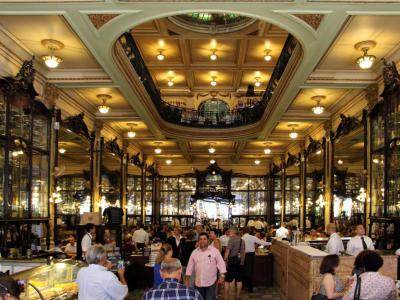
The cafe’s architecture and interior design are central to its appeal. In the early 20th century, Colombo was remodeled in the fashionable Art Nouveau style, reflecting European trends of the time. Much of the wooden furniture was handcrafted by the artisan Antonio Borsoi, while towering mirrors imported from Belgium are framed in jacaranda wood. Portuguese tiles decorate the walls, and a large stained-glass skylight from France crowns the space, flooding the interior with light. An upper floor and tearoom were added in 1922, offering a quieter vantage point overlooking the main hall below.
Beyond its beauty, Colombo Confectionery has long been a place of conversation and influence. Heads of state and royalty, including Queen Elizabeth II of England, have visited, as have Brazilian presidents such as Getúlio Vargas. The café also served as a meeting place for Brazilian artists, musicians, and writers; composer Heitor Villa-Lobos and writer Lima Barreto were among those who gathered here.
Alongside coffee and traditional Portuguese pastries, Colombo offers classic Brazilian sweets. Trying a brigadeiro—made with condensed milk and chocolate—is almost obligatory.
The cafe’s architecture and interior design are central to its appeal. In the early 20th century, Colombo was remodeled in the fashionable Art Nouveau style, reflecting European trends of the time. Much of the wooden furniture was handcrafted by the artisan Antonio Borsoi, while towering mirrors imported from Belgium are framed in jacaranda wood. Portuguese tiles decorate the walls, and a large stained-glass skylight from France crowns the space, flooding the interior with light. An upper floor and tearoom were added in 1922, offering a quieter vantage point overlooking the main hall below.
Beyond its beauty, Colombo Confectionery has long been a place of conversation and influence. Heads of state and royalty, including Queen Elizabeth II of England, have visited, as have Brazilian presidents such as Getúlio Vargas. The café also served as a meeting place for Brazilian artists, musicians, and writers; composer Heitor Villa-Lobos and writer Lima Barreto were among those who gathered here.
Alongside coffee and traditional Portuguese pastries, Colombo offers classic Brazilian sweets. Trying a brigadeiro—made with condensed milk and chocolate—is almost obligatory.
7) Candelária Church (must see)
The Candelária Church is one of Rio de Janeiro’s most important and imposing Roman Catholic landmarks. Its origins lie in a quasi-legendary event from the early 17th century. According to tradition, a Portuguese couple survived a violent storm at sea aboard a ship named Candelária and vowed to build a chapel in gratitude if they reached land safely. Upon arriving in Rio de Janeiro, they fulfilled their oath by sponsoring a small chapel dedicated to Our Lady of the Candelária around 1609.
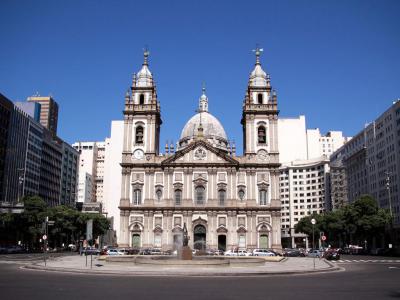
As Rio grew in size, wealth, and political importance, the modest chapel was gradually replaced by a far grander structure. Construction and decoration of the present church extended from 1775 through the late 19th century, resulting in a layered architectural composition. The façade retains a Baroque character, while the interior blends Neoclassical and Neo-Renaissance elements.
Inside, the scale is immediately impressive. Soaring columns, marble floors, and expansive spaces create a sense of solemn grandeur. The main altar was designed by Brazilian architect Archimedes Memória, while richly colored stained-glass windows produced in Germany filter light into the vast nave. The main entrance features monumental bronze doors created around 1901, and two impressive Art Nouveau bronze pulpits, added in 1931, further enrich the interior.
Beyond its architecture, Candelária has played a significant role in Brazil’s civic and social history, frequently serving as a site for public gatherings and memorials. Thanks to its excellent acoustics, the church is also renowned as a venue for concerts and organ recitals, making a visit particularly rewarding when music fills the space.
As Rio grew in size, wealth, and political importance, the modest chapel was gradually replaced by a far grander structure. Construction and decoration of the present church extended from 1775 through the late 19th century, resulting in a layered architectural composition. The façade retains a Baroque character, while the interior blends Neoclassical and Neo-Renaissance elements.
Inside, the scale is immediately impressive. Soaring columns, marble floors, and expansive spaces create a sense of solemn grandeur. The main altar was designed by Brazilian architect Archimedes Memória, while richly colored stained-glass windows produced in Germany filter light into the vast nave. The main entrance features monumental bronze doors created around 1901, and two impressive Art Nouveau bronze pulpits, added in 1931, further enrich the interior.
Beyond its architecture, Candelária has played a significant role in Brazil’s civic and social history, frequently serving as a site for public gatherings and memorials. Thanks to its excellent acoustics, the church is also renowned as a venue for concerts and organ recitals, making a visit particularly rewarding when music fills the space.
8) Saint Benedict Church and Monastery (must see)
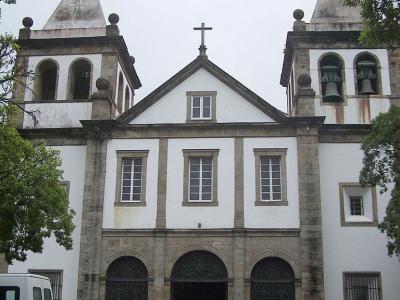
Saint Benedict Church and Monastery is one of Rio de Janeiro’s most important religious and artistic landmarks, rising above the city centre on Saint Benedict Hill. Its history began in 1590, when the land was donated to the Benedictine monks. Construction of the present complex started in 1633 and was completed in 1671, resulting in a refined example of Portuguese colonial architecture with strong Mannerist influences. The façade is marked by three entrance archways beneath a triangular gable, flanked by two towers topped with pyramidal spires. Passing through the entrance, visitors arrive at a tiled porch fitted with 19th-century iron gates.
While the exterior is relatively restrained, the interior is the church’s most famous feature. Almost every square inch of the walls and ceilings is covered in intricate wood carvings coated in 22-carat gold leaf. This massive decorative program took nearly a century to complete, spanning the years from 1668 to 1743. Look up to see a series of paintings depicting the life of Saint Benedict, framed by heavy, gold-covered scrollwork.
While admiring the church’s golden ornamentation, walk down the central aisle toward the far end of the nave. There, the High Altar displays the throne for the exposition of the Blessed Sacrament, positioned at the very top of the altar structure. Flanking the throne are statues of Saint Benedict and Saint Scholastica, his sister. Facing the altar, move into the right-hand side chapel, known as the Chapel of the Blessed Sacrament. It features some of the most delicate Rococo carvings in the church, lighter and more floral in character than the heavier Baroque decoration of the main nave. The silverwork here is particularly exquisite.
Beyond its artistic value, the monastery played a major role in education and urban development and remains active today. Visitors who attend the traditional Sunday 10:00 a.m. Mass can still hear Gregorian chant accompanied by organ music.
While the exterior is relatively restrained, the interior is the church’s most famous feature. Almost every square inch of the walls and ceilings is covered in intricate wood carvings coated in 22-carat gold leaf. This massive decorative program took nearly a century to complete, spanning the years from 1668 to 1743. Look up to see a series of paintings depicting the life of Saint Benedict, framed by heavy, gold-covered scrollwork.
While admiring the church’s golden ornamentation, walk down the central aisle toward the far end of the nave. There, the High Altar displays the throne for the exposition of the Blessed Sacrament, positioned at the very top of the altar structure. Flanking the throne are statues of Saint Benedict and Saint Scholastica, his sister. Facing the altar, move into the right-hand side chapel, known as the Chapel of the Blessed Sacrament. It features some of the most delicate Rococo carvings in the church, lighter and more floral in character than the heavier Baroque decoration of the main nave. The silverwork here is particularly exquisite.
Beyond its artistic value, the monastery played a major role in education and urban development and remains active today. Visitors who attend the traditional Sunday 10:00 a.m. Mass can still hear Gregorian chant accompanied by organ music.
