Custom Walk in Detroit, Michigan by katie_collignon_adc634 created on 2026-04-14
Guide Location: USA » Detroit
Guide Type: Custom Walk
# of Sights: 9
Tour Duration: 2 Hour(s)
Travel Distance: 3.3 Km or 2.1 Miles
Share Key: 6QSK8
Guide Type: Custom Walk
# of Sights: 9
Tour Duration: 2 Hour(s)
Travel Distance: 3.3 Km or 2.1 Miles
Share Key: 6QSK8
How It Works
Please retrieve this walk in the GPSmyCity app. Once done, the app will guide you from one tour stop to the next as if you had a personal tour guide. If you created the walk on this website or come to the page via a link, please follow the instructions below to retrieve the walk in the app.
Retrieve This Walk in App
Step 1. Download the app "GPSmyCity: Walks in 1K+ Cities" on Apple App Store or Google Play Store.



Step 2. In the GPSmyCity app, download(or launch) the guide "Detroit Map and Walking Tours".
Step 3. Tap the menu button located at upper right corner of the "Walks" screen and select "Retrieve custom walk". Enter the share key: 6QSK8
1) Renaissance Center (must see)
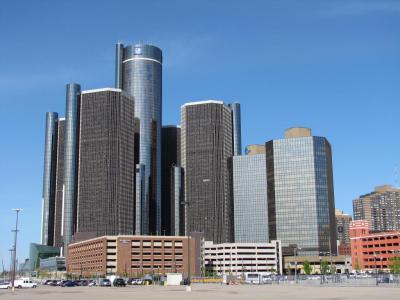
The Renaissance Center in Detroit consists of seven connected skyscrapers in the downtown area. This grouping's tallest building, Detroit Marriott at the Renaissance Center, is Michigan's tallest building. A central feature of this building is a circular glass walkway that connects to walkways leading into the other buildings, some of which feature fascinating attractions.
One of the highlights of the Marriott building is an atrium with eight stories. Terraces and concrete balconies are a significant part of this area. One of the hotel's upper floors has a restaurant with an observation deck allowing views up to 30 miles away.
A five-story retail area hosts GM World, an exhibition devoted to vehicles from General Motors. Another highlight is Asian Village in the GM Center. This collection of restaurants offers East and Southeast Asian cuisine, featuring the types of dishes that are street food cart favorites in that part of Asia.
One of the highlights of the Marriott building is an atrium with eight stories. Terraces and concrete balconies are a significant part of this area. One of the hotel's upper floors has a restaurant with an observation deck allowing views up to 30 miles away.
A five-story retail area hosts GM World, an exhibition devoted to vehicles from General Motors. Another highlight is Asian Village in the GM Center. This collection of restaurants offers East and Southeast Asian cuisine, featuring the types of dishes that are street food cart favorites in that part of Asia.
2) Mariner's Church
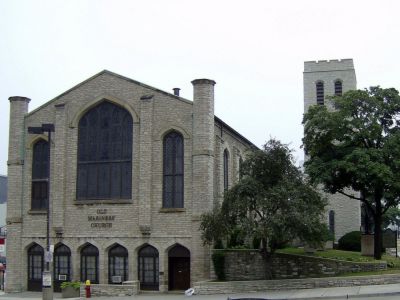
Mariners' Church of Detroit, established in 1842, is a historic church located on East Jefferson Avenue in Downtown Detroit. The church was created with a special mission to serve maritime travelers of the Great Lakes. The current Gothic Revival structure, designed by Calvin N. Otis and Hugh Moffat, was completed in 1849.
Originally situated at the corner of Woodbridge and Woodward streets, the church was relocated in 1955 to its present location to accommodate urban development. This move preserved its architectural integrity and historical significance.
Throughout its history, Mariners' Church has been dedicated to the spiritual well-being of sailors and the broader community. Notably, it served as a stop on the Underground Railroad, aiding enslaved individuals seeking freedom in Canada. In 1925, the church established Mariners' Inn, a shelter providing rehabilitation and counseling services for homeless substance abusers.
The church is renowned for its annual Blessing of the Fleet in March and the Great Lakes Memorial Service every November, honoring those who have lost their lives at sea. Following the sinking of the SS Edmund Fitzgerald in 1975, the church's bell tolled 29 times, once for each crew member lost, a tribute immortalized in Gordon Lightfoot's song "The Wreck of the Edmund Fitzgerald."
Architecturally, Mariners' Church features Lannon stone construction in the Gothic Revival style, with notable elements such as a 12-foot diameter rose window and a bell tower added during the 1955 relocation. The sanctuary includes stained glass windows depicting scenes from Detroit's history and the Bible, enhancing its historical and aesthetic significance.
Today, Mariners' Church continues its mission as "A House of Prayer for All People," offering services every Sunday at 8:30 and 11:00 AM.
Originally situated at the corner of Woodbridge and Woodward streets, the church was relocated in 1955 to its present location to accommodate urban development. This move preserved its architectural integrity and historical significance.
Throughout its history, Mariners' Church has been dedicated to the spiritual well-being of sailors and the broader community. Notably, it served as a stop on the Underground Railroad, aiding enslaved individuals seeking freedom in Canada. In 1925, the church established Mariners' Inn, a shelter providing rehabilitation and counseling services for homeless substance abusers.
The church is renowned for its annual Blessing of the Fleet in March and the Great Lakes Memorial Service every November, honoring those who have lost their lives at sea. Following the sinking of the SS Edmund Fitzgerald in 1975, the church's bell tolled 29 times, once for each crew member lost, a tribute immortalized in Gordon Lightfoot's song "The Wreck of the Edmund Fitzgerald."
Architecturally, Mariners' Church features Lannon stone construction in the Gothic Revival style, with notable elements such as a 12-foot diameter rose window and a bell tower added during the 1955 relocation. The sanctuary includes stained glass windows depicting scenes from Detroit's history and the Bible, enhancing its historical and aesthetic significance.
Today, Mariners' Church continues its mission as "A House of Prayer for All People," offering services every Sunday at 8:30 and 11:00 AM.
3) Joe Louis Memorial
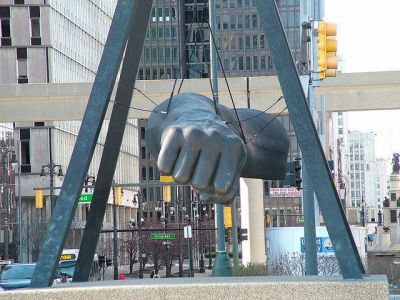
The Joe Louis Memorial is one of Detroit's most iconic sites. With its nickname "The Fist," this sculpture has a prominent place in Hart Plaza, making it one of the city's most popular attractions. Robert Graham designed to sculpture, while Rolf Kriken was the bronze artist responsible for the pouring.
This sculpture features an arm featuring 24 feet long. A 24-foot high pyramid-style framework supports a replica of Joe Louis' fist. The fist is an effective symbol highlighting Louis' history as a boxer, as well as a powerful symbol against racism.
The artist has described the fist like a battering ram to demonstrate its power. Another interesting feature is how the fist points towards Canada, showing that the American fight for democracy has crossed borders. This sculpture is a powerful symbol that is worthy of a photo opportunity.
This sculpture features an arm featuring 24 feet long. A 24-foot high pyramid-style framework supports a replica of Joe Louis' fist. The fist is an effective symbol highlighting Louis' history as a boxer, as well as a powerful symbol against racism.
The artist has described the fist like a battering ram to demonstrate its power. Another interesting feature is how the fist points towards Canada, showing that the American fight for democracy has crossed borders. This sculpture is a powerful symbol that is worthy of a photo opportunity.
4) Guardian Building (must see)
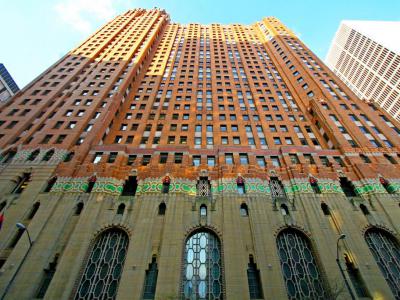
The Guardian Building is one of Detroit's most famous skyscrapers, with a location at 500 Griswold Street, in the city's Financial District. This building was completed in 1929 and demonstrates the Art Deco style that was popular at that time. A highlight that makes the building stand out, in addition to its architecture, is the size of the American flag at the top of the building.
Most of the building spans 36 stories, with one of the spires featuring 40 stories. In addition to brickwork, the building features terra cotta, limestone, and tile. Sculptures make up part of the building's exterior, demonstrating the importance of commerce to the city.
The main entrance features a semi-circular dome that is colorful. Inside the building, the lower lobby has many features similar to the inside of a cathedral, including a ceiling with colorful tile designs. The elevator lobby has colorful lamps that are in keeping with the Art Deco design.
Most of the building spans 36 stories, with one of the spires featuring 40 stories. In addition to brickwork, the building features terra cotta, limestone, and tile. Sculptures make up part of the building's exterior, demonstrating the importance of commerce to the city.
The main entrance features a semi-circular dome that is colorful. Inside the building, the lower lobby has many features similar to the inside of a cathedral, including a ceiling with colorful tile designs. The elevator lobby has colorful lamps that are in keeping with the Art Deco design.
5) Campus Martius Park
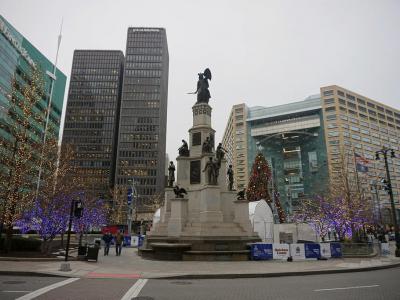
Campus Martius Park is a vibrant public space located in Downtown Detroit. Its history dates back to the aftermath of the Great Fire of 1805 when Judge Augustus Woodward used the area as the focal point for his plans to rebuild the city. The park's name, "Campus Martius," is derived from the Latin term for "Field of Mars," symbolizing a space where Roman heroes once walked. It was also named after the principal square in Marietta, Ohio, the first capital of the Northwest Territory.
Campus Martius was once a large central gathering space in Detroit but was lost in the early 1900s due to downtown reconfiguration for traffic. Although Hart Plaza was created as a replacement, its lack of greenery sparked efforts to restore Campus Martius, which reopened on November 19, 2004.
The revitalized Campus Martius Park covers 1.2 acres and features two performance stages, public spaces, sculptures, and a seasonal ice skating rink inspired by, and larger than, the iconic rink at Rockefeller Center in New York City. Although smaller than the original park, additional green space was created nearby with the opening of Cadillac Square Park in 2007.
The Woodward Fountain, surrounded by seating and beautiful landscaping, is a park highlight. Attractions include the Michigan Soldiers and Sailors Monument and the Point of Origin 1806 marker, which designates Detroit's coordinate system's starting point, aligning with roads like Seven Mile and Eight Mile.
Campus Martius Park has become a hub for year-round activities. It is the site of the annual Motown Winter Blast, attracting over 450,000 visitors to the downtown area, and it hosts Detroit’s official Christmas tree lighting celebration each November, drawing thousands for live music, festive decorations, and the holiday countdown.
Campus Martius was once a large central gathering space in Detroit but was lost in the early 1900s due to downtown reconfiguration for traffic. Although Hart Plaza was created as a replacement, its lack of greenery sparked efforts to restore Campus Martius, which reopened on November 19, 2004.
The revitalized Campus Martius Park covers 1.2 acres and features two performance stages, public spaces, sculptures, and a seasonal ice skating rink inspired by, and larger than, the iconic rink at Rockefeller Center in New York City. Although smaller than the original park, additional green space was created nearby with the opening of Cadillac Square Park in 2007.
The Woodward Fountain, surrounded by seating and beautiful landscaping, is a park highlight. Attractions include the Michigan Soldiers and Sailors Monument and the Point of Origin 1806 marker, which designates Detroit's coordinate system's starting point, aligning with roads like Seven Mile and Eight Mile.
Campus Martius Park has become a hub for year-round activities. It is the site of the annual Motown Winter Blast, attracting over 450,000 visitors to the downtown area, and it hosts Detroit’s official Christmas tree lighting celebration each November, drawing thousands for live music, festive decorations, and the holiday countdown.
6) Greektown
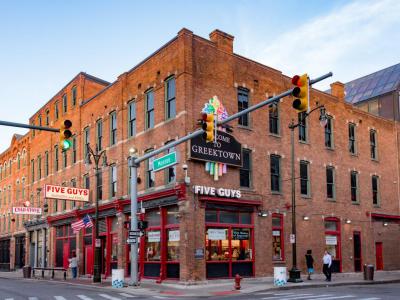
Greektown is one of Detroit's most popular commercial and entertainment districts. During the early 20th century, this district was where most of the Greek immigrants settled. Even when the Greek community started relocating to other areas in the 1920s, the neighborhood still retained many of the restaurants and coffeehouses that made it stand out.
Second Baptist Church and Saint Mary's Roman Catholic Church are two of the churches with the greatest significance. Another landmark historical building is the Atheneum Suite Hotel. This neighborhood has had a place on the National Register of Historic Places since 1982.
The Greektown Casino is one of the highlights of this area. The casino's architectural highlights include elements similar to the Parthenon. Monroe Street, one of the main streets in this area, plays festive Greek music all day, adding to the atmosphere. There are seven Greek-style restaurants, each serving unique types of cuisine.
Second Baptist Church and Saint Mary's Roman Catholic Church are two of the churches with the greatest significance. Another landmark historical building is the Atheneum Suite Hotel. This neighborhood has had a place on the National Register of Historic Places since 1982.
The Greektown Casino is one of the highlights of this area. The casino's architectural highlights include elements similar to the Parthenon. Monroe Street, one of the main streets in this area, plays festive Greek music all day, adding to the atmosphere. There are seven Greek-style restaurants, each serving unique types of cuisine.
7) St. Mary Roman Catholic Church
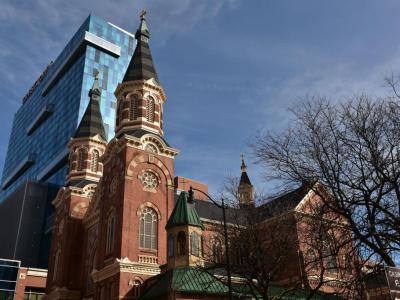
Saint Mary Roman Catholic Church, formally known as the Church of the Immaculate Conception of the Blessed Virgin Mary, is one of the oldest Roman Catholic parishes in Detroit and holds the distinction of being the third oldest in the city. Located on Monroe Street, in the heart of the Greektown Historic District, this iconic landmark is commonly referred to as "Old Saint Mary's Church" to differentiate it from other parishes with the same name in the region.
The parish was founded in 1834 by Father Martin Kundig to serve Detroit's growing population of German-speaking Catholic immigrants. The original church, built in 1841, stood on land donated by early French settlers Antoine and Monica Beaubien, who also gifted the parish its first set of bells. Over the decades, the church evolved into its current form, with the cornerstone of the existing structure laid in 1884 and completed the following year under the guidance of German-born architect Peter Dederichs, himself a parishioner.
The church, rectory, and former convent (now a community center) are built in the Romanesque style with Venetian influences, featuring red brick construction and twin towers framing a striking rose window on the west façade. Inside, the nave spans 80 feet in width and rises 90 feet in height, showcasing ten polished granite columns, originally intended for the Michigan State Capitol.
Saint Mary’s features three early 20th-century grottos by Father Joseph Wuest, including a Baptistry, a Lourdes replica, and a Garden of Gethsemane scene. Its school, founded in 1844 and staffed by lay teachers, later welcomed the Christian Brothers and School Sisters of Notre Dame, operating until 1966. Administered by the Spiritans since 1893, the parish’s notable figures include Rev. John A. Lemke, the first U.S.-born Polish-American Catholic priest, baptized here in 1866.
Designated Michigan Historic Sites in 1979, Saint Mary Roman Catholic Church reflects Detroit's immigrant history, German craftsmanship, Romanesque elegance, and Catholic tradition.
The parish was founded in 1834 by Father Martin Kundig to serve Detroit's growing population of German-speaking Catholic immigrants. The original church, built in 1841, stood on land donated by early French settlers Antoine and Monica Beaubien, who also gifted the parish its first set of bells. Over the decades, the church evolved into its current form, with the cornerstone of the existing structure laid in 1884 and completed the following year under the guidance of German-born architect Peter Dederichs, himself a parishioner.
The church, rectory, and former convent (now a community center) are built in the Romanesque style with Venetian influences, featuring red brick construction and twin towers framing a striking rose window on the west façade. Inside, the nave spans 80 feet in width and rises 90 feet in height, showcasing ten polished granite columns, originally intended for the Michigan State Capitol.
Saint Mary’s features three early 20th-century grottos by Father Joseph Wuest, including a Baptistry, a Lourdes replica, and a Garden of Gethsemane scene. Its school, founded in 1844 and staffed by lay teachers, later welcomed the Christian Brothers and School Sisters of Notre Dame, operating until 1966. Administered by the Spiritans since 1893, the parish’s notable figures include Rev. John A. Lemke, the first U.S.-born Polish-American Catholic priest, baptized here in 1866.
Designated Michigan Historic Sites in 1979, Saint Mary Roman Catholic Church reflects Detroit's immigrant history, German craftsmanship, Romanesque elegance, and Catholic tradition.
8) Saints Peter And Paul Church
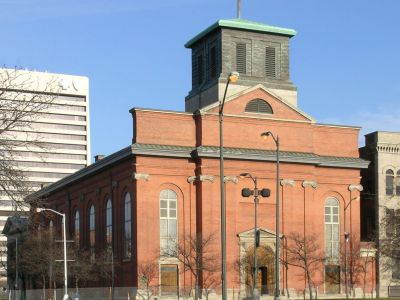
Saints Peter and Paul Jesuit Church, located on East Jefferson Avenue in Detroit, is the city's oldest surviving church and a prominent landmark. Listed on the National Register of Historic Places and designated a Michigan State Historic Site in 1971, the church holds a significant place in Detroit's architectural and religious history.
The church’s history began in 1844 when Bishop Peter Paul Lefevere initiated its construction, completed in 1848 and consecrated as the diocese's cathedral with mainly Irish and some French parishioners. In 1877, Bishop Caspar Borgess entrusted it to the Jesuit Order, leading to the establishment of Detroit’s first Catholic college, now the University of Detroit-Mercy (UDM). The adjacent building houses UDM’s law school.
Built with Detroit common brick, Saints Peter and Paul Church is a three-aisled structure that retains much of its original layout despite multiple renovations. Significant alterations were made in 1879, 1882, and 1892, with further remodeling in 1911. A chapel addition in 1918 and other updates modernized the church while preserving its historical essence.
The gabled front façade features a central entrance pavilion flanked by Ionic pilasters and arched windows. A short square belfry tops the structure, though an originally planned spire was never added. The side elevations are divided into seven bays with tall rounded arch windows, surmounted by a heavy frieze.
The interior showcases exquisite craftsmanship, including hand-carved oak confessionals, a barrel-vaulted ceiling adorned with apostolic murals, and a remarkable Carrara marble altar. Designed by Gustav Adolph Mueller, the altar features a bas-relief of the crucifixion sculpted by Joseph Sibbel. While these elements were introduced during later renovations, the original organ case remains intact.
The church continues to serve the Detroit community, offering Sunday and weekday masses. Its rich history, architectural beauty, and role in the city’s Catholic education make it a cornerstone of Detroit's cultural heritage.
The church’s history began in 1844 when Bishop Peter Paul Lefevere initiated its construction, completed in 1848 and consecrated as the diocese's cathedral with mainly Irish and some French parishioners. In 1877, Bishop Caspar Borgess entrusted it to the Jesuit Order, leading to the establishment of Detroit’s first Catholic college, now the University of Detroit-Mercy (UDM). The adjacent building houses UDM’s law school.
Built with Detroit common brick, Saints Peter and Paul Church is a three-aisled structure that retains much of its original layout despite multiple renovations. Significant alterations were made in 1879, 1882, and 1892, with further remodeling in 1911. A chapel addition in 1918 and other updates modernized the church while preserving its historical essence.
The gabled front façade features a central entrance pavilion flanked by Ionic pilasters and arched windows. A short square belfry tops the structure, though an originally planned spire was never added. The side elevations are divided into seven bays with tall rounded arch windows, surmounted by a heavy frieze.
The interior showcases exquisite craftsmanship, including hand-carved oak confessionals, a barrel-vaulted ceiling adorned with apostolic murals, and a remarkable Carrara marble altar. Designed by Gustav Adolph Mueller, the altar features a bas-relief of the crucifixion sculpted by Joseph Sibbel. While these elements were introduced during later renovations, the original organ case remains intact.
The church continues to serve the Detroit community, offering Sunday and weekday masses. Its rich history, architectural beauty, and role in the city’s Catholic education make it a cornerstone of Detroit's cultural heritage.
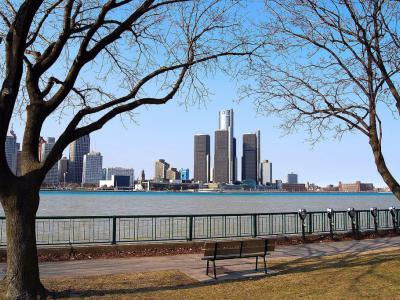
9) Detroit Riverfront (must see)
The Detroit Riverfront spans three and a half miles in an area ranging from the Joe Louis Arena to Gabriel Richard Park. A popular greenway known as the Dequindre Cut connects visitors to the green spaces accessible along the RiverWalk. This area is popular with runners and walkers and a favorite place for city residents to gather.
Milliken State Park and Harbor is one of the most popular green spaces found along the waterfront. One of the biggest attractions that draws people to this park is a lighthouse. This park also boasts a wetlands area, providing a nice touch of nature in the city.
The Aretha Franklin Amphitheater is one of the city's most popular outdoor entertainment venues, and you might have a chance to catch a performance as you make your way along the Riverfront. The Riverwalk Garden Rooms are also worth your time, giving you access to beautifully landscaped garden areas.
Milliken State Park and Harbor is one of the most popular green spaces found along the waterfront. One of the biggest attractions that draws people to this park is a lighthouse. This park also boasts a wetlands area, providing a nice touch of nature in the city.
The Aretha Franklin Amphitheater is one of the city's most popular outdoor entertainment venues, and you might have a chance to catch a performance as you make your way along the Riverfront. The Riverwalk Garden Rooms are also worth your time, giving you access to beautifully landscaped garden areas.
