Custom Walk in Maastricht, Netherlands by samlab25_ca8386 created on 2026-04-20
Guide Location: Netherlands » Maastricht
Guide Type: Custom Walk
# of Sights: 7
Tour Duration: 1 Hour(s)
Travel Distance: 1.4 Km or 0.9 Miles
Share Key: E6JQV
Guide Type: Custom Walk
# of Sights: 7
Tour Duration: 1 Hour(s)
Travel Distance: 1.4 Km or 0.9 Miles
Share Key: E6JQV
How It Works
Please retrieve this walk in the GPSmyCity app. Once done, the app will guide you from one tour stop to the next as if you had a personal tour guide. If you created the walk on this website or come to the page via a link, please follow the instructions below to retrieve the walk in the app.
Retrieve This Walk in App
Step 1. Download the app "GPSmyCity: Walks in 1K+ Cities" on Apple App Store or Google Play Store.



Step 2. In the GPSmyCity app, download(or launch) the guide "Maastricht Map and Walking Tours".
Step 3. Tap the menu button located at upper right corner of the "Walks" screen and select "Retrieve custom walk". Enter the share key: E6JQV
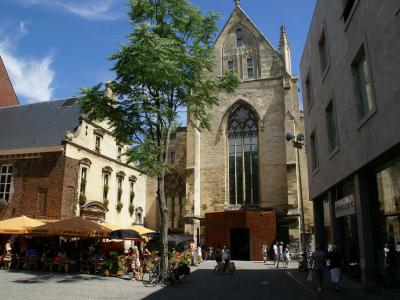
1) Boekhandel Dominicanen (Dominicanen Bookstore) (must see)
This unique bookstore features an independent bookstore located in a 13th-century church.
The Gothic-style cathedral was built in 1294. The church features a 14th-century fresco showing scenes from Thomas Aquinas' life. The fresco is known as Netherlands' oldest ecclesiastical wall painting. Other wall paintings date to the 1600s.
In 1794, Napolean Bonaparte used the church to house personnel and store equipment. After the monastery's dissolution in the 18th century, the church found a variety of other uses. For example, it was used as bike storage, a warehouse, a carnival, a boxing ring, and a printing house.
In 2006, the ancient church was converted into the Selexyx bookstore. The conversion project is known as Selexyz Dominicanen Maastricht. The conversion features open spaces, and the bookstore has been divided into three stories. The bookstore's design doesn't interfere with or detract from the church's stunning interior.
Selexyz became Polare, and Polare filed for bankruptcy. In 2014, the bookstore became independent and updated its name to Boekhandel Dominicanen. The bookstore features Dutch and English titles, children's books, art histories, travel guides, and more. In addition, the bookstore has a music department with vinyl records and CDs.
Over 150 events take place every year in the bookstore. Visitors can attend interviews with authors, readings, and debates.
The Dominicanen Bookstore also has a delightful cafe. Visitors can enjoy lunch and coffee in the former church's choir area.
Whether you are looking to peruse books, attend an event, grab a coffee, or enjoy the beauty of the ancient church, Dominicanen Bookstore is a must-see.
The Gothic-style cathedral was built in 1294. The church features a 14th-century fresco showing scenes from Thomas Aquinas' life. The fresco is known as Netherlands' oldest ecclesiastical wall painting. Other wall paintings date to the 1600s.
In 1794, Napolean Bonaparte used the church to house personnel and store equipment. After the monastery's dissolution in the 18th century, the church found a variety of other uses. For example, it was used as bike storage, a warehouse, a carnival, a boxing ring, and a printing house.
In 2006, the ancient church was converted into the Selexyx bookstore. The conversion project is known as Selexyz Dominicanen Maastricht. The conversion features open spaces, and the bookstore has been divided into three stories. The bookstore's design doesn't interfere with or detract from the church's stunning interior.
Selexyz became Polare, and Polare filed for bankruptcy. In 2014, the bookstore became independent and updated its name to Boekhandel Dominicanen. The bookstore features Dutch and English titles, children's books, art histories, travel guides, and more. In addition, the bookstore has a music department with vinyl records and CDs.
Over 150 events take place every year in the bookstore. Visitors can attend interviews with authors, readings, and debates.
The Dominicanen Bookstore also has a delightful cafe. Visitors can enjoy lunch and coffee in the former church's choir area.
Whether you are looking to peruse books, attend an event, grab a coffee, or enjoy the beauty of the ancient church, Dominicanen Bookstore is a must-see.
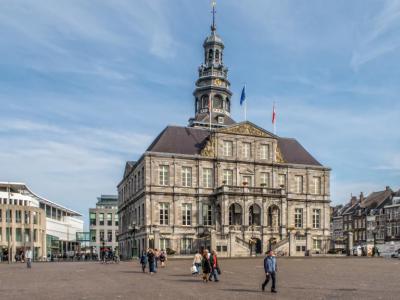
2) Marktplaats (Market Square) (must see)
Market Square is home to Maastricht's most popular market. In addition, the square features Maastricht's city hall and numerous imposing mansions.
Market Square has hosted commodity markets for centuries. In Medieval times, the square was much smaller. In the 13th century, a cloth hall was built against the old city wall and traders would gather here. In 1659, the old city walls and the cloth hall were demolished to make way for the new City Hall.
City Hall was built by architect Pieter Post between 1659 and 1664. The building's tower dates to 1684. The 49-bell carillon chimes on the hour. City Hall's interior features stunning ceiling paintings, stucco work, and wall tapestries.
The square's current layout and most of the square's buildings were constructed in the 17th and 18th centuries.
The market operates every Wednesday and Friday. The Wednesday market features around 200 stalls. The Friday market is busier, with around 400 stalls.
Sellers offer plants, flowers, food items, fresh produce, cosmetics, and clothes. Market Square also features many permanent restaurants, boutiques, and stores.
A statue of Johanne Petrus Mincklelers stands in the center of the square. The statue is called "Eternal Burning Flame." Mincklelers invented illuminating gas, and his statue depicts him holding a gas torch. The gas torch is lit with natural gas, and visitors can feel the heat up-close.
The square features a bluestone fountain called Mooswief. The statue honors women who used the market to sell their vegetables.
Market Square has hosted commodity markets for centuries. In Medieval times, the square was much smaller. In the 13th century, a cloth hall was built against the old city wall and traders would gather here. In 1659, the old city walls and the cloth hall were demolished to make way for the new City Hall.
City Hall was built by architect Pieter Post between 1659 and 1664. The building's tower dates to 1684. The 49-bell carillon chimes on the hour. City Hall's interior features stunning ceiling paintings, stucco work, and wall tapestries.
The square's current layout and most of the square's buildings were constructed in the 17th and 18th centuries.
The market operates every Wednesday and Friday. The Wednesday market features around 200 stalls. The Friday market is busier, with around 400 stalls.
Sellers offer plants, flowers, food items, fresh produce, cosmetics, and clothes. Market Square also features many permanent restaurants, boutiques, and stores.
A statue of Johanne Petrus Mincklelers stands in the center of the square. The statue is called "Eternal Burning Flame." Mincklelers invented illuminating gas, and his statue depicts him holding a gas torch. The gas torch is lit with natural gas, and visitors can feel the heat up-close.
The square features a bluestone fountain called Mooswief. The statue honors women who used the market to sell their vegetables.
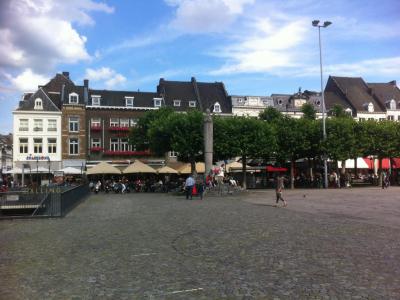
3) Vrijthof Square (must see)
Vrijthof Square is a large ancient square with beautiful cobblestones. It has been Maastricht's main square since the 19th century.
Excavations have revealed a late Roman period burial site underneath the square. Archeologists also found remains of an ancient Roman road, the Via Belgica under the square's north side.
The Vrijthof name was first mentioned in writing in 1223. Sometime after that, Vrijthof Square was walled. The walls were removed during the Maastricht Septennial Pilgrimage.
A stone perron was erected in the square in 1292 to symbolize the prince-bishop of Liège's jurisdiction. The French Occupation demolished this perron in 1795. The current perron stands in the square's northeast corner and was built in the 1950s.
The square was occasionally used for executions. In 1408, a rebellious Liège mayor was beheaded here. Fifteen Anabaptist heretics were burned at the stake in 1535.
In the 17th century, a fence replaced the wall. In the 17th and 18th centuries, the square served as a military parade ground. The Main Guard House was built in 1736.
During the 1794-1814 French Occupation, the square was renamed Arms Square. The French Occupation demolished several landmark buildings in the square.
Today, there are 38 heritage buildings in Vrijthof Square. The 11th-century Basilica of Saint Servatius stands next to the 14th century Saint John's Church. The brightly colored 16th century Spanish Government building now houses the Museum of Photography.
Visitors will find a plaque dedicated to the US Army's Old Hickory Division which was instrumental in Masstricht's liberation in 1944. The square is also home to interesting artworks by local artists.
Excavations have revealed a late Roman period burial site underneath the square. Archeologists also found remains of an ancient Roman road, the Via Belgica under the square's north side.
The Vrijthof name was first mentioned in writing in 1223. Sometime after that, Vrijthof Square was walled. The walls were removed during the Maastricht Septennial Pilgrimage.
A stone perron was erected in the square in 1292 to symbolize the prince-bishop of Liège's jurisdiction. The French Occupation demolished this perron in 1795. The current perron stands in the square's northeast corner and was built in the 1950s.
The square was occasionally used for executions. In 1408, a rebellious Liège mayor was beheaded here. Fifteen Anabaptist heretics were burned at the stake in 1535.
In the 17th century, a fence replaced the wall. In the 17th and 18th centuries, the square served as a military parade ground. The Main Guard House was built in 1736.
During the 1794-1814 French Occupation, the square was renamed Arms Square. The French Occupation demolished several landmark buildings in the square.
Today, there are 38 heritage buildings in Vrijthof Square. The 11th-century Basilica of Saint Servatius stands next to the 14th century Saint John's Church. The brightly colored 16th century Spanish Government building now houses the Museum of Photography.
Visitors will find a plaque dedicated to the US Army's Old Hickory Division which was instrumental in Masstricht's liberation in 1944. The square is also home to interesting artworks by local artists.
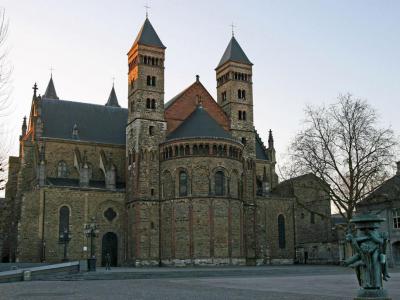
4) Basilica of Saint Servatius (must see)
The Romanesque Basilica of Saint Servatius is built on Saint Servatius's gravesite. It is likely that the current structure is the fourth iteration of churches on this site.
Saint Servatius was an Armenian missionary and Tongeren's bishop. He reportedly died in Maastricht in 384. The first church was a small memorial chapel, which was replaced by a larger church. Next, a pilgrim church was built. Finally, the current church was built between the 11th and 12th centuries. Emperor Henry III and a dozen bishops attended the church's dedication in 1039.
The impressive Berg Portal is located on the south side of the church and gives visitors access to the church via descending steps. The portal was probably built during the 12th and 13th centuries and is the first Gothic construction in Maastricht. An intricate tile labyrinth covers the floor.
The portal features vibrantly decorated walls and 72 statues of kings, prophets, apostles, saints, and angels. In addition, reliefs depict Mary's life. In 1566, many statues had their heads removed because of a cultural movement against icons. The damage was poorly repaired in 1596. A Baroque facade was added in the 18th century and removed in the 19th century.
The side chapels were added in the 14th and 15th centuries and feature Gothic architecture. A Gothic spire was added in 1556, and Baroque helmet spires were added in 1770.
French revolutionaries used the church as a horse stable in 1797. As a result, many of the church furnishings were sold or damaged. Since 1866, the church has undergone several restorations.
Throughout the Middle Ages, the Pilgrimage of the Relics took place every seven years. The pilgrimage was revived in the 19th century and again takes place every seven years.
Saint Servatius was an Armenian missionary and Tongeren's bishop. He reportedly died in Maastricht in 384. The first church was a small memorial chapel, which was replaced by a larger church. Next, a pilgrim church was built. Finally, the current church was built between the 11th and 12th centuries. Emperor Henry III and a dozen bishops attended the church's dedication in 1039.
The impressive Berg Portal is located on the south side of the church and gives visitors access to the church via descending steps. The portal was probably built during the 12th and 13th centuries and is the first Gothic construction in Maastricht. An intricate tile labyrinth covers the floor.
The portal features vibrantly decorated walls and 72 statues of kings, prophets, apostles, saints, and angels. In addition, reliefs depict Mary's life. In 1566, many statues had their heads removed because of a cultural movement against icons. The damage was poorly repaired in 1596. A Baroque facade was added in the 18th century and removed in the 19th century.
The side chapels were added in the 14th and 15th centuries and feature Gothic architecture. A Gothic spire was added in 1556, and Baroque helmet spires were added in 1770.
French revolutionaries used the church as a horse stable in 1797. As a result, many of the church furnishings were sold or damaged. Since 1866, the church has undergone several restorations.
Throughout the Middle Ages, the Pilgrimage of the Relics took place every seven years. The pilgrimage was revived in the 19th century and again takes place every seven years.
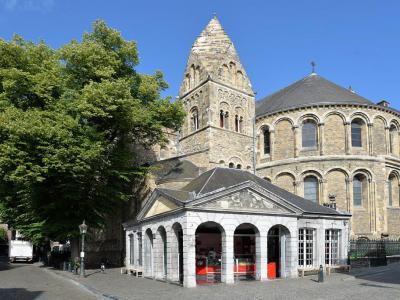
5) Onze-Lieve-Vrouwekerk (Basilica of Our Lady) (must see)
The Basilica of Our Lady is a Romanesque Roman Catholic Church, often called Star of the Sea, after the church's main devotion, Our Lady, Star of the Sea.
It's possible that a Roman temple was built on this site before the church was built. Most of the present structure was built in the 11th and 12th centuries. The westwork was built in the 11th century, and Gothic vaults were added in the 13th century.
The French Occupation used the church as a stable and a blacksmith shop during the 1790s. The church was finally returned to a place of worship in 1837.
Visitors can access the church from the Square of Our Lady through a 13th-century Gothic portal.
The interior features a 14th-century mural depicturing Saint Catherine. A mural from 1571 depicts Saint Christopher and the Infant Jesus. The church features a 1652 pipe organ, while the stained glass windows date to the 19th and 20th centuries.
Twenty symbolic capitals carved in the 12th century depict Old Testament scenes. Impressive artworks include a 14th-century Pieta sculpture, a 16th-century wood panel The Dream of Jacob, and two 15th century Virgin Mary statues.
The church features a cloistered garden that dates to the 16th century.
A 15th-century wooden statue of Our Lady, Star of the Sea is located in a chapel by the main entrance. Pope Pius X crowned the statue in 1912. The statue is carried around town during religious processions.
The Basilica of Our Lady houses an impressive treasury. The treasury includes busts of silver and copper, chalices, ancient vestments, antique books, paintings, and sculptures. Items include a 10th-century reliquary horn and the ancient Robe of Saint Lambert.
The main attraction of the Basilica of Our Lady is arguably the miraculous statue of Our Lady, Star of the Sea. This 15th-century wooden statue was originally housed in a nearby Franciscan monastery. It was moved to the Basilica of Our Lady in 1837. You can find the statue placed in a Gothic chapel near the main entrance where it is visited by hundreds of worshipers daily.
It's possible that a Roman temple was built on this site before the church was built. Most of the present structure was built in the 11th and 12th centuries. The westwork was built in the 11th century, and Gothic vaults were added in the 13th century.
The French Occupation used the church as a stable and a blacksmith shop during the 1790s. The church was finally returned to a place of worship in 1837.
Visitors can access the church from the Square of Our Lady through a 13th-century Gothic portal.
The interior features a 14th-century mural depicturing Saint Catherine. A mural from 1571 depicts Saint Christopher and the Infant Jesus. The church features a 1652 pipe organ, while the stained glass windows date to the 19th and 20th centuries.
Twenty symbolic capitals carved in the 12th century depict Old Testament scenes. Impressive artworks include a 14th-century Pieta sculpture, a 16th-century wood panel The Dream of Jacob, and two 15th century Virgin Mary statues.
The church features a cloistered garden that dates to the 16th century.
A 15th-century wooden statue of Our Lady, Star of the Sea is located in a chapel by the main entrance. Pope Pius X crowned the statue in 1912. The statue is carried around town during religious processions.
The Basilica of Our Lady houses an impressive treasury. The treasury includes busts of silver and copper, chalices, ancient vestments, antique books, paintings, and sculptures. Items include a 10th-century reliquary horn and the ancient Robe of Saint Lambert.
The main attraction of the Basilica of Our Lady is arguably the miraculous statue of Our Lady, Star of the Sea. This 15th-century wooden statue was originally housed in a nearby Franciscan monastery. It was moved to the Basilica of Our Lady in 1837. You can find the statue placed in a Gothic chapel near the main entrance where it is visited by hundreds of worshipers daily.
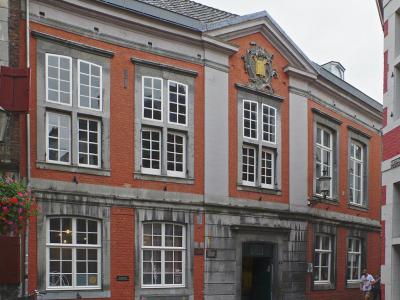
6) Bisschopsmolen (Bishop's Mill) (must see)
Bishop's Mill is Holland's oldest working watermill. Guests can buy flour to make their own bread or buy fresh-baked bread from the mill's bakery.
The mill was originally built in the seventh century. Duke Godfrey of Bouillon leased the mill to The Principality of Liège in the 11th century. The Duke died in 1099 in Jerusalem, and the mill became episcopal property. At this time, the mill became known as "Bishop's Mill."
The Brewer's Guild ran the mill during the late Middle Ages. During this time, all city brewers were required to grind their malt at Bishop's Mill.
The 1577 Spanish siege destroyed the mill, which was partially rebuilt in 1609.
The mill was renovated in 2004. Visitors can watch the working mill and taste fresh-baked bread and pies. Bakery items are made from the mill's spelt flour. The vlaaisweet tart is a must for visitors. Bishop's Mill offers guided tours for a more in-depth experience.
The mill was originally built in the seventh century. Duke Godfrey of Bouillon leased the mill to The Principality of Liège in the 11th century. The Duke died in 1099 in Jerusalem, and the mill became episcopal property. At this time, the mill became known as "Bishop's Mill."
The Brewer's Guild ran the mill during the late Middle Ages. During this time, all city brewers were required to grind their malt at Bishop's Mill.
The 1577 Spanish siege destroyed the mill, which was partially rebuilt in 1609.
The mill was renovated in 2004. Visitors can watch the working mill and taste fresh-baked bread and pies. Bakery items are made from the mill's spelt flour. The vlaaisweet tart is a must for visitors. Bishop's Mill offers guided tours for a more in-depth experience.
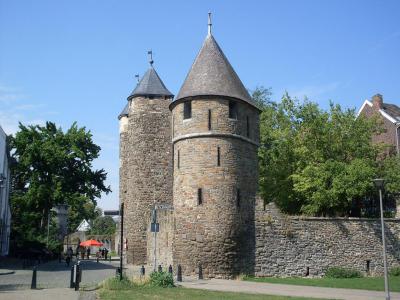
7) Helpoort (Hell's Gate)
Hell’s Gate (Dutch: Helpoort) is a striking medieval landmark located in the Jekerkwartier district of Maastricht. Built shortly after 1229, when Henry I, Duke of Brabant, authorized the construction of stone fortifications, the gate is part of the city's first city wall and stands as the oldest surviving city gate in the Netherlands.
Originally called Hoogbruggepoort (“gate of the high bridge”), the structure was likely completed around 1230 and served as a defensive stronghold for nearly two centuries. Positioned near the Jeker River, the gate once connected to a bridge and was one of thirteen city gates in the original wall system-walls made of coal sandstone that stretched about 2.4 kilometers and were dotted with towers and water gates.
Hell’s Gate stands 14 meters (46 feet) tall and played a key role in protecting the city until the 15th century when Maastricht expanded and new fortifications (the Second City Walls) made the gate obsolete as a main entry point. After losing its military function, the gate had a second life in various roles: armory, powder magazine, a meeting place for cloth makers, and even a private residence.
Today, the Helpoort is home to a small but engaging museum focused on Maastricht’s fortification history. Tucked away on a quiet square, the museum is staffed by volunteers who share historical insights with visitors. Guests can also climb the gate’s tower for panoramic views of the old town.
Hell’s Gate is more than just a medieval relic-it’s a symbol of Maastricht’s layered past and a unique piece of Dutch heritage still standing proud in the heart of the city.
Originally called Hoogbruggepoort (“gate of the high bridge”), the structure was likely completed around 1230 and served as a defensive stronghold for nearly two centuries. Positioned near the Jeker River, the gate once connected to a bridge and was one of thirteen city gates in the original wall system-walls made of coal sandstone that stretched about 2.4 kilometers and were dotted with towers and water gates.
Hell’s Gate stands 14 meters (46 feet) tall and played a key role in protecting the city until the 15th century when Maastricht expanded and new fortifications (the Second City Walls) made the gate obsolete as a main entry point. After losing its military function, the gate had a second life in various roles: armory, powder magazine, a meeting place for cloth makers, and even a private residence.
Today, the Helpoort is home to a small but engaging museum focused on Maastricht’s fortification history. Tucked away on a quiet square, the museum is staffed by volunteers who share historical insights with visitors. Guests can also climb the gate’s tower for panoramic views of the old town.
Hell’s Gate is more than just a medieval relic-it’s a symbol of Maastricht’s layered past and a unique piece of Dutch heritage still standing proud in the heart of the city.
