Custom Walk in Chester, England by petra_borosch_c94f2a created on 2026-04-20
Guide Location: England » Chester
Guide Type: Custom Walk
# of Sights: 5
Tour Duration: 1 Hour(s)
Travel Distance: 1 Km or 0.6 Miles
Share Key: S4X38
Guide Type: Custom Walk
# of Sights: 5
Tour Duration: 1 Hour(s)
Travel Distance: 1 Km or 0.6 Miles
Share Key: S4X38
How It Works
Please retrieve this walk in the GPSmyCity app. Once done, the app will guide you from one tour stop to the next as if you had a personal tour guide. If you created the walk on this website or come to the page via a link, please follow the instructions below to retrieve the walk in the app.
Retrieve This Walk in App
Step 1. Download the app "GPSmyCity: Walks in 1K+ Cities" on Apple App Store or Google Play Store.



Step 2. In the GPSmyCity app, download(or launch) the guide "Chester Map and Walking Tours".
Step 3. Tap the menu button located at upper right corner of the "Walks" screen and select "Retrieve custom walk". Enter the share key: S4X38
1) Chester Cathedral (must see)
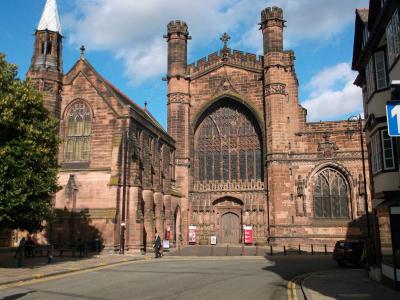
Chester Cathedral is a prominent Church of England cathedral and the mother church of the Diocese of Chester, located in the historic city of Chester. Originally the abbey church of a Benedictine monastery dedicated to Saint Werburgh, the cathedral is now dedicated to Christ and the Blessed Virgin Mary. Since 1541, it has served as the seat of the Bishop of Chester.
The cathedral is a Grade I listed building, renowned for its architectural significance. Construction spans several centuries, from the 10th to the early 16th century, showcasing a rich blend of Norman to Perpendicular English medieval styles. The site itself holds historical depth, with evidence suggesting Christian worship dating back to Roman times, possibly as a basilica under Legio XX Valeria Victrix during Chester’s era as a Roman stronghold.
The cathedral follows a traditional east-west cruciform layout, with an asymmetrical design reflecting its extensive history of modifications. A central tower rises above the crossing, while the west façade features contrasting towers from the Norman period and the early 16th century. The nave and choir are flanked by wide aisles, illuminated by clerestory and multi-light windows. The eastern end features an apse, a departure from the original symmetrical aisle arrangement.
To the north lie monastic buildings, including a cloister, refectory, and chapter house, which are also Grade I listed. These spaces reflect the cathedral’s monastic origins, providing insight into medieval ecclesiastical life.
The cathedral's storied past includes its role as a minster founded or refounded in 907, likely by Lady of the Mercians, to house the relics of Saint Werburgh. During the Middle Ages, it also became a site of veneration for Saint Barloc of Norbury. In 1057, Leofric, Earl of Mercia, and Lady Godiva restored the collegiate church before it was replaced by the current structure around 1090.
Chester Cathedral underwent extensive restoration in the 19th century, which included some controversial changes. A free-standing bell tower, a 20th-century addition, complements the historical architecture.
Today, Chester Cathedral is a hub of spiritual, cultural, and tourist activity. It hosts regular services, concerts, and exhibitions, attracting visitors from around the globe. The site is a living testament to Chester’s Roman, Saxon, and medieval heritage, making it a cornerstone of the city’s historical and architectural identity.
Why You Should Visit:
- To see one of the most popular tourist attractions in Chester
- To explore the beauty of medieval architecture
Tips:
The cafe and gift shop are open from 10 AM to 4 PM Monday through Saturday and from noon to 4 PM on Sundays. Visitors who wish to tour the interior of the cathedral must make advance arrangements for a 60-minute ground floor tour or a half-hour tour that ends with views from the cathedral's tower.
The cathedral is a Grade I listed building, renowned for its architectural significance. Construction spans several centuries, from the 10th to the early 16th century, showcasing a rich blend of Norman to Perpendicular English medieval styles. The site itself holds historical depth, with evidence suggesting Christian worship dating back to Roman times, possibly as a basilica under Legio XX Valeria Victrix during Chester’s era as a Roman stronghold.
The cathedral follows a traditional east-west cruciform layout, with an asymmetrical design reflecting its extensive history of modifications. A central tower rises above the crossing, while the west façade features contrasting towers from the Norman period and the early 16th century. The nave and choir are flanked by wide aisles, illuminated by clerestory and multi-light windows. The eastern end features an apse, a departure from the original symmetrical aisle arrangement.
To the north lie monastic buildings, including a cloister, refectory, and chapter house, which are also Grade I listed. These spaces reflect the cathedral’s monastic origins, providing insight into medieval ecclesiastical life.
The cathedral's storied past includes its role as a minster founded or refounded in 907, likely by Lady of the Mercians, to house the relics of Saint Werburgh. During the Middle Ages, it also became a site of veneration for Saint Barloc of Norbury. In 1057, Leofric, Earl of Mercia, and Lady Godiva restored the collegiate church before it was replaced by the current structure around 1090.
Chester Cathedral underwent extensive restoration in the 19th century, which included some controversial changes. A free-standing bell tower, a 20th-century addition, complements the historical architecture.
Today, Chester Cathedral is a hub of spiritual, cultural, and tourist activity. It hosts regular services, concerts, and exhibitions, attracting visitors from around the globe. The site is a living testament to Chester’s Roman, Saxon, and medieval heritage, making it a cornerstone of the city’s historical and architectural identity.
Why You Should Visit:
- To see one of the most popular tourist attractions in Chester
- To explore the beauty of medieval architecture
Tips:
The cafe and gift shop are open from 10 AM to 4 PM Monday through Saturday and from noon to 4 PM on Sundays. Visitors who wish to tour the interior of the cathedral must make advance arrangements for a 60-minute ground floor tour or a half-hour tour that ends with views from the cathedral's tower.

2) Chester Rows (must see)
Chester Rows, located along the city’s four main streets, is an iconic feature of Chester, offering a fascinating blend of medieval architecture and modern utility. Originally designed as buildings combining shops with living quarters, the Rows now host a mix of shops, restaurants, offices, and meeting rooms, making them a vibrant part of Chester’s cityscape.
The exact origins of Chester Rows remain a topic of speculation. Many believe they were constructed atop Roman ruins during the medieval period, possibly after a devastating fire in 1278 destroyed much of the city. The earliest documented reference to Chester Rows dates back to 1293. These structures served dual purposes in medieval times: the lower floors acted as business premises, while the upper levels provided private living accommodations.
The medieval Rows were ingeniously designed. The entrance led into a hall, often utilized as a shop. In cases where the hall was large, it could accommodate multiple businesses. The upper stories served as private residences, while additional domestic spaces, including separate kitchens, were located in backyards. These yards also contained cesspits for waste disposal and rubbish storage. Beneath the Rows were undercrofts-stone-lined, rib-vaulted crypts used for storing valuable goods or general storage.
Today, about 20 original Rows still stand, with Cowper House serving as the finest example of their architecture. Its six-bay undercroft with rib vaulting has earned it a Grade I listing on the National Heritage List for England.
Modern visitors to Chester Rows will find them transformed into bustling retail and leisure hubs, such as the Grosvenor Shopping Center. The pedestrian-friendly streets make it easy to explore the Rows, which remain one of Chester’s top tourist attractions. Whether you’re shopping, dining, or simply marveling at the historic architecture, Chester Rows offers an immersive journey into the past within a contemporary setting.
The exact origins of Chester Rows remain a topic of speculation. Many believe they were constructed atop Roman ruins during the medieval period, possibly after a devastating fire in 1278 destroyed much of the city. The earliest documented reference to Chester Rows dates back to 1293. These structures served dual purposes in medieval times: the lower floors acted as business premises, while the upper levels provided private living accommodations.
The medieval Rows were ingeniously designed. The entrance led into a hall, often utilized as a shop. In cases where the hall was large, it could accommodate multiple businesses. The upper stories served as private residences, while additional domestic spaces, including separate kitchens, were located in backyards. These yards also contained cesspits for waste disposal and rubbish storage. Beneath the Rows were undercrofts-stone-lined, rib-vaulted crypts used for storing valuable goods or general storage.
Today, about 20 original Rows still stand, with Cowper House serving as the finest example of their architecture. Its six-bay undercroft with rib vaulting has earned it a Grade I listing on the National Heritage List for England.
Modern visitors to Chester Rows will find them transformed into bustling retail and leisure hubs, such as the Grosvenor Shopping Center. The pedestrian-friendly streets make it easy to explore the Rows, which remain one of Chester’s top tourist attractions. Whether you’re shopping, dining, or simply marveling at the historic architecture, Chester Rows offers an immersive journey into the past within a contemporary setting.
3) Eastgate and Eastgate Clock (must see)
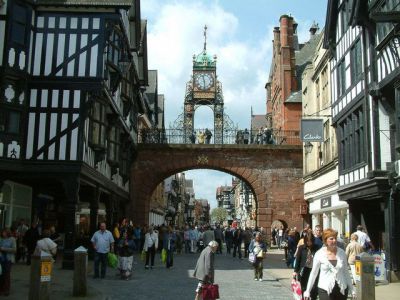
Eastgate and Eastgate Clock stand on the site of the original entrance gate to the Deva Victrix fortress which was a legionary fortress and town in the Roman province of Britannia. The fortress was built around the AD 70 as the Roman army advanced north against the Brigantes, and rebuilt completely over the next few decades.
The fortress was rebuilt in the early 3rd century. The Roman army probably remained at the fortress until the late 4th or early 5th century, then it fell into disuse. A civilian settlement, or canabae, grew around the fortress and it remained after the Romans departed, eventually becoming the present-day city of Chester.
The original gate is said to date to about AD 74. It was replaced in the 2nd century, and then again in the 14th century. The current Eastgate dates to 1768.
Eastgate Clock was added in 1899 in celebration of Queen Victoria's diamond jubilee. It was designed by architect John Douglas. It has a face on all four sides with the year 1897 and initials VR appearing above and below each clock face. A copper ogee cupola is mounted over the clock with a large weather vane.
It is said that Eastgate Clock is the second most photographed clock in England after Big Ben in London. Eastgate and Eastgate Clock are among the most well-known landmarks in the city. They were designated as a Grade I listed building in 1955.
The fortress was rebuilt in the early 3rd century. The Roman army probably remained at the fortress until the late 4th or early 5th century, then it fell into disuse. A civilian settlement, or canabae, grew around the fortress and it remained after the Romans departed, eventually becoming the present-day city of Chester.
The original gate is said to date to about AD 74. It was replaced in the 2nd century, and then again in the 14th century. The current Eastgate dates to 1768.
Eastgate Clock was added in 1899 in celebration of Queen Victoria's diamond jubilee. It was designed by architect John Douglas. It has a face on all four sides with the year 1897 and initials VR appearing above and below each clock face. A copper ogee cupola is mounted over the clock with a large weather vane.
It is said that Eastgate Clock is the second most photographed clock in England after Big Ben in London. Eastgate and Eastgate Clock are among the most well-known landmarks in the city. They were designated as a Grade I listed building in 1955.
4) Chester Roman Gardens (must see)
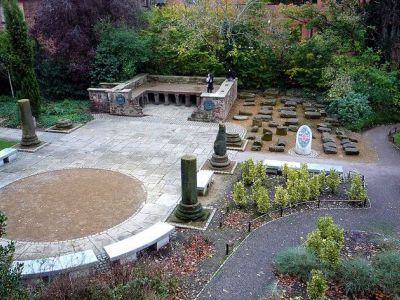
Chester Roman Gardens, created in the 1950s, is a public park that showcases an impressive collection of Roman building fragments originating from the fortress of Deva, a Roman military stronghold. The fragments on display include pieces from key structures like the main bath building (thermae) and the legionary headquarters (principia). While none of these relics were originally found on this site-located just outside the Roman fortress-many were uncovered during late 19th-century excavations across Chester.
The Gardens also provide an interesting intersection with the city's medieval history. The City Wall, adjacent to the Gardens, is a medieval extension of the Roman defenses. Notably, some portions of the wall bear evidence of repairs made after the Civil War siege of Chester in 1645. Parliamentary cannon fire breached this section of the walls during an intense four-hour bombardment on September 22, allowing for a hole wide enough for ten soldiers to pass through.
A highlight of the Roman Gardens is the reconstructed hypocaust, a Roman underfloor heating system. Using recovered stone pillars (pilae) from the thermae, the hypocaust illustrates the advanced engineering of Roman bathhouses. Built in AD 75, the main bath building in Chester spanned 85 square meters and featured underfloor heating, mosaic floors, and barrel-vaulted ceilings. Thought to serve as a luxurious club for Roman officers, the bathhouse included three bathing rooms-cold (frigidarium), warm (tepidarium), and hot (caldarium)-along with plunge baths, a courtyard, and an exercise hall.
The columns seen today in the Roman Gardens primarily come from the bathhouse’s exercise hall, where they once stood 6 meters tall, supporting the central structure. The largest column, however, originates from the assembly hall of the headquarters building (principia). Additional semi-circular coping stones, likely from the fortress wall parapet, were retrieved during repairs to the northern City Wall in the 19th century.
Chester Roman Gardens uniquely blend Roman innovation, medieval resilience, and industrial history, offering visitors a rich journey through time amidst beautifully landscaped grounds.
The Gardens also provide an interesting intersection with the city's medieval history. The City Wall, adjacent to the Gardens, is a medieval extension of the Roman defenses. Notably, some portions of the wall bear evidence of repairs made after the Civil War siege of Chester in 1645. Parliamentary cannon fire breached this section of the walls during an intense four-hour bombardment on September 22, allowing for a hole wide enough for ten soldiers to pass through.
A highlight of the Roman Gardens is the reconstructed hypocaust, a Roman underfloor heating system. Using recovered stone pillars (pilae) from the thermae, the hypocaust illustrates the advanced engineering of Roman bathhouses. Built in AD 75, the main bath building in Chester spanned 85 square meters and featured underfloor heating, mosaic floors, and barrel-vaulted ceilings. Thought to serve as a luxurious club for Roman officers, the bathhouse included three bathing rooms-cold (frigidarium), warm (tepidarium), and hot (caldarium)-along with plunge baths, a courtyard, and an exercise hall.
The columns seen today in the Roman Gardens primarily come from the bathhouse’s exercise hall, where they once stood 6 meters tall, supporting the central structure. The largest column, however, originates from the assembly hall of the headquarters building (principia). Additional semi-circular coping stones, likely from the fortress wall parapet, were retrieved during repairs to the northern City Wall in the 19th century.
Chester Roman Gardens uniquely blend Roman innovation, medieval resilience, and industrial history, offering visitors a rich journey through time amidst beautifully landscaped grounds.
5) Chester City Walls (must see)
The Chester City Walls were built by Romans when the Deva Victrix fortress was established between 70 and 80 ADE. The walls were built as defensive structures, but took more than 100 years to complete. The construction was carried out using sandstone and a wooden palisade.
The walls were expanded after the Norman conquest. The full circuit was completed in the mid-12th century. The walls were severely damaged during the English Civil War, after which they were no longer needed for defense.
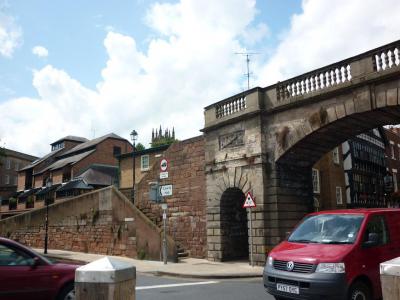
The city chose to repair the walls for recreational use in 1707. The gates were rebuilt with wider arches to allow more walkers to use the walls. A number of steps were also added to make walking easier for pedestrians. The Chester City Walls form a walkway of about 1.8 miles.
The city walls continue to be a primary tourist attraction in the city. This is largely due to the fact that the walls are the oldest in all of Britain. They are also the most complete and the longest city walls in the country.
Those who wish to walk along the walls can access them from one of four main gateways. These gateways are Northgate, Eastgate, Watergate and Bridgegate. The walls are also accessible by steps and some accessible ramps in the city. Visitors should plan their entry points in advance as water damage regularly causes closures of certain areas.
The city walls regularly undergo repair projects in order to maintain the safety of walkers.
Why You Should Visit:
- To see the largest and oldest city walls in Britain
- To have an excellent view of the city from multiple vantage points
Tips:
Chester Walls are open throughout the year with open and free access.
The walls were expanded after the Norman conquest. The full circuit was completed in the mid-12th century. The walls were severely damaged during the English Civil War, after which they were no longer needed for defense.
The city chose to repair the walls for recreational use in 1707. The gates were rebuilt with wider arches to allow more walkers to use the walls. A number of steps were also added to make walking easier for pedestrians. The Chester City Walls form a walkway of about 1.8 miles.
The city walls continue to be a primary tourist attraction in the city. This is largely due to the fact that the walls are the oldest in all of Britain. They are also the most complete and the longest city walls in the country.
Those who wish to walk along the walls can access them from one of four main gateways. These gateways are Northgate, Eastgate, Watergate and Bridgegate. The walls are also accessible by steps and some accessible ramps in the city. Visitors should plan their entry points in advance as water damage regularly causes closures of certain areas.
The city walls regularly undergo repair projects in order to maintain the safety of walkers.
Why You Should Visit:
- To see the largest and oldest city walls in Britain
- To have an excellent view of the city from multiple vantage points
Tips:
Chester Walls are open throughout the year with open and free access.
