Custom Walk in Kiev, Ukraine by ch039_dc3e77 created on 2026-04-28
Guide Location: Ukraine » Kiev
Guide Type: Custom Walk
# of Sights: 5
Tour Duration: 2 Hour(s)
Travel Distance: 4.6 Km or 2.9 Miles
Share Key: 25EBY
Guide Type: Custom Walk
# of Sights: 5
Tour Duration: 2 Hour(s)
Travel Distance: 4.6 Km or 2.9 Miles
Share Key: 25EBY
How It Works
Please retrieve this walk in the GPSmyCity app. Once done, the app will guide you from one tour stop to the next as if you had a personal tour guide. If you created the walk on this website or come to the page via a link, please follow the instructions below to retrieve the walk in the app.
Retrieve This Walk in App
Step 1. Download the app "GPSmyCity: Walks in 1K+ Cities" on Apple App Store or Google Play Store.



Step 2. In the GPSmyCity app, download(or launch) the guide "Kiev Map and Walking Tours".
Step 3. Tap the menu button located at upper right corner of the "Walks" screen and select "Retrieve custom walk". Enter the share key: 25EBY
1) Saint Sophia's Cathedral (must see)
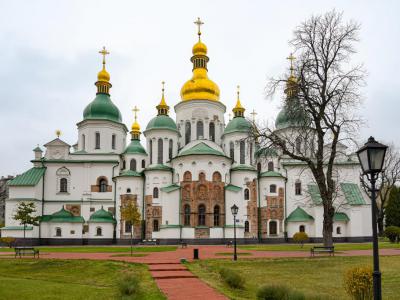
Saint Sophia’s Cathedral stands at the heart of the city's as one of the most magnificent testaments to the city’s medieval heritage and the spiritual power of Kyivan Rus’. Commissioned in the 11th century by Prince Yaroslav the Wise, the cathedral was conceived not only as a house of worship but also as a statement of cultural and political strength, marking Kyiv as a major center of Christianity in Eastern Europe. Named after the Hagia Sophia in Constantinople, it reflected the influence of Byzantine architecture while incorporating distinctly local artistic traditions.
The cathedral’s design follows the cross-in-square plan typical of Byzantine churches, crowned by multiple domes that once shimmered above the city’s skyline.
Inside, visitors are greeted by an astonishing array of mosaics and frescoes-over 3,000 square meters of them-depicting saints, angels, and biblical scenes in luminous gold, emerald, and cobalt tones. Among its most celebrated works is the Praying Virgin, a grand mosaic figure that dominates the apse, symbolizing divine protection over Kyiv.
As centuries passed, restorations and expansions transformed the cathedral’s silhouette. During the 17th and 18th centuries, under the influence of the Cossack Hetmanate, the structure was embellished with graceful Ukrainian Baroque elements-whitewashed walls, gilded domes, and ornate bell towers that softened the strict lines of its Byzantine core. Despite wars, fires, and the neglect of certain eras, a remarkable portion of the 11th-century frescoes and mosaics has survived, offering a rare glimpse into early medieval art.
The cathedral complex today encompasses bell towers, monastic quarters, and defensive walls, all enclosed within a peaceful courtyard that contrasts sharply with the city’s modern bustle outside. As a UNESCO World Heritage Site, Saint Sophia’s remains a destination where travelers can walk through nearly a thousand years of history, surrounded by the enduring colors, shapes, and symbols that once defined the spiritual life of Kyivan Rus’.
The cathedral’s design follows the cross-in-square plan typical of Byzantine churches, crowned by multiple domes that once shimmered above the city’s skyline.
Inside, visitors are greeted by an astonishing array of mosaics and frescoes-over 3,000 square meters of them-depicting saints, angels, and biblical scenes in luminous gold, emerald, and cobalt tones. Among its most celebrated works is the Praying Virgin, a grand mosaic figure that dominates the apse, symbolizing divine protection over Kyiv.
As centuries passed, restorations and expansions transformed the cathedral’s silhouette. During the 17th and 18th centuries, under the influence of the Cossack Hetmanate, the structure was embellished with graceful Ukrainian Baroque elements-whitewashed walls, gilded domes, and ornate bell towers that softened the strict lines of its Byzantine core. Despite wars, fires, and the neglect of certain eras, a remarkable portion of the 11th-century frescoes and mosaics has survived, offering a rare glimpse into early medieval art.
The cathedral complex today encompasses bell towers, monastic quarters, and defensive walls, all enclosed within a peaceful courtyard that contrasts sharply with the city’s modern bustle outside. As a UNESCO World Heritage Site, Saint Sophia’s remains a destination where travelers can walk through nearly a thousand years of history, surrounded by the enduring colors, shapes, and symbols that once defined the spiritual life of Kyivan Rus’.
2) The National Museum of Ukrainian History
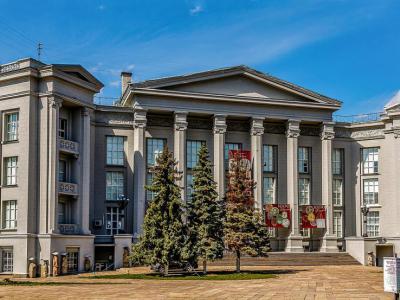
The National Museum of the History of Ukraine offers a comprehensive overview of the country’s past, from prehistoric times to the modern era. Founded in 1904, the museum began with private archaeological collections and gained government support in 1909. Its exhibits were moved to the Kyiv-Pechersk Lavra in 1935 and evacuated to Ufa during World War II, before returning to Kyiv in 1944, where it remains today on Starokyivska Hill.
Covering over 9,000 years of history, the museum traces Ukraine’s story from the Trypillya settlements (circa 7000 B.C.), through the Greek and Scythian periods, the rise of Kyivan Rus, the Cossack era, and the Soviet period, up to Ukraine’s recent independence. Modern exhibits explore the country’s political and cultural transformation, including displays on the Orange Revolution and contemporary national movements.
With more than 800,000 artifacts, the museum’s collections include rare coins, weaponry, manuscripts, folk costumes, and archaeological treasures. Highlights feature fine glass and porcelain, ethnographic items, and personal belongings of notable figures such as Serge Lifar, the celebrated Ukrainian ballet dancer known as “the god of dance.”
Renamed the National Museum of the History of Ukraine after independence in 1991, the institution adopted the name “MIST” in 2020-meaning “bridge” in Ukrainian-to reflect its mission of linking the nation’s past and future. Recognized as one of Kyiv’s leading cultural landmarks, the museum provides visitors with a deep understanding of Ukraine’s historical resilience and cultural heritage.
Covering over 9,000 years of history, the museum traces Ukraine’s story from the Trypillya settlements (circa 7000 B.C.), through the Greek and Scythian periods, the rise of Kyivan Rus, the Cossack era, and the Soviet period, up to Ukraine’s recent independence. Modern exhibits explore the country’s political and cultural transformation, including displays on the Orange Revolution and contemporary national movements.
With more than 800,000 artifacts, the museum’s collections include rare coins, weaponry, manuscripts, folk costumes, and archaeological treasures. Highlights feature fine glass and porcelain, ethnographic items, and personal belongings of notable figures such as Serge Lifar, the celebrated Ukrainian ballet dancer known as “the god of dance.”
Renamed the National Museum of the History of Ukraine after independence in 1991, the institution adopted the name “MIST” in 2020-meaning “bridge” in Ukrainian-to reflect its mission of linking the nation’s past and future. Recognized as one of Kyiv’s leading cultural landmarks, the museum provides visitors with a deep understanding of Ukraine’s historical resilience and cultural heritage.
3) Maidan Nezalezhnosti (Independence Square) (must see)
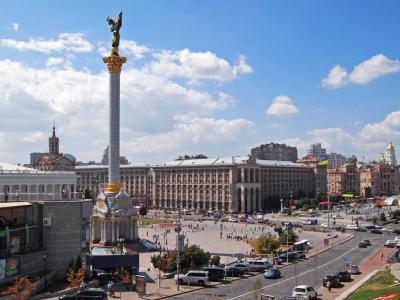
Maidan Nezalezhnosti, or Independence Square, sits at the very heart of the capital, forming the vibrant center of both civic life and the city’s cultural memory. Stretching along Khreshchatyk Street, it is one of Ukraine’s most recognizable public spaces, a place where locals and visitors alike come together to walk, meet, and experience the pulse of the capital.
The square’s history, however, extends far beyond its modern identity, evolving from a low-lying area on the city’s outskirts into the monumental and symbolic hub it is today.
The name “Maidan Nezalezhnosti” was officially adopted following Ukraine’s independence in 1991, reflecting the country’s new sovereignty and the square’s role as a national symbol. Over the decades, it became a stage for civic and political life, hosting everything from parades and public celebrations to pivotal moments of protest and revolution.
Most notably, it gained worldwide attention during the Orange Revolution of 2004, when citizens rallied peacefully to demand democratic reforms, and the Revolution of Dignity (also called Euromaidan) in 2013–2014, which saw massive gatherings calling for government accountability, civil rights, and alignment with European values. These events deeply shaped the square’s identity, turning it into a place of remembrance, resilience, and national pride.
Architecturally and culturally, the square is framed by fountains, sculptures, and the Independence Monument, a tall column crowned with the figure of Berehynia, a traditional guardian spirit in Ukrainian folklore. Surrounding the square are historic government buildings, shopping arcades, and cultural landmarks, which together create a sense of continuity between past and present. Since 2014, large-scale entertainment events and fairs have been moved to nearby locations, such as Sofiyivska Square, in recognition of Maidan’s significance as a memorial site.
The square’s history, however, extends far beyond its modern identity, evolving from a low-lying area on the city’s outskirts into the monumental and symbolic hub it is today.
The name “Maidan Nezalezhnosti” was officially adopted following Ukraine’s independence in 1991, reflecting the country’s new sovereignty and the square’s role as a national symbol. Over the decades, it became a stage for civic and political life, hosting everything from parades and public celebrations to pivotal moments of protest and revolution.
Most notably, it gained worldwide attention during the Orange Revolution of 2004, when citizens rallied peacefully to demand democratic reforms, and the Revolution of Dignity (also called Euromaidan) in 2013–2014, which saw massive gatherings calling for government accountability, civil rights, and alignment with European values. These events deeply shaped the square’s identity, turning it into a place of remembrance, resilience, and national pride.
Architecturally and culturally, the square is framed by fountains, sculptures, and the Independence Monument, a tall column crowned with the figure of Berehynia, a traditional guardian spirit in Ukrainian folklore. Surrounding the square are historic government buildings, shopping arcades, and cultural landmarks, which together create a sense of continuity between past and present. Since 2014, large-scale entertainment events and fairs have been moved to nearby locations, such as Sofiyivska Square, in recognition of Maidan’s significance as a memorial site.
4) Opera House (must see)
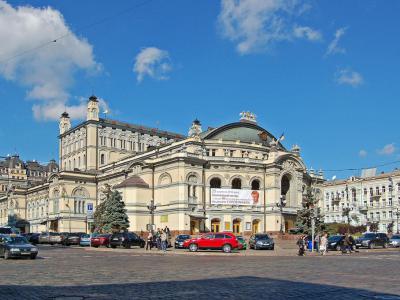
The Kyiv Opera House, formally known as the Taras Shevchenko National Opera and Ballet Theatre of Ukraine, stands as one of the city's most iconic cultural landmarks and a testament to the city’s artistic heritage. Founded in 1867, the opera company predates the current building, which was completed in 1901 after a devastating fire destroyed the earlier theater. Since then, the grand structure on Volodymyrska Street has become a defining part of Kyiv’s cultural and architectural landscape.
Its architect, Viktor Schröter, designed the building in the eclectic style popular in late 19th-century Europe, blending Neo-Renaissance and Neo-Baroque elements. The result is a façade adorned with elegant arches, intricate reliefs, and symbolic ornamentation. Inside, visitors are met with a lavish interior featuring marble staircases, gilded balconies, and a magnificent chandelier that bathes the hall in warm light.
The theater’s acoustics are world-renowned, carefully engineered to ensure that every note, whether sung by a soloist or played by the orchestra, reaches the audience with perfect clarity.
Throughout its history, the Kyiv Opera House has hosted an impressive range of performances and artists-from timeless operas like Carmen and La Traviata to contemporary ballets and original Ukrainian works. The stage has welcomed world-famous performers and nurtured generations of Ukrainian talent, becoming a cornerstone of the country’s performing arts.
The theater has also undergone several renovations, most notably in the 1980s, when the stage and orchestra pit were expanded to accommodate up to 100 musicians. Care was taken to preserve the opulent décor-murals, stucco details, and crystal chandeliers-while upgrading the technical infrastructure for modern productions. Today, audiences still gather beneath the soaring dome of the main auditorium, where history, culture, and artistry converge in every performance.
Its architect, Viktor Schröter, designed the building in the eclectic style popular in late 19th-century Europe, blending Neo-Renaissance and Neo-Baroque elements. The result is a façade adorned with elegant arches, intricate reliefs, and symbolic ornamentation. Inside, visitors are met with a lavish interior featuring marble staircases, gilded balconies, and a magnificent chandelier that bathes the hall in warm light.
The theater’s acoustics are world-renowned, carefully engineered to ensure that every note, whether sung by a soloist or played by the orchestra, reaches the audience with perfect clarity.
Throughout its history, the Kyiv Opera House has hosted an impressive range of performances and artists-from timeless operas like Carmen and La Traviata to contemporary ballets and original Ukrainian works. The stage has welcomed world-famous performers and nurtured generations of Ukrainian talent, becoming a cornerstone of the country’s performing arts.
The theater has also undergone several renovations, most notably in the 1980s, when the stage and orchestra pit were expanded to accommodate up to 100 musicians. Care was taken to preserve the opulent décor-murals, stucco details, and crystal chandeliers-while upgrading the technical infrastructure for modern productions. Today, audiences still gather beneath the soaring dome of the main auditorium, where history, culture, and artistry converge in every performance.
5) Bessarabsky Indoor Market
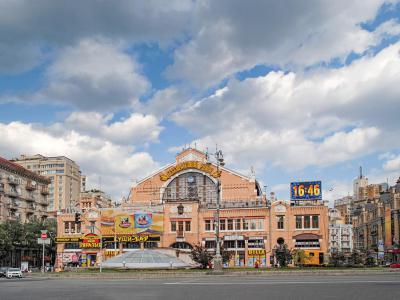
Besarabsky Market (also known as Bessarabian Market) is a historic indoor marketplace and cultural landmark, built between 1910 and 1912. At the time of its opening, it was considered one of the most modern trading facilities in the region, notable for featuring an early refrigeration system-an impressive innovation for its time.
The market's name honors the Bessarabian (known today as Moldovan) farmers who regularly came to sell their produce here long before the structure was built.
It was created to replace chaotic open-air stalls that once crowded the square, and has since withstood wars, political changes, and a near-demolition in the 1980s-remaining a central part of the city’s commercial life.
Today, Besarabsky Market is home to nearly 400 stalls offering a wide variety of goods-from fresh fruits, vegetables, and meats to beloved Ukrainian specialties like salo (which means cured pork fat) and red caviar. The bustling atmosphere and central location make it an ideal stop for sampling local tastes or picking up unique edible souvenirs.
Beyond food, the market also houses small service businesses including a barbershop, tailoring and shoe repair services, a wedding shop, and currency exchange.
The market's name honors the Bessarabian (known today as Moldovan) farmers who regularly came to sell their produce here long before the structure was built.
It was created to replace chaotic open-air stalls that once crowded the square, and has since withstood wars, political changes, and a near-demolition in the 1980s-remaining a central part of the city’s commercial life.
Today, Besarabsky Market is home to nearly 400 stalls offering a wide variety of goods-from fresh fruits, vegetables, and meats to beloved Ukrainian specialties like salo (which means cured pork fat) and red caviar. The bustling atmosphere and central location make it an ideal stop for sampling local tastes or picking up unique edible souvenirs.
Beyond food, the market also houses small service businesses including a barbershop, tailoring and shoe repair services, a wedding shop, and currency exchange.
