Custom Walk in Dublin, Ireland by emurphy_74f69 created on 2026-04-29
Guide Location: Ireland » Dublin
Guide Type: Custom Walk
# of Sights: 5
Tour Duration: 1 Hour(s)
Travel Distance: 2.1 Km or 1.3 Miles
Share Key: FFPSK
Guide Type: Custom Walk
# of Sights: 5
Tour Duration: 1 Hour(s)
Travel Distance: 2.1 Km or 1.3 Miles
Share Key: FFPSK
How It Works
Please retrieve this walk in the GPSmyCity app. Once done, the app will guide you from one tour stop to the next as if you had a personal tour guide. If you created the walk on this website or come to the page via a link, please follow the instructions below to retrieve the walk in the app.
Retrieve This Walk in App
Step 1. Download the app "GPSmyCity: Walks in 1K+ Cities" on Apple App Store or Google Play Store.



Step 2. In the GPSmyCity app, download(or launch) the guide "Dublin Map and Walking Tours".
Step 3. Tap the menu button located at upper right corner of the "Walks" screen and select "Retrieve custom walk". Enter the share key: FFPSK
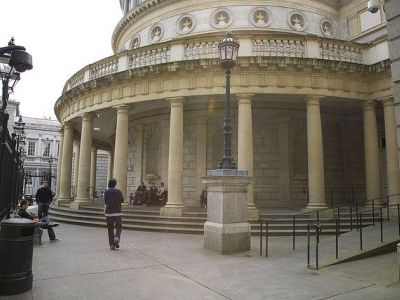
1) National Museum of Ireland – Archaeology (must see)
Dublin's got museums galore, but one particularly steals the limelight with its remarkable collection housed in a building that's practically the Irish version of the Roman Pantheon. This place is a treasure trove spanning every epoch of Irish history, showcasing prehistoric tools, Bronze Age jewelry, early Christian and medieval relics, Viking artifacts, 18th- and 19th-century craftsmanship, and even remarkably preserved bog bodies.
Among its prized possessions, the Tara Brooch, Ardagh Chalice, and Cross of Cong stand as shining examples of Celtic craftsmanship from different periods. Everything of archaeological significance discovered across the country finds its way here, creating a mesmerizing display under glass – including the unsettling bog bodies. Temporary exhibitions, ranging from ancient Egyptian to Roman and Byzantine artifacts, add depth to the already rich tapestry of Irish history.
Why You Should Visit:
While the prehistoric gold and ecclesiastical treasures steal the show, the entire collection weaves a compelling narrative of Irish archaeology and heritage.
Tip:
Don't miss the opportunity to explore the shop offering crafts inspired by the museum's exhibits and grab a bite at the quaint café nestled in the beautiful entrance rotunda.
Among its prized possessions, the Tara Brooch, Ardagh Chalice, and Cross of Cong stand as shining examples of Celtic craftsmanship from different periods. Everything of archaeological significance discovered across the country finds its way here, creating a mesmerizing display under glass – including the unsettling bog bodies. Temporary exhibitions, ranging from ancient Egyptian to Roman and Byzantine artifacts, add depth to the already rich tapestry of Irish history.
Why You Should Visit:
While the prehistoric gold and ecclesiastical treasures steal the show, the entire collection weaves a compelling narrative of Irish archaeology and heritage.
Tip:
Don't miss the opportunity to explore the shop offering crafts inspired by the museum's exhibits and grab a bite at the quaint café nestled in the beautiful entrance rotunda.
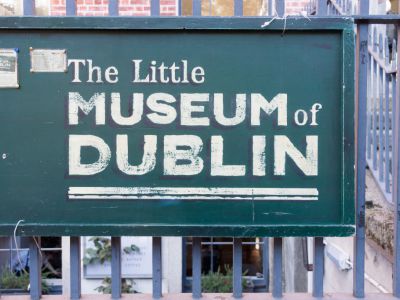
2) Little Museum of Dublin (must see)
Squeezed snugly into the confines of a quaint Georgian house, the Little Museum of Dublin displays an impressive collection of over 5,000 artifacts and oddities that narrate the social saga of 20th-century Dublin. It's a whirlwind journey that kicks off with a snapshot of Queen Victoria's grand entrance into Dún Laoghaire in 1900 and continues through a century's worth of transformations in the city. Along the way, visitors are treated to a mishmash of historical tidbits, from newspaper clippings to vintage photos, children's playthings, posters, ticket stubs, and even personal letters – all generously lent by the fine folk of Dublin since the museum's inception in 2011.
The ever-changing lineup of temporary exhibits tackles an eclectic array of topics, from the Irish exodus to America and the struggles of tenement life in 1913, to the formative years of U2 and the ever-evolving street style of Dublin over the decades. And if that's not enough to pique your interest, regular lectures delve deep into Dublin's cultural veins, exploring everything from literature and art to the city's musical heritage and beyond.
Tip:
For those keen on immersing themselves further into the Dublin experience, there's the museum's delightful "City of a Thousand Welcomes" initiative. Here, visitors can hop online and sign up for a chance to mingle with locals over a free drink, exchanging stories and insights to gain a firsthand understanding of the city's heartbeat.
The ever-changing lineup of temporary exhibits tackles an eclectic array of topics, from the Irish exodus to America and the struggles of tenement life in 1913, to the formative years of U2 and the ever-evolving street style of Dublin over the decades. And if that's not enough to pique your interest, regular lectures delve deep into Dublin's cultural veins, exploring everything from literature and art to the city's musical heritage and beyond.
Tip:
For those keen on immersing themselves further into the Dublin experience, there's the museum's delightful "City of a Thousand Welcomes" initiative. Here, visitors can hop online and sign up for a chance to mingle with locals over a free drink, exchanging stories and insights to gain a firsthand understanding of the city's heartbeat.
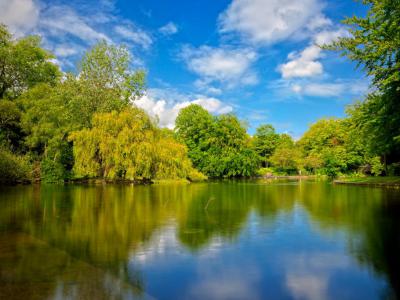
3) St. Stephen's Green (must see)
Not in the mood to play the "wait-for-a-table" game downtown? No problem. Just grab yourself a sandwich, a drink, and a little bit of rebellious charm, then head south to St. Stephen’s Green - Dublin’s answer to stress, queues, and too many menus.
Sprawling across 22 leafy acres at the foot of Grafton Street, this Georgian-era park is where grazing sheep once roamed - before it got a serious glow-up in the 18th century and became the place to see and be seen. By the late 1800s, it was given a full Victorian makeover, complete with manicured lawns, flowerbeds that would shame your grandma’s garden, shady tree-lined walks, fountains doing their best impression of zen, and benches galore, all circling an elegant lake where ducks reign supreme. Summer bonus: live music sometimes pops up in the open air. Feel free to bring snacks; they won’t judge...
This green rectangle of calm is ringed by fancy Georgian houses and dotted with more statues and memorials than you can count on two hands - or even four if you’re multitasking. Sir Arthur Guinness (yes, that same Guinness fellow) has pride of place for gifting the land to the public. Theobald Wolfe Tone, Irish revolutionary, is encircled by towering stones locals affectionately call “Tonehenge.” There’s also the Three Fates - a thank-you from post-WWII Germany for Ireland’s help with war orphans - and striking sculptures of Robert Emmet and James Joyce, the latter possibly judging your inner monologue.
And if you’re into poignant history, the park has that too. The Yeats Memorial Garden features work by Henry Moore; the Fusiliers Arch recalls fallen soldiers of the Boer War; a nod to Jeremiah O'Donovan Rossa of the Irish Republican Brotherhood; and a famine memorial quietly reminds us of the devastating years between 1845 and 1850.
Pro tip:
Before or after your stroll, check out the charming cafés just outside the gates. Cake, coffee, and green views - it’s the holy trinity of a perfect Dublin afternoon.
Sprawling across 22 leafy acres at the foot of Grafton Street, this Georgian-era park is where grazing sheep once roamed - before it got a serious glow-up in the 18th century and became the place to see and be seen. By the late 1800s, it was given a full Victorian makeover, complete with manicured lawns, flowerbeds that would shame your grandma’s garden, shady tree-lined walks, fountains doing their best impression of zen, and benches galore, all circling an elegant lake where ducks reign supreme. Summer bonus: live music sometimes pops up in the open air. Feel free to bring snacks; they won’t judge...
This green rectangle of calm is ringed by fancy Georgian houses and dotted with more statues and memorials than you can count on two hands - or even four if you’re multitasking. Sir Arthur Guinness (yes, that same Guinness fellow) has pride of place for gifting the land to the public. Theobald Wolfe Tone, Irish revolutionary, is encircled by towering stones locals affectionately call “Tonehenge.” There’s also the Three Fates - a thank-you from post-WWII Germany for Ireland’s help with war orphans - and striking sculptures of Robert Emmet and James Joyce, the latter possibly judging your inner monologue.
And if you’re into poignant history, the park has that too. The Yeats Memorial Garden features work by Henry Moore; the Fusiliers Arch recalls fallen soldiers of the Boer War; a nod to Jeremiah O'Donovan Rossa of the Irish Republican Brotherhood; and a famine memorial quietly reminds us of the devastating years between 1845 and 1850.
Pro tip:
Before or after your stroll, check out the charming cafés just outside the gates. Cake, coffee, and green views - it’s the holy trinity of a perfect Dublin afternoon.
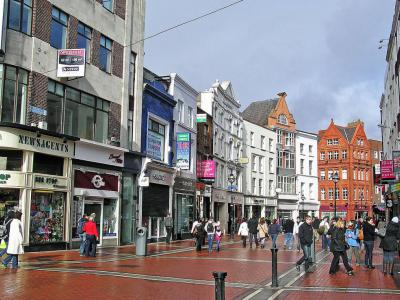
4) Grafton Street (must see)
Finding yourself in Grafton Street, you may feel like the spirit of Dublin is pulling on your sleeve, jingling in your pocket, and occasionally singing you a love song... This iconic pedestrian paradise stretches from the scholarly shadows of Trinity College to the leafy calm of St. Stephen’s Green, and indeed, this isn’t just a path, it’s a performance.
Named after the first Duke of Grafton (who likely never imagined his name would end up on shopping bags and street musician setlists), the street started off as a sleepy lane in the early 1700s. Fast forward a century or three, and it’s become Dublin’s unofficial catwalk for window shoppers, chocolate lovers, and busking hopefuls.
When cars were banned in 1982, Grafton Street didn’t merely sigh in relief - it bloomed. With its redbrick paving and carefree foot traffic, it turned into the city’s beating retail heart. Here, luxury and tradition shake hands daily: Brown Thomas, Dublin’s answer to London's Harrods, anchors the street, with stalwarts like Marks & Spencer, Weir & Sons, and the ever-sparkling Arnotts not far behind.
For a breather, duck into Bewley’s Oriental Café, where stained glass windows and velvet booths are the warm-up act to a killer cappuccino. Or satisfy your sweet side at Butlers Chocolate Café, where the drinks come with bonus truffles and a small dose of serotonin.
But shopping is just the start. Grafton Street is basically a stage where no one auditions - they just show up. Buskers, living statues, folk duos, jazz guitarists, and the occasional flaming juggler transform this strip into the friendliest street theatre around. In fact, singer-songwriters like Glen Hansard and Damien Rice cut their teeth right here, strumming before they were streaming.
And if the crowds get too thick, just take a sidestep. South Anne Street leads you into a more intimate rhythm, and the Powerscourt Townhouse Centre - once an 18th-century mansion, now a boutique arcade - offers elegance, quiet, and espresso-fueled calm.
So, whether you’re here to spend, snack, strum, or stare - Grafton Street is Dublin at its most charmingly alive. Just be warned: you may come for the shops, but you’ll leave humming a tune you didn’t know you knew...
Named after the first Duke of Grafton (who likely never imagined his name would end up on shopping bags and street musician setlists), the street started off as a sleepy lane in the early 1700s. Fast forward a century or three, and it’s become Dublin’s unofficial catwalk for window shoppers, chocolate lovers, and busking hopefuls.
When cars were banned in 1982, Grafton Street didn’t merely sigh in relief - it bloomed. With its redbrick paving and carefree foot traffic, it turned into the city’s beating retail heart. Here, luxury and tradition shake hands daily: Brown Thomas, Dublin’s answer to London's Harrods, anchors the street, with stalwarts like Marks & Spencer, Weir & Sons, and the ever-sparkling Arnotts not far behind.
For a breather, duck into Bewley’s Oriental Café, where stained glass windows and velvet booths are the warm-up act to a killer cappuccino. Or satisfy your sweet side at Butlers Chocolate Café, where the drinks come with bonus truffles and a small dose of serotonin.
But shopping is just the start. Grafton Street is basically a stage where no one auditions - they just show up. Buskers, living statues, folk duos, jazz guitarists, and the occasional flaming juggler transform this strip into the friendliest street theatre around. In fact, singer-songwriters like Glen Hansard and Damien Rice cut their teeth right here, strumming before they were streaming.
And if the crowds get too thick, just take a sidestep. South Anne Street leads you into a more intimate rhythm, and the Powerscourt Townhouse Centre - once an 18th-century mansion, now a boutique arcade - offers elegance, quiet, and espresso-fueled calm.
So, whether you’re here to spend, snack, strum, or stare - Grafton Street is Dublin at its most charmingly alive. Just be warned: you may come for the shops, but you’ll leave humming a tune you didn’t know you knew...
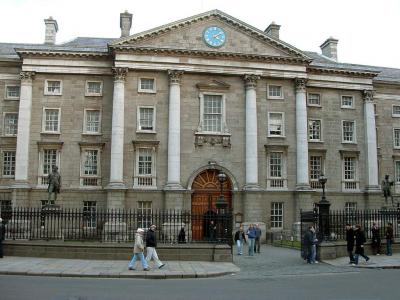
5) Trinity College (must see)
Tucked right into Dublin’s beating heart, Trinity College is both a university and a scene-stealing diva of stone and legacy wrapped into one. Founded in 1592 by none other than Queen Elizabeth I (because what’s an empire without a bit of academic propaganda?), it was originally meant to steer Irish students away from those pesky continental Catholic ideas. Over the centuries that followed, this world-renowned institution has churned out everyone from politicians and philosophers to literary legends like Swift, Wilde, and Beckett-talk about a star-studded alumni list...
Planted on College Green like a scholarly fortress, Trinity greets you with serious old-school charm and just enough mystery. Depending on the time of year-or the mood of the security gates-you might not get full access, but the west front gate usually plays nice. Stroll through and you’ll land in Parliament Square, where symmetry reigns supreme. The Chapel and Examination Hall face off across a lawn that occasionally moonlights as a concert venue.
Keep wandering further and you’ll find the Rubrics, the college’s oldest surviving building, all red brick and 18th-century vibes. But let’s be honest-the real showstopper here is the Old Library. Not only does it smell like intellectual dust and old wisdom, it houses the legendary Book of Kells, a 9th-century masterpiece of illuminated manuscript art that’s basically medieval bling.
Also, beyond the Old Library is Fellows' Square, where old meets new. On one side: the modernist Berkeley Library and the Arts Building. On the other: the Douglas Hyde Gallery, serving up contemporary Irish and international art with a side of cool detachment.
And just when you think Trinity’s done impressing, you stumble into New Square and meet the School of Engineering. Its home is the Museum Building-an absolute fever dream of Venetian Gothic architecture, decked out with stone-carved animals, twisting leaves, and enough floral motifs to make a Victorian jealous.
In short, Trinity College campus is a storybook that you can walk through, with a little drama, a lot of history, and just the right amount of academic swagger...
Planted on College Green like a scholarly fortress, Trinity greets you with serious old-school charm and just enough mystery. Depending on the time of year-or the mood of the security gates-you might not get full access, but the west front gate usually plays nice. Stroll through and you’ll land in Parliament Square, where symmetry reigns supreme. The Chapel and Examination Hall face off across a lawn that occasionally moonlights as a concert venue.
Keep wandering further and you’ll find the Rubrics, the college’s oldest surviving building, all red brick and 18th-century vibes. But let’s be honest-the real showstopper here is the Old Library. Not only does it smell like intellectual dust and old wisdom, it houses the legendary Book of Kells, a 9th-century masterpiece of illuminated manuscript art that’s basically medieval bling.
Also, beyond the Old Library is Fellows' Square, where old meets new. On one side: the modernist Berkeley Library and the Arts Building. On the other: the Douglas Hyde Gallery, serving up contemporary Irish and international art with a side of cool detachment.
And just when you think Trinity’s done impressing, you stumble into New Square and meet the School of Engineering. Its home is the Museum Building-an absolute fever dream of Venetian Gothic architecture, decked out with stone-carved animals, twisting leaves, and enough floral motifs to make a Victorian jealous.
In short, Trinity College campus is a storybook that you can walk through, with a little drama, a lot of history, and just the right amount of academic swagger...
