Custom Walk in Fort Worth, Texas by sinclaref_963562 created on 2026-04-30
Guide Location: USA » Fort Worth
Guide Type: Custom Walk
# of Sights: 5
Tour Duration: 2 Hour(s)
Travel Distance: 5.2 Km or 3.2 Miles
Share Key: 9ADRC
Guide Type: Custom Walk
# of Sights: 5
Tour Duration: 2 Hour(s)
Travel Distance: 5.2 Km or 3.2 Miles
Share Key: 9ADRC
How It Works
Please retrieve this walk in the GPSmyCity app. Once done, the app will guide you from one tour stop to the next as if you had a personal tour guide. If you created the walk on this website or come to the page via a link, please follow the instructions below to retrieve the walk in the app.
Retrieve This Walk in App
Step 1. Download the app "GPSmyCity: Walks in 1K+ Cities" on Apple App Store or Google Play Store.



Step 2. In the GPSmyCity app, download(or launch) the guide "Fort Worth Map and Walking Tours".
Step 3. Tap the menu button located at upper right corner of the "Walks" screen and select "Retrieve custom walk". Enter the share key: 9ADRC
1) Billy Bob's Texas
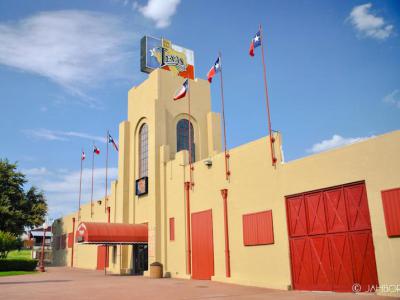
Billy Bob’s Texas, once used for prize livestock during the Fort Worth Stock Show and later converted into an airplane factory during World War II, the building was transformed into what is now referred to as the world’s largest honky tonk. Billy Bob’s has hosted live music, professional bull riding, and various other entertainment for more than four decades.
The venue features a concert stage, large dance floor, bar and restaurant, pool hall, arcade, gift shop, and an indoor dirt arena used for bull riding events. Performances range from country music to occasional rock, pop, and mixed martial arts shows. A permanent memorabilia collection lines the space, with a Wall of Fame featuring handprints of entertainers such as Johnny Cash, Ringo Starr, and Willie Nelson.
Billy Bob’s has received repeated recognition as “Country Music Club of the Year” from major industry associations. One of its most well-known moments occurred in 1983, when Merle Haggard bought a round of drinks for the entire audience-earning a Guinness World Record.
The venue features a concert stage, large dance floor, bar and restaurant, pool hall, arcade, gift shop, and an indoor dirt arena used for bull riding events. Performances range from country music to occasional rock, pop, and mixed martial arts shows. A permanent memorabilia collection lines the space, with a Wall of Fame featuring handprints of entertainers such as Johnny Cash, Ringo Starr, and Willie Nelson.
Billy Bob’s has received repeated recognition as “Country Music Club of the Year” from major industry associations. One of its most well-known moments occurred in 1983, when Merle Haggard bought a round of drinks for the entire audience-earning a Guinness World Record.
2) Fort Worth Stockyards National Historic District (must see)
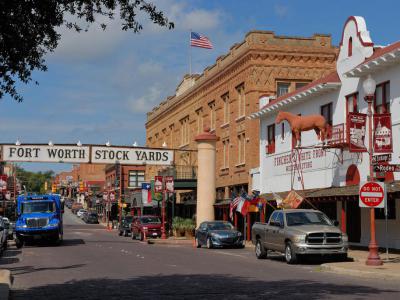
The Fort Worth Stockyards National Historic District, beginning in 1866 as a livestock market and bolstered by railroad access a decade later, evolved into a major cattle hub by the early 20th century. The Fort Worth Union Stockyards opened in 1890, followed by meatpacking operations from companies like Swift and Armour. By 1907, over a million cattle were traded annually. Though the industry declined by the mid-20th century, the area’s architectural core-including the Livestock Exchange Building, Cowtown Coliseum, and the Stockyards Hotel-remains intact, earning a place on the National Register of Historic Places in 1976.
The modern-day Stockyards district is centered on Western retail, food, and entertainment venues. Historic saloons, artisan bootmakers, and rodeo arenas offer visitors a chance to experience aspects of Texas’ cattle-driving heritage. The Cowtown Coliseum hosts weekly rodeos, and the daily cattle drives continue as a symbolic nod to the region’s ranching past. Horseback trail rides begin at the Stockyards Stables, while attractions like the Cowtown Cattlepen Maze and petting corral appeal to families. Museums such as the Texas Cowboy Hall of Fame and the Bull Riding Hall of Fame highlight rodeo culture and Western traditions.
Beyond livestock and rodeo, the district includes a mix of live music, Western performance, and heritage activities. The Cowtown Opry features musicians preserving Texas’ Western swing legacy, and the Second Rodeo Brewing venue hosts performances alongside house-made beer and open-air seating. The Grapevine Vintage Railroad connects the Stockyards to nearby communities, extending its reach as a heritage site. Visitors can also explore local history through the North Fort Worth Historical Society or take part in walking tours, including those focused on reported ghost sightings.
The modern-day Stockyards district is centered on Western retail, food, and entertainment venues. Historic saloons, artisan bootmakers, and rodeo arenas offer visitors a chance to experience aspects of Texas’ cattle-driving heritage. The Cowtown Coliseum hosts weekly rodeos, and the daily cattle drives continue as a symbolic nod to the region’s ranching past. Horseback trail rides begin at the Stockyards Stables, while attractions like the Cowtown Cattlepen Maze and petting corral appeal to families. Museums such as the Texas Cowboy Hall of Fame and the Bull Riding Hall of Fame highlight rodeo culture and Western traditions.
Beyond livestock and rodeo, the district includes a mix of live music, Western performance, and heritage activities. The Cowtown Opry features musicians preserving Texas’ Western swing legacy, and the Second Rodeo Brewing venue hosts performances alongside house-made beer and open-air seating. The Grapevine Vintage Railroad connects the Stockyards to nearby communities, extending its reach as a heritage site. Visitors can also explore local history through the North Fort Worth Historical Society or take part in walking tours, including those focused on reported ghost sightings.
3) Cowtown Coliseum
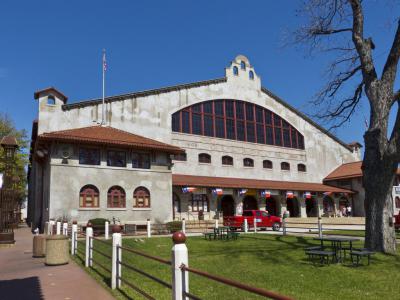
Cowtown Coliseum, built in 1908 and originally known as the Grand Coliseum, holds the distinction of being the first indoor arena in the United States designed for rodeo events. It has served as a longstanding venue for Western sports, live music, and local gatherings. The building was refurbished in 1986, preserving its early 20th-century architecture while adapting it for modern use. Over the decades, the Coliseum has hosted a range of public figures and performers, including presidential addresses from Theodore Roosevelt and Jimmy Carter, and concerts by Elvis Presley and Ike & Tina Turner.
The Coliseum is best known today for the Stockyards Championship Rodeo, held almost every Friday and Saturday since 1992. It also hosts competitions affiliated with the PRCA, Bill Pickett Invitational Rodeo, WRCA, and Bulls, Bands & Barrels. Bull riding plays a significant role in its programming: the PBR’s first event was held here in 1993.
In addition to its event schedule, Cowtown Coliseum houses the Texas Rodeo Cowboy Hall of Fame and the Bull Riding Hall of Fame. The arena also occasionally hosts concerts and local sports games, maintaining a varied year-round calendar.
The Coliseum is best known today for the Stockyards Championship Rodeo, held almost every Friday and Saturday since 1992. It also hosts competitions affiliated with the PRCA, Bill Pickett Invitational Rodeo, WRCA, and Bulls, Bands & Barrels. Bull riding plays a significant role in its programming: the PBR’s first event was held here in 1993.
In addition to its event schedule, Cowtown Coliseum houses the Texas Rodeo Cowboy Hall of Fame and the Bull Riding Hall of Fame. The arena also occasionally hosts concerts and local sports games, maintaining a varied year-round calendar.
4) Sundance Square (must see)
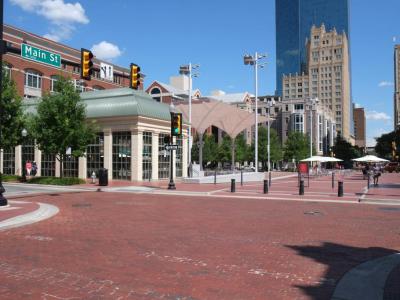
Sundance Square is a busy and bustling district located in downtown Forth Worth. It is a popular place for tourists because of ample entertainment, shopping, food and nightlife. It gets its name from Butch Cassidy's sidekick, the Sundance Kid. The two, along with their gang, would spend time in the area as they were evading the law.
Shoppers at Sundance Square will find more than a dozen unique boutiques to patronize. These shops sell clothing, jewelry, accessories, food items, tobacco and art. After perusing the shops, hungry tourists can find a restaurant that is guaranteed to please. Chain restaurants and local flavors are spread through Sundance Square.
There is no shortage of entertainment in this district. Sundance Square is the home of Bass Performance Hall, which offers concerts and theatre performances. Other entertainment venues include a jazz hall, comedy clubs, a movie theatre and a cigar bar, among others.
History lovers will enjoy seeing the former downtown Woolworth's Building, the Knights of Pythias Building and the Burk Burnett Building. All of these sites are listed on the National Register of Historic Places.
Shoppers at Sundance Square will find more than a dozen unique boutiques to patronize. These shops sell clothing, jewelry, accessories, food items, tobacco and art. After perusing the shops, hungry tourists can find a restaurant that is guaranteed to please. Chain restaurants and local flavors are spread through Sundance Square.
There is no shortage of entertainment in this district. Sundance Square is the home of Bass Performance Hall, which offers concerts and theatre performances. Other entertainment venues include a jazz hall, comedy clubs, a movie theatre and a cigar bar, among others.
History lovers will enjoy seeing the former downtown Woolworth's Building, the Knights of Pythias Building and the Burk Burnett Building. All of these sites are listed on the National Register of Historic Places.
5) Jubilee Theatre
Founded in 1981 by Rudy and Marian Eastman, Jubilee Theatre was established to preserve and present the traditions and experiences of African Americans through stage performance. Initially operating in temporary venues across Fort Worth, the company found its first space in 1987. Over the years, the theatre became known for producing original musicals and expanding its programming, including educational outreach initiatives that reached tens of thousands of students.
Jubilee Theatre has consistently developed its operations and artistic output, changing to a professional Actors’ Equity theatre in the mid-1990s and undertaking major renovations in 2005 that increased seating and improved facilities. Under successive artistic directors, including Tre Garrett, William Earl Ray, and current director D. Wambui Richardson, Jubilee has continued to stage new works and regional premieres that reflect the African American experience.
Jubilee Theatre has consistently developed its operations and artistic output, changing to a professional Actors’ Equity theatre in the mid-1990s and undertaking major renovations in 2005 that increased seating and improved facilities. Under successive artistic directors, including Tre Garrett, William Earl Ray, and current director D. Wambui Richardson, Jubilee has continued to stage new works and regional premieres that reflect the African American experience.
