Custom Walk in Siem Reap, Cambodia by ronald_diggs_f85e67 created on 2026-05-06
Guide Location: Cambodia » Siem Reap
Guide Type: Custom Walk
# of Sights: 10
Tour Duration: 11 Hour(s)
Travel Distance: 31.7 Km or 19.7 Miles
Share Key: WYWAG
Guide Type: Custom Walk
# of Sights: 10
Tour Duration: 11 Hour(s)
Travel Distance: 31.7 Km or 19.7 Miles
Share Key: WYWAG
How It Works
Please retrieve this walk in the GPSmyCity app. Once done, the app will guide you from one tour stop to the next as if you had a personal tour guide. If you created the walk on this website or come to the page via a link, please follow the instructions below to retrieve the walk in the app.
Retrieve This Walk in App
Step 1. Download the app "GPSmyCity: Walks in 1K+ Cities" on Apple App Store or Google Play Store.



Step 2. In the GPSmyCity app, download(or launch) the guide "Siem Reap Map and Walking Tours".
Step 3. Tap the menu button located at upper right corner of the "Walks" screen and select "Retrieve custom walk". Enter the share key: WYWAG
1) Terrace of the Elephants
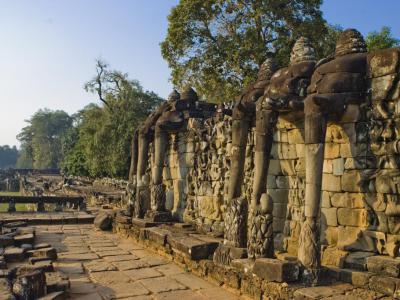
The Terrace of the Elephants is a remarkable archaeological site within the vast temple complex. It was an essential part of the grandeur of Angkor's king, Jayavarman VII's reign, serving multiple purposes during that time.
The terrace was originally constructed as a platform for King Jayavarman VII to observe and greet his victorious returning army. It was strategically attached to the palace of Phimeanakas, although only a few ruins of the once magnificent palace remain today. The majority of the original structure was built using organic materials, which have long since decayed, leaving behind the foundation platforms of the complex.
The name "Terrace of the Elephants" was derived from the remarkable carvings of elephants adorning its eastern face. These intricate carvings pay homage to the significance of elephants in the Khmer culture, symbolizing power, strength, and regal magnificence.
Stretching an impressive 350 meters in length, the Terrace of the Elephants served as a grand reviewing stand for various public ceremonies. It also functioned as the base for the king's grand audience hall, where he held important meetings and events. The terrace featured five outworks extending towards the Central Square - three in the center and one at each end, contributing to its monumental scale and architectural grandeur.
The middle section of the retaining wall was adorned with life-sized sculptures of mythical bird-like creatures and lions, adding an air of mythological significance to the site. Towards either end of the terrace, visitors can witness the renowned parade of elephants depicted in the carvings, complete with their elephant handlers.
The terrace was originally constructed as a platform for King Jayavarman VII to observe and greet his victorious returning army. It was strategically attached to the palace of Phimeanakas, although only a few ruins of the once magnificent palace remain today. The majority of the original structure was built using organic materials, which have long since decayed, leaving behind the foundation platforms of the complex.
The name "Terrace of the Elephants" was derived from the remarkable carvings of elephants adorning its eastern face. These intricate carvings pay homage to the significance of elephants in the Khmer culture, symbolizing power, strength, and regal magnificence.
Stretching an impressive 350 meters in length, the Terrace of the Elephants served as a grand reviewing stand for various public ceremonies. It also functioned as the base for the king's grand audience hall, where he held important meetings and events. The terrace featured five outworks extending towards the Central Square - three in the center and one at each end, contributing to its monumental scale and architectural grandeur.
The middle section of the retaining wall was adorned with life-sized sculptures of mythical bird-like creatures and lions, adding an air of mythological significance to the site. Towards either end of the terrace, visitors can witness the renowned parade of elephants depicted in the carvings, complete with their elephant handlers.
2) Baphuon
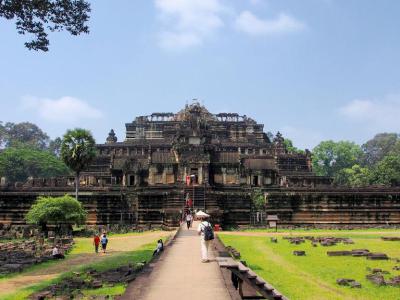
Baphuon is a magnificent temple that stands as a testament to the grandeur and architectural brilliance of the Khmer Empire. It was built in the mid-11th century during the reign of Udayadityavarman II as the state temple dedicated to the Hindu God Shiva.
The temple's design is that of a three-tiered temple mountain, commonly associated with the Baphuon style, which makes it an archetype of this architectural tradition. The temple's imposing presence and sacred purpose made it a significant religious and cultural center during its time.
With its base measuring 120 meters east-west and 100 meters north-south, Baphuon once stood an impressive 34 meters tall without its tower. If the tower were still intact, the temple's height would have reached approximately 50 meters, making it a colossal structure that impressed visitors throughout history.
During the late 13th century, the temple's appearance captivated Temür Khan's envoy, Chou Ta-kuan, during his visit from 1296 to 1297. He described Baphuon as the "Tower of Bronze," a truly astonishing spectacle with more than ten chambers at its base.
In the late 15th century, the temple underwent significant changes when it was converted to a Buddhist temple. A massive statue of a reclining Buddha, standing 9 meters tall and extending 70 meters in length, was constructed on the second level of the temple's west side. To make room for this immense statue, the 8-meter tower above was likely demolished, which explains its absence today.
The construction of Baphuon posed challenges due to its immense size and the land on which it was built, filled with sand. This instability caused portions of the temple to collapse throughout its history, and by the time the reclining Buddha was added, significant sections had already crumbled.
The temple's design is that of a three-tiered temple mountain, commonly associated with the Baphuon style, which makes it an archetype of this architectural tradition. The temple's imposing presence and sacred purpose made it a significant religious and cultural center during its time.
With its base measuring 120 meters east-west and 100 meters north-south, Baphuon once stood an impressive 34 meters tall without its tower. If the tower were still intact, the temple's height would have reached approximately 50 meters, making it a colossal structure that impressed visitors throughout history.
During the late 13th century, the temple's appearance captivated Temür Khan's envoy, Chou Ta-kuan, during his visit from 1296 to 1297. He described Baphuon as the "Tower of Bronze," a truly astonishing spectacle with more than ten chambers at its base.
In the late 15th century, the temple underwent significant changes when it was converted to a Buddhist temple. A massive statue of a reclining Buddha, standing 9 meters tall and extending 70 meters in length, was constructed on the second level of the temple's west side. To make room for this immense statue, the 8-meter tower above was likely demolished, which explains its absence today.
The construction of Baphuon posed challenges due to its immense size and the land on which it was built, filled with sand. This instability caused portions of the temple to collapse throughout its history, and by the time the reclining Buddha was added, significant sections had already crumbled.
3) Angkor Thom (must see)
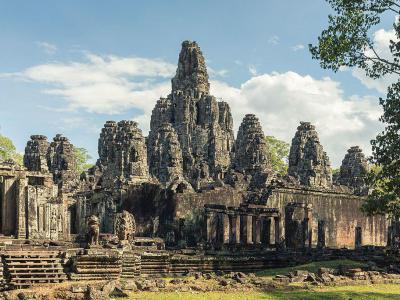
Angkor Thom, also known as Nokor Thom, is a historic city located in what is now Cambodia. It was the final and longest-lasting capital of the ancient Khmer Empire and was founded in the late 12th century by King Jayavarman VII.
The city spans about 9 square kilometers and includes numerous significant structures from both its own time and earlier periods. Central to Angkor Thom is the Bayon Temple, built by King Jayavarman, with other important sites nearby. It's a key destination for travelers visiting Southeast Asia.
The city's architecture is marked by the Bayon style, characterized by its grand scale, use of laterite (a type of stone), and distinctive towers with faces at the city's entrances, as well as statues of giants holding nagas (serpent deities).
Interestingly, Angkor Thom wasn't the first Khmer capital at this location. Yasodharapura, dating back three centuries earlier, was situated nearby, and parts of Angkor Thom were built over it. Key temples from earlier times within Angkor Thom include the Baphuon and Phimeanakas, integrated into the Royal Palace. The boundaries between Angkor Thom and Yasodharapura weren't clearly defined, and the name Angkor Thom (meaning "Great City") started being used around the 16th century.
The last known temple built in Angkor Thom was Mangalartha, completed in 1295. Following this, existing structures were occasionally modified, but no new stone buildings were added. The city was captured and abandoned after an attack by the Ayutthaya Kingdom under King Borommarachathirat II, leading the Khmers to move their capital to Phnom Penh.
By 1609, Angkor Thom was deserted, described by an early Western visitor as a mysterious, uninhabited city. It's estimated to have supported a population of 80,000 to 150,000 at its peak. A Khmer poem written in 1622 celebrates Angkor Thom's beauty.
The city spans about 9 square kilometers and includes numerous significant structures from both its own time and earlier periods. Central to Angkor Thom is the Bayon Temple, built by King Jayavarman, with other important sites nearby. It's a key destination for travelers visiting Southeast Asia.
The city's architecture is marked by the Bayon style, characterized by its grand scale, use of laterite (a type of stone), and distinctive towers with faces at the city's entrances, as well as statues of giants holding nagas (serpent deities).
Interestingly, Angkor Thom wasn't the first Khmer capital at this location. Yasodharapura, dating back three centuries earlier, was situated nearby, and parts of Angkor Thom were built over it. Key temples from earlier times within Angkor Thom include the Baphuon and Phimeanakas, integrated into the Royal Palace. The boundaries between Angkor Thom and Yasodharapura weren't clearly defined, and the name Angkor Thom (meaning "Great City") started being used around the 16th century.
The last known temple built in Angkor Thom was Mangalartha, completed in 1295. Following this, existing structures were occasionally modified, but no new stone buildings were added. The city was captured and abandoned after an attack by the Ayutthaya Kingdom under King Borommarachathirat II, leading the Khmers to move their capital to Phnom Penh.
By 1609, Angkor Thom was deserted, described by an early Western visitor as a mysterious, uninhabited city. It's estimated to have supported a population of 80,000 to 150,000 at its peak. A Khmer poem written in 1622 celebrates Angkor Thom's beauty.
4) Bayon Temple (must see)
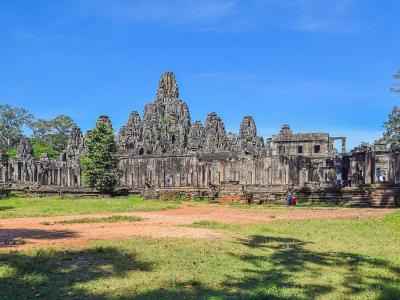
Bayon Temple is an iconic and intricately adorned Khmer temple. Constructed in the late 12th century or early 13th century, it served as the official state temple of King Jayavarman VII, a devout Mahayana Buddhist ruler, and was situated at the heart of his capital city, Angkor Thom. Over the centuries, the temple underwent modifications and additions by later Hindu and Theravada Buddhist kings, reflecting their religious inclinations.
The Bayon Temple is renowned for its most distinctive and captivating feature - the multitude of serene and massive stone faces adorning the numerous towers that rise from the upper terrace and cluster around its central peak. These enigmatic faces, believed to represent Avalokiteshvara or Jayavarman VII himself, exude an aura of calm and enigmatic power, adding to the temple's mystique and allure.
Beyond its iconic faces, the Bayon boasts two remarkable sets of bas-reliefs. These intricate carvings offer a unique combination of mythological, historical, and everyday scenes, providing valuable insights into the culture, history, and religious beliefs of the Khmer civilization.
The temple's architecture is a striking representation of the baroque style of Khmer architecture, setting it apart from the classical style of its neighboring temple, Angkor Wat. The Bayon's layout, with its maze of towers and intricate carvings, creates a mesmerizing visual spectacle that leaves visitors in awe of its grandeur and intricacy.
Over the years, the temple has undergone extensive restoration efforts to preserve its rich heritage. The Japanese Government team for the Safeguarding of Angkor (the JSA) has been actively involved in the conservation and restoration of this architectural marvel, ensuring that its splendor continues to be appreciated by generations to come.
The Bayon Temple is renowned for its most distinctive and captivating feature - the multitude of serene and massive stone faces adorning the numerous towers that rise from the upper terrace and cluster around its central peak. These enigmatic faces, believed to represent Avalokiteshvara or Jayavarman VII himself, exude an aura of calm and enigmatic power, adding to the temple's mystique and allure.
Beyond its iconic faces, the Bayon boasts two remarkable sets of bas-reliefs. These intricate carvings offer a unique combination of mythological, historical, and everyday scenes, providing valuable insights into the culture, history, and religious beliefs of the Khmer civilization.
The temple's architecture is a striking representation of the baroque style of Khmer architecture, setting it apart from the classical style of its neighboring temple, Angkor Wat. The Bayon's layout, with its maze of towers and intricate carvings, creates a mesmerizing visual spectacle that leaves visitors in awe of its grandeur and intricacy.
Over the years, the temple has undergone extensive restoration efforts to preserve its rich heritage. The Japanese Government team for the Safeguarding of Angkor (the JSA) has been actively involved in the conservation and restoration of this architectural marvel, ensuring that its splendor continues to be appreciated by generations to come.
5) Angkor Night Market
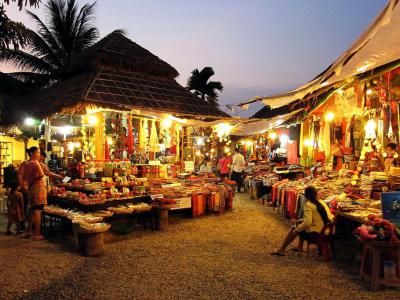
Angkor Night Market, established in 2007, has quickly become one of the most popular attractions in Siem Reap. As the country's first night market, this expansive open-air venue boasts over 240 shops, stalls, street food vendors, bars, and restaurants, making it a lively and vibrant destination for both locals and tourists alike.
Unlike other tourist parks, the founders of Angkor Night Market were careful to create a unique and authentic atmosphere. The market is not housed in a typical warehouse setting; instead, it features beautifully designed huts made from natural materials, reflecting the exquisite Khmer style.
Visitors can explore an extensive range of souvenirs and handicrafts at the market, including traditional Cambodian-made items such as clothing, silk, paintings, photographs, jewelry, wood carvings, and stone carvings. There is something for every taste and preference, making it an ideal place to shop for memorable keepsakes.
Beyond shopping, Angkor Night Market offers various entertainment options. The Movie Mall presents documentaries about significant events in Cambodia's history, including the Khmer Rouge genocidal regime during 1975-1979 and the issue of landmines. For a unique experience, visitors can also witness the world's largest snake harvest.
After a day of shopping and exploration, visitors can pamper themselves at the market's relaxation centers. The original Dr. Fish massage, Body and Feet massage, and spa services provide a rejuvenating experience. Additionally, there are two bars to unwind and enjoy the ambiance. The Island Bar impresses with its bamboo tower and tiered lamps, offering a one-of-a-kind setting in Siem Reap. Meanwhile, the secluded Brick House Bar, with its thatched roof and large bamboo furniture, creates a relaxing and stylish atmosphere amidst a tropical garden.
Unlike other tourist parks, the founders of Angkor Night Market were careful to create a unique and authentic atmosphere. The market is not housed in a typical warehouse setting; instead, it features beautifully designed huts made from natural materials, reflecting the exquisite Khmer style.
Visitors can explore an extensive range of souvenirs and handicrafts at the market, including traditional Cambodian-made items such as clothing, silk, paintings, photographs, jewelry, wood carvings, and stone carvings. There is something for every taste and preference, making it an ideal place to shop for memorable keepsakes.
Beyond shopping, Angkor Night Market offers various entertainment options. The Movie Mall presents documentaries about significant events in Cambodia's history, including the Khmer Rouge genocidal regime during 1975-1979 and the issue of landmines. For a unique experience, visitors can also witness the world's largest snake harvest.
After a day of shopping and exploration, visitors can pamper themselves at the market's relaxation centers. The original Dr. Fish massage, Body and Feet massage, and spa services provide a rejuvenating experience. Additionally, there are two bars to unwind and enjoy the ambiance. The Island Bar impresses with its bamboo tower and tiered lamps, offering a one-of-a-kind setting in Siem Reap. Meanwhile, the secluded Brick House Bar, with its thatched roof and large bamboo furniture, creates a relaxing and stylish atmosphere amidst a tropical garden.
6) Pub Street (must see)
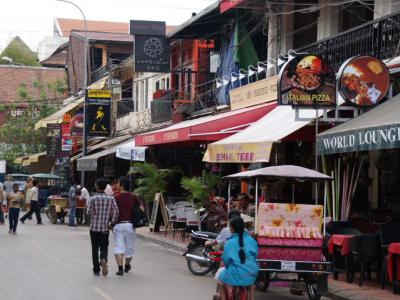
Pub Street, officially known as "Street 8," is the vibrant epicenter of nightlife in Siem Reap. As the sun sets, the street comes alive with energy and excitement, drawing both locals and travelers alike to experience the bustling atmosphere.
Spanning a 100-meter stretch from the Red Piano Restaurant to the Banana Leaf Restaurant, Pub Street is a dazzling sight adorned with neon lights, offering an array of entertainment options. Along the street, you'll find a captivating mix of clubs, bars, restaurants, and vendors, creating a lively and diverse ambiance.
In recent times, Pub Street has undergone significant improvements and renovations, providing visitors with an enhanced experience. The revamped street and pavement, completed during the Covid period, ensure a pleasant and comfortable visit, even during rainy weather, thanks to its new sewerage system.
Situated in the heart of the city, close to the scenic Siem Reap River and various markets, Pub Street attracts backpackers from around the world, eager to dance the night away and create lasting memories. Often likened to a more subdued version of Bangkok's famous Khaosan Road, Pub Street exudes an equally dynamic and exciting atmosphere.
As the night progresses, traffic is blocked off from the road, creating a pedestrian-friendly zone where visitors can freely stroll, dance, and revel in the festivities. Whether you're in the mood for traditional Khmer specialties or Western favorites, Pub Street offers an enticing array of culinary delights served in food trucks.
Spanning a 100-meter stretch from the Red Piano Restaurant to the Banana Leaf Restaurant, Pub Street is a dazzling sight adorned with neon lights, offering an array of entertainment options. Along the street, you'll find a captivating mix of clubs, bars, restaurants, and vendors, creating a lively and diverse ambiance.
In recent times, Pub Street has undergone significant improvements and renovations, providing visitors with an enhanced experience. The revamped street and pavement, completed during the Covid period, ensure a pleasant and comfortable visit, even during rainy weather, thanks to its new sewerage system.
Situated in the heart of the city, close to the scenic Siem Reap River and various markets, Pub Street attracts backpackers from around the world, eager to dance the night away and create lasting memories. Often likened to a more subdued version of Bangkok's famous Khaosan Road, Pub Street exudes an equally dynamic and exciting atmosphere.
As the night progresses, traffic is blocked off from the road, creating a pedestrian-friendly zone where visitors can freely stroll, dance, and revel in the festivities. Whether you're in the mood for traditional Khmer specialties or Western favorites, Pub Street offers an enticing array of culinary delights served in food trucks.
7) Angkor National Museum (must see)
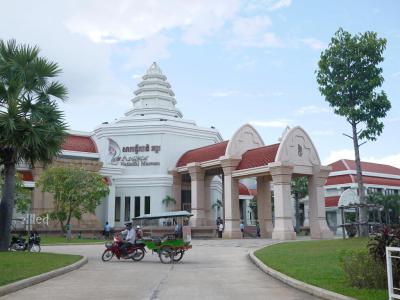
The Angkor National Museum stands as a magnificent showcase of the Khmer civilization and the grandeur of Angkor. Upon entering the museum, visitors are treated to themed displays that encompass various eras, religious aspects, and royal elements of the Khmer dynasty.
The experience begins with a short presentation, setting the stage for the subsequent exploration of the museum's treasures. In the Zen-like Gallery of a Thousand Buddhas, visitors are greeted with a splendid collection of Buddha images, creating a serene and meditative atmosphere.
The exhibits cover a wide range of topics, including the pre-Angkorian periods of Funan and Chenla, the reign of the great Khmer kings, the magnificence of Angkor Wat and Angkor Thom, as well as the inscriptions that reveal invaluable historical insights.
Interactive touch-screen videos, accompanied by epic commentary, enhance the museum's presentation, offering visitors a deeper appreciation of the artifacts on display. The museum even allows visitors to experience a panoramic sunrise at Angkor Wat, a memorable and immersive encounter with one of Cambodia's most iconic landmarks.
Among the standout pieces in the collection are a late 12th to early 13th-century seated Buddha protected by a naga, a mythical serpent-being; a 7th-century standing Vishnu from Sambor Prei Kuk in Kompong Thom; and a breathtaking 10th-century lintel from the exquisite Banteay Srei temple.
One of the advantages of visiting the Angkor National Museum is the respite it provides from the heat, as the entire museum is air-conditioned. To enhance the experience, audio tours are available for a nominal fee, providing in-depth explanations and insights into the exhibits.
Allowing approximately two hours to explore the museum thoroughly, visitors can conclude their visit with a stop at the museum's shop and small cafe, providing an opportunity to take home mementos and reflect on the incredible journey through the ancient wonders of the Khmer civilization.
The experience begins with a short presentation, setting the stage for the subsequent exploration of the museum's treasures. In the Zen-like Gallery of a Thousand Buddhas, visitors are greeted with a splendid collection of Buddha images, creating a serene and meditative atmosphere.
The exhibits cover a wide range of topics, including the pre-Angkorian periods of Funan and Chenla, the reign of the great Khmer kings, the magnificence of Angkor Wat and Angkor Thom, as well as the inscriptions that reveal invaluable historical insights.
Interactive touch-screen videos, accompanied by epic commentary, enhance the museum's presentation, offering visitors a deeper appreciation of the artifacts on display. The museum even allows visitors to experience a panoramic sunrise at Angkor Wat, a memorable and immersive encounter with one of Cambodia's most iconic landmarks.
Among the standout pieces in the collection are a late 12th to early 13th-century seated Buddha protected by a naga, a mythical serpent-being; a 7th-century standing Vishnu from Sambor Prei Kuk in Kompong Thom; and a breathtaking 10th-century lintel from the exquisite Banteay Srei temple.
One of the advantages of visiting the Angkor National Museum is the respite it provides from the heat, as the entire museum is air-conditioned. To enhance the experience, audio tours are available for a nominal fee, providing in-depth explanations and insights into the exhibits.
Allowing approximately two hours to explore the museum thoroughly, visitors can conclude their visit with a stop at the museum's shop and small cafe, providing an opportunity to take home mementos and reflect on the incredible journey through the ancient wonders of the Khmer civilization.
8) Angkor Temple (must see)
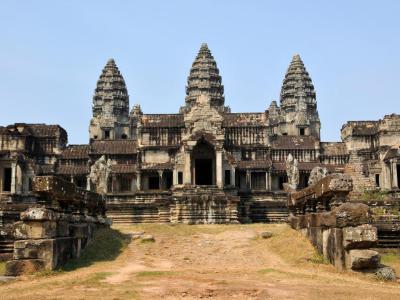
The Angkor Temple is a majestic UNESCO World Heritage site and a top destination for history enthusiasts traveling to Southeast Asia. Among the numerous temples in the Angkor complex, Angkor Wat stands out as the ultimate statement of Khmer architectural brilliance. It is the largest religious building in the world, boasting a perfect blend of symbolism and symmetry.
Every corner of this immense complex is adorned with intricate carvings and motifs, making it a wonder to behold. Angkor Wat, constructed by King Suryavarman II (r. 1113-1150), represents the earthly manifestation of Mount Meru, a sacred mountain in Hindu mythology believed to be the dwelling place of ancient gods. The Khmer god-kings of old sought to surpass their ancestors' achievements in architecture, resulting in what is now considered the world's largest religious edifice.
Unlike other Angkor temples, Angkor Wat has never been abandoned to nature and has remained in continuous use since its construction. Scholars once speculated that Angkor Wat might have been primarily a tomb due to its westward orientation, which symbolizes death in ancient beliefs. This idea was further supported by the bas-reliefs within the temple, designed to be viewed in an anticlockwise direction, reminiscent of Hindu funerary rites. However, it is now widely accepted that Angkor Wat served both as a temple and a mausoleum for King Suryavarman II.
The temple is famous for its more than 3000 enchanting apsaras (heavenly nymphs) intricately carved into its walls. Each apsara is unique, showcasing 37 different hairstyles that captivate visitors. Surrounding the central temple complex is an 800-meter-long series of astonishing bas-reliefs, depicting historical events and mythological stories.
The spatial dimensions of Angkor Wat align with the lengths of the four ages (Yuga) in Hindu philosophy, symbolizing a metaphorical journey back to the creation of the universe. The experience of walking the causeway to the main entrance and passing through the courtyards to the final main tower, which once held a statue of Vishnu, takes visitors on a journey through time.
Every corner of this immense complex is adorned with intricate carvings and motifs, making it a wonder to behold. Angkor Wat, constructed by King Suryavarman II (r. 1113-1150), represents the earthly manifestation of Mount Meru, a sacred mountain in Hindu mythology believed to be the dwelling place of ancient gods. The Khmer god-kings of old sought to surpass their ancestors' achievements in architecture, resulting in what is now considered the world's largest religious edifice.
Unlike other Angkor temples, Angkor Wat has never been abandoned to nature and has remained in continuous use since its construction. Scholars once speculated that Angkor Wat might have been primarily a tomb due to its westward orientation, which symbolizes death in ancient beliefs. This idea was further supported by the bas-reliefs within the temple, designed to be viewed in an anticlockwise direction, reminiscent of Hindu funerary rites. However, it is now widely accepted that Angkor Wat served both as a temple and a mausoleum for King Suryavarman II.
The temple is famous for its more than 3000 enchanting apsaras (heavenly nymphs) intricately carved into its walls. Each apsara is unique, showcasing 37 different hairstyles that captivate visitors. Surrounding the central temple complex is an 800-meter-long series of astonishing bas-reliefs, depicting historical events and mythological stories.
The spatial dimensions of Angkor Wat align with the lengths of the four ages (Yuga) in Hindu philosophy, symbolizing a metaphorical journey back to the creation of the universe. The experience of walking the causeway to the main entrance and passing through the courtyards to the final main tower, which once held a statue of Vishnu, takes visitors on a journey through time.
9) Ta Prohm (must see)
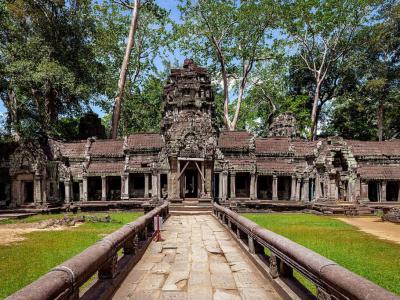
Ta Prohm is an ancient temple, known by the modern name Ta Prohm, was originally called Rajavihara and was built in the late 12th century and early 13th century during the reign of Khmer King Jayavarman VII.
As a Mahayana Buddhist monastery and center of learning, Ta Prohm held great significance during its time. It was dedicated to the king's mother and served as a place of religious worship, education, and spiritual guidance. The temple complex was vast and grand, requiring an estimated 80,000 individuals to either live in or visit it. Among these visitors were over 2,700 officials and 615 dancers, highlighting the temple's importance and influence.
What sets Ta Prohm apart from many other temples in the region is its unique state of preservation. After the decline of the Khmer Empire and the abandonment of the temple, nature began to reclaim the site. The temple was constructed without the use of mortar, and over time, trees took root in the gaps between the stones. These massive trees, with their imposing roots intertwining with the temple's ruins, create an awe-inspiring sight that makes Ta Prohm truly remarkable.
The integration of nature and architecture has led to Ta Prohm being often referred to as the "Tomb Raider Temple" or the "Angelina Jolie Temple." Its fame in popular culture stems from its appearance in the movie "Lara Croft: Tomb Raider" released in 2001, where it served as a captivating backdrop for the adventures of the film's protagonist.
Recognizing its cultural and historical significance, Ta Prohm was inscribed on the UNESCO World Heritage List in 1992, along with the other temples of the Angkor complex. This recognition ensures the preservation and protection of the temple, allowing future generations to experience its haunting beauty and unravel its secrets.
As a Mahayana Buddhist monastery and center of learning, Ta Prohm held great significance during its time. It was dedicated to the king's mother and served as a place of religious worship, education, and spiritual guidance. The temple complex was vast and grand, requiring an estimated 80,000 individuals to either live in or visit it. Among these visitors were over 2,700 officials and 615 dancers, highlighting the temple's importance and influence.
What sets Ta Prohm apart from many other temples in the region is its unique state of preservation. After the decline of the Khmer Empire and the abandonment of the temple, nature began to reclaim the site. The temple was constructed without the use of mortar, and over time, trees took root in the gaps between the stones. These massive trees, with their imposing roots intertwining with the temple's ruins, create an awe-inspiring sight that makes Ta Prohm truly remarkable.
The integration of nature and architecture has led to Ta Prohm being often referred to as the "Tomb Raider Temple" or the "Angelina Jolie Temple." Its fame in popular culture stems from its appearance in the movie "Lara Croft: Tomb Raider" released in 2001, where it served as a captivating backdrop for the adventures of the film's protagonist.
Recognizing its cultural and historical significance, Ta Prohm was inscribed on the UNESCO World Heritage List in 1992, along with the other temples of the Angkor complex. This recognition ensures the preservation and protection of the temple, allowing future generations to experience its haunting beauty and unravel its secrets.
10) Terrace of the Leper King
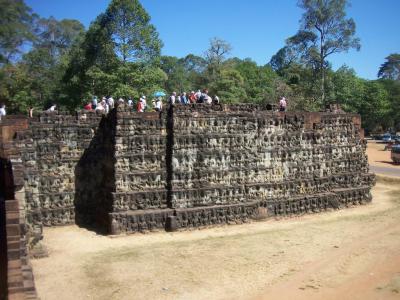
The Terrace of the Leper King, situated in the northwest corner of the Royal Square of Angkor Thom is a fascinating and historically significant monument. The terrace was constructed in the Bayon architectural style during the reign of King Jayavarman VII, a period known for its remarkable architectural achievements.
The modern name of the terrace is derived from a sculpture discovered at the site in the 15th century. This sculpture portrays the Hindu god Yama, who is known as the god of Death in Hindu mythology. The statue earned its association with the Leper King due to the appearance of discoloration and moss growth on its surface, which resembled the physical symptoms of leprosy. Additionally, the name seemed to align with a Cambodian legend about an Angkorian king who suffered from leprosy.
Despite the association with leprosy, the original name inscribed at the bottom of the statue was "Dharmaraja." This name, which translates to "King of Dharma" or "Righteous King," is a reflection of the god Yama's role as the divine judge who weighs a person's good and bad deeds after death.
The Terrace of the Leper King is an exceptional architectural masterpiece that showcases the artistic prowess of the Khmer civilization. As part of the Angkor Thom complex, it holds a significant place in Cambodian history and culture. The terrace features intricate carvings and decorative elements that highlight the influence of Hindu mythology and religious beliefs prevalent during the Khmer Empire.
The modern name of the terrace is derived from a sculpture discovered at the site in the 15th century. This sculpture portrays the Hindu god Yama, who is known as the god of Death in Hindu mythology. The statue earned its association with the Leper King due to the appearance of discoloration and moss growth on its surface, which resembled the physical symptoms of leprosy. Additionally, the name seemed to align with a Cambodian legend about an Angkorian king who suffered from leprosy.
Despite the association with leprosy, the original name inscribed at the bottom of the statue was "Dharmaraja." This name, which translates to "King of Dharma" or "Righteous King," is a reflection of the god Yama's role as the divine judge who weighs a person's good and bad deeds after death.
The Terrace of the Leper King is an exceptional architectural masterpiece that showcases the artistic prowess of the Khmer civilization. As part of the Angkor Thom complex, it holds a significant place in Cambodian history and culture. The terrace features intricate carvings and decorative elements that highlight the influence of Hindu mythology and religious beliefs prevalent during the Khmer Empire.
