Custom Walk in San Francisco, California by edotson_7b4c28 created on 2026-05-20
Guide Location: USA » San Francisco
Guide Type: Custom Walk
# of Sights: 5
Tour Duration: 7 Hour(s)
Travel Distance: 20.5 Km or 12.7 Miles
Share Key: M4EHV
Guide Type: Custom Walk
# of Sights: 5
Tour Duration: 7 Hour(s)
Travel Distance: 20.5 Km or 12.7 Miles
Share Key: M4EHV
How It Works
Please retrieve this walk in the GPSmyCity app. Once done, the app will guide you from one tour stop to the next as if you had a personal tour guide. If you created the walk on this website or come to the page via a link, please follow the instructions below to retrieve the walk in the app.
Retrieve This Walk in App
Step 1. Download the app "GPSmyCity: Walks in 1K+ Cities" on Apple App Store or Google Play Store.



Step 2. In the GPSmyCity app, download(or launch) the guide "San Francisco Map and Walking Tours".
Step 3. Tap the menu button located at upper right corner of the "Walks" screen and select "Retrieve custom walk". Enter the share key: M4EHV

1) Stonehouse California Olive Oil
What to buy here: Extra Virgin House Blend ($14). The past decade has seen a resurgence in California oil production which first began when 16th-century Spanish missionaries introduced what is now known as the Mission olive to the New World and which lapsed into horticultural neglect for the several centuries that followed. In 2008, the University of California at Davis established the Olive Center – the first olive research and education facility in North America and a division of the Robert Mondavi Institute for Wine and Food Science. Its purpose: to help vault California olives to high rankings and to a league on par with its Mediterranean competitors. Stonehouse’s Silver Ridge grove harvests Mission olives along with Manzanillo (the most common variety of Spanish olive) and Barouni olives (a tree developed in Tunisia). Olive oil has been called one of the healthiest cooking oils due to its antioxidative properties and high levels of monounsaturated fats (which lower cholesterol and improve overall heart health).
The Stonehouse farm is located east of Chico in north-central California at the edge of the volcanic Table Mountain plateau and on an 80-plus-year-old organic olive grove called Silver Ridge. Its store is in the Ferry Building Marketplace.
The Stonehouse farm is located east of Chico in north-central California at the edge of the volcanic Table Mountain plateau and on an 80-plus-year-old organic olive grove called Silver Ridge. Its store is in the Ferry Building Marketplace.
Image Courtesy of Colleen Corcoran.

2) Asian Art Museum (must see)
The Asian Art Museum, situated in the Western World, is home to one of the most extensive Asian Collections. Its proud assortment comprises over 15,000 pieces originating from countries such as India, China, Japan, Korea, Persia, and other South Asian nations.
Previously located within Golden Gate Park, the Asian Art Museum relocated to the former San Francisco City Library opposite the Civic Centre following its expansion. The building's interiors were thoughtfully crafted by the renowned Italian architect Gae Aulenti, celebrated for her exceptional talent in repurposing historical structures into museum spaces.
Within the museum, visitors can explore more than 6,000 years of artistic and cultural heritage from diverse civilizations of the Far East. The exhibits encompass a wide range of art forms, including paintings, sculptures, textiles, books, scriptures, ceramics, and furniture.
The inception of the Asian Art Museum dates back to 1966 when Avery Brundage, an industrialist from Chicago, generously donated a portion of his vast Asian Art collection to the city. In return for his donation, Brundage envisioned a museum dedicated to housing these treasures. Consequently, a special wing was constructed in the M.H. de Young Memorial Museum in Golden Gate Park, which was later designated as the Asian Art Museum.
Why You Should Visit:
Art, history and spirituality in a wonderful building. Changing exhibits, permanent collection, modern Asian art, classic art: this museum has it all.
Tip:
The AAM cafe has a nice selection of ethnic entrees to choose from. If you prefer more traditional fare they also have sandwiches, salads, and soups.
The museum also has a large gift shop stocked with apparel, jewelry, books, and folk art.
Previously located within Golden Gate Park, the Asian Art Museum relocated to the former San Francisco City Library opposite the Civic Centre following its expansion. The building's interiors were thoughtfully crafted by the renowned Italian architect Gae Aulenti, celebrated for her exceptional talent in repurposing historical structures into museum spaces.
Within the museum, visitors can explore more than 6,000 years of artistic and cultural heritage from diverse civilizations of the Far East. The exhibits encompass a wide range of art forms, including paintings, sculptures, textiles, books, scriptures, ceramics, and furniture.
The inception of the Asian Art Museum dates back to 1966 when Avery Brundage, an industrialist from Chicago, generously donated a portion of his vast Asian Art collection to the city. In return for his donation, Brundage envisioned a museum dedicated to housing these treasures. Consequently, a special wing was constructed in the M.H. de Young Memorial Museum in Golden Gate Park, which was later designated as the Asian Art Museum.
Why You Should Visit:
Art, history and spirituality in a wonderful building. Changing exhibits, permanent collection, modern Asian art, classic art: this museum has it all.
Tip:
The AAM cafe has a nice selection of ethnic entrees to choose from. If you prefer more traditional fare they also have sandwiches, salads, and soups.
The museum also has a large gift shop stocked with apparel, jewelry, books, and folk art.
3) Japantown Peace Plaza
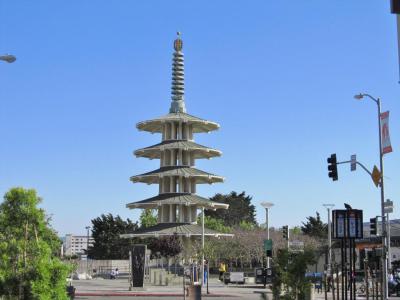
In San Francisco, the famous Japantown is distinguished by its iconic Peace Plaza, an outdoor court nestled between the Miyako and Kintetsu Malls. This tranquil space was created in the 1960s as a complementary addition to the Japan Center Mall, providing visitors a serene spot to relax their feet after shopping or dining. Moreover, it serves as a vibrant venue for various Japantown celebrations, such as the Obon Festival, Aki Matsuri, Children’s Day, and the Cherry Blossom Festival.
Originally, the plaza's design showcased a 17th Century eternal flame, a granite reflecting pool, and a grand drum tower. However, over time, it has been transformed into an inviting area with benches for relaxation, pleasant greenery, and the famous Peace Pagoda.
The Peace Pagoda itself was constructed during the 1960s and was dedicated on March 28th, 1968. Positioned in the northeastern corner of the Peace Plaza, it lies between the Japan Center Mall and the Nihonmachi Mall. A symbol of peace, the Peace Pagoda follows the Buddhist tradition and aims to inspire harmony among all people. Its design was entrusted to Yoshiro Taniguchi, a Japanese modernist architect.
This significant monument holds historical significance as it was a gift from the people of Osaka, Japan, to San Francisco, a gesture of sisterhood between the two cities dating back to 1957. With its rich history and serene ambiance, the Peace Plaza and its magnificent Peace Pagoda continue to be cherished landmarks in San Francisco's vibrant Japantown.
Originally, the plaza's design showcased a 17th Century eternal flame, a granite reflecting pool, and a grand drum tower. However, over time, it has been transformed into an inviting area with benches for relaxation, pleasant greenery, and the famous Peace Pagoda.
The Peace Pagoda itself was constructed during the 1960s and was dedicated on March 28th, 1968. Positioned in the northeastern corner of the Peace Plaza, it lies between the Japan Center Mall and the Nihonmachi Mall. A symbol of peace, the Peace Pagoda follows the Buddhist tradition and aims to inspire harmony among all people. Its design was entrusted to Yoshiro Taniguchi, a Japanese modernist architect.
This significant monument holds historical significance as it was a gift from the people of Osaka, Japan, to San Francisco, a gesture of sisterhood between the two cities dating back to 1957. With its rich history and serene ambiance, the Peace Plaza and its magnificent Peace Pagoda continue to be cherished landmarks in San Francisco's vibrant Japantown.
4) Japanese Tea Garden (must see)
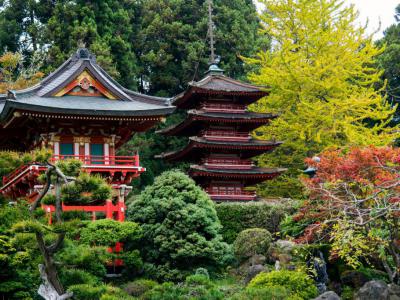
The Japanese Tea Garden in San Francisco holds a significant place within Golden Gate Park, originally established during the 1894 California Midwinter International Exposition, a grand World's Fair. While many of its original attractions remain, the garden has changed throughout its history, shaping it into the captivating sanctuary it is today.
This cherished complex, sprawling across 3 acres, boasts a network of serene paths, enchanting ponds, and an inviting teahouse, all meticulously arranged in the traditional Japanese style. Embracing elements from Buddhist and Shinto beliefs, the garden features sculptures and structures, while water and rocks are thoughtfully integrated to create a calming ambiance that encourages a slower pace of life.
The Japanese Tea Garden was created by George Turner Marsh, an Australian. Skilled Japanese craftsmen aided him in bringing his vision to life. Makoto Hagiwara, a Japanese immigrant, and gardener, became the garden's manager. Under his care, the temporary village transformed into the permanent Japanese Tea Garden. From 1895 to 1925, Hagiwara expanded the garden with various plants, birds, and the renowned koi fish.
The Tea House at the Japanese Tea Garden is steeped in history, connected to the sacred Japanese Tea Ceremony dating back to 1203 AD. It has been rebuilt multiple times and continues to serve generations of visitors with whipped green tea, Matcha, and a variety of snacks. Today, it remains a symbol of tranquility and beauty within the garden's enchanting landscape.
As a place of revered ritual, the Japanese Tea Garden serves as a profound representation of Japanese culture and religious philosophy, expressed through the esteemed art forms of landscaping and architecture. The design of the garden reflects the influence of Japan's geographic location, emphasizing elements like isolation and the significance of water. Both Buddhist and Shinto influences are gracefully interwoven into the essence of the Japanese Tea Garden, creating a haven of serenity and spiritual connection.
This cherished complex, sprawling across 3 acres, boasts a network of serene paths, enchanting ponds, and an inviting teahouse, all meticulously arranged in the traditional Japanese style. Embracing elements from Buddhist and Shinto beliefs, the garden features sculptures and structures, while water and rocks are thoughtfully integrated to create a calming ambiance that encourages a slower pace of life.
The Japanese Tea Garden was created by George Turner Marsh, an Australian. Skilled Japanese craftsmen aided him in bringing his vision to life. Makoto Hagiwara, a Japanese immigrant, and gardener, became the garden's manager. Under his care, the temporary village transformed into the permanent Japanese Tea Garden. From 1895 to 1925, Hagiwara expanded the garden with various plants, birds, and the renowned koi fish.
The Tea House at the Japanese Tea Garden is steeped in history, connected to the sacred Japanese Tea Ceremony dating back to 1203 AD. It has been rebuilt multiple times and continues to serve generations of visitors with whipped green tea, Matcha, and a variety of snacks. Today, it remains a symbol of tranquility and beauty within the garden's enchanting landscape.
As a place of revered ritual, the Japanese Tea Garden serves as a profound representation of Japanese culture and religious philosophy, expressed through the esteemed art forms of landscaping and architecture. The design of the garden reflects the influence of Japan's geographic location, emphasizing elements like isolation and the significance of water. Both Buddhist and Shinto influences are gracefully interwoven into the essence of the Japanese Tea Garden, creating a haven of serenity and spiritual connection.
5) Palace of Fine Arts (must see)
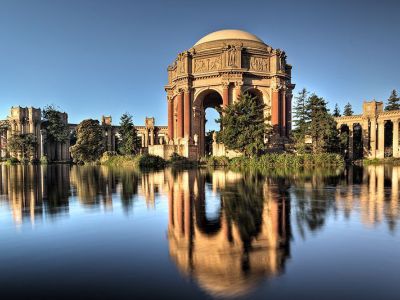
The Palace of Fine Arts stands as an impressive edifice situated in San Francisco's Marina District, originally erected for the 1915 Panama–Pacific International Exposition to showcase magnificent works of art. Though the passing years have taken their toll, the structure underwent a complete reconstruction from 1964 to 1974, making it the sole surviving building from the historical exposition.
Embracing a small man-made lagoon, the Palace of Fine Arts features a sprawling 1,100 feet (0.34 kilometer) pergola encircling a central rotunda, gracefully positioned near the water's edge. The designers drew inspiration from European classical settings, where serene bodies of water mirrored the grand architecture, offering a tranquil vista to behold from afar.
Adorning the rotunda's entablature, Bruno Zimm's three repeating panels portray "The Struggle for the Beautiful," a tribute to Greek culture. Additionally, sculptor Ulric Ellerhusen contributed the statues of weeping women atop the colonnade, along with a sculpted frieze and allegorical figures representing Contemplation, Wonderment, and Meditation.
Underneath the rotunda's dome, one can find eight substantial insets that once showcased murals by Robert Reid. Four of these depicted the inception and birth of Art, its relationship with the Earth, its progression, and its acceptance by human intellect. The remaining insets celebrated California's four "golds," symbolizing poppies, citrus fruits, metallic gold, and wheat.
Designed to evoke the essence of ancient Roman ruins, the Palace of Fine Arts has become an iconic landmark of San Francisco. In the early months of 2009, extensive renovations were carried out, revitalizing the lagoons, and walkways, and ensuring the structure's seismic resilience.
Why You Should Visit:
Historic architectural structure in a sweet area for picnic lunch!
Worth checking out especially if you are into photography.
Tip:
Go inside and see the museum if it's open. There's no fee and you can walk across the street and check out the bay right afterwards.
Embracing a small man-made lagoon, the Palace of Fine Arts features a sprawling 1,100 feet (0.34 kilometer) pergola encircling a central rotunda, gracefully positioned near the water's edge. The designers drew inspiration from European classical settings, where serene bodies of water mirrored the grand architecture, offering a tranquil vista to behold from afar.
Adorning the rotunda's entablature, Bruno Zimm's three repeating panels portray "The Struggle for the Beautiful," a tribute to Greek culture. Additionally, sculptor Ulric Ellerhusen contributed the statues of weeping women atop the colonnade, along with a sculpted frieze and allegorical figures representing Contemplation, Wonderment, and Meditation.
Underneath the rotunda's dome, one can find eight substantial insets that once showcased murals by Robert Reid. Four of these depicted the inception and birth of Art, its relationship with the Earth, its progression, and its acceptance by human intellect. The remaining insets celebrated California's four "golds," symbolizing poppies, citrus fruits, metallic gold, and wheat.
Designed to evoke the essence of ancient Roman ruins, the Palace of Fine Arts has become an iconic landmark of San Francisco. In the early months of 2009, extensive renovations were carried out, revitalizing the lagoons, and walkways, and ensuring the structure's seismic resilience.
Why You Should Visit:
Historic architectural structure in a sweet area for picnic lunch!
Worth checking out especially if you are into photography.
Tip:
Go inside and see the museum if it's open. There's no fee and you can walk across the street and check out the bay right afterwards.
