Custom Walk in Shanghai, China by dannello666 created on 2026-05-21
Guide Location: China » Shanghai
Guide Type: Custom Walk
# of Sights: 8
Tour Duration: 9 Hour(s)
Travel Distance: 23.7 Km or 14.7 Miles
Share Key: EFPXE
Guide Type: Custom Walk
# of Sights: 8
Tour Duration: 9 Hour(s)
Travel Distance: 23.7 Km or 14.7 Miles
Share Key: EFPXE
How It Works
Please retrieve this walk in the GPSmyCity app. Once done, the app will guide you from one tour stop to the next as if you had a personal tour guide. If you created the walk on this website or come to the page via a link, please follow the instructions below to retrieve the walk in the app.
Retrieve This Walk in App
Step 1. Download the app "GPSmyCity: Walks in 1K+ Cities" on Apple App Store or Google Play Store.



Step 2. In the GPSmyCity app, download(or launch) the guide "Shanghai Map and Walking Tours".
Step 3. Tap the menu button located at upper right corner of the "Walks" screen and select "Retrieve custom walk". Enter the share key: EFPXE
1) The Bund (Waitan) (must see)
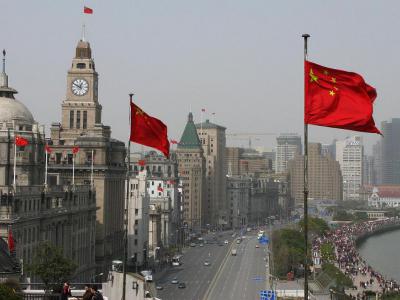
If you want to explore the history of Shanghai as the leading financial hub of modern China, The Bund is the ideal place to start. Initially serving as a path for towing rice-loaded barges, it eventually became the site of Shanghai's first foreign settlement, evolving into a bustling business district where major banks and trading companies established their presence to take advantage of the emerging trading opportunities.
In its heyday, The Bund also hosted the Russian and British consulates, as well as the English club and the Masonic lodge. Prior to the communist victory in the Chinese Civil War, the area featured numerous statues of notable colonial and European figures. These have since been replaced by a bronze statue of Chen Yi (Shanghai's first mayor after the communist takeover) and a Monument to the People’s Heroes at the northern end.
During the 1990s, The Bund underwent restoration, showcasing a waterfront adorned with a variety of buildings representing the architectural styles of nations that once sought to be involved in Shanghai's development.
The western section of The Bund boasts older colonial-style architecture, prominently featuring the neo-classical Hong-Kong and Shanghai Banking Corporation building and the Signal Tower, formerly maintained by the Jesuits to aid local shipping. For many locals, this area serves as a reminder of a century of foreign dominance. In the present golden age, however, it has transformed into a vibrant hub for top-notch dining, entertainment, and shopping.
Set against the backdrop of the now-famous Shanghai skyline, adorned with iconic skyscrapers of various shapes, heights, and colors, The Bund is particularly breathtaking after sunset when all the lights illuminate the area. Be sure to visit before 10pm, as some of the lights are turned off after that time.
Tip:
If you're out taking a stroll along The Bund, make way to the high-ground part beside the river for a better look at the two sides of the promenade. Otherwise, climb to the observation deck of one of the high towers to the east of the Huangpu River and see the whole stretch of the riverfront from up there. A sight not to be missed!
In its heyday, The Bund also hosted the Russian and British consulates, as well as the English club and the Masonic lodge. Prior to the communist victory in the Chinese Civil War, the area featured numerous statues of notable colonial and European figures. These have since been replaced by a bronze statue of Chen Yi (Shanghai's first mayor after the communist takeover) and a Monument to the People’s Heroes at the northern end.
During the 1990s, The Bund underwent restoration, showcasing a waterfront adorned with a variety of buildings representing the architectural styles of nations that once sought to be involved in Shanghai's development.
The western section of The Bund boasts older colonial-style architecture, prominently featuring the neo-classical Hong-Kong and Shanghai Banking Corporation building and the Signal Tower, formerly maintained by the Jesuits to aid local shipping. For many locals, this area serves as a reminder of a century of foreign dominance. In the present golden age, however, it has transformed into a vibrant hub for top-notch dining, entertainment, and shopping.
Set against the backdrop of the now-famous Shanghai skyline, adorned with iconic skyscrapers of various shapes, heights, and colors, The Bund is particularly breathtaking after sunset when all the lights illuminate the area. Be sure to visit before 10pm, as some of the lights are turned off after that time.
Tip:
If you're out taking a stroll along The Bund, make way to the high-ground part beside the river for a better look at the two sides of the promenade. Otherwise, climb to the observation deck of one of the high towers to the east of the Huangpu River and see the whole stretch of the riverfront from up there. A sight not to be missed!
2) Shi Liu Pu Cloth Market (上海十六铺面料城)
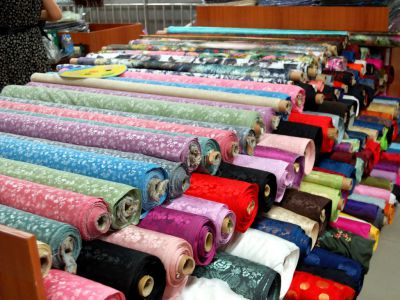
Apart from the traditional silk, in Shanghai you can find any kind of fabric material at very accessible prices. The best place where to find fabrics of any type are Shi Liu Pu Cloth Market at 168 Dong Men Road. The market is very popular among expats living in Shanghai, and offers a complete choice of any kind of fabric materials.
Entire market is organized and devoted to fabrics, where tourists can buy raw material for sewing or order pieces of clothes or even buy the traditional cheongsam (Chinese dress). Here you will find everything you can search for, not just silk, but also linen, cashmere, mixed fabrics. It’s recommended to bargain, as prices are never fixed but change depending on the day (usually higher on weekends and busy seasons in general) and if you are a first-timer.
Prices vary also depending if the material is bought per meter or the finished product. A silk half linen and half silk is usually RMB250 or the same material around RMB50 per meter. Cashmere is usually more expensive, especially if it comes from Mongolia. A tailor-made dress or a jumper in cashmere can be bought between RMB600 and RMB900.
Entire market is organized and devoted to fabrics, where tourists can buy raw material for sewing or order pieces of clothes or even buy the traditional cheongsam (Chinese dress). Here you will find everything you can search for, not just silk, but also linen, cashmere, mixed fabrics. It’s recommended to bargain, as prices are never fixed but change depending on the day (usually higher on weekends and busy seasons in general) and if you are a first-timer.
Prices vary also depending if the material is bought per meter or the finished product. A silk half linen and half silk is usually RMB250 or the same material around RMB50 per meter. Cashmere is usually more expensive, especially if it comes from Mongolia. A tailor-made dress or a jumper in cashmere can be bought between RMB600 and RMB900.
Image Courtesy of Angela Corrias.
3) Yuyuan Bazaar (must see)
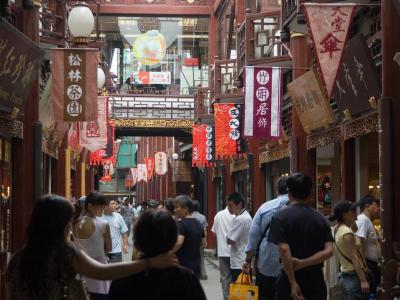
Regularly packed with locals and tourists, this busy shopping area – located just outside the famous Yuyuan Gardens – is a good chance to get a glimpse of Shanghai's everyday life. Amid the plethora of goods on sale – including fresh produce, second-hand stuff, antiques and handicrafts – the most intriguing, perhaps, are the countless food offerings whose vendors seemingly compete with each other. The vast majority of them specialize in dumplings of every imaginable filling; they even have dumplings filled with soup and served with a straw. The Nanxiang Shanghai steamed buns are pretty good on a chilly day either, and there's a long but well-organized queue for them in the central courtyard.
On the whole, this new-looking Ming-style bazaar is a cacophony of shops, street performers, sedan-chair rides and swarms of people everywhere. It covers an area of over 50 hectares and houses almost 3,000 shops and nearly 10,000 vendors. Among them are souvenir shops with tonnes of fine gift ideas, from painted snuff bottles and delightful Chinese kites to embroidered and clever palm-and-finger paintings.
As with any shopping in Asia, haggling skills are quite handy here, especially if you've done your homework on products and prices previously. Another good thing is to buy as the locals buy, particularly women, who certainly know where the best deals are.
Why You Should Visit:
No matter how commercialized, this is still a pretty sight to behold. Only in China!
Tip:
Other than the bazaar itself, there are a few spots just behind the Yuyan Gardens on Fuyou Street where you can find things at wholesale prices. In particular, if you're after household items, check out the Fuyou Street Merchandise Mart – similar to WalMart in the U.S., but in a fraction of the space it usually occupies there. Bargaining here is recommended, but the prices aren’t too high to begin with – just perfect for those on a budget.
On the whole, this new-looking Ming-style bazaar is a cacophony of shops, street performers, sedan-chair rides and swarms of people everywhere. It covers an area of over 50 hectares and houses almost 3,000 shops and nearly 10,000 vendors. Among them are souvenir shops with tonnes of fine gift ideas, from painted snuff bottles and delightful Chinese kites to embroidered and clever palm-and-finger paintings.
As with any shopping in Asia, haggling skills are quite handy here, especially if you've done your homework on products and prices previously. Another good thing is to buy as the locals buy, particularly women, who certainly know where the best deals are.
Why You Should Visit:
No matter how commercialized, this is still a pretty sight to behold. Only in China!
Tip:
Other than the bazaar itself, there are a few spots just behind the Yuyan Gardens on Fuyou Street where you can find things at wholesale prices. In particular, if you're after household items, check out the Fuyou Street Merchandise Mart – similar to WalMart in the U.S., but in a fraction of the space it usually occupies there. Bargaining here is recommended, but the prices aren’t too high to begin with – just perfect for those on a budget.
4) Yuyuan Garden (must see)
This lovely classical Chinese garden was built in 1577, under the Ming Dynasty, by a high-ranking imperial court official who dedicated it to his elderly father, and quite fittingly so, as ‘yu’ means peace and comfort in Chinese. Probably because of this name or good luck, despite changing fortunes, the garden had miraculously survived the passage of centuries and was reopened to the public in 1961.
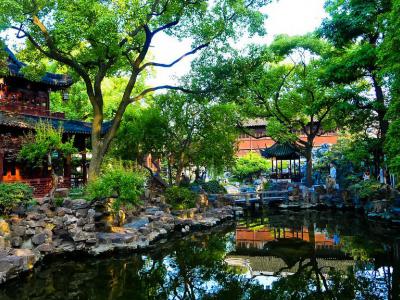
For those unfamiliar with Chinese gardening, this would be a great introduction to its elegance manifested, among other things, in the hidden bat and dragon features and, in this particular case, a huge authentic rockery dating back to the Ming period. Overall, the garden has less emphasis on flora and more on water and the harmonious position of elements.
It may well look small, but you will be amazed at how much actually fits in here. The corridors, archways and zigzag bridges all are carefully placed with a great deal of meaning. Of special interest is the Ming-style rosewood furniture in three halls within the garden, one of which is historically famous as the headquarters of the anti-imperialist “Little Sword” society during the Taiping uprising in the 1850s-60s. The roofs and tops of the walls here are decorated with incredible carvings of dragons, horses, and warriors.
Among other highlights is the famous Jade Rock, a 5-ton boulder said to have been one of the private collection items of the Song Dynasty Emperor Huizong. Interestingly enough, this rock's 72 holes are reportedly positioned so as to make the water or smoke sent into one of the holes, come out from all the other holes simultaneously. Sometimes, the guides show another trick with a coin dropped into a hole at the top and exiting from a certain hole down below (each time different) in accordance, they say, with the person's astrological sign.
Tip:
Depending on the time of your visit, the garden may be quite crowded – but that's China! Try coming early, as closer to the opening hours as possible; otherwise, later in the day, the queues are usually long! Don't forget a bottle of water or check out a two-storey teahouse on the island in the middle of the garden. The Queen of England herself once dropped in for a cup of tea there, so these days it’s a bit pricey, but you’re welcome to poke about anyway.
For those unfamiliar with Chinese gardening, this would be a great introduction to its elegance manifested, among other things, in the hidden bat and dragon features and, in this particular case, a huge authentic rockery dating back to the Ming period. Overall, the garden has less emphasis on flora and more on water and the harmonious position of elements.
It may well look small, but you will be amazed at how much actually fits in here. The corridors, archways and zigzag bridges all are carefully placed with a great deal of meaning. Of special interest is the Ming-style rosewood furniture in three halls within the garden, one of which is historically famous as the headquarters of the anti-imperialist “Little Sword” society during the Taiping uprising in the 1850s-60s. The roofs and tops of the walls here are decorated with incredible carvings of dragons, horses, and warriors.
Among other highlights is the famous Jade Rock, a 5-ton boulder said to have been one of the private collection items of the Song Dynasty Emperor Huizong. Interestingly enough, this rock's 72 holes are reportedly positioned so as to make the water or smoke sent into one of the holes, come out from all the other holes simultaneously. Sometimes, the guides show another trick with a coin dropped into a hole at the top and exiting from a certain hole down below (each time different) in accordance, they say, with the person's astrological sign.
Tip:
Depending on the time of your visit, the garden may be quite crowded – but that's China! Try coming early, as closer to the opening hours as possible; otherwise, later in the day, the queues are usually long! Don't forget a bottle of water or check out a two-storey teahouse on the island in the middle of the garden. The Queen of England herself once dropped in for a cup of tea there, so these days it’s a bit pricey, but you’re welcome to poke about anyway.
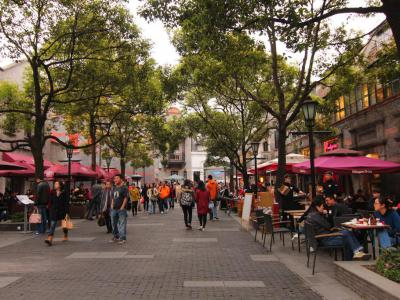
5) Xintiandi (must see)
Xintiandi in Shanghai blends East and West, with traditional Shikumen houses alongside modern Western-style buildings, creating a unique pedestrian district. The area is distinctly divided into two blocks, each offering a different experience to visitors. The Southern block is characterized by its modern architecture, incorporating a few well-preserved Shikumen houses amidst a sprawling 25,000 square meter area dedicated to shopping and entertainment. This modern enclave boasts a sprawling mall, established in 2002.
In contrast, the Northern block is a nostalgic journey back to Shanghai in the early 20th century. It is exclusively composed of preserved Shikumen houses and narrow streets, meticulously maintained to offer a glimpse into the city's historical ambiance. The exteriors of these houses may retain their original charm, but the interiors have been transformed into luxurious spaces housing high-end boutiques and cafes. These establishments serve a variety of global cuisines, catering to the tastes of a diverse clientele.
The two blocks are separated by Xingye Lu, a road of historical significance as it is the site of the memorial for the first congress of the Communist Party of China. This adds a layer of historical depth to Xintiandi's already rich cultural tapestry.
Xintiandi, which translates to "New Heaven and Earth," lives up to its name by being a bustling hub of activity. The district is renowned for its trendy restaurants and bars, many of which feature live music and outdoor seating that extends into the plazas, creating a lively atmosphere that attracts both locals and a large expatriate community. Beyond the bustling nightlife and shopping, the area offers serene escapes like a small lake bordered by trees and surrounded by exclusive residential towers, providing a tranquil contrast to the lively urban environment.
Why You Should Visit:
Elegant, beautiful and of great ambiance; one of the best places for a chilled out meal any time of day – European style.
Tip:
Eat first and burn off the calories with a long walk around the area to explore the bars, designer boutiques, art galleries, specialty stores, etc.
In contrast, the Northern block is a nostalgic journey back to Shanghai in the early 20th century. It is exclusively composed of preserved Shikumen houses and narrow streets, meticulously maintained to offer a glimpse into the city's historical ambiance. The exteriors of these houses may retain their original charm, but the interiors have been transformed into luxurious spaces housing high-end boutiques and cafes. These establishments serve a variety of global cuisines, catering to the tastes of a diverse clientele.
The two blocks are separated by Xingye Lu, a road of historical significance as it is the site of the memorial for the first congress of the Communist Party of China. This adds a layer of historical depth to Xintiandi's already rich cultural tapestry.
Xintiandi, which translates to "New Heaven and Earth," lives up to its name by being a bustling hub of activity. The district is renowned for its trendy restaurants and bars, many of which feature live music and outdoor seating that extends into the plazas, creating a lively atmosphere that attracts both locals and a large expatriate community. Beyond the bustling nightlife and shopping, the area offers serene escapes like a small lake bordered by trees and surrounded by exclusive residential towers, providing a tranquil contrast to the lively urban environment.
Why You Should Visit:
Elegant, beautiful and of great ambiance; one of the best places for a chilled out meal any time of day – European style.
Tip:
Eat first and burn off the calories with a long walk around the area to explore the bars, designer boutiques, art galleries, specialty stores, etc.
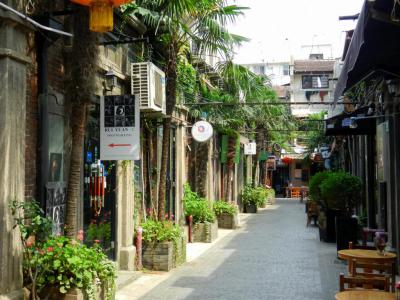
6) Tianzifang District (must see)
Tianzifang is a lively enclave that has evolved from a renovated traditional residential area in the French Concession district of Shanghai. This neighborhood abounds in tiny labyrinthine alleyways that can keep you wandering infinitely, as it is probably the most accessible, authentic, charming and vibrant example of Shanghai’s trademark back-lane architecture.
What started off as an attempt to foster a district of arts, crafts, boutiques, and cafes, based around a former candy factory, has now become a major tourist destination and a much-needed counterpoint to the mega-malls and dwarfing skyscrapers elsewhere in the city.
Some of the best bars and restaurants are found in this area, together with a handful of art galleries, handicraft workshops and jewelry and ethnic clothing boutiques – a great place to pick up one-off souvenirs, as well to practice your bargaining skills when shopping.
In particular, look out for the hand-embroidered ethnic-styled accessories at Harvest Studio and photographic prints of Shanghai scenes at Deke Erh Art Center. Wonderful surprises are practically waiting to be found around every corner, but try to arrange your visit during weekdays, since the narrow streets can get pretty packed on Saturdays and Sundays.
What started off as an attempt to foster a district of arts, crafts, boutiques, and cafes, based around a former candy factory, has now become a major tourist destination and a much-needed counterpoint to the mega-malls and dwarfing skyscrapers elsewhere in the city.
Some of the best bars and restaurants are found in this area, together with a handful of art galleries, handicraft workshops and jewelry and ethnic clothing boutiques – a great place to pick up one-off souvenirs, as well to practice your bargaining skills when shopping.
In particular, look out for the hand-embroidered ethnic-styled accessories at Harvest Studio and photographic prints of Shanghai scenes at Deke Erh Art Center. Wonderful surprises are practically waiting to be found around every corner, but try to arrange your visit during weekdays, since the narrow streets can get pretty packed on Saturdays and Sundays.
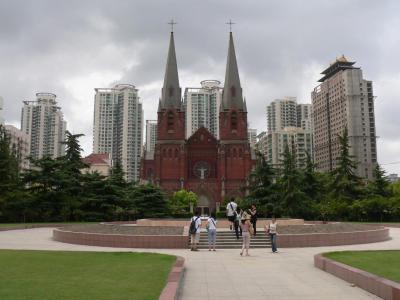
7) St. Ignatius Cathedral of Shanghai
Constructed in the aftermath of the Opium Wars, the Saint Ignatius Cathedral of Shanghai stands as one of the most splendid churches in the Far East, currently serving a parish of over 2000 members.
Completed in 1910, this grand cathedral boasts twin brick spires and was erected by the Jesuits, who were among the earliest European settlers in Shanghai. Named in honor of their founder, Saint Ignatius of Loyola, the cathedral's design was crafted by English architect William Doyle, with construction overseen by a French Jesuit order between 1905 and 1910. Characterized by its Gothic architectural style, the cathedral marked a significant presence as the first European-style building in Shanghai upon its completion. Notably, its 64 stone columns were sourced from the Jin Mountain in Suzhou. Housing 19 altars, one intricately carved altar was notably imported from Paris. The cathedral's capacity accommodates up to 2,500 worshipers.
During the tumultuous period of the Cultural Revolution in 1966, the Saint Ignatius Cathedral suffered vandalism, resulting in the destruction of its stained glass windows. However, through extensive restoration efforts, the cathedral reopened for worship in 1978. In a symbolic moment, the first Chinese mass took place in 1989, and more recently, new stained glass windows adorned with Chinese characters and icons have been installed, reflecting the enduring spirit and adaptability of this historic place of worship.
Completed in 1910, this grand cathedral boasts twin brick spires and was erected by the Jesuits, who were among the earliest European settlers in Shanghai. Named in honor of their founder, Saint Ignatius of Loyola, the cathedral's design was crafted by English architect William Doyle, with construction overseen by a French Jesuit order between 1905 and 1910. Characterized by its Gothic architectural style, the cathedral marked a significant presence as the first European-style building in Shanghai upon its completion. Notably, its 64 stone columns were sourced from the Jin Mountain in Suzhou. Housing 19 altars, one intricately carved altar was notably imported from Paris. The cathedral's capacity accommodates up to 2,500 worshipers.
During the tumultuous period of the Cultural Revolution in 1966, the Saint Ignatius Cathedral suffered vandalism, resulting in the destruction of its stained glass windows. However, through extensive restoration efforts, the cathedral reopened for worship in 1978. In a symbolic moment, the first Chinese mass took place in 1989, and more recently, new stained glass windows adorned with Chinese characters and icons have been installed, reflecting the enduring spirit and adaptability of this historic place of worship.
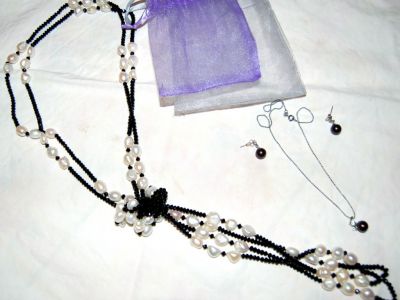
8) Shanghai A.P. Xinyang Fashion & Gifts Market
What to buy here: Pearls: China is the largest producer of pearls in the world and buying beautiful necklaces and earrings here is cheaper than anywhere else. There are many different types of pearls: those from fresh water, usually lower quality and much cheaper and those coming from the South Sea, more expensive and better quality. The difference of the price is also determined by the size, the shape and the color. Perfectly round pearls are more difficult to find and therefore more expensive. Real color for pearls, apart from the common white, can be peach, pink, grey, black and golden. Beautiful black and especially golden pearls are only from the sea.
To recognize real pearls is very easy: scrape it with scissors or even with your teeth: a fine white sand will come out and once you wipe it off the pearl will not be damaged. Prices vary consistently, they can go from Y60 for a set of necklace and earrings of fresh water pearls, to Y1000 for only one big golden pearl from the South Sea.
The best places for pearls in Shanghai are the shopping center AP Xinyang Fashion & Gifts Market, under ground in the Science and Technology Museum metro station on line 2, and Hongqiao International Pearl City in 3721 Hongmei Road (Hong Mei Lu, 虹梅路). In Hongqiao International Pearl City find Helen's shop, on the 2nd floor, Room B001: she makes beautiful sets of pearls combined with other stones and colored crystals, and you can even place the order according to your taste.
To recognize real pearls is very easy: scrape it with scissors or even with your teeth: a fine white sand will come out and once you wipe it off the pearl will not be damaged. Prices vary consistently, they can go from Y60 for a set of necklace and earrings of fresh water pearls, to Y1000 for only one big golden pearl from the South Sea.
The best places for pearls in Shanghai are the shopping center AP Xinyang Fashion & Gifts Market, under ground in the Science and Technology Museum metro station on line 2, and Hongqiao International Pearl City in 3721 Hongmei Road (Hong Mei Lu, 虹梅路). In Hongqiao International Pearl City find Helen's shop, on the 2nd floor, Room B001: she makes beautiful sets of pearls combined with other stones and colored crystals, and you can even place the order according to your taste.
Image Courtesy of Angela Corrias.
