Custom Walk in Maastricht, Netherlands by athina_65547c created on 2026-06-01
Guide Location: Netherlands » Maastricht
Guide Type: Custom Walk
# of Sights: 9
Tour Duration: 2 Hour(s)
Travel Distance: 2.5 Km or 1.6 Miles
Share Key: NGZJA
Guide Type: Custom Walk
# of Sights: 9
Tour Duration: 2 Hour(s)
Travel Distance: 2.5 Km or 1.6 Miles
Share Key: NGZJA
How It Works
Please retrieve this walk in the GPSmyCity app. Once done, the app will guide you from one tour stop to the next as if you had a personal tour guide. If you created the walk on this website or come to the page via a link, please follow the instructions below to retrieve the walk in the app.
Retrieve This Walk in App
Step 1. Download the app "GPSmyCity: Walks in 1K+ Cities" on Apple App Store or Google Play Store.



Step 2. In the GPSmyCity app, download(or launch) the guide "Maastricht Map and Walking Tours".
Step 3. Tap the menu button located at upper right corner of the "Walks" screen and select "Retrieve custom walk". Enter the share key: NGZJA
1) Nieuwenhofklooster (Nieuwenhof Convent and Chapel)
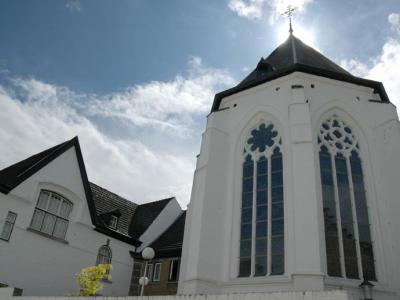
Built up against the inside of the Maastricht city wall, the Zwingelput 4 complex, formally known as the ‘Nieuwenhof’ (Nieuwenhofklooster or Klooster van de Nieuwenhof) is a former nunnery.
Over the centuries this complex has served a variety of purposes. Originally built in 1484-1489 as a beguinage (a convent-like institution for devout lay women), by 1625 it had become a proper convent whose nuns cared for the ill. In 1652 the nunnery was expanded, but in 1788 it went bankrupt due to mismanagement and during the French period was closed down. In 1797 the complex was repurposed as a Catholic poorhouse to accommodate needy orphans. The Nieuwenhof served as a children’s home up until 1980.
In 1981 the property was taken over by the University of Maastricht, which radically renovated it. Following that, the then recently-established UM Faculty of Law moved onto the premises in 1982. The faculty moved out in 1998, making way for University College in the Nieuwenhof.
Part of the complex, situated within a walking distance from the bank of the River Maas, is the Nieuwenhof Chapel – a mid-sized octagonal Gothic structure built in 1492-1493. The structure was converted into a lecture hall in 2002. To retain its spaciousness, the lecture hall was situated in the open area like a piece of wooden furniture. Incidentally, the hall is oriented towards the rood loft rather than the altar. During the renovation, a common room with a glazed roof was also constructed, creating a kind of covered courtyard.
Both the chapel and the remaining monastic buildings, some of which, including lower parts of the Zwingelput complex, date from 1652, now represent a national monument.
Over the centuries this complex has served a variety of purposes. Originally built in 1484-1489 as a beguinage (a convent-like institution for devout lay women), by 1625 it had become a proper convent whose nuns cared for the ill. In 1652 the nunnery was expanded, but in 1788 it went bankrupt due to mismanagement and during the French period was closed down. In 1797 the complex was repurposed as a Catholic poorhouse to accommodate needy orphans. The Nieuwenhof served as a children’s home up until 1980.
In 1981 the property was taken over by the University of Maastricht, which radically renovated it. Following that, the then recently-established UM Faculty of Law moved onto the premises in 1982. The faculty moved out in 1998, making way for University College in the Nieuwenhof.
Part of the complex, situated within a walking distance from the bank of the River Maas, is the Nieuwenhof Chapel – a mid-sized octagonal Gothic structure built in 1492-1493. The structure was converted into a lecture hall in 2002. To retain its spaciousness, the lecture hall was situated in the open area like a piece of wooden furniture. Incidentally, the hall is oriented towards the rood loft rather than the altar. During the renovation, a common room with a glazed roof was also constructed, creating a kind of covered courtyard.
Both the chapel and the remaining monastic buildings, some of which, including lower parts of the Zwingelput complex, date from 1652, now represent a national monument.
2) Ezelke (Donkey)
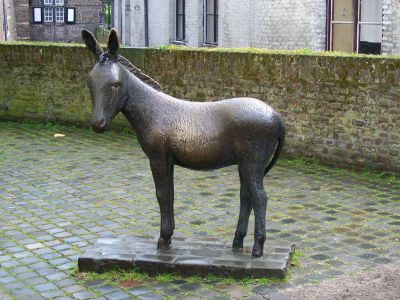
One of Maastricht’s most peculiar landmarks, the Ezelke statue-meaning donkey in Dutch-stands quietly in Ezelmarkt, the former marketplace where horses and donkeys were once traded. Installed in 1976, this small yet wistful bronze donkey was sculpted by Gertrud Januszewski as part of a broader initiative to expand green spaces in the city.
Ezelke is not alone in its symbolic role; it joins other animal sculptures that pay tribute to Maastricht’s past while advocating for a more sustainable urban landscape. But among them, this humble donkey holds a special charm-a nostalgic nod to the days when donkeys roamed the city's streets as trusted transport animals.
Over the years, the statue has become a favorite among children, who eagerly climb onto its back, turning this contemplative figure into an impromptu playground companion. Whether seen as a historical tribute, a piece of public art, or simply a lovable bronze donkey, Ezelke remains a quirky and enduring part of Maastricht’s cityscape.
Ezelke is not alone in its symbolic role; it joins other animal sculptures that pay tribute to Maastricht’s past while advocating for a more sustainable urban landscape. But among them, this humble donkey holds a special charm-a nostalgic nod to the days when donkeys roamed the city's streets as trusted transport animals.
Over the years, the statue has become a favorite among children, who eagerly climb onto its back, turning this contemplative figure into an impromptu playground companion. Whether seen as a historical tribute, a piece of public art, or simply a lovable bronze donkey, Ezelke remains a quirky and enduring part of Maastricht’s cityscape.
3) Sint-Janskerk (St. John's Church)
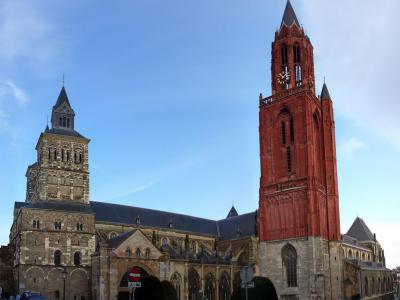
The Protestant Saint John's Church is immediately next to the Roman Catholic Basilica of Saint Servatius. The churches are often referred to as the church twins.
Saint John's Church is named after John the Baptist and was founded around 1200 by the chapter of Saint Servatius to function as a baptismal and parish church for the parish of Saint Servatius. This relieved the load on the Saint Servatius Church and allowed it to function exclusively as a collegiate and pilgrimage church.
Saint John was one of Masstricht's four Catholic parish churches during the Middle Ages. The current structure was built in the 14th and 15th centuries. The Gothic baptistery was added in 1414.
During the medieval times, on the Saturdays before Easter and Pentecost, the canons of Saint Servatius went in procession to Saint John to consecrate the baptismal water. On that occasion, the church choir sang to the canons from the first transept of Saint John's.
Saint John's became a Protestant church in 1632, while Saint Servatius remained a Catholic church. Some original Catholic wall paintings remain in Saint John's.
The interior features an impressive rib vault. The polychrome corbels feature angels, bishops, and the twelve apostles.
The church has had dozens of renovations over the years. The church has many detailed furnishings, including a Baroque Louis XVI-style pulpit that dates to 1779. The church's organ was built in 1992 using the organ case from 1780.
Saint John's main feature is its red 79-meter (259 feet) tall tower built in the 15th century after the previous tower collapsed. The tower includes a wooden belfry and a 1687 bell. A small bell, the so-called gate bell, used to be rung daily to open and close the city gates, but sadly it was stolen in 1943 by the German occupiers.
Visitors can climb the tower's 218 narrow steps to the belfry's viewing platform for a stunning view of the city.
Saint John's Church is named after John the Baptist and was founded around 1200 by the chapter of Saint Servatius to function as a baptismal and parish church for the parish of Saint Servatius. This relieved the load on the Saint Servatius Church and allowed it to function exclusively as a collegiate and pilgrimage church.
Saint John was one of Masstricht's four Catholic parish churches during the Middle Ages. The current structure was built in the 14th and 15th centuries. The Gothic baptistery was added in 1414.
During the medieval times, on the Saturdays before Easter and Pentecost, the canons of Saint Servatius went in procession to Saint John to consecrate the baptismal water. On that occasion, the church choir sang to the canons from the first transept of Saint John's.
Saint John's became a Protestant church in 1632, while Saint Servatius remained a Catholic church. Some original Catholic wall paintings remain in Saint John's.
The interior features an impressive rib vault. The polychrome corbels feature angels, bishops, and the twelve apostles.
The church has had dozens of renovations over the years. The church has many detailed furnishings, including a Baroque Louis XVI-style pulpit that dates to 1779. The church's organ was built in 1992 using the organ case from 1780.
Saint John's main feature is its red 79-meter (259 feet) tall tower built in the 15th century after the previous tower collapsed. The tower includes a wooden belfry and a 1687 bell. A small bell, the so-called gate bell, used to be rung daily to open and close the city gates, but sadly it was stolen in 1943 by the German occupiers.
Visitors can climb the tower's 218 narrow steps to the belfry's viewing platform for a stunning view of the city.
4) Basilica of Saint Servatius (must see)
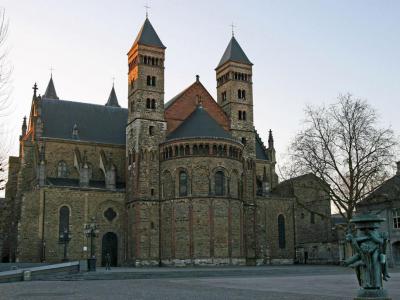
The Romanesque Basilica of Saint Servatius is built on Saint Servatius's gravesite. It is likely that the current structure is the fourth iteration of churches on this site.
Saint Servatius was an Armenian missionary and Tongeren's bishop. He reportedly died in Maastricht in 384. The first church was a small memorial chapel, which was replaced by a larger church. Next, a pilgrim church was built. Finally, the current church was built between the 11th and 12th centuries. Emperor Henry III and a dozen bishops attended the church's dedication in 1039.
The impressive Berg Portal is located on the south side of the church and gives visitors access to the church via descending steps. The portal was probably built during the 12th and 13th centuries and is the first Gothic construction in Maastricht. An intricate tile labyrinth covers the floor.
The portal features vibrantly decorated walls and 72 statues of kings, prophets, apostles, saints, and angels. In addition, reliefs depict Mary's life. In 1566, many statues had their heads removed because of a cultural movement against icons. The damage was poorly repaired in 1596. A Baroque facade was added in the 18th century and removed in the 19th century.
The side chapels were added in the 14th and 15th centuries and feature Gothic architecture. A Gothic spire was added in 1556, and Baroque helmet spires were added in 1770.
French revolutionaries used the church as a horse stable in 1797. As a result, many of the church furnishings were sold or damaged. Since 1866, the church has undergone several restorations.
Throughout the Middle Ages, the Pilgrimage of the Relics took place every seven years. The pilgrimage was revived in the 19th century and again takes place every seven years.
Saint Servatius was an Armenian missionary and Tongeren's bishop. He reportedly died in Maastricht in 384. The first church was a small memorial chapel, which was replaced by a larger church. Next, a pilgrim church was built. Finally, the current church was built between the 11th and 12th centuries. Emperor Henry III and a dozen bishops attended the church's dedication in 1039.
The impressive Berg Portal is located on the south side of the church and gives visitors access to the church via descending steps. The portal was probably built during the 12th and 13th centuries and is the first Gothic construction in Maastricht. An intricate tile labyrinth covers the floor.
The portal features vibrantly decorated walls and 72 statues of kings, prophets, apostles, saints, and angels. In addition, reliefs depict Mary's life. In 1566, many statues had their heads removed because of a cultural movement against icons. The damage was poorly repaired in 1596. A Baroque facade was added in the 18th century and removed in the 19th century.
The side chapels were added in the 14th and 15th centuries and feature Gothic architecture. A Gothic spire was added in 1556, and Baroque helmet spires were added in 1770.
French revolutionaries used the church as a horse stable in 1797. As a result, many of the church furnishings were sold or damaged. Since 1866, the church has undergone several restorations.
Throughout the Middle Ages, the Pilgrimage of the Relics took place every seven years. The pilgrimage was revived in the 19th century and again takes place every seven years.
5) Boekhandel Dominicanen (Dominicanen Bookstore) (must see)
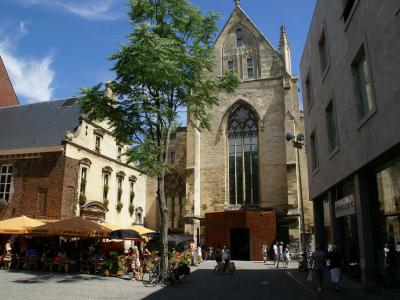
This unique bookstore features an independent bookstore located in a 13th-century church.
The Gothic-style cathedral was built in 1294. The church features a 14th-century fresco showing scenes from Thomas Aquinas' life. The fresco is known as Netherlands' oldest ecclesiastical wall painting. Other wall paintings date to the 1600s.
In 1794, Napolean Bonaparte used the church to house personnel and store equipment. After the monastery's dissolution in the 18th century, the church found a variety of other uses. For example, it was used as bike storage, a warehouse, a carnival, a boxing ring, and a printing house.
In 2006, the ancient church was converted into the Selexyx bookstore. The conversion project is known as Selexyz Dominicanen Maastricht. The conversion features open spaces, and the bookstore has been divided into three stories. The bookstore's design doesn't interfere with or detract from the church's stunning interior.
Selexyz became Polare, and Polare filed for bankruptcy. In 2014, the bookstore became independent and updated its name to Boekhandel Dominicanen. The bookstore features Dutch and English titles, children's books, art histories, travel guides, and more. In addition, the bookstore has a music department with vinyl records and CDs.
Over 150 events take place every year in the bookstore. Visitors can attend interviews with authors, readings, and debates.
The Dominicanen Bookstore also has a delightful cafe. Visitors can enjoy lunch and coffee in the former church's choir area.
Whether you are looking to peruse books, attend an event, grab a coffee, or enjoy the beauty of the ancient church, Dominicanen Bookstore is a must-see.
The Gothic-style cathedral was built in 1294. The church features a 14th-century fresco showing scenes from Thomas Aquinas' life. The fresco is known as Netherlands' oldest ecclesiastical wall painting. Other wall paintings date to the 1600s.
In 1794, Napolean Bonaparte used the church to house personnel and store equipment. After the monastery's dissolution in the 18th century, the church found a variety of other uses. For example, it was used as bike storage, a warehouse, a carnival, a boxing ring, and a printing house.
In 2006, the ancient church was converted into the Selexyx bookstore. The conversion project is known as Selexyz Dominicanen Maastricht. The conversion features open spaces, and the bookstore has been divided into three stories. The bookstore's design doesn't interfere with or detract from the church's stunning interior.
Selexyz became Polare, and Polare filed for bankruptcy. In 2014, the bookstore became independent and updated its name to Boekhandel Dominicanen. The bookstore features Dutch and English titles, children's books, art histories, travel guides, and more. In addition, the bookstore has a music department with vinyl records and CDs.
Over 150 events take place every year in the bookstore. Visitors can attend interviews with authors, readings, and debates.
The Dominicanen Bookstore also has a delightful cafe. Visitors can enjoy lunch and coffee in the former church's choir area.
Whether you are looking to peruse books, attend an event, grab a coffee, or enjoy the beauty of the ancient church, Dominicanen Bookstore is a must-see.
6) Marktplaats (Market Square) (must see)
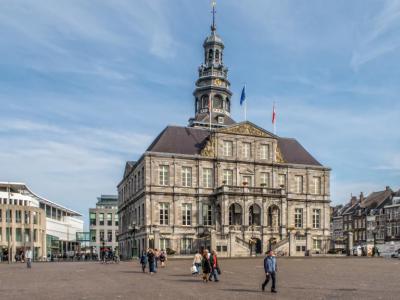
Market Square is home to Maastricht's most popular market. In addition, the square features Maastricht's city hall and numerous imposing mansions.
Market Square has hosted commodity markets for centuries. In Medieval times, the square was much smaller. In the 13th century, a cloth hall was built against the old city wall and traders would gather here. In 1659, the old city walls and the cloth hall were demolished to make way for the new City Hall.
City Hall was built by architect Pieter Post between 1659 and 1664. The building's tower dates to 1684. The 49-bell carillon chimes on the hour. City Hall's interior features stunning ceiling paintings, stucco work, and wall tapestries.
The square's current layout and most of the square's buildings were constructed in the 17th and 18th centuries.
The market operates every Wednesday and Friday. The Wednesday market features around 200 stalls. The Friday market is busier, with around 400 stalls.
Sellers offer plants, flowers, food items, fresh produce, cosmetics, and clothes. Market Square also features many permanent restaurants, boutiques, and stores.
A statue of Johanne Petrus Mincklelers stands in the center of the square. The statue is called "Eternal Burning Flame." Mincklelers invented illuminating gas, and his statue depicts him holding a gas torch. The gas torch is lit with natural gas, and visitors can feel the heat up-close.
The square features a bluestone fountain called Mooswief. The statue honors women who used the market to sell their vegetables.
Market Square has hosted commodity markets for centuries. In Medieval times, the square was much smaller. In the 13th century, a cloth hall was built against the old city wall and traders would gather here. In 1659, the old city walls and the cloth hall were demolished to make way for the new City Hall.
City Hall was built by architect Pieter Post between 1659 and 1664. The building's tower dates to 1684. The 49-bell carillon chimes on the hour. City Hall's interior features stunning ceiling paintings, stucco work, and wall tapestries.
The square's current layout and most of the square's buildings were constructed in the 17th and 18th centuries.
The market operates every Wednesday and Friday. The Wednesday market features around 200 stalls. The Friday market is busier, with around 400 stalls.
Sellers offer plants, flowers, food items, fresh produce, cosmetics, and clothes. Market Square also features many permanent restaurants, boutiques, and stores.
A statue of Johanne Petrus Mincklelers stands in the center of the square. The statue is called "Eternal Burning Flame." Mincklelers invented illuminating gas, and his statue depicts him holding a gas torch. The gas torch is lit with natural gas, and visitors can feel the heat up-close.
The square features a bluestone fountain called Mooswief. The statue honors women who used the market to sell their vegetables.
7) Grote Staat (Great Street)
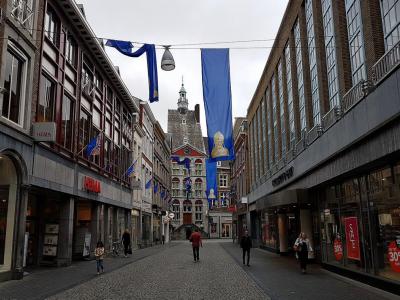
Great Street is located in Masstricht's pedestrian zone and is the city's most important shopping street. Historically the street linked the Vrijthof Square and the Saint Servatius Bridge. Great Street is also home to 35 national monuments.
Excavations reveal significant Roman habitation along Great Street. Evidence shows that Roman houses, wells, and businesses were located here. The excavation showed two longhouse lots. The narrow houses were called strip houses and were up to 30 meters (98 feet) long. These houses usually featured a shop facing the street and a business area or home behind it.
Great Street was known as Saint George Street before the 18th century. Many of the buildings feature 17th and 18th-century facades, even though the buildings themselves are much older.
Great Street features a variety of chain stores and national brands. Shoppers can check out the HEMA department store in addition to many clothing, retail, cosmetic, and shoe stores. The Living Above Shops project has encouraged many locals to live in apartments above the stores.
Excavations reveal significant Roman habitation along Great Street. Evidence shows that Roman houses, wells, and businesses were located here. The excavation showed two longhouse lots. The narrow houses were called strip houses and were up to 30 meters (98 feet) long. These houses usually featured a shop facing the street and a business area or home behind it.
Great Street was known as Saint George Street before the 18th century. Many of the buildings feature 17th and 18th-century facades, even though the buildings themselves are much older.
Great Street features a variety of chain stores and national brands. Shoppers can check out the HEMA department store in addition to many clothing, retail, cosmetic, and shoe stores. The Living Above Shops project has encouraged many locals to live in apartments above the stores.
8) Bisschopsmolen (Bishop's Mill) (must see)
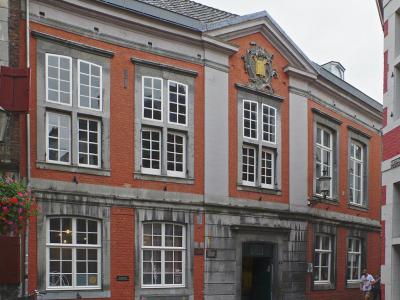
Bishop's Mill is Holland's oldest working watermill. Guests can buy flour to make their own bread or buy fresh-baked bread from the mill's bakery.
The mill was originally built in the seventh century. Duke Godfrey of Bouillon leased the mill to The Principality of Liège in the 11th century. The Duke died in 1099 in Jerusalem, and the mill became episcopal property. At this time, the mill became known as "Bishop's Mill."
The Brewer's Guild ran the mill during the late Middle Ages. During this time, all city brewers were required to grind their malt at Bishop's Mill.
The 1577 Spanish siege destroyed the mill, which was partially rebuilt in 1609.
The mill was renovated in 2004. Visitors can watch the working mill and taste fresh-baked bread and pies. Bakery items are made from the mill's spelt flour. The vlaaisweet tart is a must for visitors. Bishop's Mill offers guided tours for a more in-depth experience.
The mill was originally built in the seventh century. Duke Godfrey of Bouillon leased the mill to The Principality of Liège in the 11th century. The Duke died in 1099 in Jerusalem, and the mill became episcopal property. At this time, the mill became known as "Bishop's Mill."
The Brewer's Guild ran the mill during the late Middle Ages. During this time, all city brewers were required to grind their malt at Bishop's Mill.
The 1577 Spanish siege destroyed the mill, which was partially rebuilt in 1609.
The mill was renovated in 2004. Visitors can watch the working mill and taste fresh-baked bread and pies. Bakery items are made from the mill's spelt flour. The vlaaisweet tart is a must for visitors. Bishop's Mill offers guided tours for a more in-depth experience.
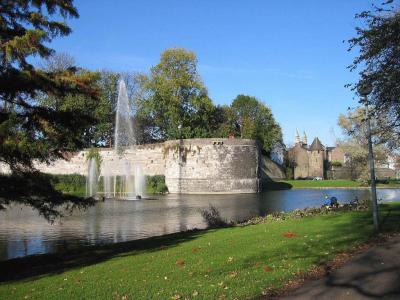
9) De Vijf Koppen (The Five Heads) Bastion
The Five Heads (De Vief Kop) is a late 15th-century to early 16th-century roundel located in the Nieuwstad area of Maastricht. Alongside the nearby Haet ende Nijt roundel, it formed an extension of Maastricht's second city wall, originally built in the late 13th century. Today, both structures are designated national monuments and are prominent features of the Maastricht City Park.
Like many historical fortifications, the Five Heads was initially unnamed. Early references from 1528 describe it as ''the new tower in the Nieuwstad near the Maas''. The infamous name "The Five Heads" originates from a gruesome event in 1638, when, after the failed Betrayal of Maastricht, the severed heads of five conspirators were displayed here on a stake. The term "De Vijf Koppen" likely came into common use by the late 19th century, spurred by a Catholic movement seeking the rehabilitation of the so-called traitors.
The Five Heads saw restoration efforts in 2018, including work on the courtine wall, a replica of the 1638 wooden stake, and a gun carriage with a cast iron cannon. On March 24, 2019, part of the city wall collapsed due to moisture and erosion. Temporary supports were added, with restoration planned for mid-2023.
Architecturally, the Five Heads is slightly more than semi-circular, with a diameter of approximately eighteen meters. The structure is faced with Namur stone, beneath which lies a core of marlstone, with the majority of the roundel filled with rubble and earth. Unlike Haet ende Nijt, which features a sculpted frieze along its outer edge, the Five Heads does not possess such ornamentation. The eastern wall was repaired with bricks, and a Namur stone engraved with crossed cannon barrels and two bullets was embedded nearby. Additionally, three corbels can be seen on the southeast-facing side, which once supported a cage.
The Five Heads remains an integral part of Maastricht’s historical landscape, standing as both a reminder of its turbulent past and a key feature of its scenic city park.
Like many historical fortifications, the Five Heads was initially unnamed. Early references from 1528 describe it as ''the new tower in the Nieuwstad near the Maas''. The infamous name "The Five Heads" originates from a gruesome event in 1638, when, after the failed Betrayal of Maastricht, the severed heads of five conspirators were displayed here on a stake. The term "De Vijf Koppen" likely came into common use by the late 19th century, spurred by a Catholic movement seeking the rehabilitation of the so-called traitors.
The Five Heads saw restoration efforts in 2018, including work on the courtine wall, a replica of the 1638 wooden stake, and a gun carriage with a cast iron cannon. On March 24, 2019, part of the city wall collapsed due to moisture and erosion. Temporary supports were added, with restoration planned for mid-2023.
Architecturally, the Five Heads is slightly more than semi-circular, with a diameter of approximately eighteen meters. The structure is faced with Namur stone, beneath which lies a core of marlstone, with the majority of the roundel filled with rubble and earth. Unlike Haet ende Nijt, which features a sculpted frieze along its outer edge, the Five Heads does not possess such ornamentation. The eastern wall was repaired with bricks, and a Namur stone engraved with crossed cannon barrels and two bullets was embedded nearby. Additionally, three corbels can be seen on the southeast-facing side, which once supported a cage.
The Five Heads remains an integral part of Maastricht’s historical landscape, standing as both a reminder of its turbulent past and a key feature of its scenic city park.
