Custom Walk in Cologne, Germany by katja_friedrich_939cd5 created on 2026-06-06
Guide Location: Germany » Cologne
Guide Type: Custom Walk
# of Sights: 10
Tour Duration: 2 Hour(s)
Travel Distance: 4.7 Km or 2.9 Miles
Share Key: CGX28
Guide Type: Custom Walk
# of Sights: 10
Tour Duration: 2 Hour(s)
Travel Distance: 4.7 Km or 2.9 Miles
Share Key: CGX28
How It Works
Please retrieve this walk in the GPSmyCity app. Once done, the app will guide you from one tour stop to the next as if you had a personal tour guide. If you created the walk on this website or come to the page via a link, please follow the instructions below to retrieve the walk in the app.
Retrieve This Walk in App
Step 1. Download the app "GPSmyCity: Walks in 1K+ Cities" on Apple App Store or Google Play Store.



Step 2. In the GPSmyCity app, download(or launch) the guide "Cologne Map and Walking Tours".
Step 3. Tap the menu button located at upper right corner of the "Walks" screen and select "Retrieve custom walk". Enter the share key: CGX28
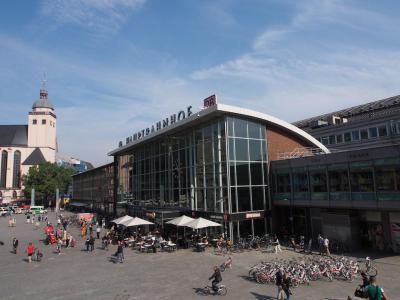
1) Köln Hauptbahnhof
Köln Hauptbahnhof (english: Cologne Central Station), is an important railway station. It is a crucial local, national, and international transportation hub, serving many ICE, Thalys, and Intercity trains, as well as regional Regional-Express, RegionalBahn, and local S-Bahn trains. The station also hosts EuroNight and Nightjet night services. On an average day, around 280,000 travellers pass through the station, making it the fifth busiest station in Germany.
One of the notable features of Köln Hauptbahnhof is its frequent connections to Frankfurt, thanks to the Cologne-Frankfurt high-speed rail line that starts in southern Cologne. The station is conveniently located next to Cologne Cathedral, a major landmark and tourist attraction in the city.
The original Central Station (German: Centralbahnhof) was constructed in 1857 to the plans of Hermann Otto Pflaume on behalf of the RhE, which had acquired the BCE in the same year. The station was inaugurated on 5 December 1859, together with the Cathedral Bridge (German: Dombrücke, later the site of the Hohenzollernbrücke). The Central Station was both a terminus and a through station. It included four terminating tracks for the RhE running to the west and two through tracks connected to its line on the eastern side of the Rhine by the Cathedral Bridge.
One of the notable features of Köln Hauptbahnhof is its frequent connections to Frankfurt, thanks to the Cologne-Frankfurt high-speed rail line that starts in southern Cologne. The station is conveniently located next to Cologne Cathedral, a major landmark and tourist attraction in the city.
The original Central Station (German: Centralbahnhof) was constructed in 1857 to the plans of Hermann Otto Pflaume on behalf of the RhE, which had acquired the BCE in the same year. The station was inaugurated on 5 December 1859, together with the Cathedral Bridge (German: Dombrücke, later the site of the Hohenzollernbrücke). The Central Station was both a terminus and a through station. It included four terminating tracks for the RhE running to the west and two through tracks connected to its line on the eastern side of the Rhine by the Cathedral Bridge.
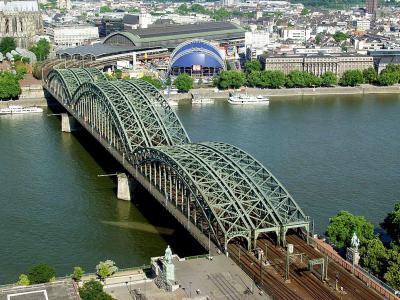
2) Hohenzollernbrücke (Hohenzollern Bridge) (must see)
The Hohenzollern Bridge-Cologne’s grand old crossing that’s equal parts iron, history, and sentimental hardware. Stretching across the Rhine like a steel spine, it’s the city’s most beloved blend of romance and railway precision.
Built in 1911 to replace the overworked Cathedral Bridge, this heavy-duty thoroughfare was Cologne’s answer to the rising tide of traffic. It handled trains, trams, cars, pedestrians-you name it. Its name is a royal nod to the House of Hohenzollern, the Prussian dynasty that once ruled over this corner of the world. In fact, the whole project was inaugurated by none other than Kaiser Wilhelm II, who likely admired it for being both majestic and punctual.
Watch your step-or your stirrup-because each end of the bridge is guarded by towering equestrian statues of German emperors and Prussian kings. On one side: Friedrich Wilhelm IV and Wilhelm I. On the other: Friedrich III and Wilhelm II. A cavalry of stone to usher you across.
Now, history took a turn in 1945 when German forces-perhaps not appreciating the bridge’s architectural flair-blew it up during their retreat. Luckily, the bridge rose from the ashes, rebuilt by 1959, and polished up again in the '80s. It still carries trains today-lots of them-and now features pedestrian paths and bike lanes too.
But wait-this is no longer just a bridge. Since 2008, it’s become Cologne’s unofficial temple of love. Couples attach padlocks to the railings, whisper sweet nothings, and toss the keys into the Rhine. By 2015, over half a million locks had been added. That’s a lot of commitment. And a lot of extra weight, too...
A place where steel meets sentiment, this is the best spot to gaze at the Cologne Cathedral from across the water-and maybe reflect on the nature of love, war, and urban planning...
Pro tip:
Go at night. The city lights up, the cathedral glows like a Gothic lantern, and the bridge hums with quiet magic. Trust us, it’s a whole different mood after sunset.
Built in 1911 to replace the overworked Cathedral Bridge, this heavy-duty thoroughfare was Cologne’s answer to the rising tide of traffic. It handled trains, trams, cars, pedestrians-you name it. Its name is a royal nod to the House of Hohenzollern, the Prussian dynasty that once ruled over this corner of the world. In fact, the whole project was inaugurated by none other than Kaiser Wilhelm II, who likely admired it for being both majestic and punctual.
Watch your step-or your stirrup-because each end of the bridge is guarded by towering equestrian statues of German emperors and Prussian kings. On one side: Friedrich Wilhelm IV and Wilhelm I. On the other: Friedrich III and Wilhelm II. A cavalry of stone to usher you across.
Now, history took a turn in 1945 when German forces-perhaps not appreciating the bridge’s architectural flair-blew it up during their retreat. Luckily, the bridge rose from the ashes, rebuilt by 1959, and polished up again in the '80s. It still carries trains today-lots of them-and now features pedestrian paths and bike lanes too.
But wait-this is no longer just a bridge. Since 2008, it’s become Cologne’s unofficial temple of love. Couples attach padlocks to the railings, whisper sweet nothings, and toss the keys into the Rhine. By 2015, over half a million locks had been added. That’s a lot of commitment. And a lot of extra weight, too...
A place where steel meets sentiment, this is the best spot to gaze at the Cologne Cathedral from across the water-and maybe reflect on the nature of love, war, and urban planning...
Pro tip:
Go at night. The city lights up, the cathedral glows like a Gothic lantern, and the bridge hums with quiet magic. Trust us, it’s a whole different mood after sunset.
3) KölnTriangle Panorama (Triangle Observation Deck) (must see)
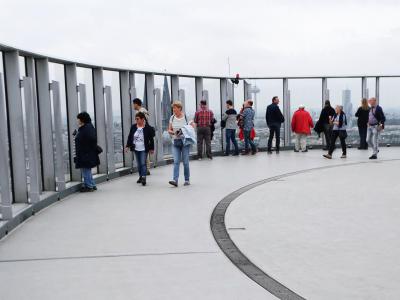
Perched atop the sleek KölnTriangle building, the Triangle Observation Deck isn’t just a fancy name-it’s a 103-meter-high front-row seat to Cologne in all its sprawling glory. The building itself is shaped like a Reuleaux triangle, which basically means someone got fancy with a geometry set and decided curves were cooler than corners. Bonus: Its double-skin south facade acts like the building’s lungs, breathing in fresh air for your convenience.
Up at the top, the observation deck delivers a full panoramic wow-factor. Directly across the Rhine, the Cologne Cathedral poses majestically like it knows it’s being watched (because it is). The deck is outdoors but protected by glass panels, so you can embrace the wind in your hair without worrying about losing your hat-or your dignity.
Feeling peckish after all that skyline admiration? There's a rooftop restaurant that serves up views and food, both equally worth savoring.
Whether you're a daytime wanderer or a dusk-chaser, the deck stays open from sun-up to starlight, letting you witness Cologne flip its switch from postcard-perfect to nighttime sparkle.
Up at the top, the observation deck delivers a full panoramic wow-factor. Directly across the Rhine, the Cologne Cathedral poses majestically like it knows it’s being watched (because it is). The deck is outdoors but protected by glass panels, so you can embrace the wind in your hair without worrying about losing your hat-or your dignity.
Feeling peckish after all that skyline admiration? There's a rooftop restaurant that serves up views and food, both equally worth savoring.
Whether you're a daytime wanderer or a dusk-chaser, the deck stays open from sun-up to starlight, letting you witness Cologne flip its switch from postcard-perfect to nighttime sparkle.
4) Chocolate Museum (must see)
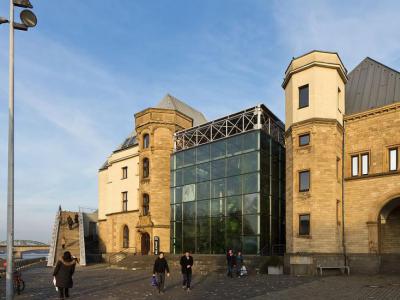
The Imhoff-Schokoladenmuseum was opened by Hans Imhoff on 31 October 1993. It is situated in the Cologne quarter Altstadt-Süd on the Rheinauhafen-peninsula. The exhibition shows the whole history of chocolate, from the beginning at the Olmecs, Maya and Aztecs until the contemporary products and their production methods. The museum belongs to the Top Ten of German museums with 5,000 guidances and 600,000 visitors a year.
A special attraction is the three-meter-high chocolate fountain, at which a woman dips wafers in the liquid chocolate and distributes them to visitors. Another interesting thing for visitors is the small tropiarium consisting of a glass cube with 10-meter edge length showing cacao trees of the species Theobroma cacao and Theobroma grandiflorum. Several production machineries were built as miniatures so that you can have a look at the production process of the small chocolate bars, which are given to the visitors at the entrance of the museum.
Why You Should Visit:
Gives a brief history of chocolate as well as more esoteric things like the religion & culture related to it. Great spot to view the Rhine river, too.
Tip:
Lots of free samples during visits and you can have your own personalized chocolate made.
A special attraction is the three-meter-high chocolate fountain, at which a woman dips wafers in the liquid chocolate and distributes them to visitors. Another interesting thing for visitors is the small tropiarium consisting of a glass cube with 10-meter edge length showing cacao trees of the species Theobroma cacao and Theobroma grandiflorum. Several production machineries were built as miniatures so that you can have a look at the production process of the small chocolate bars, which are given to the visitors at the entrance of the museum.
Why You Should Visit:
Gives a brief history of chocolate as well as more esoteric things like the religion & culture related to it. Great spot to view the Rhine river, too.
Tip:
Lots of free samples during visits and you can have your own personalized chocolate made.
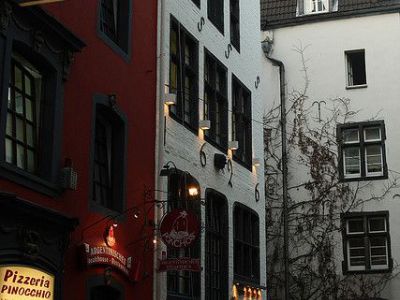
5) Sunner im Walfisch
Sünner im Walfisch is a cozy brewery located in a historic property dating from the mid-17th century. It stands on the site of another, medieval brewery "Heinrich zur Krae" (Krähe), the first records of which in the Cologne Rentkammer beer tax book appear as early as 1476.
Visitors to Sunner im Walfisch can expect to find a variety of traditional dishes on the menu, including Himmel & Ääd (a local dish made with mashed potatoes and apple sauce), broad beans with bacon and fried potatoes, and Rhenish sauerbraten with dumplings and red cabbage. Grilled rump steaks with herb butter and an oven-fresh knuckle of pork with sauerkraut and mashed potatoes are also popular choices.
If you're looking for a quick bite, Sunner im Walfisch offers a range of snack options as well. Try a Mett roll with freshly tapped Kölsch beer, Halve Hahn (a local sandwich made with rye bread and cheese), or a meatball with mustard and bread.
Visitors to Sunner im Walfisch can expect to find a variety of traditional dishes on the menu, including Himmel & Ääd (a local dish made with mashed potatoes and apple sauce), broad beans with bacon and fried potatoes, and Rhenish sauerbraten with dumplings and red cabbage. Grilled rump steaks with herb butter and an oven-fresh knuckle of pork with sauerkraut and mashed potatoes are also popular choices.
If you're looking for a quick bite, Sunner im Walfisch offers a range of snack options as well. Try a Mett roll with freshly tapped Kölsch beer, Halve Hahn (a local sandwich made with rye bread and cheese), or a meatball with mustard and bread.
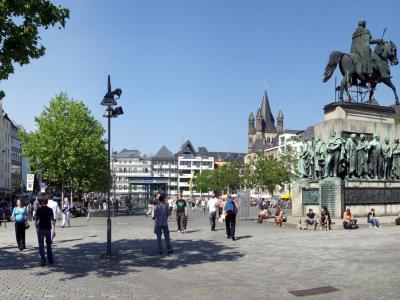
6) Heumarkt (Hay Market) (must see)
Welcome to Cologne’s Hay Market-where the past smells faintly of hay, spice, and maybe a little too much fish.
Dating all the way back to Roman times, this square is one of Central Europe’s oldest markets. In the Middle Ages, it bloomed into a buzzing trade hub. Originally, Hay Market and Old Market were one big commercial jumble simply called the Old Market. But as the centuries marched on and city life got more complex, the two parted ways-amicably, we assume...
By the 13th century, Cologne was booming, with a population of over 40,000-massive by medieval standards. Hay Market, thanks to its prime location, became the go-to spot for everything from cheese to chickpeas. Traders hawked vegetables, fish, grain, spices, and yes, actual hay. In 1492, while Columbus was off looking for India, a grain scale was added here to keep the deals honest.
But this wasn’t just your average muddy medieval market. During the Renaissance, Hay Market leveled up in beauty, drawing comparisons to Venice’s St. Mark’s Square. Today, it’s still charming, paved in brick, framed by neatly trimmed trees, and peppered with restaurants that definitely know how to plate a schnitzel.
In 1580, the Cologne stock exchange took root here, too-proof that not just onions were traded. Closer to our days, in 1878, the square got a serious upgrade in the form of a dramatic equestrian statue of Prussia’s King Friedrich Wilhelm III. The Market Hall was added in 1904, and historic flair has been going strong here ever since.
Though nobody comes here for hay anymore, Hay Market is far from quiet. These days, it’s one of the city’s liveliest squares-packed with pubs, breweries, and cafés perfect for watching the world go by. And in winter, it transforms into a holiday wonderland with a cheerful Christmas market and a festive ice-skating rink.
Hay Market may have traded its wagons and wheat for lattes and selfies-but its spirit is very much alive and thriving.
Dating all the way back to Roman times, this square is one of Central Europe’s oldest markets. In the Middle Ages, it bloomed into a buzzing trade hub. Originally, Hay Market and Old Market were one big commercial jumble simply called the Old Market. But as the centuries marched on and city life got more complex, the two parted ways-amicably, we assume...
By the 13th century, Cologne was booming, with a population of over 40,000-massive by medieval standards. Hay Market, thanks to its prime location, became the go-to spot for everything from cheese to chickpeas. Traders hawked vegetables, fish, grain, spices, and yes, actual hay. In 1492, while Columbus was off looking for India, a grain scale was added here to keep the deals honest.
But this wasn’t just your average muddy medieval market. During the Renaissance, Hay Market leveled up in beauty, drawing comparisons to Venice’s St. Mark’s Square. Today, it’s still charming, paved in brick, framed by neatly trimmed trees, and peppered with restaurants that definitely know how to plate a schnitzel.
In 1580, the Cologne stock exchange took root here, too-proof that not just onions were traded. Closer to our days, in 1878, the square got a serious upgrade in the form of a dramatic equestrian statue of Prussia’s King Friedrich Wilhelm III. The Market Hall was added in 1904, and historic flair has been going strong here ever since.
Though nobody comes here for hay anymore, Hay Market is far from quiet. These days, it’s one of the city’s liveliest squares-packed with pubs, breweries, and cafés perfect for watching the world go by. And in winter, it transforms into a holiday wonderland with a cheerful Christmas market and a festive ice-skating rink.
Hay Market may have traded its wagons and wheat for lattes and selfies-but its spirit is very much alive and thriving.
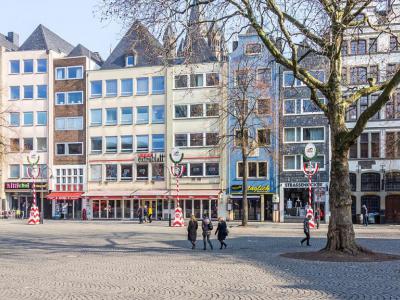
7) Alter Markt (Old Market)
In the Old Market Square of Cologne, cobblestones carry gossip older than most European countries.
Once connected to the Hay Market, this lively square has seen everything from Renaissance flair to full-blown weaver revolts. Today, it's home to beautiful façades, a dramatic fountain, and, come winter, one of Cologne’s coziest Christmas Markets. But don’t let the mulled wine distract you from the centuries of drama baked into these stones.
Markets and homes have stood here since at least the year 922-that’s not a typo... The oldest surviving building dates back to 1580, though many historic structures were wiped out during WWII bombings. Still, Cologne rebuilt with style, as it always does.
One particularly spicy chapter unfolded here in 1371: the Cologne Weaver Uprising. Picture disgruntled guild members facing off with the city council. The weavers lost-badly-and were either arrested or politely escorted out of town with pitchforks (not the musical kind).
At the heart of the square stands the Jan von Werth fountain, completed in 1884. The story it tells is pure soap opera. Young Jan, a lowly farm boy, fell for Griet. But Griet wanted someone with a bit more... coin. Heartbroken, Jan headed off to the Thirty Years’ War, leveled up to war hero status, and returned to find Griet peddling fruit in the square. She gasped, “Jan, who would’ve thought it?” To this, he shrugged and delivered the ultimate verbal mic drop: “Griet, the one who should have” (and with these words, he turned away).
Around the square, you’ll find old-school German architecture, statues of the city’s founders, and-up near house No. 24-a cheeky little sculpture called Kallendresser. It shows a man relieving himself into a gutter. Tasteful? Not exactly. But pointed absolutely-it’s likely a rebellious jab at the city hall conveniently located on the square’s west side.
Today, the Old Market is car-free and people-full. With its bars, restaurants, and ice cream shops, it buzzes well into the night. So, come here for the history, stay for the beer-and maybe watch out for flying weaver spindles...
Once connected to the Hay Market, this lively square has seen everything from Renaissance flair to full-blown weaver revolts. Today, it's home to beautiful façades, a dramatic fountain, and, come winter, one of Cologne’s coziest Christmas Markets. But don’t let the mulled wine distract you from the centuries of drama baked into these stones.
Markets and homes have stood here since at least the year 922-that’s not a typo... The oldest surviving building dates back to 1580, though many historic structures were wiped out during WWII bombings. Still, Cologne rebuilt with style, as it always does.
One particularly spicy chapter unfolded here in 1371: the Cologne Weaver Uprising. Picture disgruntled guild members facing off with the city council. The weavers lost-badly-and were either arrested or politely escorted out of town with pitchforks (not the musical kind).
At the heart of the square stands the Jan von Werth fountain, completed in 1884. The story it tells is pure soap opera. Young Jan, a lowly farm boy, fell for Griet. But Griet wanted someone with a bit more... coin. Heartbroken, Jan headed off to the Thirty Years’ War, leveled up to war hero status, and returned to find Griet peddling fruit in the square. She gasped, “Jan, who would’ve thought it?” To this, he shrugged and delivered the ultimate verbal mic drop: “Griet, the one who should have” (and with these words, he turned away).
Around the square, you’ll find old-school German architecture, statues of the city’s founders, and-up near house No. 24-a cheeky little sculpture called Kallendresser. It shows a man relieving himself into a gutter. Tasteful? Not exactly. But pointed absolutely-it’s likely a rebellious jab at the city hall conveniently located on the square’s west side.
Today, the Old Market is car-free and people-full. With its bars, restaurants, and ice cream shops, it buzzes well into the night. So, come here for the history, stay for the beer-and maybe watch out for flying weaver spindles...
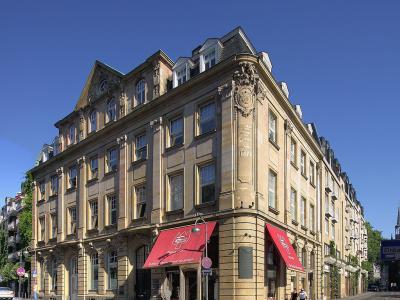
8) Farina Fragrance Museum
One of the popular tourist attractions in Cologne is the Fragrance Museum and Shop. This shop is across the City Hall and close to the Wallraf-Richartz Museum. Founded in 1709 by John Maria Farina to provide visitors with an insight into the art of producing perfumes, the museum is the eldest fragrance factory still standing and houses the registered office since 1723. Here you will see how perfume is produced using different methods. Over several floors, the museum provides a very detailed insight into the production methods of perfume throughout the various stages. The focus is primarily laid on Eau de Cologne, and you will, therefore, discover some particular technical devices such as distillation apparatus which were once used. In addition to the equipment, you will also be able to witness the evolution thanks to various pictures and documents which help trace back history. Moreover, as copyright didn’t exist in those days, many imitations and forgeries of Eau de Cologne rapidly appeared on the market and a certain number of them are also presented in the museum. Further details as to the changes in the manufacturing of Farina Eau de Cologne are also on display.
A staircase will lead you to the original cellar vaults, right back to those ancient days. This is where scents were produced three hundred years ago. On 25 November 2006, in commemoration of John Maria Farina’s 240th death anniversary, the Farina House was elected “place to be” within the context of the project “Germany Land to be”. On your trip to Cologne, visit the perfume museum and learn all about what this city is popularly known for. Go through an interesting 300-year-old journey unfolding the essence, culture and fragrance of the perfume industry here.
Why You Should Visit:
Super-educational on the history and realities of fragrances.
Takes 1 hour and is very central near the Dom.
You will also receive a small free sample of l'eau de Cologne at the end.
Tip:
Visit early or a day in advance to book a tour, as they do it in small groups and on a language-by-language basis.
A staircase will lead you to the original cellar vaults, right back to those ancient days. This is where scents were produced three hundred years ago. On 25 November 2006, in commemoration of John Maria Farina’s 240th death anniversary, the Farina House was elected “place to be” within the context of the project “Germany Land to be”. On your trip to Cologne, visit the perfume museum and learn all about what this city is popularly known for. Go through an interesting 300-year-old journey unfolding the essence, culture and fragrance of the perfume industry here.
Why You Should Visit:
Super-educational on the history and realities of fragrances.
Takes 1 hour and is very central near the Dom.
You will also receive a small free sample of l'eau de Cologne at the end.
Tip:
Visit early or a day in advance to book a tour, as they do it in small groups and on a language-by-language basis.
9) Kölner Dom (Cologne Cathedral) (must see)
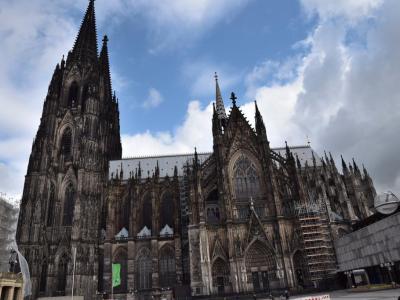
The Cologne Cathedral - a place where Gothic ambition met a 600-year-long construction delay and still came out looking fabulous... Indeed, the magnitude of this building dwarfs your expectations and your camera’s field of view.
This towering masterpiece is Germany’s most visited landmark, with 20,000 people dropping by daily - not bad for a church that took over six centuries to finish. At 157 meters (that’s 515 feet for those who still think in feet), it’s the tallest twin-spired church on Earth, the second-tallest church in Europe, and the third tallest in the world. Clearly, Cologne doesn’t do things halfway...
Construction began in 1248, then took a casual break around 1560. The west tower wasn't completed until 1880, when 19th-century officials unearthed the original blueprints and reasoned, “Why not finish it?”
But the site’s sacred history runs much deeper than that. Since the 4th century, Christians have been building here. The "Old Cathedral" stood from 818 to 1248, and even earlier, a baptistery once graced the eastern end.
So, what kicked off this giant Gothic project? A golden box. Specifically, the Shrine of the Three Kings, believed to hold relics of the Three Wise Men (also known as the Magi - the ones who visited baby Jesus and offered him gifts). Its construction started at the eastern arm to house the shrine, then the west front followed - until everything just kind of stopped in 1473. The work-in-progress look lasted for centuries, complete with a giant crane stuck on top for 400 years. Talk about an eternal fixer-upper...
The cathedral's highlights include the 1322 black marble High Altar and that aforementioned blingy shrine, which began in 1190 and shines brighter than a royal wedding. There's also the 10th-century Gero Crucifix, the 1290 Milan Madonna, and a legal twist - a 13th-century stone tablet that once granted rights to Cologne’s Jewish residents.
And, of course, there are bells - eleven in total. The Saint Peter Bell, cast in 1922, was once the biggest free-swinging bell in the world. You’ll feel it before you hear it...
Insider Tip:
Don’t skip the rear mosaics - they're stunning. Brave the climb for sky-high views, or sneak into the underground parking to see the cathedral’s ancient roots... literally.
This towering masterpiece is Germany’s most visited landmark, with 20,000 people dropping by daily - not bad for a church that took over six centuries to finish. At 157 meters (that’s 515 feet for those who still think in feet), it’s the tallest twin-spired church on Earth, the second-tallest church in Europe, and the third tallest in the world. Clearly, Cologne doesn’t do things halfway...
Construction began in 1248, then took a casual break around 1560. The west tower wasn't completed until 1880, when 19th-century officials unearthed the original blueprints and reasoned, “Why not finish it?”
But the site’s sacred history runs much deeper than that. Since the 4th century, Christians have been building here. The "Old Cathedral" stood from 818 to 1248, and even earlier, a baptistery once graced the eastern end.
So, what kicked off this giant Gothic project? A golden box. Specifically, the Shrine of the Three Kings, believed to hold relics of the Three Wise Men (also known as the Magi - the ones who visited baby Jesus and offered him gifts). Its construction started at the eastern arm to house the shrine, then the west front followed - until everything just kind of stopped in 1473. The work-in-progress look lasted for centuries, complete with a giant crane stuck on top for 400 years. Talk about an eternal fixer-upper...
The cathedral's highlights include the 1322 black marble High Altar and that aforementioned blingy shrine, which began in 1190 and shines brighter than a royal wedding. There's also the 10th-century Gero Crucifix, the 1290 Milan Madonna, and a legal twist - a 13th-century stone tablet that once granted rights to Cologne’s Jewish residents.
And, of course, there are bells - eleven in total. The Saint Peter Bell, cast in 1922, was once the biggest free-swinging bell in the world. You’ll feel it before you hear it...
Insider Tip:
Don’t skip the rear mosaics - they're stunning. Brave the climb for sky-high views, or sneak into the underground parking to see the cathedral’s ancient roots... literally.
10) Roman Gate
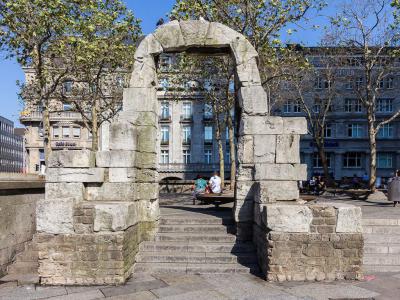
On the side of Domplatz [Cathedral Square] there is an ancient structure vaguely reminiscent of what was once a Roman wall. Built in the days of the Roman Empire, a symbolic gate now stands in its place.
