Custom Walk in Salzburg, Austria by jmc6785_c6dd92 created on 2026-06-06
Guide Location: Austria » Salzburg
Guide Type: Custom Walk
# of Sights: 7
Tour Duration: 2 Hour(s)
Travel Distance: 4.1 Km or 2.5 Miles
Share Key: ZENWD
Guide Type: Custom Walk
# of Sights: 7
Tour Duration: 2 Hour(s)
Travel Distance: 4.1 Km or 2.5 Miles
Share Key: ZENWD
How It Works
Please retrieve this walk in the GPSmyCity app. Once done, the app will guide you from one tour stop to the next as if you had a personal tour guide. If you created the walk on this website or come to the page via a link, please follow the instructions below to retrieve the walk in the app.
Retrieve This Walk in App
Step 1. Download the app "GPSmyCity: Walks in 1K+ Cities" on Apple App Store or Google Play Store.



Step 2. In the GPSmyCity app, download(or launch) the guide "Salzburg Map and Walking Tours".
Step 3. Tap the menu button located at upper right corner of the "Walks" screen and select "Retrieve custom walk". Enter the share key: ZENWD
1) Mirabell Palace and Gardens (must see)
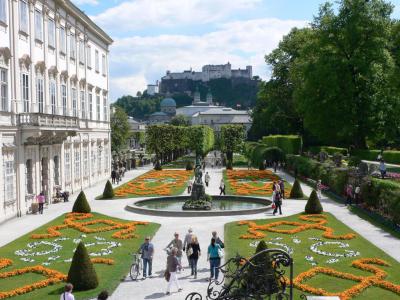
Mirabell Palace: part love story, part symphony, part surreal garden party. Here, Baroque drama meets soap opera realness and UNESCO-approved elegance. Originally constructed in 1606 by Prince-Archbishop Wolf Dietrich von Raitenau - who wasn’t just building a palace, but also a very fancy love nest for himself and his mistress - this place has always known how to turn heads.
After Wolf got the boot in 1612 (through palace intrigue), his successor renamed it Mirabell - meaning “wonderful” in Italian, which, come to think of it, is a bit more subtle than “Archbishop’s Love Shack.” The whole palace got a glitzy Baroque makeover between 1721 and 1727, and later a Neoclassical facelift - because palaces, of all properties, do need to keep up appearances...
Step inside and brace yourself for the grand staircase - or the 'staircase of thunder' if you like: with sweeping curves, angelic sculptures, and a shine so dramatic it practically sings. At the top of it is the Marble Hall. Mozart played here. You won’t. But you could get married here - if you book a few years ahead and maybe win a small lottery...
Fun fact: Hitler’s sister-in-law tied the knot here in 1944, with some disturbingly famous guests in attendance. But don’t let that kill the vibe - today, it’s more Mozart concerts and Instagram moments than fascist footnotes.
Venture further and you'll find a chapel dressed in Baroque finery, with statues so saintly they might just bless your photo.
Outside, the gardens are a mythological fever dream. Statues of Hercules, Aeneas, and Pluto look on, while the flower beds explode in geometric perfection - a riot of color that makes your eyeballs do pirouettes. At the center of it is the Pegasus Fountain, a scene-stealer from The Sound of Music’s “Do Re Mi.” Yes, that very one...
Climb the steps like a Von Trapp child chasing high notes, peek into the vine tunnel and hedge maze, and finish at Dwarf Park - where a regiment of lumpy marble gnomes stares you down with all the charm of a slightly haunted chess set.
And beyond it all, the High Salzburg Fortress, sitting smugly on its hilltop, watches centuries go by.
After Wolf got the boot in 1612 (through palace intrigue), his successor renamed it Mirabell - meaning “wonderful” in Italian, which, come to think of it, is a bit more subtle than “Archbishop’s Love Shack.” The whole palace got a glitzy Baroque makeover between 1721 and 1727, and later a Neoclassical facelift - because palaces, of all properties, do need to keep up appearances...
Step inside and brace yourself for the grand staircase - or the 'staircase of thunder' if you like: with sweeping curves, angelic sculptures, and a shine so dramatic it practically sings. At the top of it is the Marble Hall. Mozart played here. You won’t. But you could get married here - if you book a few years ahead and maybe win a small lottery...
Fun fact: Hitler’s sister-in-law tied the knot here in 1944, with some disturbingly famous guests in attendance. But don’t let that kill the vibe - today, it’s more Mozart concerts and Instagram moments than fascist footnotes.
Venture further and you'll find a chapel dressed in Baroque finery, with statues so saintly they might just bless your photo.
Outside, the gardens are a mythological fever dream. Statues of Hercules, Aeneas, and Pluto look on, while the flower beds explode in geometric perfection - a riot of color that makes your eyeballs do pirouettes. At the center of it is the Pegasus Fountain, a scene-stealer from The Sound of Music’s “Do Re Mi.” Yes, that very one...
Climb the steps like a Von Trapp child chasing high notes, peek into the vine tunnel and hedge maze, and finish at Dwarf Park - where a regiment of lumpy marble gnomes stares you down with all the charm of a slightly haunted chess set.
And beyond it all, the High Salzburg Fortress, sitting smugly on its hilltop, watches centuries go by.
2) Sigmund Haffner Gasse
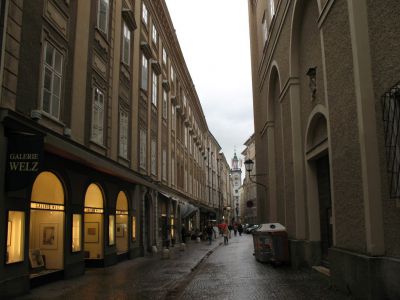
The Sigmund Haffner Gasse is one of the oldest streets in Salzburg. The buildings flanking the street were once homes of wealthy merchants and the 700 year old Elefant Hotel is located here.
The Sigmund Haffner Gasse is a wide street that connects two other important streets, the Getreidegasse and the Franziskanergasse. The Old City Hall marks the lower end of the street and the Franciscan Church is at the upper end. The street was laid in 1140 when the Franciscan Church was made a parish church. Before 1620, the street marked the end of the merchants residences and the St. Peter’s Convent. It is named after Sigmund Haffner, a wealthy merchant and benefactor in Salzburg who was its mayor between 1768 and 1772.
Important buildings on Sigmund Haffner Gasse are the Elafant Hotel which was established as an inn by the keeper of an elephant gifted to Archduke Maximilian of Austria and his bride by the King of Portugal. Houses that formerly belonged to wealthy merchants include the Haffnerhaus, the Lamberhaus, the Gusettihaus, the Ritzerhaus, Dachsbergerhof and the Cheuzleins House. The Langenhof was established by Archbishop Max Gandolf von Kuenburg for his family and the Kapellhaus was used as a residence of the chapel choirboys.
The Sigmund Haffner Gasse is a wide street that connects two other important streets, the Getreidegasse and the Franziskanergasse. The Old City Hall marks the lower end of the street and the Franciscan Church is at the upper end. The street was laid in 1140 when the Franciscan Church was made a parish church. Before 1620, the street marked the end of the merchants residences and the St. Peter’s Convent. It is named after Sigmund Haffner, a wealthy merchant and benefactor in Salzburg who was its mayor between 1768 and 1772.
Important buildings on Sigmund Haffner Gasse are the Elafant Hotel which was established as an inn by the keeper of an elephant gifted to Archduke Maximilian of Austria and his bride by the King of Portugal. Houses that formerly belonged to wealthy merchants include the Haffnerhaus, the Lamberhaus, the Gusettihaus, the Ritzerhaus, Dachsbergerhof and the Cheuzleins House. The Langenhof was established by Archbishop Max Gandolf von Kuenburg for his family and the Kapellhaus was used as a residence of the chapel choirboys.
3) Paul Reber & Co
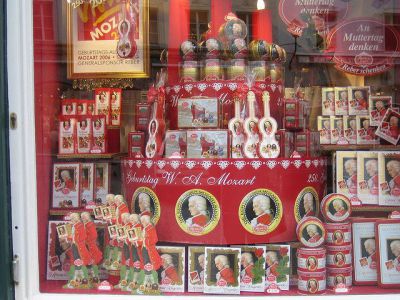
Paul Reber & Co is a renowned confectionery and pastry shop in Salzburg. Founded by Paul Reber, the shop has a rich history of producing high-quality sweets and treats that have earned it a loyal following among locals and tourists alike.
Peter Reber, a master confectioner, founded the first Reber confectionery and pastry café in Munich in 1865. His homemade treats quickly became popular, and the café became a beloved gathering spot for the city's residents. In 1938, the Reber family moved their main café to the center of Bad Reichenhall, where the company's headquarters remain today. Around 200,000 guests visit Café Reber in Bad Reichenhall and the store in Salzburg each year to enjoy the exquisite confectionary in a unique setting.
The Salzburg store is the exclusive location for the renowned "Florentines," made with a secret Reber recipe, as well as freshly made Reber pralines by the in-house confectioners. The store offers a one-of-a-kind experience where visitors can find the entire range of Reber products.
Paul Reber & Co is a must-visit for anyone with a sweet tooth visiting Salzburg. Its rich history, dedication to quality, and delicious treats make it a true gem in the city's culinary scene.
Peter Reber, a master confectioner, founded the first Reber confectionery and pastry café in Munich in 1865. His homemade treats quickly became popular, and the café became a beloved gathering spot for the city's residents. In 1938, the Reber family moved their main café to the center of Bad Reichenhall, where the company's headquarters remain today. Around 200,000 guests visit Café Reber in Bad Reichenhall and the store in Salzburg each year to enjoy the exquisite confectionary in a unique setting.
The Salzburg store is the exclusive location for the renowned "Florentines," made with a secret Reber recipe, as well as freshly made Reber pralines by the in-house confectioners. The store offers a one-of-a-kind experience where visitors can find the entire range of Reber products.
Paul Reber & Co is a must-visit for anyone with a sweet tooth visiting Salzburg. Its rich history, dedication to quality, and delicious treats make it a true gem in the city's culinary scene.
4) Café Tomaselli
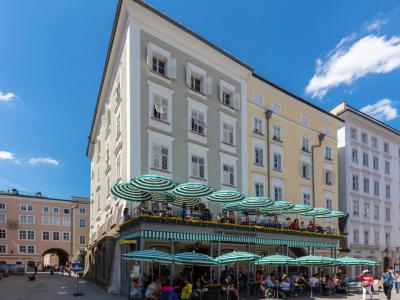
Every European city has what can be referred to as "the posh-café" – the one with history and elevated prices. The Café Tomaselli is the main contender for Salzburg's "posh-café" status, with a long and distinguished history going back over 300 years, allied to a good reputation and superb location. On the whole, it could easily be viewed as one of the city's best, especially in summer when it can spread out into the Old Market (Alter Markt) square, making for a perfect people-watching spot.
According to research, the origins of this coffeehouse can be traced back to 1700. Since then, the café changed hands several times, moving from its original location on Gold Lane (Goldgasse) to the Old Market in 1764. Carl Tomaselli purchased the place in 1852. In his hands, the café became renowned far beyond the borders of Salzburg.
Since the old days, celebrities such as Wolfgang Amadeus Mozart, Austrian poet and novelist Hugo von Hofmannsthal, Austrian theater and film director Max Reinhardt, and world-renowned musical conductor Herbert von Karajan, among others, frequented this place. Wolfgang Amadeus, in particular, used to have his almond milk here when he was young. The proprietor, Carl Tomaselli, the son of tenor Giuseppe Tomaselli from Milan, enjoyed a close relationship with the composer's family, playing music with his father Leopold, and his sister Nannerl. Later on, Wolfgang's widow, Constanze von Nissen, also lived in the same building, from 1820 to 1826.
Magnificent wood paneling with inlays adorns the walls and takes guests back in time, as do the marble tables, silver trays, waiters in dinner jackets, and the “cake ladies” who roam around with a tray of the most delicious-looking confectionery. Only women serve the cakes, while men serve the drinks – just a bit of a nice tradition! The place exudes stylish Austrian coffeehouse culture with its vibrant sense of living history and a tempting array of sweet dishes.
Local specialties include espresso topped with whipped cream (Einspänner) and espresso topped with steamed milk froth (Melange), Esterhazy or Dobos torte, apple, curd cheese, and berry strudel, strawberry dessert, Salzburger Nockerl slice, and croissants with walnut filling, plus a variety of egg dishes.
Tip:
Ideally, take a book of Stefan Zweig, go to Tomaselli, have one of their delicious coffees and pastries, and relax...
According to research, the origins of this coffeehouse can be traced back to 1700. Since then, the café changed hands several times, moving from its original location on Gold Lane (Goldgasse) to the Old Market in 1764. Carl Tomaselli purchased the place in 1852. In his hands, the café became renowned far beyond the borders of Salzburg.
Since the old days, celebrities such as Wolfgang Amadeus Mozart, Austrian poet and novelist Hugo von Hofmannsthal, Austrian theater and film director Max Reinhardt, and world-renowned musical conductor Herbert von Karajan, among others, frequented this place. Wolfgang Amadeus, in particular, used to have his almond milk here when he was young. The proprietor, Carl Tomaselli, the son of tenor Giuseppe Tomaselli from Milan, enjoyed a close relationship with the composer's family, playing music with his father Leopold, and his sister Nannerl. Later on, Wolfgang's widow, Constanze von Nissen, also lived in the same building, from 1820 to 1826.
Magnificent wood paneling with inlays adorns the walls and takes guests back in time, as do the marble tables, silver trays, waiters in dinner jackets, and the “cake ladies” who roam around with a tray of the most delicious-looking confectionery. Only women serve the cakes, while men serve the drinks – just a bit of a nice tradition! The place exudes stylish Austrian coffeehouse culture with its vibrant sense of living history and a tempting array of sweet dishes.
Local specialties include espresso topped with whipped cream (Einspänner) and espresso topped with steamed milk froth (Melange), Esterhazy or Dobos torte, apple, curd cheese, and berry strudel, strawberry dessert, Salzburger Nockerl slice, and croissants with walnut filling, plus a variety of egg dishes.
Tip:
Ideally, take a book of Stefan Zweig, go to Tomaselli, have one of their delicious coffees and pastries, and relax...
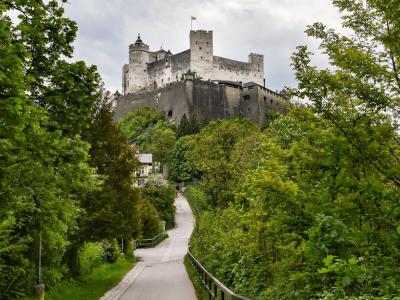
5) Hohensalzburg (High Salzburg Fortress) (must see)
Sitting atop the Fortress Mountain (Festungsberg) at an altitude of 506 meters, the mighty High Salzburg Fortress (Hohensalzburg) dominates the skyline of Salzburg.
Archaeological findings revealed a Roman fort once present at this site. The current construction was started in 1077 by one of the city's prince-archbishops and was more a show of the Catholic Church's power and determination than anything else. Let's say that the archbishops were more businessmen and politicians than churchmen... but that sums up the Middle Ages in many places.
What started as a small castle eventually grew into a grand, whitewashed fortress – 250 meters (820 feet) long and 150 meters (490 feet) wide – making it one of the largest medieval castles in Europe, so foreboding in fact, that no army ever tried attacking it for over eight centuries.
Still, during the course of history, the fortress did see action – during the German Peasants' War in 1525 – and underwent further modifications in the Thirty Years' War (which lasted from 1618 to 1648). By the 19th century, after a stint as a military barracks and a storage depot, the fortress was decommissioned, in 1861, and opened to the public by Habsburg Emperor Franz Josef.
Being one of Europe's best-preserved castles, it has undergone significant transformations since its refurbishment in the late 19th century, including the addition of the Fortress Railway (Festungsbahn) funicular in 1892.
Inside, the fortress boasts luxurious state apartments, the Golden Hall, and the Golden Chamber, exemplifying its role as both a residence and a refuge. It features the "Salzburg Bull," a large mechanical organ, dating from 1502, that plays daily between Palm Sunday and October 31, at 7, 11, and 18 o'clock. The fortress is adorned with marble pillars, a coffered ceiling with gold stars, and a chapel with a star-vaulted ceiling. The bedchamber combines historic splendor with modern updates, showcasing precious textiles, gilded wainscoting, and a once state-of-the-art toilet...)))
On top of that, the High Salzburg Fortress offers unique panoramic views of the city, mountains, and surrounding plains, as well as cafés and a handful of museums. It’s a pleasant place to grab an ice cream cone and wander the whitewashed maze of buildings while soaking up the medieval ambiance.
Tip:
It's worth going to for the views alone, but the short guided tour is also fascinating. They do a great job telling the story of this fortress and its growth over the centuries.
Don't miss visiting the few rooms with the marionettes on display, and try to leak into the old church as well.
Although most visitors opt for the one-minute trip on the funicular, consider walking up if you are in good shape and the weather allows, as it makes the experience more enjoyable and there are some nice things to see on the way.
To save money and avoid the crowds, take advantage of online booking using the 'early bird' pricing (you'll then scan tickets from your device to get access to the site). If time allows, take advantage of dinner and the concerts which feature local musicians playing wonderful classical music from the region.
Archaeological findings revealed a Roman fort once present at this site. The current construction was started in 1077 by one of the city's prince-archbishops and was more a show of the Catholic Church's power and determination than anything else. Let's say that the archbishops were more businessmen and politicians than churchmen... but that sums up the Middle Ages in many places.
What started as a small castle eventually grew into a grand, whitewashed fortress – 250 meters (820 feet) long and 150 meters (490 feet) wide – making it one of the largest medieval castles in Europe, so foreboding in fact, that no army ever tried attacking it for over eight centuries.
Still, during the course of history, the fortress did see action – during the German Peasants' War in 1525 – and underwent further modifications in the Thirty Years' War (which lasted from 1618 to 1648). By the 19th century, after a stint as a military barracks and a storage depot, the fortress was decommissioned, in 1861, and opened to the public by Habsburg Emperor Franz Josef.
Being one of Europe's best-preserved castles, it has undergone significant transformations since its refurbishment in the late 19th century, including the addition of the Fortress Railway (Festungsbahn) funicular in 1892.
Inside, the fortress boasts luxurious state apartments, the Golden Hall, and the Golden Chamber, exemplifying its role as both a residence and a refuge. It features the "Salzburg Bull," a large mechanical organ, dating from 1502, that plays daily between Palm Sunday and October 31, at 7, 11, and 18 o'clock. The fortress is adorned with marble pillars, a coffered ceiling with gold stars, and a chapel with a star-vaulted ceiling. The bedchamber combines historic splendor with modern updates, showcasing precious textiles, gilded wainscoting, and a once state-of-the-art toilet...)))
On top of that, the High Salzburg Fortress offers unique panoramic views of the city, mountains, and surrounding plains, as well as cafés and a handful of museums. It’s a pleasant place to grab an ice cream cone and wander the whitewashed maze of buildings while soaking up the medieval ambiance.
Tip:
It's worth going to for the views alone, but the short guided tour is also fascinating. They do a great job telling the story of this fortress and its growth over the centuries.
Don't miss visiting the few rooms with the marionettes on display, and try to leak into the old church as well.
Although most visitors opt for the one-minute trip on the funicular, consider walking up if you are in good shape and the weather allows, as it makes the experience more enjoyable and there are some nice things to see on the way.
To save money and avoid the crowds, take advantage of online booking using the 'early bird' pricing (you'll then scan tickets from your device to get access to the site). If time allows, take advantage of dinner and the concerts which feature local musicians playing wonderful classical music from the region.
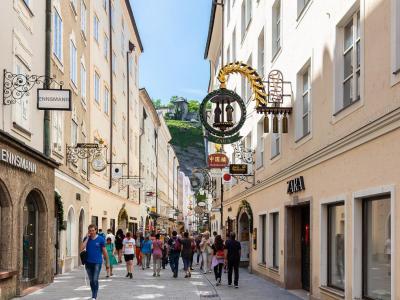
6) Getreidegasse (Grain Lane) (must see)
Old Salzburg's colorful main drag, Grain Lane (Getreidegasse) has been a center of trade since Roman times. Now a UNESCO World Heritage Site since 1996, this historic street is famous for being the birthplace of Wolfgang Amadeus Mozart, at No. 9, where he lived until the age of 17. The narrow lane is lined with high townhouses and is distinguished by its traditional wrought-iron guild signs advertising what is (or used to be) sold inside.
The street, originally named Trot Lane (Trabegasse), traces its beginnings to around 1150 when it served as a pathway from Salzburg's trade center to the suburb of Mülln. Over the centuries, its name evolved several times, reflecting its changing role in the city's economy. By the 14th century, the prince-archbishops granted the citizens staple rights, transforming the area into a vibrant trading zone and attracting Salzburg's patricians and officials who established their residences here.
Dating mainly from the 15th century, the buildings are tall and narrow because this was prime real estate, and there was nowhere to build but up. Space was always tight, as the town was squeezed between the river and the mountain, with lots of land set aside for the church. The architecture still looks much as it did in Mozart's day, though many of the buildings themselves are now inhabited by Austrian clothiers and international chain outlets. At Number 37 you will find the glamorous Goldener Hirsch hotel, a hotspot for stylish gatherings – so, if you're appropriately attired, you may wish to view the lobby and enjoy an aperitif in its gorgeous bar, the watering hole of chic Salzburg.
What was once the Salzburg quarter of prosperous medieval burghers (merchants) now bustles with the tourist trade. Today, Grain Lane forms part of a pedestrian zone and continues to be one of Salzburg's prime tourist attractions. Efforts have been made to preserve its authentic character amidst the conversion of historic residential houses into commercial premises.
Tip:
If planning some shopping for gifts, take a look in a couple of stores because they often carry similar products for different prices. Small alleys lead off the main street – do wander down these as lots of smaller shops and nice cafés can be found there.
The street, originally named Trot Lane (Trabegasse), traces its beginnings to around 1150 when it served as a pathway from Salzburg's trade center to the suburb of Mülln. Over the centuries, its name evolved several times, reflecting its changing role in the city's economy. By the 14th century, the prince-archbishops granted the citizens staple rights, transforming the area into a vibrant trading zone and attracting Salzburg's patricians and officials who established their residences here.
Dating mainly from the 15th century, the buildings are tall and narrow because this was prime real estate, and there was nowhere to build but up. Space was always tight, as the town was squeezed between the river and the mountain, with lots of land set aside for the church. The architecture still looks much as it did in Mozart's day, though many of the buildings themselves are now inhabited by Austrian clothiers and international chain outlets. At Number 37 you will find the glamorous Goldener Hirsch hotel, a hotspot for stylish gatherings – so, if you're appropriately attired, you may wish to view the lobby and enjoy an aperitif in its gorgeous bar, the watering hole of chic Salzburg.
What was once the Salzburg quarter of prosperous medieval burghers (merchants) now bustles with the tourist trade. Today, Grain Lane forms part of a pedestrian zone and continues to be one of Salzburg's prime tourist attractions. Efforts have been made to preserve its authentic character amidst the conversion of historic residential houses into commercial premises.
Tip:
If planning some shopping for gifts, take a look in a couple of stores because they often carry similar products for different prices. Small alleys lead off the main street – do wander down these as lots of smaller shops and nice cafés can be found there.
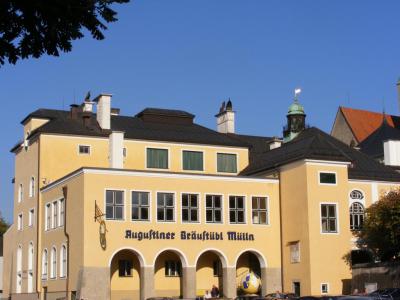
7) Augustiner Brewery
The Augustiner Brewery is a traditional beer garden in Salzburg. Visitors and locals can drink beer poured straight from the barrel into a traditional Austrian Stein mug.
The Augustiner brewery is located in an ancient Augustine Monastery. It was established in 1605 and given to the Augustine order of monks by Archbishop Wolf Dietrich von Raitenau. The old abbey buildings contain an ancient mill and the parish church, Müllner Stadtpfarrkirche. The brewery has a large gate with decorations by artist, Diego Francesco Carlone, two statues of St. Benedict and St. Augustinus with the coat of arms of Prince Archbishop Wolf Dietrich von Raitenau between them. The beer is brewed using traditional methods. It is made manually according to the Purity Laws of 1516 and only natural ingredients are used. The beer is stored in 15, 20 and 50 liter barrels and three types of beer are made, the Lenten Beer, the Marzen beer and the Christmas Bock Beer for different celebrations. Visitors will find viewing the impressive beer cellar an interesting and worthwhile experience.
The Augustiner brewery has a beer garden and many beer halls. From 1890 beer is traditionally self catered and visitors can rinse their stein under the cool water of the fountain before filling it with beer from the barrel. Visitors can enjoy their beer while sitting at the tables in the garden under the shade of chestnut trees.
The Augustiner brewery is located in an ancient Augustine Monastery. It was established in 1605 and given to the Augustine order of monks by Archbishop Wolf Dietrich von Raitenau. The old abbey buildings contain an ancient mill and the parish church, Müllner Stadtpfarrkirche. The brewery has a large gate with decorations by artist, Diego Francesco Carlone, two statues of St. Benedict and St. Augustinus with the coat of arms of Prince Archbishop Wolf Dietrich von Raitenau between them. The beer is brewed using traditional methods. It is made manually according to the Purity Laws of 1516 and only natural ingredients are used. The beer is stored in 15, 20 and 50 liter barrels and three types of beer are made, the Lenten Beer, the Marzen beer and the Christmas Bock Beer for different celebrations. Visitors will find viewing the impressive beer cellar an interesting and worthwhile experience.
The Augustiner brewery has a beer garden and many beer halls. From 1890 beer is traditionally self catered and visitors can rinse their stein under the cool water of the fountain before filling it with beer from the barrel. Visitors can enjoy their beer while sitting at the tables in the garden under the shade of chestnut trees.
