Custom Walk in Toulouse, France by abrahantes_53979 created on 2026-06-14
Guide Location: France » Toulouse
Guide Type: Custom Walk
# of Sights: 5
Tour Duration: 1 Hour(s)
Travel Distance: 1.5 Km or 0.9 Miles
Share Key: ZU2EL
Guide Type: Custom Walk
# of Sights: 5
Tour Duration: 1 Hour(s)
Travel Distance: 1.5 Km or 0.9 Miles
Share Key: ZU2EL
How It Works
Please retrieve this walk in the GPSmyCity app. Once done, the app will guide you from one tour stop to the next as if you had a personal tour guide. If you created the walk on this website or come to the page via a link, please follow the instructions below to retrieve the walk in the app.
Retrieve This Walk in App
Step 1. Download the app "GPSmyCity: Walks in 1K+ Cities" on Apple App Store or Google Play Store.



Step 2. In the GPSmyCity app, download(or launch) the guide "Toulouse Map and Walking Tours".
Step 3. Tap the menu button located at upper right corner of the "Walks" screen and select "Retrieve custom walk". Enter the share key: ZU2EL
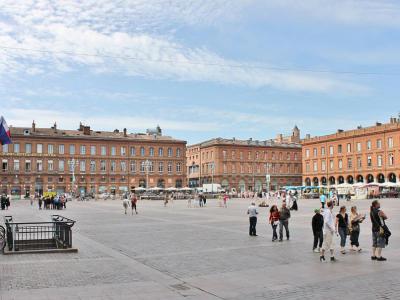
1) Place du Capitole (Capitol Square)
Capitol Square (Place du Capitole) in Toulouse stands as a vibrant and historic epicenter in the city's heart. This grand square, central to Toulouse's social and cultural life, serves as a primary gathering spot, a starting point for city exploration, and a venue for various events. Known for its Neoclassical elegance, the square has been a fixture for approximately 800 years, with its current prominent feature, the Capitole building, gracing its space since the mid-18th century. The Capitole's stunning 128-meter facade is a popular backdrop for photography and social media, reflecting its status as a key Toulouse landmark.
The Capitol Square is not just about its majestic main building. The western side features canopied terraces under Byzantine arches reminiscent of Saint Mark's Square in Venice. To the north, the medieval Bull Street (Rue du Taur) buzzes with a lively mix of South American bistros and quirky shops and even hosts an open-air cinema, leading to the Basilica of Saint-Sernin with its distinctive octagonal bell tower.
Visitors can explore the Capitole's interior, particularly the Salle des Illustres, adorned with some of Toulouse’s finest 19th-century paintings. The entrance features a grand staircase, an opulent chandelier, and a patterned mosaic floor, enhancing the grandeur of the experience. The square is also known for its eclectic daily market, where vendors sell everything from flowing summer dresses and vintage vinyl records to practical items like straw hats and sunglasses.
The square's site is steeped in history, reportedly the location of the martyrdom of Saint Saturninus in 257 CE. While the existing Capitole building dates back to the 18th century, the area's significance extends to Roman times, previously centered around the nearby square of Carmes. The 1990s pedestrianization transformed Capitol Square into a thriving tourist attraction, cementing its place as Toulouse’s focal point of tourism and local life.
The Capitol Square is not just about its majestic main building. The western side features canopied terraces under Byzantine arches reminiscent of Saint Mark's Square in Venice. To the north, the medieval Bull Street (Rue du Taur) buzzes with a lively mix of South American bistros and quirky shops and even hosts an open-air cinema, leading to the Basilica of Saint-Sernin with its distinctive octagonal bell tower.
Visitors can explore the Capitole's interior, particularly the Salle des Illustres, adorned with some of Toulouse’s finest 19th-century paintings. The entrance features a grand staircase, an opulent chandelier, and a patterned mosaic floor, enhancing the grandeur of the experience. The square is also known for its eclectic daily market, where vendors sell everything from flowing summer dresses and vintage vinyl records to practical items like straw hats and sunglasses.
The square's site is steeped in history, reportedly the location of the martyrdom of Saint Saturninus in 257 CE. While the existing Capitole building dates back to the 18th century, the area's significance extends to Roman times, previously centered around the nearby square of Carmes. The 1990s pedestrianization transformed Capitol Square into a thriving tourist attraction, cementing its place as Toulouse’s focal point of tourism and local life.
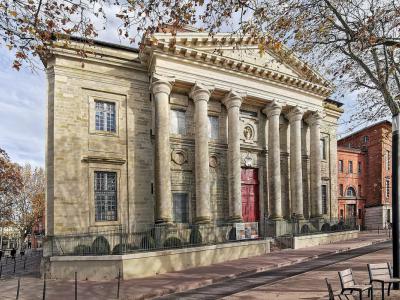
2) Notre-Dame de la Daurade Church
Notre-Dame de la Daurade is a historic basilica located in Toulouse, with a rich history that traces back to the early 5th century. Originally, the site was home to a pagan temple dedicated to Apollo, which was converted into a Christian church around 410 AD, under the authorization of Emperor Honorius. This transformation marked the beginning of the site's Christian heritage.
The name "Daurade" comes from "Deaurata," referring to the golden mosaics that adorned the church built during the 5th or 6th century. These mosaics, accompanied by inscriptions, indicate that the church initially served the Visigoths who practiced Arian Christianity. The church shifted into Catholic hands after the Visigoths were defeated at the Battle of Vouillé in 507.
By the 9th century, Notre-Dame de la Daurade had become a Benedictine monastery. However, it experienced a decline starting in the 15th century and was eventually demolished in 1761 to facilitate the construction of riverside quays in Toulouse. The site saw further transformation during the French Revolution when the monastery was closed and repurposed as a tobacco factory.
The basilica was historically significant for housing a shrine of the Black Madonna, an icon highly revered in the Christian community. The original icon was stolen in the 15th century, and its subsequent replacement was destroyed during the Revolution. Today's icon, created in 1807, is a replica of the 15th-century Madonna and has been significantly darkened by candle soot over the years, earning it the name "Notre Dame The Black" ("Notre Dame La Noire").
Reconstruction of the current basilica structure took place in the 19th century. The church, along with its notable organ, has been officially listed as a Monument historique by the French Ministry of Culture, underscoring its cultural and historical importance to the region and France's heritage.
The name "Daurade" comes from "Deaurata," referring to the golden mosaics that adorned the church built during the 5th or 6th century. These mosaics, accompanied by inscriptions, indicate that the church initially served the Visigoths who practiced Arian Christianity. The church shifted into Catholic hands after the Visigoths were defeated at the Battle of Vouillé in 507.
By the 9th century, Notre-Dame de la Daurade had become a Benedictine monastery. However, it experienced a decline starting in the 15th century and was eventually demolished in 1761 to facilitate the construction of riverside quays in Toulouse. The site saw further transformation during the French Revolution when the monastery was closed and repurposed as a tobacco factory.
The basilica was historically significant for housing a shrine of the Black Madonna, an icon highly revered in the Christian community. The original icon was stolen in the 15th century, and its subsequent replacement was destroyed during the Revolution. Today's icon, created in 1807, is a replica of the 15th-century Madonna and has been significantly darkened by candle soot over the years, earning it the name "Notre Dame The Black" ("Notre Dame La Noire").
Reconstruction of the current basilica structure took place in the 19th century. The church, along with its notable organ, has been officially listed as a Monument historique by the French Ministry of Culture, underscoring its cultural and historical importance to the region and France's heritage.
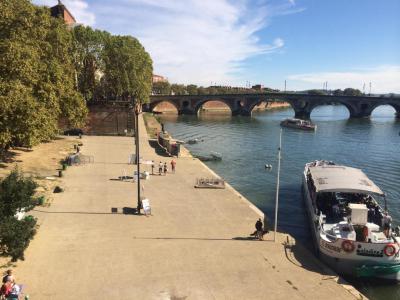
3) Quai de la Daurade (Daurade Quay) (must see)
The Daurade Quay in Toulouse is steeped in historical significance. It is derived largely from its connection to the Benedictine priory of the Daurade which had been there since the 9th century. Originally, the area included the priory’s lands, such as the cemetery of the Counts and the adjoining gardens that sloped down towards the Garonne River.
Development of the quay area commenced in 1766, encouraged by the Archbishop of Toulouse. The construction faced resistance from the Benedictines but progressed nonetheless. By 1777, the major construction work neared completion with key modifications including the addition, relocation, and reconstruction of some notable architectural elements such as the statue of Christ, the bust of Louis XIV, and various sculpted emblems.
During the French Revolution in 1794, the quay was briefly renamed Rousseau Quay, and the local church was desecrated. By the 19th century, better heads prevailed and the church regained its spiritual destiny becoming the Basilica of Notre Dame de La Daurada. Today, it is celebrated as the home of the Black Madonna (a painted wooden bust of the Holy Virgin dressed up to look like a full-size statue).
During the same period, the quay transitioned from a monastic site to a vibrant public space integral to Toulouse’s cultural and social fabric. In 1892, the School of Arts moved to the former Tobacco factory on the quay and was inaugurated in 1895 as the Palace of Arts and Sciences. Additionally, the quay has become a beloved walking area, known for its scenic views and historical cafes, such as Café des Pyrénées and Café Bellevue, opened in 1920 and 1935, respectively.
While walking on the Henri Martin promenade along the quay, feel free to descend the steps to the river and take a cruise. Boat tours are available in the mornings and afternoons. Also, see the finely engineered New Bridge, erected in 1632, the only bridge in town consistently impervious to the Garonne's ravaging floods.
Development of the quay area commenced in 1766, encouraged by the Archbishop of Toulouse. The construction faced resistance from the Benedictines but progressed nonetheless. By 1777, the major construction work neared completion with key modifications including the addition, relocation, and reconstruction of some notable architectural elements such as the statue of Christ, the bust of Louis XIV, and various sculpted emblems.
During the French Revolution in 1794, the quay was briefly renamed Rousseau Quay, and the local church was desecrated. By the 19th century, better heads prevailed and the church regained its spiritual destiny becoming the Basilica of Notre Dame de La Daurada. Today, it is celebrated as the home of the Black Madonna (a painted wooden bust of the Holy Virgin dressed up to look like a full-size statue).
During the same period, the quay transitioned from a monastic site to a vibrant public space integral to Toulouse’s cultural and social fabric. In 1892, the School of Arts moved to the former Tobacco factory on the quay and was inaugurated in 1895 as the Palace of Arts and Sciences. Additionally, the quay has become a beloved walking area, known for its scenic views and historical cafes, such as Café des Pyrénées and Café Bellevue, opened in 1920 and 1935, respectively.
While walking on the Henri Martin promenade along the quay, feel free to descend the steps to the river and take a cruise. Boat tours are available in the mornings and afternoons. Also, see the finely engineered New Bridge, erected in 1632, the only bridge in town consistently impervious to the Garonne's ravaging floods.
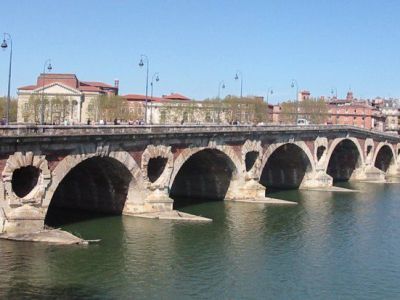
4) Pont Neuf (New Bridge) (must see)
The New Bridge in Toulouse, otherwise known as the Big or Stone Bridge, is a historically significant structure dating back over 400 years. Its construction began in 1544 and concluded in 1632, spanning almost a century of work marked by challenges such as the Garonne River's violent floods and unstable subsoil. The project was initiated by King Francis I of France, who recognized the strategic threat from the Spanish King Charles V during that period. He considered it vital to have an overpass for quickly moving defending armies across the Garonne in any weather or season.
The New Bridge replaced the Daurade Bridge which provided a link between the pilgrim hospital of Saint Mary of the Daurade and the Benedictine monastery across the river in the Middle Ages. In 1541, King Francis declared a tax levy to finance the construction, which came to fruition in 1561 as a sturdy, invincible structure.
Renowned for its mix of Renaissance and early 17th-century styles, the bridge was designed to be innovative compared to its predecessors. It was free from the common medieval practice of housing stores on it and thus provided clear passage. The design combined ancient Roman and more modern – Renaissance – influences, featuring among other elements the extensive use of the so-called "basket-handle" arches which are wider than height, allowing for fewer piles.
The bridge's durability and quality of construction were proven when it remained standing after the devastating flood of 1875, which destroyed all the other bridges in town and numerous houses. Notably, the bridge is not symmetrical due to the differing elevations of the river banks, which adds a great deal of uniqueness to its design.
The bridge has crests before each pier to part flows, and eye-like round openings to allow water to pass through it when the arches are submerged. Spanning 220 meters with seven arches, the biggest of which measures 56 meters, the New Bridge of Toulouse is a testament to the architectural prowess of its era.
The New Bridge replaced the Daurade Bridge which provided a link between the pilgrim hospital of Saint Mary of the Daurade and the Benedictine monastery across the river in the Middle Ages. In 1541, King Francis declared a tax levy to finance the construction, which came to fruition in 1561 as a sturdy, invincible structure.
Renowned for its mix of Renaissance and early 17th-century styles, the bridge was designed to be innovative compared to its predecessors. It was free from the common medieval practice of housing stores on it and thus provided clear passage. The design combined ancient Roman and more modern – Renaissance – influences, featuring among other elements the extensive use of the so-called "basket-handle" arches which are wider than height, allowing for fewer piles.
The bridge's durability and quality of construction were proven when it remained standing after the devastating flood of 1875, which destroyed all the other bridges in town and numerous houses. Notably, the bridge is not symmetrical due to the differing elevations of the river banks, which adds a great deal of uniqueness to its design.
The bridge has crests before each pier to part flows, and eye-like round openings to allow water to pass through it when the arches are submerged. Spanning 220 meters with seven arches, the biggest of which measures 56 meters, the New Bridge of Toulouse is a testament to the architectural prowess of its era.
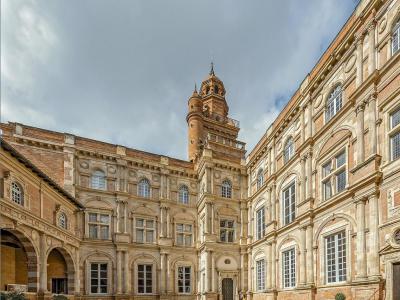
5) Hotel d'Assezat (Assezat Mansion) and Bemberg Foundation (must see)
The Assezat Mansion in Toulouse is a 16th-century French Renaissance mansion originally built for merchant Pierre Assézat. It now houses the Bemberg Foundation's art gallery. Noted for its pristine condition, the property is a jewel of Renaissance architecture in southern France, showcasing early French classicism with Italian Mannerist influences.
Pierre Assézat, a prosperous founder of the local Merchant Exchange, initiated the construction of this mansion around 1562. As a Calvinist, he faced religious persecution and was temporarily exiled. He returned and recanted ten years later, dying in Toulouse in 1581. Since then the mansion had changed hands several times before in 1894 the last owner bequeathed it to the city for use by learned societies.
The building showcases a blend of classical and mannerist architecture, with its facade inspired by classical models like the Coliseum, featuring twin columns across three floors (Doric, Ionic, Corinthian). Unique to this structure are the various mannerist ornaments such as cabochons and masks, illustrating themes of luxury and abundance. The main gate marries strength with intricate detailing, highlighted by Doric pilasters and a mullioned window framed by Ionic pilasters, adding a refined elegance to the overall composition.
Inside the courtyard, the loggia and the passageway decorated with arches and grotesque masks on scrolled consoles illustrate the manneristic aesthetic, merging the mineral, vegetable, and animal kingdoms. The staircase pavilion features a large staircase adorned with architectural orders and a male term (which is half man and half pilaster), symbolizing both knowledge and humor through its design.
Since 1994, the building has been home to the Bemberg Foundation, showcasing the extensive private art collection of Argentine Georges Bemberg. This collection features a wide array of European artworks, including paintings, sculptures, and ancient books. In particular, it encompasses significant pieces from the Flemish, Dutch, and Italian Renaissance, with notable works by Titian and Tintoretto. Highlights also include 19th- and early 20th-century paintings, showcasing styles like impressionism and fauvism, featuring Henri de Toulouse-Lautrec, Claude Monet, Edgar Degas, Paul Gauguin, and Paul Cézanne, as well as Henri Matisse, Pablo Picasso, Amedeo Modigliani and others.
Pierre Assézat, a prosperous founder of the local Merchant Exchange, initiated the construction of this mansion around 1562. As a Calvinist, he faced religious persecution and was temporarily exiled. He returned and recanted ten years later, dying in Toulouse in 1581. Since then the mansion had changed hands several times before in 1894 the last owner bequeathed it to the city for use by learned societies.
The building showcases a blend of classical and mannerist architecture, with its facade inspired by classical models like the Coliseum, featuring twin columns across three floors (Doric, Ionic, Corinthian). Unique to this structure are the various mannerist ornaments such as cabochons and masks, illustrating themes of luxury and abundance. The main gate marries strength with intricate detailing, highlighted by Doric pilasters and a mullioned window framed by Ionic pilasters, adding a refined elegance to the overall composition.
Inside the courtyard, the loggia and the passageway decorated with arches and grotesque masks on scrolled consoles illustrate the manneristic aesthetic, merging the mineral, vegetable, and animal kingdoms. The staircase pavilion features a large staircase adorned with architectural orders and a male term (which is half man and half pilaster), symbolizing both knowledge and humor through its design.
Since 1994, the building has been home to the Bemberg Foundation, showcasing the extensive private art collection of Argentine Georges Bemberg. This collection features a wide array of European artworks, including paintings, sculptures, and ancient books. In particular, it encompasses significant pieces from the Flemish, Dutch, and Italian Renaissance, with notable works by Titian and Tintoretto. Highlights also include 19th- and early 20th-century paintings, showcasing styles like impressionism and fauvism, featuring Henri de Toulouse-Lautrec, Claude Monet, Edgar Degas, Paul Gauguin, and Paul Cézanne, as well as Henri Matisse, Pablo Picasso, Amedeo Modigliani and others.
