Custom Walk in Funchal, Portugal by juliansmith476 created on 2026-06-15
Guide Location: Portugal » Funchal
Guide Type: Custom Walk
# of Sights: 16
Tour Duration: 3 Hour(s)
Travel Distance: 3.6 Km or 2.2 Miles
Share Key: CJE7J
Guide Type: Custom Walk
# of Sights: 16
Tour Duration: 3 Hour(s)
Travel Distance: 3.6 Km or 2.2 Miles
Share Key: CJE7J
How It Works
Please retrieve this walk in the GPSmyCity app. Once done, the app will guide you from one tour stop to the next as if you had a personal tour guide. If you created the walk on this website or come to the page via a link, please follow the instructions below to retrieve the walk in the app.
Retrieve This Walk in App
Step 1. Download the app "GPSmyCity: Walks in 1K+ Cities" on Apple App Store or Google Play Store.



Step 2. In the GPSmyCity app, download(or launch) the guide "Funchal Map and Walking Tours".
Step 3. Tap the menu button located at upper right corner of the "Walks" screen and select "Retrieve custom walk". Enter the share key: CJE7J
1) Igreja Inglesa (English Church)
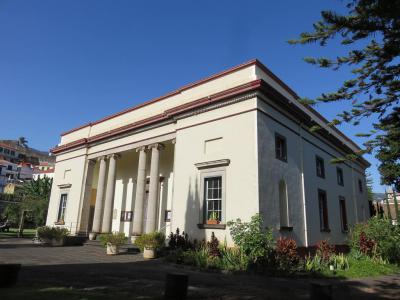
The Holy Trinity Church, also known as the English Church (Igreja Inglesa), was built in response to the English garrison's desire for a place of worship during the Napoleonic Wars. Over time, it became a center of worship for the growing English community on the island of Madeira. Funds were raised to buy land near the British Cemetery and construct the church. The church's unique circular nave is enclosed within a square Neoclassical structure and was designed by architect Henry Veitch, and completed in 1822.
The church is situated on a side street and may not be immediately visible to passersby. The Neoclassical facade features columns, and entry is through a side door in the back of the south aisle. The nave is circular, with pillars that support a small balcony around the top of the walls. On either side of the small Royal Coat of Arms above the door are panels displaying the Lord's Prayer, Ten Commandments, and the Creed, which were required to be displayed by Protestant churches at the time.
The church's most impressive feature is its elegant Neoclassical dome. The high altar is located in a small wood-paneled apse with a blue ceiling adorned with stars. A small war memorial is located in one corner, and a statue of Queen Philippa, who played a significant role in creating the Anglo-Portuguese Alliance, stands in front of the parish center. The church remains an important part of the English-speaking community on the island, hosting frequent musical performances and social gatherings in the parish center.
The church is situated on a side street and may not be immediately visible to passersby. The Neoclassical facade features columns, and entry is through a side door in the back of the south aisle. The nave is circular, with pillars that support a small balcony around the top of the walls. On either side of the small Royal Coat of Arms above the door are panels displaying the Lord's Prayer, Ten Commandments, and the Creed, which were required to be displayed by Protestant churches at the time.
The church's most impressive feature is its elegant Neoclassical dome. The high altar is located in a small wood-paneled apse with a blue ceiling adorned with stars. A small war memorial is located in one corner, and a statue of Queen Philippa, who played a significant role in creating the Anglo-Portuguese Alliance, stands in front of the parish center. The church remains an important part of the English-speaking community on the island, hosting frequent musical performances and social gatherings in the parish center.
2) Jardim Municipal (Municipal Garden)
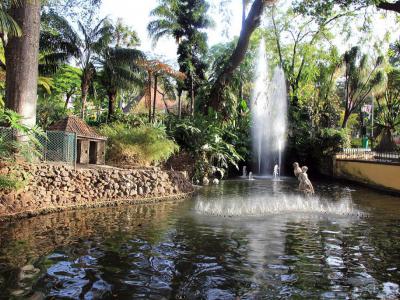
The Funchal Municipal Garden, also known as Dona Amélia Garden, is situated in a prime location, enhancing the beauty of this distinguished area with its lush and vibrant flora. This natural haven in the heart of the city attracts both locals and tourists, providing a serene escape.
Spanning across 8,300 square meters, the garden is located on the north side of Arriaga Avenue (Avenida Arriaga), opposite the Municipal Theatre, on the site where the Convent of São Francisco once stood. The Coat of Arms of the convent can still be admired on one of the lawns.
The garden boasts a vast collection of botanical species, including plants indigenous to Madeira and other regions of the world, making it a fascinating destination for nature enthusiasts. Visitors can explore a variety of captivating species during their visit.
Established in 1880, the Funchal Municipal Garden offers ample space for relaxation and entertainment. Its leisure area features shaded trees, a lake, and a stream inhabited by fish, ducks, and swans. The garden also houses an amphitheater, hosting numerous cultural events, and an esplanade.
Spanning across 8,300 square meters, the garden is located on the north side of Arriaga Avenue (Avenida Arriaga), opposite the Municipal Theatre, on the site where the Convent of São Francisco once stood. The Coat of Arms of the convent can still be admired on one of the lawns.
The garden boasts a vast collection of botanical species, including plants indigenous to Madeira and other regions of the world, making it a fascinating destination for nature enthusiasts. Visitors can explore a variety of captivating species during their visit.
Established in 1880, the Funchal Municipal Garden offers ample space for relaxation and entertainment. Its leisure area features shaded trees, a lake, and a stream inhabited by fish, ducks, and swans. The garden also houses an amphitheater, hosting numerous cultural events, and an esplanade.
3) Teatro Municipal Baltazar Dias (Baltazar Dias Municipal Theatre)
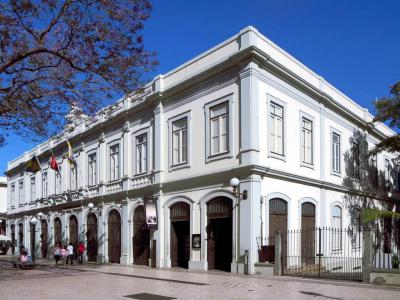
Situated in the heart of Funchal along Avenida Arriaga, Baltazar Dias Municipal Theatre is a cultural and artistic hub on the island of Madeira. The theatre hosts a variety of events, including music, exhibitions, and theatre performances, as well as festivals such as the Madeira Literary Festival and the Madeira Film Festival, which are highly regarded by audiences. The island's passion for the arts inspired the construction of the theatre, which provides a permanent venue for the abundance of artistic shows and performances on the island.
To meet the demand for a suitable venue for cultural events, a company was established in 1880 with the sole purpose of constructing a theatre in Funchal. Eventually, the municipality took over the project, and the company was dissolved. The architect in charge drew inspiration from Milan's La Scala, a popular theatre model throughout Europe at the time.
In 1887, the theatre was inaugurated as the Dona Maria Pia Theatre in honor of the Portuguese Queen. After several name changes following the establishment of the Portuguese Republic, the theatre was ultimately named after Baltazar Dias, the great blind poet, and playwright who was born in Madeira and had a significant impact on the history of Portuguese theatre.
The theatre is characterized by a range of distinctive features that convey a unique message and character. Visitors can admire the masks of the Greek theatre, the golden clock that signaled each act, and the clouds on the ceiling, among other details. To fully appreciate its grandeur, make sure to visit this magnificent theatre.
To meet the demand for a suitable venue for cultural events, a company was established in 1880 with the sole purpose of constructing a theatre in Funchal. Eventually, the municipality took over the project, and the company was dissolved. The architect in charge drew inspiration from Milan's La Scala, a popular theatre model throughout Europe at the time.
In 1887, the theatre was inaugurated as the Dona Maria Pia Theatre in honor of the Portuguese Queen. After several name changes following the establishment of the Portuguese Republic, the theatre was ultimately named after Baltazar Dias, the great blind poet, and playwright who was born in Madeira and had a significant impact on the history of Portuguese theatre.
The theatre is characterized by a range of distinctive features that convey a unique message and character. Visitors can admire the masks of the Greek theatre, the golden clock that signaled each act, and the clouds on the ceiling, among other details. To fully appreciate its grandeur, make sure to visit this magnificent theatre.
4) Cais da Cidade (City Pier)
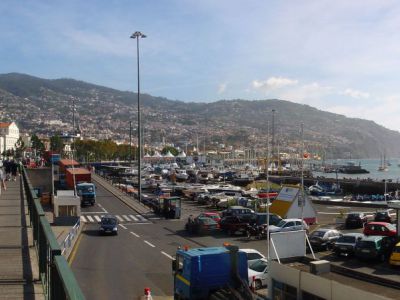
Located in the heart of Funchal, Cais da Cidade (City Pier) is a bustling harbor that was constructed in 1889 to replace an outdated pier from the second half of the 18th century. It serves as a popular destination for tourists and locals, offering stunning views of the Atlantic Ocean and a variety of activities and attractions.
Originally built to serve as a hub for trade and transportation, the harbor has undergone a transformation in recent years and is now a lively promenade filled with cafes, bars, restaurants, and shops. Visitors can take a leisurely stroll along the waterfront, basking in the warm sunshine and sea breeze while taking in the sights and sounds of the bustling harbor.
Cais da Cidade is a must-visit destination for anyone traveling to Funchal. Its stunning views, vibrant atmosphere, and diverse range of attractions provide a unique and unforgettable experience for all visitors.
Originally built to serve as a hub for trade and transportation, the harbor has undergone a transformation in recent years and is now a lively promenade filled with cafes, bars, restaurants, and shops. Visitors can take a leisurely stroll along the waterfront, basking in the warm sunshine and sea breeze while taking in the sights and sounds of the bustling harbor.
Cais da Cidade is a must-visit destination for anyone traveling to Funchal. Its stunning views, vibrant atmosphere, and diverse range of attractions provide a unique and unforgettable experience for all visitors.

5) Praça do Povo (People's Square)
The bay area of Funchal boasts the People's Square (Praça do Povo), a remarkable gateway to Madeira and a significant attraction for the island. This leisure zone, which opened in 2014, offers breathtaking views of the Atlantic on one side and the city of Funchal on the other, stretching up to the mountains.
People's Square is an expansive and delightful recreational area, ideal for walking, jogging, cycling, rollerblading, or just unwinding. Visitors can find benches scattered throughout the area, providing a tranquil spot to appreciate the stunning scenery.
The hiking trail that passes through the center of Funchal and across People's Square is adorned with lush green carpets of plants and flowers, further enhancing the beauty of the surroundings. Due to its central location and ample space, People's Square is a remarkable venue for cultural events such as concerts, exhibitions, shows, and fairs, especially during the summer.
To the north of the square, several notable buildings stand, including the Legislative Assembly of Madeira, the National Republican Guard, the Captaincy of the Port of Funchal, and the Funchal Customs (Alfândega do Funchal).
People's Square is an expansive and delightful recreational area, ideal for walking, jogging, cycling, rollerblading, or just unwinding. Visitors can find benches scattered throughout the area, providing a tranquil spot to appreciate the stunning scenery.
The hiking trail that passes through the center of Funchal and across People's Square is adorned with lush green carpets of plants and flowers, further enhancing the beauty of the surroundings. Due to its central location and ample space, People's Square is a remarkable venue for cultural events such as concerts, exhibitions, shows, and fairs, especially during the summer.
To the north of the square, several notable buildings stand, including the Legislative Assembly of Madeira, the National Republican Guard, the Captaincy of the Port of Funchal, and the Funchal Customs (Alfândega do Funchal).
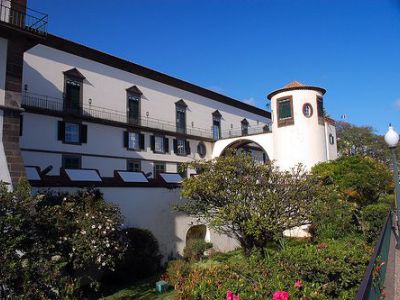
6) Fortaleza e Palácio de São Lourenço (Saint Lawrence Fortress)
Funchal's initial fortress was constructed between 1529 and 1540 in response to an incident in which a boat moored in the harbor of Funchal was plundered, following the entreaties of the local population. However, the fortification, which was finished in the latter half of the 16th century, was inadequate for all of the necessary fortification requirements, and as a result, it was easily overcome by French pirates in 1566.
Numerous alterations, extensions, and improvements were made to the primitive original structure in the following years until the 19th century, resulting in Saint Lawrence Fortress and Palace (Fortaleza e Palácio de São Lourenço), which is still standing today, and is one of the finest examples of Portuguese fortification from the 16th and 17th centuries.
The Saint Lawrence Fortress initially served as a dwelling for many island captains and governors before gradually evolving into a national residential palace. It was designated a National Monument in August of 1943 and now functions as the residence of the Prime Minister of the Autonomous Region and the Military Command.
The fortress presently houses a permanent exhibit, which was created by the Military Command and opened in July of 1993 and pertains to the history and growth of the fortress. The National Palace within the fortress can be visited after scheduling an appointment with the office of the Prime Minister.
Numerous alterations, extensions, and improvements were made to the primitive original structure in the following years until the 19th century, resulting in Saint Lawrence Fortress and Palace (Fortaleza e Palácio de São Lourenço), which is still standing today, and is one of the finest examples of Portuguese fortification from the 16th and 17th centuries.
The Saint Lawrence Fortress initially served as a dwelling for many island captains and governors before gradually evolving into a national residential palace. It was designated a National Monument in August of 1943 and now functions as the residence of the Prime Minister of the Autonomous Region and the Military Command.
The fortress presently houses a permanent exhibit, which was created by the Military Command and opened in July of 1993 and pertains to the history and growth of the fortress. The National Palace within the fortress can be visited after scheduling an appointment with the office of the Prime Minister.
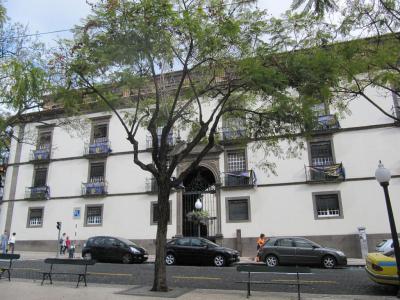
7) Palácio do Governo Regional (Regional Government Palace)
The Regional Government Palace (Palácio do Governo Regional) is a magnificent building located in the heart of Funchal, which has played a significant role in the city's history. It was originally constructed in the 17th century on the site of the Medical School of Funchal and served as a home for the Holy House of Mercy (Santa Casa da Misericórdia) and the city's hospital.
Over time, the palace underwent numerous transformations and served different functions. In the late 20th century, it was converted into the Palace of the Regional Government and became the headquarters of several Regional Secretariats. Despite undergoing various renovations over the years, the palace still retains many interesting decorative elements from the 17th century, such as the polychrome tile panels that adorn its walls.
Today, the Regional Government Palace is an iconic landmark that dominates the urban landscape of Funchal and offers visitors a glimpse into the city's rich history.
Over time, the palace underwent numerous transformations and served different functions. In the late 20th century, it was converted into the Palace of the Regional Government and became the headquarters of several Regional Secretariats. Despite undergoing various renovations over the years, the palace still retains many interesting decorative elements from the 17th century, such as the polychrome tile panels that adorn its walls.
Today, the Regional Government Palace is an iconic landmark that dominates the urban landscape of Funchal and offers visitors a glimpse into the city's rich history.
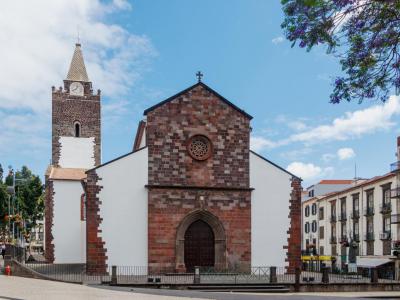
8) Sé Catedral do Funchal (Funchal Cathedral) (must see)
Dedicated in 1514, the Funchal Cathedral is one of the few buildings that have survived largely intact since the early colonization of Madeira. Its design follows the late Gothic style, with three naves supported by robust stone pillars. The structure was built using massive blocks of volcanic rock, giving the building its characteristic solidity. The facades are white, framed with dark stone corners, typical of Madeiran ecclesiastical architecture.
Inside, as you walk down the central nave toward the high altar, continue straight into the raised choir area. On both your right and left, you’ll see the 16th-century wooden choir stalls set against the walls, carved with prophets, disciples, and cherubs carrying fruit and wine. Another highlight is the large silver processional cross donated by King Manuel I kept in the Cathedral Treasury. To see it, turn to your right before leaving the church and follow the signs for the “Cathedral Treasury" or “Tesouro da Sé”, where the cross is displayed among the cathedral’s liturgical treasures.”
The cathedral itself was designed in the 1490s by architects Pêro Anes and Gil Enes. Construction progressed quickly: the main structure was completed by 1514, and the bell tower with its distinctive spire was finished by 1517. In its past, the cathedral had not fared well. The exterior volcanic tuff masonry suffered severe moisture damage, and the roof tiles leaked. Interior woodwork needed cleaning and repair. A comprehensive restoration began in 2000, and the cathedral was fully reopened to the public by 2014.
Outside, on the square directly in front of the cathedral’s main facade, stands a bronze statue of Pope John Paul II. As you exit the church, you’ll see it slightly to your left, raised on a stone pedestal overlooking the plaza. The statue commemorates the Pope’s visit to Madeira in 1991, when he celebrated Mass in Funchal and spoke about the island’s long Catholic heritage.
Inside, as you walk down the central nave toward the high altar, continue straight into the raised choir area. On both your right and left, you’ll see the 16th-century wooden choir stalls set against the walls, carved with prophets, disciples, and cherubs carrying fruit and wine. Another highlight is the large silver processional cross donated by King Manuel I kept in the Cathedral Treasury. To see it, turn to your right before leaving the church and follow the signs for the “Cathedral Treasury" or “Tesouro da Sé”, where the cross is displayed among the cathedral’s liturgical treasures.”
The cathedral itself was designed in the 1490s by architects Pêro Anes and Gil Enes. Construction progressed quickly: the main structure was completed by 1514, and the bell tower with its distinctive spire was finished by 1517. In its past, the cathedral had not fared well. The exterior volcanic tuff masonry suffered severe moisture damage, and the roof tiles leaked. Interior woodwork needed cleaning and repair. A comprehensive restoration began in 2000, and the cathedral was fully reopened to the public by 2014.
Outside, on the square directly in front of the cathedral’s main facade, stands a bronze statue of Pope John Paul II. As you exit the church, you’ll see it slightly to your left, raised on a stone pedestal overlooking the plaza. The statue commemorates the Pope’s visit to Madeira in 1991, when he celebrated Mass in Funchal and spoke about the island’s long Catholic heritage.
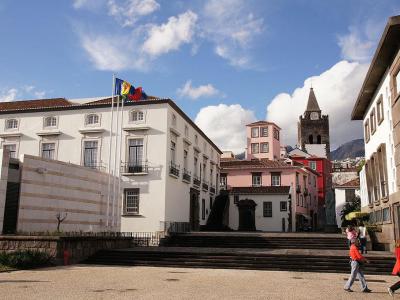
9) Assembleia Regional da Madeira (Legislative Assembly of Madeira)
The Legislative Assembly of Madeira (Assembleia Regional da Madeira ) is the legislative and parliamentary supervisory body of the Autonomous Region of Madeira.
In 1976, the beginning of the I Legislature and until December 1987, the date of the inauguration of the current facilities, the Assembly's services were based in the building of the former General Board (Junta Geral) on Zarco Avenue (Avenida Zarco). The new headquarters was installed in the Old Customs of Funchal building, classified as a National Monument. The building's restoration project was carried out by the architect Raul Chorão Ramalho.
The Legislative Assembly of Madeira building has undergone many improvements over the centuries but has preserved its look from the 15th century, which includes its Gothic style and Moorish ceilings. To the east of the building, is the Chapel of Santo António da Mouraria, founded in 1714.
In 1976, the beginning of the I Legislature and until December 1987, the date of the inauguration of the current facilities, the Assembly's services were based in the building of the former General Board (Junta Geral) on Zarco Avenue (Avenida Zarco). The new headquarters was installed in the Old Customs of Funchal building, classified as a National Monument. The building's restoration project was carried out by the architect Raul Chorão Ramalho.
The Legislative Assembly of Madeira building has undergone many improvements over the centuries but has preserved its look from the 15th century, which includes its Gothic style and Moorish ceilings. To the east of the building, is the Chapel of Santo António da Mouraria, founded in 1714.
10) Praça do Colombo (Columbus Square)
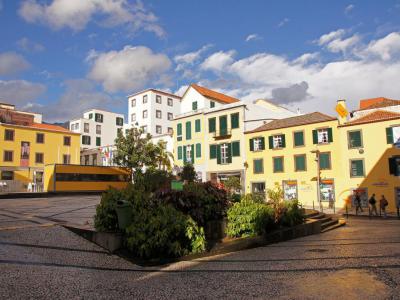
Situated in Funchal, Columbus Square is also referred to as Yellow Square because of the dominant yellow hue of the buildings around it. The square came into being part of a regeneration scheme that concluded in 1993.
The square was named in honor of the renowned explorer Christopher Columbus, who, as per historical accounts, lived in a mansion that stood on the same site during his visit to Madeira in 1498. The mansion was constructed in 1494 and belonged to João Esmeraldo, a farmer and trader, whose name has been given to the street on the eastern side of the square - Rua do Esmeraldo. The mansions in the vicinity were razed to the ground in 1876.
For a while, warehouses and stores occupied the square, but after a severe fire in the 1970s and the deterioration of the block's buildings, the Funchal City Council decided to redevelop the area in 1984, demolishing the structures and erecting the square. In 1989, archaeological excavations were initiated at the site during construction works, and some of the recovered artifacts are currently exhibited at the Municipal Sugar Museum (Núcleo Museológico da Cidade do Açúcar), north of the square.
In line with the renovation project, an underground car park was built in 1990, the Sugar Museum was finished in 1992, and the square was completed in 1993.
Presently, Columbus Square is a charming and well-liked spot in Funchal, featuring outdoor seating areas, eateries, and stores, and acting as a venue for public gatherings. With its historic cobblestone streets, the square is surrounded by some of the city's oldest colonial buildings, providing visitors with a distinctive shopping and dining experience.
The square was named in honor of the renowned explorer Christopher Columbus, who, as per historical accounts, lived in a mansion that stood on the same site during his visit to Madeira in 1498. The mansion was constructed in 1494 and belonged to João Esmeraldo, a farmer and trader, whose name has been given to the street on the eastern side of the square - Rua do Esmeraldo. The mansions in the vicinity were razed to the ground in 1876.
For a while, warehouses and stores occupied the square, but after a severe fire in the 1970s and the deterioration of the block's buildings, the Funchal City Council decided to redevelop the area in 1984, demolishing the structures and erecting the square. In 1989, archaeological excavations were initiated at the site during construction works, and some of the recovered artifacts are currently exhibited at the Municipal Sugar Museum (Núcleo Museológico da Cidade do Açúcar), north of the square.
In line with the renovation project, an underground car park was built in 1990, the Sugar Museum was finished in 1992, and the square was completed in 1993.
Presently, Columbus Square is a charming and well-liked spot in Funchal, featuring outdoor seating areas, eateries, and stores, and acting as a venue for public gatherings. With its historic cobblestone streets, the square is surrounded by some of the city's oldest colonial buildings, providing visitors with a distinctive shopping and dining experience.
11) Colegio dos Jesuitas do Funchal ( Jesuit College of Funchal)
Situated in the heart of Funchal, near the Funchal Sacred Art Museum and the Municipal Chamber, stands the impressive Jesuit College. This remarkable building, one of Funchal's most notable structures, is now accessible to visitors.
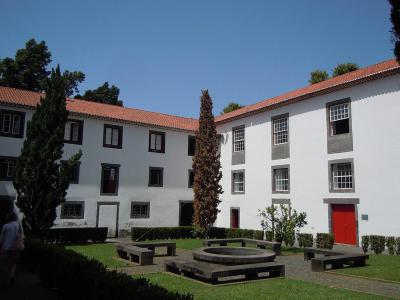
Originally established in 1570, the Jesuit College served as the local headquarters and college of the Society of Jesus until 1760. Since then, it has undergone several transformations, serving as a military school, seminary, barracks, regimental school, higher education school, and preparatory school. At one point, it was the largest building in the region. Today, it serves as the rectory of the University of Madeira.
The Jesuit College is an enormous Mannerist-style building, with a white and black exterior. It comprises two courtyards, one larger than the other, with the larger one containing a well that was used by the students. The smaller courtyard was reserved for the priests and is not open to the public. Visitors can enter the shop and refectory area through an archway. The original bell is still on display here, although it is no longer in use.
The library corridor, with doors leading into different sections of the library, is a notable feature. One of the rooms, now used as the general council room, was designed with a domed ceiling that amplified even the slightest noise. Stone window seats provided the priests with a vantage point to observe student behavior in the courtyard below. The priest's corridor with their cells is located around the final bend. The college is minimally furnished, with some furniture from Monte Palace.
Visitors can access the ground floor of the building free of charge. A circuit map is available for each visitor, outlining all the relevant points of interest. The doors are open Monday to Friday from 10 am to 6 pm and on Saturdays from 10 am to 4 pm.
Originally established in 1570, the Jesuit College served as the local headquarters and college of the Society of Jesus until 1760. Since then, it has undergone several transformations, serving as a military school, seminary, barracks, regimental school, higher education school, and preparatory school. At one point, it was the largest building in the region. Today, it serves as the rectory of the University of Madeira.
The Jesuit College is an enormous Mannerist-style building, with a white and black exterior. It comprises two courtyards, one larger than the other, with the larger one containing a well that was used by the students. The smaller courtyard was reserved for the priests and is not open to the public. Visitors can enter the shop and refectory area through an archway. The original bell is still on display here, although it is no longer in use.
The library corridor, with doors leading into different sections of the library, is a notable feature. One of the rooms, now used as the general council room, was designed with a domed ceiling that amplified even the slightest noise. Stone window seats provided the priests with a vantage point to observe student behavior in the courtyard below. The priest's corridor with their cells is located around the final bend. The college is minimally furnished, with some furniture from Monte Palace.
Visitors can access the ground floor of the building free of charge. A circuit map is available for each visitor, outlining all the relevant points of interest. The doors are open Monday to Friday from 10 am to 6 pm and on Saturdays from 10 am to 4 pm.
12) Igreja do Colégio (College Church)
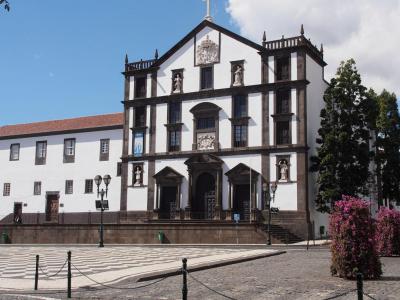
College Church (Igreja do Colégio), also known as the Church of São João Evangelista, is a beautiful church in the heart of Funchal. Constructed in the 17th century by the Society of Jesus, the church represents the shift from the Mannerist style to the Baroque, marked by impressive decorations.
It is located in the São Pedro parish and is among the wealthiest churches in the archipelago. The church's interior is a beautiful display of Baroque architecture, featuring a longitudinal plan and three intercommunicating chapels. The chapels are adorned with stunning 17th-century carved altarpieces that are considered among the most valuable in the country.
The most striking feature of the church's interior is the Chapel of the Eleven Thousand Virgins, which is decorated with painted tiles and boasts a beautifully painted roof that resembles a dome with lunettes. The temple is also decorated with paintings from the 17th and 18th centuries, adding to its artistic value. In 2008, a grand organ was installed in the church, crafted by the Portuguese organ builder Dinarte Machado and inaugurated by the Dutch conductor Ton Koopman.
The atrium of College Church is graced by a stunning sugar boxwood windscreen door flanked by two shell-shaped fonts of holy water. Additionally, the façade of the church showcases the reliquary busts of Saint Ignatius of Loyola, Saint Francis Xavier, Saint Francisco de Borja, and Saint Estanislau.
College Church is an important part of Madeira's cultural heritage and is a must-visit attraction for those interested in religious architecture and art. The church is open to the public and offers visitors a chance to marvel at its historical and artistic value. It is a true gem in the heart of Funchal and is not to be missed.
It is located in the São Pedro parish and is among the wealthiest churches in the archipelago. The church's interior is a beautiful display of Baroque architecture, featuring a longitudinal plan and three intercommunicating chapels. The chapels are adorned with stunning 17th-century carved altarpieces that are considered among the most valuable in the country.
The most striking feature of the church's interior is the Chapel of the Eleven Thousand Virgins, which is decorated with painted tiles and boasts a beautifully painted roof that resembles a dome with lunettes. The temple is also decorated with paintings from the 17th and 18th centuries, adding to its artistic value. In 2008, a grand organ was installed in the church, crafted by the Portuguese organ builder Dinarte Machado and inaugurated by the Dutch conductor Ton Koopman.
The atrium of College Church is graced by a stunning sugar boxwood windscreen door flanked by two shell-shaped fonts of holy water. Additionally, the façade of the church showcases the reliquary busts of Saint Ignatius of Loyola, Saint Francis Xavier, Saint Francisco de Borja, and Saint Estanislau.
College Church is an important part of Madeira's cultural heritage and is a must-visit attraction for those interested in religious architecture and art. The church is open to the public and offers visitors a chance to marvel at its historical and artistic value. It is a true gem in the heart of Funchal and is not to be missed.
13) Câmara Municipal (City Hall)
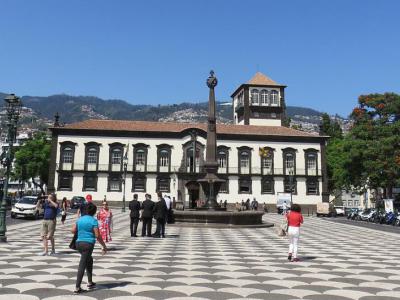
The first Funchal town hall was built in 1486 on Duque Square. The town council moved several times afterward, finally settling in Cathedral Square in 1802. Still dissatisfied with the facilities, the council eventually purchased the Carvalhal Esmeraldo Palace in 1883, adjoining the present-day Municipal Square.
Francisco António Camara Leme built his home, the Carvalhal Esmeraldo Palace in 1758. Although the original structure dates from the mid-18th century, it was later remodeled by the renowned Portuguese architects Raul Lino and Carlos Ramos during intensive restoration works around 1940. Construction materials included masonry, stone, wood, cast iron, and decorative tiles.
As you approach the City Hall, pay attention to the impressive entrance doorway carved in gray stone. On the second floor, the reception area is lined with eleven windows, each with its own small balcony. The ground-floor windows retain 17th-century wrought-iron security gratings. From the entrance, an extravagant interior staircase leads to the central courtyard. Here visitors encounter the sculpture “Leda and the Swan”, created by Madeiran sculptor Germano José Salles. The sculpture depicts the myth in which Zeus, disguised as a swan, approaches Leda-an ancient legend long admired for its symbolism and dramatic narrative.
Francisco António Camara Leme built his home, the Carvalhal Esmeraldo Palace in 1758. Although the original structure dates from the mid-18th century, it was later remodeled by the renowned Portuguese architects Raul Lino and Carlos Ramos during intensive restoration works around 1940. Construction materials included masonry, stone, wood, cast iron, and decorative tiles.
As you approach the City Hall, pay attention to the impressive entrance doorway carved in gray stone. On the second floor, the reception area is lined with eleven windows, each with its own small balcony. The ground-floor windows retain 17th-century wrought-iron security gratings. From the entrance, an extravagant interior staircase leads to the central courtyard. Here visitors encounter the sculpture “Leda and the Swan”, created by Madeiran sculptor Germano José Salles. The sculpture depicts the myth in which Zeus, disguised as a swan, approaches Leda-an ancient legend long admired for its symbolism and dramatic narrative.
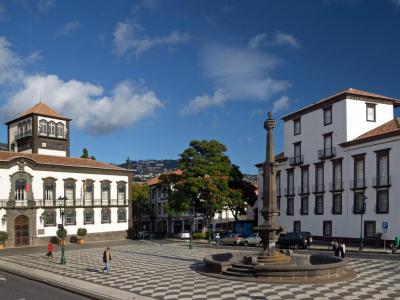
14) Praça do Município (Municipal Square)
Municipal Square is a pedestrianized area paved with dark and light basalt and limestone tiles arranged in flowing wave patterns typical of Madeiran pavements. At its heart rises a tall fountain spire in a Portuguese architectural style from the early 1500s, set above a wide, overflowing basin that has become one of the square’s defining features. Although the inner area is reserved for pedestrians, traffic and parking are allowed around the perimeter, forming a ring road that frames the space.
This square is widely regarded as the most important public gathering place in Funchal. It is surrounded by some of the city’s finest historic buildings: the 18th-century Town Hall, the 17th-century Church of Saint John the Evangelist, the Museum of Sacred Art housed in the 16th-century Episcopal Palace, and the former Jesuits’ College, today serving as the rectory of the University of Madeira.
If you want to stop in a nearby restaurant, to feel the square vibe, Just behind the Museum of Sacred Art sits the popular Museum Cafe, known for its shaded patio and relaxed atmosphere. The square frequently serves as a ceremonial and cultural stage. Christmas illuminations, open-air concerts, civic celebrations, and public dances fill the space throughout the year.
This square is widely regarded as the most important public gathering place in Funchal. It is surrounded by some of the city’s finest historic buildings: the 18th-century Town Hall, the 17th-century Church of Saint John the Evangelist, the Museum of Sacred Art housed in the 16th-century Episcopal Palace, and the former Jesuits’ College, today serving as the rectory of the University of Madeira.
If you want to stop in a nearby restaurant, to feel the square vibe, Just behind the Museum of Sacred Art sits the popular Museum Cafe, known for its shaded patio and relaxed atmosphere. The square frequently serves as a ceremonial and cultural stage. Christmas illuminations, open-air concerts, civic celebrations, and public dances fill the space throughout the year.
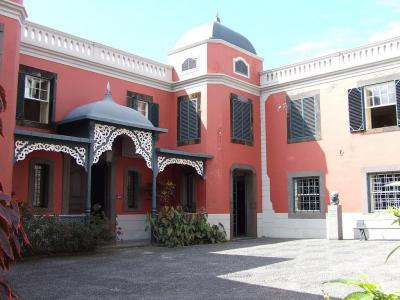
15) Casa Museu Dr. Frederico de Freitas (Frederico de Freitas House Museum)
Located in the city of Funchal, Frederico de Freitas House Museum is named after Dr. Frederico de Freitas, a renowned lawyer, notary, and collector from Madeira who rented the property around 1941. The building was originally the residence of the Condes da Calçada and their ancestors, known as Casa da Calçada, since the end of the 17th century. It underwent significant remodeling in the 19th century.
Freitas was a passionate collector of decorative arts, and he bequeathed his vast collection of furniture, sculpture, painting, ceramics, engraving, crystals, and pewter objects to the Autonomous Region of Madeira. Later, the building was acquired by the Regional Government and gradually restored to serve as a museum while preserving the original environment of the collections. The museum officially opened on June 29, 1988, and expanded in 1999 with the addition of the purpose-built House of Tiles (Casa dos Azulejos), which houses the museum's tile collection.
The museum's collection consists of decorative art pieces dating from the 17th to the 20th centuries, including sculptures, paintings, engravings, furniture, ceramics, crystals, and pewter objects. The pieces are arranged in a way that reflects the collector's domestic environment. The furniture collection comprises national and foreign pieces from the 17th to the 19th centuries. Religious themes dominate the sculpture and painting collections, which are predominantly European.
The collection of mugs and similar objects dates from the 18th century to the present and comes from various origins. The engravings include those related to Madeira from the 18th and 19th centuries. The House of Tiles contains tiles of different origins, including oriental, Islamic, medieval, majolica, Dutch, and Portuguese. The Portuguese tile collection features a substantial set of 17th-century patterns and represents national production from then until the present day.
Freitas was a passionate collector of decorative arts, and he bequeathed his vast collection of furniture, sculpture, painting, ceramics, engraving, crystals, and pewter objects to the Autonomous Region of Madeira. Later, the building was acquired by the Regional Government and gradually restored to serve as a museum while preserving the original environment of the collections. The museum officially opened on June 29, 1988, and expanded in 1999 with the addition of the purpose-built House of Tiles (Casa dos Azulejos), which houses the museum's tile collection.
The museum's collection consists of decorative art pieces dating from the 17th to the 20th centuries, including sculptures, paintings, engravings, furniture, ceramics, crystals, and pewter objects. The pieces are arranged in a way that reflects the collector's domestic environment. The furniture collection comprises national and foreign pieces from the 17th to the 19th centuries. Religious themes dominate the sculpture and painting collections, which are predominantly European.
The collection of mugs and similar objects dates from the 18th century to the present and comes from various origins. The engravings include those related to Madeira from the 18th and 19th centuries. The House of Tiles contains tiles of different origins, including oriental, Islamic, medieval, majolica, Dutch, and Portuguese. The Portuguese tile collection features a substantial set of 17th-century patterns and represents national production from then until the present day.
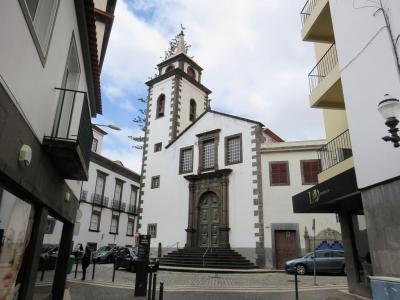
16) Igreja de São Pedro (St. Peter's Church)
Saint Peter's Church (Igreja de São Pedro) is situated in Funchal and was commissioned for construction in 1590, but took several decades to be completed in 1743. It features a tall bell tower with a colored tile roof and a small cockerel at the top. The church's exterior is a mix of white and dark colors, and there is a flight of steps leading up to the double doors. The building showcases Mannerist-style architecture, with a single nave and chancel and three small chapels branching off the nave.
The interior of the church is decorated with beautiful blue and white azulejo tiles from the 17th century and paintings, jewelry, and furniture from the 17th to the 20th centuries. The nave ceiling is painted, and there are long, narrow wooden balconies running along either side of the back of the nave. The chancel arch features two side altars dedicated to Our Lady of Candelaria and Santa Luzia and is an example of Baroque architecture. The main altar and reredos are magnificent, with gilt-covered carvings and a tabernacle behind the figure of Christ crucified.
The side chapels branching off from the nave also feature decorative Baroque altars. However, the chapel at the back of the north wall is a later addition and lacks the azulejo tiles found elsewhere in the church. It is surrounded by an arcade of pillars supporting round arches, and its reredos is plain compared to the others in the church. Lastly, there is a small sacristy on the north side of the chancel that is also used by the flower arrangers.
Saint Peter's Church is a must-visit destination for anyone interested in the history and culture of Funchal and Madeira. Its beautiful architecture, stunning artwork, and rich history make it one of the most important religious and cultural landmarks on the island.
The interior of the church is decorated with beautiful blue and white azulejo tiles from the 17th century and paintings, jewelry, and furniture from the 17th to the 20th centuries. The nave ceiling is painted, and there are long, narrow wooden balconies running along either side of the back of the nave. The chancel arch features two side altars dedicated to Our Lady of Candelaria and Santa Luzia and is an example of Baroque architecture. The main altar and reredos are magnificent, with gilt-covered carvings and a tabernacle behind the figure of Christ crucified.
The side chapels branching off from the nave also feature decorative Baroque altars. However, the chapel at the back of the north wall is a later addition and lacks the azulejo tiles found elsewhere in the church. It is surrounded by an arcade of pillars supporting round arches, and its reredos is plain compared to the others in the church. Lastly, there is a small sacristy on the north side of the chancel that is also used by the flower arrangers.
Saint Peter's Church is a must-visit destination for anyone interested in the history and culture of Funchal and Madeira. Its beautiful architecture, stunning artwork, and rich history make it one of the most important religious and cultural landmarks on the island.
