Custom Walk in Cape Town, South Africa by itsbart_6e7f65 created on 2026-06-16
Guide Location: South Africa » Cape Town
Guide Type: Custom Walk
# of Sights: 10
Tour Duration: 2 Hour(s)
Travel Distance: 2.4 Km or 1.5 Miles
Share Key: RVYYQ
Guide Type: Custom Walk
# of Sights: 10
Tour Duration: 2 Hour(s)
Travel Distance: 2.4 Km or 1.5 Miles
Share Key: RVYYQ
How It Works
Please retrieve this walk in the GPSmyCity app. Once done, the app will guide you from one tour stop to the next as if you had a personal tour guide. If you created the walk on this website or come to the page via a link, please follow the instructions below to retrieve the walk in the app.
Retrieve This Walk in App
Step 1. Download the app "GPSmyCity: Walks in 1K+ Cities" on Apple App Store or Google Play Store.



Step 2. In the GPSmyCity app, download(or launch) the guide "Cape Town Map and Walking Tours".
Step 3. Tap the menu button located at upper right corner of the "Walks" screen and select "Retrieve custom walk". Enter the share key: RVYYQ

2) Company's Garden (must see)
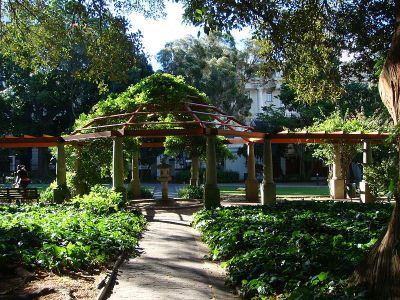
Company’s Garden is one of Cape Town’s oldest and most cherished public spaces, offering a peaceful green retreat in the heart of the city. Established in the 1650s by the Dutch East India Company, the garden was originally created to supply fresh produce to passing ships. Today, it blends centuries of history with landscaped lawns, towering oak trees, and shaded pathways, making it a popular stop for both tourists and locals.
One of the garden’s main attractions is its collection of historic monuments and statues. Visitors will find memorials to key figures in South African history, including statues of Queen Victoria, Jan Smuts, and Cecil John Rhodes. These monuments reflect the country’s layered and often complex past, adding depth to a leisurely stroll through the grounds.
A pear tree planted in 1652 is still growing in the garden and is the oldest cultivated tree in South Africa. The pear tree is located toward the eastern side of the garden, near the South African National Gallery and the Iziko South African Museum. It stands in a small fenced area to protect it due to its age.
Other historical features include the Rutherford Fountain, installed in 1864, and a well pump embedded in an oak tree, dating back to 1842. These charming relics offer visitors a tangible connection to the garden’s early history.
Wildlife adds to the garden’s charm. Friendly squirrels are a familiar sight, and the aviary showcases a selection of birds. Benches, cafés, and open lawns invite visitors to pause, enjoy a picnic, or simply take in views of Table Mountain rising above the city skyline.
One of the garden’s main attractions is its collection of historic monuments and statues. Visitors will find memorials to key figures in South African history, including statues of Queen Victoria, Jan Smuts, and Cecil John Rhodes. These monuments reflect the country’s layered and often complex past, adding depth to a leisurely stroll through the grounds.
A pear tree planted in 1652 is still growing in the garden and is the oldest cultivated tree in South Africa. The pear tree is located toward the eastern side of the garden, near the South African National Gallery and the Iziko South African Museum. It stands in a small fenced area to protect it due to its age.
Other historical features include the Rutherford Fountain, installed in 1864, and a well pump embedded in an oak tree, dating back to 1842. These charming relics offer visitors a tangible connection to the garden’s early history.
Wildlife adds to the garden’s charm. Friendly squirrels are a familiar sight, and the aviary showcases a selection of birds. Benches, cafés, and open lawns invite visitors to pause, enjoy a picnic, or simply take in views of Table Mountain rising above the city skyline.
3) St. George's Cathedral
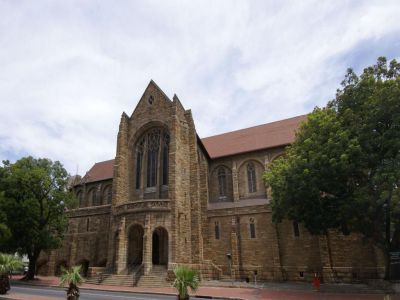
Saint George’s Cathedral on Wale Street is renowned for two things: the first is its beautiful stained glass windows; the second is that even after 120 years, it still isn’t finished!
The cathedral was designed on the site of a former church by Sir Henry Baker in 1901. Building started in 1906, but due to a lack of funds, the North Transept wasn’t finished until 1936. By this time Sir Henry had returned to England, where he died ten years later.
Work dragged on slowly over the years. The Lady Chapel and the south aisle were completed in 1963, the Bell Tower and the Link in 1978. The cathedral is still waiting for the Chapter House to be added onto the end of the Link.
In 1982 the French stained-glass artist Gabriel Loire donated the magnificent window entitled “Christ in Triumph over Darkness and Evil” to the cathedral. This masterpiece is dedicated to the memory of Earl Mountbatten of Burma, the last Viceroy of India. The beautiful rose window is in the South Transept and in the Link is a window dating back to 1866 of the Last Supper.
In the cathedral gardens, you can walk the Labyrinth and buy souvenirs in the Cathedral Book and Bric-à-Brac Shop opposite the church. This great shop not only sells religious books but also cookbooks, children’s stories, and fiction. You can browse through the CDs or old records, pictures and paintings, antiques and occasionally small items of furniture.
Tip:
Be sure to visit the crypt and the beautiful wooden homage to Archbishop Desmond Tutu at the entrance leading to the Company Garden.
The cathedral was designed on the site of a former church by Sir Henry Baker in 1901. Building started in 1906, but due to a lack of funds, the North Transept wasn’t finished until 1936. By this time Sir Henry had returned to England, where he died ten years later.
Work dragged on slowly over the years. The Lady Chapel and the south aisle were completed in 1963, the Bell Tower and the Link in 1978. The cathedral is still waiting for the Chapter House to be added onto the end of the Link.
In 1982 the French stained-glass artist Gabriel Loire donated the magnificent window entitled “Christ in Triumph over Darkness and Evil” to the cathedral. This masterpiece is dedicated to the memory of Earl Mountbatten of Burma, the last Viceroy of India. The beautiful rose window is in the South Transept and in the Link is a window dating back to 1866 of the Last Supper.
In the cathedral gardens, you can walk the Labyrinth and buy souvenirs in the Cathedral Book and Bric-à-Brac Shop opposite the church. This great shop not only sells religious books but also cookbooks, children’s stories, and fiction. You can browse through the CDs or old records, pictures and paintings, antiques and occasionally small items of furniture.
Tip:
Be sure to visit the crypt and the beautiful wooden homage to Archbishop Desmond Tutu at the entrance leading to the Company Garden.
4) Auwal Mosque
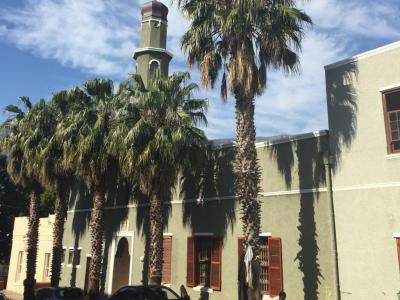
The Auwal Mosque, sometimes spelled Awwal, Owal, or Owwal, is located in the Bo-Kaap area of Cape Town and is considered the oldest mosque in South Africa. Built in 1794 during the initial British presence in the Cape, it sits on land originally owned by Coridon van Ceylon, a freed Black Muslim slave. Coridon's daughter, Saartjie van de Kaap, inherited the land, which was previously used as a warehouse, and generously donated it for the construction of South Africa's inaugural mosque.
Originally erected in 1794, the mosque underwent renovations in 1907 and significant refurbishments in 1936. Notably, it was the first mosque in the region to hold public prayers and served as an early hub for Cape Muslim customs and the teaching of Arabic-Afrikaans. Its significance lies in its role as a beacon for the recognition of Islam and the freedom of worship for former slaves.
The initial imam appointed to the mosque was Qadi Abdussalam, fondly known as Tuan Guru, a prominent religious figure and former political detainee. During his imprisonment, he transcribed the entire Quran from memory, a copy of which is now showcased within the mosque. Tuan Guru also utilized the mosque as a madrassah, or religious school, where he educated both children and adults in Islamic teachings.
Following Tuan Guru's passing, Saartjie van de Kaap's husband, Achmad of Bengal, assumed the imamship. This role remained within his family until the passing of Gasan Achmat in 1980. Since then, numerous imams have succeeded, including notable figures like Sheikh Salih Abadi. Presently, Moulana Mugammad Carr and Sheikh Ismail Londt serve jointly as imams.
A disagreement over the succession of the imam led to a faction splitting from the congregation in 1807, forming Cape Town's second mosque, the Palm Tree Mosque on Long Street.
Originally erected in 1794, the mosque underwent renovations in 1907 and significant refurbishments in 1936. Notably, it was the first mosque in the region to hold public prayers and served as an early hub for Cape Muslim customs and the teaching of Arabic-Afrikaans. Its significance lies in its role as a beacon for the recognition of Islam and the freedom of worship for former slaves.
The initial imam appointed to the mosque was Qadi Abdussalam, fondly known as Tuan Guru, a prominent religious figure and former political detainee. During his imprisonment, he transcribed the entire Quran from memory, a copy of which is now showcased within the mosque. Tuan Guru also utilized the mosque as a madrassah, or religious school, where he educated both children and adults in Islamic teachings.
Following Tuan Guru's passing, Saartjie van de Kaap's husband, Achmad of Bengal, assumed the imamship. This role remained within his family until the passing of Gasan Achmat in 1980. Since then, numerous imams have succeeded, including notable figures like Sheikh Salih Abadi. Presently, Moulana Mugammad Carr and Sheikh Ismail Londt serve jointly as imams.
A disagreement over the succession of the imam led to a faction splitting from the congregation in 1807, forming Cape Town's second mosque, the Palm Tree Mosque on Long Street.
5) Monkeybiz
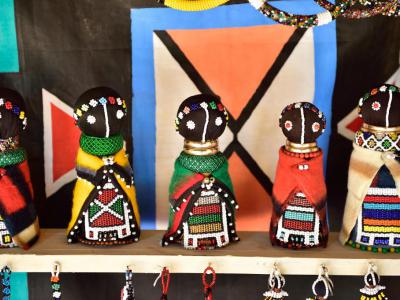
Located next door to the Bo-Kaap Museum, the Monkeybiz boutique sells unique beaded dolls and animals of all sizes. However, this is not simply a quaint toy store. It's a non-profit organization that gives work to over 320 local beaders. These local women are trained in beadwork, given materials, and then can work from home. Their work enables them to provide for their families, and working from home allows the artists to save on transport costs and childcare.
Traditional beaded necklaces and artworks are thought to impart spiritual energy. Each beaded doll is truly unique. Each artist chooses her pattern and colors. The resulting dolls and animals are genuinely treasured works of art. Monkeybiz has more than just dolls and animals. They also sell beaded fridge magnets, Christmas tree decorations, bridal cake toppers, and life-size animals.
Monkeybiz aims to be environmentally friendly, too. They use discarded cutoffs from local clothing manufacturers to create filling for the dolls and animals.
Traditional beaded necklaces and artworks are thought to impart spiritual energy. Each beaded doll is truly unique. Each artist chooses her pattern and colors. The resulting dolls and animals are genuinely treasured works of art. Monkeybiz has more than just dolls and animals. They also sell beaded fridge magnets, Christmas tree decorations, bridal cake toppers, and life-size animals.
Monkeybiz aims to be environmentally friendly, too. They use discarded cutoffs from local clothing manufacturers to create filling for the dolls and animals.
6) Bo-Kaap Museum
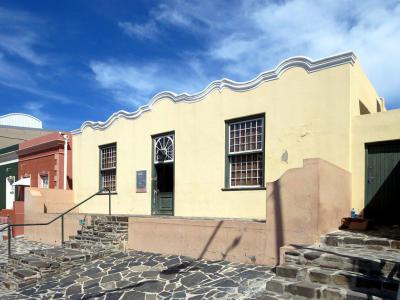
The Bo-Kaap Museum's building dates back to the 1760s. It's the oldest unchanged house in the area. The Bo-Kapp Museum celebrates the Cape Muslims' culture, which prospered in this area after the abolition of slavery in the 1834. The museum was founded in 1978.
The museum is furnished as a typical 19th-century Muslim dwelling and celebrates Islamic culture. The "Cape Malays" were known as skilled artists, carpenters, and scholars. The old Cape Dutch feel is accentuated by yellowwood floors and ceilings. The teak door frames, window frames, and shutters are representative of the traditional local style.
One of the rooms is beautifully decorated as a bridal chamber and features a bridal dress. Visitors will also find examples of Quranic calligraphy, historic photographs, and Islamic art.
Another exhibit is dedicated to the convicts, slaves, and free workers who built Cape Town over three centuries. This exhibit focuses on pre-apartheid racial discrimination.
The museum is furnished as a typical 19th-century Muslim dwelling and celebrates Islamic culture. The "Cape Malays" were known as skilled artists, carpenters, and scholars. The old Cape Dutch feel is accentuated by yellowwood floors and ceilings. The teak door frames, window frames, and shutters are representative of the traditional local style.
One of the rooms is beautifully decorated as a bridal chamber and features a bridal dress. Visitors will also find examples of Quranic calligraphy, historic photographs, and Islamic art.
Another exhibit is dedicated to the convicts, slaves, and free workers who built Cape Town over three centuries. This exhibit focuses on pre-apartheid racial discrimination.
7) Wale Street
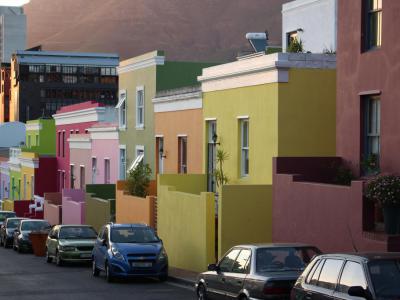
Wale Street transverses the heart of the Bo-Kaap District. Here, you will find colorful houses and traditional cobbled streets. Some of the houses date back to 1763-1768. In the 18th and 19th centuries, the Dutch captured slaves from Indonesia, Zanzibar, Mozambique, and Madagascar. These slaves leased homes in the Bo-Kaap district. According to folklore, when the houses were leased, they had to be painted white. After the slaves were granted freedom and allowed to buy houses, the former slaves painted the homes in vibrant colors.
The Bo-Kaap area is steeped in Malaysian culture. Many descendants live in the Bo-Kaap area and keep the "Cape Malay" traditions alive. Cape Minstrel Carnival is held every January 2nd and is a must-see if you are in the area.
While walking on Wale Street, keep an eye out for Islamic shrines, known as "kramats." You'll also see mosques, food markets, and craft markets in the area.
Visitors will love trying Cape Malay food; it's spicy, aromatic, and delicious!
The Bo-Kaap area is steeped in Malaysian culture. Many descendants live in the Bo-Kaap area and keep the "Cape Malay" traditions alive. Cape Minstrel Carnival is held every January 2nd and is a must-see if you are in the area.
While walking on Wale Street, keep an eye out for Islamic shrines, known as "kramats." You'll also see mosques, food markets, and craft markets in the area.
Visitors will love trying Cape Malay food; it's spicy, aromatic, and delicious!
8) Biesmiellah Restaurant
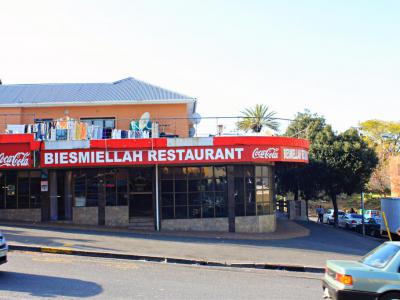
Biesmiellah Restaurant serves traditional Cape Malay food. Both indoor and rooftop seating is available. Visitors that choose the rooftop are treated to views of Bo-Kaap and Table Mountain. Diners should note that alcohol is not served at this traditional Muslim restaurant and is not permitted on the premises.
The restaurant looks unassuming from the outside. Inside, it's very welcoming. Islamic art hangs on the walls, and wood paneling adds to the cozy decor.
The food is quite spicy. Bobotie is one of the most popular menu items. Bobotie is made with beef, curry spices, raisins, and an egg topping. The flavors are intoxicating and very unique. The Pienang curry is a delicious Cape Malay sweet and sour curry. Denningvleis is another unique Cape Malay dish that is sure to delight.
Biesmiellah also serves Indian curries like Butter Chicken. Samoosas, chili bites, and koeksisters are also popular dishes. Mango lassi is a deliciously cool and refreshing drink to balance out the spicy meals.
The restaurant looks unassuming from the outside. Inside, it's very welcoming. Islamic art hangs on the walls, and wood paneling adds to the cozy decor.
The food is quite spicy. Bobotie is one of the most popular menu items. Bobotie is made with beef, curry spices, raisins, and an egg topping. The flavors are intoxicating and very unique. The Pienang curry is a delicious Cape Malay sweet and sour curry. Denningvleis is another unique Cape Malay dish that is sure to delight.
Biesmiellah also serves Indian curries like Butter Chicken. Samoosas, chili bites, and koeksisters are also popular dishes. Mango lassi is a deliciously cool and refreshing drink to balance out the spicy meals.
9) Boorhaanol Islam Mosque
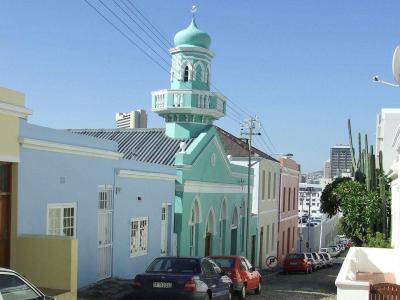
The Boorhaanol Islam Mosque was built in 1884. It was originally known as Pilgrim Mosque and featured the first minaret in Cape Town. The minaret features a tower with a balcony. The balcony is used to call the faithful to prayer five times a day. The tall, distinctive minaret also serves as a visual reminder to the Muslim community.
The Boorhaanol Islam Mosque's original minaret was made from wood and blew down in a storm in the 1930s. The current minaret is made from concrete.
Boorhaanol Islam Mosque is the only mosque in Cape Town that has been declared a National Monument. In keeping with the rest of the Bo-Kaap district, it is painted in bright seafoam green with eye-catching white trim.
The Dutch and British occupiers were often hostile to the practice of the Muslim faith. Throughout much of the 20th century, the Muslim community was burdened by racist attitudes and laws. Since 1994, all religions are permitted to practice freely.
Besides providing a spiritual center to the Cape Malay Muslim community, the Boorhaanol Islam Mosque provides community services and programs.
The Boorhaanol Islam Mosque's original minaret was made from wood and blew down in a storm in the 1930s. The current minaret is made from concrete.
Boorhaanol Islam Mosque is the only mosque in Cape Town that has been declared a National Monument. In keeping with the rest of the Bo-Kaap district, it is painted in bright seafoam green with eye-catching white trim.
The Dutch and British occupiers were often hostile to the practice of the Muslim faith. Throughout much of the 20th century, the Muslim community was burdened by racist attitudes and laws. Since 1994, all religions are permitted to practice freely.
Besides providing a spiritual center to the Cape Malay Muslim community, the Boorhaanol Islam Mosque provides community services and programs.
10) Marco’s African Place
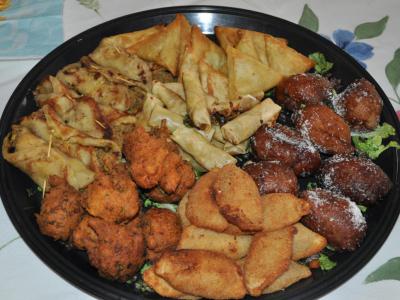
Visitors arriving at Marco's African Place are immersed in African culture, food, and music. Marco's African Place features both traditional African food and multicultural Cape cuisine.
The proprietor and chef, Marco, was the first black restauranter in Cape Town. He opened his first restaurant in 1989. Marco's African Place opened in 1997.
Here, you can have unique African dishes you can't get anywhere else. Crocodile and impala are popular choices. Diners can also try traditional Xhosa Dishes. For a tour of African specialties, try the Pan African Platter with Springbok, Kudu, and Ostrich.
To complete the exquisite meal, pair with a home-brewed African beer. Marco's also offers a full bar with an extensive wine, liquor, and cocktail menu.
Nightly live entertainment includes local bands, singers, and dancers. With the immersive atmosphere and so many delightful food choices, visitors often find themselves spending the entire evening at Marco's African Place.
Save room for a dessert; a delightful selection of sweet temptations is offered.
The proprietor and chef, Marco, was the first black restauranter in Cape Town. He opened his first restaurant in 1989. Marco's African Place opened in 1997.
Here, you can have unique African dishes you can't get anywhere else. Crocodile and impala are popular choices. Diners can also try traditional Xhosa Dishes. For a tour of African specialties, try the Pan African Platter with Springbok, Kudu, and Ostrich.
To complete the exquisite meal, pair with a home-brewed African beer. Marco's also offers a full bar with an extensive wine, liquor, and cocktail menu.
Nightly live entertainment includes local bands, singers, and dancers. With the immersive atmosphere and so many delightful food choices, visitors often find themselves spending the entire evening at Marco's African Place.
Save room for a dessert; a delightful selection of sweet temptations is offered.
