Custom Walk in Santo Domingo, Dominican Republic by thabrick007_53e73c created on 2026-06-15
Guide Location: Dominican Republic » Santo Domingo
Guide Type: Custom Walk
# of Sights: 14
Tour Duration: 2 Hour(s)
Travel Distance: 3.3 Km or 2.1 Miles
Share Key: 5SASV
Guide Type: Custom Walk
# of Sights: 14
Tour Duration: 2 Hour(s)
Travel Distance: 3.3 Km or 2.1 Miles
Share Key: 5SASV
How It Works
Please retrieve this walk in the GPSmyCity app. Once done, the app will guide you from one tour stop to the next as if you had a personal tour guide. If you created the walk on this website or come to the page via a link, please follow the instructions below to retrieve the walk in the app.
Retrieve This Walk in App
Step 1. Download the app "GPSmyCity: Walks in 1K+ Cities" on Apple App Store or Google Play Store.



Step 2. In the GPSmyCity app, download(or launch) the guide "Santo Domingo Map and Walking Tours".
Step 3. Tap the menu button located at upper right corner of the "Walks" screen and select "Retrieve custom walk". Enter the share key: 5SASV
1) Alcázar de Colón (Columbus Alcazar) (must see)
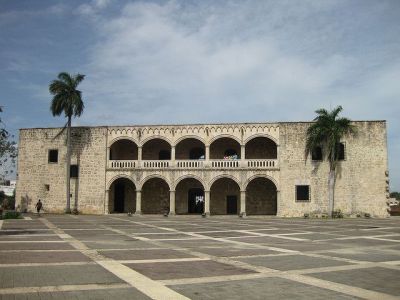
The Columbus Alcazar is a historically significant and awe-inspiring edifice located in Santo Domingo. As the oldest Viceregal residence in the Americas, it holds a prestigious place within the Colonial Zone of Santo Domingo, a UNESCO World Heritage Site.
The Columbus Alcazar houses the Alcazar Museum of Diego Colón, which boasts an exceptional collection of European late medieval and Renaissance works of art. Acquired in the 1950s, these art pieces represent the most important ensemble of their kind in the Caribbean region. Among the notable exhibits is a Tapestry collection that spans the 15th to 17th centuries, making it particularly unique and significant in the Caribbean. This collection includes remarkable pieces produced by the renowned Flemish Van Den Hecke family, using cartouches created by Charles Le Brun. As a result, the museum attracts a considerable number of visitors and stands as the most visited museum in Santo Domingo.
The palace itself is a stunning architectural marvel, constructed with coralline blocks. In its heyday, it boasted around fifty rooms, gardens, and courtyards, creating a grand and opulent atmosphere befitting a Viceregal residence. However, today, only about half of its original size remains due to the passage of time and historical events. The Alcázar de Colón was built during the early 16th century, between 1510 and 1512, under the orders of Diego Colón, the son of Christopher Columbus. At the time, Diego Colón served as the Viceroy of La Española and the Indies, and he envisioned the mansion as both a family home and a governor's mansion.
Throughout the Spanish colonial period, the Columbus Alcazar held immense importance in history. It served as a crucial center for planning expeditions of conquest and exploration, shaping the course of early exploration and colonization in the region.
Editor's note: The Alcazar Museum is temporarily closed.
The Columbus Alcazar houses the Alcazar Museum of Diego Colón, which boasts an exceptional collection of European late medieval and Renaissance works of art. Acquired in the 1950s, these art pieces represent the most important ensemble of their kind in the Caribbean region. Among the notable exhibits is a Tapestry collection that spans the 15th to 17th centuries, making it particularly unique and significant in the Caribbean. This collection includes remarkable pieces produced by the renowned Flemish Van Den Hecke family, using cartouches created by Charles Le Brun. As a result, the museum attracts a considerable number of visitors and stands as the most visited museum in Santo Domingo.
The palace itself is a stunning architectural marvel, constructed with coralline blocks. In its heyday, it boasted around fifty rooms, gardens, and courtyards, creating a grand and opulent atmosphere befitting a Viceregal residence. However, today, only about half of its original size remains due to the passage of time and historical events. The Alcázar de Colón was built during the early 16th century, between 1510 and 1512, under the orders of Diego Colón, the son of Christopher Columbus. At the time, Diego Colón served as the Viceroy of La Española and the Indies, and he envisioned the mansion as both a family home and a governor's mansion.
Throughout the Spanish colonial period, the Columbus Alcazar held immense importance in history. It served as a crucial center for planning expeditions of conquest and exploration, shaping the course of early exploration and colonization in the region.
Editor's note: The Alcazar Museum is temporarily closed.
2) Iglesia and Convento de Santa Clara (Church and Convent of Santa Clara)
The Church and Convent of Santa Clara is one of the most enduring religious landmarks in Santo Domingo’s Colonial City, carrying a layered history that spans nearly five centuries. Its origins date to 1550, when Don Rodrigo Pimentel financed the construction of what was initially intended to be a church dedicated to Santa Ana. By the time the building was completed, however, the Clarissan nuns had already established a presence on the island, and the complex was given to them. For more than two centuries, the nuns lived in strict seclusion within its walls, shaping a quiet spiritual community at the heart of the growing colonial settlement. Their residence lasted until 1796, when they relocated to Cuba, marking the end of the convent’s first chapter.
A new period began in 1873, when the building was restored and entrusted to the Sisters of Charity of Cardenal Sancha. They founded the Colegio Santa Clara, an educational institution that remains active today, continuing the site’s long-standing connection to service and learning.
Architecturally, the structure reflects early colonial simplicity. The church features a single nave and a 17th-century coffered vault above the presbytery, while its north and west sides include two modest vestibules and a buttress that helps support its historic walls.
Located near the Primada de América Cathedral and the Larimar Museum, the Church and Convent of Santa Clara offer visitors a distinctive look into Santo Domingo’s religious past. Its quiet presence and enduring legacy make it a rewarding stop while exploring the Colonial City.
A new period began in 1873, when the building was restored and entrusted to the Sisters of Charity of Cardenal Sancha. They founded the Colegio Santa Clara, an educational institution that remains active today, continuing the site’s long-standing connection to service and learning.
Architecturally, the structure reflects early colonial simplicity. The church features a single nave and a 17th-century coffered vault above the presbytery, while its north and west sides include two modest vestibules and a buttress that helps support its historic walls.
Located near the Primada de América Cathedral and the Larimar Museum, the Church and Convent of Santa Clara offer visitors a distinctive look into Santo Domingo’s religious past. Its quiet presence and enduring legacy make it a rewarding stop while exploring the Colonial City.
3) Calle Las Damas (Ladies Street) (must see)
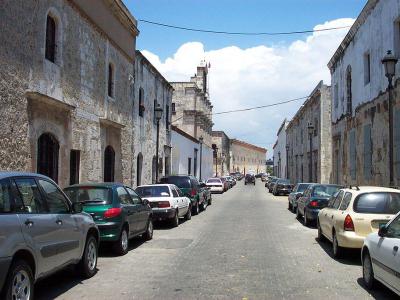
Ladies Street holds a significant place in the history of Santo Domingo. As the first street in the city and in the Americas, it carries with it a rich heritage that reflects the colonial past of the region.
Situated within the enchanting Colonial City, Ladies Street derives its name from the fact that it was frequented by the ladies of the colony during its early days. Today, the street is adorned with colonial tiles, creating a charming and picturesque atmosphere.
Ladies Street boasts several colonial houses, some of which still display their original colonial shields. These houses were built by distinguished families of the colonial period, including the Oviedo, Dávila, Heredia, Campuzano Polanco, Infante, and Coca families.
At the end of Ladies Street lies the Spanish Square, a vibrant and bustling square that marks the culmination of this historic street. The plaza offers a picturesque setting for locals and tourists to gather, relax, and soak in the ambiance of the Colonial Zone.
The origins of Ladies Street can be traced back to the government of Nicolás de Ovando, during which it became the first street created in the Colonial Zone. Originally known as Fortress Street due to the presence of the Ozama Fortress, the street later acquired the name Ladies Street. Despite a brief period when it was renamed Colón Street in honor of Christopher Columbus, the street ultimately reclaimed its original name.
Situated within the enchanting Colonial City, Ladies Street derives its name from the fact that it was frequented by the ladies of the colony during its early days. Today, the street is adorned with colonial tiles, creating a charming and picturesque atmosphere.
Ladies Street boasts several colonial houses, some of which still display their original colonial shields. These houses were built by distinguished families of the colonial period, including the Oviedo, Dávila, Heredia, Campuzano Polanco, Infante, and Coca families.
At the end of Ladies Street lies the Spanish Square, a vibrant and bustling square that marks the culmination of this historic street. The plaza offers a picturesque setting for locals and tourists to gather, relax, and soak in the ambiance of the Colonial Zone.
The origins of Ladies Street can be traced back to the government of Nicolás de Ovando, during which it became the first street created in the Colonial Zone. Originally known as Fortress Street due to the presence of the Ozama Fortress, the street later acquired the name Ladies Street. Despite a brief period when it was renamed Colón Street in honor of Christopher Columbus, the street ultimately reclaimed its original name.
4) Fortaleza Ozama (Ozama Fortress)
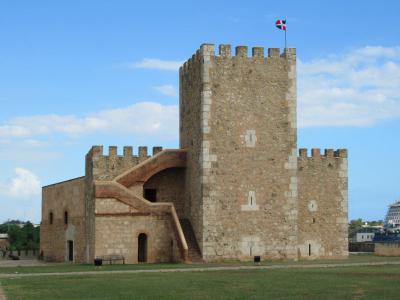
The Ozama Fortress is a magnificent sixteenth-century castle situated at the entrance to Santo Domingo, overlooking the Ozama River. The fortress derives its name from this river and holds the distinction of being the oldest surviving formal military construction in the Americas. Often referred to as "La Fortaleza" or simply "The Fortress," it stands as a proud testament to the city's rich history and strategic significance.
The Ozama Fortress boasts an impressive medieval-style architectural structure that exudes grandeur and historical importance. At the heart of the fortress lies the Tower of Homage which stands tall as a central focal point within the castle's grounds.
Originally built to guard the entrance to the port of Santo Domingo, the fortress served as a vital defense against seaborne enemies, safeguarding the city from potential threats. Its construction began in 1502, reflecting the early efforts to fortify the city and protect its inhabitants.
Over the centuries, the Ozama Fortress proved its resilience and strength, and it was even utilized as a prison until the 1960s. However, as times changed and the need for its military function diminished, the fortress underwent restoration efforts. Following its transformation, the "Fortaleza" opened its doors to the public, welcoming visitors from around the world as a captivating tourist attraction.
Nestled at the end of Ladies Street, the Ozama Fortress serves as a historical gateway to the city, offering a captivating journey through time for those who explore its well-preserved corridors and ramparts. As visitors walk through the fortress, they are transported back to the era of exploration and colonization, gaining insight into the strategic importance of the Dominican Republic's capital during the early days of the New World.
The Ozama Fortress boasts an impressive medieval-style architectural structure that exudes grandeur and historical importance. At the heart of the fortress lies the Tower of Homage which stands tall as a central focal point within the castle's grounds.
Originally built to guard the entrance to the port of Santo Domingo, the fortress served as a vital defense against seaborne enemies, safeguarding the city from potential threats. Its construction began in 1502, reflecting the early efforts to fortify the city and protect its inhabitants.
Over the centuries, the Ozama Fortress proved its resilience and strength, and it was even utilized as a prison until the 1960s. However, as times changed and the need for its military function diminished, the fortress underwent restoration efforts. Following its transformation, the "Fortaleza" opened its doors to the public, welcoming visitors from around the world as a captivating tourist attraction.
Nestled at the end of Ladies Street, the Ozama Fortress serves as a historical gateway to the city, offering a captivating journey through time for those who explore its well-preserved corridors and ramparts. As visitors walk through the fortress, they are transported back to the era of exploration and colonization, gaining insight into the strategic importance of the Dominican Republic's capital during the early days of the New World.

5) Kah-Kow Experience
The Kah-Kow Experience Chocolate Museum is a remarkable destination for anyone eager to explore the world of chocolate. Housed in a historic building, this interactive and informative museum offers a unique and immersive experience for visitors of all ages. For those with a passion for chocolate or an interest in learning about the journey from bean to bar, the Kah-Kow Experience is a must-visit.
The tour begins with a fascinating introduction to the origin of chocolate at the Holographic Theater. From there, the journey continues to the Mystical Forest, where guests have the opportunity to taste the cacao bean, the fundamental ingredient that forms the basis of chocolate. During this segment, they also learn about the various post-harvesting techniques involved in chocolate production. The sensory adventure continues in the Sensory Room, where visitors can engage all their senses to explore the diverse ingredients used in creating exquisite chocolates.
One of the highlights of the Kah-Kow Experience is the visit to the Chocolate Factory. Here, visitors can unleash their creativity and craft their own personalized chocolate bars. From choosing the ingredients to designing the final product, this hands-on activity provides a memorable and interactive experience. Additionally, guests can also try their hand at making uniquely scented soaps using cacao butter, adding an extra touch of creativity to their visit.
After the tour, visitors can relax and indulge in the Chocolate Bar, where a wide range of chocolate beverages and desserts await.
Before leaving, guests have the opportunity to browse the gift shop, where they can purchase a variety of chocolate products, soaps, and other items to take home as souvenirs. It's the perfect way to extend the Kah-Kow Experience beyond the museum's walls and continue enjoying the delights of chocolate long after the visit.
The tour begins with a fascinating introduction to the origin of chocolate at the Holographic Theater. From there, the journey continues to the Mystical Forest, where guests have the opportunity to taste the cacao bean, the fundamental ingredient that forms the basis of chocolate. During this segment, they also learn about the various post-harvesting techniques involved in chocolate production. The sensory adventure continues in the Sensory Room, where visitors can engage all their senses to explore the diverse ingredients used in creating exquisite chocolates.
One of the highlights of the Kah-Kow Experience is the visit to the Chocolate Factory. Here, visitors can unleash their creativity and craft their own personalized chocolate bars. From choosing the ingredients to designing the final product, this hands-on activity provides a memorable and interactive experience. Additionally, guests can also try their hand at making uniquely scented soaps using cacao butter, adding an extra touch of creativity to their visit.
After the tour, visitors can relax and indulge in the Chocolate Bar, where a wide range of chocolate beverages and desserts await.
Before leaving, guests have the opportunity to browse the gift shop, where they can purchase a variety of chocolate products, soaps, and other items to take home as souvenirs. It's the perfect way to extend the Kah-Kow Experience beyond the museum's walls and continue enjoying the delights of chocolate long after the visit.
6) Casa de Bastidas (House of Bastidas)
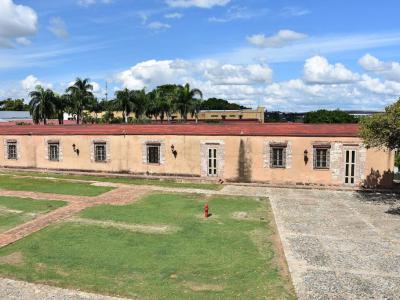
The House of Bastidas holds a significant historical legacy as the residence of Don Rodrigo de Bastidas, the governor of Santo Domingo. While the building may not exude opulence or luxury, it bears witness to a vital function in the city's colonial past.
Rather than serving as a lavish mansion, the House of Bastidas resembles more of a warehouse in its architectural design. Its primary purpose was not for comfortable living but as a place to safeguard and manage the Crown's revenues and fortunes before they were transferred to Spain. This essential role in managing the colonial finances underscored the building's importance in the administration of the region during that era.
As one enters the House of Bastidas, a notable feature awaits discovery-a prominent plaque of Santa Barbara dating back to the 18th century. This artistic and religious adornment adds a touch of cultural richness and spiritual significance to the building, offering visitors a glimpse into the artistry of the past.
Moreover, the House of Bastidas has evolved over time, and today, it houses art galleries, further contributing to the city's vibrant cultural scene. The transformation of this historical building into a space for art and creativity breathes new life into its walls, bridging the gap between the past and the present.
Rather than serving as a lavish mansion, the House of Bastidas resembles more of a warehouse in its architectural design. Its primary purpose was not for comfortable living but as a place to safeguard and manage the Crown's revenues and fortunes before they were transferred to Spain. This essential role in managing the colonial finances underscored the building's importance in the administration of the region during that era.
As one enters the House of Bastidas, a notable feature awaits discovery-a prominent plaque of Santa Barbara dating back to the 18th century. This artistic and religious adornment adds a touch of cultural richness and spiritual significance to the building, offering visitors a glimpse into the artistry of the past.
Moreover, the House of Bastidas has evolved over time, and today, it houses art galleries, further contributing to the city's vibrant cultural scene. The transformation of this historical building into a space for art and creativity breathes new life into its walls, bridging the gap between the past and the present.
7) Governor Nicolás Ovando's Residence
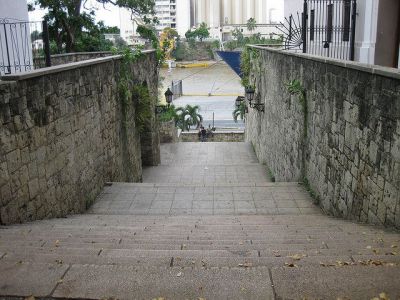
Governor Nicolás de Ovando’s Residence is one of the most significant early colonial landmarks in Santo Domingo’s Colonial Zone, offering visitors a clear window into the formative years of Spanish rule in the Americas. Completed in the early 1500s, the residence was built for Nicolás de Ovando, the first governor of Hispaniola appointed by the Spanish Crown. Ovando played a major role in shaping the political and administrative structure of the island, and his home reflects this era of authority, ambition, and expanding imperial influence. Set along the historic Calle Las Damas, it stands among the earliest European-style structures in the New World and remains closely connected to the narrative of Santo Domingo as the first permanent Spanish settlement in the Americas.
The building presents a fortified stone design typical of early colonial architecture, with sturdy walls and a façade shaped by practical needs rather than decorative excess. Its simple lines and heavy masonry echo the challenges of life in the early colony, when European settlers adapted familiar Iberian forms to a Caribbean climate and frontier conditions. Over time, modifications and restorations preserved the building’s essential character while allowing it to remain a visible testament to the city’s earliest urban development.
Visitors today can appreciate the residence from the exterior as they explore Calle Las Damas and nearby sites such as the Fortaleza Ozama and the Plaza de España. Even without interior access, the structure serves as a valuable stop for understanding how political power, architectural experimentation, and the everyday realities of colonial life converged in the earliest decades of the Spanish Caribbean.
The building presents a fortified stone design typical of early colonial architecture, with sturdy walls and a façade shaped by practical needs rather than decorative excess. Its simple lines and heavy masonry echo the challenges of life in the early colony, when European settlers adapted familiar Iberian forms to a Caribbean climate and frontier conditions. Over time, modifications and restorations preserved the building’s essential character while allowing it to remain a visible testament to the city’s earliest urban development.
Visitors today can appreciate the residence from the exterior as they explore Calle Las Damas and nearby sites such as the Fortaleza Ozama and the Plaza de España. Even without interior access, the structure serves as a valuable stop for understanding how political power, architectural experimentation, and the everyday realities of colonial life converged in the earliest decades of the Spanish Caribbean.
8) Plaza María de Toledo
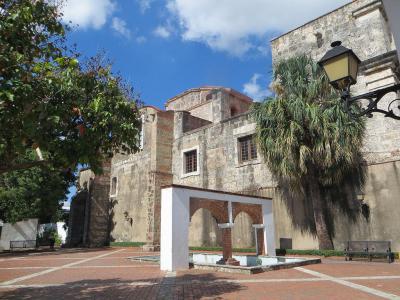
Plaza María de Toledo is a graceful public space in Santo Domingo’s Colonial Zone, named in honour of María de Toledo, the first vicereine of the Americas and a figure closely tied to the early governance of the island. Her presence in local history is linked to the formative years of the Spanish colony, and the square reflects that legacy with a setting that blends open space, heritage architecture, and a calm urban rhythm. Positioned near several of the district's oldest structures, the plaza offers visitors a quiet pause in an area where the city’s early chapters are still evident in the surrounding stonework and restored façades.
The plaza's atmosphere is shaped by its combination of greenery, shaded seating, and the soft backdrop of nearby historic buildings. Visitors will often notice how the layout encourages lingering: small paths invite short strolls, while benches provide a chance to take in the movement of the neighbourhood. Restaurants and cafés around the square add to its appeal, creating a welcoming spot for a drink or a meal while observing the flow of the Colonial Zone.
Although modest in scale, Plaza María de Toledo functions as a connector between several landmarks and streets frequently explored by tourists. It is a pleasant transition point before continuing toward the waterfront or deeper into the historic district. The blend of local life, historical resonance, and relaxed ambience makes it a reliable place to pause, reset, and get a sense of Santo Domingo’s layered past.
The plaza's atmosphere is shaped by its combination of greenery, shaded seating, and the soft backdrop of nearby historic buildings. Visitors will often notice how the layout encourages lingering: small paths invite short strolls, while benches provide a chance to take in the movement of the neighbourhood. Restaurants and cafés around the square add to its appeal, creating a welcoming spot for a drink or a meal while observing the flow of the Colonial Zone.
Although modest in scale, Plaza María de Toledo functions as a connector between several landmarks and streets frequently explored by tourists. It is a pleasant transition point before continuing toward the waterfront or deeper into the historic district. The blend of local life, historical resonance, and relaxed ambience makes it a reliable place to pause, reset, and get a sense of Santo Domingo’s layered past.
9) Panteón Nacional (National Pantheon) (must see)
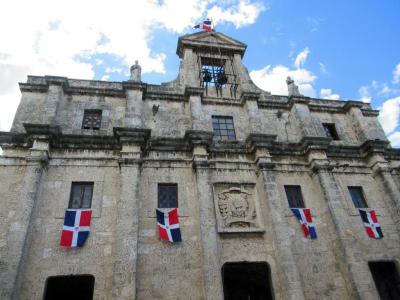
The National Pantheon is a significant historical and cultural landmark with a storied past that spans centuries. Originally built from 1714 to 1746 by the Spaniard Geronimo Quezada y Garçon, the structure started as a Jesuit church, showcasing the neoclassic-renaissance architectural style.
Today, the National Pantheon stands as a proud national symbol of the Dominican Republic and holds a profound role as the final resting place for the country's most esteemed citizens. Initially serving as a place of worship, the Jesuits conducted masses within its walls from 1746 to 1767. However, its purpose evolved over time, and after 1767, it went through various uses, including functioning as a tobacco warehouse and a theater.
The theater within the National Pantheon became a crucial hub for the pro-independence organization La Trinitaria. Under the guise of aliases like La Filantrópica and La Dramática, national heroes such as Juan Pablo Duarte, Ramon Matias Mella, and Francisco del Rosario Sanchez, among others, expressed their ideas and aspirations for a free and sovereign republic. From this stage, the seeds of independence and nationalism were sown, paving the way for the country's eventual liberation.
In 1956, the National Pantheon underwent renovations by Spanish architect Javier Borroso to transform it into a national mausoleum, under the order of then dictator Rafael Trujillo. Ironically, Trujillo initially envisioned being buried at the National Pantheon, but today it serves as the resting place for the Dominican Republic's most celebrated individuals, including some of Trujillo's assassins. Notable figures interred at the National Pantheon include Francisco Gregorio Billini, Gregorio Luperón, and Eugenio Hostos, among others.
Today, the National Pantheon stands as a proud national symbol of the Dominican Republic and holds a profound role as the final resting place for the country's most esteemed citizens. Initially serving as a place of worship, the Jesuits conducted masses within its walls from 1746 to 1767. However, its purpose evolved over time, and after 1767, it went through various uses, including functioning as a tobacco warehouse and a theater.
The theater within the National Pantheon became a crucial hub for the pro-independence organization La Trinitaria. Under the guise of aliases like La Filantrópica and La Dramática, national heroes such as Juan Pablo Duarte, Ramon Matias Mella, and Francisco del Rosario Sanchez, among others, expressed their ideas and aspirations for a free and sovereign republic. From this stage, the seeds of independence and nationalism were sown, paving the way for the country's eventual liberation.
In 1956, the National Pantheon underwent renovations by Spanish architect Javier Borroso to transform it into a national mausoleum, under the order of then dictator Rafael Trujillo. Ironically, Trujillo initially envisioned being buried at the National Pantheon, but today it serves as the resting place for the Dominican Republic's most celebrated individuals, including some of Trujillo's assassins. Notable figures interred at the National Pantheon include Francisco Gregorio Billini, Gregorio Luperón, and Eugenio Hostos, among others.
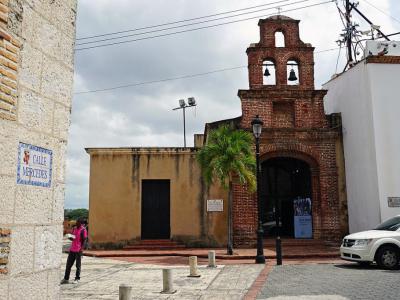
10) Capilla de los Remedios (Chapel of Our Lady of Remedies)
The Chapel of Our Lady of Remedies is one of the most distinctive small chapels in Santo Domingo’s Colonial Zone, offering visitors a close look at 16th-century religious architecture along the historic Calle Las Damas. Built by the alderman Francisco de Ávila, it originally served as a private chapel and mausoleum for the Ovando and Dávila families, reflecting both their prominence and the early development of ecclesiastical life in the Spanish Caribbean. Though modest in size, the chapel stands out for its Gothic style, marked by a brick façade, a barrel-vaulted ceiling, and a striking triple-arched bell tower that remains one of its most recognizable features.
The building underwent a major restoration in 1884, preserving its colonial lines while allowing its interior to be appreciated today. Visitors who enter the chapel encounter elegant arches, period artwork, and a notable sculpture of the Virgen de los Remedios placed at the altar, which reflects the devotion that gave the chapel its name. The combination of architectural simplicity and artistic detail creates an atmosphere that complements the surrounding historic streets.
Its location near the Plaza de Espana makes it easy to include during a walk through the area. Around the chapel, visitors will find other points of interest, including old cannons, a historic sundial, and modern sculptural pieces such as a bull and a horse, adding context to the site’s layered setting. Although still intimate in scale, the chapel now opens for guided tours and occasionally hosts classical music concerts and art exhibits, offering a quiet cultural stop within the wider Colonial Zone.
The building underwent a major restoration in 1884, preserving its colonial lines while allowing its interior to be appreciated today. Visitors who enter the chapel encounter elegant arches, period artwork, and a notable sculpture of the Virgen de los Remedios placed at the altar, which reflects the devotion that gave the chapel its name. The combination of architectural simplicity and artistic detail creates an atmosphere that complements the surrounding historic streets.
Its location near the Plaza de Espana makes it easy to include during a walk through the area. Around the chapel, visitors will find other points of interest, including old cannons, a historic sundial, and modern sculptural pieces such as a bull and a horse, adding context to the site’s layered setting. Although still intimate in scale, the chapel now opens for guided tours and occasionally hosts classical music concerts and art exhibits, offering a quiet cultural stop within the wider Colonial Zone.
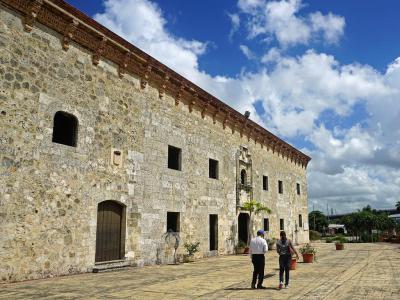
11) Museum of the Casas Reales (Museum of the Royal Houses)
Museum of the Royal Houses is a captivating historical treasure that dates back to the colonial era of Hispaniola. Constructed in the sixteenth century, this magnificent building was originally designed to serve as the administrative headquarters for the Spanish colonies in the Americas. Commissioned by the Spanish Crown on October 5, 1511, the palace was meticulously constructed as two interconnected buildings to house the essential government offices of the colony.
The southern section of the Museum of the Royal Houses served as the Royal Audiencia, which functioned as the first court of the New World. Additionally, it housed the office of the Comptroller General. Meanwhile, the northern section was utilized by successive Viceroys, Governors, and Captains-General, making it an integral part of the region's colonial governance.
Throughout its history, the building underwent various transformations. During the period of French sovereignty over the Eastern part of Hispaniola in 1807, General Louis Ferrand bestowed the facade with a classical architectural style, adding to its grandeur. Subsequent changes were made to adapt the building for use as the Governmental Palace during the last year of President Carlos Felipe Morales's administration. Later, during the government of Rafael Leónidas Trujillo, further modifications were carried out to accommodate government offices.
Eventually, the building underwent a restoration process that brought it back to its original 16th-century appearance, preserving its historical authenticity. On October 18, 1973, during the administration of President Joaquín Balaguer, the Museum of the Royal Houses was established as a museum dedicated to showcasing the history, life, and customs of the inhabitants of the Spanish colony. However, it was not officially opened to the public until May 31, 1976, in a momentous ceremony attended by King Juan Carlos I of Spain.
Today, the Museum of the Royal Houses stands as one of the most visited and revered attractions in Santo Domingo. As visitors step inside the museum's hallowed halls, they are transported back in time, gaining a deeper understanding of the country's colonial past and the impact of Spanish rule on the region's cultural heritage.
The southern section of the Museum of the Royal Houses served as the Royal Audiencia, which functioned as the first court of the New World. Additionally, it housed the office of the Comptroller General. Meanwhile, the northern section was utilized by successive Viceroys, Governors, and Captains-General, making it an integral part of the region's colonial governance.
Throughout its history, the building underwent various transformations. During the period of French sovereignty over the Eastern part of Hispaniola in 1807, General Louis Ferrand bestowed the facade with a classical architectural style, adding to its grandeur. Subsequent changes were made to adapt the building for use as the Governmental Palace during the last year of President Carlos Felipe Morales's administration. Later, during the government of Rafael Leónidas Trujillo, further modifications were carried out to accommodate government offices.
Eventually, the building underwent a restoration process that brought it back to its original 16th-century appearance, preserving its historical authenticity. On October 18, 1973, during the administration of President Joaquín Balaguer, the Museum of the Royal Houses was established as a museum dedicated to showcasing the history, life, and customs of the inhabitants of the Spanish colony. However, it was not officially opened to the public until May 31, 1976, in a momentous ceremony attended by King Juan Carlos I of Spain.
Today, the Museum of the Royal Houses stands as one of the most visited and revered attractions in Santo Domingo. As visitors step inside the museum's hallowed halls, they are transported back in time, gaining a deeper understanding of the country's colonial past and the impact of Spanish rule on the region's cultural heritage.
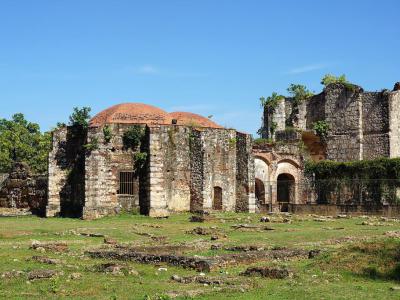
12) Monasterio de San Francisco (Saint Francis Monastery) (must see)
The Monastery of San Francisco is a historically significant and cherished site in the heart of the Zona Colonial. Its construction dates back to around 1508, coinciding with the arrival of the Franciscan fathers, making it the first monastery in the New World. Despite its current state of ruin, it remains one of the most important and treasured landmarks in the city, earning its designation as a "heritage Dominican."
The monastery was commissioned by Nicolas de Ovando, and its construction began with the arrival of the Franciscan fathers in the early 16th century. However, it faced challenges throughout its history. The main part of the church was constructed in 1544 and completed on July 23, 1556. Tragically, it suffered severe damage from a hurricane and was subsequently looted by the infamous pirate Francis Drake in 1586. Repairs were carried out in 1664, but further damage occurred due to earthquakes in 1673 and 1751.
The monastery's historical significance is further enhanced by the notable figures associated with it. Historians believe that the remains of Alonso de Ojeda, a renowned explorer, were once buried at the main entrance to the monastery. Additionally, the remains of Bartholomew Columbus, Christopher Columbus's brother, were also found within its grounds. These connections with prominent historical figures contribute to the site's allure for history enthusiasts.
Over the centuries, the Monastery of San Francisco witnessed various uses and underwent different phases of restoration. During the Battle of Palo Hincado in 1808 against the French, the building served as a strategic military position with a piece of artillery deployed on its roof. However, the vault was damaged in the process, and a timber platform was constructed to accommodate the military operations.
In the late 19th and early 20th centuries, the monastery served as a mental asylum. Unfortunately, a hurricane during that period caused substantial damage that was never fully repaired, leading to the current state of ruin. Today, the majestic ruins are used for social and cultural events, showcasing the enduring importance of this historical site in the cultural life of Santo Domingo.
The monastery was commissioned by Nicolas de Ovando, and its construction began with the arrival of the Franciscan fathers in the early 16th century. However, it faced challenges throughout its history. The main part of the church was constructed in 1544 and completed on July 23, 1556. Tragically, it suffered severe damage from a hurricane and was subsequently looted by the infamous pirate Francis Drake in 1586. Repairs were carried out in 1664, but further damage occurred due to earthquakes in 1673 and 1751.
The monastery's historical significance is further enhanced by the notable figures associated with it. Historians believe that the remains of Alonso de Ojeda, a renowned explorer, were once buried at the main entrance to the monastery. Additionally, the remains of Bartholomew Columbus, Christopher Columbus's brother, were also found within its grounds. These connections with prominent historical figures contribute to the site's allure for history enthusiasts.
Over the centuries, the Monastery of San Francisco witnessed various uses and underwent different phases of restoration. During the Battle of Palo Hincado in 1808 against the French, the building served as a strategic military position with a piece of artillery deployed on its roof. However, the vault was damaged in the process, and a timber platform was constructed to accommodate the military operations.
In the late 19th and early 20th centuries, the monastery served as a mental asylum. Unfortunately, a hurricane during that period caused substantial damage that was never fully repaired, leading to the current state of ruin. Today, the majestic ruins are used for social and cultural events, showcasing the enduring importance of this historical site in the cultural life of Santo Domingo.
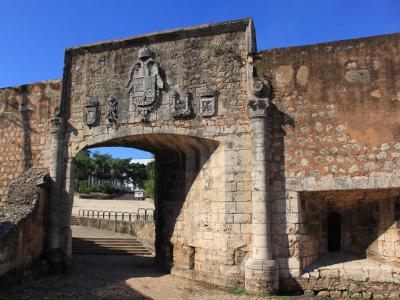
13) Puerta de San Diego (Gate of San Diego)
The Gate of San Diego is one of the most recognisable gateways of Santo Domingo’s Colonial Zone, offering a clear link between the fortified city of the 16th century and the lively waterfront just beyond its walls. Built as part of the defensive system that protected the first permanent European settlement in the Americas, the gate once served as a controlled entry point for ships’ crews, merchants, and goods arriving at the nearby port. Its name honours Saint Didacus (San Diego de Alcalá), though over time it became more closely associated with its practical role as a maritime passageway than with its religious dedication.
The structure visitors see today reflects several phases of modification, yet its appearance still conveys the strength and simplicity of Spanish colonial military design. Thick stone walls frame the arched opening, which originally connected the bustling docks with the orderly grid of the early city. In earlier centuries, this would have been one of the first impressions travellers had when stepping into Santo Domingo, symbolising both protection and administrative control.
Today, the Gate of San Diego stands at the edge of Plaza España, where the contrast between its historic masonry and the broad open square creates a striking setting. Tourists can pause here to appreciate how the gateway anchors the surrounding monuments, including the Alcázar de Colón overlooking the plaza. Its convenient position also makes it a natural point of transition between the waterfront promenade and the cultural landmarks of the Colonial Zone, offering a quiet moment of historical reflection amid the flow of modern activity.
The structure visitors see today reflects several phases of modification, yet its appearance still conveys the strength and simplicity of Spanish colonial military design. Thick stone walls frame the arched opening, which originally connected the bustling docks with the orderly grid of the early city. In earlier centuries, this would have been one of the first impressions travellers had when stepping into Santo Domingo, symbolising both protection and administrative control.
Today, the Gate of San Diego stands at the edge of Plaza España, where the contrast between its historic masonry and the broad open square creates a striking setting. Tourists can pause here to appreciate how the gateway anchors the surrounding monuments, including the Alcázar de Colón overlooking the plaza. Its convenient position also makes it a natural point of transition between the waterfront promenade and the cultural landmarks of the Colonial Zone, offering a quiet moment of historical reflection amid the flow of modern activity.
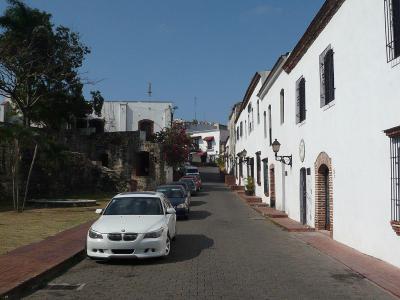
14) La Atarazana Street
La Atarazana Street is a delightful destination for shopping and immersing oneself in the city's rich history and vibrant culture. This charming street offers a unique blend of modern establishments and historical significance, making it an interesting spot for locals and tourists alike.
For shopping enthusiasts, La Atarazana is a paradise. The street is lined with a variety of shops, including art galleries, jewelry stores, and shops offering vintage crafts. As you stroll along this picturesque street, you'll find yourself captivated not only by the diverse and exquisite items available for sale but also by the enchanting views of the surrounding area.
La Atarazana Street is not only a shopper's haven but also a historical pathway with deep cultural roots. It leads to the Royal Dockyards, a collection of buildings that date back to the 15th and 16th centuries. Originally designed as storages, these structures have undergone a fascinating transformation over time. Today, they house a vibrant array of establishments, such as restaurants, discos, art galleries, and more. The blending of modern activities within these centuries-old buildings creates an incredible atmosphere where history and contemporary life harmoniously coexist.
Despite the modern renovations, the exterior facades of the Royal Dockyards have been meticulously preserved. This preservation allows visitors to witness and appreciate the historical charm that emanates from these ancient structures. The juxtaposition of the past and present creates a unique experience for those exploring La Atarazana Street and the Royal Dockyards.
For shopping enthusiasts, La Atarazana is a paradise. The street is lined with a variety of shops, including art galleries, jewelry stores, and shops offering vintage crafts. As you stroll along this picturesque street, you'll find yourself captivated not only by the diverse and exquisite items available for sale but also by the enchanting views of the surrounding area.
La Atarazana Street is not only a shopper's haven but also a historical pathway with deep cultural roots. It leads to the Royal Dockyards, a collection of buildings that date back to the 15th and 16th centuries. Originally designed as storages, these structures have undergone a fascinating transformation over time. Today, they house a vibrant array of establishments, such as restaurants, discos, art galleries, and more. The blending of modern activities within these centuries-old buildings creates an incredible atmosphere where history and contemporary life harmoniously coexist.
Despite the modern renovations, the exterior facades of the Royal Dockyards have been meticulously preserved. This preservation allows visitors to witness and appreciate the historical charm that emanates from these ancient structures. The juxtaposition of the past and present creates a unique experience for those exploring La Atarazana Street and the Royal Dockyards.
