Custom Walk in Toledo, Spain by mrsb_brisbane_78c378 created on 2026-06-19
Guide Location: Spain » Toledo
Guide Type: Custom Walk
# of Sights: 13
Tour Duration: 3 Hour(s)
Travel Distance: 4.3 Km or 2.7 Miles
Share Key: R8QH5
Guide Type: Custom Walk
# of Sights: 13
Tour Duration: 3 Hour(s)
Travel Distance: 4.3 Km or 2.7 Miles
Share Key: R8QH5
How It Works
Please retrieve this walk in the GPSmyCity app. Once done, the app will guide you from one tour stop to the next as if you had a personal tour guide. If you created the walk on this website or come to the page via a link, please follow the instructions below to retrieve the walk in the app.
Retrieve This Walk in App
Step 1. Download the app "GPSmyCity: Walks in 1K+ Cities" on Apple App Store or Google Play Store.



Step 2. In the GPSmyCity app, download(or launch) the guide "Toledo Map and Walking Tours".
Step 3. Tap the menu button located at upper right corner of the "Walks" screen and select "Retrieve custom walk". Enter the share key: R8QH5
1) Puerta del Cambron (Cambron Gate)
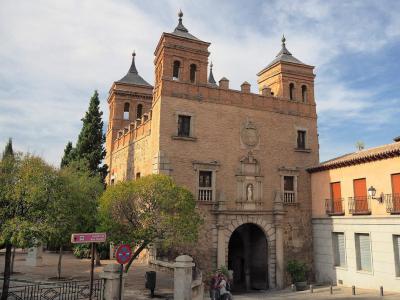
The Cambron Gate, is a magnificent gate located in the west sector of Toledo. The gate is also called the "Gate of the Jews" or the "Gate of Saint Leocadia." The gate has been speculated to have taken its name, del Cambrón, from the growth of a thorn bush or plant at the top of the ruins of one of the towers before the last reconstruction of the gate in 1576.
The Cambron Gate has a cataloging of Bien de Interés Cultural, indicating its importance in Spanish cultural heritage. The gate is of Renaissance style and is built of stone and brick. It has two pairs of towers and two arches, which add to its grandeur and magnificence.
The gate underwent two renovations, one in the early 1570s and the other in 1576. During these renovations, Hernán González, Diego de Velasco, and Juan Bautista Monegro sculpted a figure of Saint Leocadia in the gate. Saint Leocadia is the patron saint of Toledo, and her presence adds to the religious significance of the gate.
The Cambron Gate is a remarkable example of the city's defensive architecture. Despite the damage caused during the Spanish Civil War, the gate has been carefully restored and preserved. Today, it is a popular tourist attraction and a symbol of Toledo's rich history and cultural heritage. The gate stands as a testament to the city's enduring legacy and the many civilizations that have left their mark on its walls.
The Cambron Gate has a cataloging of Bien de Interés Cultural, indicating its importance in Spanish cultural heritage. The gate is of Renaissance style and is built of stone and brick. It has two pairs of towers and two arches, which add to its grandeur and magnificence.
The gate underwent two renovations, one in the early 1570s and the other in 1576. During these renovations, Hernán González, Diego de Velasco, and Juan Bautista Monegro sculpted a figure of Saint Leocadia in the gate. Saint Leocadia is the patron saint of Toledo, and her presence adds to the religious significance of the gate.
The Cambron Gate is a remarkable example of the city's defensive architecture. Despite the damage caused during the Spanish Civil War, the gate has been carefully restored and preserved. Today, it is a popular tourist attraction and a symbol of Toledo's rich history and cultural heritage. The gate stands as a testament to the city's enduring legacy and the many civilizations that have left their mark on its walls.
2) Puente de San Martin (San Martin Bridge)
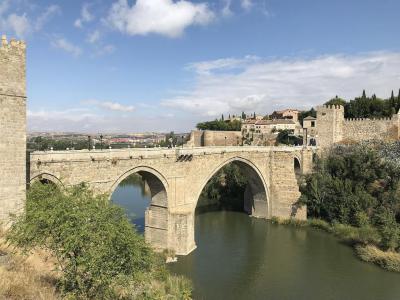
The San Martin Bridge is a remarkable medieval bridge that crosses the Tagus river in Toledo. Constructed in the late 14th century, the bridge was designed by the Archbishop Pedro Tenorio to provide access to the old town from the west, as a complement to the older Puente de Alcantara, which linked to the east.
One of the notable features of the Puente de San Martin is its five arches, with the largest in the middle having a span of 40 meters, which was a remarkable feat of engineering at the time of its construction. In fact, only a few bridges in the world were that long at that time. The bridge was heavily fortified with towers on both sides, with the more recent dating from the 16th century.
A legend surrounding the bridge says that the architect who designed it had made a perilous miscalculation, which would have caused the bridge to collapse once its supports were removed. The story goes that the architect's wife, fearing disgrace for her husband, secretly set fire to the bridge the night before its inauguration, causing it to burn down. The bridge was then rebuilt without the original structural miscalculations, and it stands today as a testament to medieval engineering and architecture.
Visitors to the Puente de San Martin can walk across the bridge and take in the breathtaking views of the Tagus river and the city of Toledo. The bridge is an iconic symbol of the city's rich history and cultural heritage, and it remains an important landmark for both locals and tourists alike.
One of the notable features of the Puente de San Martin is its five arches, with the largest in the middle having a span of 40 meters, which was a remarkable feat of engineering at the time of its construction. In fact, only a few bridges in the world were that long at that time. The bridge was heavily fortified with towers on both sides, with the more recent dating from the 16th century.
A legend surrounding the bridge says that the architect who designed it had made a perilous miscalculation, which would have caused the bridge to collapse once its supports were removed. The story goes that the architect's wife, fearing disgrace for her husband, secretly set fire to the bridge the night before its inauguration, causing it to burn down. The bridge was then rebuilt without the original structural miscalculations, and it stands today as a testament to medieval engineering and architecture.
Visitors to the Puente de San Martin can walk across the bridge and take in the breathtaking views of the Tagus river and the city of Toledo. The bridge is an iconic symbol of the city's rich history and cultural heritage, and it remains an important landmark for both locals and tourists alike.
3) Monasterio de San Juan de los Reyes (Monastery of Saint John of the Monarchs) (must see)
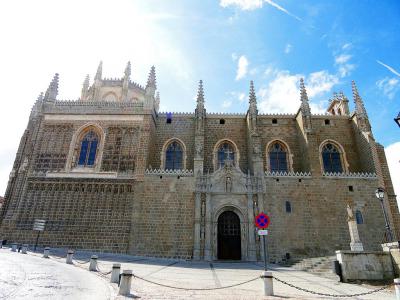
Saint John of the Monarchs doesn’t merely occupy a corner of Toledo’s Town Hall Square-it embodies the aspirations, triumphs, and scars of a city that once served as the heartbeat of Spain. Its story is tied to one of the most famous unions in European history: the 1469 marriage of Isabella of Castile, then only eighteen, and Ferdinand of Aragon, nineteen. That political and romantic alliance set the foundations for the unification of Spain, and in gratitude for their victory over King Afonso V of Portugal at the Battle of Toro in 1476, the Catholic Monarchs commissioned a new Franciscan monastery in Toledo the following year. They intended it to serve as both a spiritual offering and their future burial place.
The architect chosen, Juan Guas-master of the flamboyant Isabelline Gothic style-oversaw the project between 1477 and 1504. The result was a monumental complex, a Latin-cross church with three naves, a tall nave flanked by side chapels, and a polygonal chancel. Overhead, star-shaped ribbed vaults unfold like stone lacework, while the cloisters combine Gothic verticality with ornate carvings of saints, plants, and mythical beasts. Later additions in the 16th century included a Renaissance altarpiece by Felipe Bigarny and striking paintings of the Passion and Resurrection by Francisco de Comontes, which brought warmth and color to the otherwise austere interior.
The exterior makes an equally powerful statement. The façade is framed by two elegant towers capped with spires, while heavy chains dangle along the walls-grim relics taken from Christians once held captive by the Moors, now transformed into symbols of liberation after the Reconquista.
Though Ferdinand and Isabella were ultimately buried in Granada, their intended mausoleum in Toledo still stands as a testament to their ambition and their role in shaping a united Spain. Today, visitors who step into San Juan de los Reyes can feel the blend of history and devotion in every arch and courtyard. The monastery’s survival through wars, including the damage inflicted during the Napoleonic occupation of 1808 before its careful restoration in the 20th century, has only deepened its aura.
The monastery offers a rare chance to experience Spain’s history not through books or monuments alone, but within the very walls that once echoed with the footsteps of monarchs, friars, and the faithful.
The architect chosen, Juan Guas-master of the flamboyant Isabelline Gothic style-oversaw the project between 1477 and 1504. The result was a monumental complex, a Latin-cross church with three naves, a tall nave flanked by side chapels, and a polygonal chancel. Overhead, star-shaped ribbed vaults unfold like stone lacework, while the cloisters combine Gothic verticality with ornate carvings of saints, plants, and mythical beasts. Later additions in the 16th century included a Renaissance altarpiece by Felipe Bigarny and striking paintings of the Passion and Resurrection by Francisco de Comontes, which brought warmth and color to the otherwise austere interior.
The exterior makes an equally powerful statement. The façade is framed by two elegant towers capped with spires, while heavy chains dangle along the walls-grim relics taken from Christians once held captive by the Moors, now transformed into symbols of liberation after the Reconquista.
Though Ferdinand and Isabella were ultimately buried in Granada, their intended mausoleum in Toledo still stands as a testament to their ambition and their role in shaping a united Spain. Today, visitors who step into San Juan de los Reyes can feel the blend of history and devotion in every arch and courtyard. The monastery’s survival through wars, including the damage inflicted during the Napoleonic occupation of 1808 before its careful restoration in the 20th century, has only deepened its aura.
The monastery offers a rare chance to experience Spain’s history not through books or monuments alone, but within the very walls that once echoed with the footsteps of monarchs, friars, and the faithful.
4) Iglesia de Santo Tome (Church of Saint Thomas) (must see)
The Church of Saint Thomas sits in the heart of Toledo and holds nearly a millennium of history within its walls. Its origins go back to the aftermath of 1085, when King Alfonso VI of León reclaimed the city from Muslim rule. Instead of demolishing the mosque that already stood on the site, he consecrated it as a Christian church-a common practice in reconquered cities, where sacred spaces were repurposed rather than destroyed. By the 14th century, however, the building had fallen into disrepair. The task of restoring and expanding it fell to Ruiz de Toledo, Lord of Orgaz and then mayor of the city. A generous patron of the Church, Ruiz de Toledo commissioned a reconstruction in which the former minaret was transformed into a graceful Mudéjar-style bell tower, its brick patterns and horseshoe arches preserving a hint of the site’s Islamic past within a Christian setting.
The architecture of the church reveals Toledo’s distinctive cultural layering. The layout follows the Latin cross, with three naves, a barrel vault, and a polygonal apse. The side chapels display ornate Baroque altarpieces, while the main chapel combines Gothic structure with Mudéjar decoration, crowned by a dome shaped like the eight-pointed Islamic Rub el Hizb star. A 16th-century baptismal font survives, and a later 19th-century chapel houses The Incredulity of Saint Thomas, a moving canvas by Vicente Portaña.
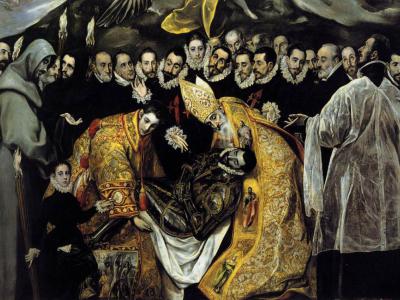
Yet what truly draws visitors from around the world is El Greco’s celebrated masterpiece, The Burial of the Count of Orgaz. Commissioned in 1586 to honor Ruiz de Toledo, the painting dramatizes the miraculous moment when Saints Stephen and Augustine descended from heaven to lay the Count in his grave. El Greco inserted his own likeness and that of his young son into the crowd of mourners, blending personal presence with historical memory in a swirl of elongated figures and luminous color. The painting remains one of the defining works of European Mannerism and a testament to Toledo’s role as the adopted home of the Cretan-born artist.
Saint Thomas offers more than a church visit. It is a vivid page from Spain’s past, where Roman, Islamic, Gothic, Renaissance, and Baroque traditions all converge. Standing within its star-vaulted nave, you glimpse the city’s shifting identities-and the extraordinary artistry that has made Toledo a cultural treasure.
The architecture of the church reveals Toledo’s distinctive cultural layering. The layout follows the Latin cross, with three naves, a barrel vault, and a polygonal apse. The side chapels display ornate Baroque altarpieces, while the main chapel combines Gothic structure with Mudéjar decoration, crowned by a dome shaped like the eight-pointed Islamic Rub el Hizb star. A 16th-century baptismal font survives, and a later 19th-century chapel houses The Incredulity of Saint Thomas, a moving canvas by Vicente Portaña.
Yet what truly draws visitors from around the world is El Greco’s celebrated masterpiece, The Burial of the Count of Orgaz. Commissioned in 1586 to honor Ruiz de Toledo, the painting dramatizes the miraculous moment when Saints Stephen and Augustine descended from heaven to lay the Count in his grave. El Greco inserted his own likeness and that of his young son into the crowd of mourners, blending personal presence with historical memory in a swirl of elongated figures and luminous color. The painting remains one of the defining works of European Mannerism and a testament to Toledo’s role as the adopted home of the Cretan-born artist.
Saint Thomas offers more than a church visit. It is a vivid page from Spain’s past, where Roman, Islamic, Gothic, Renaissance, and Baroque traditions all converge. Standing within its star-vaulted nave, you glimpse the city’s shifting identities-and the extraordinary artistry that has made Toledo a cultural treasure.
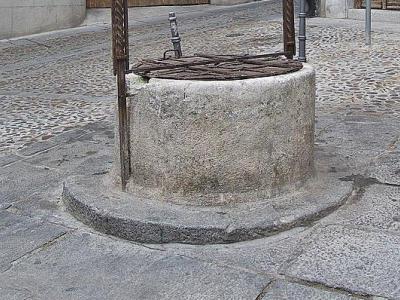
5) El Pozo De Los Deseos R. Saavedra (The Wishing Well)
El Pozo De Los Deseos R. Saavedra, which means ‘The Wishing Well’, is a unique and well-preserved example of Islamic period hydraulic architecture located in the Old Town of Toledo. The well dates back to the tenth century and was originally a part of an Islamic house. Later on, in the thirteenth century, the neighboring house was joined, making two houses into one. At that time, new access vaults were created, which are still in use today.
This solid brick structure is a must-visit for history buffs, and it can be found in the basement of a gift shop. Visitors can learn about the history and origins of the well from the kind shop owners who provide explanations about the well's origin.
The current access to the well is through stairs built to facilitate access to the water, which is crystal clear and believed to maintain the same water level regardless of the time of year. This fascinating feature adds to the allure of this historic structure.
A visit to The Wishing Well is an excellent opportunity to experience the unique and well-preserved Islamic period hydraulic architecture and learn about the history of this ancient well.
This solid brick structure is a must-visit for history buffs, and it can be found in the basement of a gift shop. Visitors can learn about the history and origins of the well from the kind shop owners who provide explanations about the well's origin.
The current access to the well is through stairs built to facilitate access to the water, which is crystal clear and believed to maintain the same water level regardless of the time of year. This fascinating feature adds to the allure of this historic structure.
A visit to The Wishing Well is an excellent opportunity to experience the unique and well-preserved Islamic period hydraulic architecture and learn about the history of this ancient well.
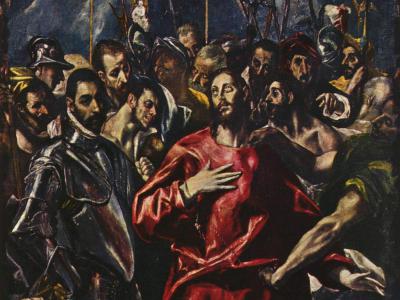
6) The Disrobing of Christ Painting at Toledo Cathedral
The painting "The Disrobing of Christ" by Domenikos Theotocópoulos (El Greco) took two years to create. It was done on commission for the high altar of the sacristy of the Cathedral of Toledo. It was finished in 1579, but it was received not without controversy. The painting was valued at 950 ducats. El Greco was paid only 350.
The commissioners were displeased at some of the figures and colors in the painting. El Greco agreed to remove some of the figures but failed to do so. While the church fathers were not completely satisfied with the work, critics have acclaimed the painting as a "masterpiece of extraordinary originality."
The canvas is alive with color and movement. Christ, in the center of the vertically oriented scene, wears the purplish red robes of martyrdom. His expression is elevated and serene. His tormentors, all clad in dark colors or armor, press around him. They appear agitated. They point and gesticulate. The three Marys look on in anguish.
More than 17 versions of the painting are known to exist. The Disrobing immediately became hugely successful. Replica versions, including at least two by the Master, can be found in museums such as the National Gallery in Oslo, the Alte Pinakothek in Munich, and Upton House in Warwickshire, England.
The commissioners were displeased at some of the figures and colors in the painting. El Greco agreed to remove some of the figures but failed to do so. While the church fathers were not completely satisfied with the work, critics have acclaimed the painting as a "masterpiece of extraordinary originality."
The canvas is alive with color and movement. Christ, in the center of the vertically oriented scene, wears the purplish red robes of martyrdom. His expression is elevated and serene. His tormentors, all clad in dark colors or armor, press around him. They appear agitated. They point and gesticulate. The three Marys look on in anguish.
More than 17 versions of the painting are known to exist. The Disrobing immediately became hugely successful. Replica versions, including at least two by the Master, can be found in museums such as the National Gallery in Oslo, the Alte Pinakothek in Munich, and Upton House in Warwickshire, England.
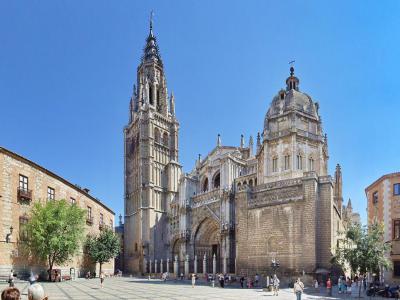
7) Toledo Cathedral and Monstrance of Arfe (must see)
The Cathedral of Saint Mary of Toledo, often simply called Toledo Cathedral, is more than a place of worship-it is a monument that mirrors the city’s long and complex history. The site itself had already been sacred for centuries before the Gothic masterpiece rose above Toledo. In the 6th century, under the Visigothic Kingdom, a church dedicated to Saint Mary was consecrated here. When Muslim forces seized the city in 711, the church was replaced with a mosque, its qibla wall oriented toward Mecca and its minaret rising over the skyline. Even today, attentive visitors can still pick out traces of these earlier layers: a Visigothic column in the Chapel of Saint Lucy, or the horseshoe arches that echo Islamic design. When King Alfonso VI of León and Castile retook Toledo in 1085, he converted the mosque into a Christian place of worship, setting the stage for an even greater project.
That project began in 1226, under the reign of King Ferdinand III, who envisioned a grand cathedral to symbolize the triumph of Christianity and the new power of Castile. For nearly two centuries, master architects, including Master Martín and the renowned Alonso de Covarrubias, labored to complete the vast structure. The result was one of the largest Gothic cathedrals in Europe, with five sweeping naves, a towering spire, and a façade adorned with ornate portals bearing names as dramatic as their sculptures: the Gate of Forgiveness, the Gate of the Last Judgment, and the ominous Gate of Hell. The building itself embodies Gothic grandeur, yet whispers of earlier civilizations remain embedded in its walls.
Inside, the cathedral unfolds as a treasury of Spanish art. The high altar rises like a forest of gilded wood and sculpted scenes from Christ’s Passion, while Narciso Tomé’s spectacular Baroque masterpiece, El Transparente, floods the interior with heavenly light. The Chapel of the New Monarchs houses the tombs of Castilian royalty, a reminder that Toledo was once the beating heart of Spain’s political power. Among the cathedral’s greatest treasures is the Monstrance of Arfe, a dazzling Gothic creation of gilded silver and gold, encrusted with 260 figures and, according to tradition, fashioned partly from gold brought back by Columbus from the Americas. Every year during the Corpus Christi festival, this masterpiece takes center stage in a grand procession that fills the city with music, flowers, and pageantry.
Toledo Cathedral offers a vivid immersion into Spain’s past, where Roman stones, Islamic arches, Gothic vaults, and Renaissance splendor coexist under one magnificent roof. To step inside is to witness the centuries that forged both the city and the nation.
That project began in 1226, under the reign of King Ferdinand III, who envisioned a grand cathedral to symbolize the triumph of Christianity and the new power of Castile. For nearly two centuries, master architects, including Master Martín and the renowned Alonso de Covarrubias, labored to complete the vast structure. The result was one of the largest Gothic cathedrals in Europe, with five sweeping naves, a towering spire, and a façade adorned with ornate portals bearing names as dramatic as their sculptures: the Gate of Forgiveness, the Gate of the Last Judgment, and the ominous Gate of Hell. The building itself embodies Gothic grandeur, yet whispers of earlier civilizations remain embedded in its walls.
Inside, the cathedral unfolds as a treasury of Spanish art. The high altar rises like a forest of gilded wood and sculpted scenes from Christ’s Passion, while Narciso Tomé’s spectacular Baroque masterpiece, El Transparente, floods the interior with heavenly light. The Chapel of the New Monarchs houses the tombs of Castilian royalty, a reminder that Toledo was once the beating heart of Spain’s political power. Among the cathedral’s greatest treasures is the Monstrance of Arfe, a dazzling Gothic creation of gilded silver and gold, encrusted with 260 figures and, according to tradition, fashioned partly from gold brought back by Columbus from the Americas. Every year during the Corpus Christi festival, this masterpiece takes center stage in a grand procession that fills the city with music, flowers, and pageantry.
Toledo Cathedral offers a vivid immersion into Spain’s past, where Roman stones, Islamic arches, Gothic vaults, and Renaissance splendor coexist under one magnificent roof. To step inside is to witness the centuries that forged both the city and the nation.
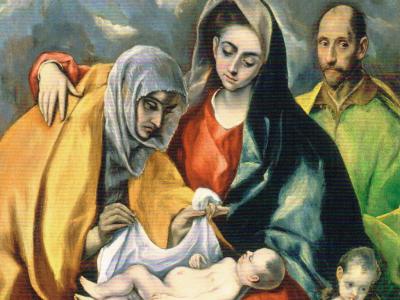
8) Museo de Santa Cruz (Santa Cruz Museum)
It is impossible to imagine Toledo without thinking of Domenikos Theotokopoulos, also known as El Greco ("The Greek"). El Greco won the hearts of Toledo in his time, and many of his works can be seen in the Santa Cruz Museum. The museum is in the old Hospital de Santa Cruz, founded in the 15th century by archbishop Pedro Gonzales de Mendoza.
The archbishop envisaged a centralized location to harbor orphaned and abandoned children in the city. The building is in a Greek cross plan with two of four courtyards completed. The vast Plateresque facade is by architect Alonso de Covarrubias. The crossing with ribbed vaults covers the museum's two main floors.
Four galleries, made by Enrique Egas, connect with the courtyards on two floors. Generally, Moorish traditions are combined with Flemish artistry and some Mannerist elements. The entablature is flanked by false columns with niches and stone canopies. The front pediment features Saint Helen discovering the True Cross.
The museum is dedicated to Archeology, Fine Arts, and Decorative Arts. Works by El Greco at the museum include The Immaculate Conception altarpiece and Veronica with the Holy Face.
The archbishop envisaged a centralized location to harbor orphaned and abandoned children in the city. The building is in a Greek cross plan with two of four courtyards completed. The vast Plateresque facade is by architect Alonso de Covarrubias. The crossing with ribbed vaults covers the museum's two main floors.
Four galleries, made by Enrique Egas, connect with the courtyards on two floors. Generally, Moorish traditions are combined with Flemish artistry and some Mannerist elements. The entablature is flanked by false columns with niches and stone canopies. The front pediment features Saint Helen discovering the True Cross.
The museum is dedicated to Archeology, Fine Arts, and Decorative Arts. Works by El Greco at the museum include The Immaculate Conception altarpiece and Veronica with the Holy Face.
9) Iluziona Museum
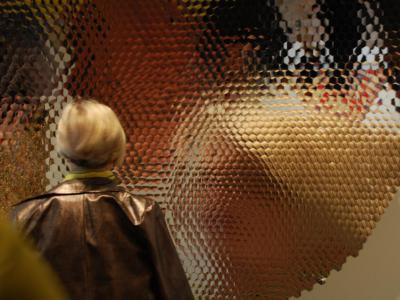
Iluziona is an interactive museum located in the old town of Toledo, that offers visitors a unique way to experience the history of Spain through optical illusions and immersive experiences. The museum takes visitors on a journey through Spain's history, introducing them to relevant characters from literature and the arts along the way.
Visitors can enjoy many fun and visual-effect-based activities, including a simulation of climbing the towers of Toledo Cathedral, "floating" on the ceiling of Cervantes' office, and escaping from the giants of Don Quixote. Other experiences include being trapped in Salvador Dalí's glass and escaping from the clutches of a gargoyle.
Iluziona has a total of 22 different spaces where visitors can create countless creative photographic scenes, with the aim of making them the protagonists of their own adventure. Visitors can play games, solve puzzles, and interact with other visitors while being followed by a team of guides-animators throughout their tour.
The museum's goal is to offer an original and immersive experience that allows visitors to learn and have fun at the same time. It's a great destination for families, couples, and groups of friends who are looking for a unique and entertaining way to experience Spanish history and culture.
Visitors can enjoy many fun and visual-effect-based activities, including a simulation of climbing the towers of Toledo Cathedral, "floating" on the ceiling of Cervantes' office, and escaping from the giants of Don Quixote. Other experiences include being trapped in Salvador Dalí's glass and escaping from the clutches of a gargoyle.
Iluziona has a total of 22 different spaces where visitors can create countless creative photographic scenes, with the aim of making them the protagonists of their own adventure. Visitors can play games, solve puzzles, and interact with other visitors while being followed by a team of guides-animators throughout their tour.
The museum's goal is to offer an original and immersive experience that allows visitors to learn and have fun at the same time. It's a great destination for families, couples, and groups of friends who are looking for a unique and entertaining way to experience Spanish history and culture.
10) Puente de Alcantara (Alcantara Bridge)
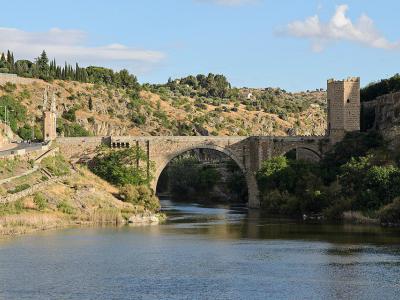
The Alcantara Bridge is a historical landmark and an impressive feat of engineering located in Toledo. This ancient bridge spans the Tagus River and was built by the Romans after they founded the city. The name "Alcántara" is derived from the Arabic word "al-qanţarah," meaning "arch," which reflects the bridge's impressive architectural design.
Located at the foot of the Castillo de San Servando, the Puente de Alcántara was one of the few entrances for pilgrims into the city during the Middle Ages. It currently features two arches, but there is evidence that it had three arches when it was originally constructed. Over time, the bridge suffered damage and was rebuilt, with a third arch disappearing and being reduced to a gate with a horseshoe arch during the 10th century.
During the reign of Alfonso X of Castile, the bridge suffered serious damage and was rebuilt. The western tower, which still stands today, belongs to this period and was later decorated under the reign of the Catholic Monarchs, whose arms decorate its walls. The pomegranate fruit, which was the emblem of Granada, is missing from the walls because the Reconquista had not been completed at that time.
The eastern tower, however, was replaced by a Baroque triumphal arch in 1721 due to its ruinous state. This arch remains a testament to the bridge's long and varied history.
Despite its age, the Puente de Alcántara has stood the test of time and remains a remarkable example of Roman engineering. It was declared a national cultural monument in 1921, and it continues to attract visitors from all over the world who come to marvel at its beauty and historical significance.
Located at the foot of the Castillo de San Servando, the Puente de Alcántara was one of the few entrances for pilgrims into the city during the Middle Ages. It currently features two arches, but there is evidence that it had three arches when it was originally constructed. Over time, the bridge suffered damage and was rebuilt, with a third arch disappearing and being reduced to a gate with a horseshoe arch during the 10th century.
During the reign of Alfonso X of Castile, the bridge suffered serious damage and was rebuilt. The western tower, which still stands today, belongs to this period and was later decorated under the reign of the Catholic Monarchs, whose arms decorate its walls. The pomegranate fruit, which was the emblem of Granada, is missing from the walls because the Reconquista had not been completed at that time.
The eastern tower, however, was replaced by a Baroque triumphal arch in 1721 due to its ruinous state. This arch remains a testament to the bridge's long and varied history.
Despite its age, the Puente de Alcántara has stood the test of time and remains a remarkable example of Roman engineering. It was declared a national cultural monument in 1921, and it continues to attract visitors from all over the world who come to marvel at its beauty and historical significance.
11) Puerta del Sol (Sun Gate)
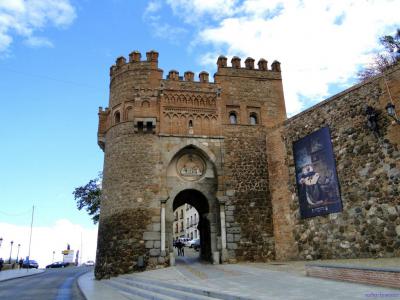
The Sun Gate is one of Toledo’s most recognizable entrances, a structure that has watched centuries of travelers climb the steep slope toward the old city. Its name is thought to come either from a carved sun that once adorned its façade or from its orientation toward the rising sun in the east. The gate itself was built in the 14th century by the Knights Hospitaller, the military order founded in Jerusalem, who clearly wanted their handiwork to make a lasting impression.
Although the gate was part of Toledo’s defensive walls, it also drew on the city’s rich multicultural legacy. The design incorporates the graceful horseshoe arches of Islamic art, a style that remained influential long after Christian forces recaptured Toledo in 1085. The façade carries decorative brick patterns typical of Mudéjar architecture, while a central medallion shows Saint Ildefonso-Toledo’s patron saint-receiving his miraculous chasuble, framed by the radiant sun symbol that gave the gate its name.
For centuries, the square before the gate served as both marketplace and stage. Merchants and travelers once streamed through this entryway with caravans of goods, while heralds proclaimed royal decrees beneath its arch. It was a place where commerce, ritual, and civic life converged.
Today, the Sun Gate remains a favorite backdrop for photographs, its brick towers standing firm against the sky. Visitors who arrive here can pause to take in the view over the Tagus and imagine the countless generations who crossed this very threshold into Toledo’s historic heart.
Although the gate was part of Toledo’s defensive walls, it also drew on the city’s rich multicultural legacy. The design incorporates the graceful horseshoe arches of Islamic art, a style that remained influential long after Christian forces recaptured Toledo in 1085. The façade carries decorative brick patterns typical of Mudéjar architecture, while a central medallion shows Saint Ildefonso-Toledo’s patron saint-receiving his miraculous chasuble, framed by the radiant sun symbol that gave the gate its name.
For centuries, the square before the gate served as both marketplace and stage. Merchants and travelers once streamed through this entryway with caravans of goods, while heralds proclaimed royal decrees beneath its arch. It was a place where commerce, ritual, and civic life converged.
Today, the Sun Gate remains a favorite backdrop for photographs, its brick towers standing firm against the sky. Visitors who arrive here can pause to take in the view over the Tagus and imagine the countless generations who crossed this very threshold into Toledo’s historic heart.
12) Puerta de Bisagra Nueva (New Hinged Door)
The New Hinged Door is a magnificent city gate located in Toledo. It is known as the "New Bisagra Gate" because of its proximity to the smaller "Old Hinge Gate" or "Alfonso VI Gate." This gate was the only direct access to the city of Toledo from the north. Its Muslim name was bab a Ssaqra or "Puerta de la Sagra."
There was some debate regarding its origin and antiquity, whether it was first Arab or Mudejar, but archaeological work has provided an answer. Excavation work carried out in 1999 documented that the Renaissance structure was built on an old elbow access. During the restoration project, various materials were unearthed that clearly dated the door before the conquest of the city by Alfonso VI in the year 1085. The powerful foundations and the angled structure underline the monumental character of the structure, which was likely sealed during the conquest of the city.
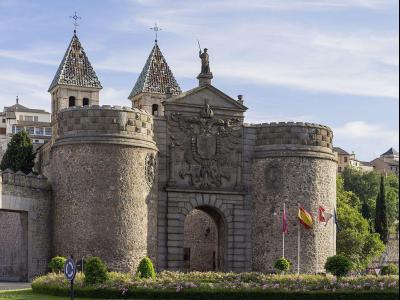
The gate is made up of two independent bodies with two high crenellated walls that join them, forming a patio between them. The external side is formed by a semicircular arch with padded ashlars, on which there is a large shield of the "Imperial City," with its double-headed eagle. This entrance is flanked by two large circular towers. The body that faces the city has another door with a semicircular arch, flanked by two square towers topped by pyramidal roofs. One of the towers located to the west was part of the original medieval structure, and its rope and brand rigging is still visible today.
There was some debate regarding its origin and antiquity, whether it was first Arab or Mudejar, but archaeological work has provided an answer. Excavation work carried out in 1999 documented that the Renaissance structure was built on an old elbow access. During the restoration project, various materials were unearthed that clearly dated the door before the conquest of the city by Alfonso VI in the year 1085. The powerful foundations and the angled structure underline the monumental character of the structure, which was likely sealed during the conquest of the city.
The gate is made up of two independent bodies with two high crenellated walls that join them, forming a patio between them. The external side is formed by a semicircular arch with padded ashlars, on which there is a large shield of the "Imperial City," with its double-headed eagle. This entrance is flanked by two large circular towers. The body that faces the city has another door with a semicircular arch, flanked by two square towers topped by pyramidal roofs. One of the towers located to the west was part of the original medieval structure, and its rope and brand rigging is still visible today.
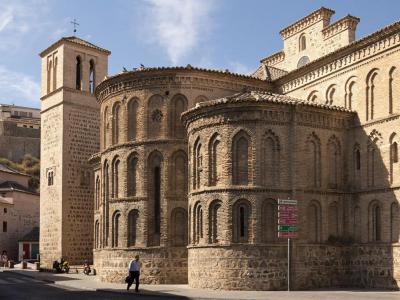
13) Iglesia de Santiago del Arrabal (Church of Santiago)
The Church of Santiago is a remarkable example of Mudejar architecture. Built between 1245 and 1248 at the orders of Sancho II, the church is dedicated to Saint James and was constructed on the site of a previous building, possibly a mosque. Many features of Islamic architecture, including the characteristic horseshoe arches, can still be seen in the current building.
During its foundation, the Diosdado family, knight commanders of the Order of Santiago, were the patrons of the church. The church's tower dates back to the 12th century and has a square floor plan. The church itself, with three naves, a gabled roof, and a triple apse, was built in the 13th century under the patronage of Sancho Capelo, the king of Portugal.
The exterior of the church is adorned with a double row of multifoil openings, and it has three portals, framed by horseshoe arches. Inside, the church features a stunning 14th-century Mudejar plasterwork pulpit, as well as several tombstones and a beautiful Plateresque high reredos from the 16th century.
Today, the Iglesia de Santiago del Arrabal is considered one of the most striking Mudejar temples in Toledo, and its unique combination of Christian and Islamic architecture makes it an important attraction for visitors to the city.
During its foundation, the Diosdado family, knight commanders of the Order of Santiago, were the patrons of the church. The church's tower dates back to the 12th century and has a square floor plan. The church itself, with three naves, a gabled roof, and a triple apse, was built in the 13th century under the patronage of Sancho Capelo, the king of Portugal.
The exterior of the church is adorned with a double row of multifoil openings, and it has three portals, framed by horseshoe arches. Inside, the church features a stunning 14th-century Mudejar plasterwork pulpit, as well as several tombstones and a beautiful Plateresque high reredos from the 16th century.
Today, the Iglesia de Santiago del Arrabal is considered one of the most striking Mudejar temples in Toledo, and its unique combination of Christian and Islamic architecture makes it an important attraction for visitors to the city.
